• Enter your email address to subscribe to this blog and receive notifications of new posts by email.

    Join 241 other subscribers
  • Noshing on

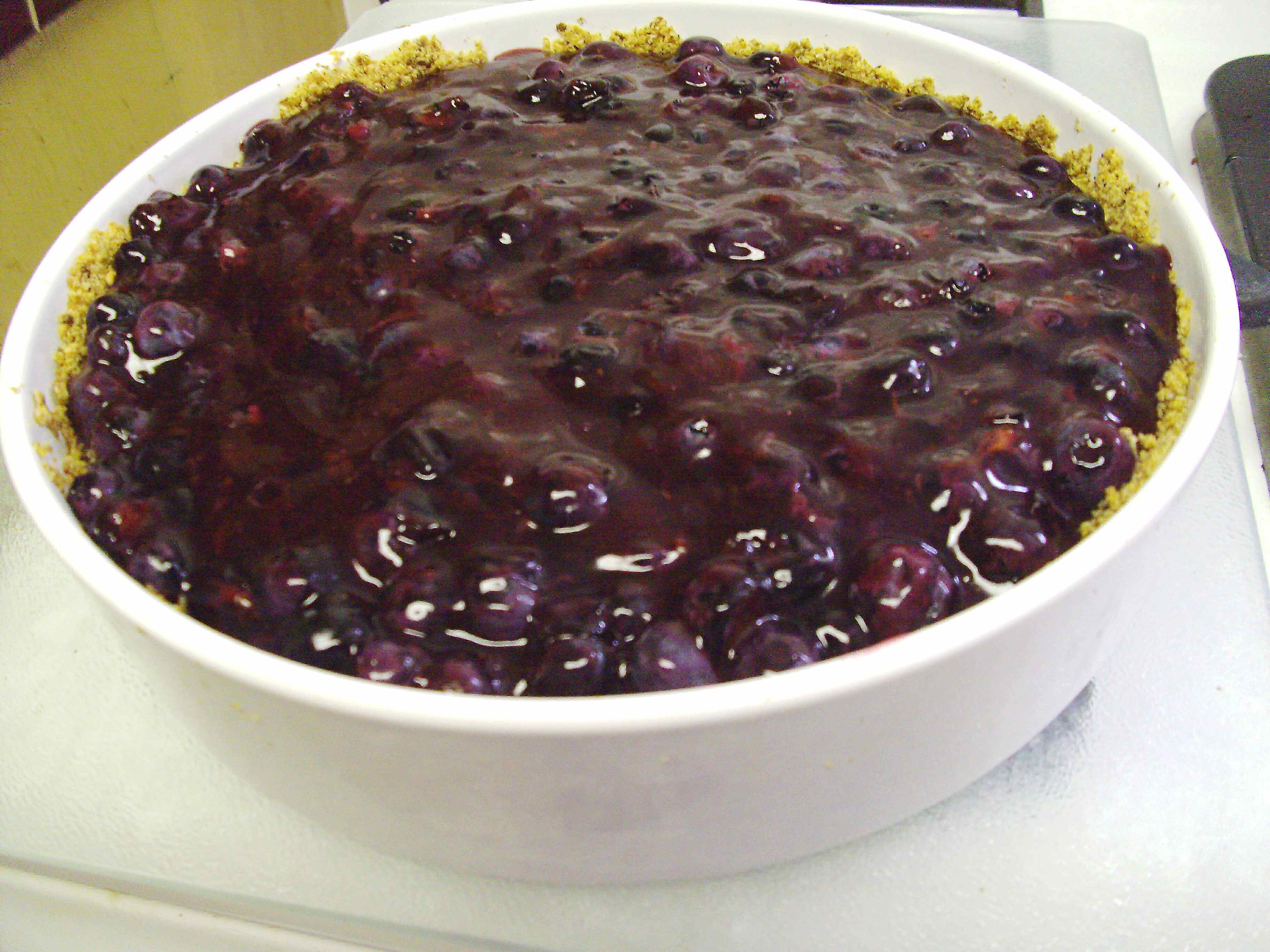
    raw blueberry pie with microwaveable filling and graham cracker crust

    This mostly-raw blueberry pie is a snap to make and very versatile--the filling microwaves in a few minutes, and you don't even have to bake the zippy gingered graham cracker crust--perfect for a hot Fourth of July and all summer long.

  • Recent Posts

  • Contents

  • Archives

  • Now Reading

  • See also my Book Reviews

  • Copyright 2008-2024Slow Food Fast. All writing and images on this blog unless otherwise attributed or set in quotes are the sole property of Slow Food Fast. Please contact DebbieN via the comments form for permissions before reprinting or reproducing any of the material on this blog.

  • ADS AND AFFILIATE LINKS

  • I may post affiliate links to books and movies that I personally review and recommend. Currently I favor Alibris and Vroman's, our terrific and venerable (now past the century mark!) independent bookstore in Pasadena. Or go to your local library--and make sure to support them with actual donations, not just overdue fines (ahem!), because your state probably has cut their budget and hours. Again.

  • In keeping with the disclaimer below, I DO NOT endorse, profit from, or recommend any medications, health treatments, commercial diet plans, supplements or any other such products.

  • DISCLAIMER

  • SlowFoodFast sometimes addresses general public health topics related to nutrition, heart disease, blood pressure, and diabetes. Because this is a blog with a personal point of view, my health and food politics entries often include my opinions on the trends I see, and I try to be as blatant as possible about that. None of these articles should be construed as specific medical advice for an individual case. I do try to keep to findings from well-vetted research sources and large, well-controlled studies, and I try not to sensationalize the science (though if they actually come up with a real cure for Type I diabetes in the next couple of years, I'm gonna be dancing in the streets with a hat that would put Carmen Miranda to shame. Consider yourself warned).

Microwave Tricks: Brown Rice Resolution

Resolution #15 from my last post was to figure out a decent “quick” method for cooking tougher grains like brown rice and pearl barley. These grains still have the skin on, which forms a barrier to quick absorption, so they take 45-50 minutes to cook on the stovetop, which is simply too much for me to babysit. Apparently I’m not alone on this–I see vacuum-packed packets of precooked brown rice at the Trader Joe’s (and similar bowls in the freezer both there and at Whole Foods).

To say the least, this is not the right way to go if you’re earnest about spending less on staples while going a little bit greener in the new year (think of all the freezer energy cost and coolant leaks, the cooking energy expended, the plastic packaging, etc.)

According to Nina Shen Rastogi of Slate.com, microwaving can be the greener cooking option as long as you don’t leave your microwave plugged in when you’re not using it–apparently the little digital clock display thingy takes up a surprising amount of energy (and do you really need a microwave to tell you the time? Hang a battery-operated clock in view of the kitchen and you’ve got it…)

So microwaving should be the way to go with brown rice, as it is for pasta (plain or whole-grain) and white rice. But unfortunately, microwaving brown rice, with its tough outer skin, really doesn’t work well at all if you just dump the raw rice into some water and try to nuke it straight up, the way you can with these quicker-soaking grains. Certainly not in 3-5 minutes of cooking time. Not without babysitting and worrying about boilover. Feh.

And it’s never a good idea to nuke something starchy more than a few minutes at a time, at least not without a lot of water in it–you could end up with plastic (think about what happens to bagels if you microwave them for more than 15-20 seconds).

But you know I don’t like to give up once I decide something should work. So–I thought about something I posted a couple of years ago on nuking oatmeal successfully and decided to try the presoak idea that had worked for steelcut oats. Only who wants to presoak rice overnight if they don’t have to? Steelcut oats–you know you’re going to make them for the next morning’s brunch (only do it on a weekend). Stick ’em in a bowl with water and a lid, let it sit overnight, nuke a few minutes in the morning and you’ve got it. It’s perfect.

Rice? I never know what I’m making for supper until about an hour before.

But a hot presoak worked pretty well to get things started, and it only took about 15 minutes (because I was impatient). The whole thing still took about an hour–well, maybe less in the strict sense, I wasn’t paying attention Continue reading

Cooking (and other important) Resolutions

(Of course)–I couldn’t leave 2010 on such a bitter note as the one in my last post, even though I think bitterness is a good, energizing, creative thing. Or as the great Eric Burdon once–or actually, quite any number of times–told an interviewer about his ordeal with getting paid for House of the Rising Sun, “I’m not bi’eh. I’m bi’ehsweet.” I have a thing for Burdon’s early stuff–voice like a hammer, great blues timing, pure nerve with a sense of humor, and clearly, a good appetite.

So I wish you all a Happy New Year, good eating, good cooking, good reading and good company, and thank everyone who’s visited and especially those who have taken the time to subscribe to Slow Food Fast. For myself, I’ve come up with about 11 new resolutions for 2011 (but as usual for me, it may will definitely run longer, since I’m terrible about following directions, even my own, whether cooking or resolving):

1. Learn the Dirty Dozen a little better and plan the weekly budget (see #3) to include buying these vegetables and fruits organic only. (I’ve got celery, potatoes, pears and strawberries down so far, but I know there’s gotta be at least 8 more, right?) Find places to buy them cheaper than Whole Foods.

1a. Learn to garden? Umm. Learn to schnorr backyard fruit from friends? More likely, ain’t it? Ok, ok, make more friends, schnorr backyard fruit and veg. And rosemary, which some people grow as a hedge here in Pasadena. Envy, envy, envy–turn it to a good purpose and offer to take some of the excess off their hands.

1b. Exercise basic civility towards other people’s food choices–your eat local is my eat kosher is his eat organic is her eat affordably. Everyone’s got different priorities, and you don’t know who is eating a particular way because they feel like it and who really needs to so they don’t end up in the hospital. Food shouldn’t be too huge a source of personal arguments. I mean, really, people, save some energy for the real issue–dark or milk chocolate?

2. Get the weekly food budget back down under $100 a week (holidays take it outta me). Make a list and (I cannot believe I’m saying this) check it twice. With a calculator. Include toilet paper and napkins and so on.

3. Use all the vegetables I buy sometime in the same week I buy them. This goes triple for any herbs. No brown broccoli (not usually a big problem in my house, actually) or rubbery carrots (didn’t mean to confess that). And NO cilantro or fresh dill left until it turns slimy while I dither over what to use it in… when in doubt, make soup (see #4), or with herbs, wash and freeze in baggies.

4. Make one big batch of soup each week (see #3 if necessary for motivation) and eat it.

5. Make one pound of beans each week and eat it in fabulously creative ways, or at least edible ones. Eat them as a substitute for, not addition to, fish or meat at least one dinner per week.

6. I’m stumped. Maybe I should make each of the previous resolutions count twice? Naaah. Put on some blues and think again.

The real #6: Eat vegetables at breakfast, Israeli-style.

7. Wash fewer dishes–make my kid do them! (oh, yeah, I’m rollin’ now!)

8. Reduce my dependence on oil–starting by using cocoa powder instead of a full-cocoa-butter chocolate fix…damn those holiday gift boxes. Hate See’s, hate it with a passion (unfortunately, not really)…

9. In the same vein–cut down to half-caf this week, decaf in two or three weeks. Start today. Too much hoppin’ around after midnight (or maybe just too much listening to Eric Burdon on YouTube–wait. Is there such a thing as too much, at least of his early stuff?).

10. Shop my neighborhood greengrocer’s first instead of the big box market. Buy and try a small amount of one new Silk Road ingredient each month (red pepper paste? knoug resin? green almonds? sea buckthorn nectar?)

11. Get a few new implements as long as they have a real multifarious use and a small kitchen footprint: stick blender? I hear it calling my name. Pasta machine? not so much–the box instructions say not to immerse in water. How are you supposed to wash it then? (see #7)

12. Make bread at home again.

13. Revamp a classic every so often, preferably with the intelligent use of a microwave to help speed things up where it will actually help. Like choux paste (at least for heating the liquid ingredients before adding the flour and eggs–that’s actually been done before, and not by me) or pretty-good fake-smoked whitefish salad (which is mine, see the end of this post). Continue reading

Soupe à l’oignon gratinée (or not)

French onion soup without the gloppy gratin

Sometimes it pays to think out the recipes you read before you try them. For example…

I love and miss French onion soup from my pre-kosher days (that would be up to about age 19, long, long ago…) Can’t be helped, though–if you keep kosher, beef stock does not combine with Gruyère. And I’ve never actually tried making it at home before, because, if you go by a traditional, official kind of recipe like the one published in the LA Times below, it’s a 3-hour ordeal.

RECIPE: Soupe à l’oignon gratinée – Los Angeles Times.

Total time: 3 hours  Servings: 8  Note: Adapted from Comme Ca.

  • 8 large yellow onions, halved and sliced lengthwise into 1/4 -inch strips
  • 1/4 cup unsalted butter
  • Salt
  • 2 2/3 cups water, divided
  • 2/3 cup dry Sherry
  • 5 cups chicken broth (with as little sodium as possible)
  • 2 2/3 cups beef broth
  • 8 sprigs fresh thyme and one bay leaf, tied together
  • Fresh ground black pepper
  • 1 loaf French bread
  • 1 pound Gruyère, grated

Pretty onerous just on the ingredients (lot of salt in them thar vacuumpaks of stock), not to mention the bread. The Swiss cheese, oddly enough, is a lower-salt cheese than most, about 120-150 mg sodium per ounce as compared with, well, anything else at 180-210. It makes up for the lack of salt with a huge OD of saturated fat–and 2 ounces per person’s got to be a lot, really, just for melting on top of soup. It would be another matter if this were a legitimate fondue, or a sumptuous grilled cheese on really good toasted pain levain, and you were actually going to eat it all, but if I recall correctly, you aren’t.

Because I never had French onion soup at home, I never had to face the task of scrubbing baked-on cheese off the rims of the bowls afterward. Maybe 1/3 of what was sprinkled on ended up stuck like Swiss barnacles to the bowl, which seems like a waste, especially if you shell out for real Gruyère.  The rest turned into goop that sank to the bottom of the bowl and stretched up for yards on the spoon only to stick to the front of your teeth. Or blouse.

Plus at home there’s all the rooting around in the cabinets hoping your soup bowls are the kind that can survive the broiler and that your oven mitts (and guests) can Survive The Gruyère.

But the real cruncher here is time.

The LA Times instructions don’t even include the time it takes to sliver 8 very large onions, but you should, because it’s not trivial: 20-30 minutes, plus crying time. Heat the oven to 400 degrees (15-20 min, they also forgot this bit, but maybe while you’re crying over the onions). Stew onions with butter and 1/4 t salt in lidded casserole in the oven until the onions are softened and a light golden-brown, about 1.5 hrs, during which you’re supposed to stir every 15 minutes (!) Take the casserole out and cook further on the stove top until the onions are a deep golden-brown and just begin to stick to the bottom of the pot to form a crust (10 min? 15? 20? more?–from the experience below, I’d say at least 20, maybe even 30). Add half of the water and cook until the water has evaporated, about 8 minutes (so specific?). Add the sherry and keep stirring until it has evaporated, 3 to 5 minutes. Stir in the remaining water, broth and the thyme bundle, bring to simmer (5-10 min) and simmer 40 minutes (why 40? who knows?). Slice and toast the bread. Fill 8 oven-proof soup bowls, lay the toasts on top of the soup, sprinkle the grated Gruyère evenly over the tops and place the bowls under the broiler just until the cheese is bubbling and begins to brown in places (5 minutes?). Serve immediately.

TOTAL TIME: At least 3 hours, probably more like 3 1/2.

KLUTZ FACTOR: HIGH–lot of hot transfers of heavy casserole dish, finding and broiling ovenproof soup bowls, transferring to the table without spilling…not to mention serving “immediately”.

Then there’s…(you knew this was coming)

Nutrition per serving: 490 cal; 27 g protein; 36 g carb; 3 g fiber; 26 g fat (15 g sat); 78 mg. cholesterol; 808 mg. sodium.

Wow! Am I wrong in thinking that almost no soup should be this much of a labor of love, not to mention love handles? For this much time, fat and salt, I’d demand at LEAST grilled marinated lamb. Or a good runny camembert, a perfectly ripe pear, some excellent sourdough toast and a half-glass of something complex and interesting in the way of wine.

Maybe it’s as delicious as promised. But all those hours, all that stirring, not to mention all that fat and sodium and cholesterol, just for a bowl of onion soup and a slice of toast with melted cheese? Is it any wonder Lipton’s is popular?

Still…Can we do better with the onion soup itself? Maybe as in, vegetarian but still opulent, and furthermore without the heavy-duty time and calorie burden? Let’s try, anyway.

The first objections I have are eight huge onions and 8-10 cups of salted broth. Do I want to make anywhere near that much onion soup? Do I have that many takers in my house? Unfortunately not. One huge onion just for me, then. Maybe my husband and daughter, but only if it’s obviously fabulous. In which case, I won’t really want to share with them.

The main thing here is getting the flavor out of the onions–you want to caramelize them thoroughly and evenly without breaking down their aromaticity too badly. But I personally think baking them slowly in a big oven for an hour and a half just to start to do that is insane. Even if we’re talking about eight big onions.

My first attempt at shortening this recipe did not go badly, exactly, but it didn’t get me soupe à l’oignon either. Continue reading

Getting Mead-ieval

(plus 2 era-appropriate desserts to go with it)

Chaucer's Mead shelftalker label

Chaucer's Mead new 2010 label. Diehard homebrewers aren't as enthusiastic as Wine Enthusiast, but most of them seem young and clearly weren't expecting a dessert wine.

A couple of years ago my husband was rooting around our dwindling wine rack selection on a Halloween eve, right before the trick-or-treat crowd came by. It was actually starting to get genuinely chilly outside in the evenings…

“Hey, Deb–what is this stuff? Chaucer’s Mead?!” [squints at label] “Says you’re supposed to serve it fresh. How old is it?”

“I dunno. Last year? I forgot it was there.”

“Are you sure it’s still good?”

I started typing away to find out. “One of the Renaissance Faire bloggers says it’s really gross fresh and you’re supposed to let it age, but it looks like they mean the kind you make at home.”

Clearly neither of us was an expert.

Mead, of course, is a drink made by fermenting honey. I’d been vaguely aware of it ever since I was eight or nine years old and my dad handed me a copy of Howard Pyle’s The Merry Adventures of Robin Hood. (Quick, everybody, picture Errol Flynn or Kevin Costner, your preference, dressed up more or less as Kermit the Frog in a pointy hat and feather, leaping up onto a dead log with arms akimbo to shout “Ha-Ha-Ha-Ha!” at his fellows in a gratingly cheerful tone…)

I like reading about medieval and renaissance Europe, but I’ve never favored the Renaissance Faire approach–especially because you have to sew your own costume AND know all the names of the pieces AND how to lace them all together. A lot of participants get very snotty about each other’s authenticity. Which is fun, clearly, but I’d be the one they were getting snotty with. Also I’ve never wanted to be addressed as “wench” unless I had a huge frying pan handy to teach the knave who tried it some manners.

Also, after seeing my ex-brother-in-law’s home beer brewing setup (very successful, but then he’s English and knows his stout) I always thought that brewing mead at home would also involve big trash cans with burp valves (I mean, gas traps, though on reflection that’s actually no politer), attract a guaranteed parade of ants even in January (this being Pasadena), and that the stuff would come out cloudy and greenish and a little too authentically medieval for enjoyment.

So all in all, it wasn’t until I stumbled on a bottle at the Trader Joe’s while looking for a gift bottle of more conventional port that I ever considered tasting mead. It was enough of a novelty and the price was right–about $10. Then, of course, I put it in the wine rack and forgot about it for an entire year…which, it turns out, is the right thing to do.

Back at the kitchen counter my husband had finished squinting at the fine print, decided it probably wouldn’t kill or blind both of us at the same time, and was already opening the bottle to pour  a sip into each of two glasses. It looked and smelled like a white dessert wine–light, clear, not at all the cloudy, beerily fermenting syrup I’d been imagining. So we decided to risk it on the count of three.

Even though it looked fine, I’m not crazy about sweet dessert wines and my husband is, so I was still prepared to wince. But whatever I was expecting, it certainly wasn’t this.

It didn’t taste like honey at all–it tasted like all the flowers the honey had been made from. Somehow the brewing and aging had unlocked all the delicate nectary flavors that had been trapped inside the honey, and the flavor kept changing and shifting with every sip. A sherry glass was plenty–it was a bit rich, another surprise, because sherry hovers around 18% alcohol, and this mead was only 10%. But it was intense and fascinating.

Just then, of course, my husband spotted the little packet of spices, like a teabag, that had been hanging around the neck of the bottle and decided he really ought to mull some of the mead with them. In five minutes, the whole downstairs smelled of nutmeg. It was too cloying for me, but he liked it. (Chorus: because he’s a boy) See, though, you can get away with that for a $10 bottle, and your wife doesn’t have to get mad at you. And there was enough left to have a little unsullied mead over the next couple of days.

What to serve with it, though?  I want to keep the contrast between the mead and the food, which is going to have to be either an appetizer or a Continue reading

Speeding up Eggplant Parmigiana

On the last night of Hanukkah, I fried some more–but only a little this time.

When my daughter and I went vegetable shopping at my favorite corner grocery that day after school, we found a bin of eggplants on sale for 25 cents apiece. And they were pretty good, so I bought four of the firmest ones and we lugged them home.

The moment I spied the eggplants at the store, I was already thinking about eggplant parmigiana, or at least about involtini (cheese-filled eggplant rolls with tomato sauce), which comes to much the same thing. It’s mostly a geometrical difference at that point–rolled eggplant versus flat, crosswise rounds versus loopy lengthwise slices.

I’ve loved eggplant parmigiana since I was a kid and my parents would take us to a local Italian diner run by a friend of my mother’s. A different Italian diner, this one during my student days, served it either screamingly hot in a fresh-from-the-oven baking dish with so much incendiary mozzarella on top that you were guaranteed to scorch the roof of your mouth, or else sandwiched into a grinder roll with the best tomato sauce in the universe. I loved them both.

But there’s no denying the fact: the traditional parmigiana is one heavy kind of dinner. It’s designed to remind you (an hour or so after eating it, or perhaps again in the middle of the night) that suffering is all around us and wants us to share, so be humble and don’t forget the Tums.

Why is it so heavy? The eggplant, the tomato sauce, the garlic, even the cheese filling–all fine. I decided the main problems with eggplant parmigiana come down to two things: 1) frying the eggplant slices to cook them, because that takes a lot of time and a lot of oil, and 2) breading the eggplant with eggs and flour or breadcrumbs.

In the kibbutz kitchen where I worked after college, I did more than my share of slicing and breading eggplants and dipping them in eggs and redredging and frying, the whole works, enough for several hundred people (the other several hundred were smart enough not to eat them unless they happened to be hanging around the kitchen side room where the fryer was going and could snag a slice fresh off the cooling rack).

It’s more than ok to eat breaded eggplant hot off the press, as it were. Almost essential, in fact. But let the slices wait around at all, layer them with cheese and tomato sauce and bake for half an hour or so under foil, and what started out as fried eggplant, deliciously crunchy with a creamy texture inside, ends up shriveled and spongy or stringy between no-longer-crisp layers of bready gunk, and more than that, the frying oil is starting to make itself known again. Continue reading

Couscous, its own fine self

Fine-grained couscous made directly from farina

When I’d just come back from a year in Israel after college, I read through Paula Wolfert’s Couscous and Other Good Food from Morocco several times. Her descriptions of the market stalls, the kitchens of the aristocrats, and the very down-to-earth cooks making tricky components like warka leaves for bistilla or rolling and sieving different sizes of couscous from farina and flour fascinated me. They filled in parts of the culture I hadn’t understood in the Moroccan Jewish community I’d just left.

Two of the dishes in the book, two only, have I actually made in all the time since. But if you get the right two, two is enough.

I first ate couscous in Ma’alot, up in the north of Israel in the western Galilee. On my first night in the volunteer program, my new roommates brought me to a tiny 4-table restaurant in the town center after a very miserable and cold trudge up to the top of the hill in a January downpour. The restaurant would have been a real hole-in-the-wall anywhere else, and even here it seemed to cater to the few single men who had neither hope nor prospect of a girlfriend, and whose mothers had finally nudged them out the door. Israel’s amenities–grocery stores and the like–are still often a grade or so down in appearance from what we’re used to in the US, and I’d been there half a year already, so I was used to ignoring it and discovering what was good. Still, even 25 years ago, most restaurants in the larger towns were not this dowdy. This was card tables and folding chairs. My heart sank. Where had I come to?

Not 5 minutes after we’d been seated, however, the lady who ran the kitchen fetched us out a huge platter mounded with couscous and chicken legs and vegetables, steaming hot and smelling incredible. The chicken was delicious (everybody sing; I’ve just been subjected to another showing of Sherlock Holmes’s Smarter Brother at our in-laws’ over Thanksgiving weekend) but the couscous itself was so light and fine it was like eating hot curried snowflakes. What was it? How do you do that? And in half a year of eating at Continue reading

Going retro for real croissants

I’m not really a follow-the-recipe-in-the-cookbook kind of person. But I love looking through cookbooks that have interesting techniques. Learning to cook means, for me, being willing to eat your mistakes or half-good attempts and try again with tweaks. It also means playing with your food until it works for you.

So croissants are one of those things I try out again every once in a while, because the dough is really not as much trouble to put together as it sounds. Most of the time is just letting the dough rest in the fridge.

Mostly I keep trying because I’d really like it to work well eventually, as opposed to half-right. It’s something about the baking that’s always giving me trouble–the outside will be hard and the inside will be steamed and still doughy. Or else the things will puff up  enormously but will be more like a popover with absolutely no layering inside because the butter layers melted away into the dough during the long rise. Or if I roll them and bake them right away straight out of the fridge they won’t rise at all in the oven and they’ll be tough. Or they’ll be gummy. Or flat tasting. Or even a little bitter.

None of this would be so bad if it were just my own fault for noodling around with a classic. But the last few times I’ve tried to follow Dorie Greenspan’s instructions from Baking with Julia more dutifully than usual, and it just hasn’t worked out right at all. Worse, in fact, than some of my offhand attempts a couple of years ago when I changed nearly everything there was to change, starting with cutting the fat in half and ending with an almond-flour attempt that actually didn’t come out so far off. Except, of course, for the gummy insides.

Julia Child, "The French Chef" DVD from PBSBut last week I stumbled across the elusive two-part The French Chef series of DVDs from…not PBS, which is probably still out of stock, but…my local library. The disks (2 and 3 disks, respectively) are a bit scratched up and tend to halt at awkward moments unless you fast-forward or skip or rewind or whatever tricks I could come up with.

But there was a croissant episode from the late 1960s in black-and-white, just as I remembered the show from when I was 4 or 5 years old. So I watched it, wondering how dated it was, whether the old recipe was anything like the one she lent her cachet to in the mid-1990s with all her guest expert bakers, and what the results would be like. At the time of this early show, she’d been home in the States less than 10 years, had just delivered Mastering the Art of French Cooking a few years before, and was still extremely rigorous about everything. Or was she?

For the croissant show, she discusses different flours, the toughening effect they might have on the dough and how to counteract it with a bit of salad oil or by mixing 2 parts pastry flour to 1 part all-purpose. But then she includes a frozen commercial bread and pizza dough as a possible alternative to making your own yeast dough. Not the tenderest choice, she says, but for someone who doesn’t yet feel at ease making their own, it’s an encouragement to try making croissants at all, and it works all right. She’s astoundingly practical in these early shows even though some aspects of her cooking aren’t (exaggeratedly rich sauces for sole, for example). And I remember that back in those days, you couldn’t get real croissants in American bakeries. If you wanted them, you had to make them at home.

Dorie Greenspan’s modern, supposedly streamlined, layering process calls for cutting the butter into cubes and mixing them into the dough before rolling out, doing six “turns” with three rests in the fridge, cutting, stretching and rolling the croissant triangles in an elaborate way with some extra scrap dough in the middle for shaping, rising them for 2 1/2 – 3 hours, gilding with egg wash and baking at 350 F for about 20 minutes.

Julia’s 1960s version is somewhat different–more aggressive, and probably much closer to classic boulangerie technique. It’s also simpler. She makes a very simple milk-based yeast dough in a bowl with her hand and kneads it a couple of minutes, picking it up and slapping hard on the work surface, all while talking flour grades (you could talk Yankees versus Red Sox if you want–she probably could have too, come to think of it).

She takes a stick of butter and bashes it into a softened flat mess with a big solid rolling pin, then scrapes it up and flattens it into a square and rechills it. She lets the dough rise until double on a heating pad, then chills the dough. Then she takes the butter and the dough out of the fridge, wraps the square of butter in the larger piece of dough and then rolls and folds and turns and chills for a full 2 hours each time, but only for a total of 4 turns–2 sets of 2–before rolling and cutting out the croissants.

She doesn’t put an extra lump of dough in the middle when she rolls the croissants. She doesn’t stretch them a lot. And she does let them rise in a relatively cool room, but only for an hour or hour and a half until just Continue reading

Cranberry Sauce Without the Fuss

Cranberry sauce in the microwaveI love homemade cranberry sauce, and not just at Thanksgiving. It makes a pretty good jam for breakfast and (should the need arise) a pretty good tisane for a congested sore throat if you heat a dollop in a mug of water and sip it hot, berries and all. Despite the fact that it’s tart, which you’d think would make your throat hurt more, the cranberries actually contain something soothing that will give you at least temporary relief when you’re in the throes of Los Angelitis and the Tylenol hasn’t kicked in yet (you can trust my expertise on this one, unfortunately). But hopefully you won’t need it for anything medicinal this winter and can just enjoy fresh-made cranberry sauce for its own sake.

A lot of people are convinced that just opening a can is the easiest and least scary way to go. They must have read the package directions and decided it was too much work to make the syrup first (very intimidating-sounding) or that adding the berries and letting them pop was likely to spatter the stove until it looks like a magenta Dalmatian.

But really, you can just microwave cranberry sauce and it works fine. Throw all the ingredients (berries, sugar, water) into a 3-cup pyrex bowl, slap a lid on partway, and nuke it for 5 minutes. That’s it. No preboiling. Don’t even bother mixing it. In five minutes, you’ve got standard fresh-made cranberry sauce in a bowl that can go straight to the fridge once it’s cool. And no saucepan or stove top to wash before your guests arrive.

You can dress it up with some orange peel or juice, or a pinch of clove and cinnamon. You could add a chopped, peeled granny smith apple or a well-scrubbed chopped organic seedless orange with the peel to the berries for cooking, or else stir in a spoonful of Cointreau or Triple Sec after the jam cools, and you’d have something a little more sophisticated, but the basic recipe is worth having as a first run.

And most helpfully, if you’re looking for something less sugared, you can cut the typical cup of sugar per 12-oz bag of cranberries in half and it’ll still gel decently. Or you can do it with no sugar at all, let all the berries pop and thicken up just in water, and sweeten it with your preferred artifice after it’s cooled. It won’t be completely carb-free per tablespoon or so even with no added sugar, but it’ll be pretty low.

Approximate carb counts (total and per tablespoon, counting 1 T as ~1/16th c.):

Cranberry-only version without apple or orange

  • With 1 cup of sugar: 242 g carb per 2.5-3 c. cranberry sauce  or 5-6 g/T.
  • With 1/2 c. sugar: 142 g carb/recipe or ~3 g/T.
  • Artificially sweetened only: 42 g carb/recipe or ~1 g/T.

Cranberry sauce with apple or orange

With a good-sized apple or orange chopped in, figure 25 extra grams of carb per recipe or 0.5 gram extra carb per tablespoon.

Any way you go with it, though, homemade cranberry sauce has a good deal less carb per spoonful than other kinds of commercial jams, and probably a good deal less than the stuff in a can. It’s a lot better tasting too.

Microwave Cranberry Sauce

  • 12-oz package fresh cranberries, washed well
  • 1 c. water
  • 1 c. sugar (standard Thanksgiving back-of-package recipe), 1/2 c. sugar (my version this week, which was plenty sweet enough for me), OR no sugar during cooking but artificial sweetener added afterward to taste

optional additions: chopped peeled apple, finely chopped whole scrubbed organic orange, pinch or so of powdered cloves and/or cinnamon, a little grated orange or lemon peel, or a spoonful of orange liqueur or brandy

Put the cranberries, sugar if using, water, and apple or orange if using in a 3-cup pyrex bowl, cover loosely with a microwaveable lid so steam can escape but it won’t spatter, and microwave on HIGH 5 minutes. (If you’ve added an apple or orange, you might need an extra minute to account for the extra fruit.) Keep an eye on it toward the end, but it probably won’t boil over.

The mixture should already be thickening to a sauce/jam consistency (it’ll thicken more as it cools), and most of the berries should be popped. Stir well and microwave a minute or so more with a vented lid if you want it thicker. Let cool to room temperature and, if using artificial sweetener, sweeten to taste. Other flavorings–you could add grated lemon or orange peel (sparingly) or clove or cinnamon before cooking, but save any alcohol-based flavorings for after the jam has cooked so they don’t just evaporate in the microwave.

Fastest Pie in Town

Pumpkin pie in the microwave

On the energy downswing from a departed sleepover guest, my daughter suddenly declared she wanted pumpkin pie, we had two cans of it and I’d said I would make it soon and I still hadn’t, why wasn’t I making it, it wasn’t fair, she hadn’t had any all year and it was past October so it was in season. This last argument was just for good measure, given the pumpkin was in a can, but still, give her points for it–it’s a new crop after all those shortages.

With ears ringing, I said, but it’s already 5:30. “So? I can help!” You’ve been there, I’m sure.

Pumpkin pie is a slow-food-slow kind of dish–not much way around it. Even with a premade crust and a can of “pumpkin pie mix” rather than just packed steamed pumpkin, the filling needs 45 minutes to an hour to bake. Then it needs another hour or more to cool enough to eat. And if you’ve got a tiny kitchen and your kid is helping, the elbows factor is bound to add some time and confusion.

Also, normally, with a diabetic kid, you don’t just think, “Hey! Let’s make pie for dessert!” Especially since the filling calls for 3/4 cup of sugar per pie.  But pumpkin pie, if it’s made from scratch and isn’t just a frozen ready-made version, is kind of reasonable on carbohydrates for a dessert–about 25 grams for 1/6 of an 8″ shallow pie, according to the ADA guidebook, or in our case, 35 grams for 1/8 of a standard 9.5″ deep-dish pie (calculated from the ingredients). And pumpkin may be a fruit and not a vegetable, but it’s still got a respectable serving of vitamin A and fiber. And I also like it, which helps.

Still, the time is a killer. But I had such a surprise success with spinach quiche in the microwave a while back that I started thinking. The standard filling for pumpkin pie is also based on a custard, more or less–a couple of eggs, a cup and a half of milk per deep dish pie. It’s half the eggs of a quiche, but it might well still work in a microwave. That part would take something like 5-7 minutes and leave enough time for the pie to cool while we got dinner together.

Actually, I’d wanted to try this for a while, and not with company in tow, just in case it flopped. The weather here was 97 degrees most of the week but dropped to the low 70s today and was promising an actual chill for evening. So doing the crust in the regular oven for 15 minutes or so wouldn’t actually make life miserable.

It was almost looking like a decent idea considering the fact that it was and still is totally nuts to make an entire pumpkin pie from scratch right before dinner (or at least everything from scratch short of hacking up a raw pumpkin and dealing with the seeds). So I decided to go for it, and I made my daughter deal with the filling while I made the crust and parbaked it. We just about managed not to step on each other or crowd into the same corner at the same time, but both parts went well. And then the real test came–time to nuke. Continue reading

Spice Mix Rx

Sunset magazine surprised me this month with a big feature on complex spice mixtures that have found their way into big-name restaurant food in the past few years–panch phoran, garam masala, baharat, za’atar, ras el hanout, quatre épices, Chinese 5-spice and berbere. Sunset tends to focus on California and southwestern US travel, home decor and food styles, so it was good to see something a little more world beat and exciting…right up until I started looking at the recipes.

The opening spread showed glossy pictures of the various whole spices included in generic versions of each mixture, but the author then blithely left all of these spice mixes and their proportions out of the recipe section!

Her reasoning, if I have it right, was that these spice mixes are getting popular enough that you can find them all premade at your local supermarket. Well…not in mine. And I live in an area with a lot of Indian, Arab, Armenian and Chinese neighbors–the only ones I’m missing are French. You can get Chinese 5-spice powder next to the double shelf of soy sauces, and you can usually get a jar of unsalted generic curry powder (which Indians don’t use but North Africans occasionally do) or some Colonel Sharwood’s and Patak’s curry pastes, and occasionally some garam masala in a jar. Who knows how close they are to real, but they’re highly salted and in jars or packets, so not exactly fresh-made.

Online commenters at the Sunset web site say that the recipes the spices are supposed to be used for are good…if you can find the spice mixes in your area, which many of them can’t. Which is why I’ve done yet another longish post…I’ve decided to dig around and post general recipes for most of the spice mixes myself. Some I’ve tried personally, but most I haven’t made at home, yet, so I’ve tried to find reliable and knowledgeable cookbook authors and where I can I crosscheck with another appropriate author’s recipes–these days it’s so easy for restaurant chefs to publish recipes they can barely pronounce and claim expertise without ever having traveled to India or Morocco or Turkey, or only the tourist routes, much less lived in a village and learned to cook a traditional cuisine for any length of time.

My local favorite family-owned Armenian greengrocer’s caters to most of the Silk Road cuisines, from Morocco to Turkmenistan and even further east. The store carries a couple of brands of premixed za’atar and its own (unfortunately salted) curry powder as well as shawarma and seven spice blends, but for me the great value is that it offers bulk pricing–loads cheaper than supermarket spices–for all the whole and ground individual spices in the mixtures that the October Sunset article mentioned. And the informality of buying spices in tubs rather than little jars encourages you to use them more often, experiment a bit, and improve on what you find in all the new Turkish, Middle Eastern, Indian and Moroccan cookbooks that have come out in the past few years.

Storing spices

Freshness counts even with dried spices. One thing I really appreciate about my corner grocer is that their tubs of spices are labeled with packing dates so you know how fresh the spices are–very important especially for preground spices. I heartily wish McCormick’s and all the store brands (Kroger, Inter-American, etc.) would do the same.

From my own experience, coriander seed and green cardamom in particular should both be left whole and ground as needed at home, preferably just before using them. Both seem to lose their oomph in ground form a lot quicker than cumin or caraway or fennel, at least in my kitchen. Perhaps it’s just that Pasadena is so dry most of the year, but ground coriander can go lifeless and flavorless in a matter of a week or less here, its delicate volatile oils evaporate so quickly, and what a waste.

If you’re going to make your own blends, cloves and allspice are also better left whole, assuming you can get them at a good price, and so is nutmeg–get a ~ $4 lemon zester to grate it with and keep it in a bag with your whole nutmegs. Then just watch your knuckles.

Powdered cinnamon and ginger are usually fine for a longer time, but of course they will weaken a bit. Always, always use whole black peppercorns, not the preground rubber-flavored stuff. And hot pepper flakes? I never realized how much flavor they lose over time–not just heat but the aromatic green edge as well, so don’t buy them in huge cafeteria-scale quantities (live and learn from my mistaken enthusiasm over a $3 quart-sized container…) or your hot mixtures and salsas will be disappointingly bland.

Even some whole spices are vulnerable to flavor loss–or rancidity. Nigella seed, which tends to get used only in small pinches because its flavor expands and permeates stews and curries as they rest overnight in the fridge, should definitely be stored double-wrapped in the freezer so it doesn’t lose all its taste before you can use it up. Poppy and sesame seeds should always be stored well-sealed in the freezer–so should most raw nuts, and so should washed fresh herbs if you can’t use them up within a few days.

Anyway, here are some tested versions of the spice mixes mentioned in the Sunset article. All of them are adapted from their source cookbooks (i.e., the proportions and ingredients are the same, but with my comments, mostly in italics).

The first two are from Manju Malhi’s India with Passion: Modern Regional Home Food, which includes directions on how to use these mixtures and in what approximate amounts for a dish of 4 servings.

Panch Phoran (adapted from Manju Malhi)

Bengali 5-spice mix; good for lentil, bean or potato dishes, samosas, etc.

Malhi’s recipe says this makes 7 teaspoons of spice mix. I’m not sure how she counts that, given that there’s a total of 5 teaspoons of individual dry whole spices in the recipe. However, she says 1 teaspoon of the mix is enough to use in a recipe for 4 servings, and the whole or ground spices can be mixed to a wet paste with 2 teaspoons of water, vinegar or yogurt per teaspoon of spice mix, then tempered in hot oil or ghee (clarified butter) before adding the other ingredients in the dish.

1 t. each (or if more, then even proportions of all five spices):

  • fenugreek seeds
  • cumin seeds
  • fennel seeds
  • brown mustard seeds
  • nigella seeds

Mix the seeds together and store in an airtight container in a dark place for up to 6 months.

Alternate version: Raghavan Iyer’s 660 Curries specifies two parts fennel seed per one part each of the other spices. Continue reading