
• Enter your email address to subscribe to this blog and receive notifications of new posts by email.

    Join 241 other subscribers
  • Noshing on

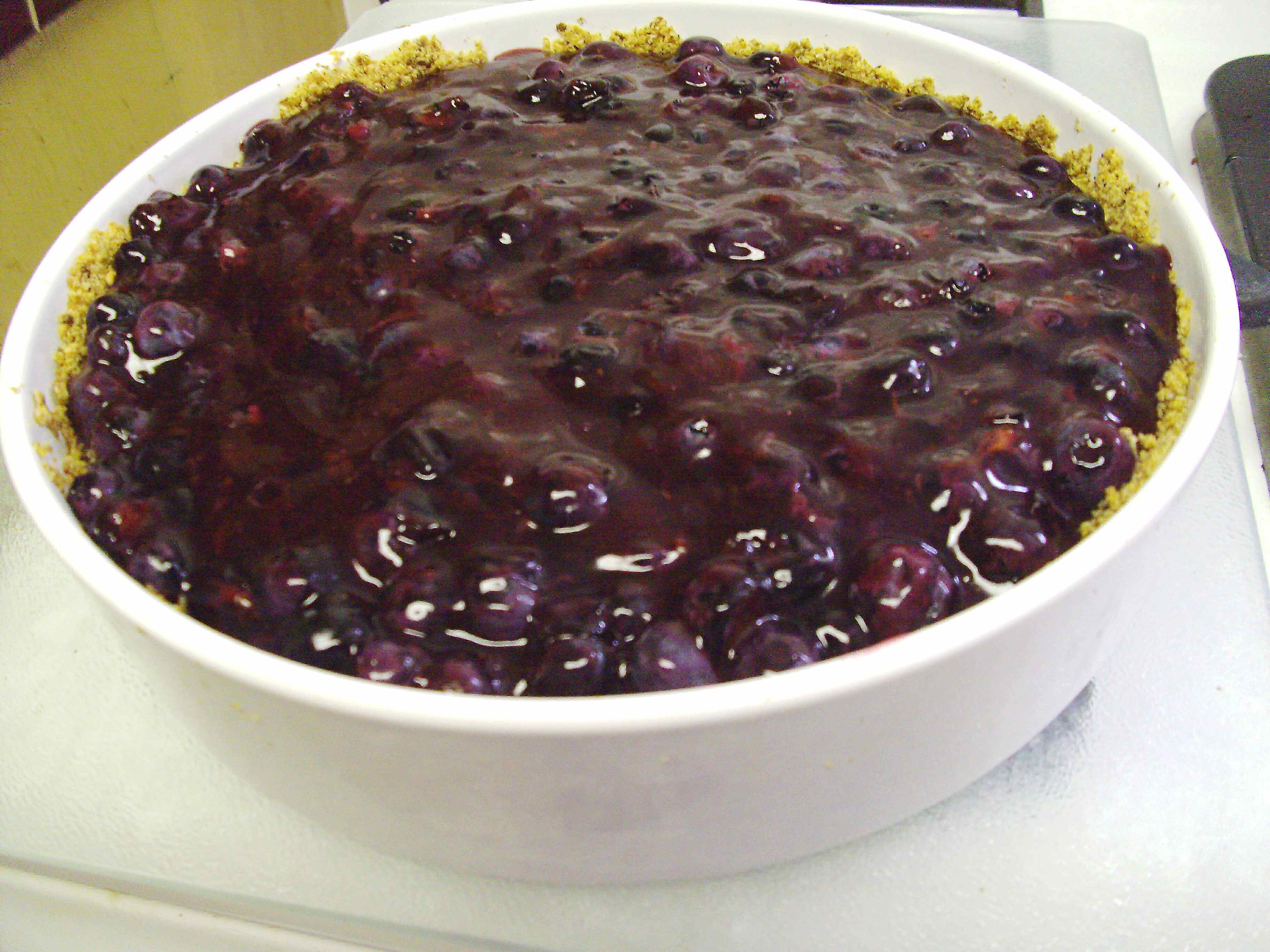
    raw blueberry pie with microwaveable filling and graham cracker crust

    This mostly-raw blueberry pie is a snap to make and very versatile--the filling microwaves in a few minutes, and you don't even have to bake the zippy gingered graham cracker crust--perfect for a hot Fourth of July and all summer long.

  • Recent Posts

  • Contents

  • Archives

  • Now Reading

  • See also my Book Reviews

  • Copyright 2008-2024Slow Food Fast. All writing and images on this blog unless otherwise attributed or set in quotes are the sole property of Slow Food Fast. Please contact DebbieN via the comments form for permissions before reprinting or reproducing any of the material on this blog.

  • ADS AND AFFILIATE LINKS

  • I may post affiliate links to books and movies that I personally review and recommend. Currently I favor Alibris and Vroman's, our terrific and venerable (now past the century mark!) independent bookstore in Pasadena. Or go to your local library--and make sure to support them with actual donations, not just overdue fines (ahem!), because your state probably has cut their budget and hours. Again.

  • In keeping with the disclaimer below, I DO NOT endorse, profit from, or recommend any medications, health treatments, commercial diet plans, supplements or any other such products.

  • DISCLAIMER

  • SlowFoodFast sometimes addresses general public health topics related to nutrition, heart disease, blood pressure, and diabetes. Because this is a blog with a personal point of view, my health and food politics entries often include my opinions on the trends I see, and I try to be as blatant as possible about that. None of these articles should be construed as specific medical advice for an individual case. I do try to keep to findings from well-vetted research sources and large, well-controlled studies, and I try not to sensationalize the science (though if they actually come up with a real cure for Type I diabetes in the next couple of years, I'm gonna be dancing in the streets with a hat that would put Carmen Miranda to shame. Consider yourself warned).

Artichoke-olive spanakopita for a party crowd

Artichoke and olive spanakopita tastes authentic even though it's completely nondairy. The party round is pretty quick to put together, too.

Artichoke and olive spanakopita tastes authentic,  even though it’s completely nondairy by request–which makes it a good vegan choice too. And it’s easy to put together.

Last night we went to a big New Year’s Eve party–a rarity for us; we’re usually with family one coast or the other. Of course, getting to go to a party means rushing around the house a few hours ahead to find an outfit that fits, is clean, looks about right, doesn’t require very high heels or an engineering degree to figure out how to put it on. Luckily most of our friends are low-key that way.

The party was potluck–the hosts provided a couple of solid main dishes and we and the other guests brought the side dishes and accoutrements. A pretty good division of labor, I think. So I offered to bring spanakopita, which is pretty easy. Or at least, I figured out an easier way last week to get the spinach squeezed out than by doing three pounds of spinach handful by painful handful, and it was pretty good for the Chanukah party, so why not do it again?

But our hosts’ family, all five of them, have a cluster of serious food allergies–primarily eggs and dairy, but a couple of other odd ones like cinnamon as well, and not all of the allergies match up from person to person. It’s a testament to their bravery and sociability (which I admire and wish I had greater stores of) that they throw big parties and let other people bring food.

I decided to do spanakopita anyway and just leave out the dairy–butter isn’t a big deal if you have olive oil for the fillo leaves, and I don’t make it with eggs in the filling. So far, so good. But what should I substitute for the feta? Feta’s usually a big part of the show.

Tofu might have been easy, and it’s a protein source, but one of the kids can’t do soy, and it doesn’t really taste right. Nuts–don’t know. Nondairy cheese substitutes–I haven’t tasted these myself and they have so many ingredients plus loads of salt that it wasn’t worth chancing without consulting the family.

My best options to add to the spinach came down to:

1. Greek olives, pitted and chopped–right on the saltiness, but maybe odd-looking. No one else I know has ever paired up spinach filling with olives.

2. Cooked and drained mushrooms–I would do this, but my daughter confesses she doesn’t like them when I make spinach quiche. And she does like my spanakopita. So…

3. Marinated artichoke hearts–they have a little saltiness, but mostly lemon and garlic, which is just about right. And artichoke hearts pair pretty nicely with spinach and are a familiar enough combination that most people will probably be okay with them. You just have to remember to drain them well so they don’t make everything soggy.

I thought I’d go with the artichoke hearts alone, but after tasting the spinach and artichoke heart filling, adding more lemon and garlic (because you can never have enough) and herbs and scallions, I decided what the heck and threw in a handful of Alfonso olives I had in the fridge–12 big purple, winy olives, pitted and slivered, did not look weird after all and they gave just enough distinctive tang and salt for the big salad bowl worth of filling to satisfy without overpowering it.

I figure, when you try something new or off-beat with a substitution, you have to test-taste to know if it’s worth doing again or recommending to anyone else. Maybe no one will agree with you, or maybe they will, but if you don’t like the result to start with, you’ll feel bad serving it up. Or maybe you’re made of tougher stuff than I am and it depends on who you’re serving it to and what have they done for you lately?

So anyway, if you can’t have feta or other dairy, this is definitely a good way to go. The olives and marinated artichoke hearts are authentically Greek enough not to taste or feel like fakey or second-rate substitutions. The spanakopita ended up tasting pretty good, and got eaten up amid some serious competition.

Also, I’ve decided this is also a good time for a slideshow. For a while now I’ve been meaning to do a step-by-step post on setting up a round tray of spanakopita or baklava, because I think it’s simpler and quicker than a plain rectangular casserole, and it looks more impressive and party-ready too. So I took some pictures as I went along (note to self: wipe olive oil thumbprints off camera grip), Continue reading

Celebration Update: “Mashup” Does Not Mean “More Potatoes”

Two or three Thanksgivings ago I railed (as I often do) at the lack of imaginative and good-looking (both aesthetically and nutritionally)  vegetarian offerings for Thanksgiving main dishes. I wasn’t having a whole lot of luck being impressed by what I saw in the newsstand food glam magazines, vegetarian and vegan cookbooks, food blogs, my local newspaper food section, or even the freezer section of my local Whole Foods. So I came up with a list of suggestions for vegetarian centerpiece dishes.

This year, we had the double-double challenge: Thanksgiving fell on the first day (though only the second evening) of Chanukah for the first time in over 100 years (1860s was the last time?) and won’t again for another 77,000 or so (well, some sources say there’ll be another Thanksgivukkah moment in about another 100 years and then the big schlep out to 77K. Either way, for most of us, this is “that moment”).

For me, mashing up Thanksgiving and Chanukah just this once gives us some ideas for rethinking the kneejerk popular way of celebrating the big important holidays in general. Maybe even exploring what’s so vital about holidays and family and clearing away some of the thoughtless excesses.

Chanukah came so early this year that we had nearly no chance at buying or making tons of presents before having to schlep ourselves up the I5 to my in-laws’, so none of us was expecting anything but silly socks, a paperback or so, and maybe a stop in Solvang for Danish marzipan-based sweets on the way back home. That’s all to the good–Chanukah was never really meant to be a “more presents all the time” kind of holiday, it’s about freedom of religion, freedom from outside oppression, and gratitude for the miracle of having enough resources to go around. Thanksgiving is about those things too.

Unlike most years, I didn’t find a two-page checklist that Martin Luther would be jealous of, listing all the acceptable giftees our daughter wanted, posted on the fridge. Partly that’s because we wouldn’t be home to see it, and partly because she already had her bat mitzvah in June and she’s old enough now to feel like it’s more than plenty in the way of gifts. Plus by now she knows me–I have a strong tendency to roll my eyes and cross most of the stuff off the list with the familiar yearly litany of:

“Library…library…library…library…not wearable at school or synagogue, so what’s left, the mirror?…we have an unusually skilled cat and I don’t really want to think about hamsters in that context, do you?…library…library…not until you practice piano…I know I promised you could get your ears pierced eventually…maybe next month…”

It’s just a matter of practice. And a willingness to channel Sylvia (one of my favorite cartoon characters,  by the great Nicole Hollander).

Anyway, I have no idea if any of my ideas the last time I riffed on vegetarian centerpiece dishes gave someone else ideas–I hope so–but recently I ran across a vegan cookbook with dishes that look like they’d be just right for a celebration. It’s too late to recommend for Thanksgiving or Chanukah, but maybe for Christmas and onward? Continue reading

Stuffed onions in a hurry

Stuffed onions ready for steaming in the microwave

With a microwave and a frying pan, you can make stuffed vegetables like Mehshi Basal quickly, and they taste even better than with long roasting. These are just rolled and ready for a few minutes of steaming in the microwave.

Just after Rosh Hashanah I posted my first-ever attempt at an elaborate Syrian Jewish dish of sweet-and-sour stuffed eggplants with quince, and because I had more stuffing than I needed, I went for seconds with Aromas of Aleppo on the spot and tried out the Mehshi Basal, or stuffed onions with tamarind sauce, which was actually even better. It was easier to put together and I was patting myself on the back when we tasted the results.

Still, given that I was using a lentil stuffing in place of ground beef, I was a little dismayed at how long the traditional braising and roasting took to cook the onions all the way through–an hour and a half at least, and that was after stuffing them. A second attempt in November, this time exclusively with stuffed onions for a congregation brunch, did no better on time, and I came away thinking that roasting was an extremely inefficient way to cook these–might even have toughened them inadvertently.

Why, you have to ask, should I make such a big deal about stuffed onions–they’re a party trick, after all, not standard cooking. But we discovered we really liked them, and they’re a pretty good kind of party trick. They were a surprise hit at the brunch. If I hadn’t snuck myself one while setting up in the kitchen, I’d have missed out altogether.

Actually, I think they fascinated everyone as much for the magic trick as for the flavor. People who’d never tasted them before kept coming up to me–and even my daughter–to ask, “How do you get the filling into the onions???”

If they hadn’t been so time-consuming I could have made double the amount and they’d still have disappeared. Or I could throw them together easily just for us on the odd weeknight as a treat–but one with some iron and fiber in it–instead of the standard pasta or rice.

So in the time since, I’ve finally rethought the process and come up with something that requires no oven time and cuts the actual cooking after stuffing them down to about 20 minutes or so–as long as you already have some cooked lentils (microwaved to perfection in about 10 minutes of cooking time and 30-4o minutes of standing time) and tamarind sauce (or “mock tamarind” sauce, a 5-minute microwave-assisted blend of prunes and/or apricots with water and some lemon juice, plus-or-minus tomato paste, applesauce and other flourishes you don’t really need for this) to hand.

I know, you probably don’t have these things sitting around. But this recipe might change your mind. Lentils are good stuff even on their own, and the stuffing here is a knockout.

Even genuine tamarind sauce isn’t so bad anymore, assuming you don’t or can’t just buy a prepared concentrate. I’ve sped the process up from an hour-plus to a few minutes just by nuking it, pulsing in a food processor, and this time, neither filtering it quite so aggressively as I did back in September NOR bothering to boil the stuff down to a sticky residue. It’s so much less painful, and I think it even tastes better, with more of the fruit character left in. See my notes at the end of the post for how to do it the quickie way (in modest jam-jar quantities, not quarts).

Anyway, back to the stuffed onions. I’m actually proud of myself for this one, and I’ve tried it three times in a row so I can vouch for it–the last time, I put my daughter to work stuffing the onion layers, and she did a great job.

For this method all you need are a microwave oven, a frying pan and a food processor. Instead of boiling the onions for 20 minutes to separate the layers, you microwave them in a drizzle of water for 5. Instead of braising the stuffed Continue reading

Microwave tricks: Seitan without Simmering

My sisters-in-law from Oakland were planning a visit to us this summer now that we actually have a house and can host them. It fell through, but the prospect got me thinking about vegan food and what we might serve them. They’re both good cooks, but they eat a lot of commercially-prepared vegan meat substitutes along with their own fresh vegetables and grains and baked goods.

I’m not great on packaged foods in general, and unfortunately, vegan proteins other than plain fresh tofu and dried beans look an awful lot like vegetarian versions of Oscar Meyer sliced bologna and turkey loaf to me. Not just the appearance, but the cost per serving (really high–something like 4-6 bucks for a chic little package that serves two, ostensibly) and the salt (also really high–600 mg and up per serving). And the ingredients lists are always long and kind of mysterious-sounding, either in a surprisingly chemical way or in a Japanese-ingredient-names-as-authenticity way. Not that I’m not working to figure out exactly what kombu and dulse and Job’s tears are. Two seaweeds and a resin? I think, anyway.

There’s also a lot of yeast extract in some of these processed vegan proteins–sounds like between that and the salt, what they really did was dump in Vegemite or Marmite. Bleagh (my husband’s sister is kind of an Anglophile, but that doesn’t excuse either version to me).

On the other hand, some of the vegan cookbooks out now have do-it-yourself recipes for seitan, and so do Ellen’s Kitchen and FatFree Vegan Kitchen.

Seitan is basically wheat gluten dough cooked in stock. If you do it yourself at home, it may take an hour to simmer but really isn’t very expensive compared with the commercially prepared versions. A 5-lb bag of flour at about $2-3 or a few ounces out of a 22-oz bag of vital wheat gluten (about $6-8, depending where you buy it, and worth it for getting 100% gluten out of the bag and not having to wash the starches out of the dough since it’s already done for you) produces something like a pound or two of seitan at a go. That’s enough for a larger meal, maybe even for that elusive home-made vegetarian centerpiece dish

Why is this worth doing if you don’t eat vegan and aren’t actually having vegan guests in the house after all? (and now that I’ve schlepped the last of the moving boxes out of the living room, I’m really wondering).

I think back to my favorite Chinese restaurant back east, the Hunan Manor in Columbia, MD. Every time we fly back east we try to make a stop there.

One of the things that makes the Hunan Manor great is their willingness to experiment and invent. They serve a wide variety of vegetarian versions of standard banquet dishes using “vegetarian chicken”–basically seitan cut and fried as for meat. These dishes complement their masterful use of tofu with textures from nearly silken to deep-fried to pressed and diced for the vegetarian jao tse, which I’ve always thought looked better and probably tasted better than the pork-based meatball filling our nonkosher friends would get (though they raved about them, and I’ll take their word for it).

The last time we came east, the restaurant had added several new dishes using a different form of seitan with very finely layered rolls that were cut in bite sized pieces, coated and fried–a pretty close simulation for the layered flesh of chicken. It was really delicious in their orange “chicken” with perfectly cooked bright green broccoli. It was unexpectedly unsalty as well, so I don’t know whether they made it in-house or had bought the prepared seitan in an unflavored form.

Either way, the dish was a great argument for using seitan creatively, and I don’t think my sisters-in-law, competent cooks though they are, have eaten any seitan dishes that good using anything from a little Gardein package.

So I decided I’d like to try my hand at seitan at home and see if I can’t come up with something flavorful, chewy, satisfying and nutritious, without having it scream salt. After all, once you’ve got the finished loaf or pieces, you’re Continue reading

Chickpea Crepes: Protein Inside-Out

Ever since Thanksgiving I’ve been thinking about the challenge of coming up with a proper vegetarian centerpiece for major celebrations–one with a single, unified dish cut up to share, something with protein, not just vegetables or grains, something with great complex flavor and no artificial ingredients.

This is apparently a tall order. For months now I’ve scoured vegetarian and vegan cookbooks in hopes of some serious suggestions and come up nearly blank. Perhaps it’s because most vegetarian cooking in America is based on southeast Asian vegetarian cuisines, which don’t emphasize centerpiece or “main” dishes as much as assortments of several smaller ones, none of which necessarily take the lead. Or because a lot of the nondairy, non-egg vegetarian cooking consists of beans, rice, tofu, seitan and vegetables–not a bad thing, but not usually pretty or convincing as a centerpiece and occasionally incomplete on protein or complex flavor (there’s an awful lot of salt or soy sauce in some of these cookbooks). The few centerpiece dishes with a meatloaf-style filling wrapped in puff pastry or phyllo or potatoes seem to include premade seitan (high in salt) and/or things like mushrooms or eggplant or spinach and nuts with a fair amount of starch for binder, which means you’re repeating starches between the filling and the wrapper and not providing much protein.

One solution might be to put the protein, or at least some of it, in the wrapper itself, so the filling can be flavorful vegetables and so on but not have to come up to the concentrated protein level of meat.

Chickpea flour crêpes are one such possibility, and they’re very easy to make. A bit stronger in flavor than ones made with wheat flour, they hold together well in the frying pan and come out thin, springy and wrappable without the need for eggs. They also take well to a Continue reading