
• Enter your email address to subscribe to this blog and receive notifications of new posts by email.

    Join 241 other subscribers
  • Noshing on

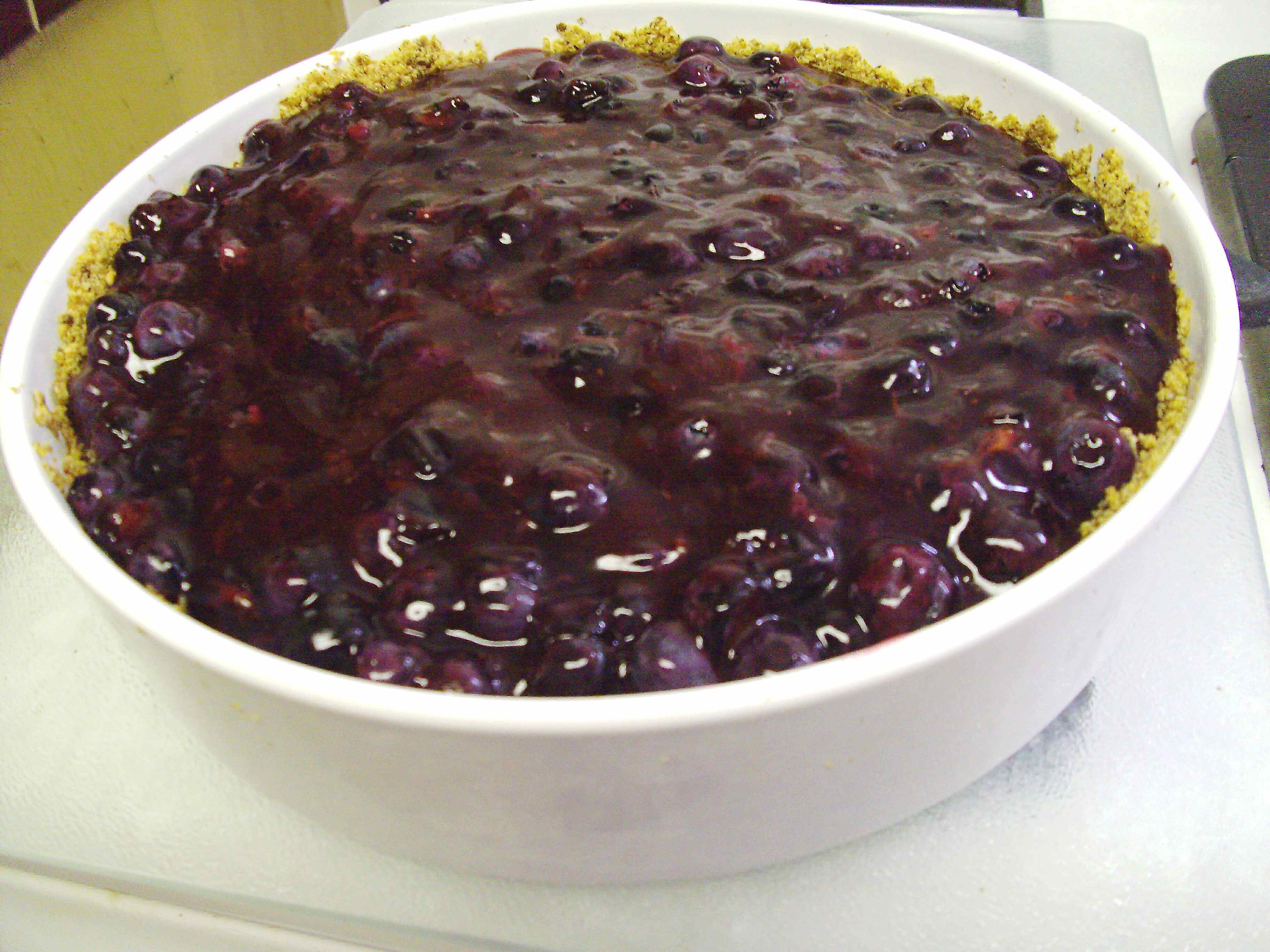
    raw blueberry pie with microwaveable filling and graham cracker crust

    This mostly-raw blueberry pie is a snap to make and very versatile--the filling microwaves in a few minutes, and you don't even have to bake the zippy gingered graham cracker crust--perfect for a hot Fourth of July and all summer long.

  • Recent Posts

  • Contents

  • Archives

  • Now Reading

  • See also my Book Reviews

  • Copyright 2008-2024Slow Food Fast. All writing and images on this blog unless otherwise attributed or set in quotes are the sole property of Slow Food Fast. Please contact DebbieN via the comments form for permissions before reprinting or reproducing any of the material on this blog.

  • ADS AND AFFILIATE LINKS

  • I may post affiliate links to books and movies that I personally review and recommend. Currently I favor Alibris and Vroman's, our terrific and venerable (now past the century mark!) independent bookstore in Pasadena. Or go to your local library--and make sure to support them with actual donations, not just overdue fines (ahem!), because your state probably has cut their budget and hours. Again.

  • In keeping with the disclaimer below, I DO NOT endorse, profit from, or recommend any medications, health treatments, commercial diet plans, supplements or any other such products.

  • DISCLAIMER

  • SlowFoodFast sometimes addresses general public health topics related to nutrition, heart disease, blood pressure, and diabetes. Because this is a blog with a personal point of view, my health and food politics entries often include my opinions on the trends I see, and I try to be as blatant as possible about that. None of these articles should be construed as specific medical advice for an individual case. I do try to keep to findings from well-vetted research sources and large, well-controlled studies, and I try not to sensationalize the science (though if they actually come up with a real cure for Type I diabetes in the next couple of years, I'm gonna be dancing in the streets with a hat that would put Carmen Miranda to shame. Consider yourself warned).

Spice Mix Rx

Sunset magazine surprised me this month with a big feature on complex spice mixtures that have found their way into big-name restaurant food in the past few years–panch phoran, garam masala, baharat, za’atar, ras el hanout, quatre épices, Chinese 5-spice and berbere. Sunset tends to focus on California and southwestern US travel, home decor and food styles, so it was good to see something a little more world beat and exciting…right up until I started looking at the recipes.

The opening spread showed glossy pictures of the various whole spices included in generic versions of each mixture, but the author then blithely left all of these spice mixes and their proportions out of the recipe section!

Her reasoning, if I have it right, was that these spice mixes are getting popular enough that you can find them all premade at your local supermarket. Well…not in mine. And I live in an area with a lot of Indian, Arab, Armenian and Chinese neighbors–the only ones I’m missing are French. You can get Chinese 5-spice powder next to the double shelf of soy sauces, and you can usually get a jar of unsalted generic curry powder (which Indians don’t use but North Africans occasionally do) or some Colonel Sharwood’s and Patak’s curry pastes, and occasionally some garam masala in a jar. Who knows how close they are to real, but they’re highly salted and in jars or packets, so not exactly fresh-made.

Online commenters at the Sunset web site say that the recipes the spices are supposed to be used for are good…if you can find the spice mixes in your area, which many of them can’t. Which is why I’ve done yet another longish post…I’ve decided to dig around and post general recipes for most of the spice mixes myself. Some I’ve tried personally, but most I haven’t made at home, yet, so I’ve tried to find reliable and knowledgeable cookbook authors and where I can I crosscheck with another appropriate author’s recipes–these days it’s so easy for restaurant chefs to publish recipes they can barely pronounce and claim expertise without ever having traveled to India or Morocco or Turkey, or only the tourist routes, much less lived in a village and learned to cook a traditional cuisine for any length of time.

My local favorite family-owned Armenian greengrocer’s caters to most of the Silk Road cuisines, from Morocco to Turkmenistan and even further east. The store carries a couple of brands of premixed za’atar and its own (unfortunately salted) curry powder as well as shawarma and seven spice blends, but for me the great value is that it offers bulk pricing–loads cheaper than supermarket spices–for all the whole and ground individual spices in the mixtures that the October Sunset article mentioned. And the informality of buying spices in tubs rather than little jars encourages you to use them more often, experiment a bit, and improve on what you find in all the new Turkish, Middle Eastern, Indian and Moroccan cookbooks that have come out in the past few years.

Storing spices

Freshness counts even with dried spices. One thing I really appreciate about my corner grocer is that their tubs of spices are labeled with packing dates so you know how fresh the spices are–very important especially for preground spices. I heartily wish McCormick’s and all the store brands (Kroger, Inter-American, etc.) would do the same.

From my own experience, coriander seed and green cardamom in particular should both be left whole and ground as needed at home, preferably just before using them. Both seem to lose their oomph in ground form a lot quicker than cumin or caraway or fennel, at least in my kitchen. Perhaps it’s just that Pasadena is so dry most of the year, but ground coriander can go lifeless and flavorless in a matter of a week or less here, its delicate volatile oils evaporate so quickly, and what a waste.

If you’re going to make your own blends, cloves and allspice are also better left whole, assuming you can get them at a good price, and so is nutmeg–get a ~ $4 lemon zester to grate it with and keep it in a bag with your whole nutmegs. Then just watch your knuckles.

Powdered cinnamon and ginger are usually fine for a longer time, but of course they will weaken a bit. Always, always use whole black peppercorns, not the preground rubber-flavored stuff. And hot pepper flakes? I never realized how much flavor they lose over time–not just heat but the aromatic green edge as well, so don’t buy them in huge cafeteria-scale quantities (live and learn from my mistaken enthusiasm over a $3 quart-sized container…) or your hot mixtures and salsas will be disappointingly bland.

Even some whole spices are vulnerable to flavor loss–or rancidity. Nigella seed, which tends to get used only in small pinches because its flavor expands and permeates stews and curries as they rest overnight in the fridge, should definitely be stored double-wrapped in the freezer so it doesn’t lose all its taste before you can use it up. Poppy and sesame seeds should always be stored well-sealed in the freezer–so should most raw nuts, and so should washed fresh herbs if you can’t use them up within a few days.

Anyway, here are some tested versions of the spice mixes mentioned in the Sunset article. All of them are adapted from their source cookbooks (i.e., the proportions and ingredients are the same, but with my comments, mostly in italics).

The first two are from Manju Malhi’s India with Passion: Modern Regional Home Food, which includes directions on how to use these mixtures and in what approximate amounts for a dish of 4 servings.

Panch Phoran (adapted from Manju Malhi)

Bengali 5-spice mix; good for lentil, bean or potato dishes, samosas, etc.

Malhi’s recipe says this makes 7 teaspoons of spice mix. I’m not sure how she counts that, given that there’s a total of 5 teaspoons of individual dry whole spices in the recipe. However, she says 1 teaspoon of the mix is enough to use in a recipe for 4 servings, and the whole or ground spices can be mixed to a wet paste with 2 teaspoons of water, vinegar or yogurt per teaspoon of spice mix, then tempered in hot oil or ghee (clarified butter) before adding the other ingredients in the dish.

1 t. each (or if more, then even proportions of all five spices):

  • fenugreek seeds
  • cumin seeds
  • fennel seeds
  • brown mustard seeds
  • nigella seeds

Mix the seeds together and store in an airtight container in a dark place for up to 6 months.

Alternate version: Raghavan Iyer’s 660 Curries specifies two parts fennel seed per one part each of the other spices. Continue reading

Prunes and Lentils III: The Lentil Variations

Today’s (and last week’s, and the week before’s) topic is STILL the lentils-and-prunes challenge.

Before I get on a roll about lentils, I should mention that the first Prunes and Lentils post was my 101st post for this blog. I don’t know if we should celebrate, but why not. Woo-hoo! Good enough. Consider it celebrated.

It’s taken me a full two weeks to put up this post because this is where the rubber meets the road, or at least where the lentils meet the prunes. The moment of courage. And I don’t know whether it’s going to be great or whether people will go back to wondering why anyone ever let me in a kitchen. (That’s easy: because no one wanted to do the cooking  themselves.)

Ordinary brownish-green lentils are kind of a workhorse ingredient in European, Mediterranean and Near East cooking (also in Indian and African cooking, though red lentils are better known). Unlike restaurant chain buffalo wings, lentils are actually rich in protein and iron, and they aren’t surreptitiously pumped up with sugar, salt and fat to entice you to overeat. The Center for Science in the Public Interest is not likely to sue, because a bag of lentils doesn’t come with a deceptive toy to con the kids. (See? we can be topical and up on the hot news of the moment even while discussing an arcane Slow Food subject like lentils).

And lentils are CHEAP–the whole point of starting this Prunes and Lentils challenge in the first place. Somehow even the big supermarkets that push shoppers to the middle aisles to buy boxes instead of actual food always carry dried store-brand lentils over near the bags of rice and split peas and kidney beans and such. It’s one of the few middle-aisle purchases that are worth it.

I don’t know if lentils have even kept up with inflation over the past 20 or 30 years, because they’re always something like $1-$1.25 for a one-pound bag. Same as when I was a student on a $20 a week food budget. And a pound makes 5-10 meals, not just one serving.

Actually, the recent agroeconomics of growing lentils in the US makes unexpectedly interesting behind-the-scenes reading for policy wonks like me. Lots of people are now clamoring for the US to change the crop subsidy laws to encourage more nutritious crops than corn, soy and wheat. Lentils are still a minor crop, but apparently the USDA introduced new marketing loans and other incentives for lentils, peas and chickpeas under the Farm Act revisions of 2002 and 2008, and exports for pulses have risen by about 45% in the last few years to India, Spain, the Philippines, and other major lentil and chickpea consumers. The rest are bought for animal feed and international food aid programs, especially those for sub-Saharan African nations.

That’s because lentils still fly under the radar here. The average annual consumption in the US is still just about a pound per person. Up from 0.8 pounds in 2008, so a 20 percent jump, but still. One pound per person in a year. If my continuation of the Prunes and Lentils Challenge posts has no other benefit to humankind, I would hope that it inspires you to buy and cook–and eat–at least one additional pound per year in a creative and satisfying way. Pass it on–Two pounds per year? At a cost of $2-3 total? We can but dream…

Of course, now that bean cuisine has become a point of pride for Meatless Mondays and other trends in eating green (if not eating local), lentils don’t just come dry in bags or bulk anymore–not glamorous enough, perhaps? If you’re upscale, you can get them precooked in little cans at your Whole Foods or steamed in vacuum packs at your Trader Joe’s, but those chic packages are much, much more expensive per meal and don’t taste as good. I frankly wouldn’t bother unless you’re on the road or camping or something and don’t have a kitchen at your disposal. Dried lentils don’t need a presoak to cook up within about half an hour even on the stove top, and they’re so easy to cook in a microwave (and avoid the watched-pot-never-boils problem) that the extra expense and time trying to find the precooked ones is usually not worth it. (And what about all that extra plastic and metal packaging? Be righteous–buy ’em dry.)

If you cook up a whole pound bag at once, you can use it throughout the week or (better, for a lot of people) freeze half of it with a bit of cooking liquid in a microwave container and save yourself some time the next time you want a batch. I keep thinking of that old “Cook Once, Eat Twice–That’s Italian!” lasagna ad (can’t remember if it was for noodles or sauce) from the 1970s. It’s a bit old-fashioned, but still a good idea for  when you’re too tired to cook for real.

In this post, I’ve got 3 or 4 main “strategic” ideas for the prunes and lentils challenge, along with more recipes and variations than should really go in a single post (and THREE more prune accompaniments as well), so just roll your eyes, bear with me, and if you decide never to let me in your kitchen, I’ll understand (plus I’ll never have to do the dishes–win/win!).

So first things first–gotta cook that bag of lentils (and recycle the bag). This recipe is probably longer than the actual process but it contains valuable Continue reading