

• Enter your email address to subscribe to this blog and receive notifications of new posts by email.

    Join 241 other subscribers
  • Noshing on

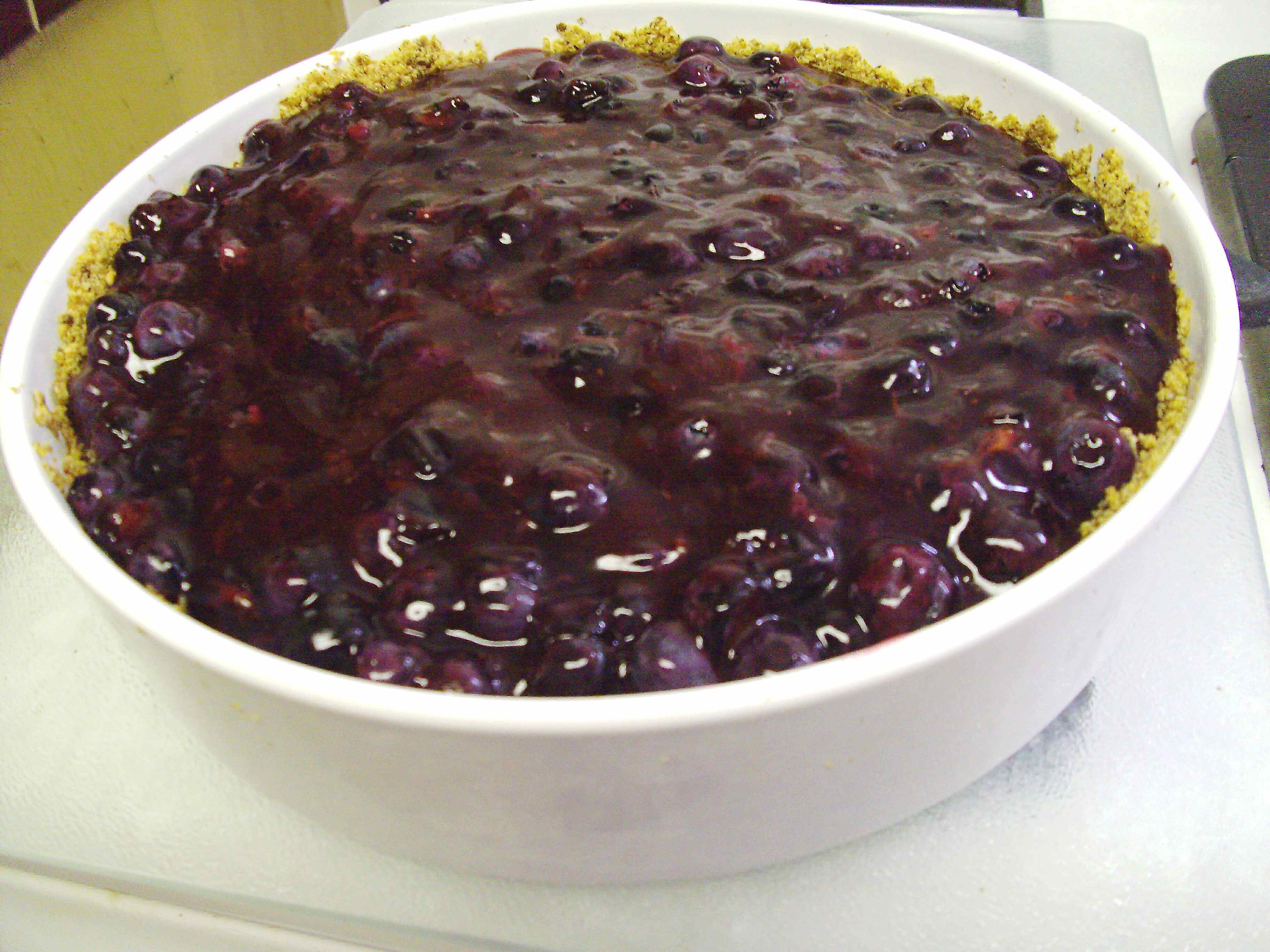
    raw blueberry pie with microwaveable filling and graham cracker crust

    This mostly-raw blueberry pie is a snap to make and very versatile--the filling microwaves in a few minutes, and you don't even have to bake the zippy gingered graham cracker crust--perfect for a hot Fourth of July and all summer long.

  • Recent Posts

  • Contents

  • Archives

  • Now Reading

  • See also my Book Reviews

  • Copyright 2008-2024Slow Food Fast. All writing and images on this blog unless otherwise attributed or set in quotes are the sole property of Slow Food Fast. Please contact DebbieN via the comments form for permissions before reprinting or reproducing any of the material on this blog.

  • ADS AND AFFILIATE LINKS

  • I may post affiliate links to books and movies that I personally review and recommend. Currently I favor Alibris and Vroman's, our terrific and venerable (now past the century mark!) independent bookstore in Pasadena. Or go to your local library--and make sure to support them with actual donations, not just overdue fines (ahem!), because your state probably has cut their budget and hours. Again.

  • In keeping with the disclaimer below, I DO NOT endorse, profit from, or recommend any medications, health treatments, commercial diet plans, supplements or any other such products.

  • DISCLAIMER

  • SlowFoodFast sometimes addresses general public health topics related to nutrition, heart disease, blood pressure, and diabetes. Because this is a blog with a personal point of view, my health and food politics entries often include my opinions on the trends I see, and I try to be as blatant as possible about that. None of these articles should be construed as specific medical advice for an individual case. I do try to keep to findings from well-vetted research sources and large, well-controlled studies, and I try not to sensationalize the science (though if they actually come up with a real cure for Type I diabetes in the next couple of years, I'm gonna be dancing in the streets with a hat that would put Carmen Miranda to shame. Consider yourself warned).

Not Stone Soup

Stone Soup Foodworks of Ottawa

Stone Soup Foodworks of Ottawa, which also uses the slogan "Slow Food. Fast"--what can you do?

If you’ve come to Slow Food Fast looking for the little green Ottawa soup truck, I have bad news and good–I’m not them. (Don’t know whether that’s good or bad, but I’m in Los Angeles, so it’d be a bit of a schlep.)

The good news is that I have found the link to Stone Soup Foodworks for the lost and hungry Canadians among you and it looks pretty good. Like David Ansel of The Soup Peddler in Austin, Texas, Stone Soup’s Jacqueline Jolliffe is getting on a roll with “soupscriptions” as well as on-the-spot takeout soups, salads, etc. made of real ingredients, mostly local and organic.

Why soup? Because soup made from real ingredients, not packets and cans, is more than most people want to tackle at home, I think. Good soup, as both Ansel and Jolliffe say, takes time to develop. And especially in winter, a cup of real soup at lunch helps you push aside the irritations of the day for awhile.

Both Ansel and Jolliffe are doing something entirely different from what I do here on Slow Food Fast–they cook complex and difficult soups in large batches and sell them to subscribing and loyal customers who only have to pay for takeout by the cup or heat up a delivered quart of soup to have something good. That’s their idea of “slow food, fast.”

My idea of slow food fast is to cook a week’s worth, say perhaps 8-10 servings’ worth, of decent, inexpensive, from-scratch vegetable or bean  soup in as little time as possible, preferably in less than 20 minutes all told, with as much help as a microwave oven can reasonably give (which turns out to be a surprising amount, so why not) and without relying on salt to build flavor. And I want it to taste good.

Mostly, I want you to be able to do that yourself at home without feeling like it’s too much work or time and too many steps to cook and eat fresh real food–particularly fresh, inexpensive bulk vegetables–on a regular basis.

If you like to cook slow (say, on the weekend), you can do the artisanal thing at the stovetop for an hour or two. But if you want to get done in a hurry without having to babysit your pots and pans, microwaving is a pretty good, mostly safe, and comparatively very energy-efficient way to go, if you play to its strengths. You can let the flavors develop overnight in the refrigerator (and they generally will) instead of cooking and cooking and cooking just to get to the point where the vegetables are cooked through and then cooking some more to get the flavors to meld.

Case in point: Jolliffe makes a Thai butternut squash soup for Stone Soup Foodworks that looks delicious on the newsroom interview–but she has to cook her onion base down for 40 minutes, and either roasts the butternut squash for an hour in a conventional oven or–this is what she did on camera–buys sacks of precooked and puréed organic winter squash from a local farm. Granted you can do that–in the US, we’d probably just open a can of packed pumpkin, which you can now get organic fairly cheaply in most places, especially after last year’s shortages at Libby’s.
butternut squash ready to microwave

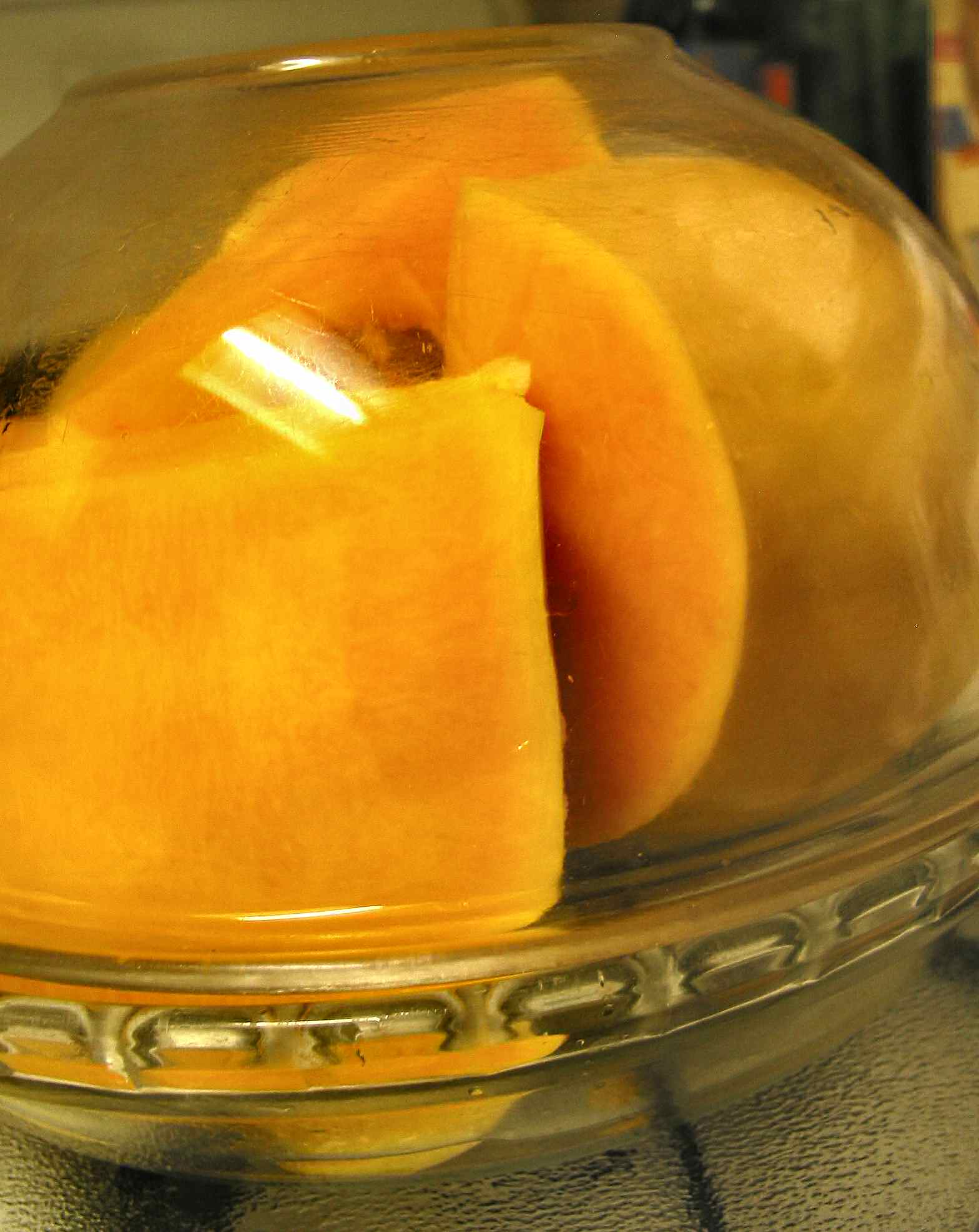
butternut squash ready to microwave

I guess the decision rests on her storage accommodations for the soup truck. But if she were to use a microwave, she could cook a fresh butternut squash–a big one–in about 10-12 minutes and then decide whether to purée or chunk the flesh for her soups, maybe pan-roast Continue reading

Cooking (and other important) Resolutions

(Of course)–I couldn’t leave 2010 on such a bitter note as the one in my last post, even though I think bitterness is a good, energizing, creative thing. Or as the great Eric Burdon once–or actually, quite any number of times–told an interviewer about his ordeal with getting paid for House of the Rising Sun, “I’m not bi’eh. I’m bi’ehsweet.” I have a thing for Burdon’s early stuff–voice like a hammer, great blues timing, pure nerve with a sense of humor, and clearly, a good appetite.

So I wish you all a Happy New Year, good eating, good cooking, good reading and good company, and thank everyone who’s visited and especially those who have taken the time to subscribe to Slow Food Fast. For myself, I’ve come up with about 11 new resolutions for 2011 (but as usual for me, it may will definitely run longer, since I’m terrible about following directions, even my own, whether cooking or resolving):

1. Learn the Dirty Dozen a little better and plan the weekly budget (see #3) to include buying these vegetables and fruits organic only. (I’ve got celery, potatoes, pears and strawberries down so far, but I know there’s gotta be at least 8 more, right?) Find places to buy them cheaper than Whole Foods.

1a. Learn to garden? Umm. Learn to schnorr backyard fruit from friends? More likely, ain’t it? Ok, ok, make more friends, schnorr backyard fruit and veg. And rosemary, which some people grow as a hedge here in Pasadena. Envy, envy, envy–turn it to a good purpose and offer to take some of the excess off their hands.

1b. Exercise basic civility towards other people’s food choices–your eat local is my eat kosher is his eat organic is her eat affordably. Everyone’s got different priorities, and you don’t know who is eating a particular way because they feel like it and who really needs to so they don’t end up in the hospital. Food shouldn’t be too huge a source of personal arguments. I mean, really, people, save some energy for the real issue–dark or milk chocolate?

2. Get the weekly food budget back down under $100 a week (holidays take it outta me). Make a list and (I cannot believe I’m saying this) check it twice. With a calculator. Include toilet paper and napkins and so on.

3. Use all the vegetables I buy sometime in the same week I buy them. This goes triple for any herbs. No brown broccoli (not usually a big problem in my house, actually) or rubbery carrots (didn’t mean to confess that). And NO cilantro or fresh dill left until it turns slimy while I dither over what to use it in… when in doubt, make soup (see #4), or with herbs, wash and freeze in baggies.

4. Make one big batch of soup each week (see #3 if necessary for motivation) and eat it.

5. Make one pound of beans each week and eat it in fabulously creative ways, or at least edible ones. Eat them as a substitute for, not addition to, fish or meat at least one dinner per week.

6. I’m stumped. Maybe I should make each of the previous resolutions count twice? Naaah. Put on some blues and think again.

The real #6: Eat vegetables at breakfast, Israeli-style.

7. Wash fewer dishes–make my kid do them! (oh, yeah, I’m rollin’ now!)

8. Reduce my dependence on oil–starting by using cocoa powder instead of a full-cocoa-butter chocolate fix…damn those holiday gift boxes. Hate See’s, hate it with a passion (unfortunately, not really)…

9. In the same vein–cut down to half-caf this week, decaf in two or three weeks. Start today. Too much hoppin’ around after midnight (or maybe just too much listening to Eric Burdon on YouTube–wait. Is there such a thing as too much, at least of his early stuff?).

10. Shop my neighborhood greengrocer’s first instead of the big box market. Buy and try a small amount of one new Silk Road ingredient each month (red pepper paste? knoug resin? green almonds? sea buckthorn nectar?)

11. Get a few new implements as long as they have a real multifarious use and a small kitchen footprint: stick blender? I hear it calling my name. Pasta machine? not so much–the box instructions say not to immerse in water. How are you supposed to wash it then? (see #7)

12. Make bread at home again.

13. Revamp a classic every so often, preferably with the intelligent use of a microwave to help speed things up where it will actually help. Like choux paste (at least for heating the liquid ingredients before adding the flour and eggs–that’s actually been done before, and not by me) or pretty-good fake-smoked whitefish salad (which is mine, see the end of this post). Continue reading

Turkey breast with ta’am

I’m not a big fan of cooking meat–never really had a great knack for it, and the lack of easy access to kosher butchers and fresh, unfrozen meat for most of my working life has made it easier to move to dairy, vegetarian, and fish dishes as my mainstays. Out here in Pasadena, my Trader Joe’s carries reasonably priced kosher chicken, turkey, and occasionally beef. But in recent years, the Post, Iowa slaughterhouses that supplied the west coast kosher markets were treating both their cattle and their workers so badly before they were shut down that I just stopped buying meat altogether for a while.

In the past two months, though, I’ve tried to get back to cooking chicken once in a while–Trader Joe’s started carrying Empire poultry again, and my daughter and husband have been clamoring for it. But once you lose the habit of cooking meat, it’s hard to go back.

For one thing, chicken and turkey are so dense compared with fish and dairy. Doesn’t really matter how many or how few pieces you have, it still takes the better part of an hour to cook all the way through–something I’d forgotten about. Even microwaving doesn’t seem to help much. Contrast that with a fish fillet or steak in 15 minutes or less, an omelet in 5 minutes, filled pasta in 10. No wonder I don’t gravitate towards chicken now that I have a kid.

Still. I had a nice-looking half of a turkey breast, recent vintage (i.e., purchased a week or so before and stuck in the freezer, rather than one that had been buried in the freezer for 4 years unused and unloved. My personal record for this year: an abandoned rock cornish game hen from 2001!)

I knew from sore experience that it would take more than a day in the fridge to thaw properly, so this time I started 2 days ahead, and it seemed to go better from there. I also figured out enough time–at least 2 hours just in case, on a day when I wouldn’t end up frustrated and furious.

But turkey–I’ve never eaten turkey that was actively good. Well, not the white meat, anyway. Ta’am (“taste” in Yiddish and Hebrew), my grandmother’s first criterion for whether food was worth eating, is something I never really associated with turkey breast, and probably for good reason. A duty rather than a pleasure, and I always think it would have been better if it were chicken. What to do?

Then I thought about the way I often cook fish–brown an onion in oil, sear the fish on both sides, then microwave covered until the middle is just barely cooked through and still moist. The microwave didn’t seem like a good idea in this case because of the dense meat and my extreme impatience, but it’s pretty classic restaurant technique to brown poultry and then stick it in a hot oven to finish. Would it work for me? Continue reading

Cutting the salt in Indian cuisine

India with Passion by Manju Malhi

Last week I got a Chanukah package in the mail from my sister. In it was India with Passion: Modern Regional Home Food by Manju Malhi, a British food writer with a popular UK cooking show, Simply Indian, on home-style cooking. One of my sister’s food-savvy friends had tried out the recipes and raved about it.

Indian food is becoming more popular in America and non-Indians like me are finally getting to taste a broader variety of regional cuisines (though I’ve yet to get down to Artesia, the “Little India” section of west LA, and really dig in). But learning to cook these dishes at home is another matter.

Yamuna Devi, Maddhur Jaffrey, and Julie Sahni were the first major Indian cookbook authors in the U.S. But their classic books and most of the ones published since then don’t give you a way to make sense of the laundry lists of spices given for each recipe. They give a rote answer as to why Indian cooks don’t use the standard yellow jar of generic curry powder that the supermarkets stock, but there’s no serious discussion on the balance of flavorings and how to vary it within a meal for any one particular regional cuisine. And perhaps there really is no great way to explain it. You really have to read through the book and see how the spices  and proportions change from one dish to another–something most Western readers aren’t used to noticing.

If I had my wish, I’d want general notes like “red lentil dal is better with twice as much cumin as coriander seed and a fair amount of both–we’re talking teaspoons to a tablespoon for 6 portions–but palak paneer should have much less of both–half-teaspoons– in equal amounts and include cardamom–preferably the black smoky kind–as the signature ingredient.” I want to know why you have onions cooked down to a paste in one dish but no garlic, and in another use fennel instead of cumin. What’s essential and what can I leave out if I don’t have it in the house? How can I vary the dish with the vegetables or beans that I have on hand at the moment and still have it come out tasting good? And what’s authentic and what’s modern?

A crop of recent cookbooks published in the US and UK attempt to deal with these problems a little more systematically–sometimes more for recent Indian emigrés and students than for the larger non-Indian community. Monica Bhide has simplified the spice lists in her recipes–sometimes to the point where you wonder if the food bears any resemblance to the original. Suvir Saran, lauded by Mark Bittman and the first Indian restaurant chef to join the American name-brand-chef pantheon, has also simplified ingredients lists and incorporated some American ingredients–like ketchup–with reasonable reasons (ketchup’s origins lie in British-controlled India of a century or so ago). And cooking teacher Raghavan Iyer has just come out this year with a big, bright paperback tome, 660 Curries, which logically ought to be more than you could or would want to cook in a couple of years.

One new trend is an attempt to make Indian food heart-healthier by cutting down on saturated fats,  substituting unsaturated vegetable oil for ghee and tofu for paneer cheese. What they haven’t yet done, and probably should, is cut back the salt as well. (So should everybody else, of course.)

Nearly every Indian cookbook I’ve ever seen uses screamingly high salt–rarely less than a teaspoon for a dish that serves 4-6, often a tablespoon or even more. Continue reading

Lentil Stew with…Pineapple?

Fresh pineapples are just coming on the market at a good price this week or so–$2 or $3 apiece. Meanwhile, tomatoes are…well, let’s say they’re not at their finest in December. So, some added incentive for trying something new.

Pineapple is the last thing that belongs in anything subtle or savory–or is it? Hawaiian pizza is practically a classic by now, despite the culinary clash of a pineapple-ham topping on the one hand and garlicky tomato sauce, mozzarella and oregano on the other. Of course, that (and all other glazed pineapple/pork product classics) seems more brash than subtle.

Given the usual culinary partners–ham, chicken, cottage cheese, spam and more spam–you’d think the rule for making pineapple work in something savory would be that the other main item has to be pretty salty to stand up to all that acidic tropical sweetness. But that’s not the only way to deal with it. Good thing too, since ham, ham, spam and ham are off my grocery list. (So’s spam.)

This curried lentil and vegetable stew, which I’ve based on a dish from my much-missed Lebanese former-restaurant-turned-lunch-spot, takes advantage of pineapple’s tang while mellowing out its jarring sweetness. It took me a couple of tries to achieve the taste I remembered from the restaurant, but I think this version works pretty well, even though it contains no salt at all.

Depending on the sweetness of your pineapple, you may need more or less to balance the flavors. The pineapple should be a subtle but surprising bite among the other vegetables and the rich lentil base. Don’t be afraid to tinker with the (rather loose) amounts of the various ingredients and taste as you go.

Curried Lentil Stew with Pineapple

  • 3-4 c. fully cooked green/brown lentils or half a pound dry (see step 1)
  • 1 T. curry powder
  • 1/2 t. ground cumin
  • 1/2 t. ground coriander seed if you have it
  • 1/2 t. brown mustard seeds if you have them
  • 2 medium onions, chopped
  • 1-2 medium tomatoes if you have them
  • juice of a lemon–plus another half to adjust taste as needed
  • 2  large or one really fat clove garlic, minced/mashed/grated
  • 2-3 half-inch rounds of fresh unsweetened pineapple in smallish chunks
  • 2-3 big carrots, peeled and chopped
  • 2-3 stalks celery, chopped
  • a good glug of dry red wine, cheap but decent, about 1/4 c.
  • olive oil

1. To cook the lentils in case you haven’t, wash and pick over half a pound of green/brown lentils and put them in a big pyrex bowl (2.5 qt/l) with enough water to cover by 2 inches. Put a microwaveable lid or dinner plate on top and microwave on HIGH for 7-8 minutes. Let sit in the closed oven another 20-30 minutes to soak up, add more water if there’s less than an inch above the lentils, then microwave again for another 7-8 minutes. Wait another 10-15 minutes and test for doneness. The lentils should be soft.

2. Meanwhile, sauté one of the onions with the spices in a little olive oil for a few minutes, add the chopped tomato and half the garlic and cook a few minutes, adding a drizzle of water if it starts to dry out.

3. When the lentils are done, pour them in with some of the cooking water, stir up, heat, and add the lemon juice and the pineapple. Cook a few more minutes until it starts to thicken.

3. Put the cooked lentils back into the pyrex bowl, add the remaining vegetables and the rest of the garlic, a little water, maybe a little more lemon juice, the wine, and a drizzle of olive oil. Cover at least partway (maybe with a small gap to let alcohol from the wine boil off) and microwave 5 minutes more or until the vegetables are tender.

Microwave tricks: Pasta You Don’t Have to Babysit

Mark Bittman’s post-Thanksgiving look into the brave new world of absorption pasta and Pete Wells’s “Cooking with Dexter” piece in the New York Times yesterday on the virtues of a pot of boiling water have me thinking hard about why neither of them has even tried the microwaves that must be sitting on their counters. Especially Wells, who has not one but two very young and active children to watch out for.

You can cook standard dried or frozen pasta very well in a microwave, with only a few minutes of actual cooking time and almost no need to stay close by. You can cook rice too–and we’re not talking Minute Rice, either. Basmati rice, the queen of difficult rices, cooks perfectly in a microwave.

The setup for microwaving tortelloni

The setup for microwaving tortelloni and other filled pasta

I started cooking pasta in a microwave when my daughter was a toddler. She was pretty active and I couldn’t leave a pot boiling away on the stove to go and chase her–either the pasta or I would have boiled over. By the same token, I had nightmares of her getting over the baby gate and into the kitchen as she got bigger and more impatient. My mother-in-law still has extensive scars from having a boiling pot tip over on her when she was a child, and it’s one of the reasons I decided to try microwaving pasta instead. Even though my daughter is now kitchen-savvy, it worked so well I’ve never been tempted to go back. Continue reading

Yogurt in the microwave

Back in the early 1970s, when yogurt first started to become popular in the U.S. but wasn’t yet widely available in supermarkets, manufacturers like Salton started selling home yogurt machines that would run overnight with a temperature-controlled water bath and six or so individual-sized covered containers. Those machines are hard to find today but you don’t really need them to make your own yogurt.

You can make very good yogurt in the microwave without any special equipment, and it’s very easy. But although a few older, less fashionable shared recipe sources on the web still mention it, none of the current slow food mavens ever seem to go this route. I’m not sure why–microwaving works beautifully.

Traditional instructions have you heat up the milk to something under a boil and let it cool to just a little hotter than lukewarm–measured either by thermometer at about 118 degrees F, or by testing with a finger before you can stir in the yogurt. That takes a fair amount of time on the stove top, and you have to stand there and stir or risk scorching the bottom of the pan (which you have to scrub).  It’s probably a half hour of preparation just to get it going. Then you have to  insulate or keep it heating very slightly for 6-12 hours. The most common insulation schemes from the new-slow-food crowd involve all-night ovens kept at 100 degrees F, towels or blankets wrapped around the yogurt pot, hot water jugs surrounding multiple small yogurt pots in a beer chest, crockpots, and other hard-to-believe and hard-to-clean setups.

Just reading about it all–the jumble-sale setups, the 24-step “guides”, the incredible number of pots and things that need washing before, during and after–makes you want to run to the store and buy a tub of ready-made.

Microwaving is a much easier and dare I say better method. It requires a grand total of a microwave oven, a large pyrex bowl, a pyrex or ceramic pie or dinner plate, and a spoon. The milk heats in just a few minutes with no need for stirring and doesn’t scorch at all. Once you stir in the cultures, you let the yogurt sit covered in the microwave with the power off and the door shut. The oven’s a very good insulator, especially in combination with the pyrex bowl and lid. You already have it on your counter–no need to dig weird items out of closets or the garage. The yogurt stays warm for hours with no cockeyed, jury-rigged insulation schemes, and the washing up is, unsurprisingly, simple.

Unlike most microwaving, this is still a slow business–as in, overnight–because it’s the real thing. No matter how you set it up, it takes between 6 and 12 hours for a couple of quarts of warm-to-hot milk with a few spoonfuls of yogurt stirred in to sit and culture undisturbed in the microwave, minding their own business, before the new batch of yogurt is ready to eat.

So it’s not fast, per se, but it’s a perfect thing to set up after supper and revisit the next morning. When you open the microwave door at the end, you can jiggle the bowl gently and see that the milk has set as yogurt. Continue reading

Dolmas by microwave

When we first moved to Pasadena 10 years ago, one of my favorite places for Sunday dinners out was Pita! Pita!, a family-run Lebanese restaurant in the “Old Town” section of the city. One of the reasons I loved it was the usual reason to love middle eastern food: the mostly vegetarian mezze were wonderful, and the main dishes were knockouts. Long-cooked lamb, roast chicken, fish grilled or under tehina sauce, vegetable stews with a surprising bite of pineapple in them. Even though I couldn’t eat the meat dishes, I could certainly appreciate them by smell. Everything was modestly priced and generous along with it.

The other reason I loved it was that the family that ran it had made their restaurant the kind of place families went for an old-country kind of Sunday dinner with all the uncles and aunts. Pita! Pita! was housed in one of a row of narrow spaces along Fair Oaks, converted from what I think was once a schoolhouse. The narrowness didn’t stop them from putting a couple of large old-fashioned dining room tables in with the smaller ones for couples. They treated their customers like family, you could sit and eat at a leisurely pace and converse, and we never came away anything less than happy. And certainly never hungry.

Which is why I still miss the place. The family ended up realizing they couldn’t make a go of it without charging astronomical prices or wearing themselves out and decided instead to run a smaller, cafeteria-style lunch spot with fewer and simpler dishes on the main business street. And I can’t blame them at all. The food they serve now–more mezze and fast grilled items–is still as good, but the long-cooked family-style dishes and the leisurely Sunday nights I’ll keep having to miss.

I grew up with hummus, tehina, felafel and tabbouleh, which are Israeli standards too and popular among Jews in the U.S. My mother made them from the dried mixes and cans of prepared tehina when they finally became available in our supermarket. In Israel I learned to make them from scratch, but one thing I didn’t know how to make was stuffed grape leaves or dolmas. My sister had married someone who did and on one weekend visit she showed me the ropes.

I love dolmas but they are not quick to make, not at all. We rolled a loooooottt of grape leaves that afternoon (her husband had bought the econo-jar at a local Arab market), and stuck them tight in a pot, plated down so they didn’t float and unwind, and boiled them with lemon and olive oil for more than an hour. They were wonderful but you would never want to do it on a regular basis!

In the spirit of “what can you cook in a microwave instead of the regular way,” I have gone back and made dolmas at home–in a microwave. It works! You can cook them in a few minutes rather than an hour-plus of boiling and having to top up the water so nothing scorches, and they come out beautifully.

Unfortunately, the microwave, miracle machine though it be, will not help at all with the rolling, which is the hard part. The best I can do is say that microwaving lets you do a few at a time if you feel like it–say, 10-20 dolmas, not 50-100. What you do with the rest of the grape leaves in the econojar is up to you.

Grape leaves come brined in rolls of 20 or so, either a single roll in a skinny jar (Krinos) or a big pickle-jar with four rolls (Cortas, other brands). When you buy them, inspect the rolls and make sure there are no little fluorescent green or yellow spots on them–you’ll know if you see them; capers also get this sometimes. I’m not sure if it’s harmful or not, but I stay away from it. I’d keep the other rolls in the brine in the fridge and make sure to use them up within a month, or else take the rolls and freeze them in ziplock sandwich bags with the air squeezed out–and use them within a couple of months so they don’t get freezer burn.

Dolmas in the Microwave

  • Roll of brined grape leaves ~ 20-30
  • 1 c raw rice (not “minute rice” or parboiled) or bulgur (cracked wheat or tabbouleh grain, plain)
  • 1 med/big ripe tomato
  • 1/4 onion or 1-2 scallions
  • 1 T dill (a few good sprigs fresh is best if you have fresh)
  • several sprigs or small handful fresh curly parsley
  • juice of 1/2 lemon
  • olive oil and the other half lemon for cooking

1. Partially or almost-completely cook the rice or tabbouleh in the microwave: put it in a pyrex bowl or microwaveable container, cover with ~1/2-3/4 inch of water, microwave covered on HIGH for ~2-2.5 minutes, let sit and absorb the water several minutes until nearly done, drain excess moisture.

2. While the grain is cooking, rinse off the roll of grape leaves and then soak them in a big Pyrex bowl to get rid of some of the salt. Change the water once. [Note: traditional recipes say soak the grape leaves an hour in cold water. Some others say pour boiling water over them and let them soak. If you want to split the difference in a microwaveable way, you could rinse them, put them in the Pyrex bowl with water to cover, nuke 2-3 minutes on HIGH and then change the water.]

3. Blend the tomato, onion or scallion, herbs and lemon juice in a food processor and mix with the drained rice or bulgur–include the tomato juice. Let cool enough to handle.

4. Stuff the grape leaves–this is the hard part. Take a stack of grape leaves and drain them on a plate. Cut off the stems carefully without tearing the leaves. Lay out one leaf vein-side up and stem end toward you. Put a spoonful of the filling–not more–on the leaf right above where the stem joint was. Roll the leaf over it–tightly but carefully so you don’t tear–and tuck the side leaves over it halfway through, then keep rolling away from you. Place each stuffed grape leaf, flap edge down, in a tight layer in a  microwaveable container or dish.

5. When you’re done rolling (nothing says you have to do the whole thing in one go if you get sick of it after 10 or you just want 10, just put the leftover filling and the grape leaves in the fridge) pour a little water carefully over the layer of grape leaf rolls. Maybe a quarter-inch of water. Squeeze the other half lemon over the whole thing, and drizzle a little olive oil over it– maybe a couple of tablespoons worth. Cover the dish or container and microwave on high 2-3 minutes for 10, maybe 3-4 minutes for 20+. Check one for doneness–careful, it’ll be pretty hot–you want the leaves tender and the grain cooked through. Maybe go another minute if you need to.

Let them cool and chill in the fridge. Serve with tzatziki, raita, tehina, or other yogurt-based dip.