
• Enter your email address to subscribe to this blog and receive notifications of new posts by email.

    Join 241 other subscribers
  • Noshing on

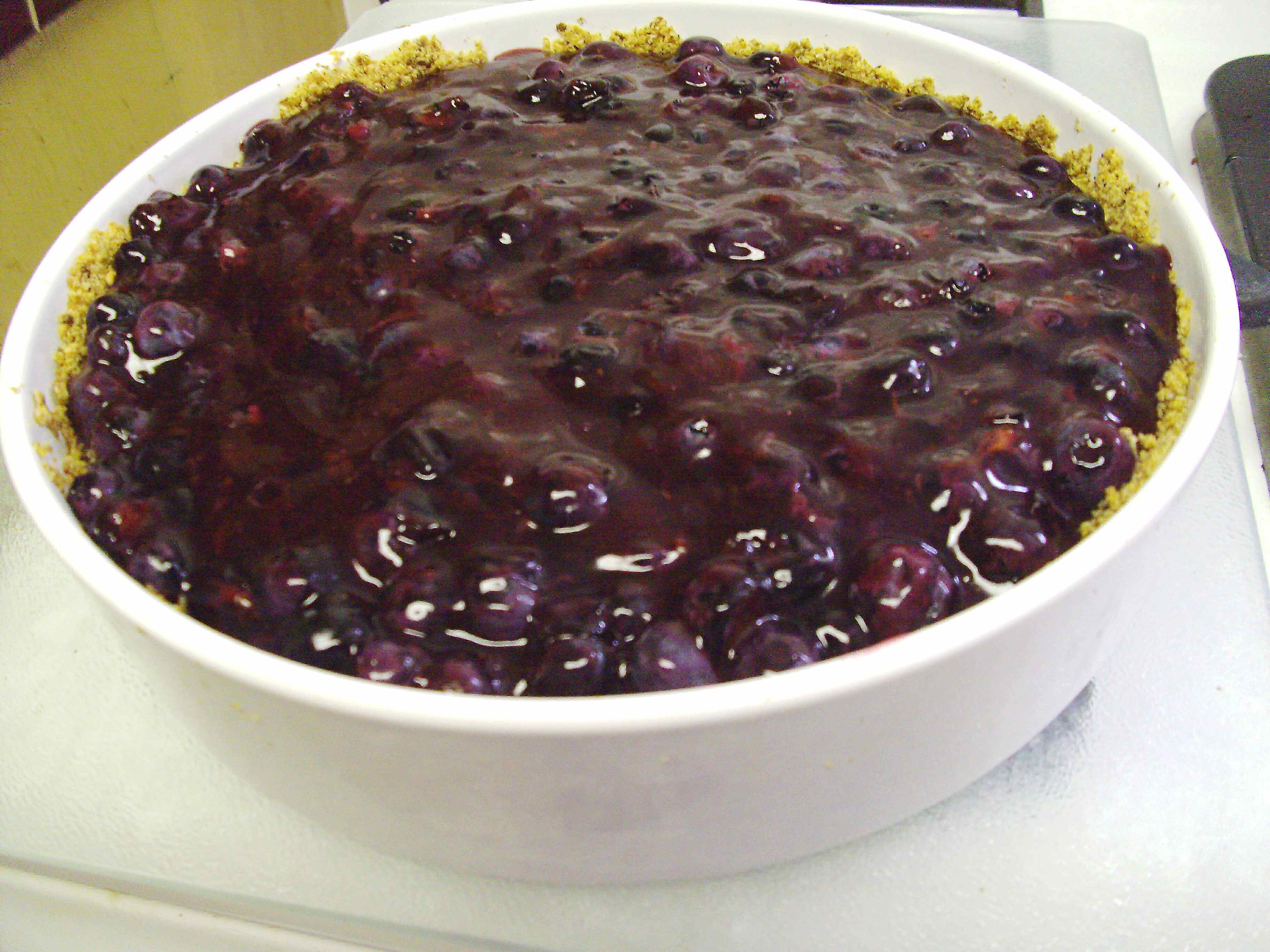
    raw blueberry pie with microwaveable filling and graham cracker crust

    This mostly-raw blueberry pie is a snap to make and very versatile--the filling microwaves in a few minutes, and you don't even have to bake the zippy gingered graham cracker crust--perfect for a hot Fourth of July and all summer long.

  • Recent Posts

  • Contents

  • Archives

  • Now Reading

  • See also my Book Reviews

  • Copyright 2008-2024Slow Food Fast. All writing and images on this blog unless otherwise attributed or set in quotes are the sole property of Slow Food Fast. Please contact DebbieN via the comments form for permissions before reprinting or reproducing any of the material on this blog.

  • ADS AND AFFILIATE LINKS

  • I may post affiliate links to books and movies that I personally review and recommend. Currently I favor Alibris and Vroman's, our terrific and venerable (now past the century mark!) independent bookstore in Pasadena. Or go to your local library--and make sure to support them with actual donations, not just overdue fines (ahem!), because your state probably has cut their budget and hours. Again.

  • In keeping with the disclaimer below, I DO NOT endorse, profit from, or recommend any medications, health treatments, commercial diet plans, supplements or any other such products.

  • DISCLAIMER

  • SlowFoodFast sometimes addresses general public health topics related to nutrition, heart disease, blood pressure, and diabetes. Because this is a blog with a personal point of view, my health and food politics entries often include my opinions on the trends I see, and I try to be as blatant as possible about that. None of these articles should be construed as specific medical advice for an individual case. I do try to keep to findings from well-vetted research sources and large, well-controlled studies, and I try not to sensationalize the science (though if they actually come up with a real cure for Type I diabetes in the next couple of years, I'm gonna be dancing in the streets with a hat that would put Carmen Miranda to shame. Consider yourself warned).

Microwave Tricks: Passover Haste and Fresh Apple Sauce

(What? no pictures of apples? How could this be?!! Somehow I’ve never taken any during Passover–maybe Tuesday…)

I know, I know, it’s already Friday afternoon, Passover starts tomorrow night after sundown, and have I cleaned out my fridge? Have I found the all-important kosher-enough-for-me chocolate and kosher-enough-for-anyone cocoa powder? Um…no. I did just bake the remaining bowl of dough (why? why?) for dinner tonight and breakfast tomorrow. I kashered the oven afterward, if that’s any comfort. But really. I’ve been hating the idea of kashering for Passover this year more than usual, and that’s saying something. I hate it every year, especially the fridge. And all the boiling. And trying to remember which frying pan was going to be okay for dairy.

It’s just me and my husband this time, again, not even our daughter this year except by Zoom–and due to March Madness, she reports that the typical sports stupids on Syracuse’s campus have been partying maskless AGAIN, like it’s a big surprise that COVID is still around and still actually matters more than the coach’s son’s basketball talents. The distanced seder she was going to is not happening, or at least not for her. The lady in charge is sending her a Pesach kit so she can be a party of one at home–we’ll Zoom with her a couple of hours before we start and so she doesn’t have to be starting at 10 at night to be with us. But oy.

Passover ideas on this site

So I’m obviously not feeling all that brilliant and I don’t have a lot of new great ideas other than the ones I always have, to make best use of a microwave where you can–mostly for fresh vegetables–and to keep the matzah modest and out where you can identify it easily as matzah, not all kinds of dubious baked “treats.” More plain fruit than baked goods–citrus if you still can. Keep the vegetables in the soup, whether chicken or not-chicken. And mostly, don’t forget not to grate raw daikon radish and pour on any vinegar if you can’t find horseradish. That is sage advice, there, the actual one thing I would not do again, ever, so please learn from our hilarious but horrifying experience a few years ago!

I plan to honor my ancestors, including my grandfather whose memoir of escaping the Pale of Settlement I’m re-editing right now, by not wasting food if I can help it and not whining too much for things there just aren’t. Keep it simple, make do, try to make sure other people have food. Keep walking. Improvise.

If you want or need some ideas for microwaveable Passover stuff, look either in the Recipes tab at the top of the page or use the search to find “Passover”. Or in my fabulous “Microwaveable Passover/not-chicken” post from a coupla years ago, which has a roster of links you may or may not enjoy–sort of like second prize in a matzah-crunching competition…

And one more

Meanwhile, one quick, cheap microwaveable idea for the day: microwave applesauce from scratch.

Let’s say you have a couple of apples. Big ones. Maybe with a couple of bruises. And they’ve been sitting in your fridge or in your fruit bowl or (if you’re old-fashioned enough) apple barrel long enough to need using. What can you do with them that doesn’t take more effort than it’s worth? Actually, this is a good time to be using them up instead of tossing them and going back to the store before you really have to.

If you’re not interested in eating them as-is, then at least peel them, core them and cut them up–slices for microwave apple toaster pastry or an apple omelet, dice for throwing into microwave oatmeal, or just whole but peeled for grating…

Grating? yes. I mean, you could get out the food processor if you want, or if you have a lot of apples to do. But if you have a flat or box grater and only one or two apples to use up, it’s probably faster to do it by hand and you don’t have to wash as many utensils afterward. This is what I did on my one night of latke-making during Chanukah this year, because we had no applesauce in the house and I wasn’t about to dash out and buy some. Plus the grater was still handy. It was a seriously nice surprise that it wasn’t a flop.

Microwave Applesauce

Apple(s), washed and peeled–that’s it. Unless you want lemon juice or cinnamon or something–I’d say add that after microwaving, though, because cinnamon contains a compound that’s slightly hyperreactive in the microwave, and depending what and how much stuff you’re adding it to can result in unexpected boilover.

Make the applesauce:

Set the grater in or over a bowl, preferably microwaveable, and grate each peeled apple just about down to the core on one side, give it a quarter-turn and grate it down again, turn and grate the remaining sides and throw away or compost the core. Once you have the gratings in the bowl, stick the pulp in the microwave for about 1.5-2 minutes per cup, just enough to get it cooked through, and voilà! You have fresh (though hot) applesauce and nothing but. Obviously, if your grating bowl’s not microwave-friendly, transfer the stuff to a snaplock or other container that is before you nuke.

Or you could go the other way, especially if you’re making more than 1 or 2 apples’ worth of sauce. Peel and this time core the apples, quarter them, nuke them in a lidded container with a drizzle of water for a few minutes until they’re cooked, then mash them by hand or whiz them in a food processor.

Happy Passover, chag same’ach, stay safe, wear a mask, wash your hands, don’t poke yourself in the eye especially if you’ve been handling horseradish, and eat nice.

Microwave Wild Rice Pilaf

Thursday was kind of rushed–we started the morning late and kept being slow until it was nearly 2:30 and time to Zoom our family. But I managed to get a few Thanksgiving-type things going in the microwave for dinner before that and even managed to post about them at an almost-civilized length instead of going off on more tangents than anyone really wants to read even under current conditions. Artichokes–no big deal. Cranberry sauce, even less. Wild rice, though.

Wild rice, rinsed and ready to add water and microwave. Not very friendly-looking, is it?

Any grain with a tough husk takes a longish time to cook conventionally on a stovetop compared with something like white rice or rolled oats. And wild rice is tough enough that the Trader Joe’s package directions strongly recommend soaking the stuff in a bowl of water in the fridge overnight before attempting to boil it. A good suggestion that would help for microwaving too–a fine suggestion, if only we had started with things the day before. Not all that helpful when you need it the same day.

Microwaving works for brown rice, another long-cook whole grain, so it should (and in fact did) work for wild rice too. But it’s not quite the brief one-step kind of technique it is for white basmati rice. More a “nuke a few minutes to a simmer, let it sit 10 or so minutes to absorb hot liquid, stir, nuke a few more minutes and go away again, stir and check…..” kind of thing, similar to the way I cook beans, chickpeas and lentils, but with fewer rounds of cooking. I don’t know, it didn’t seem like a nuisance to me because I was doing two or three other things while it sat (one of those was sipping champagne while noshing with my husband on a few decorator cheeses and nuts and chatting with my in-laws and my daughter over Zoom). So I wasn’t in an overwhelming rush.

And it came out pretty nicely, so I’m posting it now. I would in fact do this again, because it came out pretty much as well as the original with a lot less work.

When I was younger and well before I had a child (who is now old enough to cook with her housemates, and did), I would make this pilaf in an electric wok with a lid, frying the onions and mushrooms first with the herbs, then adding the wild rice and some pearl barley and broth, bringing it to a boil and turning it down to simmer with a lid for however long, checking once in a while and stirring in the fruits and nuts and adding a little broth or water as needed. Similar idea to the microwaving, but on a stove or any heat element, you need to stay a lot more present. Microwaving lets you go away–it can stop itself and sit for a while without things drying out and scorching.

Continue reading

No, I don’t know what I’m making for Thanksgiving either

–And it’s already after noon! So it’s going to have to be quick. I did manage to figure out a Zoom meeting for later with my family on both coasts–I have the odd feeling of joining the 21st century a beat or so late while they all roll their eyes, but still. They’re used to me being late to the table, and always last-minute. If you are too, I have some reasonable (and a few not-so-reasonable) microwaveable options below.

This year, we’ve watched the spectacle of the election and its many, many, many entertaining lawsuits attempt to distract us from the huge, unfortunately predictable third spike in pandemic numbers all across the nation, and we’re facing facts: our kid is not coming home until finals, our parents on both coasts are being cautious and hunkering down as are we. The upside–we’re not traveling for Thanksgiving, or being required to smile and praise anyone’s turkey or attempt the groaning board. The obvious downside is what the heck do you make when it’s just you?

It’s just me, my husband and the cat, plus all of our family expecting to hear from us remotely so we don’t all feel as isolated as we feel. Which means mostly that we’re going to have to figure out how to Zoom everyone and not get cranberry sauce stuck in the laptop keyboard. And, of course, not reveal the exact state of our livingroom if we can help it.

This is going to require reserves of stagecraft, because when you’re stuck home with your husband and the cat instead of getting to dress up, sip champagne and hug all the people you haven’t seen in a year, the last thing you really want to have to do, besides cook all day, is straighten the livingroom for company.

The most important things, the essential things about Thanksgiving that I actually look forward to have nothing to do with the menu and everything to do with the experience (once we’ve recovered from schlepping halfway up California anyhow).

First is the getting together with family and friends–we’re Zooming and calling today and tomorrow, best we can.

Second is the sense of celebration–but how do you do that for yourself at home? My favorite part of Thanksgiving at my in-laws’, who are great hosts and savvy party people, is the way they welcome everyone into the house mid-afternoon, a couple of hours before the late-afternoon dinner. They set out cheeses, crackers, olives and nuts, raw vegetables with dip, and glasses–and break open a bottle of champagne for toasting. Sparkling apple juice for the kids, if they’re not already running through the house to the backyard for games.

I do have a frozen kosher turkey breast somewhere at the back of the freezer, but for just us, without our daughter home, it’s going to be microwave-assisted pan-grilled salmon, which I admit is kind of prosaic but still, after much testing, clearly the best indoor way to make it.

On the other hand, having fish rather than meat allows me to think, I can haz cheese platter? (the cat approves).

We never really do appetizers or cheese boards just for ourselves at home; that would probably be a good way to feel like it’s at least slightly partyish and worth celebrating something. Get out a nice bottle of wine and some glasses–I think I actually have a decent under-$20 bottle of Piper Sonoma champagne somewhere in the wilds, good enough for toasting, even though I still usually prefer reds and still whites.

Actually, if you’re home alone or with just your immediate family, that’s probably going to be a better way to make it feel like Thanksgiving than all the huge big-cooking thing. And put some sunshine on the plate too–good green (and/or purple) salads, a bowl of tangerines and apples that people can snag, something fresh.

In any case, if you’re really stuck for ideas, check out my mostly-microwaveable Slow Food Fast Thanksgiving Guide.

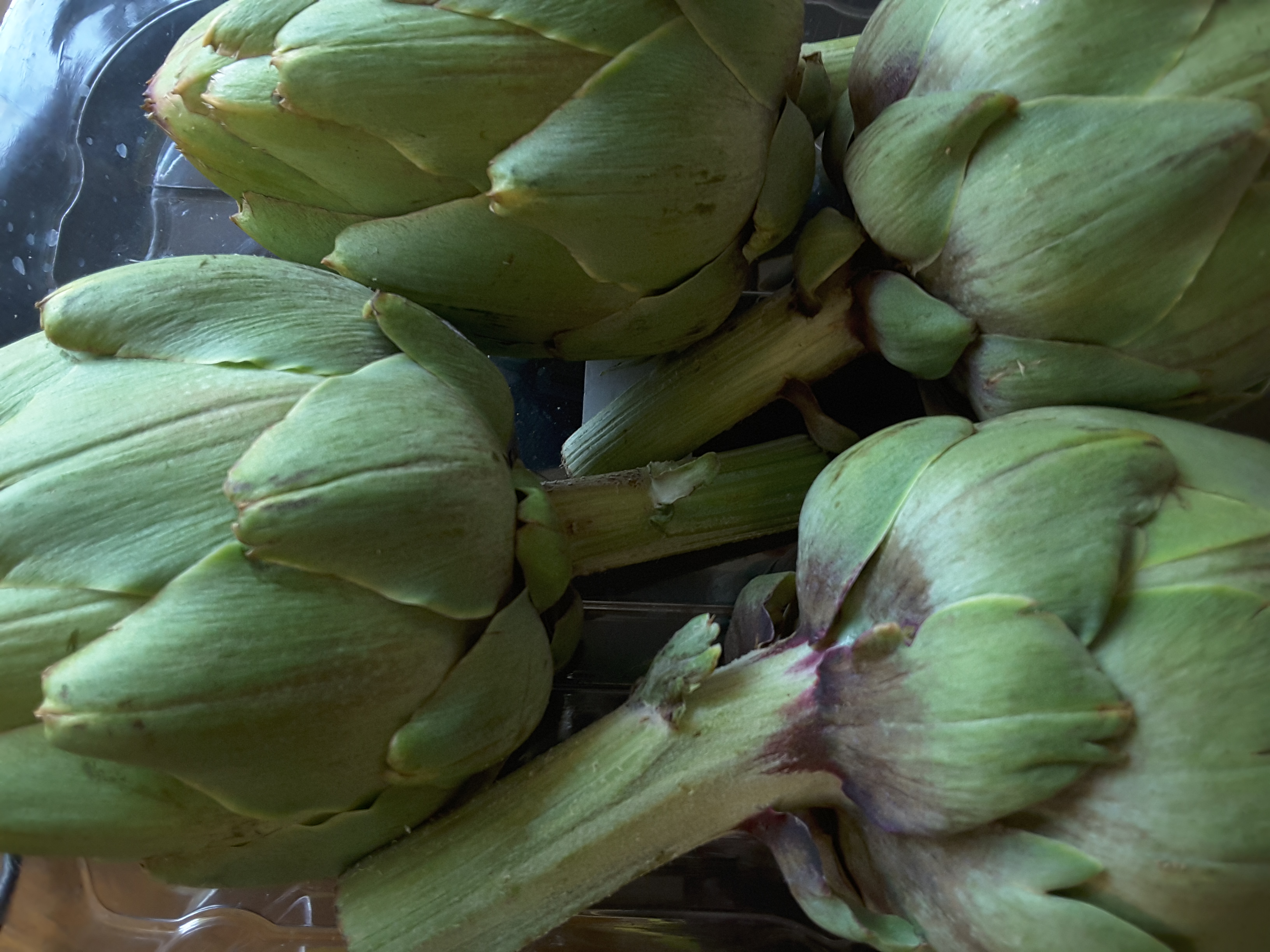
And I’d like to add two more mostly-microwaveable items to that list, because for just us, I’ve decided to snag a box of globe artichokes at my local Trader Joe’s and also a bag of wild rice for a pilaf with some chopped apple, onion, mushrooms and pecans or walnuts, and raisins or other dried fruit.

Artichokes I’ve already steamed successfully in the microwave in years past, but I don’t think I’ve ever posted the method here. It’s pretty straightforward and similar to my usual method for steaming broccoli or brussels sprouts or other cruciferous greens, just a few minutes longer per pound because they’re whole, they’re tough, and they contain less of their own water.

The wild rice I’m trying in a microwave for the first time–going by my brown rice experiments, I’m going to hot-soak it for a bit to crack the outer husks, then microwave it in earnest for a few minutes at a time, letting it sit and soak up the hot water for a while undisturbed before stirring and testing and deciding if it needs more time. Hopefully it won’t get mushy. It’s already after 1 pm so I’m going to break off with just this and then go microwave some cranberries, wash a few glasses, clean off the table (got to look better than it really is), and get dressed for company, at least sort of–I have a family to Zoom!

A toast to all of you–Happy Thanksgiving, make sure to give to your local food bank and homeless shelter this season, because even small amounts help, and may we all have a safe and better year.

Whole Artichokes in the Microwave

  1. Trim the thorny, tough outer leaves and the stems off a couple of large or a bowlful of baby whole artichokes. Open the centers carefully–there may still be a few thorns inside–and use a spoon to scoop out and discard all the dandelion-like fuzz and trim off any thorns at the top of the soft inner “heart” leaves.
  2. Squeeze some lemon juice on and inside, plop the artichokes in a microwaveable container with about 1/4-1/2 inch (~1 cm.) of water in the bottom, add the lemon half if it’s washed and organic, or just squeeze a little more juice into the water. Put on a lid and microwave on HIGH for about 7 minutes, then let sit a few minutes. 
  3. Test for doneness by pulling off one base leaf (should come away very easily) and/or poking gently through the bottom of one of them with a sharp knife to test if it’s tender enough. Add another minute or so if they’re not there yet.
  4. If you have more than one layer of artichokes in the bowl or container, the ones at the bottom may be less cooked than those at the top, so you may want to bring those up before adding any additional cooking time, or remove the fully cooked ones and then microwave the less-done ones a minute or so more with the lid on.

Serve with basic lemon-butter sauce that my husband prefers because his mother made it that way (melt a little butter, squeeze in some lemon juice, scoop out any seeds that fall in) or the more exciting tzatziki-type sauce I like better with artichokes: nonfat plain Greek yogurt, a dab of garlic, a drizzle of olive oil plus a squeeze of lemon juice, and a little thyme, dill and mint or basil chopped and mixed in, cracked black pepper optional.

Crème de X: Purslane and basil dress up a lighter velouté

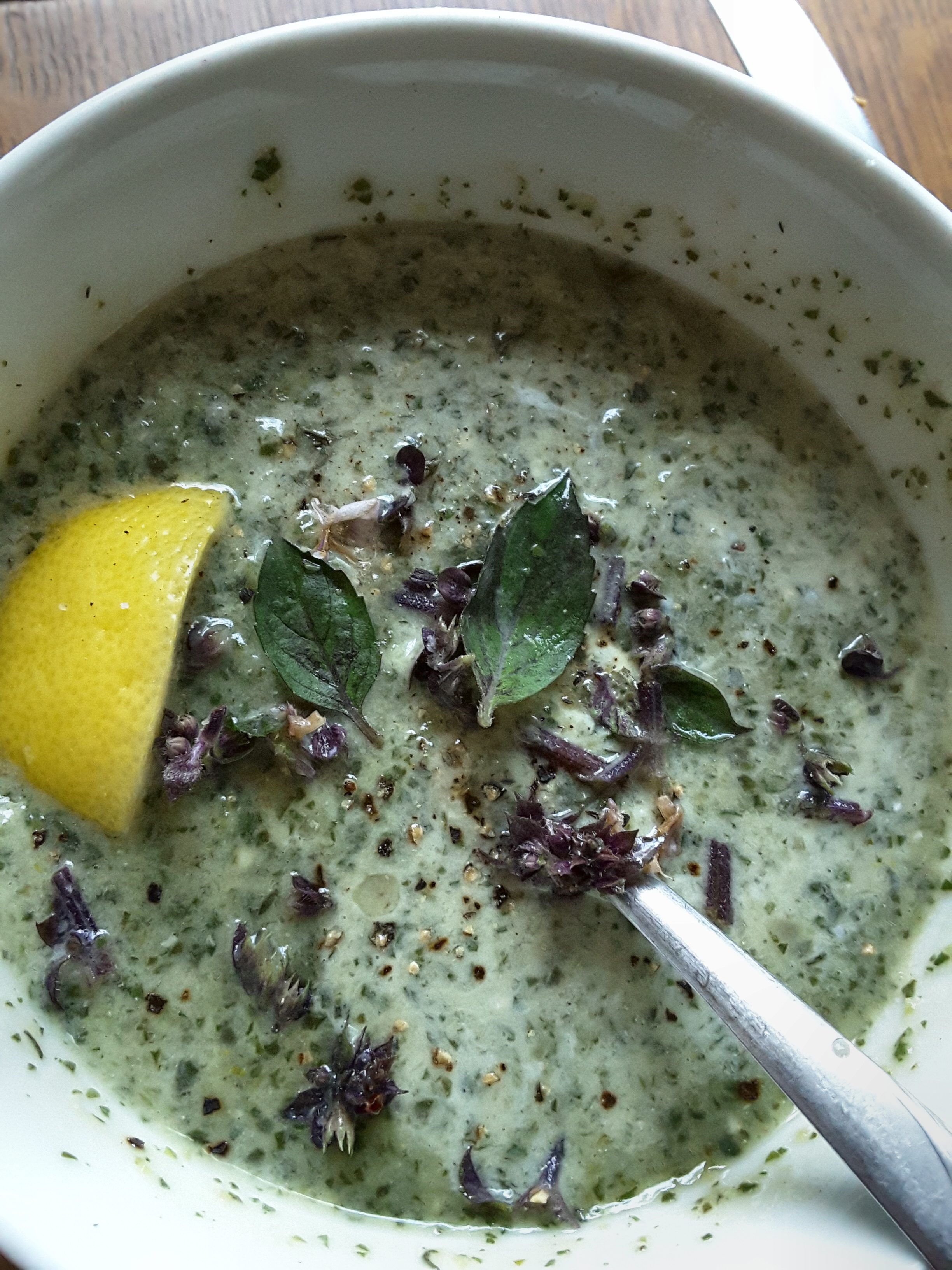
Purslane soup with purple basil garnish
Purslane plus purple basil flowers for that Crème-de-X factor

Sargent’s infamous ballroom portrait of Madame X is today’s inspiration for a soup that, like his subject, breaks a few stodgy rules and dares to produce an elegant but fresher, bolder, more nutritious–and certainly lighter–version of a classic French soup in a few minutes flat. It’s smooth but svelte. And it still keeps you in suspense.

So before we get to today’s featured mystery vegetable (herb? green? Let’s settle on green)–let’s talk about breaking the rules.

Most classic veloutés–vegetable-based cream soups–rely on thorough boiling-into-submission of the vegetables, generally mostly potatoes, to soften them for blending, which used to be done by hand through a mesh sieve back in Madame X’s and John Singer Sargent’s day. They also add a heavy dose of cream to mask any individual or strong flavors so nobody could possibly get upset that they can actually taste the vegetables.

All that cooking softens things but also breaks down most of the vitamins. Reliance on potatoes for bulk makes things starchier and blander as it crowds out the greens as the main ingredient. And I don’t have to tell you what I think about cream–you’re free to disagree but I take statins for a reason, and I’m an inveterate cheese freak. Also chocolate.

So I say save the high-ticket calories for something that packs a bigger punch tastewise even in small, expensive, memorable bites–goat cheese, bittersweet chocolate ganache. Not soup. Make it count.

Method counts too. The modernized French restaurant-approved cookbook methods for veloutés and blended soups in general are stupid, cumbersome and unsafe. There’s no good enough excuse anymore for telling inexperienced cooks–or any cooks–to boil up a vat of something and then try to pour it into a food processor or blender hot–very dangerous, and not the edge we’re seeking here. Scald marks are not chic. Nor is hot flying soup all over the kitchen walls.

In today’s world, you have a blender or food processor AND you probably have a microwave, no matter how many TV chefs may rail against it. You can do this smarter and safer and lighter and faster.

Common sense says blend your veg of choice first, then heat it. If it isn’t soft enough raw to blend smooth before cooking, steam it through first with minimal water and a lid in the microwave for a couple of minutes or, failing that, in a nonstick frying pan or stockpot with a drizzle of water, maybe a quarter-inch off the bottom of the container or pan, and a lid, also for a few minutes. Take it off the heat, pulse a few times in your blender or food processor without most of the liquid to get it started, then add cold liquid gradually as it blends further until it gets to the consistency you’re aiming for. You’re a lot less likely to generate big steam and pop the lid that way.

Then pour it into a microwaveable container with a lid to cook or reheat the soup in a few minutes without destroying every possible vitamin or losing all the color. You won’t scald yourself and you won’t be furious and frustrated and wishing you’d never heard of it before you even get to taste it (this does happen, you know, and cookbooks never mention it)… You’ll be fabulously unruffled (well…at least for this) and ready to dine when it’s ready to eat.

So, enough with the cooking hock-I-mean-hack. What’s with the purslane? What is purslane, anyway?

Fresh purslane in context

You’ve been wading patiently through my diatribe, and the suspense is killing you (but a nice distraction from worrying about the election totals, yeah?)

Purslane–slightly wilted but still worth cooking. I can sympathize.

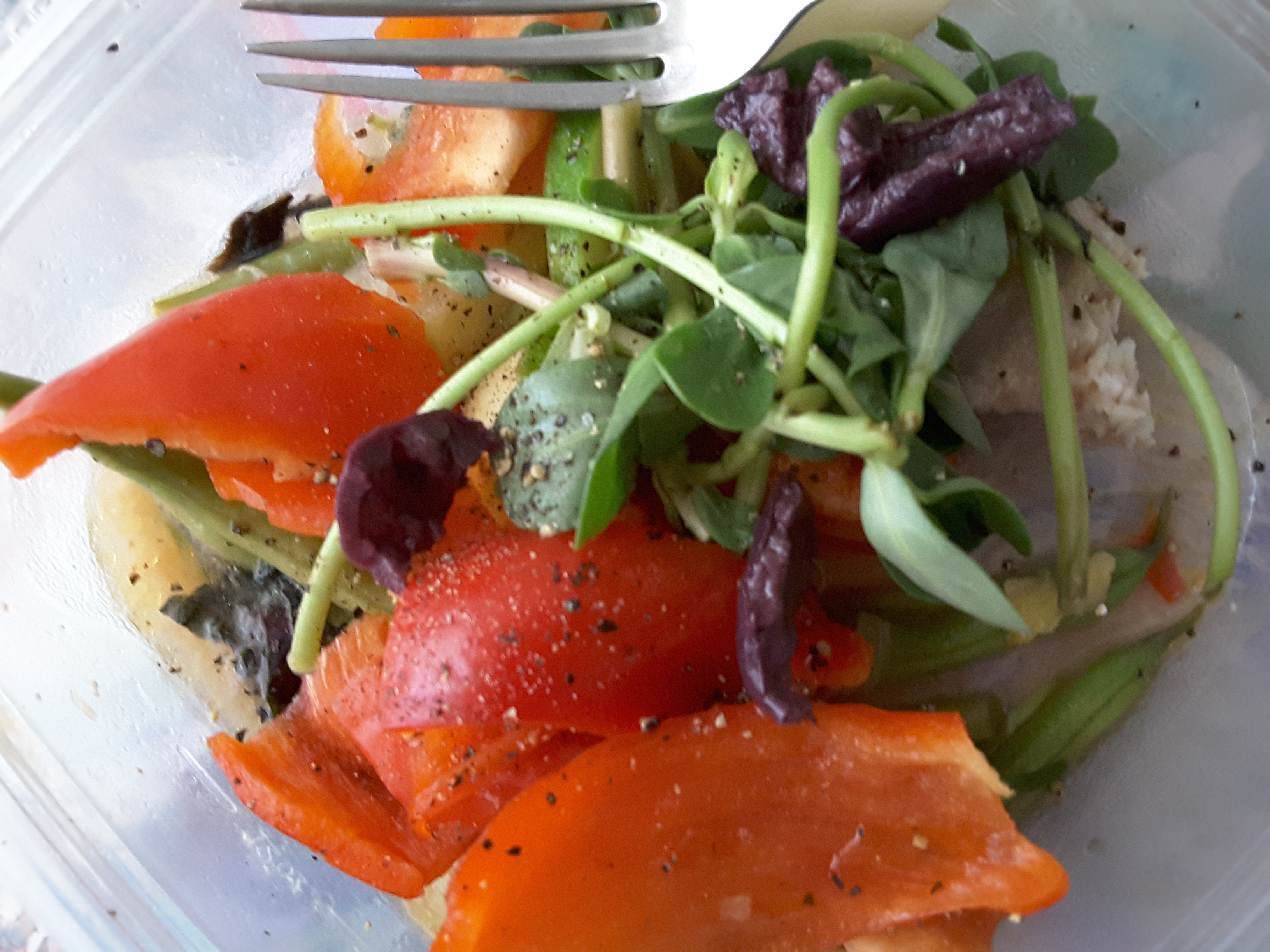
Purslane, or verdolagas in Spanish, is a slightly tart fresh herb that tastes like a lemony version of watercress or spinach–sorrel? Texture- and looks-wise, it’s a cross between a fresh green herb like basil and a succulent like…like…well, like a jade plant (despite the fact that jade plants are not edible, I’m pretty sure). That is, the leaves are smallish but sort of fleshier than normal herbs. At least when they’re at their peak freshness. Most people who buy and eat purslane put it into a fresh salad and eat it raw. Some stirfry it or chop it and put it into spinach-type dishes. And it’s pretty nutritious–high in vitamins A and C, potassium and other minerals, surprisingly for a vegetable, highish in omega-3 fatty acids if you’re still into those. Grows pretty much throughout the world.

After a week in the fridge, though, it loses a little of its puff and starts to wilt a bit–is it going bad? can you still do something with it?

Continue reading

Oasis

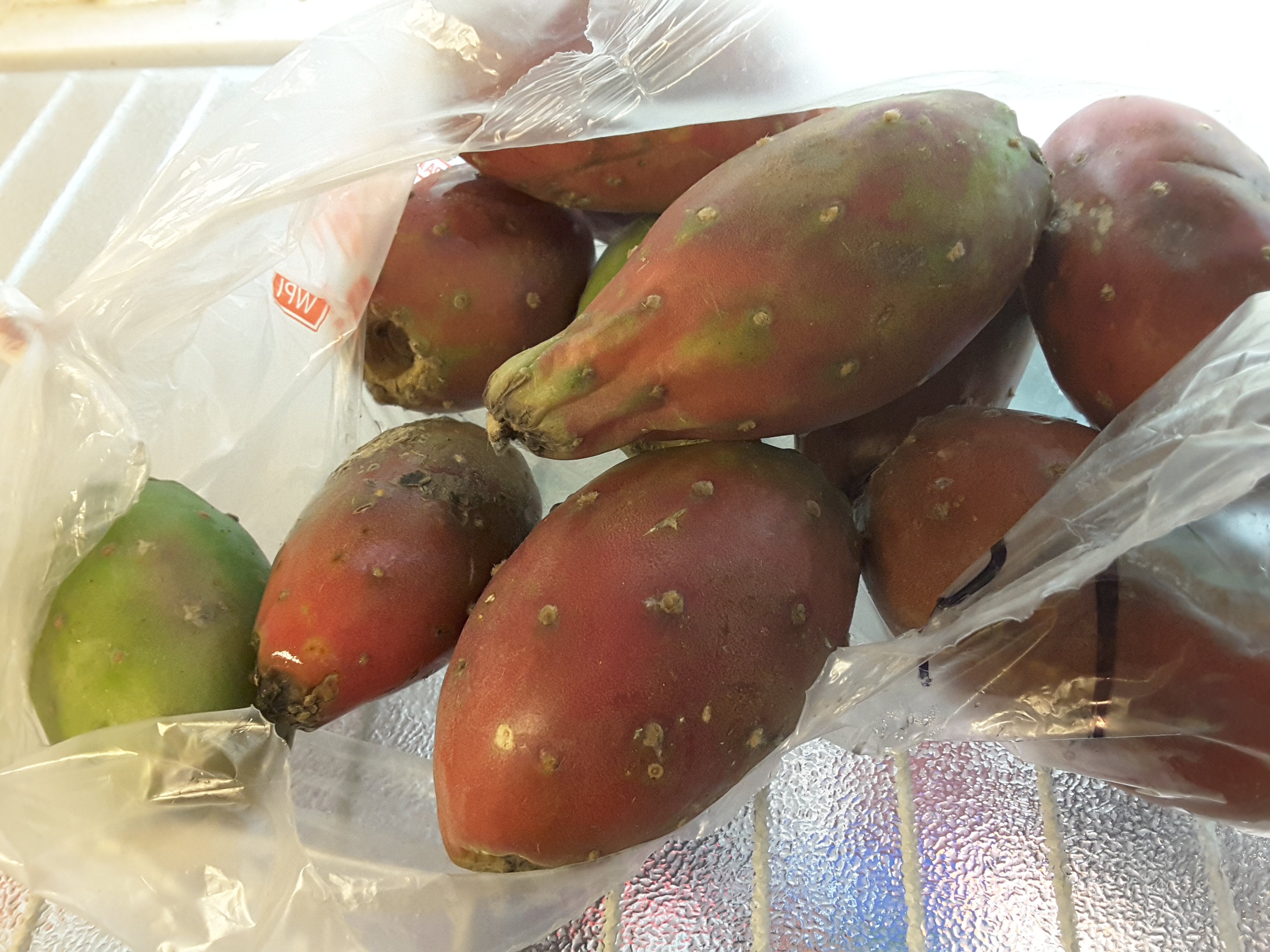
Cactus tunas (prickly pears) from the Armenian corner grocery

For the first time in the history of this blog, I’ve decided to delete a post. Last week I wrote about the nomination hearings for Judge Barrett, whom I definitely don’t want to see on the Supreme Court–not that I’m so thrilled by and large with any of the conservative justices already on the court.

I thought about that piece all week, though, and reconsidered, because every time I started to work on the next new post for things I was actually excited about, it bothered me to see it here, and I decided that meant something. I have voiced some fairly strong opinions in my time, here and elsewhere, and I generally stand by them in retrospect. One of my convictions, however, is that I don’t like signs that someone is cooking with bile, a chip on their shoulder, or is making blanket statements, and that includes myself. A difficult thing to balance because we live in the real world, and there’s a lot to be upset about right now.

As my daughter pointed out last week and as I’ve said myself to loved ones who wanted to dissect the headlines when I needed a break, we all have heard way too much to want to hear even more of it right now at the dinner table. We need an oasis of some kind. So I’ve reconsidered and decided it doesn’t need to be here.

SlowFoodFast is one of my own longer-lasting places of calm–well, usually calm, or at least calm-ish. Sometimes I have to remind myself of that, take a step back and a deep breath or two (with a mask on) and get on with things…because I’ve been waiting to spring a couple of ideas I’d rather have written about instead.

This is my place to rethink and experiment with cooking methods, share my ideas about getting more out of ordinary inexpensive ingredients and kitchen gadgets, explore unfamiliar techniques and foods, and generally do the grown-up equivalent of climbing a chair and sampling every jar or bottle in the spice cabinet just to see what they taste like (which, you are probably not surprised, I did pretty often as a kid. I never actually got caught, either, now that I think about it).

I’m still more or less that kid and the cabinet keeps getting taller and springing some interesting new items. As, for instance, cactus tunas (prickly pears), which are in at my local market and slightly ugly on the outside–often scarred or ashy-looking in spots. It wasn’t really obvious why there should be several bags of them in the last-chance bin because the fresh ones aren’t markedly different. And you’d think people would be grabbing them up. Here they are, spines trimmed off, no need to go out and harvest them yourself and take the risk of high-fiving any cacti.

When I saw the cactus tunas at the store, I remembered a story from last year in Atlas Obscura about a Sicilian liqueur, bright jewel-toned stuff, made from these cactus tunas steeped in strong alcohol plus sugar syrup and aged a bit as kind of a thick fruit brandy. Not that I was really going to put up a cactus cordial myself–I don’t really have the head for drink, and when I do, it has to prove its worth to me in a few sips. What if it were only kind of bland, like an alcohol/watermelon kind of thing?

But I still wanted a bag of them to take home. These are the kinds of fruits that grow on the paddle cacti the lonesome teenager in Cinema Paradiso cut to use for salad plates on his one picnic date with the elusive rich girl. Cue the music…

…It still took me a full week to dare to deal with them.

The tough leathery skins turn out to be no big deal, even the obviously blemished ones, as long as the spines are definitely off–some people recommend rubber gloves in case. You rinse the tunas and just peel them with a paring knife, and the skins slip off pretty easily. All of the ones in my bag were fine inside and unspoiled, no matter how blemished they were on the peel. Just inside the skins is a pale greenish-yellow-white layer–rather tart, like watermelon rind–and then the brilliant, multicolored fruit itself, also textured like watermelon, and with much the same kind of taste, maybe crossed with cucumber.

The fruit varies in color–one might be bright magenta, another a deep ruddy brick red, and some in the farmers’ markets are a sherbety pale orange, yellow or even honeydew green inside. My camera refused to believe what my eyes were seeing here in my kitchen or to give me an option partway between fluorescent and natural light, so the colors don’t really show up as bright in the picture as they actually are. Anyway, they’re pretty showy.

bowl of peeled cactus pears or "tunas"
Cactus tunas after peeling. The greenish layer is tart, like watermelon rind.
Continue reading

Saving Summer, 2020-style: Peaches and Pasta Yet Again

While I was stuck for what to post this summer without ranting too badly, I noticed readers are still searching for some of my inexplicably most popular older posts–how to ripen uncooperative peaches, and how to cook pasta in the microwave. I’m grateful you all are still out there, and I hope some of this helps or at the very least piques your imagination for what’s possible.

Usually I think these unconventional methods are mostly my own odd, quirky ideas about how to cook without turning on a hot stove in 100-degree heat and how not to throw out fresh produce if you can rescue it somehow.

These are no longer fringe questions now that the pandemic has hit so hard. We don’t want to waste money and food or make more shopping trips than we have to. And of course, the 100+ degree weather has suddenly hit hard in the West.  So for the first time in a while, I find I actually have a few new things to say about both pasta and peaches, before I move on to some slightly more warped but fun ideas in the next overdue post…

peaches ripening on counter


Peaches first (since it seems like the more upsetting food for most of us):

Well, I really thought I was going to post here that I have finally come up with a fast and easy way to “ripen” uncooperative, spongy or bland peaches to edibility without cooking them, but it turns out I already did it 3 years ago. Sometimes I post improvements to older posts and assume people can find them easily and tell that the revisions are better, but obviously not, so I’m going to have to go back to the original peach post from about 10 years ago, which suggested ways to cook peaches in a microwave, and point people forward to the method I use now, which sometimes improves blah peaches enough to be able to eat them raw and like them. It also works well for other kinds of mediocre fruit (see under, strawberries) that need a boost to taste like better versions of themselves.

For those of you who don’t want to poke around, this is basically it:

Peach fix 3.0

Wash, pit and cut up the peaches. Sprinkle on a spoonful of sugar and a small pinch or two (a little goes a long way) of citric acid powder and maybe a spoonful drizzle of water, stir a bit and let it sit for several minutes. They should taste better and be at least somewhat juicy and tart, and maybe start taking some rosy color and flavor from the skin as well.

Notes:

  • Citric acid is also called “sour salt” or “limon con sal” or “rock lemon” even though it’s not actually made from lemons, just tastes a little like them, and it doesn’t contain any salt. My Armenian corner grocery sells it along with other bags of bulk spices, and Rokeach brand citric acid shakers used to be available in the kosher food aisle of the supermarket. Don’t pay a lot for it, wherever you buy it–citric acid should be inexpensive and an ounce or two will go a pretty long way.
  • Lemon juice should also work if you can’t find citric acid powder locally or online.  But if you have it, citric acid keeps the peaches tasting like peaches, not like peaches with lemon added.
  • If you have a whole bag of such flavorless peaches to rescue, more than you can actually eat in one go once they’ve sat and macerated a while (“macerating” is just the sweet version of marinating), you can keep them in the fridge in a snaplock container for several days without worrying about spoilage because the citric acid is also a preservative.

Of course, while I was still dawdling over this post last month, wondering if this was more important than my other overdue ideas, the FDA suddenly issued a recall of bagged yellow peaches in at least 12 states for salmonella contamination, and I even got a robocall from the Ralph’s/Kroger supermarket chain offering a full refund if I’d bought their peaches lately (I hadn’t). So I don’t know if this is going to help a lot right now, but maybe the next time you’re in a quandary about bland, spongy peaches and they’re not under a recall, you’ll have at least one more trick up your sleeve. Might work for reviving frozen peaches too.

OK, now the pasta:

microwaving lasagne noodles  

Pasta 2020: Lasagne noodles in the microwave

Yes, I know. This is exactly what it looks like. But I finally figured this one out after how many years? too many. You can boil lasagne noodles in the microwave and keep them from sticking together horribly with a fairly simple trick–well, two. And incidentally, I also learned that lasagne, which is plural, refers to the noodles themselves, lasagna is singular and means the whole layered casserole…I’m still going to mix them up, I’m pretty sure of it. Continue reading

Wanted: cooler heads, warmer hearts

…and less inflammatory bloat.

Warning: This is kind of a long make-up post with 3-4 related recipes out of my experiments since April. They’ve been helpful and fairly fast for coping with hot weather and hot tempers, mostly my own.

It’s been a long spring and summer not posting and just trying to get through, and wondering what kind of food post could possibly make up for the mess we’ve seen unfolding in this country.

So my thinking has kept roiling around in the manner of the following rant (much cleaned up):

We have to do better. As a nation, as a people, as individuals and members of our communities, as responsible and worthwhile human beings.

The proof is in the pudding, they say. This is true of both government and cooking. Right now we’re learning the hard way that you get out of it what you put into it. So watch what you put into it, and don’t treat yourself or your country like a garbage can. Prepare to vote like it matters, and in the meantime contribute as best you can to your local public schools’ support organizations to get students in low-income families the food and tech they need during distance learning.

— — —

I can’t help but cook, and usually I like to experiment, but with my husband and daughter suddenly home 24/7 for the past half year (my kid just went back to university across the country), and with temperatures getting up to 100+ some days here, staying creative about food without a lot of excess shopping trips or extensive cooking has meant staying fairly simple and more about fresh produce than about artiness in the kitchen, and maybe just using more herbs–one of the few things I seem to be growing successfully in the backyard. We all could use some shoring up healthwise and flavorwise, with some trimming back after a stressful winter and spring. So I’ve been trying hard to make the veg and fresh fruit more prominent and easier to grab-and-go for self-made lunches, without any of us having to work too hard.

But I have been cooking, and some of it has been good, and a lot of it has been anti-bloat AND good, surprisingly enough.

And it has in fact worked, most impressively for our daughter before she went back east.

So this is worth passing on, especially now: forget the “stress-baking.” Go for basic vegetables and fruit. Seriously. It makes a difference, and it might help lower your health risk, and possibly your food expenses, as well. Maybe even help de-stress.

My daughter came home from university in March seriously stressed out from the shift to online and upended plans. She’d been suffering acid reflux badly enough to be on daily medication, and had to ask me for mild zucchini-type vegetables only for the first couple of weeks home, because tomatoes were too much, and so were the hot peppers she loves.

Being home with us during the shutdowns meant a lot less “student” food, aka greasy takeout with its oversized portions. More beans and lentils and fresh veg and fruit every day. More sleep, more water, more hanging out with friends online or by phone, more socially distanced walks to get a break from us parental units (yay!). By June, she was already in visibly better shape, needing less insulin per day to stay in range, had lost the “freshman 10” from last year without major effort, and possibly (probably?) as a result, she was able to stop taking the acid reflux meds. Just in time for Anaheim peppers and Fresno tomatoes. And Indian food.

(okay, back to food):

For my husband’s birthday this summer, I took requests and ordered celebratory takeout from our favorite restaurant, which has been in Pasadena for over 20 years and just keeps getting better. We’ve only done takeout anywhere a total of three times since the shutdowns, partly because it’s a splurge and partly because the logistics are more nerve-wracking now (were they wearing gloves? were you? do you wipe down the containers? should you nuke them?) You don’t want to know how it went on our first try back in April when the bad news was first ratcheting up. Not at all fun. I vowed to my still-beloveds afterward that we’d do it again and this time I’d be calmer, and just decide ahead how to handle the containers safely.

In any case, by my husband’s birthday, we’d finally got the hang of it enough for us, and there’s no denying that it was delicious. It also inspired a couple of microwave-friendly dishes I plan to pass on to my kid now that she’s back and cooking for herself. Two (well, three) of these dishes are hot, the other frozen, and all are cheap, fast, surprisingly easy and pretty good–they’re even fairly close to the dishes I was trying to imitate, but a bit lighter fat- and calorie-wise.

Which is good because today we’re in a massive heatwave in Southern California, and it’s so hot I decided to try hanging wet sheets out on an old clothesline I’ve never used. I think they were dry by the time I finished pinning them up 5 minutes later. I know I was.

Lightening up Makhni Paneer

Makhni paneer-style tofu with pumpkin sauce, plus added green beans and cooked chickpeas for a microwaveable next-day lunch. Or in this weather, just eat it cold.

One of the dishes we ordered from the All India was makhni paneer, which is cubes of fresh-pressed cheese submerged in a very rich tomato cream sauce. I’ve looked in a number of cookbooks and online–could be ghee and cream or full-fat yogurt in the sauce, could be coconut milk. Tasty but way, way, way too rich for my blood (cholesterol, that is). Way.

Still–the ideas started churning. The makhni paneer had a slight tang and a suggestion of sweet under all the obvious richness, and showcased the spices in a completely different way from the other dishes at the table.

How do you do that, but lighter, and possibly a little faster?

I love paneer but my daughter prefers tofu, at least for my home renditions of saag paneer. That actually fits a recent wave in US Indian communities of making heart-healthier substitutions–unsaturated vegetable oil for ghee, tofu instead of paneer, lower-fat yogurt where possible, and hopefully backing down a little on salt. Even the All India offers tofu as an alternative. So we obviously start there.

But the cream sauce is really the main challenge. The bhuna (browned-onion/spice flavor base) works fine with unsaturated vegetable oil instead of ghee. You can precook the chopped onion in the microwave for a minute or so to get it going a little faster when it hits the frying pan without the need for salt. But for the bulk of the sauce?

A large can of pumpkin sitting on the shelf for one of those just-in-case moments (why do we always seem to have them?) caught my eye, and it suddenly seemed right.

Pumpkin? right color, right substantial thickness, smooth, decent taste, likely to go well with everything else, easy to thin out just enough with milk or soymilk to get it a little more like the sauce I was going for, only without fat and with lots of vitamin A and fiber. Use enough of it to make a difference and it counts as a vegetable. Check.

Plus, I’d once used it successfully as the base for a fat- and egg-free eggnog back in my 20s, the early days of cooking for myself. Squashnog? That’s what I’d put in my little blank-book cookbook. Maybe it would work here too. Continue reading

The Afikomen Conundrum, plus a quiche for our times

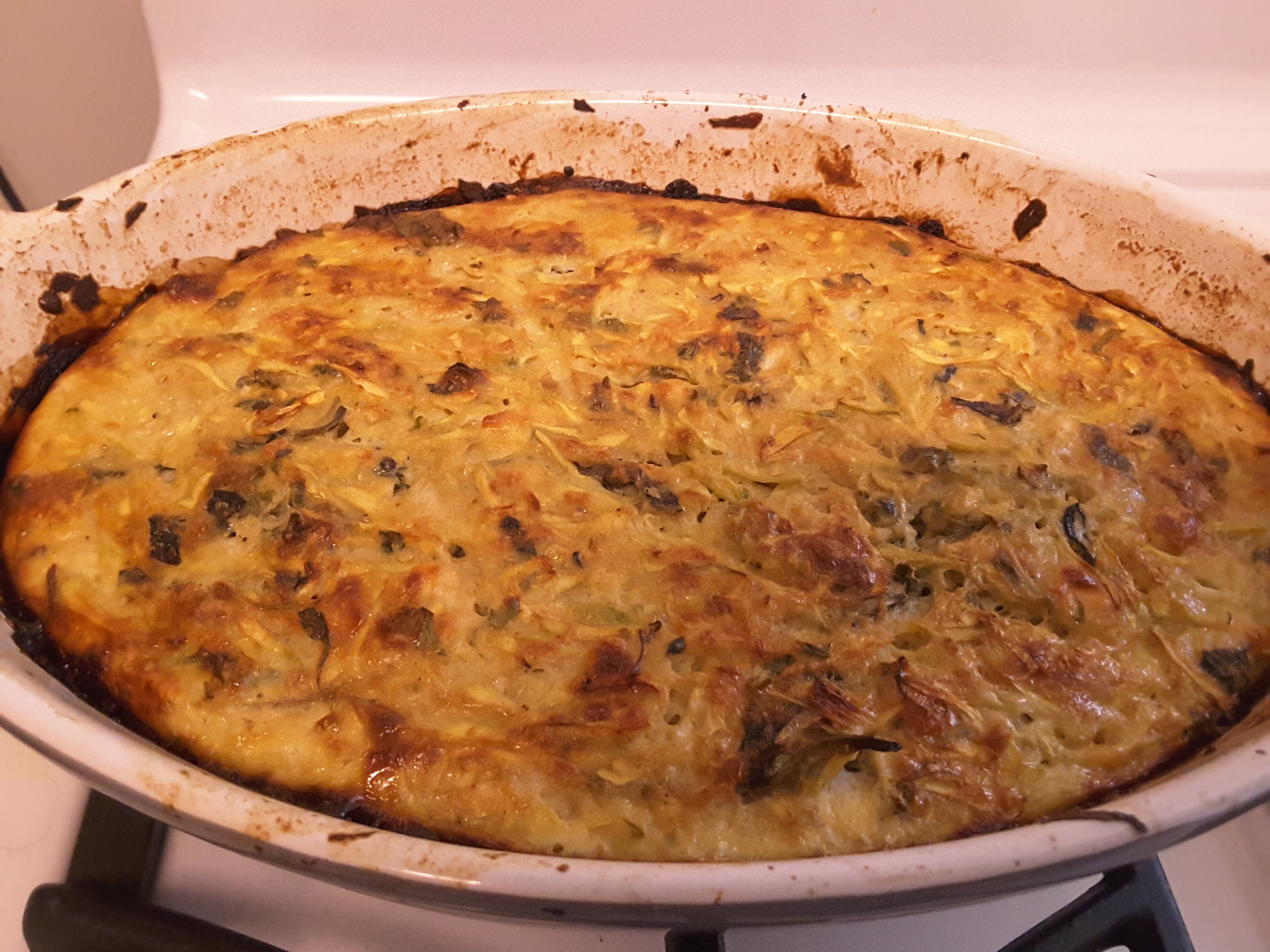
zucchini crustless quiche

On the lighter side of Passover, now that it’s the last day for anyone outside Israel, I did catch Terry Gross’s wonderful Fresh Air interview with Adam Sandler and the Safdie brothers on NPR back in December and was delighted to hear that the brothers included the first-ever mention of the afikomen in an English-language film. It’s about time! I mean, bagel and chopped liver references can only take you so far with Jewish culture. Afikomen is the real insider stuff.

Then, of course, Terry realized that all four of them, herself included, were talking inside matzah-ball or at least Aramaic amongst themselves on-air, and the uninitiated radio listenership who had never even been to a Passover seder might need some enlightenment on the subject of afikomen. Yes, it was exactly like having to explain a joke, and no, the great mass of society probably still didn’t get why a broken matzah is more important than a whole one, or why you’d bribe the kids to give the other half back once you’ve hidden it somewhere cleverly during the meal.

But Sandler and the Safdies ran with it and tried not to make it any more like explaining a joke than they had to. At least Terry didn’t pick the Hillel sandwich to riff on. (Partly because no matter what the Haggadah says about it, there really is no good logical or culinary explanation for eating a combination of apples, nuts and horseradish all together on matzah. It just is, you know? Tradition!)

Anyway, the interview was actually enlightening and smart, and the link is still up online, so go listen to it and donate to your local NPR station while you are wondering, as I am, where we go from here.

I look back to where we were only a month ago and realize that I am thankful my daughter is with us, that my mother and sister and their families and my in-laws are all well if a bit frustrated at home, especially the younger generations with young kids. Back then I  was starting to wonder if there was actually going to be matzah in the stores by the time we needed it or whether I would have to enlist my daughter for some not-quite-kosher-but-best-we-can-do homemade matzah from the leftover bag of flour that I couldn’t bring myself to throw away this year–it seems like more than a sin to throw away anything you could use later, anything you might need, or that someone else could use now.

I mentioned this to a friend back east when Governor Hogan of Maryland decided to declare a statewide a lockdown a week or so after California’s, and we were comparing notes about having college-age kids stuck at home for the duration. It was about a week before Passover started, and a few days later not only was there finally some matzah available at the store, just in the nick of time, but a big mystery box arrived at our door later the same day. When we opened it, we discovered she’d sent us two boxes of Streit’s matzah, just in case. She’s really something else!

As mentioned above, today is the last day of Pesach (Passover in English) if you live outside Israel. My husband is hoping for pizza tonight but since  the stores are closing before sundown, I somehow doubt it’s going to happen tonight. Plus we have two whole boxes of matzah left and a bunch of rice, which I cooked starting with the second night. Turns out many, many American Jews other than us have also decided this year to expand their Passover cooking options to Sefardic traditions that include rice.

I even have most of a packet of quinoa, which is so recent in the Jewish world that rabbis everywhere have declared it kosher for Passover. Somehow that declaration annoys me. Quinoa’s an expensive grain compared to rice and the major importers and cultivators probably paid someone off under the table to get this vegan-trendy chic grain declared ritually different from all other grains, cereals and seeds including rice. Call it Dizengoffia or Beverly Hills Syndrome, and yes, I’m really that much of a cynic, but put it this way–nobody’s bribing anyone about rice as far as I know. Rice is common, inexpensive and traditional, and it’s already approved for Sefardim and most Mizrahi Jews as well.

Small wonder a lot of us have decided to go Sefardi this year, and possibly every year from now on.

Anyway, since this is me, I made some of the quinoa last night in the microwave just to see how it would go–answer, not bad, and pleased my daughter, who along with her college housemates is more conversant with quinoa than I am. I think it’s twice or three times as expensive as rice; they’re still young and excited and into brandname olive oil, gourmet coffee, designer vinegars and  and vegan-chic ingredients because they’re all so new to cooking on their own and still a bit gullible.

It takes time, practice and ruining a few expensive buys on your own dime to realize that fancy-label ingredients won’t make you a great cook automatically. You can go online all you want–even here, if you have the patience to read through all my grumbling and occasional bouts of wild enthusiasm. The fact is there’s no substitute for trying it yourself and being willing to eat your mistakes as far as they’re edible and figure out from them how to fix them up now and do better next time.

But in any case, the quinoa, microwaved or not, is still quinoa, with an earthy, bitter edge similar to buckwheat (kasha).  So definitely squeeze on some lemon or mix in some vinaigrette; instant improvement. My kid agrees–there’s vegan chic and then there’s too chic. And if you’re going to buy it and try it anyhow, you need to be willing to work with it and make it good or else. At least not waste it.

More to the point of frugality, I have been trying mostly to practice what I preach and buy and use cheap vegetables plentifully this week instead of reaching for yet more matzah and cheese at every turn, or using up more eggs at once than is wise in a time when you’re limited to two cartons a customer when you can even get them, and where a lot of supermarkets are now stocking medium-sized eggs when they can’t get enough large ones.

My standard Israeli-style spinach and feta flan for Passover (or any other time) calls for 6 large eggs for a pound of squeezed-out spinach, but you can reduce the eggs to 3-4 and increase the milk to 1.5 c and/or add a bit of bread or flour (if you’re not cooking for Passover), rice, matzah meal, grated or mashed cooked potato etc. –the starch absorbs some of the excess liquid and acts as a binder. And you can use a different vegetable as the main ingredient.

Zucchini are some of the common inexpensive fresh vegetables being neglected most often at the Ralph’s (Kroger affiliate here in the west). I bought a bargain bag for a dollar on my last shop (still doing that where possible) and washed them carefully à la COVID-19 precautions (spritz with dilute dish soap along with all the other groceries, rinse well, airdry, hope for the best). Today I decided it was time to use them for the last Pesach lunch and that they were better to use up now for a crustless quiche than the bags of frozen spinach which cost twice to four times as much and can stay in the freezer. Continue reading

Zwetchgenkuchen: a lighter holiday plum tart

Zwetchgenkuchen or plum pie with almond filling

In spite of the recent weather snarling Thanksgiving traffic a few weeks ago and the upcoming winter holidays this week (Oy! Chanukah starts tonight! gotta get candles!), we still have plums in the market in southern California even now that it’s late December. Which adds a strange twist to the dessert I was going to post about belatedly, because I realize that’s probably not true in the rest of the country, so what now?

I first meant to post this recipe for a svelter pastry way back in October, on the heels of the Jewish New Year, Rosh Hashanah, when plums are usually in season.

Zwetchgen, sometimes spelled zwetchken, or “quetches” in French, (could this possibly be the origin of the famed Yiddish word “kvetch”?–probably not, but it’s fun to think about it) are the elongated, blue-black Italian prune plums, which were in at my local Armenian corner grocery in September-October, along with the divine yellow-green sweet plums for eating raw. Unfortunately, most standard supermarket chains in the US don’t sell either fresh prunes or the yellow-green kind of plum in their produce sections, to say nothing of dinosaur plums (green and brown speckled outsides, variously pink and yellow insides, telltale dinosaur logo on the sticker) or Santa Rosa plums (pinkish-red outside, deep rose-pink insides), so it’s a good argument for seeking out your local mom-and-pop ethnic corner grocers wherever possible.

But my lightened-up method for a plum tart is still pretty adaptable to other fruits you probably do have–apples, pears, thickened berry jams or canned cherry filling, mincemeat,  or even, dare I suggest, canned pumpkin? (green tomatoes? even rarer than plums unless you garden, like my in-laws.)

So it’s not that you absolutely must have plums (only for a plum tart, it’s kind of required) nor that you should do the (nearly) unthinkable for a plum tart and use dried prunes somehow. Which, I promise, I am not doing here. Well, maybe they’d work in mincemeat, preferably a vegetarian version with no suet involved. Actually, someone back in the old days of the nursery rhyme probably was using prunes and it understandably fell out of favor when fresh fruits became available more widely during the winter months. Or when some bright young thing started selling premade mincemeat filling in jars…

This lightened-up European-style tart for a holiday or other party tastes good, makes the most of end-of-season fruit, and isn’t overwhelmingly rich or oversweetened. It’s got a thin, delicate crust, an almond filling, and tart, substantial wedges of fruit. The almond extract or amaretto (or you could use rum or brandy or kirsch, or orange liqueur, or orange blossom water if you’re going nonalcoholic) gives it something most American desserts these days sorely lack–not the alcohol, which quickly bakes out, but a depth and complexity of flavor that don’t depend on sugar or butter. Continue reading

Bourekas, Pastry Crust…How Low Can You Go? A Lower-Fat Flake-Off

Borekita "flakeoff" tests two types of dough

I know bourekas aren’t health food, they’re party food, but it doesn’t stop me from wanting to make and eat good ones in (small, sane, occasional) quantities.

Key to the desire for bourekas of worth is my never-ending hunt for a pastry dough with all the right qualities–lighter, tenderer, massively flaky, and oh, while we’re at it, much less heart-stopping than puff pastry or most pie dough, but still capable of flaking and puffing up nicely. I almost had it a couple of years ago with an Armenian dough that calls for a little vegetable oil in with the butter, a bit of cider vinegar for tenderness and an egg to help out the puff. But with butter, there’s automatically a lot of saturated fat, plus it takes more work than I like.

Enter the nondairy, oil-based borekita dough. Israeli (Turkish, Bulgarian, Sephardic…) bourekas, nowadays usually made with commercial puff pastry and sold in characterless boxes or plastic-wrapped trays from the supermarket, are nonetheless wildly popular with almost everyone in The Land whether they voted for Bibi or Benny. The boureka is not in doubt.

Puff pastry is nice enough in most circumstances–after all, it is what I’m aiming toward, or would ideally like to be aiming toward, if I can get away with something lighter. But after a while the packaged versions of puff-pastry bourekas all start to taste the same–salted potatoey stuff, indistinguishable through the mouthful of flakes, and not exactly fresh.

Homestyle boureka dough is much less puffy, more like the dough for sausage rolls. But still–less rich, usually made with oil rather than butter, so it’s both nondairy, to go with meat meals if you keep kosher, and lower in saturated fat (unless you go big on cheese fillings, anyhow) and lower on fat percentage generally. It’s also more economical, more delicate and less oversalted, and it doesn’t overwhelm the fillings.

But the real tests of how low on fat you can go–how well does it flake? How does it taste?–require a head-to-head comparison of different doughs with different fat content. Since it’s down in the 80s I decided to do small batches of each type and see how they worked.

There are two common versions of this home-style boureka dough, a more-oil version and a more-water version.

More oil than water

Al HaShulchan (“On the Table,” the Israeli food magazine) editor Janna Gur‘s recipe on her English-language site is very simple especially if you weigh everything out on a digital food scale (easier and more accurate than trying to juggle dry vs. wet measuring cups and scooping and sweeping and sifting). By weight, it’s about 50% fat to flour–four parts flour, two parts salad oil, one part water, a little but not too much salt. Her recipe makes about 50 borekitas; I decided to quarter that for this test because I’m not stupid and I know myself, and what was I going to do with 50?

Janna Gur borekita dough with more oil than water

The dough for this version has the texture of shortbread or playdoh, very short, and oil will definitely coat your hands when you pinch off walnut-sized balls to roll out for the borekitas, but at least it’s polyunsaturated, not solid fats. Because it’s so oily and you handle it so lightly, there’s no gluten built up. The dough is a bit fragile and rolls out a little ragged as you can see above, but you can roll, fill and bake right away.

Less oil, more water

Bureka Boy, whose Is-that-my-bureka blog, with its wealth of Sephardic and other Jewish recipes, paused for posterity in 2009 (though recently it looks like he may have shifted to Facebook or Instagram or both), has a smoother dough with the proportions of oil and water reversed, so about 25% oil to flour by weight. The water is added very hot when you stir it in (much like jao tze dough), so the dough develops gluten and needs an hour’s rest after mixing and kneading. It’s still quite oily when you go to pinch off individual balls for the borekitas, but it’s more elastic, with a smooth surface and better strength to roll it thin without breaking. You can handle it more and get neater pinched edges on the seal.

BurekaBoy's borekita dough with more water added hot to build gluten


So…on to the Flake-Off! Continue reading