
• Enter your email address to subscribe to this blog and receive notifications of new posts by email.

    Join 241 other subscribers
  • Noshing on

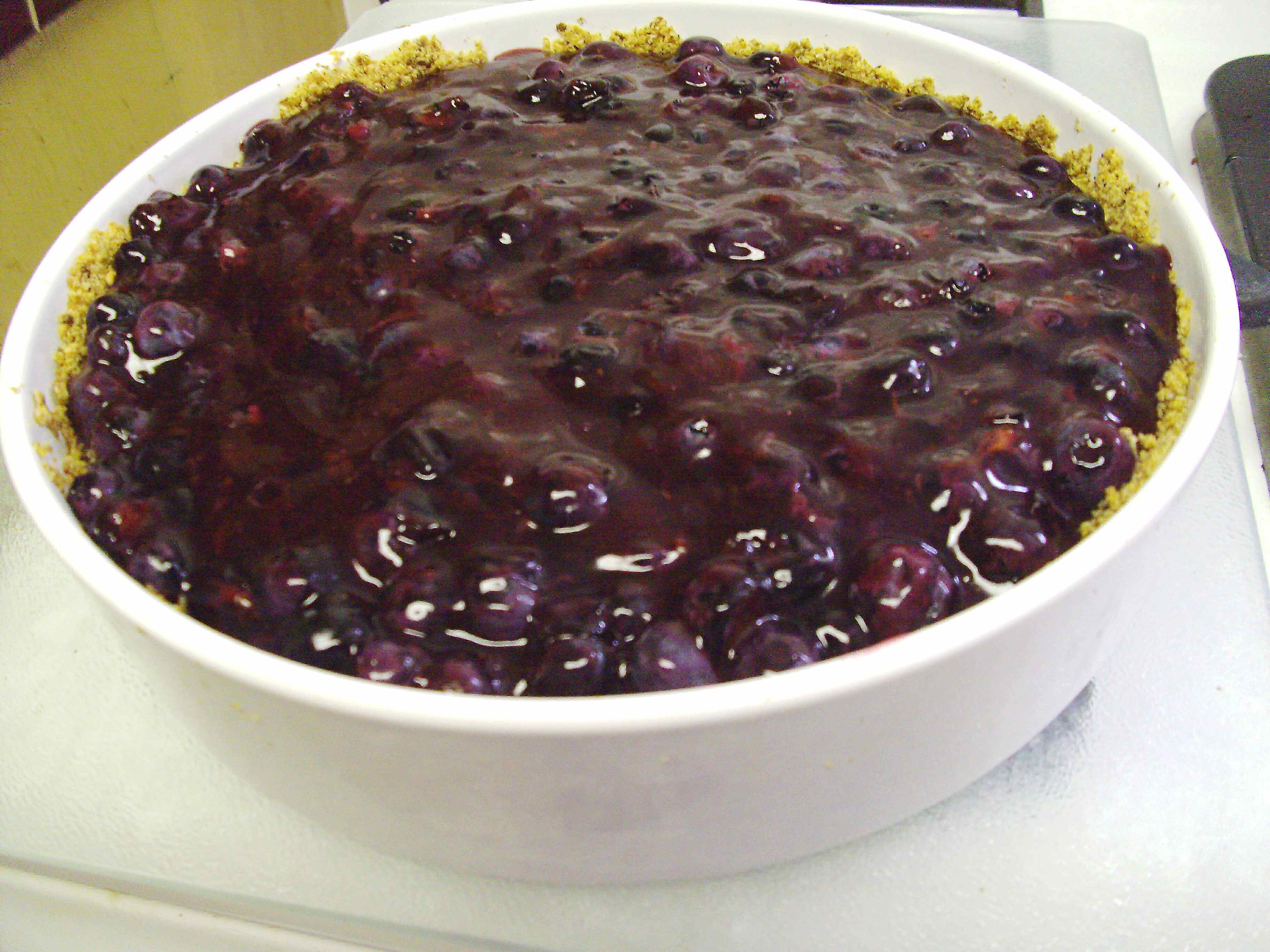
    raw blueberry pie with microwaveable filling and graham cracker crust

    This mostly-raw blueberry pie is a snap to make and very versatile--the filling microwaves in a few minutes, and you don't even have to bake the zippy gingered graham cracker crust--perfect for a hot Fourth of July and all summer long.

  • Recent Posts

  • Contents

  • Archives

  • Now Reading

  • See also my Book Reviews

  • Copyright 2008-2024Slow Food Fast. All writing and images on this blog unless otherwise attributed or set in quotes are the sole property of Slow Food Fast. Please contact DebbieN via the comments form for permissions before reprinting or reproducing any of the material on this blog.

  • ADS AND AFFILIATE LINKS

  • I may post affiliate links to books and movies that I personally review and recommend. Currently I favor Alibris and Vroman's, our terrific and venerable (now past the century mark!) independent bookstore in Pasadena. Or go to your local library--and make sure to support them with actual donations, not just overdue fines (ahem!), because your state probably has cut their budget and hours. Again.

  • In keeping with the disclaimer below, I DO NOT endorse, profit from, or recommend any medications, health treatments, commercial diet plans, supplements or any other such products.

  • DISCLAIMER

  • SlowFoodFast sometimes addresses general public health topics related to nutrition, heart disease, blood pressure, and diabetes. Because this is a blog with a personal point of view, my health and food politics entries often include my opinions on the trends I see, and I try to be as blatant as possible about that. None of these articles should be construed as specific medical advice for an individual case. I do try to keep to findings from well-vetted research sources and large, well-controlled studies, and I try not to sensationalize the science (though if they actually come up with a real cure for Type I diabetes in the next couple of years, I'm gonna be dancing in the streets with a hat that would put Carmen Miranda to shame. Consider yourself warned).

Coconut, minus the hype

dried coconut shreds

Palm and coconut oils have made a huge comeback in the last few years. Both are very high in saturated fats, which promote high blood cholesterol and heart disease, but the vegan community has embraced them as “natural” and they’re turning up in all kinds of baked goods and sweets these days at Whole Foods. Which also sells big mayo jars full of coconut butter. Looks like Crisco, scoops like Crisco, costs 10 times as much.

A lot of the newer vegan recipes and packaged foods are direct mimics of things that used to include lard, beef tallow and suet at the lower end of the classiness scale, or butter at the high end. My local Whole Foods’ pastry case features a lot of croissant and baklava variations these days, all now made with palm oil, as are many of the muffins. Starbucks’ “old-fashioned kettle” doughnuts feature palm oil in two places, both the dough and the icing.

Why are these fats getting so popular? Why all the wishful thinking that a plant source automatically makes them healthy to eat in quantity? Why are all the nutrition advice columnists in the major newspapers and health magazines suddenly “holistic coaches” who graduated college with psych majors and the like rather than board-licensed nutritionists and registered dieticians?

The truth of the matter is that your body doesn’t care so much whether a saturated fat came from lard, a coconut, or a chemical vat–regardless of the source, the fat molecules are shaped the same and your digestive and metabolic enzymes process them all the same way.

Palm and coconut oil? The hip vegan crowd, who consider themselves really indie, would be surprised to learn how thoroughly they’ve been manipulated by a very big industry. In the past 10 years, these oils have suddenly ramped up production wherever palm trees can be grown, mostly in Malaysia and Indonesia, where producers started by stripping the jungles to plant a single crop (though some of the main palm oil traders, like Lever–yes, the soap manufacturer–have made statements that they’re working to reverse some of the damage and buy only from those who “plant sustainably”). The other main centers of palm and coconut oil growers are Africa, India and Latin America.

Palm and coconut oils have taken off not because they’re vegan (outside of India, there just aren’t enough to support the industry boom) but because they’re such a cheap source of fat. Well, cheap everywhere but the Whole Foods shelves. They are indeed useful to the processed baked-goods industry for lending that heavy grease “satisfaction” factor to things that used to be made with butter, suet or lard. And they’re much less heavily regulated in the US by the agricultural inspectors because they don’t trigger all those livestock rules.

But should you be eating them? Buying jars of coco butter for your home cooking? Something tells me you’d be better off eating less of anything that requires cooking in heavy fats as opposed to regular polyunsaturated vegetable oil. And cutting down on all fats unless you’ve actually been diagnosed by an MD, not a holistic coach, as underweight.

Because even the unsaturated fats have a lot of calories. Rip Esselstyn’s “Fire Engine 2 Diet” specifically cut out all oils because the people he was training to eat better really needed to lose weight, and the bottom line is that the 120 calories in a tablespoon of ordinary unsaturated vegetable oil are still extras. There’s no real way around that. Not even if you’re vegan.

And wasn’t the point of nonstick pans supposed to be so you could cut down on cooking fats? (ok, it was really so the pans would be easier to wash, but why not take advantage while you’re at it?)

I’m not saying you shouldn’t ever use coconut itself in cooking–I’ve been a Mounds fan from way back, and please just don’t ask about those poufy huge coconut-sprinked, bright pink marshmallow things we used to clamor for as kids (“Snowballs”? I think it was a half-dome of marshmallow that sat on a cookie…almost as bad as Moon Pies.) These days I try to eat it sparingly, because it’s still fatty, and because most of my coconut exposure now takes place in the form of macaroons at Passover, when I’m already feeling like if I see another can or box of something packaged I’ll pass out.

But seriously–and more sophisticatedly–coconut itself is a worthwhile cooking ingredient in some savory dishes, and it has a subtle, penetrating flavor that means you don’t have to use a ton. You can also find good steam-defatted versions of shredded coconut that have about half the fat of regular, and look for partially decreamed canned coconut milk as well (I think Trader Joe’s sells it, maybe Whole Foods as well). Unfortunately, half the fat for coconut is still pretty fatty, but it’s an improvement.

Even a spoonful of unsweetened shreds can give a curry or aviyal (i.e., coconut-based “dry curry” class of dishes) a satisfying suggestion of richness without adding loads of fat. Maybe a gram or two per serving, and it can help even out jagged edges in the spicing.

To get the most flavor out of a small amount of coconut, I do one of two things. In the aviyal of cowpeas below, I toast a spoonful of dried shreds Continue reading

Spice Mix Rx

Sunset magazine surprised me this month with a big feature on complex spice mixtures that have found their way into big-name restaurant food in the past few years–panch phoran, garam masala, baharat, za’atar, ras el hanout, quatre épices, Chinese 5-spice and berbere. Sunset tends to focus on California and southwestern US travel, home decor and food styles, so it was good to see something a little more world beat and exciting…right up until I started looking at the recipes.

The opening spread showed glossy pictures of the various whole spices included in generic versions of each mixture, but the author then blithely left all of these spice mixes and their proportions out of the recipe section!

Her reasoning, if I have it right, was that these spice mixes are getting popular enough that you can find them all premade at your local supermarket. Well…not in mine. And I live in an area with a lot of Indian, Arab, Armenian and Chinese neighbors–the only ones I’m missing are French. You can get Chinese 5-spice powder next to the double shelf of soy sauces, and you can usually get a jar of unsalted generic curry powder (which Indians don’t use but North Africans occasionally do) or some Colonel Sharwood’s and Patak’s curry pastes, and occasionally some garam masala in a jar. Who knows how close they are to real, but they’re highly salted and in jars or packets, so not exactly fresh-made.

Online commenters at the Sunset web site say that the recipes the spices are supposed to be used for are good…if you can find the spice mixes in your area, which many of them can’t. Which is why I’ve done yet another longish post…I’ve decided to dig around and post general recipes for most of the spice mixes myself. Some I’ve tried personally, but most I haven’t made at home, yet, so I’ve tried to find reliable and knowledgeable cookbook authors and where I can I crosscheck with another appropriate author’s recipes–these days it’s so easy for restaurant chefs to publish recipes they can barely pronounce and claim expertise without ever having traveled to India or Morocco or Turkey, or only the tourist routes, much less lived in a village and learned to cook a traditional cuisine for any length of time.

My local favorite family-owned Armenian greengrocer’s caters to most of the Silk Road cuisines, from Morocco to Turkmenistan and even further east. The store carries a couple of brands of premixed za’atar and its own (unfortunately salted) curry powder as well as shawarma and seven spice blends, but for me the great value is that it offers bulk pricing–loads cheaper than supermarket spices–for all the whole and ground individual spices in the mixtures that the October Sunset article mentioned. And the informality of buying spices in tubs rather than little jars encourages you to use them more often, experiment a bit, and improve on what you find in all the new Turkish, Middle Eastern, Indian and Moroccan cookbooks that have come out in the past few years.

Storing spices

Freshness counts even with dried spices. One thing I really appreciate about my corner grocer is that their tubs of spices are labeled with packing dates so you know how fresh the spices are–very important especially for preground spices. I heartily wish McCormick’s and all the store brands (Kroger, Inter-American, etc.) would do the same.

From my own experience, coriander seed and green cardamom in particular should both be left whole and ground as needed at home, preferably just before using them. Both seem to lose their oomph in ground form a lot quicker than cumin or caraway or fennel, at least in my kitchen. Perhaps it’s just that Pasadena is so dry most of the year, but ground coriander can go lifeless and flavorless in a matter of a week or less here, its delicate volatile oils evaporate so quickly, and what a waste.

If you’re going to make your own blends, cloves and allspice are also better left whole, assuming you can get them at a good price, and so is nutmeg–get a ~ $4 lemon zester to grate it with and keep it in a bag with your whole nutmegs. Then just watch your knuckles.

Powdered cinnamon and ginger are usually fine for a longer time, but of course they will weaken a bit. Always, always use whole black peppercorns, not the preground rubber-flavored stuff. And hot pepper flakes? I never realized how much flavor they lose over time–not just heat but the aromatic green edge as well, so don’t buy them in huge cafeteria-scale quantities (live and learn from my mistaken enthusiasm over a $3 quart-sized container…) or your hot mixtures and salsas will be disappointingly bland.

Even some whole spices are vulnerable to flavor loss–or rancidity. Nigella seed, which tends to get used only in small pinches because its flavor expands and permeates stews and curries as they rest overnight in the fridge, should definitely be stored double-wrapped in the freezer so it doesn’t lose all its taste before you can use it up. Poppy and sesame seeds should always be stored well-sealed in the freezer–so should most raw nuts, and so should washed fresh herbs if you can’t use them up within a few days.

Anyway, here are some tested versions of the spice mixes mentioned in the Sunset article. All of them are adapted from their source cookbooks (i.e., the proportions and ingredients are the same, but with my comments, mostly in italics).

The first two are from Manju Malhi’s India with Passion: Modern Regional Home Food, which includes directions on how to use these mixtures and in what approximate amounts for a dish of 4 servings.

Panch Phoran (adapted from Manju Malhi)

Bengali 5-spice mix; good for lentil, bean or potato dishes, samosas, etc.

Malhi’s recipe says this makes 7 teaspoons of spice mix. I’m not sure how she counts that, given that there’s a total of 5 teaspoons of individual dry whole spices in the recipe. However, she says 1 teaspoon of the mix is enough to use in a recipe for 4 servings, and the whole or ground spices can be mixed to a wet paste with 2 teaspoons of water, vinegar or yogurt per teaspoon of spice mix, then tempered in hot oil or ghee (clarified butter) before adding the other ingredients in the dish.

1 t. each (or if more, then even proportions of all five spices):

  • fenugreek seeds
  • cumin seeds
  • fennel seeds
  • brown mustard seeds
  • nigella seeds

Mix the seeds together and store in an airtight container in a dark place for up to 6 months.

Alternate version: Raghavan Iyer’s 660 Curries specifies two parts fennel seed per one part each of the other spices. Continue reading

Cutting the salt in Indian cuisine

India with Passion by Manju Malhi

Last week I got a Chanukah package in the mail from my sister. In it was India with Passion: Modern Regional Home Food by Manju Malhi, a British food writer with a popular UK cooking show, Simply Indian, on home-style cooking. One of my sister’s food-savvy friends had tried out the recipes and raved about it.

Indian food is becoming more popular in America and non-Indians like me are finally getting to taste a broader variety of regional cuisines (though I’ve yet to get down to Artesia, the “Little India” section of west LA, and really dig in). But learning to cook these dishes at home is another matter.

Yamuna Devi, Maddhur Jaffrey, and Julie Sahni were the first major Indian cookbook authors in the U.S. But their classic books and most of the ones published since then don’t give you a way to make sense of the laundry lists of spices given for each recipe. They give a rote answer as to why Indian cooks don’t use the standard yellow jar of generic curry powder that the supermarkets stock, but there’s no serious discussion on the balance of flavorings and how to vary it within a meal for any one particular regional cuisine. And perhaps there really is no great way to explain it. You really have to read through the book and see how the spices  and proportions change from one dish to another–something most Western readers aren’t used to noticing.

If I had my wish, I’d want general notes like “red lentil dal is better with twice as much cumin as coriander seed and a fair amount of both–we’re talking teaspoons to a tablespoon for 6 portions–but palak paneer should have much less of both–half-teaspoons– in equal amounts and include cardamom–preferably the black smoky kind–as the signature ingredient.” I want to know why you have onions cooked down to a paste in one dish but no garlic, and in another use fennel instead of cumin. What’s essential and what can I leave out if I don’t have it in the house? How can I vary the dish with the vegetables or beans that I have on hand at the moment and still have it come out tasting good? And what’s authentic and what’s modern?

A crop of recent cookbooks published in the US and UK attempt to deal with these problems a little more systematically–sometimes more for recent Indian emigrés and students than for the larger non-Indian community. Monica Bhide has simplified the spice lists in her recipes–sometimes to the point where you wonder if the food bears any resemblance to the original. Suvir Saran, lauded by Mark Bittman and the first Indian restaurant chef to join the American name-brand-chef pantheon, has also simplified ingredients lists and incorporated some American ingredients–like ketchup–with reasonable reasons (ketchup’s origins lie in British-controlled India of a century or so ago). And cooking teacher Raghavan Iyer has just come out this year with a big, bright paperback tome, 660 Curries, which logically ought to be more than you could or would want to cook in a couple of years.

One new trend is an attempt to make Indian food heart-healthier by cutting down on saturated fats,  substituting unsaturated vegetable oil for ghee and tofu for paneer cheese. What they haven’t yet done, and probably should, is cut back the salt as well. (So should everybody else, of course.)

Nearly every Indian cookbook I’ve ever seen uses screamingly high salt–rarely less than a teaspoon for a dish that serves 4-6, often a tablespoon or even more. Continue reading