
• Enter your email address to subscribe to this blog and receive notifications of new posts by email.

    Join 241 other subscribers
  • Noshing on

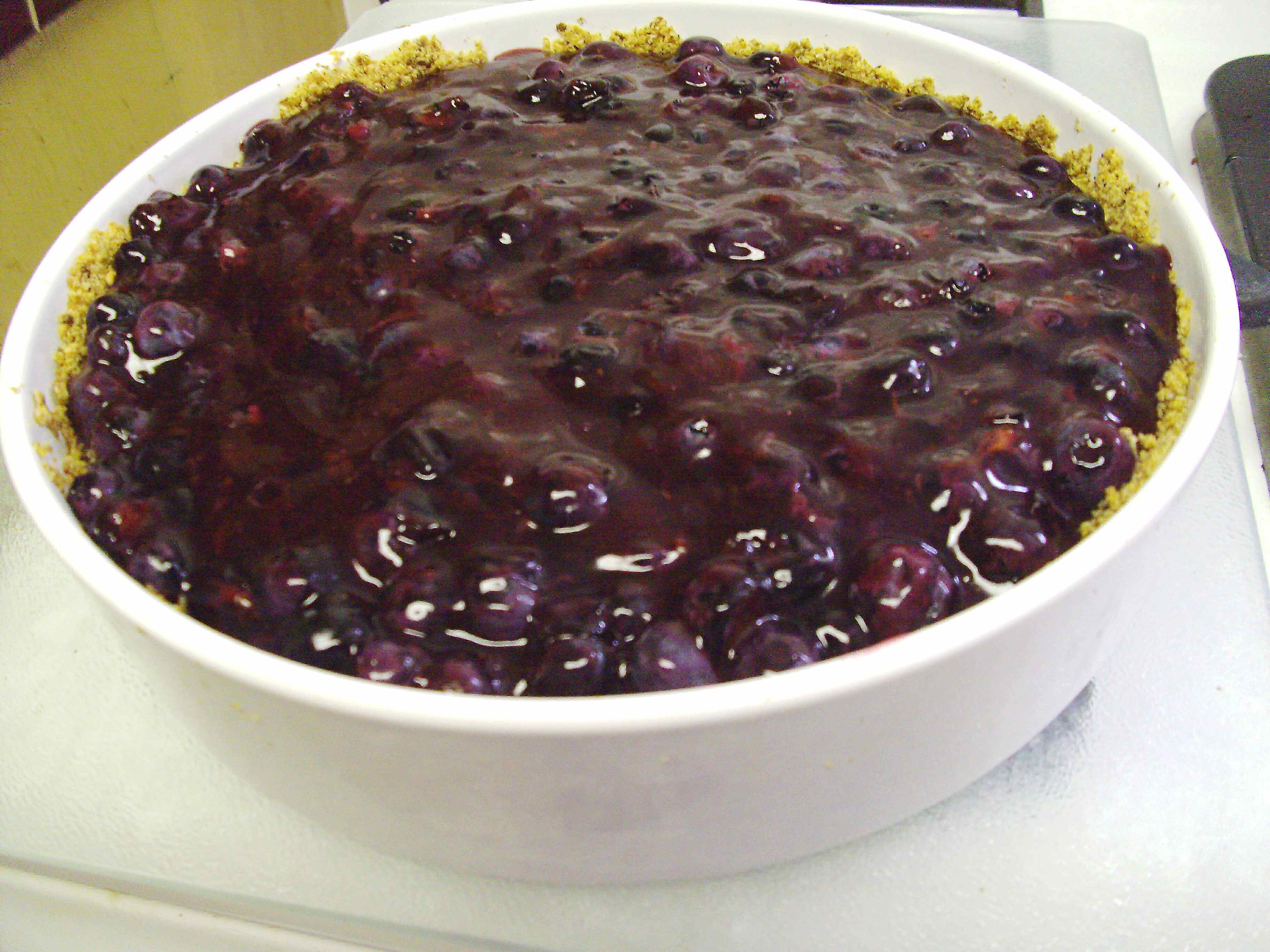
    raw blueberry pie with microwaveable filling and graham cracker crust

    This mostly-raw blueberry pie is a snap to make and very versatile--the filling microwaves in a few minutes, and you don't even have to bake the zippy gingered graham cracker crust--perfect for a hot Fourth of July and all summer long.

  • Recent Posts

  • Contents

  • Archives

  • Now Reading

  • See also my Book Reviews

  • Copyright 2008-2024Slow Food Fast. All writing and images on this blog unless otherwise attributed or set in quotes are the sole property of Slow Food Fast. Please contact DebbieN via the comments form for permissions before reprinting or reproducing any of the material on this blog.

  • ADS AND AFFILIATE LINKS

  • I may post affiliate links to books and movies that I personally review and recommend. Currently I favor Alibris and Vroman's, our terrific and venerable (now past the century mark!) independent bookstore in Pasadena. Or go to your local library--and make sure to support them with actual donations, not just overdue fines (ahem!), because your state probably has cut their budget and hours. Again.

  • In keeping with the disclaimer below, I DO NOT endorse, profit from, or recommend any medications, health treatments, commercial diet plans, supplements or any other such products.

  • DISCLAIMER

  • SlowFoodFast sometimes addresses general public health topics related to nutrition, heart disease, blood pressure, and diabetes. Because this is a blog with a personal point of view, my health and food politics entries often include my opinions on the trends I see, and I try to be as blatant as possible about that. None of these articles should be construed as specific medical advice for an individual case. I do try to keep to findings from well-vetted research sources and large, well-controlled studies, and I try not to sensationalize the science (though if they actually come up with a real cure for Type I diabetes in the next couple of years, I'm gonna be dancing in the streets with a hat that would put Carmen Miranda to shame. Consider yourself warned).

Microwave Tricks: Melts and other Hot Sandwiches

Microwaving the cheese and eggplant while the bread is toasting makes homemade panini a lot quicker

Microwaving the cheese and eggplant while the bread is toasting makes homemade panini a lot quicker--though not necessarily neater

Last year for his birthday my Italophile in-laws gave my husband the ultimate kitchen gadget. Because they loved theirs so much, they gave him…a panini press. I gawked. My husband is almost famous for not cooking. At all.

In more than 20 years of life together, I’ve rarely seen him make an actual sandwich for himself–does shmear on a bagel half count? I’m sure he believes in his heart that he still remembers how to flip one piece of bread on top of the other and seal the deal, but I’ve yet to see evidence of an attempt. Even without grilling.

Somehow I don’t in my heart of hearts believe this panini press is going to be removed from the box and used. Not by my husband, and not by me. It’s not that we’ve never been to Italy or eaten actual panini (we have, on both counts). It’s not that we hate panini or toasted sandwiches in general (we actually like them quite a bit).

It’s that the free-standing real, authentic, Michael Chiarello-approved-and-branded panini press weighs even more than the professional-grade waffle iron my in-laws gave us 10 years ago (and which we’ve used a total of 10 times since, because it’s such a pain to clean). The panini press also takes 3-4 times as long to preheat before you actually get to make the panini. Somehow a grilled cheese sandwich of whatever nationality just shouldn’t take 45 minutes to make. Which it did, when my in-laws, with all the innocent gadget-happy enthusiasm of Toad and his motorcar in Wind in the Willows, brought theirs out to demonstrate.

As a cheese-and-toast fanatic of some standing, I have a few very specific criteria for my grilled cheese sandwiches, grinders, melts, etc., etc.:

1. They have to be substantial and taste good–classic or adventurous, they have to be worth eating. That means the bread, the cheese, and any other fillings under consideration.

2. The toasted bread must be crisp. It must not crush, mush, squash, crumble or absorb tons of cheese grease. It must stand up to the fillings.

3. The cheese must have body and flavor even when melted–it shouldn’t run away, sink into the bread, turn into a pile of salty but otherwise flavorless grease, swamp everything else on the plate, or become a rubber eraser.

4. The whole sandwich must not take longer than about 7 minutes to put together and toast.

Normally you’d say panini fit the bill for an ideal toasted cheese sandwich, and I’d agree–if I were eating out and didn’t have to put up with preheating the grill. If you’re running a corner grill in a touristy Italian city, you’ve got a hot press at the ready and you’re turning out panini by the score for large crowds of passersby, an individual panino probably doesn’t take more than 5-10 minutes. At home, though, all you want is your d–n sandwich. You don’t want to heat an expensive and cluttersome gadget 45 whole minutes just to get there.

You’d also say that the standard white-bread-and-Velveeta fried cheez sandwich was out of the running. You’d be right there as well. No exceptions or passes.

However, in my kitchen, with its limited counterspace and my dislike of extra washing-up, waiting, or fussing, I sometimes get impatient even with the toaster oven classics of good bread, good cheese, and foil underneath to catch the drips.

A quesadilla is obviously no trouble in the toaster oven. Practically designed for it. Neither, really, is a simple sandwich-bread-and-cheddar grilled cheese. But for anything more complicated, or any thicker, more substantial filling, sometimes melting the cheese is the longest part of waiting, and in the meantime you’ve either pretoasted the bread so it stays crisp (in which case it burns around the edges waiting for the cheese to melt) or else you didn’t pretoast the bread and it remains too soft underneath the cheese (and maybe absorbs some of the grease while it’s doing that). Sometimes the other filling ingredients–tomatoes or tomato sauce, mushrooms, lentils, artichoke hearts, etc.–make the bread soggy while you’re trying to melt the cheese on top. Sometimes they don’t cook all the way through.

Here, surprisingly, the microwave comes to my rescue, particularly with fillings that aren’t just cheese but rather cheese melted onto vegetables or sauce or lentils or tuna or some combination. Continue reading

Speeding up Eggplant Parmigiana

On the last night of Hanukkah, I fried some more–but only a little this time.

When my daughter and I went vegetable shopping at my favorite corner grocery that day after school, we found a bin of eggplants on sale for 25 cents apiece. And they were pretty good, so I bought four of the firmest ones and we lugged them home.

The moment I spied the eggplants at the store, I was already thinking about eggplant parmigiana, or at least about involtini (cheese-filled eggplant rolls with tomato sauce), which comes to much the same thing. It’s mostly a geometrical difference at that point–rolled eggplant versus flat, crosswise rounds versus loopy lengthwise slices.

I’ve loved eggplant parmigiana since I was a kid and my parents would take us to a local Italian diner run by a friend of my mother’s. A different Italian diner, this one during my student days, served it either screamingly hot in a fresh-from-the-oven baking dish with so much incendiary mozzarella on top that you were guaranteed to scorch the roof of your mouth, or else sandwiched into a grinder roll with the best tomato sauce in the universe. I loved them both.

But there’s no denying the fact: the traditional parmigiana is one heavy kind of dinner. It’s designed to remind you (an hour or so after eating it, or perhaps again in the middle of the night) that suffering is all around us and wants us to share, so be humble and don’t forget the Tums.

Why is it so heavy? The eggplant, the tomato sauce, the garlic, even the cheese filling–all fine. I decided the main problems with eggplant parmigiana come down to two things: 1) frying the eggplant slices to cook them, because that takes a lot of time and a lot of oil, and 2) breading the eggplant with eggs and flour or breadcrumbs.

In the kibbutz kitchen where I worked after college, I did more than my share of slicing and breading eggplants and dipping them in eggs and redredging and frying, the whole works, enough for several hundred people (the other several hundred were smart enough not to eat them unless they happened to be hanging around the kitchen side room where the fryer was going and could snag a slice fresh off the cooling rack).

It’s more than ok to eat breaded eggplant hot off the press, as it were. Almost essential, in fact. But let the slices wait around at all, layer them with cheese and tomato sauce and bake for half an hour or so under foil, and what started out as fried eggplant, deliciously crunchy with a creamy texture inside, ends up shriveled and spongy or stringy between no-longer-crisp layers of bready gunk, and more than that, the frying oil is starting to make itself known again. Continue reading

How to Nuke an Eggplant

Eggplant after microwaving

After microwaving 10 minutes, the eggplant has collapsed

Eggplant is one of those warm-climate foods. It’s big, cheap, and plentiful, it goes with everything from garlicky oregano-and-fennel laden tomato sauce to nutmeg-tinged custard or cumin/cinnamon-scented Greek and North African dishes, to curries and darkly soy-glazed Chinese and Thai dishes. You can deep-fry it, panfry it, grill it and serve it room-temperature under a glossy layer of olive oil, marinate it, wrap it around other fillings, stuff it, roast it, make spreads with it… There’s even a Greek eggplant “spoon sweet” and at least one eggplant “jam” from Morocco. To say nothing of pink-tinged sour eggplant pickles, one of my favorite additions at the Israeli felafel stands.

The only thing you don’t really want to do with eggplant is eat it raw.

I NEVER bother with the usual cookbook directions for eggplant. All of them slavishly recopy instructions from their predecessors–salt it, drain it, fry it in tons of expensive olive oil, which it will soak up mercilessly, bake it for an hour only to find it still has spongy raw spots… They never bother to update, or even retest, the traditional assumptions that make eggplant such a pain.

You can forget most of that if you just nuke your eggplants first. Most of the stuff people do to their eggplants comes of just trying to get it cooked through. The salt’s to get rid of some of the water; the fat’s to cook it hotter and let the juices steam inside the slices.

Microwaving takes care of both, needs neither fat nor salt, and it’s very quick–10 minutes on HIGH on a pyrex pie plate for 1 or 2 decent-sized eggplants and you’ve got either collapsed whole eggplant(s) ready for baba ghanouj or a fan of slices or a mountain of bite-sized cubes. All of them cooked through and ready to do something more interesting with.

I used to think I was alone in the wilderness on this one, because NO ethnic cookbook–or any other cookbook with eggplant recipes–ever considers the existence of microwaving, much less condones it for cooking actual food. Continue reading