
• Enter your email address to subscribe to this blog and receive notifications of new posts by email.

    Join 241 other subscribers
  • Noshing on

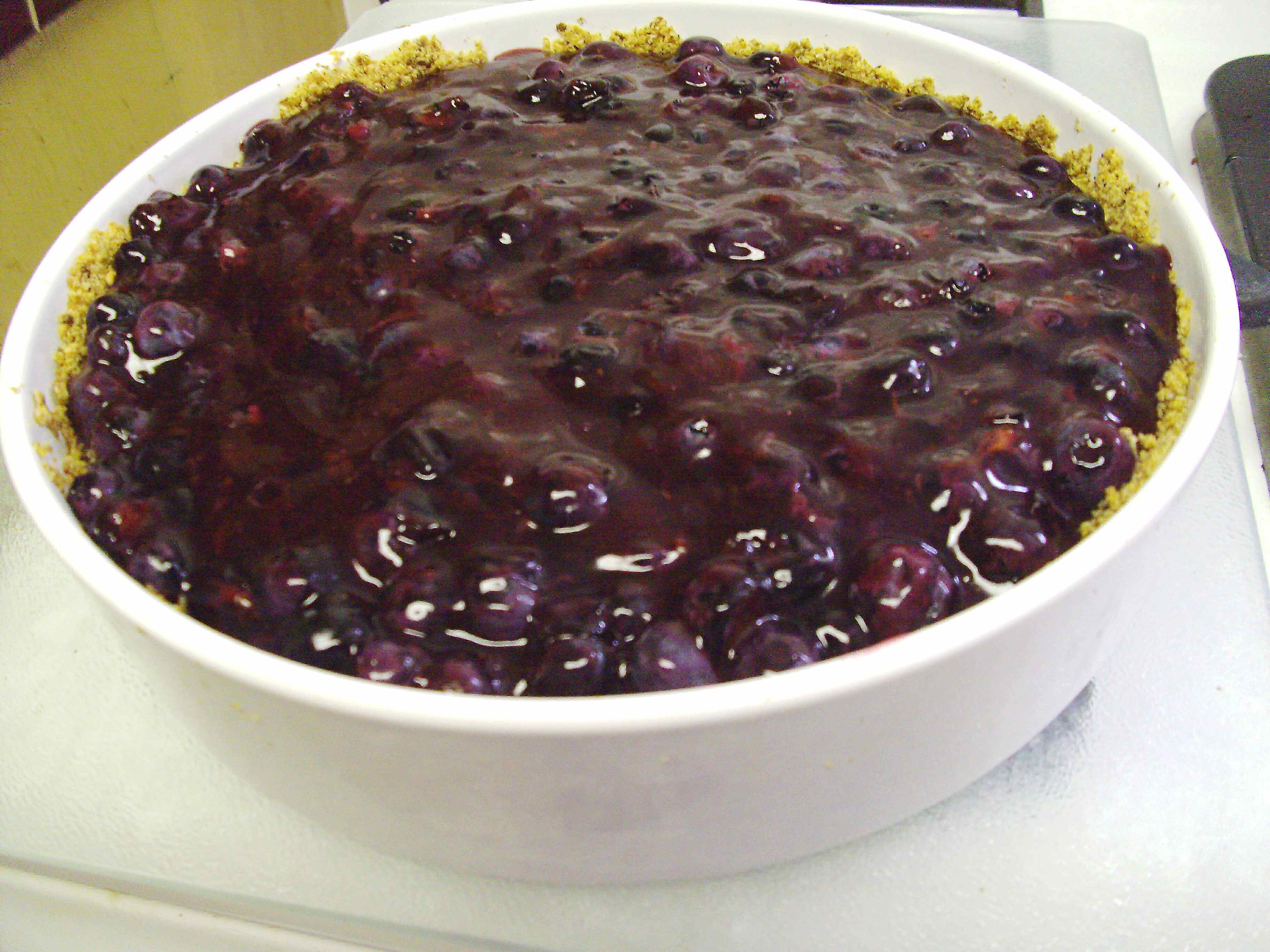
    raw blueberry pie with microwaveable filling and graham cracker crust

    This mostly-raw blueberry pie is a snap to make and very versatile--the filling microwaves in a few minutes, and you don't even have to bake the zippy gingered graham cracker crust--perfect for a hot Fourth of July and all summer long.

  • Recent Posts

  • Contents

  • Archives

  • Now Reading

  • See also my Book Reviews

  • Copyright 2008-2024Slow Food Fast. All writing and images on this blog unless otherwise attributed or set in quotes are the sole property of Slow Food Fast. Please contact DebbieN via the comments form for permissions before reprinting or reproducing any of the material on this blog.

  • ADS AND AFFILIATE LINKS

  • I may post affiliate links to books and movies that I personally review and recommend. Currently I favor Alibris and Vroman's, our terrific and venerable (now past the century mark!) independent bookstore in Pasadena. Or go to your local library--and make sure to support them with actual donations, not just overdue fines (ahem!), because your state probably has cut their budget and hours. Again.

  • In keeping with the disclaimer below, I DO NOT endorse, profit from, or recommend any medications, health treatments, commercial diet plans, supplements or any other such products.

  • DISCLAIMER

  • SlowFoodFast sometimes addresses general public health topics related to nutrition, heart disease, blood pressure, and diabetes. Because this is a blog with a personal point of view, my health and food politics entries often include my opinions on the trends I see, and I try to be as blatant as possible about that. None of these articles should be construed as specific medical advice for an individual case. I do try to keep to findings from well-vetted research sources and large, well-controlled studies, and I try not to sensationalize the science (though if they actually come up with a real cure for Type I diabetes in the next couple of years, I'm gonna be dancing in the streets with a hat that would put Carmen Miranda to shame. Consider yourself warned).

Bistro + Cartoons = Stephane Reynaud’s French Feasts

French Feasts by Stephane ReynaudFrench Feasts: 299 Traditional Recipes for Family Meals and Gatherings by Stéphane Reynaud (2009 Stewart, Tabori & Chang, $40.00)

It’s a huge book. Daunting. Heavy as a couple of bricks. Padded cover, even, with a zillion miniphotos of intimidating French bistro classics in their raw and cooked forms (an octopus, a roasting tray of vegetables with leeks, a crème caramel, and several red-checked tablecloths, for that seemingly effortless retro chic, laid out under rustic-looking pot-au-feu types of stews. And a cutting board with six stuffed marrow bones stood on end.)

Flip open the front cover and you get a classic bistro menu with way too many choices (luckily it’s printed with a little English and page numbers, not handwritten on a chalkboard across the room, so you don’t have to squint). Read down the page (continue inside the back cover) and you start to dig up little puns and odd bits of humor here and there. They finally bubble up into something definite in the introduction, where the author, a medium-youngish guy seated in front of a casserole with a chef’s knife and a two-pronged barbecue fork, reminisces about a childhood stuffed with too much good food on family Sundays with his grandmère. Replete with escargot-burping uncles.

And from then on, you realize why this book is so fat: not only is there a heavy emphasis on meats and charcuterie (and six or seven different preparations for foie gras, 12 or so variations on soft-boiled eggs and omelets, etc.), but every other page is a photograph, or a profile of a couple who run one or another bistro, a venerable Lyonnaise sausage maker, vintner, baker, or cheese affineur…

Or — quite frequently — a cartoonist’s demonstration, only a little less improbable than Rube Goldberg’s, for making wine or cheese, or canning preserves (watch out for the orange tabby in the “catsup” jar). Check out the last chart, next to the Armagnac and Cognac page, which presents  increasing girths and grades of cigars appropriate for the increasing girths and ages of the smokers. Is it by way of including the classic end to a classic meal, never mind the known risks, or a subtle message the other way–that these days it’s more savvy to laugh at the cigar nostalgia die-hards than become one?

And speaking of nostalgia…There are even songsheets for Moulin Rouge classics so you can join in with your French friends after dinner. You kind of need those. You definitely need those.

Just what kind of cookbook have we lugged home?

Actually, Stéphane Reynaud is a well-regarded restaurateur on the outskirts of Paris and the well-trained son and grandson of a line of pork butchers. His previous book, Pork & Sons, arrived in the US a couple of years ago, and this one was published here in English sometime last fall. Despite the fact that I don’t eat pork and don’t think it’s a glorious profession to “break down a pig” or any other large animal, as glamorized on adventure cooking shows, French Feasts is well worth the read. Because Reynaud clearly knows his stuff, and not just about meat.

I’m not sure whether he got a translator to help, or he’s just really fluent in English–if so, my hat’s off to him, because his sense of humor really comes through fairly naturally, and it probably meant rewriting a fair amount of the text to come up with accurate and still funny equivalents for English speakers. Translating (and having to explain!) puns from French to English would be a job and a half for just about anyone. Most people would rather scrub dishes than have to explain a joke. Even me.

The recipes themselves are classics–untrammeled and unfutzed-with–and unexpectedly instructive in their simplicity.

Most have fewer than 10 ingredients, and often fewer than six. Here there are no dishes calling for 20 different special vinegars or sweeteners, as in American food-glam magazines and cookbooks. Not too many luxury ingredients, other than that many of the “proteins”–shellfish, goose, duck, game, foie gras–are hard to find in the US and kind of chi-chi expensive these days outside of Europe, but you could probably substitute with some success. And the titles are simple too–English translations of the classic French names, not mile-long lists of every special new “twist” ingredient it’s been tweaked with to up its audience appeal. Or advertiser appeal.

And the food photos. Nice photography but no attempt to make restaurant-pretty “tall food” plates with lots of garnishes. These are stews and soups and unsliced terrines–unstyled, many of them, or at least not overstyled with voguish background blur and enhanced color and gloss on every dish. Cooked cabbage looks like cooked cabbage. Turnips look like turnips, not like  flaming purple orchids turned suddenly solid. The stews look like stews you’d make at home–well, except for the lobster one, or the terrine with the crossed strips of fatback over it, or the baked fish in a glossy brown flake pastry crust. That’s just showing off, right there.

But really, most of these dishes are photographed while still in the cooking pots–which aren’t the bright shiny brand-new brand-name items you can order directly by clicking on the picture. They’re well-used, old, blackened, ugly even. Not glamorous. They don’t go with the brushed steel decorator kitchens we’re used to seeing in all the glossy cookbooks on our shelves. They have a bit of grime and wear about them, and make us feel better about our own dowdy day-to-day kitchenware that we’ve been using since we got out of school umpty-nine years ago and haven’t replaced because it’s reliable.

And now what I thought at first was a detour:

To my great surprise, given the author’s “slow food” cred, Reynaud’s recipes don’t contain any of the rote “1 teaspoon of salt” in each recipe that most recent American cookbooks have fallen into. Few of his recipes are seasoned more than once if at all, and usually just the sauce, or just the surface, right before serving. He doesn’t dictate how much, but from the context it’s obviously closer to a pinch than a spoonful, and often he skips it altogether.

He also doesn’t boil his vegetables in salted water, which is very chic right now in the US just because Thomas Keller said he does it and Michael Ruhlman trumpeted it as gospel. With only one exception–in fact, the only recipe in the book with a specified teaspoon of salt–even the desserts in French Feasts, including all of the pastry doughs from shortbread to puff pastry, are almost entirely free of added salt. The sheet cakes have baking powder, and a handful of the pastries call for salted butter rather than plain, but neither comes anywhere close to a contemporary American version’s salt content.

It’s not that Reynaud never uses salt or salted ingredients like capers or sausage or parmesan. But unlike American recipe developers, he doesn’t throw extra salt on top of them, and in fact he warns against it in one of the smoked pork-plus-sausage-plus-three-other-preserved-meats kinds of dishes.

SO—If these are the classics and the methods American chefs and recipe test kitchens have been aping and trying to bring to the table in our best restaurants for decades, French Feasts makes it clear there’s been more than a little “tweaking” or “drift” going on, particularly for the increasingly popular baked goods. Almost every American version of the classic French desserts, from mousse to napoleon to baba to charlotte and crêpes and on to cannelés, has had an automatic teaspoon or worse of salt dumped into it before it went to press. In comparison with the traditional style of French Feasts, we seem to be pickling ourselves. You have to wonder who put it there and why, and what our sorta-French desserts are really supposed to taste like when you skip the commercial interest that seems to be behind all the routine, mindless oversalting.

And you have to ask–in romanticizing Slow Food but presenting commercially tainted, overly fussy, overly expensive and oversalted versions of traditional European dishes, how far has American foodieism drifted away from reality? How badly have we lost the thread?

In contrast to the younger wave of foodie restaurant chefs and specialty purveyors in the US, most of the folks profiled in French Feasts are not sporting extensive surfer tattoos or orange clogs to proclaim their indy cred. They’re also not Glamorous-Looking French People With Scarves ™, except Continue reading

Cutting the salt in Indian cuisine

India with Passion by Manju Malhi

Last week I got a Chanukah package in the mail from my sister. In it was India with Passion: Modern Regional Home Food by Manju Malhi, a British food writer with a popular UK cooking show, Simply Indian, on home-style cooking. One of my sister’s food-savvy friends had tried out the recipes and raved about it.

Indian food is becoming more popular in America and non-Indians like me are finally getting to taste a broader variety of regional cuisines (though I’ve yet to get down to Artesia, the “Little India” section of west LA, and really dig in). But learning to cook these dishes at home is another matter.

Yamuna Devi, Maddhur Jaffrey, and Julie Sahni were the first major Indian cookbook authors in the U.S. But their classic books and most of the ones published since then don’t give you a way to make sense of the laundry lists of spices given for each recipe. They give a rote answer as to why Indian cooks don’t use the standard yellow jar of generic curry powder that the supermarkets stock, but there’s no serious discussion on the balance of flavorings and how to vary it within a meal for any one particular regional cuisine. And perhaps there really is no great way to explain it. You really have to read through the book and see how the spices  and proportions change from one dish to another–something most Western readers aren’t used to noticing.

If I had my wish, I’d want general notes like “red lentil dal is better with twice as much cumin as coriander seed and a fair amount of both–we’re talking teaspoons to a tablespoon for 6 portions–but palak paneer should have much less of both–half-teaspoons– in equal amounts and include cardamom–preferably the black smoky kind–as the signature ingredient.” I want to know why you have onions cooked down to a paste in one dish but no garlic, and in another use fennel instead of cumin. What’s essential and what can I leave out if I don’t have it in the house? How can I vary the dish with the vegetables or beans that I have on hand at the moment and still have it come out tasting good? And what’s authentic and what’s modern?

A crop of recent cookbooks published in the US and UK attempt to deal with these problems a little more systematically–sometimes more for recent Indian emigrés and students than for the larger non-Indian community. Monica Bhide has simplified the spice lists in her recipes–sometimes to the point where you wonder if the food bears any resemblance to the original. Suvir Saran, lauded by Mark Bittman and the first Indian restaurant chef to join the American name-brand-chef pantheon, has also simplified ingredients lists and incorporated some American ingredients–like ketchup–with reasonable reasons (ketchup’s origins lie in British-controlled India of a century or so ago). And cooking teacher Raghavan Iyer has just come out this year with a big, bright paperback tome, 660 Curries, which logically ought to be more than you could or would want to cook in a couple of years.

One new trend is an attempt to make Indian food heart-healthier by cutting down on saturated fats,  substituting unsaturated vegetable oil for ghee and tofu for paneer cheese. What they haven’t yet done, and probably should, is cut back the salt as well. (So should everybody else, of course.)

Nearly every Indian cookbook I’ve ever seen uses screamingly high salt–rarely less than a teaspoon for a dish that serves 4-6, often a tablespoon or even more. Continue reading

Challah

Two nights ago I brought a couple of homemade loaves of challah to some friends’ house for Shabbat dinner, which was also the last night of Chanukah. Their mother, a fairly well-known kosher caterer, was there and my jaw dropped when she said she’d never learned how to make this classic bread. Challah looks beautiful once it’s baked even if you’re not a champion braider (I’m definitely not), but it’s not such a big deal.

Challah was the first bread I ever made. I was nearly eleven years old the summer Nixon resigned and a camp counselor asked me to help braid loaves from a huge bowl of dough in the kitchen one Friday afternoon. Later, I made all the challot for my bat mitzvah, baking and freezing them week after week. During my last two years at university, I made challah most Friday afternoons  and whenever I was baking I suddenly got proposals from other students along the lines of “Would you please be my mom?” (gee, thanks) Then I graduated, and I just stopped. I had no oven in Israel (a “WonderPot” doesn’t count), and when I came back I had a lab job with long hours. But every once in a while, for the High Holidays and at odd Fridays throughout the year, I still put my hand to the dough and lately it’s been coming out really well.

There are only a couple of smallish tricks to working with the egg-based dough. As long as you have the time to rise and bake the bread within a day or so of making the dough, the actual work time for a pair of two-foot loaves–kneading, braiding and glazing them with egg–is about half an hour altogether. Everything else is letting it sit and rise, or sit and bake. BUT you should figure about 3 hours for the first rise at room temperature (or overnight in the fridge if that’s handier, but I haven’t tried it personally for challah), and after the braiding, which takes maybe 20 minutes for 2 loaves, about another hour to rise covered and then a little less than an hour for baking.

This dough is not overtly sweet, not salty, and not too heavy on either eggs or oil. I find that the bread is lighter, more feathery, and less like a dried-out dish sponge the next day if you don’t exaggerate the rich stuff and just use water rather than more eggs or oil to make up the difference. So this is a lighter, more home-style challah than the kind you get at the bakery or in your grocery store, and less day-glo yellow too–they use turmeric, the cheats. Also much less expensive–I think the total cost is something like $2 for a pair of loaves, and the most expensive ingredient gram-for-gram is the yeast. Continue reading

Lentil Stew with…Pineapple?

Fresh pineapples are just coming on the market at a good price this week or so–$2 or $3 apiece. Meanwhile, tomatoes are…well, let’s say they’re not at their finest in December. So, some added incentive for trying something new.

Pineapple is the last thing that belongs in anything subtle or savory–or is it? Hawaiian pizza is practically a classic by now, despite the culinary clash of a pineapple-ham topping on the one hand and garlicky tomato sauce, mozzarella and oregano on the other. Of course, that (and all other glazed pineapple/pork product classics) seems more brash than subtle.

Given the usual culinary partners–ham, chicken, cottage cheese, spam and more spam–you’d think the rule for making pineapple work in something savory would be that the other main item has to be pretty salty to stand up to all that acidic tropical sweetness. But that’s not the only way to deal with it. Good thing too, since ham, ham, spam and ham are off my grocery list. (So’s spam.)

This curried lentil and vegetable stew, which I’ve based on a dish from my much-missed Lebanese former-restaurant-turned-lunch-spot, takes advantage of pineapple’s tang while mellowing out its jarring sweetness. It took me a couple of tries to achieve the taste I remembered from the restaurant, but I think this version works pretty well, even though it contains no salt at all.

Depending on the sweetness of your pineapple, you may need more or less to balance the flavors. The pineapple should be a subtle but surprising bite among the other vegetables and the rich lentil base. Don’t be afraid to tinker with the (rather loose) amounts of the various ingredients and taste as you go.

Curried Lentil Stew with Pineapple

  • 3-4 c. fully cooked green/brown lentils or half a pound dry (see step 1)
  • 1 T. curry powder
  • 1/2 t. ground cumin
  • 1/2 t. ground coriander seed if you have it
  • 1/2 t. brown mustard seeds if you have them
  • 2 medium onions, chopped
  • 1-2 medium tomatoes if you have them
  • juice of a lemon–plus another half to adjust taste as needed
  • 2  large or one really fat clove garlic, minced/mashed/grated
  • 2-3 half-inch rounds of fresh unsweetened pineapple in smallish chunks
  • 2-3 big carrots, peeled and chopped
  • 2-3 stalks celery, chopped
  • a good glug of dry red wine, cheap but decent, about 1/4 c.
  • olive oil

1. To cook the lentils in case you haven’t, wash and pick over half a pound of green/brown lentils and put them in a big pyrex bowl (2.5 qt/l) with enough water to cover by 2 inches. Put a microwaveable lid or dinner plate on top and microwave on HIGH for 7-8 minutes. Let sit in the closed oven another 20-30 minutes to soak up, add more water if there’s less than an inch above the lentils, then microwave again for another 7-8 minutes. Wait another 10-15 minutes and test for doneness. The lentils should be soft.

2. Meanwhile, sauté one of the onions with the spices in a little olive oil for a few minutes, add the chopped tomato and half the garlic and cook a few minutes, adding a drizzle of water if it starts to dry out.

3. When the lentils are done, pour them in with some of the cooking water, stir up, heat, and add the lemon juice and the pineapple. Cook a few more minutes until it starts to thicken.

3. Put the cooked lentils back into the pyrex bowl, add the remaining vegetables and the rest of the garlic, a little water, maybe a little more lemon juice, the wine, and a drizzle of olive oil. Cover at least partway (maybe with a small gap to let alcohol from the wine boil off) and microwave 5 minutes more or until the vegetables are tender.

Spaghetti Squash Too Many Ways

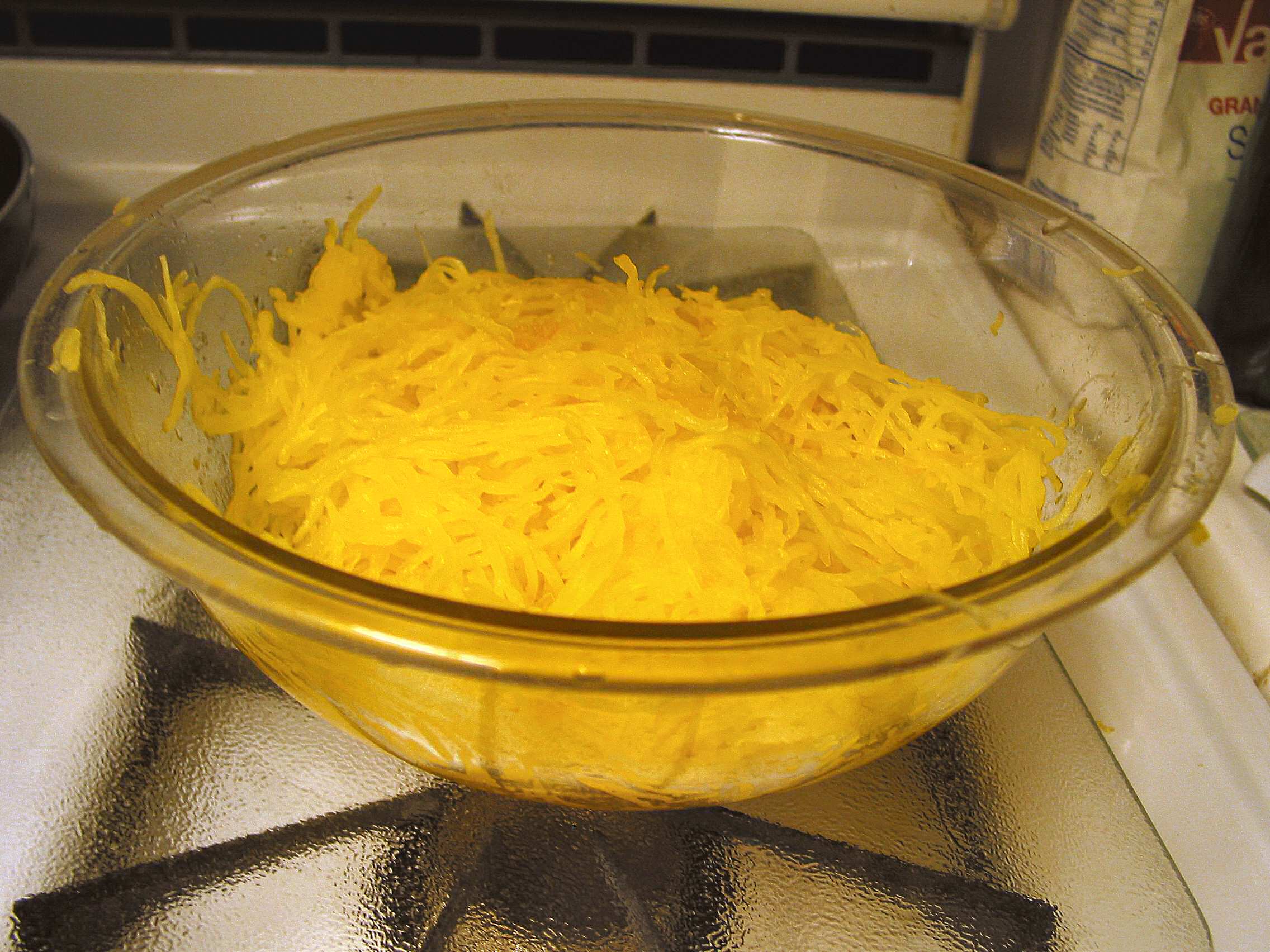
Just half of a microwaved spaghetti squash makes 5 or 6 cups

Just half of a microwaved spaghetti squash makes 5 or 6 cups!

This week my local Trader Joe’s had crates of beautiful–and hefty–spaghetti and butternut squash for less than $2 apiece–on the order of 30 to 50 cents/lb. So of course I got two of each and wobbled out of the store unsure which bag was pulling me down further. And then came the task of cooking them.

One spaghetti squash–a good-sized 5-6 lb. beast–will feed a lot more people than you’d think. It’s got some serious advantages over standard pasta: more fiber, no sodium, some vitamin A and potassium, perhaps fewer calories and carbohydrates per ounce. And it’s incredibly versatile. And you can cook it in the microwave in about 10 minutes rather than spend an hour baking it and heating up the house.

But there’s one big disadvantage–if you cook the whole thing, you have to eat the whole thing. Cooked spaghetti squash doesn’t hold up in the freezer–the strings go flat and shrivelly. And reheating too long can make it wilt as well. So can very acidic dressings.

So the choices are (for a small, moderately but only moderately tolerant family unit):

  • Cook half at a time and store the other half raw and wrapped in the fridge for a few days
  • Cook both halves, use one right away, and store the other half in the fridge for a few days, either wrapped in its shell or else scooped out into a container  (recommended)
  • Give the other half to a friend–but not too good a friend…
  • Cook it all and make it for a big potluck. Maybe people will think it’s innovative and exotic…depends on what you do with it (I don’t so much recommend marinara for this if you’re looking to impress–maybe a peanut-curry sauce or an Alfredo-style sauce with lemon peel, or something involving oyster mushrooms)
  • Cook it all and serve it a couple of different ways over the course of the week
  • Make a couple of the variations ones that taste good cold and eat the leftovers for lunch (recommended)

One important tip (learned the hard way):

The strands grow crosswise inside the spaghetti squash, not lengthwise. If you cut the squash in half the way you would a watermelon, you’ll be cutting the strands into shorter bits–not what you want. Cut the spaghetti squash in half across the middle of the SHORT side, NOT from the stem to the flower end.

If you have kids, let them count the seeds in each half of the squash–it’s a good lesson in plant survival strategies. My daughter and I counted about 80-90 seeds per half and decided to wash, dry and save them for her school’s garden. At this rate, they’ll have spaghetti squash for several years. Note of caution: out of 10 that we thought had been lost down the sink but actually got caught in the drainer, a full 9 germinated, so be careful what you wish for… even commercially grown, these things are very, very determined. But we’re not ready to name any of them “Audrey II”–yet. Continue reading

Microwave Tricks: Indoor Grilling When the Heat’s On

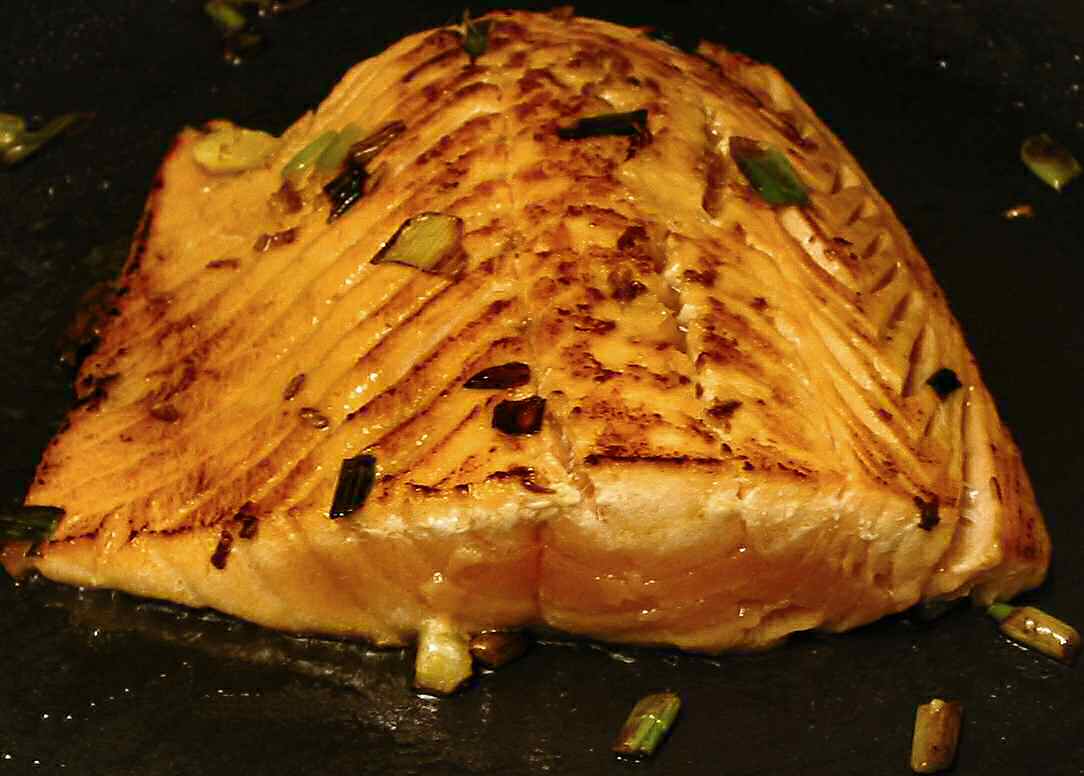
Pan-seared salmon, ready for the microwave

Pan-seared salmon, ready for the microwave

You almost never hear the words “microwave” and “slow food” in the same sentence unless someone’s casting the two as opposites with an easy sneer. The one and only time I’ve read anything about microwaving by a Real Restaurant Chef was Tony Bourdain in Kitchen Confidential when he mentioned something about hitting a plate gone cold with some “Radar Love” before sending it out. He meant it as a dirty back kitchen secret.

Gourmet cookbooks (other than Barbara Kafka’s Microwave Gourmet, a scarily extensive tome from 1987) never call for microwaving anything more exciting than butter or chocolate chips, and none of the Food Network shows do either. It’s a shame. Can you see Giada De Laurentiis microwaving? Mario Batali? No–it would probably zap the studio camera or melt Mario’s clogs or something. And it would ruin the vicarious glamor of slow cooking. But it would be fun while it lasted, wouldn’t it?

Some things, let’s face it, don’t do incredibly well in a microwave–deep fat frying (Kafka claims you can in small quantity, but I’m scared of sloshing hot oil around a small box), birthday cakes (though Kafka has found a reasonable way to do cake layers and her recipes get good reviews), an entire raw turkey (stuffed or un-)…. And fish? That may be the trickiest of all, since fish goes from almost cooked to shoe leather in 20 seconds if you’re not careful, and it still won’t brown nicely.

For example, take the lowly, farm-raised salmon fillet. Now I know it’s not wild, I know it’s not King or Sockeye, it’s not elegantly 2″ thick–but it’s also not $17.99/lb and up. And it can still be pretty good, especially grilled.

Only it’s summer in L.A., and the last thing I want to do in my townhouse with a distinct lack of outdoor grilling facilities is heat up the house or cook the salmon long enough under a broiler for the edge fat to start sending acrid smoke up the stairway.

But combine the microwave’s ability to cook things through with a quick browning technique like pan-searing, and suddenly you have a strategy for some nice main dishes that taste better than they should in a lot less time, and don’t heat up the house. Incidentally Kafka mentioned this method in passing while discussing the fact that microwaves don’t brown food. She then proceeded to ignore it completely, don’t ask me why.

Most restaurant chefs insist they can’t get a good sear on anything with a nonstick pan, but that’s not entirely true (plus I hate washing dishes any more than I have to, and I’m really determined, so nonstick it is). I’m borrowing from Martin Yan on this one–it’s a technique I saw him do for a stir-fried shrimp recipe on PBS, sometime way, way back in the 1980s, and it works surprisingly well here. Continue reading