
• Enter your email address to subscribe to this blog and receive notifications of new posts by email.

    Join 241 other subscribers
  • Noshing on

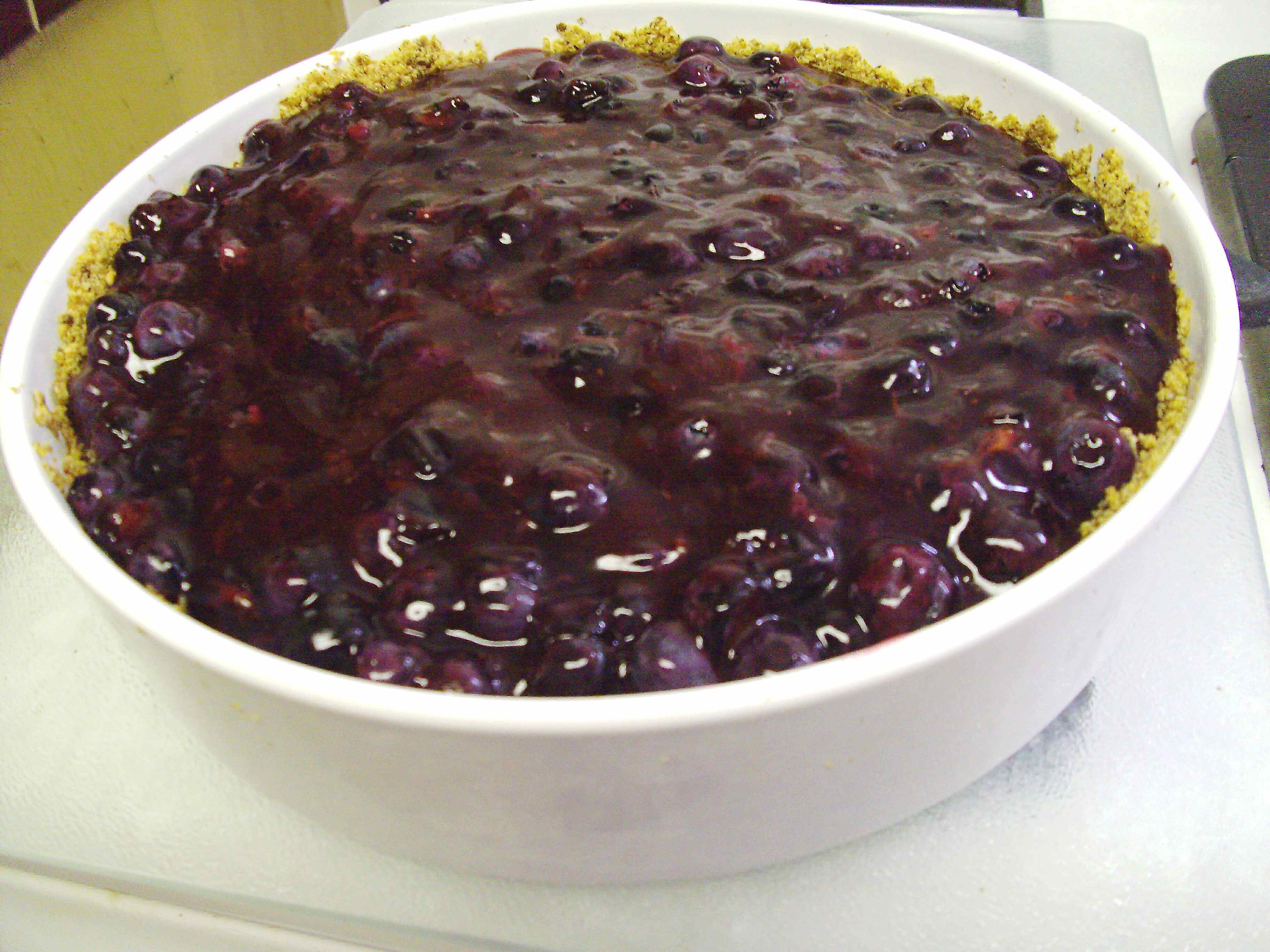
    raw blueberry pie with microwaveable filling and graham cracker crust

    This mostly-raw blueberry pie is a snap to make and very versatile--the filling microwaves in a few minutes, and you don't even have to bake the zippy gingered graham cracker crust--perfect for a hot Fourth of July and all summer long.

  • Recent Posts

  • Contents

  • Archives

  • Now Reading

  • See also my Book Reviews

  • Copyright 2008-2024Slow Food Fast. All writing and images on this blog unless otherwise attributed or set in quotes are the sole property of Slow Food Fast. Please contact DebbieN via the comments form for permissions before reprinting or reproducing any of the material on this blog.

  • ADS AND AFFILIATE LINKS

  • I may post affiliate links to books and movies that I personally review and recommend. Currently I favor Alibris and Vroman's, our terrific and venerable (now past the century mark!) independent bookstore in Pasadena. Or go to your local library--and make sure to support them with actual donations, not just overdue fines (ahem!), because your state probably has cut their budget and hours. Again.

  • In keeping with the disclaimer below, I DO NOT endorse, profit from, or recommend any medications, health treatments, commercial diet plans, supplements or any other such products.

  • DISCLAIMER

  • SlowFoodFast sometimes addresses general public health topics related to nutrition, heart disease, blood pressure, and diabetes. Because this is a blog with a personal point of view, my health and food politics entries often include my opinions on the trends I see, and I try to be as blatant as possible about that. None of these articles should be construed as specific medical advice for an individual case. I do try to keep to findings from well-vetted research sources and large, well-controlled studies, and I try not to sensationalize the science (though if they actually come up with a real cure for Type I diabetes in the next couple of years, I'm gonna be dancing in the streets with a hat that would put Carmen Miranda to shame. Consider yourself warned).

Sleepover fare

My daughter who loves vegetables and will often eat them ahead of whatever else is on the plate at supper suddenly became selfconscious yesterday about serving them to her friends at her birthday sleepover–no, no, no, Mom, none of my friends will eat them, and they probably don’t want fish, we want pizza. Not your pizza. Pizza from the good takeout place in Sierra Madre. And no anchovies this time.

We’ve known these girls since kindergarten–or earlier. They eat vegetables. But pizza it was. With some raw veggies for snack thrown in beforehand.

Our experience with the standard kid party fare is not very happy. Chips, soda, candy, popcorn–and that’s just the open bowls sitting around. Then pizza, cake, ice cream, possibly more candy.You’ve got to wonder what kind of parents actively choose such a menu–and the answer these days is, most people. All of these things are pretty addictive–everyone grabs for seconds without thinking.

Our daughter has been to a few of these parties and discovered the hard way that everything she knows how to do as a Type I diabetic flies out the window the instant she gets there. All her friends are grabbing handfuls of these very high-carb, mostly processed foods which we never get at home (except for ice cream), and the behavior is as addictive as the snacks. Even when she plans a strategy ahead of time with a goal for a limited reasonable maximum of carb grams and she calculates insulin for everything meticulously, she ends up pretty high hours later–as in, at 3 a.m., long after the insulin for the food has run its course.

It’s extremely hard to calculate carbs accurately enough with most processed snack foods at a party to avoid big glucose spikes later on. Even if you do everything right. There’s just something about junk foods–either you end up eating three meals’ worth of carbs in an hour of snacking without even feeling it because your friends are eating that way and it seems normal at the time, or these foods really digest a lot differently from standard things like bread or pasta. If it’s happening to our daughter, who can see the ugly results by getting a fingerstick three or four hours down the road, when she’s antsy and fractious and can’t sleep at 3 a.m., you know it’s also putting an extra burden on your kid who has a working pancreas.

So it might be a good idea to get fresh with the standard teen birthday party menu–if you’re doing pizza, skip the bags of chips and soda, add some veg and lighten up on dessert.

Salad was not achieved despite best intentions only because there was no room to get through to the kitchen where the vegetables of the week were lounging in the fridge. With the girls suddenly launching into “girl tawk” over pizza (a less appetizing combo would be difficult to imagine), and since we don’t have a separate den, our living room and dining room quickly became no-parent territory. My husband and I sidled up, grabbed some pizza and some carrot sticks and hid out in our bedroom so as not to intrude or have to hear any of it–win/win.

So given the awkwardness of getting past them and into the kitchen, vegetabalia last night was reduced to the bag of sugar snap peas and a bag of baby carrots we’d put out for a snack–not up to par, really, but it worked out fine. The girls ate them happily enough and didn’t notice the lack of or even seem to miss chips, cheetos, popcorn, potato chips, pretzels, goldfish etc. They were all too busy watching “Big Bang Theory” episodes and gossiping nonstop. It just goes to show you–the party is not in the bag [of chips, as per the tv ads], it’s in the participants.

I’d made a rather large and beautiful raw blueberry pie for dessert–chocolate cake after pizza just seems so wrong when it’s so hot out, and besides it’s summer with a vengeance. All indications (pretested and verified by my kid) were that both the crust and the filling were up to snuff. My daughter calculated for her best chances of being happy and more or less within range at her own party so she could have a piece with her friends, and she stopped worrying about the lack of junk food. I mean, pizza serves perfectly well as its own form of junk food–you don’t need any extra.

Plus you don’t want to be crunching too loudly when Sheldon and Leonard are going at it over whichever comic book hero’s superpower is the more mathematically sound.


You must read this. Take an hour if you have to.

Today’s New York Times has an excerpt from investigative reporter Michael Moss’s forthcoming book on the processed food industry’s push to engineer addictive foods. It’s a long article, more than 12 pages, but well worth the read.

The Extraordinary Science of Addictive Junk Food – NYTimes.com.

Getting Sensitive to Snacks

In the past two weeks since my daughter returned to school as a newly diagnosed diabetic, we’ve started finding out just how many times a week students are presented with treat foods as extra snacks, even outside of what they bring from home. Happens at least twice a week. Why? They’re not in kindergarten.

I know I kind of “got into this” in my post two days ago about making hamantaschen lower in carbs. But my lingering amazement at the automatic and frequent food handouts in class, between snack and lunch even, got a boost this morning when I read the New York Times article by Tara Parker-Pope on the big rise in kids’ snacking over the past 30 years.

Barry Popkin, a nutrition researcher at UNC-Chapel Hill, and one of his students have just published an analysis of American kids’ snacking over the past 3o years. They compiled data from four national diet and health surveys and found that kids are now snacking an average of 3 times a day, mostly on cookies, chips, candy, sodas etc., not vegetables or whole fruits. They’re taking in more than a quarter of their daily energy, about 600 calories, from these low-nutrition processed foods. That’s 168 more calories on average than 30 years ago, and kids 2-6 seemed to be in even worse shape.

The percentage of kids who snacked at least once a day in 1977 was about 75%, but now it’s up to about 98%. About half the kids today snack 4 times or more per day. Some snack 10 times a day. What on earth?

This article in the NY Times “The Well” section was quickly followed by another in which Parker-Pope reviews countering arguments about the real harm a single cookie a day may or may not be doing. Studies cited a bit more vaguely than the Popkin study may suggest a lack of consistent benefit to insisting that everyone cut out a cookie a day to lose weight.

Will cutting out a cookie a day help if you’re eating other extras instead or not exercising? Maybe not–in fact, probably not. But I have to wonder why this hedging, wishy-washy kind of article followed so quickly on the heels of the report on the bigger study with hard numbers.  Does Parker-Pope’s second piece negate what Popkin and his student Carmen Pierna have reported on snacking trends? Not legitimately.

My daughter actually needs to eat a snack between meals these days. But she’s an exception, not only for needing it at age 9 but for eating a specific and limited snack with some nutrition to it in a timely, coordinated way rather than grabbing up unlimited treat foods without regard to the regular meal plan.

Automatic, constant, reason-free snacking–now not even limited to snack time!–is just not a necessity. It’s a habit that’s snowballed until it seems so normal people don’t even realize they’re doing it anymore or why it’s not a good idea.

All I can say is, it shouldn’t take having to be diabetic to notice the excess snack habit and steer clear. Is it time for the Great American Snack-Out?

The Meaning of “Tasty”

One very strange description crops up in nearly every expert’s take on processed food and the way it’s overtaken fresh and whole foods in the American diet. Everyone from food industry veteran Hank Cardello (see the Stuffed book review) to NYU nutrition professor Marion Nestle in What to Eat talks about fast food and junk food as “tasty”. David Kessler goes even further: in The End of Overeating, he adds “irresistible,” which he says is the problem he faced most of his life.

Moreover, “tasty” has become the important word in processed food advertising. Driving home from the post office today I even saw it on a billboard for Vitaminwater10, with the tagline:  “10 CALORIES. 4 NEW FLAVORS. TASTIER THAN EVER.”

Tasty. It’s the word of champions, the key, the adword to beat.

And for the life of me, I’m not sure why. Because the words I would have chosen for most of it include stodgy, greasy, cardboardy, screamingly salty, day-glo ™ orange, and “a lot like airplane food, only on the ground.” Am I the only one?

But “tasty”–specifically that word–is clearly the accepted description, even among these food experts, and that points to a host of disturbing assumptions. Either they mean they find processed food tasty or they mean they think everyone else finds it tasty and irresistible–even if there’s something better to eat. That’s kind of defeatist, isn’t it? If everyone “knows” fast food is tastier than fresh produce, what hope is there for mainstream Americans to eat healthier than they do today?

What do they actually mean by “tasty” in the case of processed food? They don’t mean fresh, as in fresh produce. They don’t mean tangy, as in yogurt or a tangerine, or sharp as in horseradish or cheddar. Certainly not aromatic, like dill or fennel or rosemary or sage. Or rich and funky and thought-provoking, like aged camembert or shiitakes or asparagus or toasted sesame oil. And they don’t mean complex and savory and surprising, as in a palak paneer punctuated by smoky black cardamom pods, Armenian string cheese with nigella seed, or a long-cooked carbonnade or daube of beef with some cloves thrown in on a whim.

They can’t possibly, honestly, mean “these fresh hazelnuts are so sweet you’ll plotz” or “one bite and you’d better take this nectarine somewhere private.”

Most of the food experts who’ve posited that processed food is “tasty” in their books and articles are older than I am by about 10 years, old enough to remember eating late-July nectarines that devastatingly fragrant, backyard tomatoes earthily ripe and pungent, foods utterly unlike what’s available even in the produce section of most chain supermarkets today.

So I can’t help thinking that their casual use of the word “tasty” reflects and even perpetuates the hopelessly tattered, stunted and inexperienced taste imagination of the masses of people who don’t cook for themselves anymore and have given over completely to packaged food, with its excesses of salt and its bland, stale cardboardy background flavor. The ugly assumption they’ve bought into is that people who eat mostly processed food can’t change, won’t change, and most importantly, wouldn’t like fresh food if they tasted it.

Can the surge of food blogs with their encouragement to try something new, visit local farmers’ markets, maybe even take a share in a community garden plot, change this trend? I hope so, even though I know the open air markets are not often very available in poor neighborhoods and they tend to be as expensive as supermarkets. But when they are made available in urban areas, all kinds of people from the neighborhood suddenly come flocking to them, Continue reading

What’s in YOUR restaurant’s dumpster? David Kessler uncovers the addictive side of chain restaurant eating

David Kessler, the FDA commissioner who fought to bring the cigarette and tobacco companies to heel in the 1990s–has taken on the next big fight by doing something you wouldn’t think a man that eminent needs to do: he’s gone dumpster diving in the parking lots behind the fast-food chain restaurants in California. In a suit, according to his wife.

What’s in the dumpsters? Kessler’s new book, The End of Overeating: Taking Control of the Insatiable American Appetite, reveals a dirty secret. Kessler went in search of the nutrition labels on the boxes of food shipped to individual chain restaurants like Chili’s to find out what’s really in the food they serve and why people have so much trouble stopping at a normal portion and normal calorie intake when they make fast food a part of their lives.

He found the labels. Even ordinary-sounding foods were pumped abnormally, exaggeratedly, unconscionably high with fat, salt, and sugar. One appetizer–the Southwest Eggrolls–contained 910 calories, 57 grams of fat and 1,960 milligrams of sodium. Basically half a day’s calories for a normal healthy woman’s diet, about twice the recommended amount of fat if most of it was saturated, and nearly all of the recommended maximum for sodium.

Not really a big surprise–fat, salt and sugar are the three things most likely to provide a “quick hit” of satisfaction when you eat them, and all of them are cheap substitutes for actual flavor or (dare we dream) fresh ingredients you might otherwise expect in food. Most packaged snacks rely on at least one and usually all three–think Snickers; think Chees-Its; think just about any kind of vending machine item–fat, salt, sugar. It’s a hit.

But we know packaged snacks are junk food. We thought dinner at Chili’s — or Bennigan’s — or TGI Fridays — was an actual meal. It LOOKS like a meal. It looks like meat and vegetables and rice or potato. What Kessler discovered on the nutrition labels makes them seem more like giant-sized, glorified, salted, sugar-coated, oiled-up snack foods parading as meals.

That’s not a shocking kind of report anymore–the Center for Science in the Public Interest has been putting out shocker nutritional reports on all kinds of popular foods since it blasted into the headlines by calling fettucini Alfredo “a heart attack on a plate”. But since the CSPI Alfredo debacle, Americans have been swarming to fast food restaurants and sit-down chains in record numbers–not as a weekend jaunt but as a staple of their diet, reportedly eating out an average of 6 times a week.

Kessler ties these trends together with recent physiological research on fat, salt, and sugar consumption. Instead of satisfying hunger, the fat-salt-sugar combo acts as a stimulant, hitting up the dopamine receptors in the brain and triggering release of opiates as a “quick relief” response to eating the first bite of a fast food. Followed shortly, we would guess, by a let-down. And then a vicious cycle as the body suffers rapid hunger for more, even though you’ve just eaten.

So fat-salt-sugar really is a drug. Something we already knew,  but not in such detail. The fact that it’s being exploited not just in vending machine snack packs but in what we thought was real food, just restaurant-prepared, goes some way to explain why reports in the past year have clocked Americans eating 3800 calories a day.

The fact that that mass-prepared food has been manipulated to exaggerate the fat-salt-sugar content and encourage people to eat more than is reasonable in a chain restaurant sitting is even more insidious. The fact that high-class restaurants with big-name chefs are resorting to similar tactics–often unwittingly–to “boost flavor” and compete with chain food is just depressing.

Or in other words: Restaurant food is the new tobacco.