
• Enter your email address to subscribe to this blog and receive notifications of new posts by email.

    Join 241 other subscribers
  • Noshing on

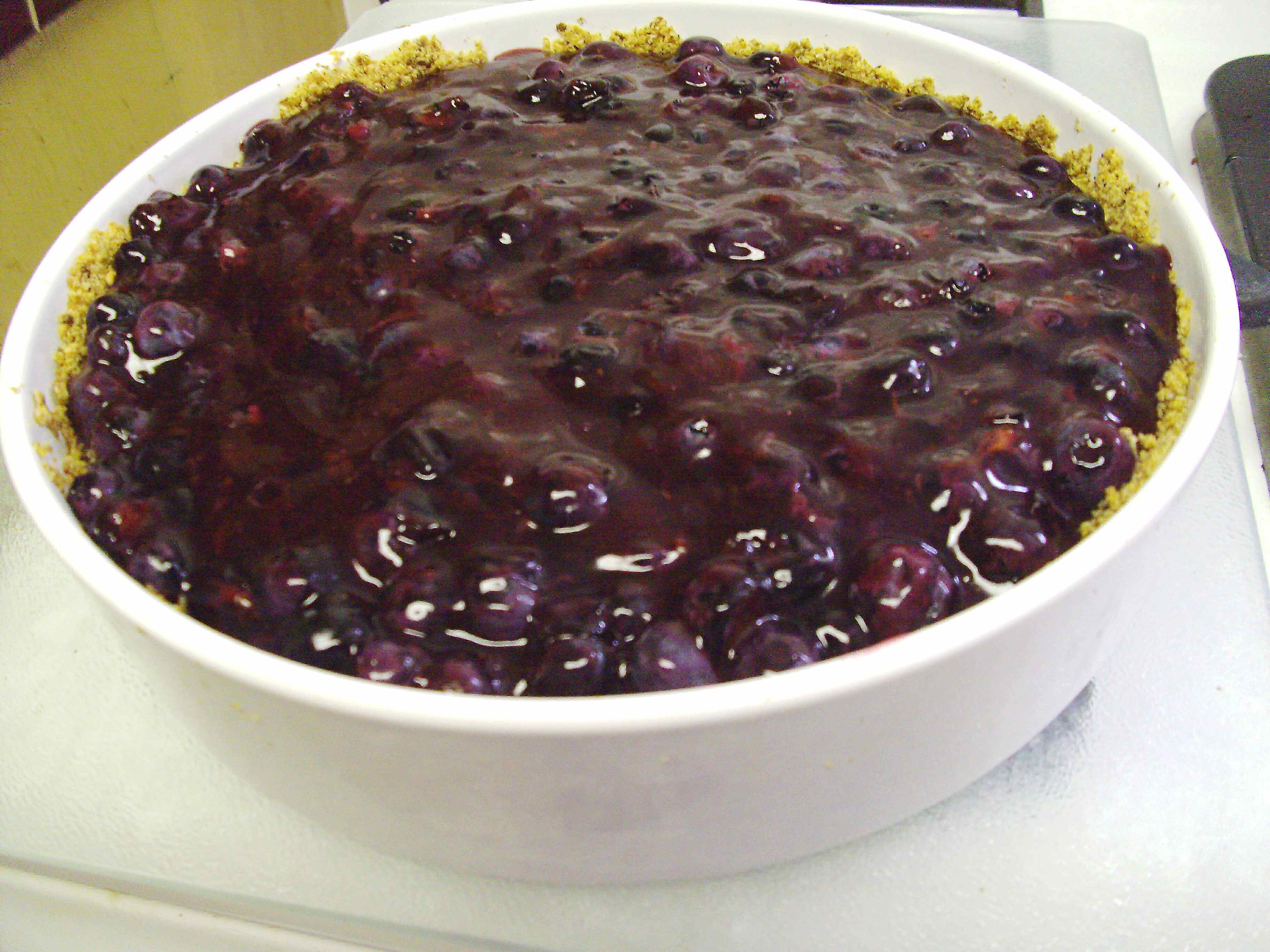
    raw blueberry pie with microwaveable filling and graham cracker crust

    This mostly-raw blueberry pie is a snap to make and very versatile--the filling microwaves in a few minutes, and you don't even have to bake the zippy gingered graham cracker crust--perfect for a hot Fourth of July and all summer long.

  • Recent Posts

  • Contents

  • Archives

  • Now Reading

  • See also my Book Reviews

  • Copyright 2008-2024Slow Food Fast. All writing and images on this blog unless otherwise attributed or set in quotes are the sole property of Slow Food Fast. Please contact DebbieN via the comments form for permissions before reprinting or reproducing any of the material on this blog.

  • ADS AND AFFILIATE LINKS

  • I may post affiliate links to books and movies that I personally review and recommend. Currently I favor Alibris and Vroman's, our terrific and venerable (now past the century mark!) independent bookstore in Pasadena. Or go to your local library--and make sure to support them with actual donations, not just overdue fines (ahem!), because your state probably has cut their budget and hours. Again.

  • In keeping with the disclaimer below, I DO NOT endorse, profit from, or recommend any medications, health treatments, commercial diet plans, supplements or any other such products.

  • DISCLAIMER

  • SlowFoodFast sometimes addresses general public health topics related to nutrition, heart disease, blood pressure, and diabetes. Because this is a blog with a personal point of view, my health and food politics entries often include my opinions on the trends I see, and I try to be as blatant as possible about that. None of these articles should be construed as specific medical advice for an individual case. I do try to keep to findings from well-vetted research sources and large, well-controlled studies, and I try not to sensationalize the science (though if they actually come up with a real cure for Type I diabetes in the next couple of years, I'm gonna be dancing in the streets with a hat that would put Carmen Miranda to shame. Consider yourself warned).

Stolen!

Toucan-beaked finjanim (coffee pots) from the Ethnographic and Folklore Museum in Akko, Israel

Brass finjanim (coffee pots) and tin plates from the pioneer days in Israel. Exhibition at the Ethnographic and Folklore Museum, Akko, Israel

Can’t decide whether I’m more heartbroken or flattered–maybe just surprised?

The Wall Street Journal 

a) has a food section (who knew?)

b) which is currently featuring a 4-part series of recipes by Yotam Ottolenghi.  (I’m actually in favor, and hoping for his book Plenty for my birthday–my husband  floated the suggestion a few weeks ago and I was really flabbergasted that he’d even heard of Ottolenghi. Must have been listening to  something on NPR.) Why is Ottolenghi favoring the WSJ, though, of all food column venues?

c) Said series is calling itself “Slow Food Fast” — the goniffs; can I charge them for it? wouldn’t you? — but it probably shouldn’t.

I’m not just saying that for my own sake (though that’s a big part of it, don’t get me wrong. I’m–the heck with neutrality–too annoyed to be giving a link to this).

Ottolenghi’s recipes aren’t really either slow-slow (stews, beans from scratch, etc.) or incredibly fast (microwave)–a lot are lightly fried or grilled, with a sharp mix of flavors, a lot of herbs, middle Eastern sauces and a tossed salad of some kind on the side. Soft-boiled eggs in a salad, corn latkes with a salad, pan-grilled mackerel on a pita with pistachio pesto and Greek yogurt (bet he’d rather have labaneh but can’t find it in New York or London)–etc.

Which makes them good eating, Israeli and Arab style. But not really slow food done fast.

Most Israeli cooking that’s still Israeli (and not nouveau-Italian, complete with oversized bowls of pasta and seven different cappuccino/macchiato/etc. kinds of coffee drinks) falls into three categories.

The old-fashioned stuff is long-cooked roasts or stews for meats and poultry, maybe stuffed vegetables or an eggplant or spinach casserole or couscous or pilaf. Traditional Romanian, Hungarian, and Moroccan restaurants and some home chefs (usually older women) serve these sorts of long-cooked dishes, but there’s no real shortcut for them.

Israeli street food (not western, engineered “fast food” like McD’s) mostly appears at lunch counters and road stops that specialize, but again the ingredients are real. Felafel, shawarma (even though they’re mostly using a mixture of turkey and beef instead of lamb these days), lahmajoun (ground-meat pizzas). Or else burekas, trays and trays of puff-like flake pastry layered with cheese or eggplant or potato or mushroom filling, and you stop in for lunch and have a huge slab of one with maybe a bit of salad on the side and some tea. All of these take some preparation–the fast part is you walking up to the counter and getting takeout.

In between these extremes are cafés that serve individually-cooked dishes–more informal than casseroles and stews, less casual and more varied than street food. Grilled or fried vegetables (peppers, onions, eggplants, tomatoes, zucchini, pumpkin? potatoes?–more eggplant) and beans, grilled fish or chicken, hummus and baba ghanouj, assortments of cooked salads,with a fresh salad and dishes of olives, turnip and eggplant pickles. A lot of olive oil and garlic and lemon and cumin, yogurt, vegetables, and water-flour-yeast-salt kinds of flatbreads. Street food stand sauces like tehina, salat turqui, harissa, and hilbe (sour yellow fenugreek sauce, kind of mustardy) are still part of it, but so are vinaigrettes and more complex flavorings, and a lot of fresh herbs make an appearance.

This is Ottolenghi’s kind of cooking, and I love it, but it’s neither slow food nor slow food done faster. It’s rustic, village-style food, even though he’s dressed up his version for London diners. At its best you feel like you could walk into the restaurant and fit in fine whether dressed for a theater evening or still dusty from hiking with a water bottle still hanging off your backpack. As though if you walked to the back you wouldn’t be that surprised to see the chefs squatting down over a little pine fire in the courtyard, grilling the food Bedouin-style,  on the back of a broad, battered skillet or skewered on a long thin stick.

They’re not really doing that in Tel Aviv or Haifa, of course, but desert camp cooking is still a key part of the local food lore. People still grill things like chicken hearts and livers outside on little pine fires in their courtyards at home with great pride. Or char eggplants and peppers directly on the gas stove–sort of smelly but undeniably authentic. They point out  za’atar, hyssop and other forageable herbs on wilderness hikes; they know how to make a quick camper’s flatbread of flour and water and a few sprigs of foraged maluakh (a salty plant found in the Negev) over the back of a frying pan. And they know how to brew botz — Turkish coffee–with a flourish.

It’s a part of Israeli life I fervently hope won’t disappear with all the new software companies and car dealerships and cappuccino joints that have popped up over the last couple of decades.

As for the use of my blog’s name, I’m thinking I should take the attitude Monty Python did one time when Margaret Thatcher made free with their Dead Parrot Sketch in a political speech for the Eastbourne by-elections: they announced that given the results of the elections, they thought it not only served her right, but that she had suffered adequately and publicly from her folly that they could save themselves the barristers’ fees for a lawsuit.

Me? I’m waiting til Tuesday. Somewhere else in the WSJ online was an editorial actually praising John Boehner’s plan for the debt ceiling. Feh.

Couscous, its own fine self

Fine-grained couscous made directly from farina

When I’d just come back from a year in Israel after college, I read through Paula Wolfert’s Couscous and Other Good Food from Morocco several times. Her descriptions of the market stalls, the kitchens of the aristocrats, and the very down-to-earth cooks making tricky components like warka leaves for bistilla or rolling and sieving different sizes of couscous from farina and flour fascinated me. They filled in parts of the culture I hadn’t understood in the Moroccan Jewish community I’d just left.

Two of the dishes in the book, two only, have I actually made in all the time since. But if you get the right two, two is enough.

I first ate couscous in Ma’alot, up in the north of Israel in the western Galilee. On my first night in the volunteer program, my new roommates brought me to a tiny 4-table restaurant in the town center after a very miserable and cold trudge up to the top of the hill in a January downpour. The restaurant would have been a real hole-in-the-wall anywhere else, and even here it seemed to cater to the few single men who had neither hope nor prospect of a girlfriend, and whose mothers had finally nudged them out the door. Israel’s amenities–grocery stores and the like–are still often a grade or so down in appearance from what we’re used to in the US, and I’d been there half a year already, so I was used to ignoring it and discovering what was good. Still, even 25 years ago, most restaurants in the larger towns were not this dowdy. This was card tables and folding chairs. My heart sank. Where had I come to?

Not 5 minutes after we’d been seated, however, the lady who ran the kitchen fetched us out a huge platter mounded with couscous and chicken legs and vegetables, steaming hot and smelling incredible. The chicken was delicious (everybody sing; I’ve just been subjected to another showing of Sherlock Holmes’s Smarter Brother at our in-laws’ over Thanksgiving weekend) but the couscous itself was so light and fine it was like eating hot curried snowflakes. What was it? How do you do that? And in half a year of eating at Continue reading

The Hummus Debate

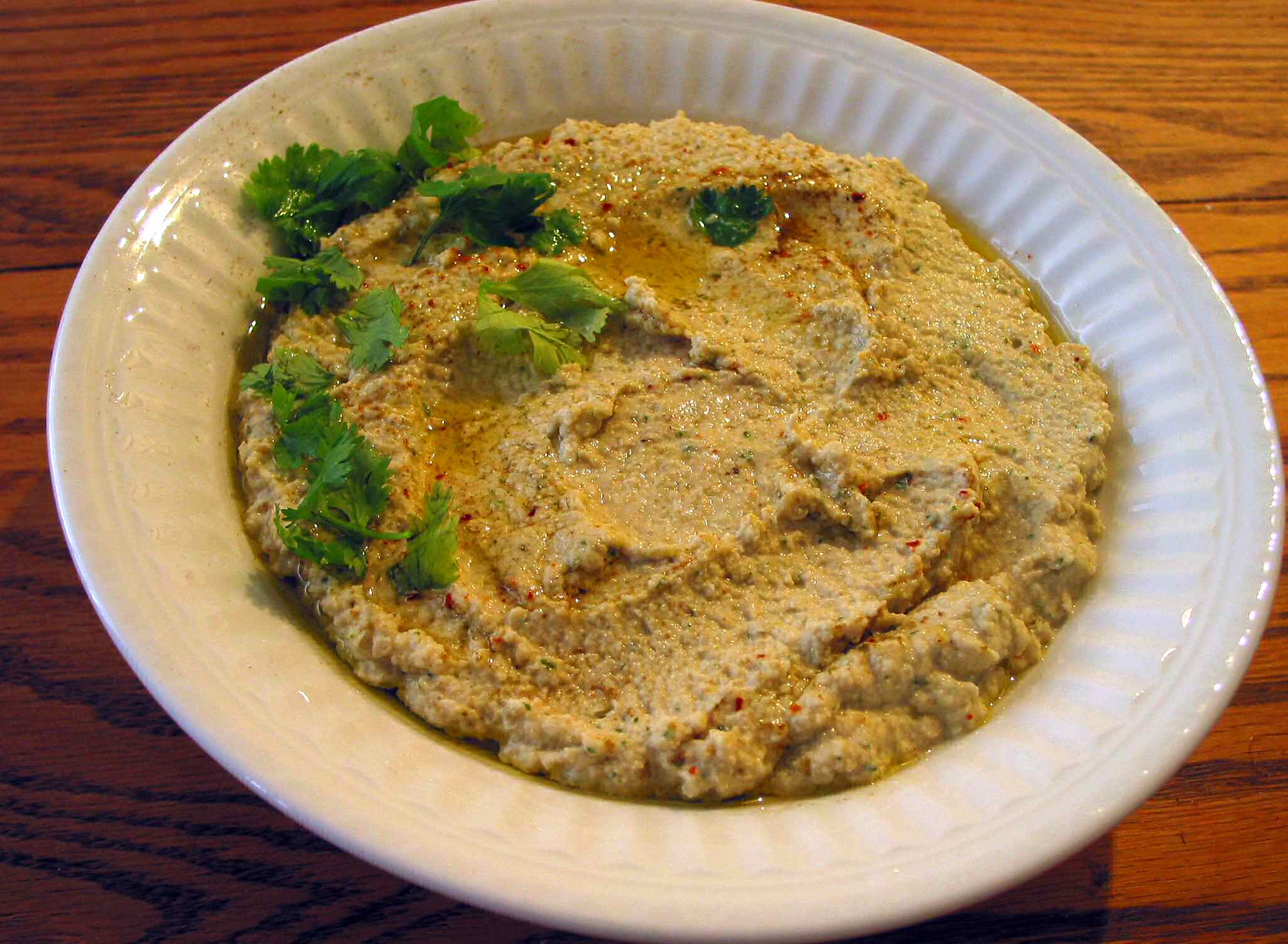
Hummus from scratchHummus is a highly politicized food these days, a situation most eaters outside Lebanon, and at a guess, most inside as well, consider slightly ridiculous. “Owning” hummus has become a point of national pride for a few higher-ups in Lebanon, which has in the past year or two followed Greece’s feta-labeling strategy and tried to appropriate sole credit for authentic hummus. At its more light-hearted, this struggle for hummus supremacy takes the form of an annual stunt in which chefs produce a hummus bowl almost the size of an Olympic swimming pool (or at least an Olympic-sized wading pool) and the triumphal photo makes the international news. But those who really take the Lebanese official origin issue seriously and grimace whenever hummus is served somewhere else are, as far as I can see, only hurting themselves.

The trouble with demanding official status is that both feta and hummus long predate the borders of the countries trying to claim them. Both are simple enough to make and so consistent from batch to batch that they don’t really exhibit much in the way of “terroir” the way aged cheeses, wines, vinegars and so on might. Feta–equally good, equally real, equally part of the native fare–is made in a lot of places neighboring modern-day Greece. Places like Bulgaria, which don’t have as much political clout in either the EU or the Slow Food organizations, and which don’t get half the international tourism. Also places further away, notably Denmark and France, which still have reasonably large sheep’s milk production. Greece may actually have succeeded for the moment in the food labeling tug-of-war, but it’s made the country look somewhat silly and petulant, unwilling to face the fact that they’ve closed the barn door at least a century after the sheep got out. Will they profit from the exclusive labeling? doubtful–and it might have been better ambassadorship to claim credit for spreading feta’s popularity and offer more recipes and products made with it.

Much to the chagrin of whoever decided in the past couple of years that hummus should be exclusively Lebanese, this simple spread is made and eaten in lots of other countries. In Egypt, it’s made with a half-and-half mixture of favas and chickpeas. And Israel, which is probably the “other country” being targeted most directly by the Lebanese hummus campaign, has eaten, breathed, and slept a more or less chickpeas-only version of hummus as an essential food (along with felafel) for longer than the state has been independent.

Unlike the partisanry in Lebanon (not that Israel has no partisanry of its own), when it comes to food, everyone in Israel–Jewish, Muslim, Christian or Druse–gives credit with a certain degree of pride that hummus is Arab food, especially if they’ve made it themselves rather than trotting down to the corner grocery to buy the bland ready-made version from a vat in the deli at the back.

That’s because everyone likes to eat it. It’s also because being a good host is really important and something of a formal habit and a chance to show off just a little–actually, I think that’s still true all throughout the Middle East. Everyone expects friends and neighbors and friends-of-friends to drop by at a moment’s notice, without invitation, especially on the weekend. The least you can do is have a bag of roasted sunflower or pumpkin seeds and a pot of hideously sweet mint tea to bring out if they show up to schmooze after supper, but in the afternoon, better if you can bring out a platter of pita, vegetables, and a bowl of hummus.

Hummus is simple Arab fare at its best–humble, nutritious, appetizing, and (now that we have food processors) easy to make a lot of so you can bring out a wide platter of it for your guests and drizzle a little olive oil and some za’atar or sumac or cumin or paprika over it for the finishing touch–right before everyone tears pita and dips in. The ceremonial thing is what makes it good hosting and is part of the fun.

Here in the US, most people buy their hummus in little plastic containers at the supermarket–not elegant at all, and a lot of money for what you get. Kind of depressing, even. Look at the ingredient list and it’s as long and discouraging as any other processed food–that’s so it can be shipped nationally and stored for a week or two in case it doesn’t all sell out the first day. Look at the nutrition label and you see highish salt, lowish protein and fiber. It’s been fluffed out with canola oil to stretch the expensive ingredient, tehina (sesame paste), and there’s not so much in the way of chickpeas even though they’re supposed to be the base.

While I’m not so much against the fluffy smooth stuff (it tastes ok, if all you’re expecting is a spoonful or two of party dip), I prefer homemade because it’s denser and more nutritious, with more iron and protein from the chickpeas, something you could eat packed in half a pita for lunch and not be starving within an hour. Continue reading

Oranges as a savory

Artichoke-Orange Salad

Oranges in a savory compote with artichoke hearts

A few weeks ago, I ran across a food article by Amanda Hesser, in which she recounted her recent experience of being served a green salad with red onions, Greek olives, and oranges in it. What struck me was the way she fumed at length over having missed out for so long on this simple culinary classic.

I grew up in a Jewish household in the early 1970s, at about the time when felafel and hummus and tabouleh started making their way west into American Jewish cooking. These, along with pita, tomato-cucumber-pepper type salads and eggplant everything, were part of the larger Jewish cultural revival after the Six-Day War. Jewish cookbooks started embracing the Lebanese, Sephardic, North African, and Persian influences on Israeli food as a complement to the more familiar Ashkenazi fare. Orange salads just seemed to fit in.

In any case, orange salads have been published in Jewish and Mediterranean-leaning cookbooks for at least 25 years–notably Paula Wolfert’s Couscous and Other Good Food from Morocco, one of my first cookbook purchases once I came back from my own year as a kibbutz volunteer.

Three orange salads

The simplest orange salad I make is a basic green salad with oranges rather than tomatoes, and it goes well with oil-and-vinegar or mustard vinaigrette. Another, more of a fruit salad, is orange and/or grapefruit segments or slices mixed with a dressing of a cup of yogurt, a spoonful of ordinary red wine vinegar, a spoonful of sugar, and curry powder to taste, maybe half a teaspoon or so, enough to make it yellow-orange and aromatic, not enough to be bitter.

Another more elegant take on the green salad is something I made a few times in my early cooking days for buffet lunches at my synagogue–orange slices sprinkled sparingly with orange blossom water and a grinding of cardamom, laid down in overlapping rows on a bed of vinaigrette-dressed romaine in a tray, and red onion rings, sliced Kalamata olives, red bell pepper rings, crumbled feta, and chopped fresh basil strewn over the oranges. It was a bit much for serving at home, but it made a beautiful buffet dish, and it always got eaten.

So oranges can serve quite nicely in fresh salads, but what about in hot dishes? There’s the rub.

Orange peel I have no trouble imagining in hot savories–a number of Chinese classics use it (beef with orange peel, etc.), and so does duck à l’orange. Cooked oranges, on the other hand, always disappoint me–somehow the structure collapses, the color fades, and so does the bright acidity. They end up pulpy and stringy and less than half as good as fresh raw pieces would have been. But people persist in cooking with them–so I thought I would give a different Paula Wolfert cookbook a try.

The Slow Mediterranean Kitchen: Recipes for the Passionate Cook
(2003) features one really unusual orange-based savory: an Algerian Jewish sweet-and-sour compote of artichoke hearts and orange sections glazed in orange juice. With garlic and olive oil. Hard to imagine–does garlic go with oranges?–but so close to my standard marinated artichoke hearts, at least theoretically, that I decided to chance it and see. Continue reading

Dolmas by microwave

When we first moved to Pasadena 10 years ago, one of my favorite places for Sunday dinners out was Pita! Pita!, a family-run Lebanese restaurant in the “Old Town” section of the city. One of the reasons I loved it was the usual reason to love middle eastern food: the mostly vegetarian mezze were wonderful, and the main dishes were knockouts. Long-cooked lamb, roast chicken, fish grilled or under tehina sauce, vegetable stews with a surprising bite of pineapple in them. Even though I couldn’t eat the meat dishes, I could certainly appreciate them by smell. Everything was modestly priced and generous along with it.

The other reason I loved it was that the family that ran it had made their restaurant the kind of place families went for an old-country kind of Sunday dinner with all the uncles and aunts. Pita! Pita! was housed in one of a row of narrow spaces along Fair Oaks, converted from what I think was once a schoolhouse. The narrowness didn’t stop them from putting a couple of large old-fashioned dining room tables in with the smaller ones for couples. They treated their customers like family, you could sit and eat at a leisurely pace and converse, and we never came away anything less than happy. And certainly never hungry.

Which is why I still miss the place. The family ended up realizing they couldn’t make a go of it without charging astronomical prices or wearing themselves out and decided instead to run a smaller, cafeteria-style lunch spot with fewer and simpler dishes on the main business street. And I can’t blame them at all. The food they serve now–more mezze and fast grilled items–is still as good, but the long-cooked family-style dishes and the leisurely Sunday nights I’ll keep having to miss.

I grew up with hummus, tehina, felafel and tabbouleh, which are Israeli standards too and popular among Jews in the U.S. My mother made them from the dried mixes and cans of prepared tehina when they finally became available in our supermarket. In Israel I learned to make them from scratch, but one thing I didn’t know how to make was stuffed grape leaves or dolmas. My sister had married someone who did and on one weekend visit she showed me the ropes.

I love dolmas but they are not quick to make, not at all. We rolled a loooooottt of grape leaves that afternoon (her husband had bought the econo-jar at a local Arab market), and stuck them tight in a pot, plated down so they didn’t float and unwind, and boiled them with lemon and olive oil for more than an hour. They were wonderful but you would never want to do it on a regular basis!

In the spirit of “what can you cook in a microwave instead of the regular way,” I have gone back and made dolmas at home–in a microwave. It works! You can cook them in a few minutes rather than an hour-plus of boiling and having to top up the water so nothing scorches, and they come out beautifully.

Unfortunately, the microwave, miracle machine though it be, will not help at all with the rolling, which is the hard part. The best I can do is say that microwaving lets you do a few at a time if you feel like it–say, 10-20 dolmas, not 50-100. What you do with the rest of the grape leaves in the econojar is up to you.

Grape leaves come brined in rolls of 20 or so, either a single roll in a skinny jar (Krinos) or a big pickle-jar with four rolls (Cortas, other brands). When you buy them, inspect the rolls and make sure there are no little fluorescent green or yellow spots on them–you’ll know if you see them; capers also get this sometimes. I’m not sure if it’s harmful or not, but I stay away from it. I’d keep the other rolls in the brine in the fridge and make sure to use them up within a month, or else take the rolls and freeze them in ziplock sandwich bags with the air squeezed out–and use them within a couple of months so they don’t get freezer burn.

Dolmas in the Microwave

  • Roll of brined grape leaves ~ 20-30
  • 1 c raw rice (not “minute rice” or parboiled) or bulgur (cracked wheat or tabbouleh grain, plain)
  • 1 med/big ripe tomato
  • 1/4 onion or 1-2 scallions
  • 1 T dill (a few good sprigs fresh is best if you have fresh)
  • several sprigs or small handful fresh curly parsley
  • juice of 1/2 lemon
  • olive oil and the other half lemon for cooking

1. Partially or almost-completely cook the rice or tabbouleh in the microwave: put it in a pyrex bowl or microwaveable container, cover with ~1/2-3/4 inch of water, microwave covered on HIGH for ~2-2.5 minutes, let sit and absorb the water several minutes until nearly done, drain excess moisture.

2. While the grain is cooking, rinse off the roll of grape leaves and then soak them in a big Pyrex bowl to get rid of some of the salt. Change the water once. [Note: traditional recipes say soak the grape leaves an hour in cold water. Some others say pour boiling water over them and let them soak. If you want to split the difference in a microwaveable way, you could rinse them, put them in the Pyrex bowl with water to cover, nuke 2-3 minutes on HIGH and then change the water.]

3. Blend the tomato, onion or scallion, herbs and lemon juice in a food processor and mix with the drained rice or bulgur–include the tomato juice. Let cool enough to handle.

4. Stuff the grape leaves–this is the hard part. Take a stack of grape leaves and drain them on a plate. Cut off the stems carefully without tearing the leaves. Lay out one leaf vein-side up and stem end toward you. Put a spoonful of the filling–not more–on the leaf right above where the stem joint was. Roll the leaf over it–tightly but carefully so you don’t tear–and tuck the side leaves over it halfway through, then keep rolling away from you. Place each stuffed grape leaf, flap edge down, in a tight layer in a  microwaveable container or dish.

5. When you’re done rolling (nothing says you have to do the whole thing in one go if you get sick of it after 10 or you just want 10, just put the leftover filling and the grape leaves in the fridge) pour a little water carefully over the layer of grape leaf rolls. Maybe a quarter-inch of water. Squeeze the other half lemon over the whole thing, and drizzle a little olive oil over it– maybe a couple of tablespoons worth. Cover the dish or container and microwave on high 2-3 minutes for 10, maybe 3-4 minutes for 20+. Check one for doneness–careful, it’ll be pretty hot–you want the leaves tender and the grain cooked through. Maybe go another minute if you need to.

Let them cool and chill in the fridge. Serve with tzatziki, raita, tehina, or other yogurt-based dip.