
• Enter your email address to subscribe to this blog and receive notifications of new posts by email.

    Join 241 other subscribers
  • Noshing on

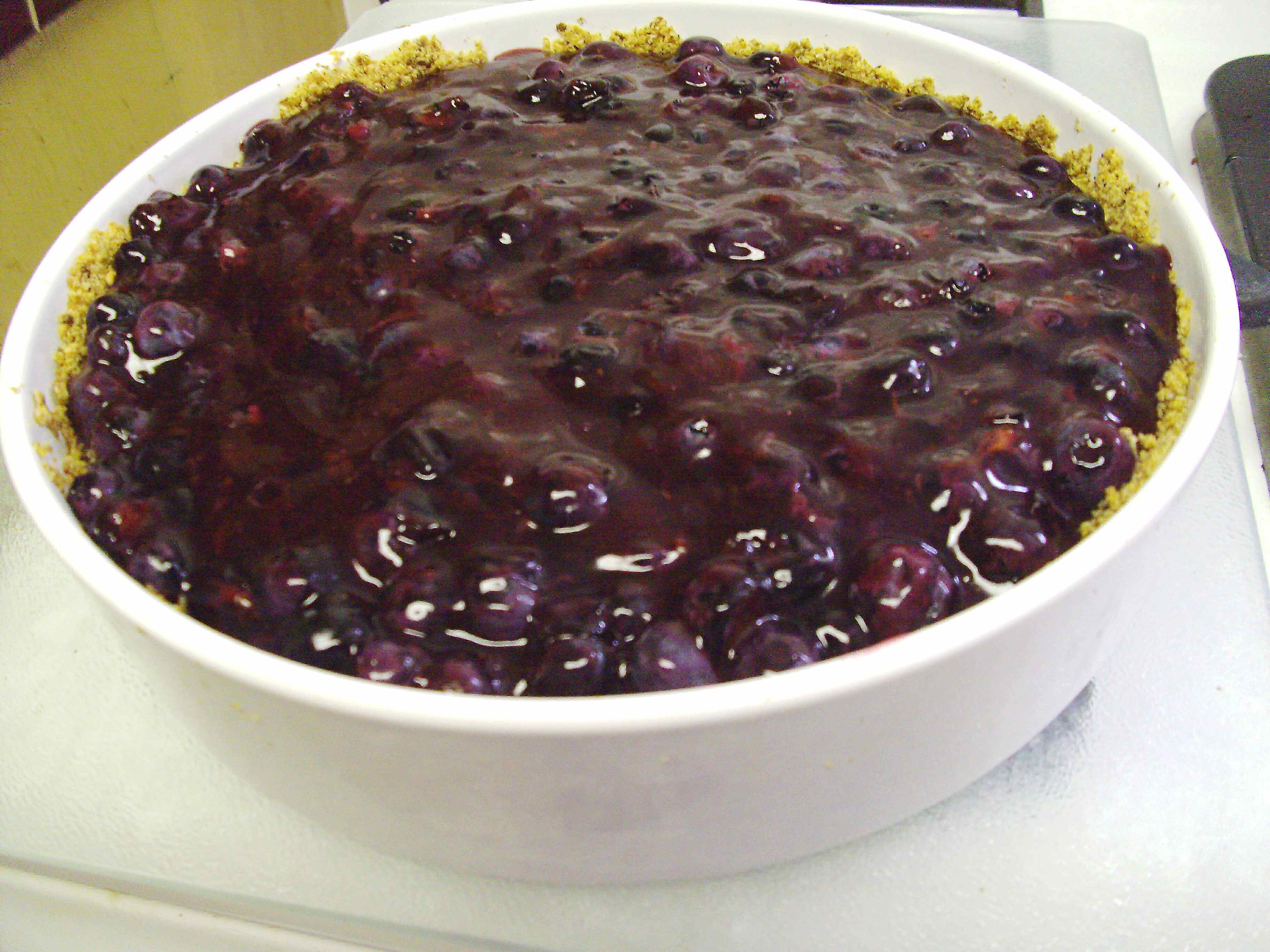
    raw blueberry pie with microwaveable filling and graham cracker crust

    This mostly-raw blueberry pie is a snap to make and very versatile--the filling microwaves in a few minutes, and you don't even have to bake the zippy gingered graham cracker crust--perfect for a hot Fourth of July and all summer long.

  • Recent Posts

  • Contents

  • Archives

  • Now Reading

  • See also my Book Reviews

  • Copyright 2008-2024Slow Food Fast. All writing and images on this blog unless otherwise attributed or set in quotes are the sole property of Slow Food Fast. Please contact DebbieN via the comments form for permissions before reprinting or reproducing any of the material on this blog.

  • ADS AND AFFILIATE LINKS

  • I may post affiliate links to books and movies that I personally review and recommend. Currently I favor Alibris and Vroman's, our terrific and venerable (now past the century mark!) independent bookstore in Pasadena. Or go to your local library--and make sure to support them with actual donations, not just overdue fines (ahem!), because your state probably has cut their budget and hours. Again.

  • In keeping with the disclaimer below, I DO NOT endorse, profit from, or recommend any medications, health treatments, commercial diet plans, supplements or any other such products.

  • DISCLAIMER

  • SlowFoodFast sometimes addresses general public health topics related to nutrition, heart disease, blood pressure, and diabetes. Because this is a blog with a personal point of view, my health and food politics entries often include my opinions on the trends I see, and I try to be as blatant as possible about that. None of these articles should be construed as specific medical advice for an individual case. I do try to keep to findings from well-vetted research sources and large, well-controlled studies, and I try not to sensationalize the science (though if they actually come up with a real cure for Type I diabetes in the next couple of years, I'm gonna be dancing in the streets with a hat that would put Carmen Miranda to shame. Consider yourself warned).

Another Greek salad

Greek cabbage saladWhen we think of Greek salads here in the US, it’s mostly horiatiki (a version of which is my current favorite lunch)–chopped tomato, cucumber, maybe peppers, some onion, feta and olives. Lahano salata, a shredded cabbage salad with lemon and olives, is less familiar and served, according to cookbook author Rena Salaman in The Greek Cook: Simple Seasonal Food, (Aquamarine/Anness Publishing, NYC ©2001), as a winter side dish–because you always have cabbage available, and lemons are a winter crop in the Mediterranean (and southern California). All you need to add are garlic, parsley, olives and olive oil and you’ve got it. Actually, that really sounds like a perfect summer thing to me.

I picked up a green cabbage today at my local greengrocer’s because it was there, it was cheap, I already had a red cabbage at home for other stuff, and besides, you can’t just hang around your local greengrocer’s picking up seven or eight pounds of fabulously ripe Fresno tomatoes all on their lonesome every couple of days. People will suspect you of becoming a tomatoholic. You need to branch out. And besides, I’d already made a tomato-cucumber-pepper salad pretty much every day for the past two weeks for lunch (as noted above). Not that I’m bored with it, but it gives me permission to do something else for dinner.

This Greek slivered cabbage salad is something I’d had in the back of my mind for half a year or so since paging through Salaman’s cookbook and its gorgeous food photos. But since it’s summertime, limiting the herbs to parsley seems like a missed opportunity when there are so many fresh herbs going wild in my fridge.

Dill, basil, mint, scallions–my current favorite mix for the lunch salad would probably also be good with shredded green cabbage. So I did a variation using those and foisted it on my unsuspecting nearest and dearest, who were both in need of something lighter than usual for supper. It went pretty well and we all agreed it would be a good filler for the salad part of a felafel pita.

I mixed this salad up about an hour before serving and stuck it in the fridge. I realized belatedly that the abundant lemon juice in the dressing would probably start wilting the cabbage, and it did slightly. It would have retained more crunch if I’d mixed it right as we were about to eat, but we still liked it and it wasn’t actually limp, just a little softened. I didn’t think the leftovers would hold up more than a day in the fridge but they did okay and didn’t wilt further overnight–perhaps because I poured off the excess liquid before storing the salad in a snaplock container.

One thing I like about cabbages is that they go a long way. You can take a quarter, wrap and refrigerate the rest and it should stay good for a couple of weeks. You might have to shave off any dried-out cut surfaces the next time (certainly for red cabbage, which also discolors a little at the dried surfaces) but the rest should stay pretty fresh.

Lahano Salata (Greek Green Cabbage Salad, Summer-style)

(Adapted from Rena Salaman’s The Greek Cook: Simple Seasonal Food; ingredient amounts are “use your best judgment”)–for 3-4 people as a side dish or pita filling as a bed for other stuff like felafel or kebabs. If you use a whole head of cabbage as in Salaman’s original recipe, increase everything by about 4-fold or to taste.)

  • 1/4 head of a washed green cabbage (the two outer leaves peeled and discarded, the rest rinsed under the tap)
  • small handful of herbs–a sprig or two each of dill, basil, and mint; parsley is okay too–finely chopped
  • 2 scallions, finely chopped
  • 3-4 pitted Greek-style olives (kalamata, Alfonso, Gaeta…), slivered
  • juice of a lemon or to taste–half a very large lemon was pretty lemony for just a quarter of a cabbage. For a medium or small lemon, taste and add a 3rd half if you think it needs more
  • 1-2 T olive oil

Shred the cabbage finely with a sharp knife and chop into manageable lengths unless you like the shreds long (Rena Salaman’s book had a pretty photo with very long straight shreds, almost like angel hair pasta. She mentions that the cabbages in Greece are different from standard American or northern European ones, so that may be part of it. Ours are curlier when shredded). Add the herbs, scallions and olive slivers, squeeze on the lemon and drizzle on the olive oil, then toss with two forks until everything’s well mixed. You can let the salad soften a little in the fridge for half an hour or so, or you can serve it straight up while it’s still a bit crunchy–it’s good either way.

Artichoke-olive spanakopita for a party crowd

Artichoke and olive spanakopita tastes authentic even though it's completely nondairy. The party round is pretty quick to put together, too.

Artichoke and olive spanakopita tastes authentic,  even though it’s completely nondairy by request–which makes it a good vegan choice too. And it’s easy to put together.

Last night we went to a big New Year’s Eve party–a rarity for us; we’re usually with family one coast or the other. Of course, getting to go to a party means rushing around the house a few hours ahead to find an outfit that fits, is clean, looks about right, doesn’t require very high heels or an engineering degree to figure out how to put it on. Luckily most of our friends are low-key that way.

The party was potluck–the hosts provided a couple of solid main dishes and we and the other guests brought the side dishes and accoutrements. A pretty good division of labor, I think. So I offered to bring spanakopita, which is pretty easy. Or at least, I figured out an easier way last week to get the spinach squeezed out than by doing three pounds of spinach handful by painful handful, and it was pretty good for the Chanukah party, so why not do it again?

But our hosts’ family, all five of them, have a cluster of serious food allergies–primarily eggs and dairy, but a couple of other odd ones like cinnamon as well, and not all of the allergies match up from person to person. It’s a testament to their bravery and sociability (which I admire and wish I had greater stores of) that they throw big parties and let other people bring food.

I decided to do spanakopita anyway and just leave out the dairy–butter isn’t a big deal if you have olive oil for the fillo leaves, and I don’t make it with eggs in the filling. So far, so good. But what should I substitute for the feta? Feta’s usually a big part of the show.

Tofu might have been easy, and it’s a protein source, but one of the kids can’t do soy, and it doesn’t really taste right. Nuts–don’t know. Nondairy cheese substitutes–I haven’t tasted these myself and they have so many ingredients plus loads of salt that it wasn’t worth chancing without consulting the family.

My best options to add to the spinach came down to:

1. Greek olives, pitted and chopped–right on the saltiness, but maybe odd-looking. No one else I know has ever paired up spinach filling with olives.

2. Cooked and drained mushrooms–I would do this, but my daughter confesses she doesn’t like them when I make spinach quiche. And she does like my spanakopita. So…

3. Marinated artichoke hearts–they have a little saltiness, but mostly lemon and garlic, which is just about right. And artichoke hearts pair pretty nicely with spinach and are a familiar enough combination that most people will probably be okay with them. You just have to remember to drain them well so they don’t make everything soggy.

I thought I’d go with the artichoke hearts alone, but after tasting the spinach and artichoke heart filling, adding more lemon and garlic (because you can never have enough) and herbs and scallions, I decided what the heck and threw in a handful of Alfonso olives I had in the fridge–12 big purple, winy olives, pitted and slivered, did not look weird after all and they gave just enough distinctive tang and salt for the big salad bowl worth of filling to satisfy without overpowering it.

I figure, when you try something new or off-beat with a substitution, you have to test-taste to know if it’s worth doing again or recommending to anyone else. Maybe no one will agree with you, or maybe they will, but if you don’t like the result to start with, you’ll feel bad serving it up. Or maybe you’re made of tougher stuff than I am and it depends on who you’re serving it to and what have they done for you lately?

So anyway, if you can’t have feta or other dairy, this is definitely a good way to go. The olives and marinated artichoke hearts are authentically Greek enough not to taste or feel like fakey or second-rate substitutions. The spanakopita ended up tasting pretty good, and got eaten up amid some serious competition.

Also, I’ve decided this is also a good time for a slideshow. For a while now I’ve been meaning to do a step-by-step post on setting up a round tray of spanakopita or baklava, because I think it’s simpler and quicker than a plain rectangular casserole, and it looks more impressive and party-ready too. So I took some pictures as I went along (note to self: wipe olive oil thumbprints off camera grip), Continue reading

Little Green Footballs

…and Other Lessons from the Fillo Stratum

cheese and pesto triangles

Two or three weeks ago I got a frantic email from the assistant at my daughter’s Hebrew school: could I lead a cooking session for the 8th graders for an hour that Sunday?

Teens and preteens are not my specialty–I have a friend who’s really terrific with them; she’s an 8th grade and high school teacher and would rather deal with kids than write. I’m the other way around, and my own kid’s turning 13 very soon. Very soon.

Suffice it to say, my answer probably should have been, “Who me? Are you off your nut? Cook with preteens in only an hour?”

And then I thought–but wait. Fillo. It’s inexpensive (a big plus), it’s  easy enough to fold, it’s almost (if you squint) kind of a craft.  Like origami. Make some tasty and quick fillings for it (though no nuts–schools have gotten annoyingly leary of anything with nuts. How are you supposed to teach baklava? Eh? Eh???) and let the kids go to town, a couple of sheets of fillo apiece in the synagogue kitchen. An hour should do it, and it’s a cool, sophisticated food to know how to make–very different from the standard summer camp challah with blue or green food coloring.

So…I bought a couple of packets of fillo (about $2.69 for a roll of 20-24 sheets), a couple of pounds of loose-frozen spinach, an onion, some garlic, a bottle of olive oil and another bottle of canola oil (for the sweet fillings), a packet of dried apricots, a packet of dried figs, some farmer cheese (mistake, doesn’t taste that good; stick with ricotta) and some feta. And some dill and scallions I had at home. Also a lemon or two. I left the fillo in the fridge overnight to thaw slowly the way you’re supposed to, and not the way I usually do (i.e., take the thing out of the wrapper and let it sit an hour on the counter and then wonder why it cracks when I rush to unroll it).

I made the fillings the Sunday morning in a microwaver’s frenzy of immense efficiency:

  1.  Nuke a stick of unsalted butter in a bowl, pour it into a snaplock container.
  2. Thaw the spinach on a plate–4 minutes on HIGH. Take it out.
  3. Dump the dried apricots in a bowl with water to cover and a saucer on top–3 minutes. Meanwhile, start squeezing the spinach dry, and I mean dry, in handfuls over the sink. Nothing worse than soggy spanakopita. Except maybe soggy pizza.
  4. Take the apricots out, put in the bowl of figs with the stems cut off, some water and a lid, 3 minutes for them.
  5. Blend the apricots with a little sugar and water and lemon juice to make a thick paste. Get it out of the food processor and pack it in a disposable container with a lid.
  6. Do the same thing for the figs, only no sugar necessary.
  7. Rinse out the food processor, stick the scallions, wild thyme, fresh dill and basil in and chop them fine, drop in the spinach, a fat clove of minced garlic, and the feta. Pack that too.
  8. Grab all the bags with the goods and don’t forget the oils and the butter and the fillings and the extra feta and farmer’s cheese just in case there’s time to make some cheese-only filling there and somebody wants it. …

I hustled, I got to the synagogue kitchen on time, I set up stations around a stainless steel work table–foil sheets at each place, paper bowls with a dab of melted butter and a pour of oil, plastic baggies to go over everyone’s hands instead of pastry brushes, the carefully unrolled fillo under plastic wrap. The oven–on. The fillings–ready to rock. And then I waited. And waited.

An hour really would have been enough time for that class. But none of the kids showed up for the first 20 minutes because it was also the day the photographers were herding all the classes out into the basketball court area for graduation photos. So when they finally straggled in, all eight–and surprisingly, three of them were boys–I made them wash their hands and then set them to work.

The first thing I did was hand out individual sheets of fillo and pointed out that they were nearly as thin and tearable as tissue paper. They were all surprised when they saw it. None of the kids, who’d been cooking all year and who had attended a lot of bar and bat mitzvah celebrations, had seen fillo “in the raw”.

I got them started on spanakopita triangles–also known sometimes as bulemas (Greek root found here; you’ve heard of bulimia, right? Didn’t mention that connection, of course. You would never want to get into that with a batch of preteens. Don’t get too disturbed, though. The rough translation as used in Hebrew is “appetizers” or “things to gobble”. Of course, in Israel “bulmus” is also what they call anything like the American after-Thanksgiving shoppers’ frenzy or otherwise a run on the stock market…so much for appetites gone hog wild…)

I naturally thought fillo triangles would be a cinch for the boys especially–you do it the same way you fold a paper football and try not to get caught in class. Only with a little more butter and olive oil involved, and hopefully no punting in the kitchen, because I wasn’t gonna clean it up for them when the spanakopita went flying.

Here came the second generational surprise, though: none of the kids, not even the boys, had any idea how to fold a basic paper football! They’d never done it. Paper airplane? I asked desperately.  Continue reading

Frankenbeanies: Gigantes, take II

Giant favas or gigantes are really as big as they look

Giant favas or gigantes really are as big as they look.

No kidding. That’s a soup spoon on the right, up there in the photo. These giant fava beans are huge–which is part of the fun of cooking them.

Because I had so much trouble getting the nice-looking pre-peeled dried giant favas to cook last week (and the time before), I went and got the bulk giant favas with the brownish-greenish-pinkish peels left on this time. And I was right. Buying the ones with the peels still on means that the dried beans stay relatively fresh and cook up a lot better–and faster–than the pre-peeled ones.

To peel them, dump the washed and sorted beans into a big bowl of very hot-to-boiling water and let them sit about an hour. The peels will start to wrinkle around the edges and turn leathery-soft. A sharp little paring knife makes it easy to crack into them and pop them off. Then soak them overnight in cold water. (Or soak the beans first and then take the peels off. Whatever’s easier.)

These beans were clearly fresher than the pre-peeled ones–in the morning, the bean water smelled almost like fresh apple juice. Bizarre. Anyway.

Rinse and cover with fresh cold water. And then you can actually microwave them 10 minutes (for a pound of peeled gigantes in a bowl with water to cover by about an inch and a lid on top) and let sit half an hour and they’ll be about halfway there, then nuke again for 5-7 minutes once or maybe twice, with 20 minutes in between. Or you could simmer them on the stove about an hour.

Or of course you could buy them in cans, but where’s the fun in that?

Giant favas

Fresh fava beans are the province of spring. Dried ones–the ultra-large size favas–are pale gigantic beans with a flavor like roast chestnuts, only without the sweet. These are the ones for Greek-style winter stews (gigantes plaki) or, as a friend in Jerusalem makes on cold and rainy December weekends, a very slow-braised stew of giant favas with chicken and vegetables.

Here in Pasadena it’s still hovering in the 90s midday, long after Yom Kippur has come and gone. So there’s no incentive to cook anything for more than 15 minutes at a time if you can possibly help it. And gigantes or giant favas (I’m not absolutely sure they’re the same bean, so for reference–what I’m using are the peeled giant favas, about an inch across) take a very long time to cook through to tenderness, even after soaking overnight.  The challenge, actually, is to cook them enough without having them fall apart like overcooked potatoes. Oven-baking or crockpotting would probably work, but it’s hours of time.

So most of the dried-fava recipes I can find are for favas that have crumbled and been puréed for soup or hummus or paté. But the stewed favas–that’s what I wanted. Only I wanted them on their own, meatless, tomato-less, pure, as it were, because I had an idea of marinating them a little for a side dish and serving them room-temperature. Something like marinated artichoke hearts, but subtler.

There are few “slow food fast” shortcuts for this, unless a pressure cooker would work well enough without blasting them to bits. I might have to get one and try it–when everyone’s out of the house, just in case my purple thumb tendencies kick in.

You still need to soak them very thoroughly overnight, a minimum of 12 hours and maybe better, 24 hours (in the fridge) before starting to cook them, because at least two batches of Sadaf peeled giant favas have shown a distinct reluctance to take up water the way most reasonably fresh dried beans do, even though a lot of the beans were split in half. Were these two bags of favas just incredibly old and dried out? Are giant favas just naturally tough? I don’t know.  I don’t know. Maybe I have to go with the bags of unpeeled favas instead?–maybe those dry out a little less inside and cook up more tender once you get the peels off (after cold-soaking and before boiling). One can only hope.

And substituting giant lima beans that a lot of Greek cookbooks recommend as a substitute in plaki would obviously give more tender results, plus they don’t require laborious peeling, but the flavor would be pretty different. The giant favas are what I want, and no other.

Nevertheless–once the favas were soaked as best possible and rinsed again, I cooked them partially by microwaving 10 minutes in water to cover by an inch and letting them sit. I didn’t want to do it a second round, as I would for chickpeas, because they had the kind of tough obstinacy that reminded me that microwaving can actually make some cooked beans tougher–black beans in particular. At least the raw bean taste was gone, but they still required 2 hours of simmering gently and partially covered on the stovetop, to become something approaching tender. Frustrating.

Some of them broke up. I think it’s practically inevitable. But some of them were huge and very impressive. Once they were as done as they were going to be, I drained them most of the way.

The marinade I use for microwaved artichoke hearts is just lemon juice, garlic, salt and olive oil–the artichoke hearts donate enough juice as they cook to mellow out everything else a little. Favas–no. Plus I wanted something richer and less strident for the flavoring.

So I pulled a bottle of cheap but dry rosé (for want of chardonnay or the like, and rejecting the ever-present reds so as not to stain the beans) out of the fridge and poured some of it into a frying pan to boil off a little of the alcohol and pick up some of the other marinade flavors: a fat clove of garlic, the juice of a lemon, olive oil and a couple of sprigs of rosemary off the bush I’ve managed not to kill this year. I let this simmer together a few minutes to take the edge off the raw garlic and wine flavors and steep the rosemary a little, and then poured in the boiled-up fava beans and just a little of their broth to simmer a few more minutes before pouring the whole thing out to cool.

A little more olive oil would have been good if I’d had it (the bottle ran out after about a tablespoon)–I was actually hoping it would help soften the beans further but I didn’t really have enough for oil-stewing (the Greek cookbooks I have all recommend about half a cup in a batch of about a pound of dried beans) and I’d have had to stew the thing a lot longer to get anything resembling a silky texture, I suspect. But the flavors permeated the beans very nicely–rosemary has an irreplaceable perfume that even wild thyme doesn’t reach even though that would be pretty good too. Together, the rosemary and wine balance the surface brashness of garlic and lemon and bring out the unusual flavor of the giant favas without the need for salt. It’s good hot, but it’s even better the second day, hot or cooled.

Dolmas by microwave

When we first moved to Pasadena 10 years ago, one of my favorite places for Sunday dinners out was Pita! Pita!, a family-run Lebanese restaurant in the “Old Town” section of the city. One of the reasons I loved it was the usual reason to love middle eastern food: the mostly vegetarian mezze were wonderful, and the main dishes were knockouts. Long-cooked lamb, roast chicken, fish grilled or under tehina sauce, vegetable stews with a surprising bite of pineapple in them. Even though I couldn’t eat the meat dishes, I could certainly appreciate them by smell. Everything was modestly priced and generous along with it.

The other reason I loved it was that the family that ran it had made their restaurant the kind of place families went for an old-country kind of Sunday dinner with all the uncles and aunts. Pita! Pita! was housed in one of a row of narrow spaces along Fair Oaks, converted from what I think was once a schoolhouse. The narrowness didn’t stop them from putting a couple of large old-fashioned dining room tables in with the smaller ones for couples. They treated their customers like family, you could sit and eat at a leisurely pace and converse, and we never came away anything less than happy. And certainly never hungry.

Which is why I still miss the place. The family ended up realizing they couldn’t make a go of it without charging astronomical prices or wearing themselves out and decided instead to run a smaller, cafeteria-style lunch spot with fewer and simpler dishes on the main business street. And I can’t blame them at all. The food they serve now–more mezze and fast grilled items–is still as good, but the long-cooked family-style dishes and the leisurely Sunday nights I’ll keep having to miss.

I grew up with hummus, tehina, felafel and tabbouleh, which are Israeli standards too and popular among Jews in the U.S. My mother made them from the dried mixes and cans of prepared tehina when they finally became available in our supermarket. In Israel I learned to make them from scratch, but one thing I didn’t know how to make was stuffed grape leaves or dolmas. My sister had married someone who did and on one weekend visit she showed me the ropes.

I love dolmas but they are not quick to make, not at all. We rolled a loooooottt of grape leaves that afternoon (her husband had bought the econo-jar at a local Arab market), and stuck them tight in a pot, plated down so they didn’t float and unwind, and boiled them with lemon and olive oil for more than an hour. They were wonderful but you would never want to do it on a regular basis!

In the spirit of “what can you cook in a microwave instead of the regular way,” I have gone back and made dolmas at home–in a microwave. It works! You can cook them in a few minutes rather than an hour-plus of boiling and having to top up the water so nothing scorches, and they come out beautifully.

Unfortunately, the microwave, miracle machine though it be, will not help at all with the rolling, which is the hard part. The best I can do is say that microwaving lets you do a few at a time if you feel like it–say, 10-20 dolmas, not 50-100. What you do with the rest of the grape leaves in the econojar is up to you.

Grape leaves come brined in rolls of 20 or so, either a single roll in a skinny jar (Krinos) or a big pickle-jar with four rolls (Cortas, other brands). When you buy them, inspect the rolls and make sure there are no little fluorescent green or yellow spots on them–you’ll know if you see them; capers also get this sometimes. I’m not sure if it’s harmful or not, but I stay away from it. I’d keep the other rolls in the brine in the fridge and make sure to use them up within a month, or else take the rolls and freeze them in ziplock sandwich bags with the air squeezed out–and use them within a couple of months so they don’t get freezer burn.

Dolmas in the Microwave

  • Roll of brined grape leaves ~ 20-30
  • 1 c raw rice (not “minute rice” or parboiled) or bulgur (cracked wheat or tabbouleh grain, plain)
  • 1 med/big ripe tomato
  • 1/4 onion or 1-2 scallions
  • 1 T dill (a few good sprigs fresh is best if you have fresh)
  • several sprigs or small handful fresh curly parsley
  • juice of 1/2 lemon
  • olive oil and the other half lemon for cooking

1. Partially or almost-completely cook the rice or tabbouleh in the microwave: put it in a pyrex bowl or microwaveable container, cover with ~1/2-3/4 inch of water, microwave covered on HIGH for ~2-2.5 minutes, let sit and absorb the water several minutes until nearly done, drain excess moisture.

2. While the grain is cooking, rinse off the roll of grape leaves and then soak them in a big Pyrex bowl to get rid of some of the salt. Change the water once. [Note: traditional recipes say soak the grape leaves an hour in cold water. Some others say pour boiling water over them and let them soak. If you want to split the difference in a microwaveable way, you could rinse them, put them in the Pyrex bowl with water to cover, nuke 2-3 minutes on HIGH and then change the water.]

3. Blend the tomato, onion or scallion, herbs and lemon juice in a food processor and mix with the drained rice or bulgur–include the tomato juice. Let cool enough to handle.

4. Stuff the grape leaves–this is the hard part. Take a stack of grape leaves and drain them on a plate. Cut off the stems carefully without tearing the leaves. Lay out one leaf vein-side up and stem end toward you. Put a spoonful of the filling–not more–on the leaf right above where the stem joint was. Roll the leaf over it–tightly but carefully so you don’t tear–and tuck the side leaves over it halfway through, then keep rolling away from you. Place each stuffed grape leaf, flap edge down, in a tight layer in a  microwaveable container or dish.

5. When you’re done rolling (nothing says you have to do the whole thing in one go if you get sick of it after 10 or you just want 10, just put the leftover filling and the grape leaves in the fridge) pour a little water carefully over the layer of grape leaf rolls. Maybe a quarter-inch of water. Squeeze the other half lemon over the whole thing, and drizzle a little olive oil over it– maybe a couple of tablespoons worth. Cover the dish or container and microwave on high 2-3 minutes for 10, maybe 3-4 minutes for 20+. Check one for doneness–careful, it’ll be pretty hot–you want the leaves tender and the grain cooked through. Maybe go another minute if you need to.

Let them cool and chill in the fridge. Serve with tzatziki, raita, tehina, or other yogurt-based dip.