
• Enter your email address to subscribe to this blog and receive notifications of new posts by email.

    Join 241 other subscribers
  • Noshing on

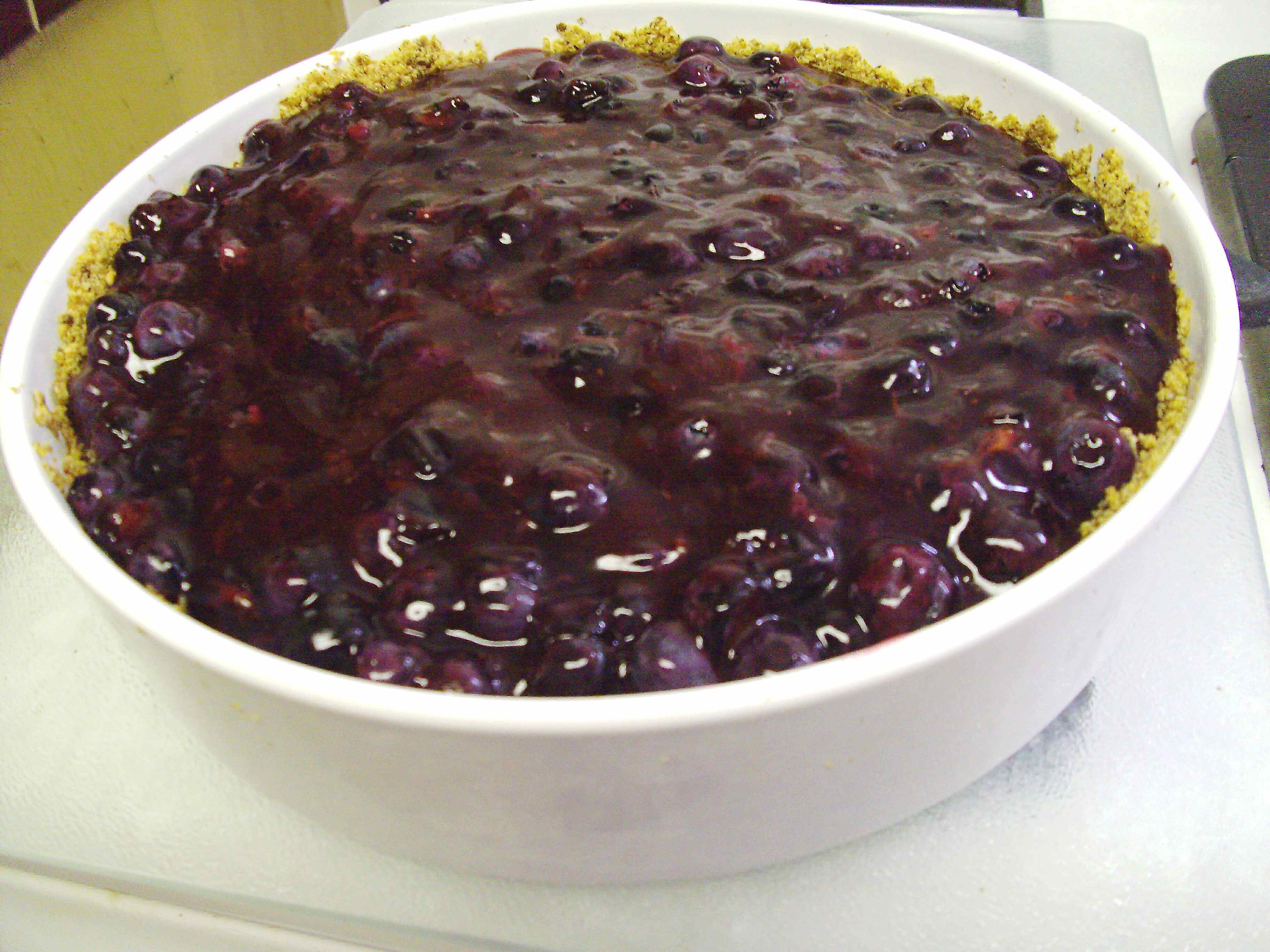
    raw blueberry pie with microwaveable filling and graham cracker crust

    This mostly-raw blueberry pie is a snap to make and very versatile--the filling microwaves in a few minutes, and you don't even have to bake the zippy gingered graham cracker crust--perfect for a hot Fourth of July and all summer long.

  • Recent Posts

  • Contents

  • Archives

  • Now Reading

  • See also my Book Reviews

  • Copyright 2008-2024Slow Food Fast. All writing and images on this blog unless otherwise attributed or set in quotes are the sole property of Slow Food Fast. Please contact DebbieN via the comments form for permissions before reprinting or reproducing any of the material on this blog.

  • ADS AND AFFILIATE LINKS

  • I may post affiliate links to books and movies that I personally review and recommend. Currently I favor Alibris and Vroman's, our terrific and venerable (now past the century mark!) independent bookstore in Pasadena. Or go to your local library--and make sure to support them with actual donations, not just overdue fines (ahem!), because your state probably has cut their budget and hours. Again.

  • In keeping with the disclaimer below, I DO NOT endorse, profit from, or recommend any medications, health treatments, commercial diet plans, supplements or any other such products.

  • DISCLAIMER

  • SlowFoodFast sometimes addresses general public health topics related to nutrition, heart disease, blood pressure, and diabetes. Because this is a blog with a personal point of view, my health and food politics entries often include my opinions on the trends I see, and I try to be as blatant as possible about that. None of these articles should be construed as specific medical advice for an individual case. I do try to keep to findings from well-vetted research sources and large, well-controlled studies, and I try not to sensationalize the science (though if they actually come up with a real cure for Type I diabetes in the next couple of years, I'm gonna be dancing in the streets with a hat that would put Carmen Miranda to shame. Consider yourself warned).

Fennel Mania

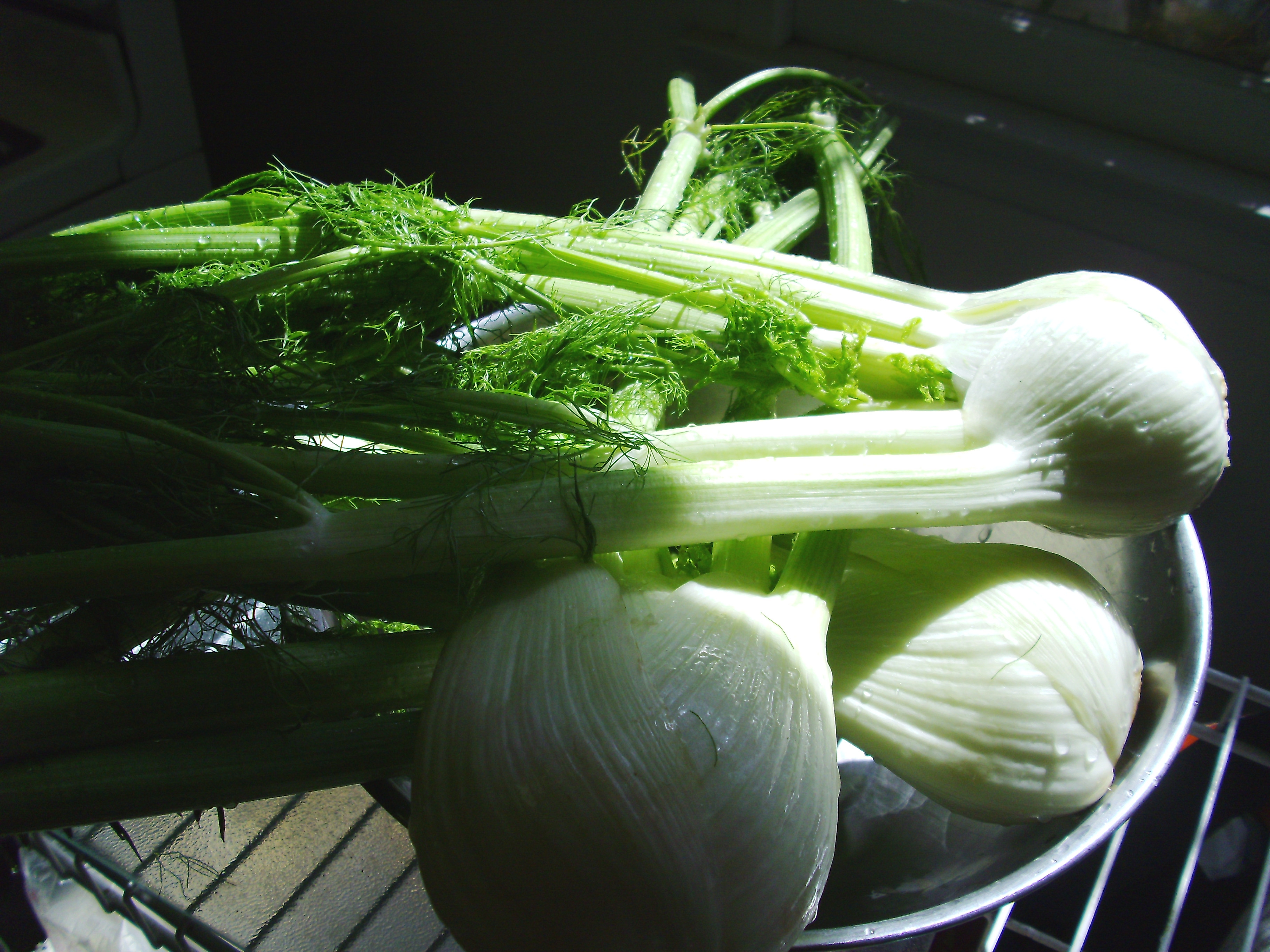
way too much fennel for one salad bowl

This much whole fennel kind of overwhelms my largest mixing bowl.
What was I thinking?

I hear a lot of complaints, among those of my friends and relatives who subscribe to CSAs, about weekly baskets arriving at the doorstep with surprise odd vegetables in unusually large amounts, and what the heck do you do with it all? I’ve never experienced that myself–I’m my own worst (or best) CSA challenge. So I can’t really blame this dilemma on anyone else, because I do my own shopping at my local greengrocer’s. And because the prices are low and the vegetables generally better than what I can get at the supermarket, I sometimes go a little overboard. Fresno tomatoes, when they’re in, are so good I end up with a 7 or 8 lb sack of them every week while I can. If I had more room in the fridge (oh, sacrilege! but they’re already so ripe it doesn’t hurt them), I’d buy even more. An overload of good tomatoes is no problem. However…

too much fennel from the greengrocer's

This week’s hot purchase: fresh fennel at a fabulous–too-fabulous?–price. Fifty cents apiece for large, clean-looking fennel bulbs with about two feet of stalk attached. They’re never less than two dollars apiece in the supermarket, and usually more like three.

So of course I couldn’t resist. I bought FOUR. Yeah. Two dollars total. For what turned out to be more than five pounds of useable produce, because if the fennel’s fresh, it’s all good eating. After washing and cutting it up into useable sections (only a 10-minute operation, surprisingly; fennel’s pretty cooperative for a big frondy vegetable), I actually weighed everything on our food scale.

Three pounds of bulbs for salads or grilling or whatever, two pounds of cleaned stalks chopped into celery-stick-length batons, and about six ounces of the cleaned chopped fronds to use as anise-to-dill-like herbs in tomato vegetable soup, fish, etc.

i1035 FW1.1

But how to use it all in a small household? We have only three people, and I’m the one who likes the anise-y taste of fennel most. Can I freeze some of it for later use (other than the fronds, which I did)? Are we going to be stuck eating it every day for weeks? How long before it starts going bad? What the heck was I thinking?

But it’s enough, and cheap enough, that I get to play around with it. Maybe I can find something good and even original to do with it that doesn’t require long roasting steps (Italian), stewing, or cheese-and-cream-filled gratin-type disguises (French) for the anise flavor, because really, for that you could have just bought celery.

The most obvious thing to do with fennel is slice it up and nosh on it raw. The first time I ever ate it was at the home of a large Moroccan Jewish family up in the  north of Israel. The mother, who invited me over for Shabbat lunch, started the meal with hraime, fish steaks (served cold, thank g-d) in a garlicky broth with enough evil birds’ eye chiles floating in it that the younger children (all the ones under 20, anyhow) started whimpering. “Only one pepper!” their mother replied, but none of them were fooled. I, the self-conscious guest just out of college, took the first bite and nearly fell off my chair as all the brothers and sisters laughed. Luckily the rest of the lunch was pretty unspiced–brisket, long-cooked eggs, farro with chickpeas, a lot of little cooked and raw vegetable salad dishes. I was still recovering from the “appetizer” though; I reached repeatedly for both water and the sliced fennel. Actually, I miss Esther’s hraime still, these many years later…

But mostly you don’t want to just gnaw on raw fennel for relief from the evil chiles. Fennel is pretty. Continue reading

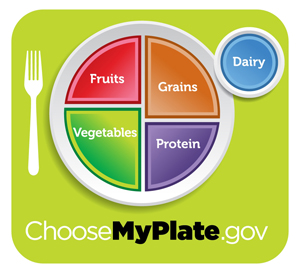
The new MyPlate icon–fantastic or plastic?

Everyone in the food press seems to be weighing in on the new replacement for the much-cursed USDA Food Pyramid in all (both?) its glorious confusion and obfuscation of real nutritional goals that might have (and should have) undermined the beef, corn, pork, corn, sugar, corn, and soy industries if they’d ever been presented honestly.

So where does that leave us? With ears of fresh corn that are more than 50 cents apiece in Los Angeles supermarkets, and the new…

USDA MyPlate logo

Already, the USDA’s MyPlate web site is in a certain amount of branding trouble (and of course, that’s what counts most in America): the Texas DMV had already bagged “MyPlates.com” for its vanity license plate division (highly unappetizing), and Livestrong.com already has its own well-established “MyPlate” food calculator and fan base. And those items come up first on Google searches. As in, the whole first page or more. The government site ranks way down the list and had to water down the impact of its original name choice with “choose” just to get a URL. Can it elbow out the competition just by bolding the “MyPlate” part?

What really counts are the food and nutrition opinion maker comments, though. And a lot of those are detracting in a nitpicking way that I think kind of misses the point.

The first thing they all have to say is that the plate looks dumbed down. Forgive me, but wasn’t the Food Pyramid’s unreadable and unusable design a large part of the problem? The MyPlate icon is simpler and more direct, and it names real food groups, not “Big Mac” or, on the haute side of things, any of Ferran Adrià’s foams. No wonder foodies and populists alike are wondering what it has to do with them.

A small sampling of the main arguments:

MyPlate: The Food Pyramid for dummies? (LA Times): Dr. Andrew Weil and others discuss what’s still wrong with the new icon. Weil says “fruits” could still include fruit juice, which is usually a useless sugar bomb in comparison with whole fruit, and he worries that the protein section, which comes with a guideline to eat 8 oz. of fish per week, might encourage unthinking people to increase their mercury intake since swordfish is on the guideline menu, as are some of the generally overfished popular species of fish. Weil’s not wrong about the fruit juice vs. actual fruit, but his hand-wringing about fish is really geared for well-off readers who can afford to eat much of it. All the fishes he names are Continue reading

Food as Barometer

The past week has seen a number of shock waves go through the food world.

Gourmet magazine’s announced closing yesterday is the latest and the one with the best PR. Gourmet‘s editor, Ruth Reichl, has turned what was once the flagship publication of foodie-ism into something more like Vogue for food–high-gloss, decorator restaurant food (the focus of her previous career) with recipes that ranged from routine to fanciful, from decadent but enticing to over-the-top, impractical, even wasteful and ridiculous, particularly in the last couple of years. A few memorable examples of the latter–lamb cooked with a stewing sauce that included something like a cup of whole coffee beans in an ingredient list some 20 or so items long, a chicken liver paté with a ton of added butter to simulate foie gras when that dish was outlawed in Chicago, and a chocolate and sesame butter tart with so many elaborate steps and so much extra fat in each layer–with nearly obvious clashes of flavor–you could practically choke.

Reichl, whose memoirs I have nonetheless enjoyed a great deal, seems to have been in on the official food world’s migration to recipe titles–and restaurant menu listings–so long they owe more to Proust, or perhaps Balzac, than to James Beard. Then again, Proust called madeleines madeleines, not “little ridged pure butter genoise microcakes with microplaned lime rind, baked in the shape of elongated shallow clamshells”. Goodness knows what today’s foodie superstar chefs would come up with for a title.

And yet Gourmet, with its glossy ads for show kitchens and olive oils and edible vacations in exotic locales, has tried to broaden readers’ ideas and ideals on occasion, and that’s Reichl’s influence too. If the cover one month showed coveted seating at a prestigious Paris restaurant, the tablecloth and glassware sternly hushed in preparation for the pre-theater crowd, or the cliffside view of an Italian trattoria table with a glass bowl in the foreground brimming voluptuously with prawns, greens, oysters and a coral-hued or purplish octopus, other issues sent staff into the mountainous inner reaches of China to report on the poverty and generosity of villagers there.

It’s hard to imagine how Reichl and her staff pictured reconciling the ultra-affluent with the world-conscious, and perhaps their attempts failed to convince either luxe advertisers or Condé Nast this year in particular. But I can see how Gourmet‘s underlying spirit of foodie-ism has led to the explosion of adventurous, hands-on food blogs of a younger working generation as they discover both real food and the desire to learn to cook it.

But Gourmet isn’t the most important food barometer, particularly because it represents a shrinking target audience at the top of the food chain, as it were. Rumbles farther down the scale have been quieter but with any luck perhaps one hopeful sign will be more lasting and more influential.

Last Thursday, the L.A. Times reported that the federal WIC  (Women, Infants and Children) food supplement program will now allow participants to spend their vouchers on fresh produce and whole grains. The allowance isn’t really big– $6/month per eligible child, $8 per pregnant woman or mother of a child under 5, and $10 per nursing mother, or about $14/month on average for a typical family, but it’s a start.

More promising is that the changes would push stores that want to accept WIC vouchers to stock fresh produce and whole grains. That might put at least modest quantities of decent foods within reach in lots of inner city neighborhoods, and it means farmers’ markets can also start qualifying to accept vouchers.

In the Los Angeles area and Orange County, the WIC program is especially important–out of more than 12 million people, something like 316,000 low-income people are enrolled in WIC. More than 8 million people are enrolled nationwide at a cost of slightly under $7 billion per year, with vouchers of about $60 total per family per month. Less than $1000 per family per year even counting the administrative costs of the program. It makes the Food Stamp program seem generous by comparison.

The new shift toward allowing fruits, vegetables, and whole grains under WIC isn’t adding anything to the total Congress allots–the cost for these vouchers has been taken from some of the dairy and juice allowance. But local WIC officers are still grateful and think it’ll make a big difference to their clients, some of whose children have never tasted fresh broccoli.

It’s a far cry from the fuss over the blight on homegrown heirloom tomatoes in the northeastern states this summer.

Microwave tricks–When the peach doesn’t ripen

What if you’re stuck with supermarket peaches or nectarines that looked good, were on an incredible discount, smelled like they had potential if you left them out on a counter for a couple of days, and then when you did, they somehow never really ripened? Just turned mushy or the texture of a pale yellow sponge inside, with a lackluster taste to match, and developed an ugly, gelatinous brown layer near the pit? And to make it worse, you’d enthusiastically bought five or more?

Spongy peaches in need of rescue

Spongy peaches in need of rescue

I’ve discovered–the hard way–that all is not lost. As long as they’re only blah, not actually mildewed or spoiled, even failed peaches like these can be rescued and put to work.

Sugaring before microwaving p

Sugaring lightly before microwaving

Sugaring fruit and letting it stand is an age-old trick for bringing out fuller flavor–strawberries are the classic, but it works for peaches and nectarines too. It wasn’t enough on its own to make the peaches edible raw, but I figured if I nuked them the flavor might come up in the cooking, and the texture might be fixed too. So I tried it a couple of ways, one just the peaches on their own, and two other versions mixed with other more flavorful fruit.

[update ~ 2017: I have tweaked the raw peach method here]

Microwave Peach (or Nectarine) Compote or Jam

The first thing to do is wash the peaches well and cut as much usable flesh off the pit as possible. Take a small sliver and taste it–if it’s just bland or spongy but still has at least a tinge of fruit flavor, you can use it.

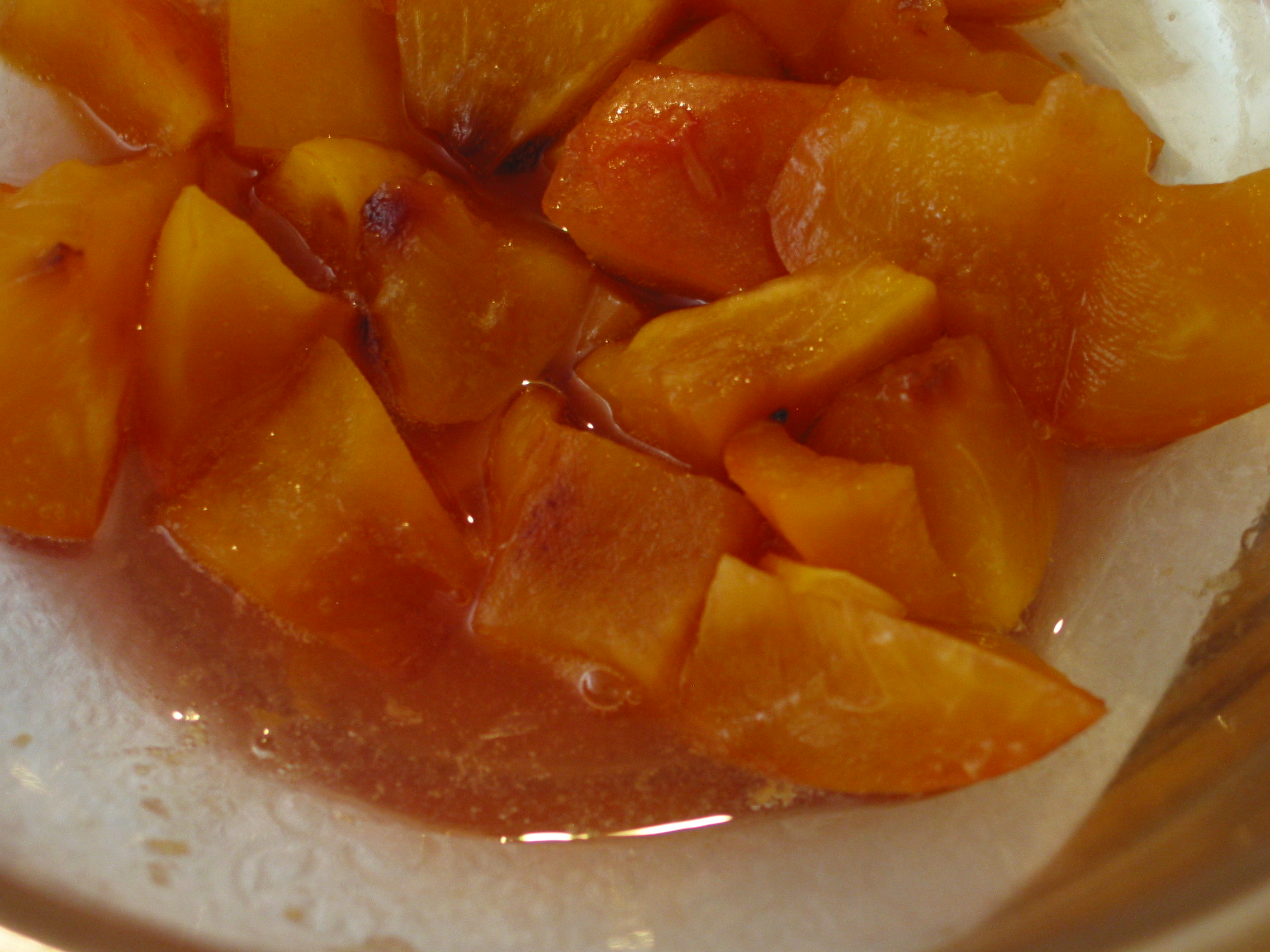
Chop up the peaches and put them in a pyrex bowl. Leave the skins on–this is where at least some of the flavor is going to come from. Sprinkle on a few spoonfuls of sugar and squeeze some lemon juice over them. Cover the bowl with a plate and microwave on high for a few minutes (3-4 min in a ~1100W oven). When you uncover the bowl, the fragrance should start coming up and the pieces will have turned translucent and produced a bit of pinkish-bronze juice. You can taste and see if that’s good enough for you, or cook another minute or so, perhaps with a sprinkle of cinnamon (very good) and/or a thin slice of fresh ginger. Maybe a star anise pod or a couple of cloves if you’re doing this as a compote and feeling really food glam that day, but I didn’t try these myself, so I can’t vouch for them. Cool, chill, and serve with yogurt or ice cream.

For jam, mash the peaches with a fork before the final minute in the microwave. Once it’s cooled, the mixture will thicken and the cinnamon and/or ginger will play off the peach flavor for a good chunky jam.

Microwave peach compote

Microwave peach compote

Mixed-Fruit Compote or Jam

The second compote/jam strategy calls for mixing the fresh peach or nectarine chunks with another fruit before microwaving. I have two  suggestions here that turned out reasonably successful–one is a handful of chopped dried apricots that have soaked up for about 1/2 hour in boiling water or orange juice, and the second choice, a bit odd perhaps, is sliced strawberries mixed in with the peach chunks.

In both cases I went extremely easy on sugar compared to what’s called for in traditional jam-making.  I wasn’t making a lot, it was going straight into the fridge and I was going to use it quickly. Plus I’d pretty much always rather eat a jam that’s more fruit and less sticky stuff. I know, I know, technically that makes it a “fruit spread” rather than proper jam, but do I care?

For the mixed jam with dried/soaked apricots, I microwaved a handful–15 or so–chopped apricots in water to cover for 2 minutes and let stand covered for half an hour, then put them in the food processor with large raw peach chunks — in my case, the peach was oversized, like a softball, so maybe two normal tennis-ball-sized ones would be about right–and a couple of spoonfuls of sugar and pulsed them just enough to blend fairly well without losing all the texture. Then I squeezed lemon juice on the mixture and poured it back into the pyrex bowl to microwave a few minutes as above. I poured the hot mixture into a very clean hot 1-lb jam jar and screwed down the lid–the lid did suck in as it cooled, but I wasn’t counting on that so I kept it in the fridge and ate it over the next week or so.

Another peach I cut up and microwaved straight with some strawberry slices mixed in because they were the last ones in the pint. Again I don’t think I added more than a tablespoonful or two of sugar and a squeeze of lemon, but what happened was the strawberries, instead of going slimy, gave the warm compote a baked comfort-food kind of taste that I hadn’t expected and looked nicer as well. I’d been thinking cooked strawberries would look as bad as they do in strawberry jam, but they didn’t, and without too much sugar (or corn syrup, in the commercial jams I hate) they kept some of their bright flavor too.

None of these ideas is as satisfying as biting into a perfectly ripe, exceedingly juicy peach (or nectarine) at the height of summer, but all of them are pretty good in their own right, they don’t take long, and they’re handy saves for fruit that turns out to be less than you expected.

The Meaning of “Tasty”

One very strange description crops up in nearly every expert’s take on processed food and the way it’s overtaken fresh and whole foods in the American diet. Everyone from food industry veteran Hank Cardello (see the Stuffed book review) to NYU nutrition professor Marion Nestle in What to Eat talks about fast food and junk food as “tasty”. David Kessler goes even further: in The End of Overeating, he adds “irresistible,” which he says is the problem he faced most of his life.

Moreover, “tasty” has become the important word in processed food advertising. Driving home from the post office today I even saw it on a billboard for Vitaminwater10, with the tagline:  “10 CALORIES. 4 NEW FLAVORS. TASTIER THAN EVER.”

Tasty. It’s the word of champions, the key, the adword to beat.

And for the life of me, I’m not sure why. Because the words I would have chosen for most of it include stodgy, greasy, cardboardy, screamingly salty, day-glo ™ orange, and “a lot like airplane food, only on the ground.” Am I the only one?

But “tasty”–specifically that word–is clearly the accepted description, even among these food experts, and that points to a host of disturbing assumptions. Either they mean they find processed food tasty or they mean they think everyone else finds it tasty and irresistible–even if there’s something better to eat. That’s kind of defeatist, isn’t it? If everyone “knows” fast food is tastier than fresh produce, what hope is there for mainstream Americans to eat healthier than they do today?

What do they actually mean by “tasty” in the case of processed food? They don’t mean fresh, as in fresh produce. They don’t mean tangy, as in yogurt or a tangerine, or sharp as in horseradish or cheddar. Certainly not aromatic, like dill or fennel or rosemary or sage. Or rich and funky and thought-provoking, like aged camembert or shiitakes or asparagus or toasted sesame oil. And they don’t mean complex and savory and surprising, as in a palak paneer punctuated by smoky black cardamom pods, Armenian string cheese with nigella seed, or a long-cooked carbonnade or daube of beef with some cloves thrown in on a whim.

They can’t possibly, honestly, mean “these fresh hazelnuts are so sweet you’ll plotz” or “one bite and you’d better take this nectarine somewhere private.”

Most of the food experts who’ve posited that processed food is “tasty” in their books and articles are older than I am by about 10 years, old enough to remember eating late-July nectarines that devastatingly fragrant, backyard tomatoes earthily ripe and pungent, foods utterly unlike what’s available even in the produce section of most chain supermarkets today.

So I can’t help thinking that their casual use of the word “tasty” reflects and even perpetuates the hopelessly tattered, stunted and inexperienced taste imagination of the masses of people who don’t cook for themselves anymore and have given over completely to packaged food, with its excesses of salt and its bland, stale cardboardy background flavor. The ugly assumption they’ve bought into is that people who eat mostly processed food can’t change, won’t change, and most importantly, wouldn’t like fresh food if they tasted it.

Can the surge of food blogs with their encouragement to try something new, visit local farmers’ markets, maybe even take a share in a community garden plot, change this trend? I hope so, even though I know the open air markets are not often very available in poor neighborhoods and they tend to be as expensive as supermarkets. But when they are made available in urban areas, all kinds of people from the neighborhood suddenly come flocking to them, Continue reading

Best new (fantasy) fresh produce ad

A few posts back I was daydreaming of a new campaign by the Ad Council promoting fresh produce. I’d thought the “Got Milk?” campaign would be something to model it on.

Washington Post columnist Paul Farhi, who was doing live chat with readers this week about why, when, and how fast food ads on tv started turning so skanky, has a more inspired take. After a fair number of comments on the increase in raunchiness of burger ads targeting 15-35 year old men, we get this exchange:

Okay, all this talk about burgers : is about to ruin my diet. I’m leaving the chat to go find some healthy fruit to snack on.

Paul Farhi: Opening scene: Long shot of Scarlett Johanssen strolling a city street. She stops at a corner grocer.

Close up: Apples, bananas, pears, etc.

Scarlett fondles the fruit seductively as wah-wah music rises up in background.

Close up: Scarlett enjoys eating fruit, in a kind of lascivious way.

Voiceover (Scarlett): “Fruit. It’s so sexy.”

End of ad.

So there you go. I wonder if Colin Firth is available for something involving asparagus?