
• Enter your email address to subscribe to this blog and receive notifications of new posts by email.

    Join 241 other subscribers
  • Noshing on

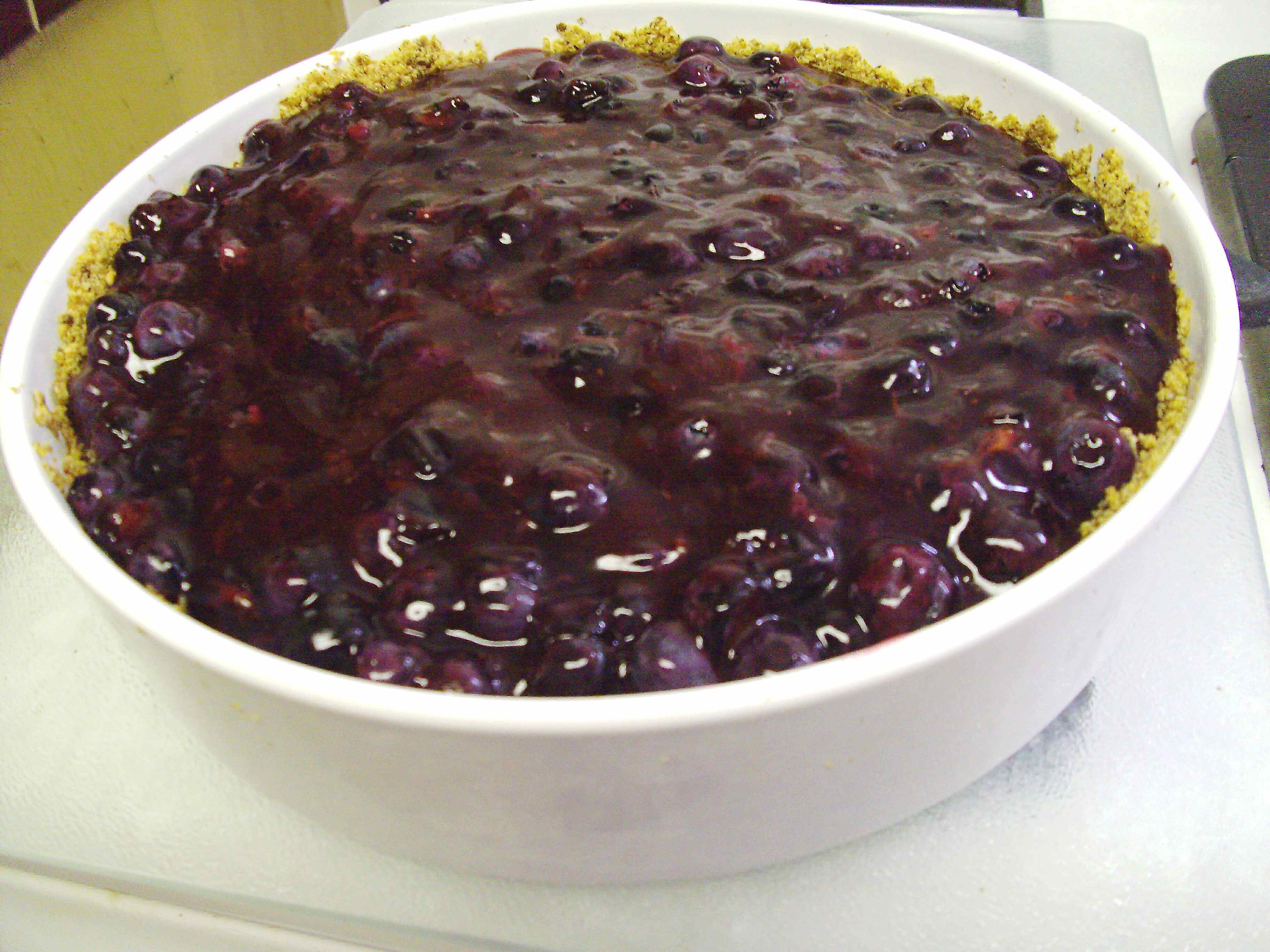
    raw blueberry pie with microwaveable filling and graham cracker crust

    This mostly-raw blueberry pie is a snap to make and very versatile--the filling microwaves in a few minutes, and you don't even have to bake the zippy gingered graham cracker crust--perfect for a hot Fourth of July and all summer long.

  • Recent Posts

  • Contents

  • Archives

  • Now Reading

  • See also my Book Reviews

  • Copyright 2008-2024Slow Food Fast. All writing and images on this blog unless otherwise attributed or set in quotes are the sole property of Slow Food Fast. Please contact DebbieN via the comments form for permissions before reprinting or reproducing any of the material on this blog.

  • ADS AND AFFILIATE LINKS

  • I may post affiliate links to books and movies that I personally review and recommend. Currently I favor Alibris and Vroman's, our terrific and venerable (now past the century mark!) independent bookstore in Pasadena. Or go to your local library--and make sure to support them with actual donations, not just overdue fines (ahem!), because your state probably has cut their budget and hours. Again.

  • In keeping with the disclaimer below, I DO NOT endorse, profit from, or recommend any medications, health treatments, commercial diet plans, supplements or any other such products.

  • DISCLAIMER

  • SlowFoodFast sometimes addresses general public health topics related to nutrition, heart disease, blood pressure, and diabetes. Because this is a blog with a personal point of view, my health and food politics entries often include my opinions on the trends I see, and I try to be as blatant as possible about that. None of these articles should be construed as specific medical advice for an individual case. I do try to keep to findings from well-vetted research sources and large, well-controlled studies, and I try not to sensationalize the science (though if they actually come up with a real cure for Type I diabetes in the next couple of years, I'm gonna be dancing in the streets with a hat that would put Carmen Miranda to shame. Consider yourself warned).

Sweet Potato Ice Cream

Some time back I was bemoaning the lack of reasonably priced butternut squash at the height of the season in my local markets–I was clearly spoiled by last year’s bargains, or so I figured. So when I tried making pumpkin ravioli at home, I substituted yams, which were a lot more plentiful and much less expensive per pound.

But as it turns out, there’s more to the missing squash mystery than I realized. Just before Thanksgiving last year, Libby’s sent out a public warning that they were facing deep shortages due to heavy rains during harvest in central Illinois, where most of their pumpkins are grown. Heavy rains and soggy fields meant harvesters couldn’t get out every day to pick, and a lot of pumpkins mildewed on the vine and had to be plowed under. Oregon’s organic pumpkin growers, who had an unusually good crop, were able to  step in as an alternate source for buyers running short, but organic pumpkins are still only a few percent of the national consumption each year.

Following on a short crop in 2008, the Midwest is looking for a better harvest this fall, but right now the shortage is pretty noticeable on store shelves. A global produce outlook web site even posted a recent factoid that, at the moment, Libby’s remaining inventory of 100% packed pumpkin stands at something like six cans. Six.

According to the article, people have been bidding up to $30 a can on eBay for those extras you probably squirreled away in the corners of your pantry and never got around to making.

But it still doesn’t explain why winter squash was so scarce and expensive in California this past year–unless our supermarkets were importing all the way from Illinois as well. Hmmmph.

Where’s the Charlie Brown Theme Song when you really need it?

In any case, yams and sweet potatoes nearly the size of footballs have been pretty plentiful in Southern California, and cheap with it. There’s very little waste on a sweet potato–just the peel, usually (or buy organic, if you can find them, and scrub them well before cooking so you can eat the peel too).

So I’ve been finding a place in my refrigerator for them and microwaving them in a lidded pyrex bowl or casserole with a little water in the bottom for about 8-10 minutes (for a big one). Because I don’t like the prospect of nasty kitchen accidents, if I can’t cut into them easily right away I wait to split these monsters in halves or quarters about 6 minutes into the cooking time, when they may not be fully cooked yet but at least they no longer require an axe.

Sweet potatoes and yams substitute pretty well in standard pumpkin pie recipes, but you generally have to bake twice as long as for the canned pumpkin, which has had a lot of the water cooked out before it was packed. They also make  good fillings for large ravioli–pretty easy with wonton or gyoza wrappers, and microwaveable too.

But…it’s now June in Los Angeles, which means “June Gloom” overcast cool weather in the morning, burning off to the mid-90s by lunchtime. And my daughter looks at the huge quarters of yam cooling on the counter and says, suddenly, “I wish we could have pumpkin ice cream instead.” I think about it and decide I wish that too.

I have buttermilk, regular milk, sugar and a variety of pumpkin pie-type spices on hand. I don’t think I’ll need eggs because the sweet potato has so Continue reading

Adventures with Cheese, Part II: Paneer in the Microwave

Paneer is the fresh white curd cheese used in Indian dishes like saag or palak paneer, aloo mattar paneer, and so on. Panela or queso fresco are okay substitutes, if you can get them, and they taste a lot better than tofu.

But you can also make paneer very easily (if a bit messily) at home in a few minutes, if you have a pyrex bowl, a microwave, and a colander. If milk is going cheap in your neighborhood market this week or you have half a gallon that you really need to use up quickly before you go on vacation, making paneer isn’t a bad way to do it.

You’ll get about 5 oz fairly dry curd for a quart of milk, so not a great yield, but it’s pretty versatile. Whole milk makes a richer cheese than skim, obviously, but both work okay. Press the curd hard when you drain it and it’s sliceable. Press lightly and it’s spreadable. If you use a quart of buttermilk on its own rather than mostly milk, you can blend in a little garlic and some herbs and a drop of olive oil to the drained curd, and you’ve got something close to Rondelé cheese spread.

And don’t just toss out the whey–it still has a lot of soluble smaller proteins and calcium in it, so it’s worth keeping if you can use it within a day or so. You can use some of the warm whey instead of water to make a moist, chewy-textured Italian-type yeast bread (whey is extremely good for rosemary focaccia). Or puree the whey with some lightly cooked broccoli or cauliflower or canned pumpkin, a bit of onion or garlic, and some marjoram and/or thyme for a quick fresh cream-of-vegetable soup.

Paneer from scratch (makes about 5 oz, can scale up if you prefer)

  • A quart of milk
  • 1 cup of buttermilk if you have it
  • juice of a lemon

1. Pour everything into a 2.5 qt. pyrex mixing bowl, mix, and microwave on HIGH about 5 minutes, until the milk solids separate from the clear yellow whey. The solids should float in a mass and be pulling away from the sides of the bowl.

2. Take a colander or strainer over another large bowl, line it with a couple of layers of cheesecloth or 3-4 overlapping round paper coffee filters, whatever works for you. Carefully pour the whey over first, keeping the curd back in the bowl with a serving spoon or spatula for as long as possible, until you’ve poured most of the whey through (otherwise it takes forever to drain…). Then drain the curd on the filters and press it until it’s fairly firm and could be cut into cubes without crumbling apart.

Buttermilk ices

Buttermilk is one of those underappreciated dairy foods, as is the even less well-loved nonfat powdered dry milk. Both are somewhat unappetizing taken straight. A glass of buttermilk, though it has its fans, can taste like liquid cottage cheese, and reconstituted NFPD never quite sheds its dank, sticky chalkiness, especially if you’re attempting to use it in the morning coffee (a desperate we’re-all-out-of-actual-milk substitute that has driven me to Starbucks more than once).

Cookbooks tend to ignore buttermilk and NFPD or else sweep them into baking recipes where they won’t matter much, won’t be recognizable, and certainly won’t dominate the taste. Given how much protein and calcium they contain and how inexpensive they are, that’s kind of a shame.

But treat them right and you get something light, versatile and delicious for dessert. Buttermilk’s actually a little easier to believe in an ice cream-like dessert than NFPD is. Foodie magazines feature lots of lemon buttermilk ice creams this time of year, but they include such odd and unnecessarily rich ingredients as cream cheese to simulate a superpremium ice cream’s texture. Not only is it extremely calorie-dense, it’s really, really expensive. Kind of defeats the purpose of using lowfat buttermilk in the first place.

My version of a lemon buttermilk ice uses NFPD instead of fat to create the microcrystalline structure that keeps it from turning into a huge popsicle. It won’t melt quite the same as ice cream, but it’s packed with flavor and a small portion feels like “enough”, especially with fresh fruit on the side.

NFPD’s stale chalkiness and crumbly texture are not so hard to fix, but I haven’t seen anyone presenting a method for it so I’m doing it here. There are two tricks, both of which can probably help for other NFPD recipes, even savory ones.

First is the taste–in this case, the lemon juice and rind seem to counter it quite successfully, and the juice also seems to help NFPD dissolve more smoothly. Orange juice seems to work also, so maybe it’s the tangy acidity that counteracts the stale milk taste. As long as you’re not heating it up, you don’t run the risk of curdling either.

Second is the clumpiness. There are a couple of Indian recipes where it’s actually a possible advantage–gulab jamun and burfi both seem to take advantage of NFPD’s doughiness when mixed with a scant amount of liquid. But for desserts where you want it to dissolve smoothly, just whiz the dry NFPD by itself in a food processor, or just with sugar, to get it to a fine dust before blending in any liquids.

Lemon Buttermilk Ice (makes about 8  1/3- to 1/2-cup servings)

  • 3.2 oz (91 g) packet nonfat powdered dry milk (or the amount specified on the package for a quart of reconstituted milk)
  • 1/2 c sugar
  • 2 c. lowfat buttermilk–drained a bit if it’s starting to separate
  • juice and grated peel of a lemon
  • 1/2 t. vanilla or to taste

Grind the NFPD and sugar together in a food processor until they form a very fine powder. Pour in the buttermilk and pulse to get the powder off the bottom of the food processor. Add the lemon juice and peel and the vanilla and blend again. Either pour into an ice cream maker for churning or into a freezer container with a sealable lid and freeze an hour or so. Scrape the frozen crystals off the sides, stir them into the still-liquid part of the buttermilk ice, cover again and refreeze. Do this once or twice more. Serve with fruit.