• Enter your email address to subscribe to this blog and receive notifications of new posts by email.

    Join 241 other subscribers
  • Noshing on

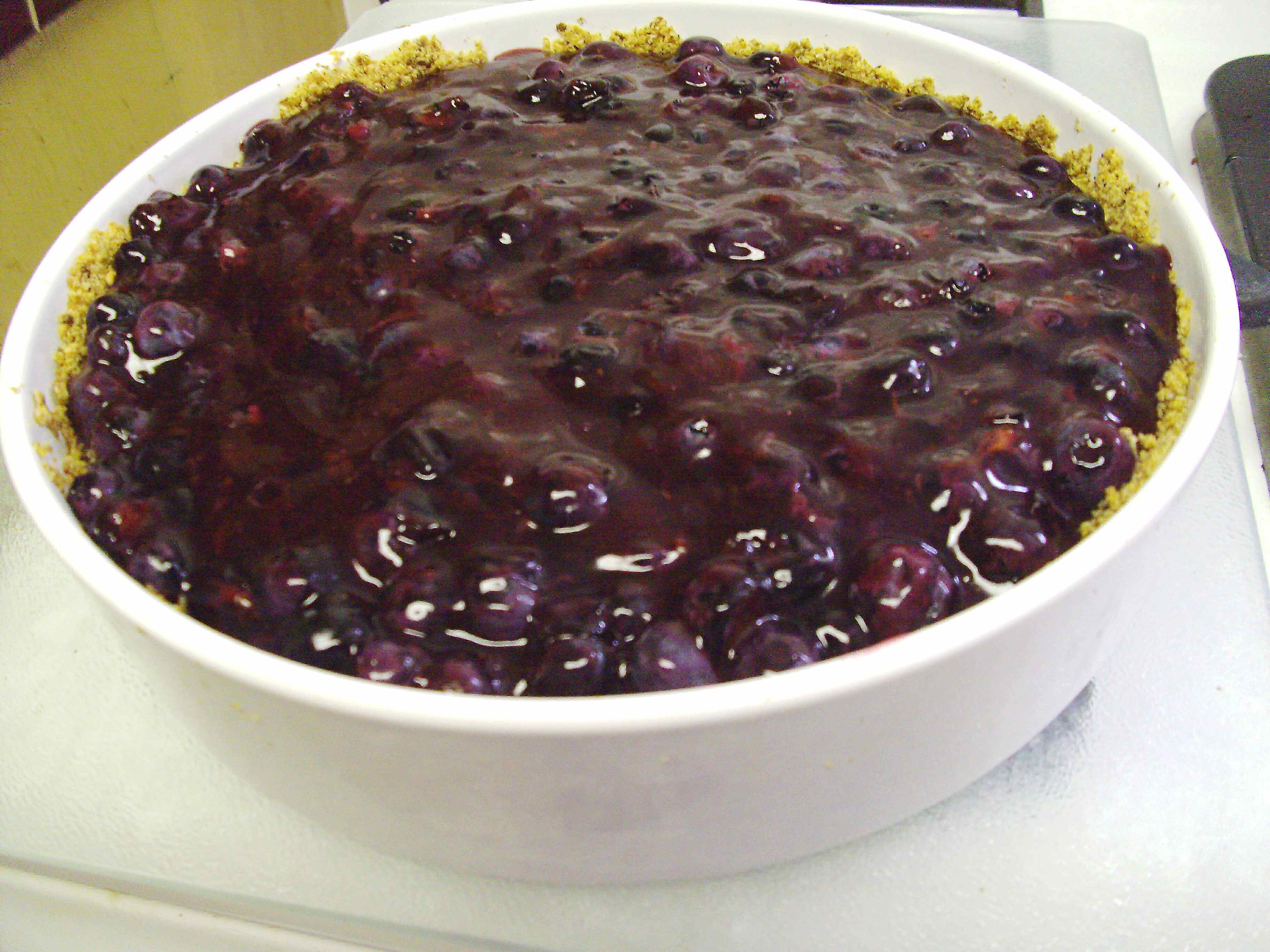
    raw blueberry pie with microwaveable filling and graham cracker crust

    This mostly-raw blueberry pie is a snap to make and very versatile--the filling microwaves in a few minutes, and you don't even have to bake the zippy gingered graham cracker crust--perfect for a hot Fourth of July and all summer long.

  • Recent Posts

  • Contents

  • Archives

  • Now Reading

  • See also my Book Reviews

  • Copyright 2008-2024Slow Food Fast. All writing and images on this blog unless otherwise attributed or set in quotes are the sole property of Slow Food Fast. Please contact DebbieN via the comments form for permissions before reprinting or reproducing any of the material on this blog.

  • ADS AND AFFILIATE LINKS

  • I may post affiliate links to books and movies that I personally review and recommend. Currently I favor Alibris and Vroman's, our terrific and venerable (now past the century mark!) independent bookstore in Pasadena. Or go to your local library--and make sure to support them with actual donations, not just overdue fines (ahem!), because your state probably has cut their budget and hours. Again.

  • In keeping with the disclaimer below, I DO NOT endorse, profit from, or recommend any medications, health treatments, commercial diet plans, supplements or any other such products.

  • DISCLAIMER

  • SlowFoodFast sometimes addresses general public health topics related to nutrition, heart disease, blood pressure, and diabetes. Because this is a blog with a personal point of view, my health and food politics entries often include my opinions on the trends I see, and I try to be as blatant as possible about that. None of these articles should be construed as specific medical advice for an individual case. I do try to keep to findings from well-vetted research sources and large, well-controlled studies, and I try not to sensationalize the science (though if they actually come up with a real cure for Type I diabetes in the next couple of years, I'm gonna be dancing in the streets with a hat that would put Carmen Miranda to shame. Consider yourself warned).

How to Nuke an Eggplant

Eggplant after microwaving

After microwaving 10 minutes, the eggplant has collapsed

Eggplant is one of those warm-climate foods. It’s big, cheap, and plentiful, it goes with everything from garlicky oregano-and-fennel laden tomato sauce to nutmeg-tinged custard or cumin/cinnamon-scented Greek and North African dishes, to curries and darkly soy-glazed Chinese and Thai dishes. You can deep-fry it, panfry it, grill it and serve it room-temperature under a glossy layer of olive oil, marinate it, wrap it around other fillings, stuff it, roast it, make spreads with it… There’s even a Greek eggplant “spoon sweet” and at least one eggplant “jam” from Morocco. To say nothing of pink-tinged sour eggplant pickles, one of my favorite additions at the Israeli felafel stands.

The only thing you don’t really want to do with eggplant is eat it raw.

I NEVER bother with the usual cookbook directions for eggplant. All of them slavishly recopy instructions from their predecessors–salt it, drain it, fry it in tons of expensive olive oil, which it will soak up mercilessly, bake it for an hour only to find it still has spongy raw spots… They never bother to update, or even retest, the traditional assumptions that make eggplant such a pain.

You can forget most of that if you just nuke your eggplants first. Most of the stuff people do to their eggplants comes of just trying to get it cooked through. The salt’s to get rid of some of the water; the fat’s to cook it hotter and let the juices steam inside the slices.

Microwaving takes care of both, needs neither fat nor salt, and it’s very quick–10 minutes on HIGH on a pyrex pie plate for 1 or 2 decent-sized eggplants and you’ve got either collapsed whole eggplant(s) ready for baba ghanouj or a fan of slices or a mountain of bite-sized cubes. All of them cooked through and ready to do something more interesting with.

I used to think I was alone in the wilderness on this one, because NO ethnic cookbook–or any other cookbook with eggplant recipes–ever considers the existence of microwaving, much less condones it for cooking actual food. Continue reading

Naked Lunch: Nutrition labeling law in effect for California Chain Restaurants

California’s not the first state or municipality to require restaurants to declare their nutritional stats to customers, but as of today, the state will require chains with more than 20 in-state locations to post calories, carbs, sodium and fat information for each menu offering. The new law also bans sales of soda and junk foods to students at public schools–a big step toward reducing empty calories and sodium consumption among children and teens.

Patt Morrison of Pasadena-based public radio station KPCC interviewed the California Restaurant Association’s senior vice president for government affairs and the executive director of the California Center for Public Health Advocacy.

Surprisingly enough, the CRA’s representative said the association actually backs the legislation in its current form. When asked whether similar New York City legislation had had any effect so far, the CCPHA director said it had–chain restaurants had started reformulating popular high-calorie foods back downward. He also gave demographics: 89 percent of Democrats and 78 percent of Republicans polled said they were in favor of the new law. Most of the callers to the show also said they wanted or needed to know what was at the end of their forks.  A fascinating interview all the way around.

Buttermilk ices

Buttermilk is one of those underappreciated dairy foods, as is the even less well-loved nonfat powdered dry milk. Both are somewhat unappetizing taken straight. A glass of buttermilk, though it has its fans, can taste like liquid cottage cheese, and reconstituted NFPD never quite sheds its dank, sticky chalkiness, especially if you’re attempting to use it in the morning coffee (a desperate we’re-all-out-of-actual-milk substitute that has driven me to Starbucks more than once).

Cookbooks tend to ignore buttermilk and NFPD or else sweep them into baking recipes where they won’t matter much, won’t be recognizable, and certainly won’t dominate the taste. Given how much protein and calcium they contain and how inexpensive they are, that’s kind of a shame.

But treat them right and you get something light, versatile and delicious for dessert. Buttermilk’s actually a little easier to believe in an ice cream-like dessert than NFPD is. Foodie magazines feature lots of lemon buttermilk ice creams this time of year, but they include such odd and unnecessarily rich ingredients as cream cheese to simulate a superpremium ice cream’s texture. Not only is it extremely calorie-dense, it’s really, really expensive. Kind of defeats the purpose of using lowfat buttermilk in the first place.

My version of a lemon buttermilk ice uses NFPD instead of fat to create the microcrystalline structure that keeps it from turning into a huge popsicle. It won’t melt quite the same as ice cream, but it’s packed with flavor and a small portion feels like “enough”, especially with fresh fruit on the side.

NFPD’s stale chalkiness and crumbly texture are not so hard to fix, but I haven’t seen anyone presenting a method for it so I’m doing it here. There are two tricks, both of which can probably help for other NFPD recipes, even savory ones.

First is the taste–in this case, the lemon juice and rind seem to counter it quite successfully, and the juice also seems to help NFPD dissolve more smoothly. Orange juice seems to work also, so maybe it’s the tangy acidity that counteracts the stale milk taste. As long as you’re not heating it up, you don’t run the risk of curdling either.

Second is the clumpiness. There are a couple of Indian recipes where it’s actually a possible advantage–gulab jamun and burfi both seem to take advantage of NFPD’s doughiness when mixed with a scant amount of liquid. But for desserts where you want it to dissolve smoothly, just whiz the dry NFPD by itself in a food processor, or just with sugar, to get it to a fine dust before blending in any liquids.

Lemon Buttermilk Ice (makes about 8  1/3- to 1/2-cup servings)

  • 3.2 oz (91 g) packet nonfat powdered dry milk (or the amount specified on the package for a quart of reconstituted milk)
  • 1/2 c sugar
  • 2 c. lowfat buttermilk–drained a bit if it’s starting to separate
  • juice and grated peel of a lemon
  • 1/2 t. vanilla or to taste

Grind the NFPD and sugar together in a food processor until they form a very fine powder. Pour in the buttermilk and pulse to get the powder off the bottom of the food processor. Add the lemon juice and peel and the vanilla and blend again. Either pour into an ice cream maker for churning or into a freezer container with a sealable lid and freeze an hour or so. Scrape the frozen crystals off the sides, stir them into the still-liquid part of the buttermilk ice, cover again and refreeze. Do this once or twice more. Serve with fruit.

Misunderstanding Salt Research: Bon Appetit’s Shameful “Health Wise” Column

I started this blog last spring more or less just to test out blogging lightheartedly about food. However, I have just read Bon Appetit‘s appalling “Health Wise” column from the May issue, “The Saline Solution” by John Hastings.

I do actually love to cook and eat well, and that’s my main purpose for this blog, but seeing this kind of blithely irresponsible “health” advice on salt makes my blood boil (not appetizing). Worse, it starts dragging me back to my work roots and up on my soapbox (also not appetizing, though kind of fun), because I trained as a biochemist and worked for several years as a science journalist. I worked for the National Heart, Lung, and Blood Institute at NIH at the time some of the bigger studies Hastings refers to were first being published. It was my job to know about them and write about them in plain (and preferably short) English for Congress and the public. To do it I talked to national experts, interviewed the leaders of the National High Blood Pressure Education Program, and combed through a century’s worth of research on salt and high blood pressure.

But you don’t have to be a scientist to find this stuff out. Descriptions of the studies AND their updates AND the reasoning behind the basic public health guidelines calling for Americans to watch their salt AND how to do it without eating a restricted diet of cardboard and baby cereal are all easily available from the NHLBI web site or the American Heart Association.

Hastings, a former editor of Prevention and health column contributor to O, the Oprah Magazine, is someone you’d expect to be reasonably accurate in reporting health research findings. But here he gets the science on salt and high blood pressure just about as backwards and upside down as he possibly can.

Worse yet, he does it in a strangely breezy, cheerleading tone that’s really hard to believe.

Hastings’ argument goes something like this:

…here’s a little secret: salt isn’t a problem. If that sounds crazy, it’s because the public health message about salt causing high blood pressure has been very, very effective, and it’s backed by reams of scientific research…Upon this, nearly everyone agrees. The controversy arises when you ask experts about the connection between salt intake and high blood pressure…All of this is fantastic news for those of us who are already cooking with high-quality meats and farmers’-market produce…

Did you follow all that? Probably you felt like you did for the few seconds you were reading it, but look again and you start to pick out the self-contradictions–“If it sounds crazy” that salt isn’t a problem, “it’s because the public health message that salt causes high blood pressure… is backed by reams of scientific research.”

Well, yes it is. The way Hastings phrases it, you’re supposed to think that was a bad thing, that health research in general and carefully designed tests of the effects of diet on cardiovascular health in particular are part of some kind of unnamed conspiracy against the public’s right to eat every bit of salt it can get.  Personally, I’d rather that broad public health messages were backed by reams of scientific research rather than by some diet guru or brand-name chef’s nutritional fantasy that will help sell his next book or tv program, or–more realistically–by corporate marketing and pressure campaigns from big pharma and big agro. Of course, it’s less profitable if people simply eat less salt–and less processed food–and never develop hypertension in the first place than if they eat salt like it’s going out of style and call it gourmet, and then have to make up for their diet by taking hypertension pills…hmm. Food, Inc., anyone?

“Upon this nearly everyone agrees”, but somehow there’s still a great controversy over it? Really? No. Not really.

The vast majority of salt researchers look at the bulk of the study results and conclude–repeatedly, for decades now–that salt is, in fact, a direct and modifiable risk factor for hypertension (high blood pressure). Which is both a disease in its own right and a leading risk factor for heart disease, stroke, and chronic kidney disease. Combine that with the fact that the average current salt intake is about twice what the consensus guidelines recommend and that more than half the adult population in the U.S. is crossing the line into overweight and obesity–and…well, yes.

Salt IS actually a health problem for most people. Gee.

The Bon Appetit article is a jumble of self-contradictions and serious misinterpretations of the findings from two older salt research studies, one of which has since been revised,  plus a cherry-picking recent review that comes to a different conclusion about salt than most of the other reviews of the same data on diet and health. That one comes from the lab of Mickey Alderman, an otherwise eminent researcher who just happens to be a long-time, much-trumpeted advisor and consultant for the Salt Institute.

Hastings  doesn’t indicate that he interviewed the man or even recognized his name on the journal article, but he should have. Anytime somebody in the media wants to come up with the magical–and really, really popular–conclusion that lots of salt, any day, any time, anywhere, please add more, is perfectly harmless and even good for you, they go to Mickey Alderman because they can paint him as a lone hero against the Food Police (the typical name they give the National Institutes of Health and the American Heart Association in such cases). Because what Alderman will say–with precision, but with disregard for the bigger public health picture–is that high salt intake isn’t directly proven to cause death from cardiovascular disease.

And it isn’t. It can’t be proven directly in a well-controlled diet study large enough to reach statistical significance, because that would require thousands of participants to follow a carefully prepared diet throughout their entire lifetimes, with no deviations for dates, wedding receptions, pizza parties, etc., and it would take 50-75 years to collect the majority of the data. You’d literally have to wait until most of the participants died before you could make a public health recommendation about salt. And the cost of doing that study “right” would run into the billions. It would bankrupt the federal science budget. And maybe a few other budgets as well.

That’s why the NHLBI and the AHA have sponsored studies that look at signs of developing cardiovascular illness–heart attacks, stroke, phlebitis, high blood pressure, kidney disease–rather than death. When you look at these ailments, you find that dietary salt actually matters quite a bit–contrary to what Hastings thought he understood from the studies he mentions.

Continue reading

Soba sodium revised

I just actually checked the package labels at Whole Foods–soba noodles from Eden brand run something like 470 mg sodium per serving–about twice what I’d estimated. Udon noodles were something like 650 mg per serving. Why? Why? That’s worse than a can of Campbell’s soup! Whole wheat pastas it is.

Taking on “Recipes for Health”

Martha Rose Shulman’s “Recipes for Health” column in the New York Times typically offers quick stir-fry vegetarian fare that anyone can do at home. Shulman is a good and popular cookbook author, and I give her credit for her intentions. But the column reveals some serious flaws in her understanding when it comes to the actual healthiness of the recipes.

First, the recipes never include standard nutritional breakdowns. I wouldn’t expect that for glamor food magazines, but any major newspaper or magazine claiming “healthy” recipes should declare the nutrition stats per serving so people can gauge calories, fats, carbs, fiber, and especially, because we’re not used to thinking consciously about it these days, salt.

And salt is where Shulman’s recipes go seriously wrong. Time after time, they contain surprisingly and unnecessarily high salt per serving. Where does it come from? Take this week’s recipe, “Stir-Fried Snow Peas with Soba”. It’s basically Japanese whole-wheat noodles (soba) with snow peas and tofu in a peanut sauce, and serves four. Seems simple enough, but the ingredients Shulman chooses are hiding an awful lot of extra salt:

* You expect the soy sauce to contain salt. OK. It’s only a tablespoon. But it isn’t the reduced-sodium version–and why isn’t it?–so figure  1200 mg.
* Half a cup of vegetable or other broth–also not specified low-sodium. Figure 250-500 mg sodium; maybe even more.
* Salt “to taste”–TV chefs tend to sprinkle in a pinch or more. Figure 1/8-1/4 teaspoon, 300-600 mg, if you imitate them.
* Peanut butter. Not specified unsalted. Figure 1 tablespoon is 100 mg.
* And then there’s the soba itself. Ordinary Italian-style whole wheat spaghetti or fettucine has almost no sodium in it, just flour and water, but authentic Japanese soba dough contains quite a bit, 250 mg or so per serving. Times four is about 1000 mg.

Grand total for 4 servings: 2300-2800 mg, or 600-700 mg sodium per serving.

If that’s your whole dinner, ok, but most of that sodium could easily be cut without sacrificing taste. Plus, two ounces of snow peas per person isn’t enough to call it vegetabalia and get away with it in my book. You’ll notice that the glossy photo in Shulman’s article shows a generous two snow pea pods, a few slices of radish, and none of the promised cubes of tofu–her version’s a side dish, not a proper meal. Let’s revise this one.

Continue reading

What’s in YOUR restaurant’s dumpster? David Kessler uncovers the addictive side of chain restaurant eating

David Kessler, the FDA commissioner who fought to bring the cigarette and tobacco companies to heel in the 1990s–has taken on the next big fight by doing something you wouldn’t think a man that eminent needs to do: he’s gone dumpster diving in the parking lots behind the fast-food chain restaurants in California. In a suit, according to his wife.

What’s in the dumpsters? Kessler’s new book, The End of Overeating: Taking Control of the Insatiable American Appetite, reveals a dirty secret. Kessler went in search of the nutrition labels on the boxes of food shipped to individual chain restaurants like Chili’s to find out what’s really in the food they serve and why people have so much trouble stopping at a normal portion and normal calorie intake when they make fast food a part of their lives.

He found the labels. Even ordinary-sounding foods were pumped abnormally, exaggeratedly, unconscionably high with fat, salt, and sugar. One appetizer–the Southwest Eggrolls–contained 910 calories, 57 grams of fat and 1,960 milligrams of sodium. Basically half a day’s calories for a normal healthy woman’s diet, about twice the recommended amount of fat if most of it was saturated, and nearly all of the recommended maximum for sodium.

Not really a big surprise–fat, salt and sugar are the three things most likely to provide a “quick hit” of satisfaction when you eat them, and all of them are cheap substitutes for actual flavor or (dare we dream) fresh ingredients you might otherwise expect in food. Most packaged snacks rely on at least one and usually all three–think Snickers; think Chees-Its; think just about any kind of vending machine item–fat, salt, sugar. It’s a hit.

But we know packaged snacks are junk food. We thought dinner at Chili’s — or Bennigan’s — or TGI Fridays — was an actual meal. It LOOKS like a meal. It looks like meat and vegetables and rice or potato. What Kessler discovered on the nutrition labels makes them seem more like giant-sized, glorified, salted, sugar-coated, oiled-up snack foods parading as meals.

That’s not a shocking kind of report anymore–the Center for Science in the Public Interest has been putting out shocker nutritional reports on all kinds of popular foods since it blasted into the headlines by calling fettucini Alfredo “a heart attack on a plate”. But since the CSPI Alfredo debacle, Americans have been swarming to fast food restaurants and sit-down chains in record numbers–not as a weekend jaunt but as a staple of their diet, reportedly eating out an average of 6 times a week.

Kessler ties these trends together with recent physiological research on fat, salt, and sugar consumption. Instead of satisfying hunger, the fat-salt-sugar combo acts as a stimulant, hitting up the dopamine receptors in the brain and triggering release of opiates as a “quick relief” response to eating the first bite of a fast food. Followed shortly, we would guess, by a let-down. And then a vicious cycle as the body suffers rapid hunger for more, even though you’ve just eaten.

So fat-salt-sugar really is a drug. Something we already knew,  but not in such detail. The fact that it’s being exploited not just in vending machine snack packs but in what we thought was real food, just restaurant-prepared, goes some way to explain why reports in the past year have clocked Americans eating 3800 calories a day.

The fact that that mass-prepared food has been manipulated to exaggerate the fat-salt-sugar content and encourage people to eat more than is reasonable in a chain restaurant sitting is even more insidious. The fact that high-class restaurants with big-name chefs are resorting to similar tactics–often unwittingly–to “boost flavor” and compete with chain food is just depressing.

Or in other words: Restaurant food is the new tobacco.

Z’khug Basic

Z'khug (hot pepper-garlic-cilantro paste) in the food processor

Grinding the cilantro with reconstituted hot pepper flakes and garlic in the food processor


Z’khug is a Yemenite condiment, something like pesto but much, much hotter. It’s made of garlic, cilantro leaves, and chile peppers, usually with some mix of cumin/caraway/etc powder and maybe a little salt and olive oil. It’s the kind of thing you use sparingly to give a kick to hummus, spaghetti with ricotta, fish, potatoes, tomato sauce, peanut sauce, sweet potatoes–anything but chocolate mousse, basically.

It’s easy to make and worth keeping in the freezer, patted into a thin layer in a sandwich-sized ziplock bag so you can break little raisin-sized pieces off as needed to flavor a dish so it’s not boring but won’t take people’s scalps off when they taste it.

Fancier versions with added spices are available on the web, but my basic (maybe too basic for authenticity, but do I care?) version is:

Z’khug

  • large bunch of washed and picked-over cilantro, lower inch of stems removed
  • 3-5 fat cloves or 12 or so medium-thin cloves of garlic, mashed or grated
  • ~1/4 c. red hot pepper flakes
  • 1/4-1/2 c. boiling water
  • drizzle of olive oil
  • pinch of salt
  • optional spices: caraway, cumin, fresh-ground black pepper, allspice and or coriander (small, small amounts of an even blend, to taste; not entirely recommended except maybe for the caraway)

In the bowl of a food processor, pour 1/4 c. boiling water or a little more on the hot pepper flakes and let sit 15 minutes or so, until the water is soaked up and the red flakes have softened and swollen (the seeds won’t look very different from dried). Add the cilantro  and garlic and grind until chopped fine to a rough paste. When the mixture looks about like pesto, drizzle a little olive oil on it and mix it in. Pat the z’khug into a sandwich bag in a layer less than 1/4 inch thick, squeeze out as much air as possible, seal and freeze it flat.

To use, saw off small chunks to add to hot foods or let a bigger chunk thaw for serving as a condiment (with a VERY small spoon) alongside hummus and pita.

A Dream of…Marmalade?

For years I assumed that only the truly gifted home ec queens, most of them from the deep South, were qualified to make jam. I love to cook and I love to play with my–or anybody’s–food, but I knew instinctively that the combination of 1) me and 2) hot vats of boiling fruit and sugar was a recipe for disaster. Or hospitalization. Or outrageous cleaning bills. Or all three. So I stayed far, far away from pressure cookers, Ball ™ jelly jars, and anything involving bushels of fruit and all-day productions.

And yet…once in a while I’d walk by the produce section, see something unusual, and fantasize about making a new kind of jam they didn’t have in the store. The kind with just fruit and maybe sugar, but no corn syrup to cloud up the flavor. Something that didn’t cost $6 for a 10 oz. jar. Something that didn’t taste like all the freshness had been boiled out of it.

There’s nothing more disappointing to me than the difference between ripe strawberries and strawberry jam. It should be so good, and it just tastes so tinny, with all the life and brilliance cooked out of it. Oranges are, if possible, even worse cooked. And yet I do love marmalade, which seems even more mysterious than jam.

This week, I stopped by my neighborhood corner grocery and found a small cardboard box perched atop the large open bins of walnuts and almonds. In the box were a couple of pounds of kumquats for $2/lb. A decent price–but was I really going to do something with kumquats?

Since discovering the microwave, I’ve taken on an unwise and very brash attitude about tackling new challenges that basically boils down to “Just nuke it!” I realized if I microwaved the marmalade it would either succeed or fail, but at least it would do it quickly. Continue reading

Red Lentil Dal

Ideally, I should have been posting this sometime in the winter, but I like it all year round–except for Passover week. Which is the real reason I’m posting it now: I bought a 2.5 lb. bag of red lentils from my corner grocery (Armenian, in this case) a month or so ago and have only used half. And Passover’s coming in a week.

Dal or rasam–depending on your Indian restaurant of choice–is a tangy thick soup of red lentils and tomatoes, with a variety of spices and either tamarind (traditional) or lemon juice (my personal preference). A lot of restaurant-style and westernized Indian recipes call for fairly shocking amounts of salt in savory dishes. This recipe doesn’t include salt at all or ghee (clarified butter) and doesn’t really need it. Like a lot of home-cooked soups and stews, it gets better overnight as the spices meld with the vegetables. Put in a good amount of garlic, lemon, cilantro and savory spices and see how it is–you can always add salt to your own dish at the table, but by day 2 it should be pretty good on its own.

I’ve given approximate amounts for the spices because you might add more lentils or have older or fresher spices–whole spices are usually more potent, especially if you grind them up just before you cook with them. You need to taste for yourself and adjust–this is easier if you’ve eaten dal before, obviously. Standard curry powder has a lot of spices in it but this tastes better if you add some extra coriander and cumin, and a sprinkling of something sweeter–cardamom plus cinnamon or 5-spice powder or garam masala.

Unlike most beans, lentils don’t need presoaking. Red lentils in particular are usually already split and cook up pretty well within about half an hour. I cook this dish in a big deep-sided teflon frying pan, but it gets a bit awkward to dish out–use what works best for you.  A regular soup pot is fine too.

Red Lentil Dal — Makes about 2 quarts

Spices:

  • 1/2 med yellow onion, chopped
  • 1″ chunk fresh ginger, grated, if you have it–don’t sub in anything if you don’t
  • 1 large T unsalted curry powder (Indo-European or other decent brand)
  • 1-2 t ground coriander or 1 t coriander seeds, crushed
  • 1/2 t cumin either ground or seeds
  • A good pinch of cardamom seeds crushed, or a teaspoonful of whole pods tossed in after the tomatoes (below) to stew with the lentils and then plucked out by the diners…
  • pinch cinnamon or 1/2 t garam masala or Chinese 5-spice powder
  • 1/2 t black mustard seeds if you have it
  • pinch nigella (“black caraway” or “kalonji” or “black onion seed”) if you have it–a little goes a fairly long way, because the flavor develops overnight in the fridge, so a pinch is enough
  • Hot stuff–add according to your own taste or leave it out: 1/2 t crushed hot pepper flakes, a bit of cayenne pepper, or 1/2-inch dab of z’khug (hot pepper/garlic/cilantro paste)

Tomatoes and lentils with liquids

  • 3-4 roma tomatoes (canned is fine) or 1-2  medium salad tomatoes, chopped or broken up
  • 1-2 fat clove(s) garlic grated–you might add one, then more later once the lentils are mostly cooked
  • ~2 c. red lentils, washed well and picked over. If you pour water over them to soak a bit while frying the spices, expect them to stick together–break them up with a fork to add to the pan.
  • Enough water to cover the lentils
  • juice of 1-2 lemons (add one first, stir and let cook and taste, then add more lemon as needed)

Adjustments and garnishes

  • additional garlic, coriander, curry powder, hot peppers or lemon juice to taste
  • fistful cilantro sprigs chopped

To a large teflon frying pan or soup pot, add the ingredients in stages:

  1. First, fry the spices in the oil with the onion and ginger, stirring for a minute just until they’re starting to smell fragrant, but don’t let them burn.
  2. Add the tomatoes and garlic, then the lentils, and water to cover. Add the lemon juice. Let the pan simmer uncovered, stirring occasionally, until the lentils have turned from red-orange to yellow and fluffy.
  3. Add more water as necessary and when it seems cooked, taste it and adjust for any additional spices, garlic, or lemon juice to  taste. I tend to add a bit more lemon and coriander as things go, and sometimes more garlic if it seems to need it.
  4. Stir in or sprinkle on the chopped cilantro leaves and serve with rice as a thick curry or in a bowl as a soup–a little chopped raw onion and tamarind chutney are also pretty good with this. Have hot pita bread or naan at the ready and maybe another sliced-up lemon.