
• Enter your email address to subscribe to this blog and receive notifications of new posts by email.

    Join 241 other subscribers
  • Noshing on

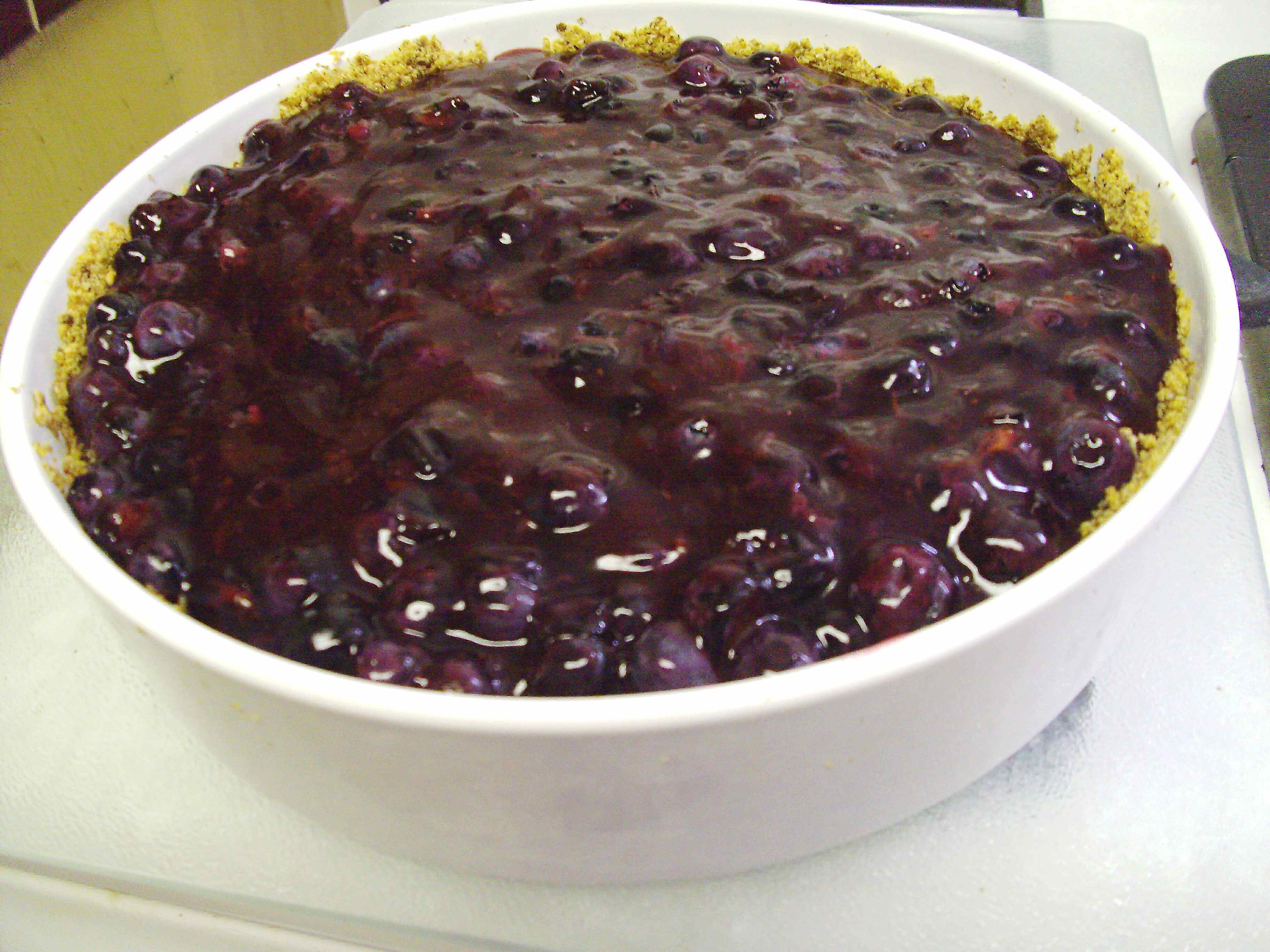
    raw blueberry pie with microwaveable filling and graham cracker crust

    This mostly-raw blueberry pie is a snap to make and very versatile--the filling microwaves in a few minutes, and you don't even have to bake the zippy gingered graham cracker crust--perfect for a hot Fourth of July and all summer long.

  • Recent Posts

  • Contents

  • Archives

  • Now Reading

  • See also my Book Reviews

  • Copyright 2008-2024Slow Food Fast. All writing and images on this blog unless otherwise attributed or set in quotes are the sole property of Slow Food Fast. Please contact DebbieN via the comments form for permissions before reprinting or reproducing any of the material on this blog.

  • ADS AND AFFILIATE LINKS

  • I may post affiliate links to books and movies that I personally review and recommend. Currently I favor Alibris and Vroman's, our terrific and venerable (now past the century mark!) independent bookstore in Pasadena. Or go to your local library--and make sure to support them with actual donations, not just overdue fines (ahem!), because your state probably has cut their budget and hours. Again.

  • In keeping with the disclaimer below, I DO NOT endorse, profit from, or recommend any medications, health treatments, commercial diet plans, supplements or any other such products.

  • DISCLAIMER

  • SlowFoodFast sometimes addresses general public health topics related to nutrition, heart disease, blood pressure, and diabetes. Because this is a blog with a personal point of view, my health and food politics entries often include my opinions on the trends I see, and I try to be as blatant as possible about that. None of these articles should be construed as specific medical advice for an individual case. I do try to keep to findings from well-vetted research sources and large, well-controlled studies, and I try not to sensationalize the science (though if they actually come up with a real cure for Type I diabetes in the next couple of years, I'm gonna be dancing in the streets with a hat that would put Carmen Miranda to shame. Consider yourself warned).

Fruit + Herbs = ?

Along the lines of my taste experiments in the last post, I wanted to share a couple of fruit-and-herb combinations I’ve come up with over the years. I hesitate to call them recipes, but they’re good, fast, and unusual. They make refreshing side dishes, especially for a light meal, because they’re not too sweet and they play the sweetness and sometimes tartness of the fruit against something woody, green, spicy or aromatic.

Food glam mags show a host of grilled peaches and nectarines, ditto salsas, and sometimes include thyme and fresh black pepper and sage and other herbs.

I should also mention I just finished drooling my way through David Tanis’s A Platter of Figs, which has a lot of very simple, good-looking fruit desserts and accompaniments (including roasted fresh figs with thyme). I didn’t lick any of the pictures (it was a library book, after all) but it’s really the recipe instructions that appeal to me–simple and informal, with interesting and helpful notes on what seem to be missing steps in other chefs’ cookbooks. My favorite example: steam or parcook fennel bulb slices before you grill them. Makes perfect sense and explains why so many upscale restaurants serve grilled fennel that’s tough and stringy and hard to get through without landing it on your blouse.

But to get to the point–fruit+herbs=intrigue.

So why not? Here are a few of mine.

Mango with Fresh Basil

I hate to say it, but that’s about it. Seriously.

I cut a large mango in half, run a paring knife CAREFULLY as close as possible to one side of the big flat hairy pit (yes you will feel cheated unless you buy at a good price in a Latino market), take the cut half of the mango and score the flesh into a tic-tac-toe pattern, and flip the peel inside-out to pop out the cubes (slicing close to the peel). I try my best with the other half, the half with the pit stuck to it–mostly it works. Sometimes I count to make sure I still have ten fingers afterward… Combine the cubes with torn or julienned fresh basil leaves and serve with grilled white fish or the like and a green salad with vinaigrette. Purple basil looks dramatic, and you can dress this up a bit more with a few dice of red onion and a squeeze of lime juice but you don’t have to.

Canteloupe with Rosemary

Canteloupe is cheap and nutritious and complex, but usually too funky and tropical for me to eat straight up. I always want lime juice or something. Even as a grownup, more’s the pity. One night I was wondering if there were anything that would possibly make me like canteloupe better–I had a canteloupe with best intentions lingering unused in my fridge as I got less and less enthusiastic about it–and something about rosemary clicked in my head. Mint and lime juice are the classics, but I like rosemary because it’s piney and aromatic without being bitter, and something about it undercuts the unctuousness of the canteloupe and makes it taste fresher to me. You wouldn’t believe how triumphant I was when I found out this actually worked. So I ground the whole thing up (well, minus the peel) and squeezed in some lime juice and froze it for a sorbet. Also good.

Prunes or Dried Figs with Anise or Fennel Seed

I tend to eat a few of these out of hand as a snack with a little of the anise or fennel sprinkled over the top for contrast, but I’ve also chopped dried figs with a couple of chopped dried apricots, microwaved them in a little bit of water to soften to a chunky paste, then mixed in a sprinkle of anise and maybe a bit of cinnamon and used it to fill filo pastry cigares. A similar idea…

Prune Log with Pistachios and Cardamom

There’s also a very nice Moroccan-Jewish High Holiday sweet–good for this time of year–that’s a lot like the fancy pressed date/walnut or fig/Marcona almond wheels from Spain–a small wedge from the Whole Foods cheese counter can run you $5 or more, but they’re delicious  sliced very thin. Anyway, this one’s a prune log with pistachios, and it’s a little more complex than the others but easy enough to make.

Simmer about a pound of pitted prunes in a little water or orange juice (you can nuke a few minutes if you prefer) and process to a very thick paste. Mix in freshly toasted pistachios and either aniseed or a good grinding of cardamom (the seeds inside, not the pods) or both, perhaps. Pack tight onto a length of plastic wrap and roll into a log, cool, and roll to coat in toasted sesame seeds. When cool and firm, slice the log very thin into rounds (it’ll be like pistachio-studded fruit leather, but a bit softer) and served on a doily-covered brass tray along with dried apricots stuffed with marzipan or walnuts and other delicacies. Mint tea, lots of it, goes with. B’te’avon! (good appetite!)

The Meaning of “Tasty”

One very strange description crops up in nearly every expert’s take on processed food and the way it’s overtaken fresh and whole foods in the American diet. Everyone from food industry veteran Hank Cardello (see the Stuffed book review) to NYU nutrition professor Marion Nestle in What to Eat talks about fast food and junk food as “tasty”. David Kessler goes even further: in The End of Overeating, he adds “irresistible,” which he says is the problem he faced most of his life.

Moreover, “tasty” has become the important word in processed food advertising. Driving home from the post office today I even saw it on a billboard for Vitaminwater10, with the tagline:  “10 CALORIES. 4 NEW FLAVORS. TASTIER THAN EVER.”

Tasty. It’s the word of champions, the key, the adword to beat.

And for the life of me, I’m not sure why. Because the words I would have chosen for most of it include stodgy, greasy, cardboardy, screamingly salty, day-glo ™ orange, and “a lot like airplane food, only on the ground.” Am I the only one?

But “tasty”–specifically that word–is clearly the accepted description, even among these food experts, and that points to a host of disturbing assumptions. Either they mean they find processed food tasty or they mean they think everyone else finds it tasty and irresistible–even if there’s something better to eat. That’s kind of defeatist, isn’t it? If everyone “knows” fast food is tastier than fresh produce, what hope is there for mainstream Americans to eat healthier than they do today?

What do they actually mean by “tasty” in the case of processed food? They don’t mean fresh, as in fresh produce. They don’t mean tangy, as in yogurt or a tangerine, or sharp as in horseradish or cheddar. Certainly not aromatic, like dill or fennel or rosemary or sage. Or rich and funky and thought-provoking, like aged camembert or shiitakes or asparagus or toasted sesame oil. And they don’t mean complex and savory and surprising, as in a palak paneer punctuated by smoky black cardamom pods, Armenian string cheese with nigella seed, or a long-cooked carbonnade or daube of beef with some cloves thrown in on a whim.

They can’t possibly, honestly, mean “these fresh hazelnuts are so sweet you’ll plotz” or “one bite and you’d better take this nectarine somewhere private.”

Most of the food experts who’ve posited that processed food is “tasty” in their books and articles are older than I am by about 10 years, old enough to remember eating late-July nectarines that devastatingly fragrant, backyard tomatoes earthily ripe and pungent, foods utterly unlike what’s available even in the produce section of most chain supermarkets today.

So I can’t help thinking that their casual use of the word “tasty” reflects and even perpetuates the hopelessly tattered, stunted and inexperienced taste imagination of the masses of people who don’t cook for themselves anymore and have given over completely to packaged food, with its excesses of salt and its bland, stale cardboardy background flavor. The ugly assumption they’ve bought into is that people who eat mostly processed food can’t change, won’t change, and most importantly, wouldn’t like fresh food if they tasted it.

Can the surge of food blogs with their encouragement to try something new, visit local farmers’ markets, maybe even take a share in a community garden plot, change this trend? I hope so, even though I know the open air markets are not often very available in poor neighborhoods and they tend to be as expensive as supermarkets. But when they are made available in urban areas, all kinds of people from the neighborhood suddenly come flocking to them, Continue reading

You want fries with that?

You have no idea how much I’m looking forward to tomorrow at 8:35 a.m. That will be a good five minutes after the start of the parental summer relief program known best as Back to School. I’m counting down the minutes as we speak.

With the return to school, public debates over what children should eat and how parents should or shouldn’t step in have intensified. Obesity, the selling out of school cafeterias, new restrictions on sodas and junk food in said cafeterias, and the diet of choice at home are the topics of the day–all underlined with a sense of rising panic.

This year more than any other I can remember, reporters, bloggers, doctors, models, political figures, and just about everyone else has jumped on the bandwagon to report the ugly facts that were excused for years.

All the statistics are in–or pretty much so, and they boil down to this: We’re facing a tidal wave of blubber.

With it comes a tidal wave of early heart disease, diabetes, kidney disease, and more. How early? Physicians are seeing a rise in the diseases of middle age–something that, 20 years ago, had been successfully pushed back by an average of 10 years, from age 50 or so to age 60 and up for a first heart attack. We thought we were making progress. But for the past 10 to 15 years,  these diseases have started popping up in school children–Type II diabetes, kidney stones, high blood cholesterol and high blood pressure. No way should a 10-year-old be facing these threats.   No wonder parents and everyone else are panicked–the studies we have aren’t giving us a single, easy-to-deal-with  definitive  guide on how to stop the juggernaut. They mostly tell us that it keeps on rolling.

But the mystery of what to do really isn’t that mysterious. Take for example the responses to Frank Bruni’s recent article in the New York Times on feeding children. Some come from doctors on the front lines, others from nutritionists and fresh-food-in-schools activists, discussing different facets of the problem, but they come to a number of sensible recommendations you could probably have named yourself without much struggle.

The conclusions?

Sodas should be cut out altogether from children’s (and probably everyone’s) daily diet. Not just for calories (250ish for a 20-oz bottle–and why is it 20 0z these days? used to be 12 was the standard) but for sodium (about 100 mg per 12-oz can, whether full-cal or diet, 200+ for the 20-oz).

Fruit juices with a pretty picture on the box are nowhere near qualifying as actual fruit. Not even with added vitamin C.

And exercise time, including outdoor recess–something most schools have cut back in the past decades–makes a big difference that’s generally overlooked in the school lunch debates.

So far, no great surprises. But they do mention one more item, also no great surprise–fast food in the school cafeterias.  Nobody seems to have trouble zeroing in on french fries as the worst offender. Are they right or is this a replay of the cupcake wars? Is the french fry being unjustly accused, as the vendors claim?

Continue reading

Smart Choices Checkmarks–Corrupt Before They Ever Hit the Cereal Box?

William Neumann of the New York Times takes a hard look at “Smart Choices”, the new food industry-sponsored common nutrition labeling program, which makes its debut in supermarket packaged food aisles. The coveted green checkmark comes with a hefty license fee–toward the $100,000 mark per item–for food companies that want to qualify, but apparently qualifying is a little easier than you might expect. The new program, headed by a nutritionist with impressive enough credentials,  has awarded healthy choice status to heavily sugared cereals like Froot Loops because, as she explains, they’re a better breakfast choice than, say, doughnuts. For sure.

How could any reputable nutritionist blurt something like that out to a New York Times reporter? Does she really use doughnuts as a benchmark for comparison when the question is “what should I feed my kid for breakfast?”

More to the point, how could items like Froot Loops end up qualifying as a smart choice? Apparently, the FDA is wondering the same thing.

Take a look at the Smart Choices program nutrition criteria. Under the program, a given processed food product qualifies as a “smart choice” if:

1. Its nutrition stats fall within consensus-defined limits for carbs, added sugars, fats, cholesterol, and sodium. But the criteria are not particularly consistent about whether these nutrition stats count for a single serving or a meal, or perhaps multiple servings throughout the day, and the upper limits shift between categories of foods. And some of the criteria have been muted, dropped, or subordinated according to the preferences of food industry members over the protests of the nutrition scientists.

2. It contains at least one positive nutrient from an industry-accepted list of vitamins, minerals, fiber, and protein. The positive nutrient can be an additive, and it can be added to an otherwise nutritionally useless food product.

3. Alternatively to the positive nutrient criterion, the product can contain or represent some aspect of the category “food groups to encourage”: fruits, vegetables, whole grains and low fat or non-fat milk. How much of any of these ingredients must be present, what their original source is, and whether the final food product retains any reasonable or comparable amount of the nutrition found in an unprocessed fruit, vegetable, grain, or dairy item which it claims to include are all a bit vague. Processed cheese is technically considered dairy, for example, even though it may contain mostly vegetable oils, starches, and emulsifiers, not milk.

Not all food categories seem to require both nutrient-of-concern limits and positive characteristics.

Finally, the instructions to companies wishing to qualify a given food product state: “Qualifying your products for the Smart Choices Program is quick and simple. Product review is typically completed in 24 – 48 hours.”

Pretty much says it all. And doesn’t really support the “science-based, consistent, reliable” claims the program presents to consumers and the media.

For further mirth and bemusement, check out Marion Nestle’s account of her discussions with Neumann and with the Kellogg’s VP for global nutrition on her blog.

Pack your own lunch

It’s almost time to head back to school, and my daughter’s finally old enough to pack her own lunch. Not that she wasn’t actually old enough last year. But now she wants to.

When I was nine, I’d been making my own school lunches for at least a year, if only to save my sandwiches from my mother’s clutches and keep her from adding butter to the jam–something that did, and still does, make me absolutely nauseous. Emergency grossout prevention is the mother of lunch-making independence.

As many of my friends with same-age kids do, I worry that I haven’t been pushing my daughter hard enough toward independence by having her fix her own lunch. Is it too late to impart the mysteries of the toaster oven? But all is not lost–the other morning she figured out how to cut up her own apples (she has braces and our orthodontist “charges extra for stupidity-related bracket repairs”). She doesn’t appear to have lost any fingers. So we’re good to go!

Which is fortunate because lately I’ve been seeing a slew of new books on how to pack your kid’s lunch–they range from “here are all the vegan-friendly brand-names that look just like everyone else’s school lunch, only cooler” to Alice Waters insisting that the first step is growing your own school garden (which I’m actually in favor of, but not if it means waiting 6-8 weeks for your lunch to germinate).

Few of these fabulously sophisticated new books even consider the things I took to school every day as a kid–peanut butter and jelly, apple, carrots and celery. Or peanut butter and jelly, orange, carrots and celery. My mother was dull. My sister and I had no cool foods like Ho-Hos or Cheetos to distract us, and we usually ate at least some of the vegetables and the apple. Actually, so did most of the other kids in our school. It was that or suffer the cafeteria kale. And almost no one was fat. I’d like to point that out.

Hip mamas today (mostly those still in their 30s) look horrified at my daughter’s lunches because out there in hipland PBJ on whole wheat is so…so ’70s. It doesn’t contain any of the seventy-two essential nutritional supplement buzzwords (like selenium and phytoestrogens and antioxidant) they’re convinced all healthy food has to have (well, it’s true you have to have those things on the label to compete in the ads). And it has fat. And sugar!

But you know what? A decent peanut butter and jelly sandwich on whole wheat is a lot better deal nutritionally than most of the prepackaged, often self-righteously labeled, crap the hip kids bring to school these days. Much of it is along the lines of Kraft Foods’ “Lunchables”–a processed meat and cheese cracker kind of thing packed with some ersatz juice and faky side items like jello and  candies (not even, as I check belatedly, a tiny tin of applesauce–and check out the Lunchables nutrition and ingredient stats!). But you know how popular these things are–because they’re a kit. Buy five boxes, throw one  in your kid’s backpack each day. They stack neatly in the pantry.

Very few of these children ever bring a substantial serving of fresh vegetables or actual fruit–not even apples. Those require washing, peeling–maybe even cutting up. And sometimes the apples turn a little brown on the cut sides. Organic fair-trade labeling aside, any remotely fruit-like substances in the hip-kids’ lunch bags arrive in a rectangular cardboard box with a plastic overwrap, a plastic straw attached, and a sanitized-for-your-protection seal. No wonder they stare.

Anatomy of a PBJ:

Straight-up peanuts-only butter (no salt, no sugars, no mono- and diglycerides, no emulsifiers or BHT or “natural flavoring” or any of the rest of it) has about 16 grams of fat per 2 T (1 oz) serving. True. Absolutely true. But it’s not the same as the heart-stopping blubber you find on a piece of meat, so stop shrieking. Most of the oil in natural peanut butter is polyunsaturated (the “good fat” kind of fat). And it separates (because of the lack of fakery and emulsifiers) so you can pour off a good bit of it if you want to when you first open the jar.

Furthermore, the same peanuts-only peanut butter contains 8 g protein, 3 g fiber, almost no sodium, and about 210 mg potassium. And a little iron. It’s a pretty good deal for a kid’s lunch item at about 200 calories.

Two slices of whole wheat bread without too much sodium or garbage ingredients gives you another 200 calories–we’re up to 400, but only 3 g. saturated fat, another 3-7 g fiber, another 4-6 g protein, and with a little care preferably less than 400 mg sodium (all from the bread). Add a spoonful of all-fruit jam with 8 g sugar, at about 35 calories, and you have something that will get your kid through school without tears or big sugar highs and lows.

It doesn’t have big vitamin- and calcium-fortified labeling. It doesn’t have a label. It’s not supposed to do it all on its own. Your kid will eat about half, maybe the whole thing if he or she is growing fast or running around a lot that week. But he or she will get the vitamins and calcium from the other things in the lunchbox–some crunchy raw vegetables and an apple or orange and a thermos or carton of plain unsweetened milk. That’s it and that’s enough.

Do your kid a huge favor and leave out all the chips, chocolate, go-gurt (real milk-and-cultures yogurt is ok, not the fake tapioca- and gelatin-stretched stuff), cookies, jello, sorta-applesauce, and fluorescent boxes of juice. School is hard enough without sugar crashes or cavities, and they don’t need any of it to have a good day.

Oh yeah. And for crying out loud, please skip the sushi. Your kid does NOT need to be that hip in the school cafeteria. Or that sick, if the sushi doesn’t stay cold enough.

(Why yes, I live in Southern California. What gave it away?)

Microwave Tricks: Poached Eggs, No Explosions

Microwave-poached eggs

Astonished. I should be elated, but I’m just–is flabbergasted too strong a word? In June, chef Wylie Dufresne of New York’s WD-50 did the unthinkable and moved his latest microwave oven out to the dining room for some elegant tableside egg poaching. Only it took him 29 minutes. With some sort of fancy tinfoil shield.

Now really. I can see it’s time to step in, because 29 minutes in a microwave is like three years in a regular oven. 29 minutes to poach an egg by any other method than LA sidewalk  (ours are reaching the 200-degree mark) is plain ridiculous. No matter how fabulous the chef. I’m tempted to send him the starter booklet that came with my Sharp Carousel.

Poaching eggs in a microwave doesn’t have to be such a production. You can do it in 2 or 3 minutes for a pair or even 4 soft-cooked eggs that look and taste nice. Not rubbery. Not chewy. Not raw. And not exploded. You don’t need any specially designed microware. You don’t need any toothpicks. Or vinegar. You don’t need anything other than a microwaveable soup bowl–the relatively rounded bottom is much better than the flat bottom of a mug for even heating and preventing explosions or boilover–and a microwaveable lid or saucer. You have those at home. I know you do.

Every food site from Chocolate & Zucchini to What’s Cooking America insists you need to prick the egg yolks with a fork or toothpick before nuking to prevent explosions, but that’s not actually so. All those recipes say to crack the eggs into cold water and then microwave it all at once. I’m not 100% sure, but I think that may be the key problem.

I’ve used the following method for years with no explosions and without the eggs turning to hockey pucks:

Poached Eggs in the Microwave

1. Heat a half-full soup bowl of water to a near-boil first–about 1.5 minutes on HIGH. Then crack in the eggs, let them sit a minute covered so the whites begin to film over, and then nuke again covered for 1 minute.

2. Take a big soup spoon, scoop under each egg and flip it gently in the water–the underside may appear near-raw even while the top is cooked, but once flipped it will quickly set in contact with the hot water, and you can finish by nuking 10-15 seconds more with the lid on and/or letting it sit covered for 20-30 seconds or so.

3. When the eggs are set the way you prefer, either scoop them gently out of the bowl or carefully drain the bowl with the lid and some potholders (be careful not to let the eggs slip out!) A little burgundy-and-mushroom reduction or mustard dressing (optional), a little mesclun, some toasted rosemary bread and you’ve got yourself a classy bistro dish. Bon appétit!

Yogurt in the microwave

Back in the early 1970s, when yogurt first started to become popular in the U.S. but wasn’t yet widely available in supermarkets, manufacturers like Salton started selling home yogurt machines that would run overnight with a temperature-controlled water bath and six or so individual-sized covered containers. Those machines are hard to find today but you don’t really need them to make your own yogurt.

You can make very good yogurt in the microwave without any special equipment, and it’s very easy. But although a few older, less fashionable shared recipe sources on the web still mention it, none of the current slow food mavens ever seem to go this route. I’m not sure why–microwaving works beautifully.

Traditional instructions have you heat up the milk to something under a boil and let it cool to just a little hotter than lukewarm–measured either by thermometer at about 118 degrees F, or by testing with a finger before you can stir in the yogurt. That takes a fair amount of time on the stove top, and you have to stand there and stir or risk scorching the bottom of the pan (which you have to scrub).  It’s probably a half hour of preparation just to get it going. Then you have to  insulate or keep it heating very slightly for 6-12 hours. The most common insulation schemes from the new-slow-food crowd involve all-night ovens kept at 100 degrees F, towels or blankets wrapped around the yogurt pot, hot water jugs surrounding multiple small yogurt pots in a beer chest, crockpots, and other hard-to-believe and hard-to-clean setups.

Just reading about it all–the jumble-sale setups, the 24-step “guides”, the incredible number of pots and things that need washing before, during and after–makes you want to run to the store and buy a tub of ready-made.

Microwaving is a much easier and dare I say better method. It requires a grand total of a microwave oven, a large pyrex bowl, a pyrex or ceramic pie or dinner plate, and a spoon. The milk heats in just a few minutes with no need for stirring and doesn’t scorch at all. Once you stir in the cultures, you let the yogurt sit covered in the microwave with the power off and the door shut. The oven’s a very good insulator, especially in combination with the pyrex bowl and lid. You already have it on your counter–no need to dig weird items out of closets or the garage. The yogurt stays warm for hours with no cockeyed, jury-rigged insulation schemes, and the washing up is, unsurprisingly, simple.

Unlike most microwaving, this is still a slow business–as in, overnight–because it’s the real thing. No matter how you set it up, it takes between 6 and 12 hours for a couple of quarts of warm-to-hot milk with a few spoonfuls of yogurt stirred in to sit and culture undisturbed in the microwave, minding their own business, before the new batch of yogurt is ready to eat.

So it’s not fast, per se, but it’s a perfect thing to set up after supper and revisit the next morning. When you open the microwave door at the end, you can jiggle the bowl gently and see that the milk has set as yogurt. Continue reading

Microwave Tricks: Indoor Grilling When the Heat’s On

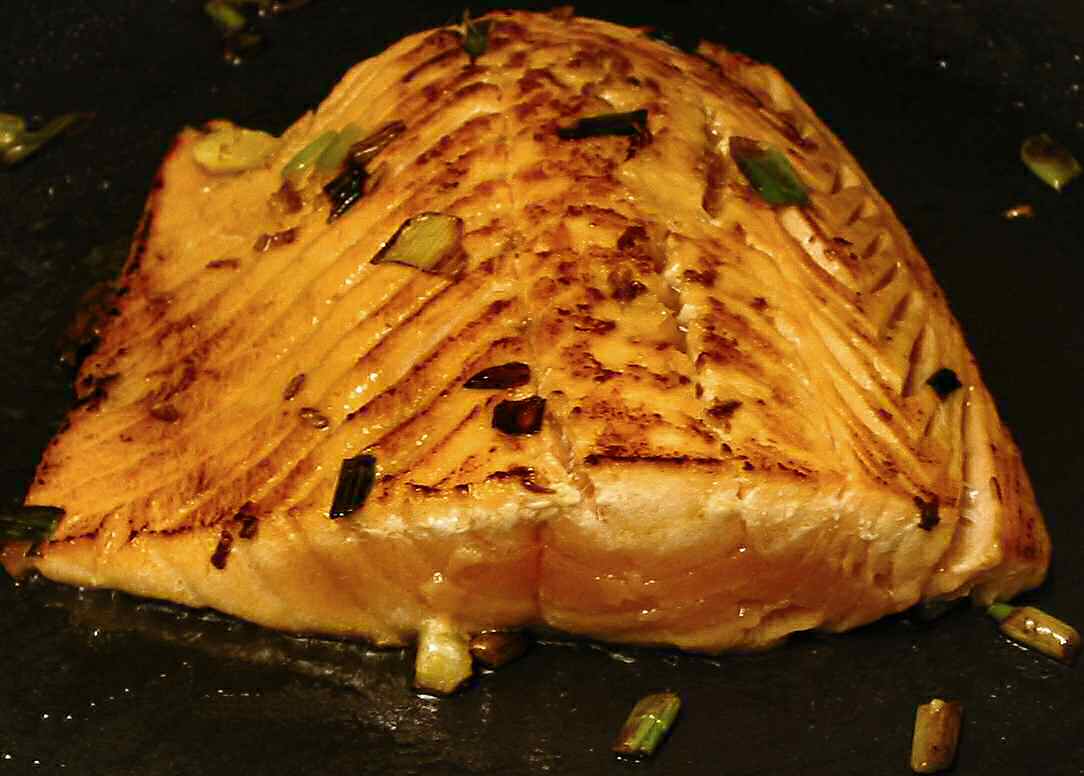
Pan-seared salmon, ready for the microwave

Pan-seared salmon, ready for the microwave

You almost never hear the words “microwave” and “slow food” in the same sentence unless someone’s casting the two as opposites with an easy sneer. The one and only time I’ve read anything about microwaving by a Real Restaurant Chef was Tony Bourdain in Kitchen Confidential when he mentioned something about hitting a plate gone cold with some “Radar Love” before sending it out. He meant it as a dirty back kitchen secret.

Gourmet cookbooks (other than Barbara Kafka’s Microwave Gourmet, a scarily extensive tome from 1987) never call for microwaving anything more exciting than butter or chocolate chips, and none of the Food Network shows do either. It’s a shame. Can you see Giada De Laurentiis microwaving? Mario Batali? No–it would probably zap the studio camera or melt Mario’s clogs or something. And it would ruin the vicarious glamor of slow cooking. But it would be fun while it lasted, wouldn’t it?

Some things, let’s face it, don’t do incredibly well in a microwave–deep fat frying (Kafka claims you can in small quantity, but I’m scared of sloshing hot oil around a small box), birthday cakes (though Kafka has found a reasonable way to do cake layers and her recipes get good reviews), an entire raw turkey (stuffed or un-)…. And fish? That may be the trickiest of all, since fish goes from almost cooked to shoe leather in 20 seconds if you’re not careful, and it still won’t brown nicely.

For example, take the lowly, farm-raised salmon fillet. Now I know it’s not wild, I know it’s not King or Sockeye, it’s not elegantly 2″ thick–but it’s also not $17.99/lb and up. And it can still be pretty good, especially grilled.

Only it’s summer in L.A., and the last thing I want to do in my townhouse with a distinct lack of outdoor grilling facilities is heat up the house or cook the salmon long enough under a broiler for the edge fat to start sending acrid smoke up the stairway.

But combine the microwave’s ability to cook things through with a quick browning technique like pan-searing, and suddenly you have a strategy for some nice main dishes that taste better than they should in a lot less time, and don’t heat up the house. Incidentally Kafka mentioned this method in passing while discussing the fact that microwaves don’t brown food. She then proceeded to ignore it completely, don’t ask me why.

Most restaurant chefs insist they can’t get a good sear on anything with a nonstick pan, but that’s not entirely true (plus I hate washing dishes any more than I have to, and I’m really determined, so nonstick it is). I’m borrowing from Martin Yan on this one–it’s a technique I saw him do for a stir-fried shrimp recipe on PBS, sometime way, way back in the 1980s, and it works surprisingly well here. Continue reading

Stuffed: A Food Industry Insider Attempts Moderation

It’s taken me over a week to read and figure out what I wanted to say about Stuffed: An Insider’s Look at Who’s [Really] Making America Fat. As usual, I’m about 6 or 7 months late to be the very first reviewer—I waited until my library acquired it. But having read it, I’m astonished that none of the bloggers, pro- or con-, have picked up on the fascination of reading a food politics book for its entertainment value as it unfolds and reveals its eccentricities. Because this is one strange concoction.

Hank Cardello, who spent most of his career as a marketing exec for General Mills, Coca Cola and other giants of the branded food world, is not the kind of player you’d expect to enter the current obesity debate, certainly not as a champion for health. His current organization is “a consulting firm that helps businesses take the lead on solving social issues.” Does that mean he’s pro-processed? Anti-processed? Well, not exactly.

Stuffed is neither a counterattack from the food industry nor the next go-green manifesto. It’s Cardello’s attempt to mediate between restaurant chains, supermarkets, Big Food manufacturers, Big Agro, the government, public schools, and pretty much every other player in food politics. It does pack some original insights about the interlock between food industry, government, and consumer behavior and a few genuine surprises among his recommendations—some reasonable, some so strange it’s worth reading just to find out how Big Food envisions its future.

Cardello spends the first part of his book dissecting the ways processed food companies, supermarkets and restaurants make decisions about the food they sell, and how they market it to consumers. Although some of it’s been done before–-usually with more indignation–-Cardello takes full advantage of his inside experience to shed light on the large web of influences surrounding profit, the bottom line, and manipulation of consumer perception and demand.

Why is a muffin or bagel twice as big as it was 30 years ago? How did Swanson’s TV dinners steer American expectations toward convenience over quality? Who decides what goes on the supermarket shelves? How did Pizza Hut get the cafeteria concession at your child’s school? How come the price of fruits and vegetables rose by 40% in a decade while the price of sodas and snacks fell?

His answers reveal the fundamental gridlock of businesses that have grown so successful that they can’t change easily without shutting down. Without exactly letting anyone off the hook for clinging to damaging business practices, Cardello contends that not only basic business constraints but government and consumer expectations are making it difficult to shift the system enough to improve the overall health of processed food. Continue reading

Dolmas by microwave

When we first moved to Pasadena 10 years ago, one of my favorite places for Sunday dinners out was Pita! Pita!, a family-run Lebanese restaurant in the “Old Town” section of the city. One of the reasons I loved it was the usual reason to love middle eastern food: the mostly vegetarian mezze were wonderful, and the main dishes were knockouts. Long-cooked lamb, roast chicken, fish grilled or under tehina sauce, vegetable stews with a surprising bite of pineapple in them. Even though I couldn’t eat the meat dishes, I could certainly appreciate them by smell. Everything was modestly priced and generous along with it.

The other reason I loved it was that the family that ran it had made their restaurant the kind of place families went for an old-country kind of Sunday dinner with all the uncles and aunts. Pita! Pita! was housed in one of a row of narrow spaces along Fair Oaks, converted from what I think was once a schoolhouse. The narrowness didn’t stop them from putting a couple of large old-fashioned dining room tables in with the smaller ones for couples. They treated their customers like family, you could sit and eat at a leisurely pace and converse, and we never came away anything less than happy. And certainly never hungry.

Which is why I still miss the place. The family ended up realizing they couldn’t make a go of it without charging astronomical prices or wearing themselves out and decided instead to run a smaller, cafeteria-style lunch spot with fewer and simpler dishes on the main business street. And I can’t blame them at all. The food they serve now–more mezze and fast grilled items–is still as good, but the long-cooked family-style dishes and the leisurely Sunday nights I’ll keep having to miss.

I grew up with hummus, tehina, felafel and tabbouleh, which are Israeli standards too and popular among Jews in the U.S. My mother made them from the dried mixes and cans of prepared tehina when they finally became available in our supermarket. In Israel I learned to make them from scratch, but one thing I didn’t know how to make was stuffed grape leaves or dolmas. My sister had married someone who did and on one weekend visit she showed me the ropes.

I love dolmas but they are not quick to make, not at all. We rolled a loooooottt of grape leaves that afternoon (her husband had bought the econo-jar at a local Arab market), and stuck them tight in a pot, plated down so they didn’t float and unwind, and boiled them with lemon and olive oil for more than an hour. They were wonderful but you would never want to do it on a regular basis!

In the spirit of “what can you cook in a microwave instead of the regular way,” I have gone back and made dolmas at home–in a microwave. It works! You can cook them in a few minutes rather than an hour-plus of boiling and having to top up the water so nothing scorches, and they come out beautifully.

Unfortunately, the microwave, miracle machine though it be, will not help at all with the rolling, which is the hard part. The best I can do is say that microwaving lets you do a few at a time if you feel like it–say, 10-20 dolmas, not 50-100. What you do with the rest of the grape leaves in the econojar is up to you.

Grape leaves come brined in rolls of 20 or so, either a single roll in a skinny jar (Krinos) or a big pickle-jar with four rolls (Cortas, other brands). When you buy them, inspect the rolls and make sure there are no little fluorescent green or yellow spots on them–you’ll know if you see them; capers also get this sometimes. I’m not sure if it’s harmful or not, but I stay away from it. I’d keep the other rolls in the brine in the fridge and make sure to use them up within a month, or else take the rolls and freeze them in ziplock sandwich bags with the air squeezed out–and use them within a couple of months so they don’t get freezer burn.

Dolmas in the Microwave

  • Roll of brined grape leaves ~ 20-30
  • 1 c raw rice (not “minute rice” or parboiled) or bulgur (cracked wheat or tabbouleh grain, plain)
  • 1 med/big ripe tomato
  • 1/4 onion or 1-2 scallions
  • 1 T dill (a few good sprigs fresh is best if you have fresh)
  • several sprigs or small handful fresh curly parsley
  • juice of 1/2 lemon
  • olive oil and the other half lemon for cooking

1. Partially or almost-completely cook the rice or tabbouleh in the microwave: put it in a pyrex bowl or microwaveable container, cover with ~1/2-3/4 inch of water, microwave covered on HIGH for ~2-2.5 minutes, let sit and absorb the water several minutes until nearly done, drain excess moisture.

2. While the grain is cooking, rinse off the roll of grape leaves and then soak them in a big Pyrex bowl to get rid of some of the salt. Change the water once. [Note: traditional recipes say soak the grape leaves an hour in cold water. Some others say pour boiling water over them and let them soak. If you want to split the difference in a microwaveable way, you could rinse them, put them in the Pyrex bowl with water to cover, nuke 2-3 minutes on HIGH and then change the water.]

3. Blend the tomato, onion or scallion, herbs and lemon juice in a food processor and mix with the drained rice or bulgur–include the tomato juice. Let cool enough to handle.

4. Stuff the grape leaves–this is the hard part. Take a stack of grape leaves and drain them on a plate. Cut off the stems carefully without tearing the leaves. Lay out one leaf vein-side up and stem end toward you. Put a spoonful of the filling–not more–on the leaf right above where the stem joint was. Roll the leaf over it–tightly but carefully so you don’t tear–and tuck the side leaves over it halfway through, then keep rolling away from you. Place each stuffed grape leaf, flap edge down, in a tight layer in a  microwaveable container or dish.

5. When you’re done rolling (nothing says you have to do the whole thing in one go if you get sick of it after 10 or you just want 10, just put the leftover filling and the grape leaves in the fridge) pour a little water carefully over the layer of grape leaf rolls. Maybe a quarter-inch of water. Squeeze the other half lemon over the whole thing, and drizzle a little olive oil over it– maybe a couple of tablespoons worth. Cover the dish or container and microwave on high 2-3 minutes for 10, maybe 3-4 minutes for 20+. Check one for doneness–careful, it’ll be pretty hot–you want the leaves tender and the grain cooked through. Maybe go another minute if you need to.

Let them cool and chill in the fridge. Serve with tzatziki, raita, tehina, or other yogurt-based dip.