
• Enter your email address to subscribe to this blog and receive notifications of new posts by email.

    Join 241 other subscribers
  • Noshing on

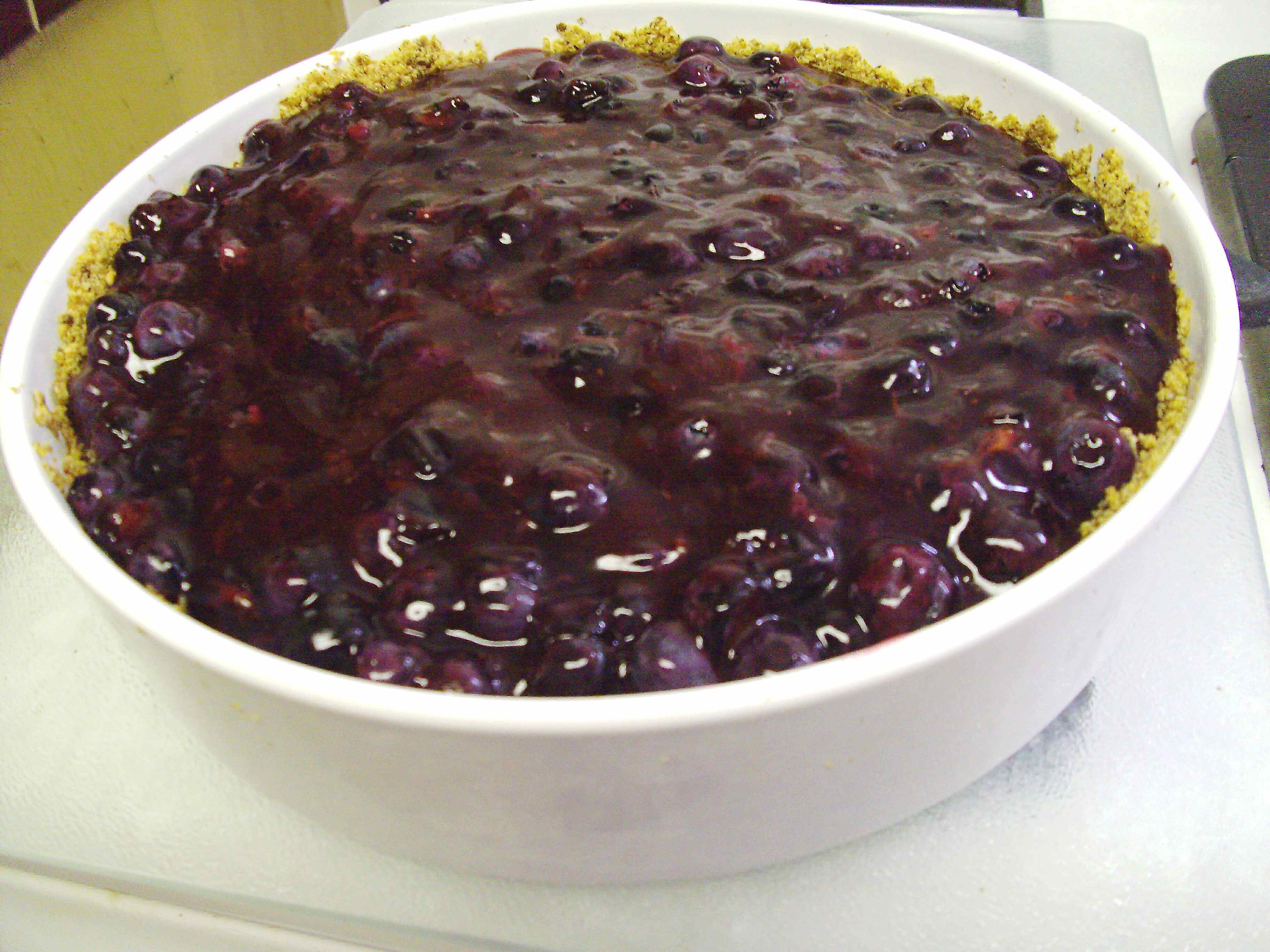
    raw blueberry pie with microwaveable filling and graham cracker crust

    This mostly-raw blueberry pie is a snap to make and very versatile--the filling microwaves in a few minutes, and you don't even have to bake the zippy gingered graham cracker crust--perfect for a hot Fourth of July and all summer long.

  • Recent Posts

  • Contents

  • Archives

  • Now Reading

  • See also my Book Reviews

  • Copyright 2008-2024Slow Food Fast. All writing and images on this blog unless otherwise attributed or set in quotes are the sole property of Slow Food Fast. Please contact DebbieN via the comments form for permissions before reprinting or reproducing any of the material on this blog.

  • ADS AND AFFILIATE LINKS

  • I may post affiliate links to books and movies that I personally review and recommend. Currently I favor Alibris and Vroman's, our terrific and venerable (now past the century mark!) independent bookstore in Pasadena. Or go to your local library--and make sure to support them with actual donations, not just overdue fines (ahem!), because your state probably has cut their budget and hours. Again.

  • In keeping with the disclaimer below, I DO NOT endorse, profit from, or recommend any medications, health treatments, commercial diet plans, supplements or any other such products.

  • DISCLAIMER

  • SlowFoodFast sometimes addresses general public health topics related to nutrition, heart disease, blood pressure, and diabetes. Because this is a blog with a personal point of view, my health and food politics entries often include my opinions on the trends I see, and I try to be as blatant as possible about that. None of these articles should be construed as specific medical advice for an individual case. I do try to keep to findings from well-vetted research sources and large, well-controlled studies, and I try not to sensationalize the science (though if they actually come up with a real cure for Type I diabetes in the next couple of years, I'm gonna be dancing in the streets with a hat that would put Carmen Miranda to shame. Consider yourself warned).

Gastropodiatry

Puzzling out the personal life of a famous food critic can be hazardous to your cherished impressions. I’ve just tripped over (I’m still not technically savvy enough to have “Stumbled Upon”) Regina Schrambling’s blog gastropoda.com, and it’s a little too revealing. Schrambling recently ended a five-year stint writing a food column for the LA Times, probably (though I’m not certain) in the aftermath of the newspaper gutting its departments and letting scores of award-winning journalists go.  If Schrambling’s column was adamantly butter-laden (and it was), it was also thought-provoking, ecumenical and wide-ranging. Civil in an intelligent way about all kinds of food.

She’s more famous than that, of course–a former editor of the more prestigious NY Times Dining section, and now a guest blogger for epicurious.com’s The Epi Log, with a focus on frugality. But the LA Times articles are where I knew her from.

So Gastropoda is a bit of a shock. It’s a blog with book reviews, short restaurant reviews, all the usual authory showcase kinds of links. But most of all, it’s a blog with quite a run of very short, very pungent entries that are almost too personal in their thinly cloaked vitriol. The editor of the Epi Log introduced Schrambling by calling Gastropoda witty and “famously acerbic”, but I think that’s putting it mildly, and perhaps even charitably. Targets include celebrity chefs who not only don’t write their own cookbooks but don’t ever even test the recipes that have been packaged into them by committee. News publishers who’ve sacked their veteran columnists in favor of wet-behind-the-ears food reviewers with no sense of journalistic ethics. Government officials who can be bought at an astonishingly low and low-class price.

It’s not that I don’t frequently agree with the basic points she’s making on Gastropoda. But in large part I’m embarrassed. The nicknames she provides her targets to avoid direct libel are childish in the extreme (e.g., “Chimpie” for George W. Bush, “The Drivelist” for a popular and successful NY Times food writer). Sometimes they’re too veiled and cryptic and make it hard to figure out who exactly she’s lambasting in these convoluted attacks. Not that I’m curious, of course.

But the tone–I wonder if she’s obsessing sincerely about the sorry state of food journalism today, or bitter toward those who still have solid writing gigs at the major newspapers (I know I am), or whether she just hasn’t noticed how far she’s gone in the direction of the classic rant blog. Throughout, you can discern the deep frustration of someone who does her own homework and legwork, and sees less and less of that career dedication in a field she regards as intellectually worth the effort as the times roll on.  Continue reading

Cutting the salt in Indian cuisine

India with Passion by Manju Malhi

Last week I got a Chanukah package in the mail from my sister. In it was India with Passion: Modern Regional Home Food by Manju Malhi, a British food writer with a popular UK cooking show, Simply Indian, on home-style cooking. One of my sister’s food-savvy friends had tried out the recipes and raved about it.

Indian food is becoming more popular in America and non-Indians like me are finally getting to taste a broader variety of regional cuisines (though I’ve yet to get down to Artesia, the “Little India” section of west LA, and really dig in). But learning to cook these dishes at home is another matter.

Yamuna Devi, Maddhur Jaffrey, and Julie Sahni were the first major Indian cookbook authors in the U.S. But their classic books and most of the ones published since then don’t give you a way to make sense of the laundry lists of spices given for each recipe. They give a rote answer as to why Indian cooks don’t use the standard yellow jar of generic curry powder that the supermarkets stock, but there’s no serious discussion on the balance of flavorings and how to vary it within a meal for any one particular regional cuisine. And perhaps there really is no great way to explain it. You really have to read through the book and see how the spices  and proportions change from one dish to another–something most Western readers aren’t used to noticing.

If I had my wish, I’d want general notes like “red lentil dal is better with twice as much cumin as coriander seed and a fair amount of both–we’re talking teaspoons to a tablespoon for 6 portions–but palak paneer should have much less of both–half-teaspoons– in equal amounts and include cardamom–preferably the black smoky kind–as the signature ingredient.” I want to know why you have onions cooked down to a paste in one dish but no garlic, and in another use fennel instead of cumin. What’s essential and what can I leave out if I don’t have it in the house? How can I vary the dish with the vegetables or beans that I have on hand at the moment and still have it come out tasting good? And what’s authentic and what’s modern?

A crop of recent cookbooks published in the US and UK attempt to deal with these problems a little more systematically–sometimes more for recent Indian emigrés and students than for the larger non-Indian community. Monica Bhide has simplified the spice lists in her recipes–sometimes to the point where you wonder if the food bears any resemblance to the original. Suvir Saran, lauded by Mark Bittman and the first Indian restaurant chef to join the American name-brand-chef pantheon, has also simplified ingredients lists and incorporated some American ingredients–like ketchup–with reasonable reasons (ketchup’s origins lie in British-controlled India of a century or so ago). And cooking teacher Raghavan Iyer has just come out this year with a big, bright paperback tome, 660 Curries, which logically ought to be more than you could or would want to cook in a couple of years.

One new trend is an attempt to make Indian food heart-healthier by cutting down on saturated fats,  substituting unsaturated vegetable oil for ghee and tofu for paneer cheese. What they haven’t yet done, and probably should, is cut back the salt as well. (So should everybody else, of course.)

Nearly every Indian cookbook I’ve ever seen uses screamingly high salt–rarely less than a teaspoon for a dish that serves 4-6, often a tablespoon or even more. Continue reading

Challah

Two nights ago I brought a couple of homemade loaves of challah to some friends’ house for Shabbat dinner, which was also the last night of Chanukah. Their mother, a fairly well-known kosher caterer, was there and my jaw dropped when she said she’d never learned how to make this classic bread. Challah looks beautiful once it’s baked even if you’re not a champion braider (I’m definitely not), but it’s not such a big deal.

Challah was the first bread I ever made. I was nearly eleven years old the summer Nixon resigned and a camp counselor asked me to help braid loaves from a huge bowl of dough in the kitchen one Friday afternoon. Later, I made all the challot for my bat mitzvah, baking and freezing them week after week. During my last two years at university, I made challah most Friday afternoons  and whenever I was baking I suddenly got proposals from other students along the lines of “Would you please be my mom?” (gee, thanks) Then I graduated, and I just stopped. I had no oven in Israel (a “WonderPot” doesn’t count), and when I came back I had a lab job with long hours. But every once in a while, for the High Holidays and at odd Fridays throughout the year, I still put my hand to the dough and lately it’s been coming out really well.

There are only a couple of smallish tricks to working with the egg-based dough. As long as you have the time to rise and bake the bread within a day or so of making the dough, the actual work time for a pair of two-foot loaves–kneading, braiding and glazing them with egg–is about half an hour altogether. Everything else is letting it sit and rise, or sit and bake. BUT you should figure about 3 hours for the first rise at room temperature (or overnight in the fridge if that’s handier, but I haven’t tried it personally for challah), and after the braiding, which takes maybe 20 minutes for 2 loaves, about another hour to rise covered and then a little less than an hour for baking.

This dough is not overtly sweet, not salty, and not too heavy on either eggs or oil. I find that the bread is lighter, more feathery, and less like a dried-out dish sponge the next day if you don’t exaggerate the rich stuff and just use water rather than more eggs or oil to make up the difference. So this is a lighter, more home-style challah than the kind you get at the bakery or in your grocery store, and less day-glo yellow too–they use turmeric, the cheats. Also much less expensive–I think the total cost is something like $2 for a pair of loaves, and the most expensive ingredient gram-for-gram is the yeast. Continue reading

Impatient for Orange Peels

Microwave Candied Orange PeelTonight is the first night of Chanukah, or as the next generation spells it, Hanukkah, and instead of blogging about latkes, which I’m not making tonight, in favor of a congregational dinner (yay, no cooking, no dishes, no family kvetches), I decided to pick something else I like more. Like candied orange peel, which is outrageously expensive if you buy it at a candy store. Chocolate plus oranges is the flavor of Sabra liqueur, an Israeli elixir from the days of my childhood which I think is now out of production. Of course, so’s my childhood, or at least my first childhood…

But the standard recipe for candied orange peels goes something like: “Boil some water. Blanch the de-pithed orange peel strips from a couple of oranges for two minutes. Throw out the water and do it again. Then simmer the peels in 4 cups of sugar and 4 cups of water for an hour or two. Then drain them. Then toss them separately in a bowl with fresh, dry sugar to coat and spread them out on a cookie tray to dry for another couple of hours.”

In all, that’s about 4 or 5 hours. Oy! My inner second childhood is whining already.

Following up from my microwaved kumquat marmalade experiment, which worked beautifully, I decided I could probably do something similar to candy orange peels. The final result was not perfect-perfect by professional confectioners’ standards and I wouldn’t be surprised if Martha Stewart disapproved, but it looked okay to me, was done in 15 minutes from peeling oranges to dredging-and-drying, and the taste is not bad, not bad at all. Makes you wonder.

The oranges I picked were a bit bland and nonacidic, and tangerine or clementine would be a bit livelier if you can find organic ones, but this is what I had. And as I discovered, the flavor seems to improve as the peels sit after being dredged in sugar and dried. Continue reading

Lentil Stew with…Pineapple?

Fresh pineapples are just coming on the market at a good price this week or so–$2 or $3 apiece. Meanwhile, tomatoes are…well, let’s say they’re not at their finest in December. So, some added incentive for trying something new.

Pineapple is the last thing that belongs in anything subtle or savory–or is it? Hawaiian pizza is practically a classic by now, despite the culinary clash of a pineapple-ham topping on the one hand and garlicky tomato sauce, mozzarella and oregano on the other. Of course, that (and all other glazed pineapple/pork product classics) seems more brash than subtle.

Given the usual culinary partners–ham, chicken, cottage cheese, spam and more spam–you’d think the rule for making pineapple work in something savory would be that the other main item has to be pretty salty to stand up to all that acidic tropical sweetness. But that’s not the only way to deal with it. Good thing too, since ham, ham, spam and ham are off my grocery list. (So’s spam.)

This curried lentil and vegetable stew, which I’ve based on a dish from my much-missed Lebanese former-restaurant-turned-lunch-spot, takes advantage of pineapple’s tang while mellowing out its jarring sweetness. It took me a couple of tries to achieve the taste I remembered from the restaurant, but I think this version works pretty well, even though it contains no salt at all.

Depending on the sweetness of your pineapple, you may need more or less to balance the flavors. The pineapple should be a subtle but surprising bite among the other vegetables and the rich lentil base. Don’t be afraid to tinker with the (rather loose) amounts of the various ingredients and taste as you go.

Curried Lentil Stew with Pineapple

  • 3-4 c. fully cooked green/brown lentils or half a pound dry (see step 1)
  • 1 T. curry powder
  • 1/2 t. ground cumin
  • 1/2 t. ground coriander seed if you have it
  • 1/2 t. brown mustard seeds if you have them
  • 2 medium onions, chopped
  • 1-2 medium tomatoes if you have them
  • juice of a lemon–plus another half to adjust taste as needed
  • 2  large or one really fat clove garlic, minced/mashed/grated
  • 2-3 half-inch rounds of fresh unsweetened pineapple in smallish chunks
  • 2-3 big carrots, peeled and chopped
  • 2-3 stalks celery, chopped
  • a good glug of dry red wine, cheap but decent, about 1/4 c.
  • olive oil

1. To cook the lentils in case you haven’t, wash and pick over half a pound of green/brown lentils and put them in a big pyrex bowl (2.5 qt/l) with enough water to cover by 2 inches. Put a microwaveable lid or dinner plate on top and microwave on HIGH for 7-8 minutes. Let sit in the closed oven another 20-30 minutes to soak up, add more water if there’s less than an inch above the lentils, then microwave again for another 7-8 minutes. Wait another 10-15 minutes and test for doneness. The lentils should be soft.

2. Meanwhile, sauté one of the onions with the spices in a little olive oil for a few minutes, add the chopped tomato and half the garlic and cook a few minutes, adding a drizzle of water if it starts to dry out.

3. When the lentils are done, pour them in with some of the cooking water, stir up, heat, and add the lemon juice and the pineapple. Cook a few more minutes until it starts to thicken.

3. Put the cooked lentils back into the pyrex bowl, add the remaining vegetables and the rest of the garlic, a little water, maybe a little more lemon juice, the wine, and a drizzle of olive oil. Cover at least partway (maybe with a small gap to let alcohol from the wine boil off) and microwave 5 minutes more or until the vegetables are tender.

Microwave tricks: Pasta You Don’t Have to Babysit

Mark Bittman’s post-Thanksgiving look into the brave new world of absorption pasta and Pete Wells’s “Cooking with Dexter” piece in the New York Times yesterday on the virtues of a pot of boiling water have me thinking hard about why neither of them has even tried the microwaves that must be sitting on their counters. Especially Wells, who has not one but two very young and active children to watch out for.

You can cook standard dried or frozen pasta very well in a microwave, with only a few minutes of actual cooking time and almost no need to stay close by. You can cook rice too–and we’re not talking Minute Rice, either. Basmati rice, the queen of difficult rices, cooks perfectly in a microwave.

The setup for microwaving tortelloni

The setup for microwaving tortelloni and other filled pasta

I started cooking pasta in a microwave when my daughter was a toddler. She was pretty active and I couldn’t leave a pot boiling away on the stove to go and chase her–either the pasta or I would have boiled over. By the same token, I had nightmares of her getting over the baby gate and into the kitchen as she got bigger and more impatient. My mother-in-law still has extensive scars from having a boiling pot tip over on her when she was a child, and it’s one of the reasons I decided to try microwaving pasta instead. Even though my daughter is now kitchen-savvy, it worked so well I’ve never been tempted to go back. Continue reading

Jazzing up Creamed Spinach

Passing by the refrigerated prepared-foods shelves in the produce section of my local Whole Foods a few days ago, I couldn’t help noticing a 24-oz tub of creamed spinach…for $8.99. Six dollars a pound. Given that most of their deli and salad bar foods are about $8/lb., maybe that’s a comparative bargain, but still. You could buy six 1-lb. bags of frozen spinach from the Trader Joe’s for that. At my local Latino supermarket, you could get at least six and maybe twelve bunches of spinach, turnip greens, mustard greens, kale, maybe chard or beet greens too. Of course then you’d have to wash it all. And chop it, and cook it. But you’d also get to decide how.

Standard creamed spinach is one of the easier and frankly quicker side dishes to put together. If you want the plain-o, Norman Rockwell version, go to an older American cookbook such as Joy of Cooking or even the Victory Garden Cookbook. Basically you sauté fresh chopped or thawed frozen spinach in a little butter, stir in a spoonful or so of flour until the white flecks disappear, add cream or milk and heat it up until the flour thickens it. Sprinkle salt and pepper and maybe grate some nutmeg over it.

But gawd, is it bland. Rich maybe, but bland.

I’m not a huge butter-and-cream fan, more because I can’t really stomach large amounts of it personally than for any particular virtues of character. If I’m going to have calories, I want them to come from a knockout dessert, not the spinach. So rich isn’t enough. I want it to taste like something.

Of course, I’m also speaking from the perspective of someone who grew up wondering “If there’s no garlic, is it really food?” No, don’t just laugh at me–think about it: most of Nigella Lawson’s recipes work precisely because she adds a clove of garlic to old-standard British stodge. You know–garlic smashed potatoes. Magic! If just adding a clove of garlic to a batch of boiled potatoes was such a big revelation, it’s no wonder the Brits fell so hard for Indian food. And Italian. And Greek. Of course, I’ve fallen hard for them too.

So of course the first thing to add to spinach is garlic. To my mind the second necessity is lemon, and the third is herbs or spices. And possibly some kind of white fresh cheese. Here are a couple of possibilities that taste satisfying without relying on heavy cream or butter, and they can be done either on the stove or in a microwave. Continue reading

Thanksgiving Vegetariots, or, How Can You Have Any Pudding If You Won’t Eat the Meat?

Newspapers all over the country are sweating to include vegetarian main dishes in their annual Thanksgiving features. But they’re not doing all that well. This week the LA Times food section proudly listed a whole bunch of Thanksgiving vegetable side dishes as if to say, “See how much there is for you vegetarians to eat without your hostess making any changes just for your special status?” Only, as readers quickly pointed out,  1) none of the dishes contained any noticeable protein, 2) most of them were overloaded with butter and salt and 3) two of them contained chicken broth or pancetta. Someone had forgotten to re-edit them for a vegetarian audience.

I pick on my local paper because we’re talking Los Angeles, with great produce available all year round and a very large vegetarian population–and a lot of ethnic groups with significant roles for vegetarian dishes in their traditional cuisines. We have less excuse for this kind of simple ignorance than most cities.

But it isn’t simple ignorance. Running very close to the surface of most food publications’ features on vegetarian fare at the big showdown holidays is a distinct tone of hysteria. How can anyone not want to eat meat? Nothing tastes like turkey, and nothing sells like it either! We don’t know anything about vegetarian proteins! they panic. Do vegetarians eat Durkee Fried Onions or Empress Yams? Do they eat marshmallows? They don’t even like pancetta! What’s wrong with them?

These are home questions for newspapers and food mags, because you know the real survival question is, “How are we going to sell advertising for chickpeas and lentils, for chrissakes?” That probably goes double or more for food shows on tv. If they don’t advertise, they don’t stay on the air.

It’s not like tofu has a big marketing presence in the nation’s newspapers or brand recognition outside of local markets. There are only so many brushed-steel and cherrywood designer kitchens anyone is willing to buy in a down economy, especially once they discover how badly brushed steel shows fingerprints. And cooking mags don’t get a lot of help from PepsiCo and CocaCola, Ralston-Purina or the many cigarette and pharmaceutical companies.

What’s left? Bacon, turkey, and processed food companies featuring starches and microwaveable tv dinners. This might not be such a problem for food pubs if they’d found a way to keep their features a little more independent of their ad base. Bacon is showing up these days as suddenly gourmet in so many inappropriate dishes–ice cream? chocolate bars? popcorn?–precisely because it’s relatively inexpensive, widely available in supermarkets, and sold by a few recognizable national namebrand companies that still advertise reliably in a down market. Young food bloggers who go for it think it’s something new and daring, but you have to wonder whether they realize how hard the commercial food media are pushing it and why.

In any case, the November and December issues or episodes really need to push meat for all they’re worth because American bacon is basically the same everywhere and straight-up turkey isn’t all that popular the rest of the year, and the companies know it. Meanwhile, vegetarianism in all its variations, and with a growing political undercurrent, is gaining ground among younger Americans, or at least those not too obsessed with bacon. What to do?

Apparently the answer is, panic and get mad at the vegetarians for wanting non-meat dishes that are worth something, but try hard not to admit it in front of the camera. Continue reading

Adventures with Cheese

A year or so ago, I saw a show on PBS about how PR consultants test and choose keywords to influence public opinion on everything from political campaigns to new foods. Most memorable–other than the use of a statistics-wielding ad consultant for the Swiftboat smear campaign–was a French marketing expert in his late 60s who discussed the key difference he’d found in food attitude focus groups between Americans and French:

“In America,” he declared, “Cheese is dead. I can assure you of that.” The key positive words that arose in his group discussions about cheese were “sterile” and “safe”. That is, as long as the cheese was processed, uniform, free of visible mold, refrigerated, odor-free, pasteurized and–most important–wrapped in plastic so nothing could possibly escape, cheese was okay.

Otherwise, he said–you could hardly miss the sneer–Americans considered cheese unsafe. They–we–were culturally afraid of it.

In France, he maintained, “Cheese is alive.” The French focus groups brought out  words like culture, flavor, and the names of many, many specific types of regional cheeses that were their personal favorites. The French still buy much of their cheese at small local shops whose owners’ main job is to present their cheeses for sale at the optimum point of ripeness. The customers take home a wedge or small round of cheese and keep it on the counter or a dedicated shelf in the fridge, depending on the type, and they have their own fixed ideas and traditions for storing it so as not to ruin its flavor or texture–two words that did not really come up in the American discussions as much as “Velveeta”.

Are we Americans really that ignorant about cheese? The food my husband brought home from the aforementioned brunch included three or four stacks of precut sliced cheese–yellow-orange, whitish with an orange edge, and whitish again with tiny flecks of red and green throughout. Cheddar, muenster, and pepper jack? I looked at them, wondering were they real or processed–hard to say by looks alone, so I peeled off a corner of a slice on each of them to try them. They all tasted exactly alike. Although the one with the flecks was a little bit spicy, the basic flavor was Velveeta: salt, starch or gum, cooking oil. Something stale–maybe milk solids–but no culture, no tang, no fresh dairy flavor. There wasn’t even much of a smell. The French guy was right.

I started to toss the packets in the trash and my daughter asked why–so I let her taste them. “They’re not that bad,” she said. “They’re not that good,” I replied, and handed her a small chunk of sharp cheddar we had in the house for comparison. “Which would you rather eat?” ‘Nuff said.

I bring this up because I really do have a thing for cheese (damn my cholesterol-packin’ genes), but good artisan-type cheeses are often pretty expensive–$15 and up per pound–and the more affordable varieties of things like brie or gorgonzola usually lack something in the way of flavor, especially if they’re made in Canada or the U.S. Plus I have a thing for playing with my food.

For the last couple of years I’ve been playing around with the idea of taking a fresh cheese and culturing it further to get to something approaching the aged artisanal cheeses. We have lots of generic chèvre and feta and ricotta and so on these days–as well as increasingly easy-to-find inexpensive (but bland) brie and bleu cheeses made with cows’ milk. And that’s sometimes the problem: we don’t have a lot of goat’s or sheep’s milk available to ordinary consumers in the U.S., and the French-style cheeses we do have are kind of bland, maybe even oversterilized, even though as a former biochemist I’m a big fan of pasteurization, especially for any dairy that has scaled-up production. To that end, READ THE SAFETY NOTE AT THE BOTTOM OF THIS POST if you’re going to give this a try.  Continue reading

Another Reason to Make Your Own Salad Dressings

My husband came home this weekend loaded down with leftovers from a brunch he’d helped set up. Among the cartons of pasta salad and regular salad and dubious mass-market hummus and two–two? really?–homemade onion pies was a jug of something reddish. It turned out to be more than a quart of prepared raspberry vinaigrette, the kind of thing a caterer would pick up at a bulk commodities store. More than we would ever use in a year, but let it pass. He meant well.

So we found space for most of the stuff in the fridge, threw out the hummus because we didn’t know if it had been dipped into or not, and then there was this jug of vinaigrette hanging out on the counter. I took a look at the ingredients. Canola oil (boring but expected), sugar (enhhh–not a fan of sweet salad dressings, personally), salt, distilled vinegar, raspberry extract was somewhere down in the lower middle, more for color than flavor no doubt, paprika extractives (so much easier than actual paprika?)…yada yada yada…some kind of starch and emulsifiers to keep the oil and vinegar more or less together…polyethylene glycol…

Bleagggh. PEG? As my college lab partner once remarked, in a toney City Line (Philadelphia) accent, “It smells so….bio-laahhhgical.” And it does.

Not to mention the “nutrition” counts–and here I mean the sodium count per serving, which alone, minus any actual salad fixings, comes to 240 mg. It’s not so hard to see why chain restaurant salads typically hover above 500 mg sodium and frequently up to 900 mg.

So a couple of suggestions:

1. Make your own salad dressings–it’s quick and they’ll be fresher. You don’t need exact recipes, do you? Try a few of these.

2. Don’t automatically add salt–get the majority of your dressing flavors from the real ingredients. The satisfaction of a salad dressing comes from a combination of tart and savory ingredients to startle and intrigue the palate and make the freshness of the salad itself more apparent, so start with that. Flavor your dressing with garlic or shallots, lemon juice or vinegar, mustard or sharp cheese, olive or walnut oil, maybe yogurt or buttermilk, herbs, etc., but flavor it, don’t salt it. Real ingredients are also less likely to suffer flavor fatigue–salt’s a moving target that most people stop being able to taste when they eat a lot of it habitually (see the Salt Rant).

2b. If you’re following a recent cookbook or food magazine recipe, there’s sure to be a routine, unthinkingly added teaspoon of salt called for in just about every recipe. That’s much more than you really need to enhance a salad or make the dressing piquant. But those recipes are based on restaurant think, where salt is the cheap substitute for the expensive ingredients that need to be stretched. You don’t have that problem–you’re not making vats of bleu cheese dressing on a shoestring budget, you’re making dinner.

So leave out the salt, mix everything else together, and taste.

3. Time is your friend. You can make a basic vinaigrette right at the table–a dollop of mustard, a few spoonfuls of red wine vinegar or lemon juice, a pinch of salt if you must, and a couple or so spoonfuls of olive oil whisked in. Maybe a few herbs or a clove of garlic to boost it, and cracked black peppercorns over the top. Or nasturtiums.

But if the dressing–a yogurt or buttermilk-based one, say– is mostly about herbs, garlic, onion, shallot, scallions, bleu cheese or the like, let the dressing sit awhile to develop. If you make a yogurt/buttermilk/herb and garlic ranch-style dressing a day ahead, it’ll be much stronger and also more integrated after a night in the fridge. Right before serving, taste a bit of lettuce in the dressing and see what you think. If you still feel like salt is genuinely missing after you taste it in action, add a pinch or two. Not more. You can always add more to your own serving at the table if you’re craving salt for its own sake, and you’ll have the advantage of being able to taste it because the crystals will be on the surface of the food, where your tastebuds can get to them easily.

4. Unless it’s just olive oil and red wine vinegar, don’t toss the dressing in before serving, let people dress their own. Not everybody likes or can tolerate every dressing, and everyone’s got their own right amount. If you have to dress the salad ahead for a banquet setup, do it lightly. Less is more.