
• Enter your email address to subscribe to this blog and receive notifications of new posts by email.

    Join 241 other subscribers
  • Noshing on

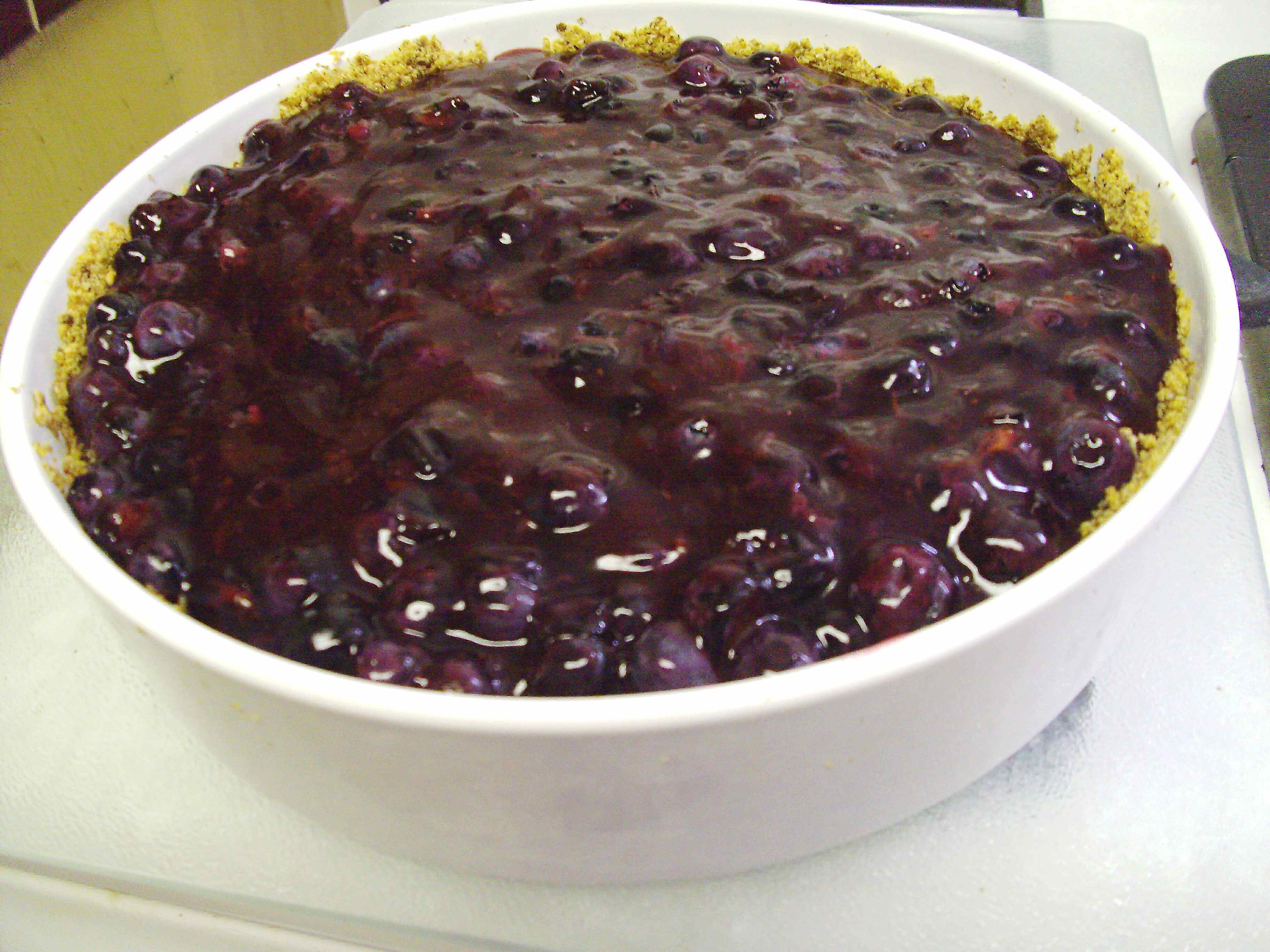
    raw blueberry pie with microwaveable filling and graham cracker crust

    This mostly-raw blueberry pie is a snap to make and very versatile--the filling microwaves in a few minutes, and you don't even have to bake the zippy gingered graham cracker crust--perfect for a hot Fourth of July and all summer long.

  • Recent Posts

  • Contents

  • Archives

  • Now Reading

  • See also my Book Reviews

  • Copyright 2008-2024Slow Food Fast. All writing and images on this blog unless otherwise attributed or set in quotes are the sole property of Slow Food Fast. Please contact DebbieN via the comments form for permissions before reprinting or reproducing any of the material on this blog.

  • ADS AND AFFILIATE LINKS

  • I may post affiliate links to books and movies that I personally review and recommend. Currently I favor Alibris and Vroman's, our terrific and venerable (now past the century mark!) independent bookstore in Pasadena. Or go to your local library--and make sure to support them with actual donations, not just overdue fines (ahem!), because your state probably has cut their budget and hours. Again.

  • In keeping with the disclaimer below, I DO NOT endorse, profit from, or recommend any medications, health treatments, commercial diet plans, supplements or any other such products.

  • DISCLAIMER

  • SlowFoodFast sometimes addresses general public health topics related to nutrition, heart disease, blood pressure, and diabetes. Because this is a blog with a personal point of view, my health and food politics entries often include my opinions on the trends I see, and I try to be as blatant as possible about that. None of these articles should be construed as specific medical advice for an individual case. I do try to keep to findings from well-vetted research sources and large, well-controlled studies, and I try not to sensationalize the science (though if they actually come up with a real cure for Type I diabetes in the next couple of years, I'm gonna be dancing in the streets with a hat that would put Carmen Miranda to shame. Consider yourself warned).

Whif? Whaf? The Wonka of breathable food faces FDA review

It looks like a sleek, avant garde  lipstick or  a purse-sized cologne atomizer–one designed by Halston or Calvin Klein. Atomizer is the right word. Only these AeroShot canisters, which got their start at Harvard’s The Laboratory Art/Science project under David Edwards and became available in the US last fall, are packing “breathable caffeine” (plus a couple of B vitamins).

The previous model, aka “le Whif”, packs “breathable” chocolate powder. It was a moderate success in Paris, where Edwards’ Bauhaus-like other lab center (named Le Laboratoire) produced and promoted the experimental chocolate inhalers as an aesthetic experience at celebrity events, and in London, where its spinoff company Breathable Foods now holds court.

Where did this strange, possibly ludicrous idea come from, that it’s a better aesthetic experience to inhale a shpritz of caffeine (please note: flavorless though with a kick, and definitely a drug-I-have-worked-with-in-the-lab-because-it-blocks-G-protein-coupled-receptors) than drink a long, hot cup of intense coffee while reading this blog and contemplate the degree to which your barista still favors you by regarding the temperature and the decoration in the steamed milk foam served on top? Why is it better to puff a little chocolate-flavored powder on your tongue than eat actual chocolate? Somehow, I don’t think the “calorie-free” argument really plays into the decision very strongly, so what’s driving this?

Do we not still have taste buds? Do we not long to extend our coffee break as far from our cubicles as it will stretch? Do we really want our hearts to suddenly kick into overdrive after we have to get back to the office, just when we’re stuck behind the counter, attempting to explain that glitch in the irate customer’s bill? For that matter, do we really want to ingest B vitamins with our caffeine? Or figure out which recycling bin the little plastic aerosolizer goes in when it runs out? Will the aerosolized flavors or food components even still be interesting if we have a stuffy nose?

Do we want to miss out on the gustatory satisfaction of real food?

In the public demos for Le Whif, (according to Edwards’ book, anyway) the French surprisingly enough didn’t mind the fact that many of the chocolate inhalers didn’t work well, or that they started coughing whenever the chocolate powder went the wrong way. They didn’t mind being used as impromptu guinea pigs–or perhaps realize that they were–despite the fact that these products were being tested informally and some of them demonstrated the adverse health risks right away, and that just possibly breathing chocolate-flavored particulates into your lungs might not be all that smart, particularly if you have asthma.

These things obviously didn’t bother the French too much. The packaging was chic, the concept ultramodern, and the activation gestures analogous enough to lighting up a (now-forbidden) cigarette with one’s coffee at a sidewalk café table. And, so the company promised, it was a calorie-free chocolate experience.

Even more surprisingly, it didn’t really matter what kind or quality of chocolate was in the little gadgets, or how it actually tasted in comparison with ordinary solid chocolate. This was closer to participating in Modern Art, or at least in fashion’s idea of modern art. Like a visit to the now-closed El Bulli, which paired some dishes with a side beaker of aromatic vapor, only much less expensive, disposable, and with a simple popular flavor everyone understands. Molecular gastronomy for the common man. Or woman.

Americans of my generation–which also happens to be Edwards’–are a little less sure than the French about the chic value of shpritzing odd substances onto one’s tongue, much less as a high-class cultural or intellectual activity. Our references include tacky mouth spray breath fresheners (made fun of in numerous movies and tv shows over the decades), Bic lighters, Pez dispensers, and asthma inhalers. Kind of low on chic.

So Breathable Foods found the right marketing paradigm–“buzz”–for its target audience:  college students cramming at exam time, athletes who want that Continue reading

Dressing (or not) for Dinner

Los Angeles news outlets tend to go for mildly racy or otherwise sensationalized “human interest” tidbits, preferably ones in other cities, so they can get a double benefit from publishing trashily attractive stuff and tsking over it at the same time.

Restaurant nudity to be debated in San Francisco is a practically perfect example of such a nonstory. Frankly, in this teched-up age, the phone/iPad/wallet fannypack looks strikingly silly on someone with no other adornments but a hat. Surely nudists should be a little less materialistic? Surely such a fashion faux pas rules them out of being a big threat?

Everyone interviewed seems to be worried about whether nudists, who are allowed to roam the streets of SF legally, are going to observe decent etiquette in restaurants and put paper down on the seats first. I think they’ve got it wrong.

The real issue is not whether anyone leaves a few tushie germs on seats that haven’t been cleaned properly since the Kennedy administration anyway.

No, the real safety issue comes down to the Seinfeld Syndrome. Two words here: hot soup. Or hot coffee. Take your pick, it’s gonna be a field day for law firms.

When life hands you sour cherries, pit them!

Sour cherries after microwaving

Vishniak–I’m probably spelling it wrong–is sour cherries turned into a compote, a syrup, a soda (as in, Frank’s Cherry Vishniak from Philadelphia), or a cherry brandy.

How do I know, you ask. Ah–(and with the “Ah” I’m pulling a Dad and giving you the flavor of a particularly smug conversation he had explaining it all to me when I was 15 and had never heard of vishniak either). Because my mother’s father, as it turns out, had made a particularly fine cherry vishniak by accident, about 20 years before this story begins.

My Grandpa Abe came to the States in 1923 as a child from a harsh place whose main compensations were family, music, tea, Bessarabian grapes, and the cherry harvest. His family had survived the pogroms in the Ukraine, his father had survived being drafted into (probably the Tsar’s) army during the Bolshevik Revolution and decided that was enough already, and the family arrived on the last boat allowed to bring Jews into Ellis Island that year–sometime in August.

The family started out dirt-poor, with no English, stripped of everything by the old Russian and new Soviet border guards. And yet Grandpa ended up a doctor, head of internal medicine, energetic and cheerful, unusually beloved by the nurses in the ICU, and an avid world traveler in his later years (my grandmother was a little less thrilled, but a good sport and better at languages than he was).

Some time in the late 1950s, out on Long Island, a friend gave him a gift of sour cherries, which he quickly put up with sugar and vodka in a sterilized glass Mott’s prune juice jug (why, oh why did all four of my grandparents keep prune juice in the house? I never figured it out. They weren’t even out of their 50s when I was little, and I’m almost 50 now myself.)

But in any case Grandpa put the vishniak jug in a dark, quiet corner of the garage to mature for a couple of months and promptly forgot about it.

He and Grandma moved into a New York City apartment sometime in the mid-1960s, and then in the late 1970s, when I was 15, he retired and they moved back out to Long Island. My family came up to help them sort things out–and that’s where my dad started rooting around among the boxes in the garage and found a dust-caked jug with a faded Mott’s label and some dark reddish liquid and cloudy, lumpy slush at the bottom.

“Abe!” he said, horrified. “What are you doing keeping this old jar? And what the hell’s that stuff at the bottom?”

My dad had just spent at least an hour finding similarly dubious-looking treasures of neatly folded foil, rubber bands, wax paper, and other saved-up sundries that my ever-careful grandparents had paid good money to have moved back out of the New York apartment. Was this yet another such item meant to ward off the next Great Depression, or was Grandpa collecting surgical specimens for posterity?

My grandpa took one look at the cloudy jar and beamed–it had all come back. In true shtetl fashion, he uttered the magic word–“Ah!”–and with no further explanation, bustled around in the kitchen to find a couple of sherry glasses that weren’t too dusty. Dad wasn’t looking too thrilled.

In even truer shtetl fashion, Grandpa returned and promptly challenged my dad to a game of chess to celebrate. We kids were left baffled, but not for long–as the game was set out, we each got a tiny sip, and it was incredible.

It turned out that forgetting the cherry vishniak for 20 years or so was the best thing Grandpa could have done to it. When Grandpa opened the jar the vishniak aroma alone was so developed, so rich, that Dad just stopped kibbitzing in his tracks for a minute and inhaled reverently. The liqueur was a clear bright red–astonishing after 20 years–and at the bottom were all the brandied cherries. When it was time for us to leave, Grandpa filled us a little Paul Masson carafe (remember those?) with vishniak to take home.

Now, I don’t have the head for anything more than half an inch of wine–and that’s actually something I inherited from my dad more than my mom–but my local Armenian grocery was selling fresh sour cherries this summer and I managed to snag a box. What to do with them? I washed and stemmed them, then stuck them in the fridge until I figured it out.

This was not really a great move. They sat for at least 3 weeks in there–it’s a miracle more of them didn’t go moldy, but I lost quite a few when I finally opened the container today. The price you pay for dithering. I sorted them, washed the good ones really well and pitted them with a sharp little paring knife. But what now?

I have a bottle of vodka from years ago–still unopened, maybe I’ll use it next summer and put up some vishniak. But there aren’t enough cherries this time around. So I decided to try making a quick preserve the way I do with cranberries.

The raw cherries aren’t really that sour–they’re more bitter with a faint sweetness, like the wild unofficial and unrecognized variety that used to grow at the edges of the woods in the backyard when I was a kid in Virginia. But I decided to try them anyway.

I had a smallish bowlful–maybe a cup, cup and a half, of pitted cherries–and put a couple of tablespoons of sugar on them. Lemon–no lemons in the house. Citric acid “sour salt” I had in a shaker–you can get Rokeach brand in the Jewish section of your supermarket’s International Foods aisle, next to the Telma bouillon cubes and the unsold jars of Manischewitz gefilte fish from last Passover. But a little goes a long way–one modest shake was plenty.

Then–you won’t be entirely surprised at this, but I covered the bowl with a saucer and nuked it for 3 minutes on HIGH. It didn’t gel–I think you need a lot more sugar to make it gel without adding pectin–but it did make some liquid, and the smell–I’d taken all the pits out carefully before microwaving, but there was still a distinctly almondy smell when I moved the lid a little. Powerful stuff.

A tiny taste–heady and bursting with cherries. With more sugar, more cherries, and a bottle of vodka to add it to, in 20 years it might be worth talking about. But in my house it’s not gonna last that long.

I’ve learned my lesson–if you’ve got something rare like fresh sour cherries at a good price, get with it and use them right away. You can freeze them after you pit them, or you can cook them–or put them up with sugar and vodka, though I don’t think Mott’s is still issuing its juices in glass jugs, more’s the pity. The main thing is to act swiftly, and if anyone gives you trouble, threaten them to a game of chess.

Pyrex and Anchor Hocking now both unsafe for cooking

I’m not sure how I happened upon Consumer Reports’ disturbing feature from January on exploding glassware cooking accidents in both Pyrex and Anchor Hocking tempered glassware. Since a lot of my microwave directions call for Pyrex bowls, I thought I’d better post about it asap.

Here’s the link explicitly:

http://www.consumerreports.org/cro/magazine-archive/2011/january/home-garden/glass-cookware/glass-cookware/index.htm

Because I’ve used my current Pyrex bowls and bakeware for more than 10 years, I’ve been looking recently to replace and/or add to my collection. But every time I’ve looked for it in the past year or so, I’ve hesitated–the stuff on sale is a blueish color. Or it’s a little thinner than I remember. Or it doesn’t feel or even sound right when I pick it up. And the cardboard overwrap has a lot of new warnings about when and how you can or can’t use it that are different than the old classic Pyrex. It’s confusing–can I use it the way I’m used to or not?

So even though the casseroles and pie plates are bright and shiny and new and usually on sale at my local supermarket and the Target, I’ve passed them up, thinking, “I’ll do it next time.”

According to the Consumer Reports piece, it’s a damn good thing I did. Read the article. Now. Please. Before you put any of this generation of Pyrex in an oven or microwave. Before you give a set to some newlywed as a kitchen gift.

And don’t buy this stuff. If you did, don’t use it for any kind of heating up, conventional oven or microwave (I know, so what good is it if you can’t heat stuff up in it? Wasn’t that the whole point?)

Apparently both companies are claiming that the explosions–which have caused burns and lacerations when the victims took a hot casserole out of the oven or microwave and set it down–are the result of misuse, or perhaps the glassware had gotten dinged or scratched and therefore the flaws had weakened it, and that it was a rare phenomenon. The article authors estimated a fairly high number of incidents in the past few years based on hospitalization records and other outside evidence.

Consumer Reports debunked the companies’ blame-the-victims ploy by testing both brands of glass cookware at various temperatures and setting the pans down on a variety of typical kitchen surfaces.

The results were not pretty–Pyrex had a slight temperature range advantage over Anchor Hocking, but a fairly high percentage of both broke or exploded if they weren’t used exactly within the laundry list of restrictions on the cardboard overwrap that came with the new bakeware.

Altogether, conducting the tests and videorecording them took more guts than I would have without lexan armor and a full face shield.

But, as I’ve said, I’ve been using my mixing bowls and pie plates for years without problems. What’s going on?

The article authors did track down a probable explanation for all this breakage in what’s supposed to be very durable glassware. Both brands have recently switched to a cheaper formulation for their glass. Pyrex–note, no longer made by Corning–at least used to be borosilicate glass but now uses soda lime glass, as does Anchor Hocking’s tempered glass. Borosilicate is the standard for laboratory grade glassware; it’s stronger and somewhat more expensive to produce–probably the mineral shortages of the past few years have made it more so.

Technically, you can temper soda lime glass, but even when tempered it’s not as strong as the old classic tempered borosilicate. It also seems to be less uniform–and the little unevennesses in the material create local instabilities that can cause cracks and even explosions when subjected to rapid or uneven heating and cooling. It only takes a split second in some cases.

Borosilicate is almost certainly what my old Pyrex standbys are made of, and I’m standing by them. I just wish I could have bought more at the time, or that someone else made them now. I wish Pyrex’s current manufacturers in particular had not ruined their product by changing glass to reduce costs, and that their managers weren’t scrambling to deny it.

For now, I’d say please DON’T use the newer Pyrex or tempered glass bakeware items for microwaving. They’re just not the same anymore. Use microwave-safe ceramic instead.

All Those Magazine Microwave Tips

I’m STILL working on a review of Joan Nathan’s Quiches, Kugels, and Couscous: My Search for Jewish Cooking in France. Reason–so far the stories are more engaging and attention-getting than the food itself. So deciding what I think about the food takes a reread and some comparative checking.

For now, I’ll note very briefly that Nathan actually recommends microwaving in several recipes. This is a big step forward in the top-tier cookbook world, even though Nathan’s few mentions are still pretty brief and simple uses for the microwave. They’re still commonsense, so I give her credit for not eschewing them.

But it brings up a sore point for me. A lot of food writers are starting to incorporate microwave tips in their publishing repertoires, but some of them don’t really know how to use a microwave for much or else they don’t do the important legwork and test out their suggestions under varying conditions so that readers won’t get burned.

Case in point: Melissa Clark in a recent article for Real Simple, 14 Who-Knew? Uses for Your Microwave. Clark’s article is an unfortunate object lesson on the need for caution, maybe even a bit of actual research and critical thinking on the bounty of quickie microwave tips the food and homemaker magazines love to dish up.

The “uses” in Clark’s list include sterilizing sponges and plastic cutting boards, juicing lemons, toasting nuts and coconut, heating up beauty products like gel masks and leg wax…

Not only are most of these nonfood uses unoriginal–did she just scour the ‘Net or did she try them out?–but some of them are actively dangerous, to say nothing of unappetizing. Some gel mask manufacturers even put a warning in their instructions not to microwave the mask by itself but rather in a bowl of water–you could end up overheating it and scalding your face. One reader commented that she’d tried the sponge-sterilizing trick and ended up with a houseful of black smoke and a ruined microwave. Very expensive and maybe even harmful, even without the risk of a house fire. Sponges and plastics give off volatiles when heated–do you want to breathe them? do you want to have them coating the inside of your microwave and then washing off into your food the next time you heat up a cup of coffee?

And do you really want to eat ANYTHING from your microwave after something like dirty sponges or a plastic cutting board has been heated up in it? To me it would be like eating off a table where someone’s just left their dirty socks.

SOOOO–Here are a few general (hard-earned, experience-based) notes on not abusing your microwave by following such tips unthinkingly. Because there will always be more articles like Clark’s than the kind I’d hoped for.

1. Don’t microwave nonfood items to clean them (or really, for any other nonfood reason…) At all. Your microwave is not a dishwasher, washing machine, or autoclave (and I have very unpleasant memories of the bio department autoclave and its smell when I was still a lab tech–wouldn’t exactly call it clean even if it did lyse the bacterial cell cultures…) The chemistry of microwaving is different from straight-up heating in an oven and may do something unpredictable or harmful if there’s no water present to absorb the energy, or occasionally even if there is. Think BPAs in plastic–there are loads of Continue reading

Political Pancakes, or, Why is Borders flogging so much lard?

Why Borders is not getting my business this week

Why Borders is not getting my business this week

I know–highly unappetizing. I don’t think even a full teaspoon of salt would help here. And I’m getting back to actual food as of today, I promise.

But I just had to “share” my inbox this morning before I get started. Borders has now closed its Pasadena store but keeps sending me these fabulous discounts in the pretty hope that I’ll schlep to Arcadia to check them out. What does it say when a huge business that’s trying to stay afloat after two decades of leading the field misses so blatantly in its one-to-one personalized marketing?

For that matter, what does it say (reading the tea leaves here) when Newt Gingrich looks like the most coherent and readable (and properly-dressed) selection? I mean, I was there–in 1995 I started working at NIH and promptly got caught in the federal furloughs when he lost his budget armtwisting attempt on Bill Clinton.

What does it say when the Gritch is allegedly trying to run for president and his soon-to-be-available tome is grouped with those of three other deeply discounted “authors” who have no actual public service background, just a penchant for loud titles and  army drag (of various centuries)? Where the hell did Laura Ingraham get that hat? No wonder she’s not keeping up with Patt Morrison. And I thought French food was a no-no for today’s discerning ultraconservative trougher?

I do also wonder at the significance of Ann Coulter’s latest effort being discounted just that six percent more than everyone else’s…maybe it’s the fact that she’s jumped (appropriately) on the vampire-empire bandwagon? Too bad there are no handsome devils on the cover (almost guaranteed there are none inside either). I’m sure they’d sell like hotcakes. Maybe she’s included an actual recipe for hotcakes (with blood sauce or fava beans or something)?–You never know.  Can she actually cook? Without fatback?

Given the deep and undoubtedly thorough marketing research Borders has done (by sending me of all people this fabulous selection of deals), I’m sure they’ve already figured out which way the wind is blowing. I can smell it from here.

In honor of this great selection, I’ve decided to pull out the stops and dig into the older of my cookbooks for an appropriate response.

Semi-Patriotic Pancakes–No Lard AND No Blood (well, at least no added salt)!

Makes about 16 3-4″ diameter pancakes, enough for 3-4 people

  • about 1 c. bread flour, whole wheat flour, matzah cake meal, buckwheat flour, or any mix of these as desired (to preserve our individual freedoms. Put that gun down, Jeb! We’re talking first amendment, not second!) Generally if you’re using buckwheat or whole wheat, it’s better to go half-and-half with regular flour so the pancakes aren’t too heavy or grainy
  • 2 large eggs, separated–I usually toss one of the yolks but keep both whites
  • dollop of plain milk-and-cultures-only yogurt (for that Mediterranean touch)
  • milk or buttermilk (depending how sour you are, and if you use buttermilk skip the yogurt)–about a cup, but might be more to make the batter consistency come out right
  • 1 T sugar (any color, even green if that’s all you’ve got and can stomach the results)
  • 1 capful vanilla extract AND/OR a shake or two of cinnamon (keep it small)
  • oil or butter –1 T for the batter, the rest for frying

Optional mix-ins: blueberries or raspberries (fresh are good, but if you have frozen ones leave them frozen to add when you fry the pancakes; otherwise make a sauce of defrosted ones to serve at the table instead), chopped peeled apples, pecans, chocolate chips, etc. etc. NO: liver, fava beans, or blood-anything!

1. In a large bowl mix the the flour, sugar, flavoring(s), egg yolks, the tablespoon of oil or butter, the dollop of yogurt if using,  and enough milk or buttermilk to make a thick but just-pourable batter. If you’ve got chopped apples, nuts or chocolate chips, you can mix them in now.

2. In a second bowl beat the egg whites to reasonably stiff peaks, then fold them gently into the batter to lighten it. Start frying as soon as you’ve got this done.

3. Fry 3-4″ dollops (about 2-3T each) of the batter in a large (preferably nonstick) frying pan over medium to medium-high heat. If you’re adding berries, add a few to each pancake as soon as you’ve spooned the batter into the pan, and let the pancake batter rise around and over the berries a bit before flipping to the other side.  You’ll know to start flipping the pancakes when you see the bottom edge start to look solid and a ring of small bubbles appears just above it–but I sometimes go a little longer to make sure because the leavening is egg whites-only, which makes a pretty delicate batter. You don’t want the pancakes to collapse completely.

4. “Stick a fork in ’em, they’re done.”–The late, great governor of Texas, Ann Richards, July 15, 1992, in an interview with David Letterman about the Republicans’ chances, and quoted on page 61 of my swiss-dot cookbook… Incidentally, she was wearing an outfit that puts any of Ann Coulter’s to shame–she had her very, very white hair up in a classic Texas beehive and she was wearing a hot pink miniskirt that she actually had the legs for. I miss her still.

Excuses, excuses

Sorry everyone, I’ve been out of it for 3 weeks this time, due to:

1. Moving (last week)

2. Illness (started with tonsils, ended with a swollen ear from cellulitis, a strep infection of the skin when you get too rundown), right the day of the move. You go in expecting them to hand you a packet of smelly antibiotic capsules and they take one look at your red ear and the redness is starting to march across your cheek hour by hour like Attila the Hun invading Europe, only redder, and instead they sweep you up on a gurney in the ER and hook you up to an iv with the big-guns antibiotics pronto and tell you you’re lucky it hasn’t reached your eye yet and you’re in the observation unit for the night. Verdict:  get more sleep and don’t send your kid into the mountains for two retreats (one regional, one school) in one week right before you move.

3. Moving some more–the movers took only about 3/4 of our stuff the first time around because my husband didn’t have what it took to pack it all himself and he didn’t call them to move the date or ask for extra help when I ended up in hospital. I was flat on my back with an iv in my hand and a phone bleating my husband’s panic at being stuck with it all himself and what should he do with the…I was actually GLAD not to be on the scene. But he took me there the minute I got home so I could see how bad it was and calm him down. Usually it’s the other way around–he’s the calm one in the family. Mostly. So a week later some of the movers came back on their own to finish for pickup work. Still ended up less than we were expecting to pay.

4. Garage full of boxes–where are my daughter’s dress clothes? where’s the other piece of the vacuum cleaner? whose pots are those and are they milk or meat?

5. Cleaning out whatever passes for our old townhouse is like Hercules mucking out the stables of the gigantic horses. Only with fewer shovels and more muck. But we’ll do it to get what we can of our old deposit back. Don’t ask about the local, woman-owned maid service we tried (twice!) to engage for this work and whose owner blew it not once but twice. We tried. Next! Molly Maids.

6. It’s still Pesach come Monday night. Advantage: new kitchen is tiny and unsettled, so we don’t have that much hametz to get rid of. And we’re paying someone else to clean the fridge at the old place.  (but I still did a preliminary scrub yesterday because it would be too cruel, and too expensive, for the maid service to have to face that fridge without help).

7. Freedom? No, it’s not just another word for nothing left to lose. It’s the taste of matzah and parsley and horseradish and haroset after I’m finally done with the antibiotics and can stand to eat anything more exciting than toast and eggs. Even though that’s mostly what matzah balls are made of, I’m really, really looking forward to it.

Up next, as soon as I can actually read my way through it, Joan Nathan’s newest book, “Quiches, Kugels and Couscous” about looking for the Jewish foodways of France and the Jewish roots still discernible in French food today. I’m kind of excited about it because Nathan is a friendly as well as intrepid explorer in the world of food and culture, and she finds ways to visit people in their homes and see what they really cook and eat. So the food may not be highbrow but the stories are looking good so far.

Have a great weekend if I don’t post before then and Chag Pesach Sameach!

Play with your food…

In a season of too many boring holiday cookies, this take on playing with your food, from artist/New York Times blogger Christoff Niemann, caught my eye…

Let It Dough! – NYTimes.com

No idea how they taste when baked, but I suspect that’s not really the point, and anyway, reading Niemann’s column is a calorie-free splurge on a rainy Monday. Printed out, it could make a tasty impromptu greeting card (or several) as well, as long as you give copyright credit and a link so your friends can find the whole article easily.

I can’t wait ’til he takes on gingerbread. Gehry or Gaudì?


Why All the Mealy Peaches?

A lot of recent visitors to this site have come in desperate need of ways to redeem the disappointing peaches that are all you can find in the supermarkets these days. Even in peach season. The best I can tell them is that you can microwave the fruit with a little sugar and lemon juice to bring back some of the flavor, but of course it’ll be cooked, not raw. For a couple of suggestions on how to do it and what to use it for, see my original post.

I decided to take this topic up again because the idea of microwave peach jam as your only option is probably not what most of you were hoping for. Me either, frankly. I want great, aromatic, incredibly juicy height-of-season peaches, and I want to be able to eat them with no further ado. Cooking them runs a distant second as far as I’m concerned (though the jam and compote weren’t bad, to tell you the truth–and I just made another batch in about 5 minutes yesterday with some much better peaches from my father-in-law’s backyard trees).

But back to the more usual reality for a moment:

I really don’t think you can get a crummy, mealy unripenable peach to be juicy and fabulous and still raw by nuking it–though I might be wrong; I haven’t tried the lower-power settings or “defrost” yet, and I haven’t tried a shorter time than 3-5 minutes. If you’re determined to try one of these, at least take the poisonous pit out first–you really don’t want to risk infusing the flesh (the peach’s or your own!) with cyanide.

But all that begs the real question–

Why all these @#$*Q#R&*@F….etc. etc…. mealy peaches at the height of summer in the first place?

OK, I know that’s not a dignified way to phrase it, but it calms me down without actually specifying swear words for a situation that clearly deserves it. (And I do have some decent enough swear words beginning with “R” and “F”, but “Q” is going to be a challenge. I’ll have to work on it–get out the Scrabble Cussword Dictionary; it’s probably going to be something in Latin.)

The reason I get so upset about this is I remember looking forward to peaches every summer as a kid–you couldn’t get them in winter (for that matter, it’s debatable that what you get in winter now actually qualifies as peaches). They were so good, so reliably good when they did arrive that my mother once assured my younger brother, who was little enough at the time to worry about the fuzzy peel, that they tasted “like heaven”. She was right. You wouldn’t hear angels or anything insipid like that when you bit into one. You’d get a stream of juice down your chin and flavor so intense you wanted to take it somewhere private to eat so you wouldn’t embarrass yourself.

But things have changed. My post on microwaving unripenable peaches came out last summer, when I bought what turned out to be mealy peaches so many times in a row I started wondering if it was just me or were the peaches really a lot worse than I remembered in childhood. Maybe it was just a one-year blip, a bad crop, some kind of exception in the history of peach-harvesting.

Turns out, probably not. Crummy peaches are back in stock this year–judging from the visitors’ log, my experience, pretty much everyone’s. Even here in California where they do grow peaches.

So blithely scouting the web for answers I come up with two possibles:

Either all the good peaches are being shipped overseas for astronomical prices and our supermarkets are buying the good-looking but deceptive dregs and we’re allowing it by not returning the unacceptable goods and demanding refunds

OR

All the big supermarket chains are buying imported peaches from South America and the combination of long distance storage requirements and import quarantine protocols is ruining the peaches’ ability to ripen.

Of the two, I think the idea that all our domestic peach growers are sending their entire stock of acceptably good produce overseas is unlikely. We do export some fruit but the countries that were likeliest to buy from us ten years ago (Japan and Russia come to mind) have fallen on harder times and there’s more competition from sources that are geographically closer.

On the other hand, there’s a good bit of evidence to suggest the supermarket chains have been cheaping out by importing most of their summer fruit from Argentina and Chile even when it’s summer here–and winter down there. The stores have gotten used to importing all kinds of stone fruits from Chile when it’s winter here, and they may have decided to issue longer term contracts with their distributors. It’s probably cheaper than domestic fruit even after transportation and quarantine.

And that brings us to the main find: Continue reading

Prunes, Lentils, and “Cookin’ Cheap”

When I was a kid, PBS, which had made a gourmet name for itself with The French Chef, decided that if one chef was good, six or seven had to be better. Suddenly the public and cable airwaves were  bursting with the Frugal Gourmet, the Galloping Gourmet, Yan Can Cook, Cookin’ Cajun, various shows with Pierre Franey and Jacques Pépin, and one…ummm…less glamorous show called Cookin’ Cheap.

This was hosted by Larry Bly and Earl “Laban” Johnson, Jr. out of Roanoke, VA–-not too far from where I grew up–and featured two viewer-submitted recipes per episode, which the guys bravely cooked and sampled on the air. At the end of each show, just like Julia Child, they sat down at the table for the tasting… and decided whose recipe had come off worse.

Now, Cookin’ Cheap was not for tenderfoots–if you couldn’t handle ingredient lists that included whole sticks of margarine and self-rising flour, or bring yourself to shop in one of the ordinary supermarket chains that had never heard of organic anything (this was the South in the ’80s), you would have done better not to watch. But if down-home cooking delivered with a touch of schadenfreude was your thing, it was a great little show.

Unfortunately, my favorite early episode doesn’t seem to be available anywhere on the ‘net. But the clip above, the Cookin’ Cheap 2.0 (YouTube) version of about a third of Episode #609, will give you some idea. (see copyright disclaimer below…)

In my actual favorite episode, Bly and Johnson hit their personal limit with a recipe that had them both making faces and apologizing to the audience that “there’s cheap… and then there’s too cheap.”

The dish in question was “Lentils ‘n’ Prunes” (you can guess the entire ingredient list). And it was indeed cheap. Unfortunately lentils, though incredibly cheap and nutritious, cook up kind of gray, especially on a semi-rural public TV station with early-’80s (i.e., yellow-ocher) set lighting. Trust me when I say the addition of mashed prunes did nothing for them aesthetically or otherwise. How on earth could they have put this on the air?

Of course, these guys didn’t have to take the blame for the recipe, and it was great entertainment to see some of the strange things your neighbors might be cooking at home and writing in to the show about with high hopes of being selected. I understand the Food Network is now copying Bly and Johnson’s reality-cooking formula shamelessly for the fall lineup…

[Actually, I didn’t realize the show had such a good run, but it started locally in 1981 and only ended its nationally syndicated run in 2002. Johnson passed away a few years before the end, but he managed to publish the Cookin’ Cheap Cookbook in 1988. Bly kept the show going with Johnson’s friend and successor Doug Patterson and has since made a couple of rescued episodes available on DVD. And the show still has fans on YouTube and — surprisingly just this March–in the New York Times.

Disclaimer: YouTube removed the first clip I linked to for copyright violation–so my apologies to Bly; the intent in linking here isn’t to rip anyone off but to highlight a too-little-known show. Because the original Roanoke station managers were too shortsighted to save the episodes (they apparently trashed them!), Bly was only able to rescue a couple of episodes for the DVD, and I think some of the others posted at this point were recorded at home from TV.]

Ah, well. Times change, horizons broaden, and we aim to challenge our palates in a sophisticated world beat kind of way even with limited cash and ingredients. The wolf may be at the door, we may be on the rice and beans yet again to make up for unreimbursed conference travel, but we are determined to do it in style–that means Indian, Moroccan, Mediterranean–French? Well, at least by not mixing plain lentils and prunes together in a hideous gray mash.

…I’m not actually sure how the French feel about lentils with prunes, or what they’d do about it if you suggested it. But I have a huge bowl of cooked lentils to deal with from a 1-lb. bag at $1.29. And a 1-lb. bag of non-sorbate pitted prunes at $2.99. Less than $5 total. And a number of ideas about how to deal with each of them, separately or together. Enough ideas that I’m probably going to have to split this post so it doesn’t turn into War and Prunes.

This, I think, is going to become my How to Cook a Wolf Challenge, 21st Century Edition.

Because I have fantasies (not many, and relatively tame though entertaining) of the Iron Chef America and Top Chef hosts announcing, for the next quickfire competition, a challenge to find three or four good ways to combine lentils and prunes in dishes where they’re the main ingredients and for which the total bill for the tasting menu comes to something like $10, including spices (prorated as used…) Can’t you just see the contestants’ faces? Take a moment to enjoy their obvious panic. The restaurant industry hasn’t trained them for this.

But seriously. What was actually behind this Cookin’ Cheap dealbreaker, other than the obvious frugality factor plus the even more obvious digestive humor that follows prunes and lentils wherever they roam?

Is there any way on earth that prunes and lentils could really go together?

Well…yes, as a matter of fact. You don’t run across prune and lentil recipes everyday, but good-tasting and intriguing variations, or at least the components of them, exist in a number of respected cuisines around the globe. Even French. For very little more than it cost the Cookin’ Cheap guys, Continue reading