• Enter your email address to subscribe to this blog and receive notifications of new posts by email.

    Join 241 other subscribers
  • Noshing on

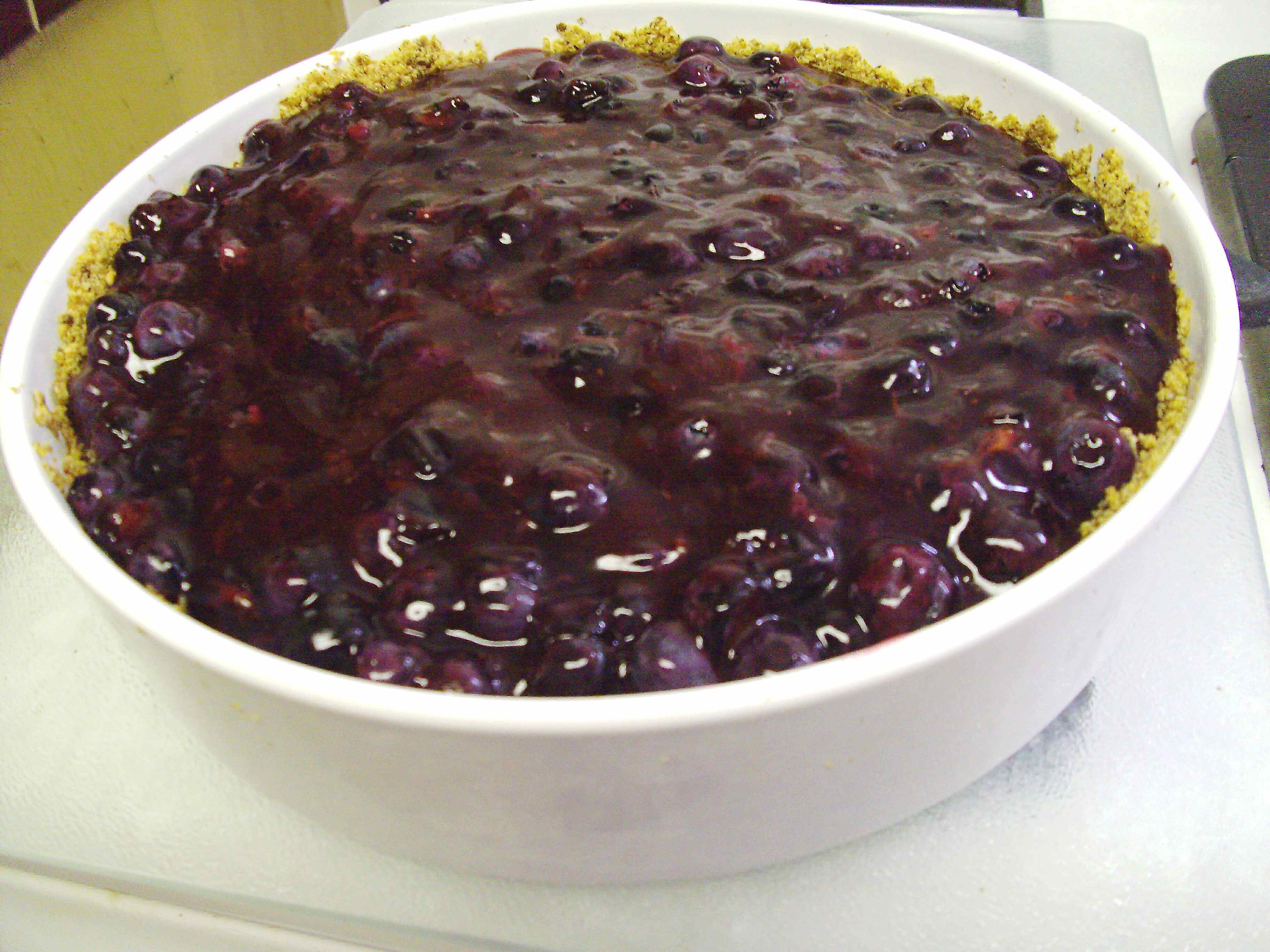
    raw blueberry pie with microwaveable filling and graham cracker crust

    This mostly-raw blueberry pie is a snap to make and very versatile--the filling microwaves in a few minutes, and you don't even have to bake the zippy gingered graham cracker crust--perfect for a hot Fourth of July and all summer long.

  • Recent Posts

  • Contents

  • Archives

  • Now Reading

  • See also my Book Reviews

  • Copyright 2008-2024Slow Food Fast. All writing and images on this blog unless otherwise attributed or set in quotes are the sole property of Slow Food Fast. Please contact DebbieN via the comments form for permissions before reprinting or reproducing any of the material on this blog.

  • ADS AND AFFILIATE LINKS

  • I may post affiliate links to books and movies that I personally review and recommend. Currently I favor Alibris and Vroman's, our terrific and venerable (now past the century mark!) independent bookstore in Pasadena. Or go to your local library--and make sure to support them with actual donations, not just overdue fines (ahem!), because your state probably has cut their budget and hours. Again.

  • In keeping with the disclaimer below, I DO NOT endorse, profit from, or recommend any medications, health treatments, commercial diet plans, supplements or any other such products.

  • DISCLAIMER

  • SlowFoodFast sometimes addresses general public health topics related to nutrition, heart disease, blood pressure, and diabetes. Because this is a blog with a personal point of view, my health and food politics entries often include my opinions on the trends I see, and I try to be as blatant as possible about that. None of these articles should be construed as specific medical advice for an individual case. I do try to keep to findings from well-vetted research sources and large, well-controlled studies, and I try not to sensationalize the science (though if they actually come up with a real cure for Type I diabetes in the next couple of years, I'm gonna be dancing in the streets with a hat that would put Carmen Miranda to shame. Consider yourself warned).

A Quick Wish for a Better 5781

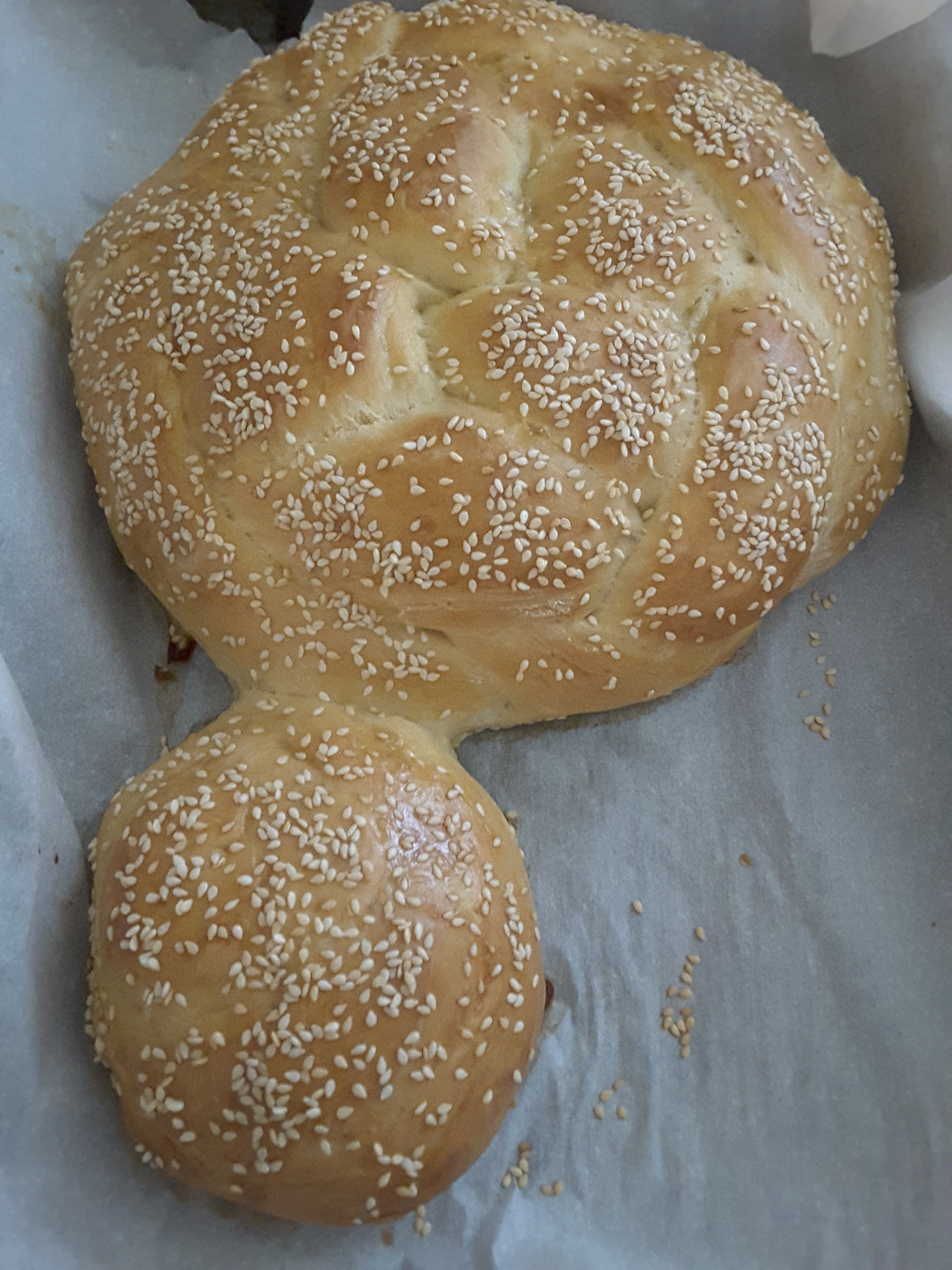
Round challahs, one large, one small 

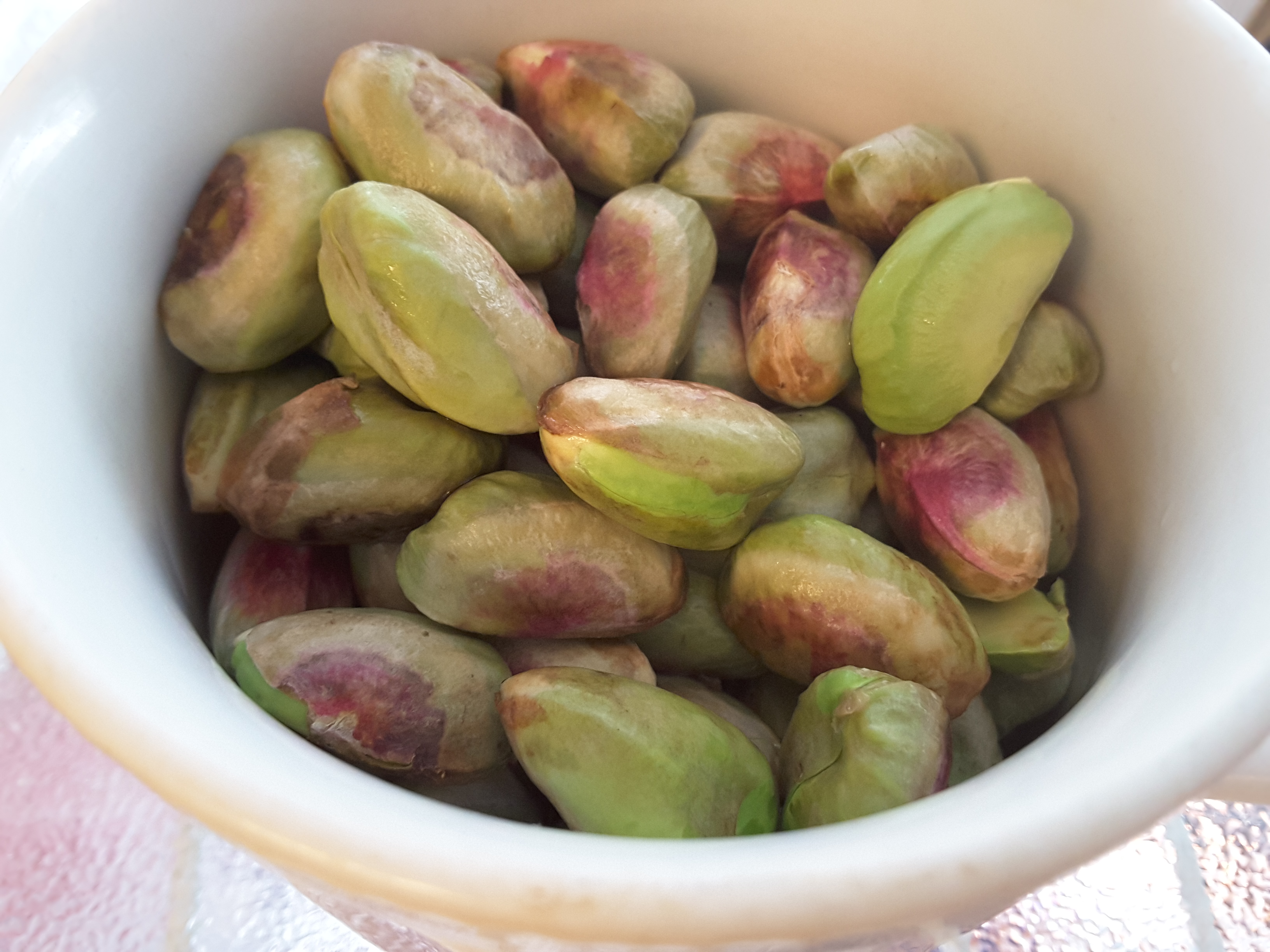
Most of the US is already at or past sunset for Yom Kippur, but it is still late afternoon here on the west coast. This morning I got up, fed the cat, made coffee, set up challah dough, watered the plants, and discovered that the two fresh pistachios I decided to try and root, after trying out a handful of these recently picked nuts with their soft green outer coat at my local Armenian corner grocery a week or so ago, had both sprouted over a couple of days in a bag with a damp paper towel, so I planted them. It was an immense joy.


Yesterday evening, out on a walk, I realized that the mystery plant that seems to be doing well among my peppers is in fact the product of one of the pomegranate seeds I tossed into some dirt in an empty yogurt container a few months ago and kept watering, even though I’d assumed nothing would germinate.

All these small things–when I look at them they offset a little of the hard uncertainties of daily life this year. At least for a moment or two at a time. It’s odd to think that if I take care of them I could end up with a pomegranate tree and a couple of pistachio trees.

Likewise with people.

Wednesday was my birthday, and I talked to four people I expected to–my family–and one person I didn’t expect to hear from, a friend from our congregation, who called to wish me happy, and we talked, and I asked her how she was doing. It would have been normal in a conversation with anyone else, but not with her.

She’s a care coordinator for other people, which often means “how are you doing?” is her question, not something other people ask her. “Really stressed out,” she told me. She, like me, has been reading the appalling headlines too often and is too worried about the upcoming election to be able to relax.

And we commiserated a little, and hopefully felt better and stronger afterward.

And we’re going to observe Yom Kippur in an hour or so, and we’re going to breathe in as much calm and remembrance as we can that our community is still here, in large part thanks to her work, and we’re going to put one foot in front of the other and take the chances we can to do better.

Take a moment and take a chance where you can on a small act of planting and growing generosity, kindness, optimism. It will sweeten the new year for at least moments at a time, and you never know but it may work better than you hope.

To a better 5781, with better health, peace, love, prosperity, justice and compassion for all of us who are feeling more than a little nuts at the moment.

cup of pistachios

Three nonsense words

That I don’t really want to hear about food or nutrition, pretty much ever, and certainly not as a way to welcome in 2018. Courtesy of the New York Times’ T Magazine this week:

To usher in the new year, we asked creative people to share the homemade recipes they count on to detox, cleanse — and refresh.

Please. When you start describing breakfast in terms better suited to a moist towelette, and when the breakfast product itself comes out looking…well, let’s not even go there. I mean, check out the before and after food photos and tell me I’m wrong.

The fashion-slash-yoga world tends to be convinced that cleanses and detox schemes are legitimate. Physiologists, internists and RDs with board certifications tend to disagree.

Juicing, while obviously ultra-fashionable (still? boggles the mind), actually removes all the fiber, concentrates the sugars, and makes you wonder, given the thinness and the (frankly hideous) color of the stuff in the goblet in the right-hand “after” photo, whether it wouldn’t have been more genuinely nutritious, tastier, satisfying and visually appealing at the same time just to make some chunky vegetable soup–with garlic and herbs, not this sweet swill–and just wash and eat the apple with the peel. Because of course it would.

Another article in the series shows the breakfast for a conceptual artist who includes “human bacteria” and Teva sandals in her exhibitions (why? and I mean, are you really tempted to follow her food conceits after reading that?)–a bowl with about 10 hazelnuts and a dusting of chia seeds, not exactly a meal, and on the side a shotglass of something that is admittedly a much better green than the first interviewee’s due to dark leafy greens rather than celery and carrots, but would still be better left unjuiced, lightly cooked in stirfry or soup form, and without any sweet stuff in it. And preferably with a hit of garlic.

No major calories in this kind of breakfast, and perhaps we should be grateful that they don’t throw in any bacon or its variants with the veg, but really. Those breakfasts look pretty bleak and cold and less balanced than they ought to be, whether green or not-such-a-good-green.

Why the “detox” label? Why the crash-style diet drinkies? Why an article series–not even just one ill-judged gush piece–on food that doesn’t really look or taste all that good or deliver that much actual nutrition as given in the recipes, and frankly isn’t necessary if you actually eat things like vegetable soup or broccoli and other greens as part of your regular meals? Is the NYT readership really that into these things? Are they in it for the post-holiday self-castigation value?

None of the women interviewed (and of course they are all women, at least so far) are  particularly unfit or overweight or heavily broken out or anything, and none of them look ill or hung over. Raises the question: just how badly did these people really eat during the holidays?

You’d think from the tone of the articles that these artists had all been rolling around in crappy green and red sugar cookies of increasing staleness and chugging quarts of full-on eggnog all December just for something to do.  It’s the only way the articles even begin to justify themselves.

What happens when you age champagne?
A couple of weeks ago on a Friday evening, the week before our anniversary, my husband and I were scrambling to find a bottle of kosher wine in the house for the Shabbat blessings and coming up empty. We didn’t even have grape juice. I took one more look in the last-chance box and realized one of the bottles was kosher after all. It was a bottle of Yarden 2000 champagne I’d picked up on an after-Passover sale several years ago (our local Kroger affiliate supermarket has a not-quite-tuned-in approach toward Jewish holiday ordering; sometimes the matzah boxes arrive and disappear a week before Passover; sometimes they hang around for months, and sometimes they sell good wines at a fire-sale bargain because of the kosher label).

I’d saved that bottle for a special kosher-requiring occasion that never quite arrived. Vintage 2000–definitely the oldest bottle I’ve ever opened at home. As old as our daughter. Has it really been that long since 2000???

(OK, given the sorry yet predictable result of the mid-term elections, I have to say it hasn’t been long enough. But still.)

The bottle was QUITE dusty–almost a prerequisite for experimentation.

Neither my husband nor I are usually all that impressed with champagne–even the expensive mid-level ones, at $40-100 a bottle. Not that we’re usually in a position to sample those at home, but sometimes people splurge on them at Thanksgiving, New Year’s, etc., and we wonder why. They’re usually not as good as the cheaper Spanish cavas–if I had to buy champagne-style wine, I’d rather go with something like Freixenet, not to be cheap but because it’s closer to that bone-dry, yeasty, buttered-toast style I prefer to all the more acidic and flat-flavored mid-level champagnes out there. Taittinger and Moët et Chandon both come to mind as severe disappointments at the $45ish level. Their top-level champagnes might be quite different, but these just seem to be trading on the brand name and pricetag for the naive American market.

For that kind of money, I’d rather have a good, deeply-flavored still chardonnay than almost any of the usual fizzy lifting drinks, and you can get a pretty decent bottle of chard for under $20. Actually, most of the time I’d rather have a decent red.

And frankly nothing is as good as the (once-only) bottle of Dom Perignon my husband brought home 17 years ago, when we finally decided to get engaged after all those years of dodging family and friends, celebrating with some couples and outlasting others. After a lackluster and slightly glum Sunday afternoon discussion that ended with, “Well…okay,” we called each other at work the next morning and agreed we should probably do a little better than that. We were getting married, after all. Oy. We clearly needed some bolstering before we broke the news and faced the inevitable hocking from our families.

A really nutritious dinner consisting solely of Dom Perignon and a (smallish) box of Godiva truffles, each of which looked exactly like Miracle Max’s big chocolate pill from The Princess Bride, seemed to do the trick.

Of course, under the influence of the DP and chocolate, we decided we could do the parts of the wedding we liked (huppah, food, klezmer music, line dancing, ketubbah signing, friends and family, more food, more dancing) and just skip the stereotypical parts we found laughable, uncomfortable or downright detestable in other people’s weddings and wedding-themed tv ads (tux, white puffy dress, veil, speeches, first waltz, which neither of us knew how to do, tiered wedding cakes, arguing with either of our mothers over invitation fonts, color-coordination of any sort or description…)

We ended up having fun at our own wedding, which never really seems to be the primary goal somehow, we only decided where to go on our honeymoon the next morning while sitting around in our pjs, and I maintain that we’ve just kept getting weirder ever since.

Which brings us back to the Yarden 2000. To be fair, Yarden has been making some very decent kosher wines the last 10-20 years. But kosher or not, 14 years for any champagne below the DP level?

Champagne is supposed to be the only white wine that can age–maybe it’s all the trapped carbon dioxide fending off oxidation, but I’d never gotten close enough to try it out. The chemist in me has been waiting for another crack at mad scientist status for a couple of years now, so this was it. Plus it was getting after sunset already and we were hungry and there was no regular grape juice in the house.

Well…if we were daring enough risk our stomach linings and our eyesight by trying mead that had been sitting around for more than a year, we could probably risk a 14-year-old bottle of kosher champagne, once I got the major dust coat off it, anyhow. I found a deep enough pot to improvise an ice bucket but didn’t really have enough time or patience to chill the bottle well.

“Do you want a towel for the cork? It’s probably lost all its zuzz, you know,” my husband said.

Just in case it hadn’t, I opened the bottle carefully and with approved champagne-opening technique (the point-away-from-people-and-twist-the-bottle-gently-away-from-the-cork routine, not the find-the-Napoleonic-era-saber-up-in-the-attic version). The cork actually made a proper popping sound and the usual CO2 fumes rose up. It wasn’t dead after all! (“It was only mostly dead,” I hear you chime in. Stop digging around in that Godiva box already, willya? We already took the good ones.)

Then we poured it, and it foamed up–zuzz intact. So we made the blessing over the wine, and my husband very generously said he’d let me take the first sip. Which I did, but…

“You haven’t gone blind yet, have you?”

I glared at him. Or at what I thought was his general direction.

Continue reading

New hope for lowering arsenic levels in rice

A new study has identified a key protein in rice plants that allows some varieties to keep any absorbed arsenic safely contained in a separate part of the plant from the grain itself. The authors are hoping to introduce the gene for this highly effective transporter protein into plant strains that don’t have much of it and see whether the new genetic hybrids can reduce the arsenic level in major rice crops.


What’s my beef with burgers?

As usual, I’m slightly behind the times on all the really exciting and futuristic food news. But a conversation I had yesterday with an older volunteer at my local library brought back the article and my (as usual) sarcastic thoughts on the way forward in American food culture. The man I talked to grew up in Arcadia, about 10 minutes southeast of Pasadena, back in the 1950s when it was still mostly farmland, and he rode a horse to school–and was often sent home with it early because it started fertilizing the school grounds at a copious rate. Nowadays, they’d have to pay good money for the stuff.

This gentleman, about my mother’s age, was talking about the younger generation, his grandkids, and while he admired how adept they seem to be with sophisticated technology, he shook his head at the fact that his grandson was the only kid last year in his kindergarten class who had any idea where tomatoes come from, because his family was the only one that had a garden or (perhaps) ate vegetables that didn’t miraculously appear, wan, grainy orangeish slices, mixed with pickle slices, on top of a hamburger in foil paper. “It’s all burgers now,” the man shook his head. “That’s all anyone seems to eat anymore–hamburgers and hotdogs. That’s not food.”

It was exactly what I’d been thinking all summer long, looking at the magazine covers and newspaper food sections. Which is why I view the biggest food story of the year a little differently than most biochem-trained enthusiasts….

Two weeks ago, an Austrian nutritionist, an American journalist, and a cell biologist in the Netherlands shared the first public taste  of a hamburger made from beef tissue cultured in laboratory from cattle stem cells.

Ordinarily we’d all be running around in circles throwing our hands up in the air and, depending on our political bent, either chanting “This is the Age of Aquarius” or else screaming “Soylent Green is People!” Or possibly “It’s Alive! It’s Alive!” (quickly followed with a heavy-booted reprise of “Puttin’ on the Ritz”).  I mean, it’s a big deal. Right? It is.

Yeah. Well. So, what is it, really, this synthetic stem cell-derived miracle burger? Synthetic beef, lab-cultured in (yes) flasks of nutrient sera as the starting stem cells differentiate into beef-style shoulder muscle (read, brisket?) cells and some fat cells.  The animal rights people are thrilled and dreaming of scaleup that could eliminate the need for stockyard cruelties, the vegetarians say they’d be first in line to try it, and…apparently no one yet has asked what exactly is in the nutrient serum to grow the little strings of muscle tissue.

Is it a vegetarian-sourced solution of amino acids and so on or does it (as I suspect) derive from the more usual beef and other animal broth, made (inexpensively for laboratory consumption) from boiled-down hooves and skins and various meat scraps? Maybe it ain’t time to celebrate that aspect just yet.

But still, it’s a big step forward. Isn’t it?

I mean, an actual New Age synthetic beef alternative using the latest advances in cell biology. Very exciting.

Except…they’ve used all this very sophisticated technology to develop…a hamburger.

For this test, the 20,000 or so individual strands of muscle tissue they managed to harvest (after a five-year developmental process funded by by Sergey Brin, cofounder of Google, no less, and 3 months or so of growing this particular sample) were patted lovingly into shape and fluffed out to reasonable volume and held together with the help of some salt, some breadcrumbs, and some egg powder. And some beet juice for realistic coloring because the strands were a little more yellow than pink, somehow. And then the sample was cooked and eaten plain by the lab director and his two volunteers.

Who complained that it was really hard to judge the flavor of the synthesized beef without any of their favorite toppings on board. No jalapenos or cheese or pickle relish, no salt and pepper, no aged gouda, no ketchup. They both skipped the lettuce and tomato they were offered, to say nothing of the bun. And they couldn’t judge the meat on its own. Continue reading

You must read this. Take an hour if you have to.

Today’s New York Times has an excerpt from investigative reporter Michael Moss’s forthcoming book on the processed food industry’s push to engineer addictive foods. It’s a long article, more than 12 pages, but well worth the read.

The Extraordinary Science of Addictive Junk Food – NYTimes.com.

More “breathable foods” weirdness

A couple of days ago, Entertainment Tonight posted a new video tidbit on “breathable” food  from the same Harvard professor, David Edwards, who invented the AeroShot “breathable caffeine” cartridge that has drawn some serious FDA attention of the negative sort.

ET’s anchor breathlessly posed the  question, could this become The Next New Diet Fad in Southern California, when what the LeWhaf vaporizer was invented for was the “aesthetic experience” of breathing food flavors. This according to Edwards, whose Paris-based design lab, Le Laboratoire (names aren’t really his thing?) offers a number of vaporized cocktails at a small sit-down bar.

When I wrote about the first set of inventions, I said I thought it might be an interesting molecular gastronomy-style taste experiment (at least if the flavors were something more sophisticated than “lime,” the flavoring in the AeroShot cartridge), depending on what was being used to create and propel the vapor.

The ET video presents an interview with a young up-and-coming chef who’s offering cocktails of various kinds served in the Le Whaf vaporizers–to be inhaled through a special straw. The accompanying visual looks, frankly, like someone about to use a bong or snort a line of coke, but that could just be the way ET’s camera crew are used to shooting bar scenes…

The chef they interviewed doesn’t serve these vaporized cocktails, not all of which are standard drinks in the daily repertoire (some of them look like beef broth) as a low-cal diet offering but rather as a sideline to enhance some other dish. Very molecular gastronomy. Still he concedes, when pushed, that he can’t see how it would have calories.

(From his doubtful expression, they must have edited out the part where the Barbie Doll reporter shoved a mike in his face repeatedly and insisted with desperation that the vapor must make it calorie-free, it just MUST. She’s the one who tried the AeroShot caffeine spritzer on-camera in the studio to demonstrate the concept, and quickly uttered the dutiful “Mmmm”,  but the video jumped at that point, so I wonder if she really sampled it or not. At least she didn’t start coughing…unless they cut that part too…)

And yet I wonder if ET hasn’t hit on something here–no, not the diet fad. One can’t live on pâté-flavored air alone. One must also vaporize some champagne to go with it, preferably Krug. Could possibly clog the nozzles otherwise.

No. In the frenzy to discover the new French technology that magically removes all calories, ET seems to have let the chef describe the mechanism at the bottom of the vaporizer. Here you are, at a cocktail bar, leaning over the open mouth of a carafe, straw in mouth, ready to inhale cocktail-flavored vapor…produced, about 12 inches from your face, by three ultrasound probes at the bottom of the carafe. Continue reading

Broccoli IS a conservative political bogeyman!

This exposé from yesterday’s New York Times goes into the longish history of how conservatives started waving broccoli stalks at any issue they don’t like…

Just as I suspected when Justice Antonin Scalia started spouting broccoli-tinged party-line nonsense this March, the Republicans really DID originally decide to blame broccoli based on George Herbert Walker Bush’s stated hatred of an innocent green. Yeesh! You can’t make this stuff up. And I was really, really trying to!

Eat the City, Read the Book

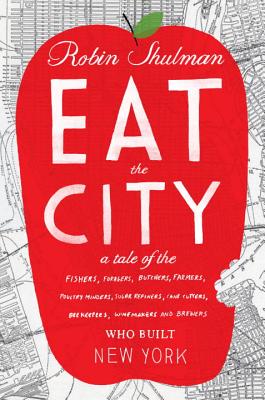
Robin Shulman's "Eat the City" bookcoverI’ve just received an advance copy of Robin Shulman‘s forthcoming book, Eat the City: A Tale of the Fishers, Foragers, Butchers, Farmers, Poultry Minders, Sugar Refiners, Cane Cutters, Beekeepers, Winemakers and Brewers Who Built New York.

[Or at least that’s the title on the cover art–the copyright info page version of the book title squeezes in even more food trades–what, or rather who, the heck are “hungers”? People who “curate” aged hanger steaks?]

Shulman, a well-known reporter who has worked for the New York Times, the Washington Post, the Los Angeles Times, Slate and other venues, has covered hard-news beats from city politics and urban blight to Middle East diplomacy. In Eat the City, Shulman explores the neighborhoods of New York, where she lives, and from hundreds of interviews, she harvests seven key stories to tell in depth: Honey, Vegetables, Meat, Sugar, Beer, Fish and Wine.

Each chapter, rich and multilayered, cuts across decades of urban history, whether development or decay, recounts conflicts and unexpected cooperation between would-be urban farmers and the neighborhood factories or city agencies they deal with, and uncovers the not-so-obvious ways these individual entrepreneurs bring a sense of connection and vitality to the city.

So we meet a man who after returning not entirely whole from a stint in Iraq, got enthusiastic about beekeeping when it was still illegal. In 2010, he rallied New York’s clandestine beekeepers to convince the city to rescind its ban on rooftop hives, and started training hundreds of apprentices. The retired numbers runner who farms vacant lots in Harlem–something he started as a cover for his gambling operations in the ’60s and turned into one of the first urban community garden projects–is still going strong in his 70s, but he’s seen several of his neighborhoods fall silent over the decades as buildings crumbled and the city neglected the people. The Manhattan ad exec risks her health and her freedom sneaking into taped-off areas to fish striped bass from the East River–she’s not sure it’s safe to eat, but she’s as hooked as her catch, and often announces her triumphs on Facebook. And somewhere toward the end of the book is the true and presumably unvarnished story of Manischewitz, the first big brand of kosher wine in America (and actually, probably anywhere, since before the 20th century most people made their own kosher wine at home).

Eat the City is due out in July, and all I can say is get out there and reserve yourself a copy, or clamor at the cash register of your local bookstore to order you one. Because this is the best book I’ve read in quite a while on the history and present fortunes of small independent food growers in one of America’s largest urban landscapes.

Like Michael Pollan’s books, it has depth and thoughtful analysis of the meaning of food in modern life. Unlike Pollan, Shulman isn’t advocating a lifestyle choice, she’s giving you a window on individuals as they elbow their way into a crowded city to make room for themselves.

Food is the medium here, but the impulse is universal, and the result is a better understanding of both food entrepreneurs and the meaning of city life itself. If you want to know what’s really happening beyond the wide-eyed grow-your-own-tomatoes-in-Brooklyn blogs, just pick a chapter and start digging in.

FDA: Not such Breathable Foods

Following on NY Senator Charles Schumer’s request last December, the FDA has sent a Warning Letter to Breathable Foods, Inc. for its marketing of the AeroShot caffeine inhaler, which commits a multitude of violations against law and common sense. It’s kind of a long letter, and I hope I’m not the only one here who enjoyed every word as the officer meticulously spells out the difference between inhalation and ingestion in great glottal and epiglottal detail. Just to clarify so they understand that breathing and swallowing aren’t interchangeable to most people.

As I noted earlier in this case, the inventor, David Edwards of Harvard, and the young student who became CEO for the company, Thomas Hadfield, have both seemingly been operating on the blithe assumption that if they didn’t think about safety for more than a few dismissive minutes, neither would anyone else. Unfortunately, given the breadth of the mostly unregulated “dietary supplements” market, they may be partly right. If they weren’t both so high-profile, they might not have been noticed so quickly.

As it is, I would be very surprised if by this time next year, the product, the CEO, or the professor himself weren’t gone with the wind.