• Enter your email address to subscribe to this blog and receive notifications of new posts by email.

    Join 241 other subscribers
  • Noshing on

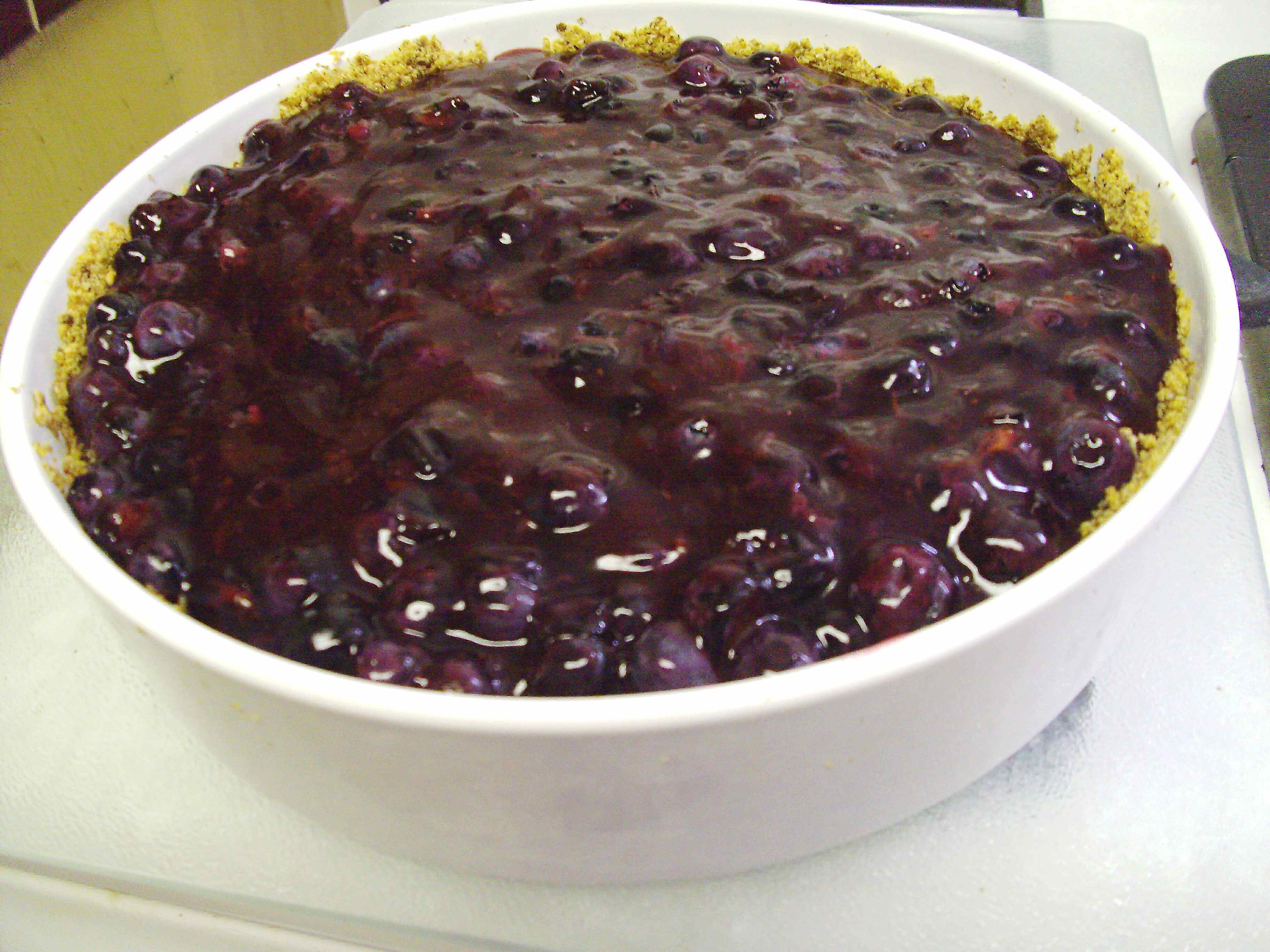
    raw blueberry pie with microwaveable filling and graham cracker crust

    This mostly-raw blueberry pie is a snap to make and very versatile--the filling microwaves in a few minutes, and you don't even have to bake the zippy gingered graham cracker crust--perfect for a hot Fourth of July and all summer long.

  • Recent Posts

  • Contents

  • Archives

  • Now Reading

  • See also my Book Reviews

  • Copyright 2008-2024Slow Food Fast. All writing and images on this blog unless otherwise attributed or set in quotes are the sole property of Slow Food Fast. Please contact DebbieN via the comments form for permissions before reprinting or reproducing any of the material on this blog.

  • ADS AND AFFILIATE LINKS

  • I may post affiliate links to books and movies that I personally review and recommend. Currently I favor Alibris and Vroman's, our terrific and venerable (now past the century mark!) independent bookstore in Pasadena. Or go to your local library--and make sure to support them with actual donations, not just overdue fines (ahem!), because your state probably has cut their budget and hours. Again.

  • In keeping with the disclaimer below, I DO NOT endorse, profit from, or recommend any medications, health treatments, commercial diet plans, supplements or any other such products.

  • DISCLAIMER

  • SlowFoodFast sometimes addresses general public health topics related to nutrition, heart disease, blood pressure, and diabetes. Because this is a blog with a personal point of view, my health and food politics entries often include my opinions on the trends I see, and I try to be as blatant as possible about that. None of these articles should be construed as specific medical advice for an individual case. I do try to keep to findings from well-vetted research sources and large, well-controlled studies, and I try not to sensationalize the science (though if they actually come up with a real cure for Type I diabetes in the next couple of years, I'm gonna be dancing in the streets with a hat that would put Carmen Miranda to shame. Consider yourself warned).

Microwave tricks: Pasta You Don’t Have to Babysit

Mark Bittman’s post-Thanksgiving look into the brave new world of absorption pasta and Pete Wells’s “Cooking with Dexter” piece in the New York Times yesterday on the virtues of a pot of boiling water have me thinking hard about why neither of them has even tried the microwaves that must be sitting on their counters. Especially Wells, who has not one but two very young and active children to watch out for.

You can cook standard dried or frozen pasta very well in a microwave, with only a few minutes of actual cooking time and almost no need to stay close by. You can cook rice too–and we’re not talking Minute Rice, either. Basmati rice, the queen of difficult rices, cooks perfectly in a microwave.

The setup for microwaving tortelloni

The setup for microwaving tortelloni and other filled pasta

I started cooking pasta in a microwave when my daughter was a toddler. She was pretty active and I couldn’t leave a pot boiling away on the stove to go and chase her–either the pasta or I would have boiled over. By the same token, I had nightmares of her getting over the baby gate and into the kitchen as she got bigger and more impatient. My mother-in-law still has extensive scars from having a boiling pot tip over on her when she was a child, and it’s one of the reasons I decided to try microwaving pasta instead. Even though my daughter is now kitchen-savvy, it worked so well I’ve never been tempted to go back. Continue reading

The Case Against Bologna

(Beside the fact that I’ve never actually liked it, not even as a kid. Too flabby and bland.)

It would be so nice if once in a while, just occasionally–every other Thursday would probably be enough–the processed food industry judged nutritional value the way the CDC or NIH public health guidelines do. (The USDA and its Food Pyramid scheme, all versions, are too compromised toward the food industry for me to include.)

Take a small health column in today’s Washington PostJennifer LaRue Huget comments on Oscar Meyer’s claim that a classic peanut butter and jelly sandwich has nothing on a classic bologna sandwich for health. Their contention is that the bologna sandwich is healthier because it has only 4 grams of sugar, and somewhat less total fat than a sandwich’s worth of peanut butter, about 2 tablespoons.

Huget proceeds to tear that argument down with a simple look at the nutrition label stats for both and a smidgen of common sense–why would bologna have sugar in it anyway? The bologna has less total fat but somewhat more saturated fat and cholesterol, and it has only 3 grams of protein for peanut butter’s 8. And what about the salt–800 mg for a sandwich with a single slice of bologna, compared with a PBJ at 490 mg–which is still high by my standards, but I guess it’s salted peanut butter, and quite a bit of the salt is probably in the bread itself (incidentally, did Oscar Meyer include bread in its sodium count for the bologna sandwich? did it use the same kind of bread in the PBJ comparison? Hmmm….)

Well anyway, Huget doesn’t need to work too hard to make her case. Still, there are issues she doesn’t even scratch. Obviously Oscar Meyer is trying to play up its few nutritional points and hide its glaring weaknesses–most of the processed food players have been doing this aggressively for years now. We’re mostly inured to it, and frankly we expect bologna to be high-salt and kind of fatty. No big surprises there.

So let’s get back to the main strangeness of this comparison and ask the key questions: How could peanut butter possibly have more protein than bologna? Isn’t bologna meat? What’s going on?

I headed for the USDA Nutrient Database to find out. As much as I distrust the USDA’s dietary advice and its Food Pyramid, the nutrient database is pretty vast and pretty consistent, and its holdings aren’t branded.

The protein in bologna and most other processed sandwich meats–not just Oscar Meyer brand but others as well–is considerably lower than in the same amount of plain unprocessed cooked meat. We’re talking 3 grams of protein in a 28-gram (1-oz) slice.

Oscar Meyer’s bologna is made in descending order of “mechanically separated” chicken and pork bits and then a variety of corn derivatives, both syrup and starch, plus gelatin and other fillers.

Normally you look at the top two ingredients and think “Meat! That’s the main ingredient! It’s chock-full of protein!” Actual chicken and pork–the solid meat, not the skin or fat of the chicken, and not bacon–contain about 25 grams of protein per 100 grams of meat, according to the USDA nutrient database, or about 7 grams of protein per 28 grams of meat. Not 3 grams per 28. By the time you get to bologna, you’ve got less than half the protein of actual meat.

You have two possibilities here for how that happens:

1. The company’s definition of “chicken” and “pork” includes a hefty proportion of skin and solid fat most people trim away and throw out rather than eat when they buy actual chicken or pork. Fat doesn’t have protein in it but it does weigh something. Should it be allowed to qualify as “meat”?

2. The percentages of the chicken and pork bits in the bologna are just enough higher than those of each of the filler ingredients to qualify as leading ingredients on the label, but the actual proportion of chicken-plus-pork to the total filler is something under half.

So bologna leaves a lot to be desired even compared to an old standard like PBJ, especially today when you can get peanuts-only peanut butter without fillers, and fruit-only fruit spreads without added sugars or corn syrup. And you can look on the nutrition label to find out what’s in it and what it’s worth nutritionally.

But what disturbs me, even more than the clear and present need for Huget’s column to point out Oscar Meyer’s casual sophistry in this over-informed day and age, are some of the comments her column generated. The Washington Post has a pretty liberal comment policy on just about every opinion article.

I expected some type of Food Police accusations to crop up. I’m not sure they didn’t, eventually, but when I read the piece this morning, what struck me was just how many of the commenters waxed nostalgic about how much they loved bologna. How, even with all its and Oscar Meyer’s obvious flaws, they still craved bologna when they saw the word in print. Even when they’d actually read the whole article. Brought them right back to the good old days of the elementary school cafeteria. Worse, it brought them a specific craving for bologna with mayonnaise on white bread. That plus Velveeta to cap things off.  I ask you, is there any hope?

The Meaning of “Tasty”

One very strange description crops up in nearly every expert’s take on processed food and the way it’s overtaken fresh and whole foods in the American diet. Everyone from food industry veteran Hank Cardello (see the Stuffed book review) to NYU nutrition professor Marion Nestle in What to Eat talks about fast food and junk food as “tasty”. David Kessler goes even further: in The End of Overeating, he adds “irresistible,” which he says is the problem he faced most of his life.

Moreover, “tasty” has become the important word in processed food advertising. Driving home from the post office today I even saw it on a billboard for Vitaminwater10, with the tagline:  “10 CALORIES. 4 NEW FLAVORS. TASTIER THAN EVER.”

Tasty. It’s the word of champions, the key, the adword to beat.

And for the life of me, I’m not sure why. Because the words I would have chosen for most of it include stodgy, greasy, cardboardy, screamingly salty, day-glo ™ orange, and “a lot like airplane food, only on the ground.” Am I the only one?

But “tasty”–specifically that word–is clearly the accepted description, even among these food experts, and that points to a host of disturbing assumptions. Either they mean they find processed food tasty or they mean they think everyone else finds it tasty and irresistible–even if there’s something better to eat. That’s kind of defeatist, isn’t it? If everyone “knows” fast food is tastier than fresh produce, what hope is there for mainstream Americans to eat healthier than they do today?

What do they actually mean by “tasty” in the case of processed food? They don’t mean fresh, as in fresh produce. They don’t mean tangy, as in yogurt or a tangerine, or sharp as in horseradish or cheddar. Certainly not aromatic, like dill or fennel or rosemary or sage. Or rich and funky and thought-provoking, like aged camembert or shiitakes or asparagus or toasted sesame oil. And they don’t mean complex and savory and surprising, as in a palak paneer punctuated by smoky black cardamom pods, Armenian string cheese with nigella seed, or a long-cooked carbonnade or daube of beef with some cloves thrown in on a whim.

They can’t possibly, honestly, mean “these fresh hazelnuts are so sweet you’ll plotz” or “one bite and you’d better take this nectarine somewhere private.”

Most of the food experts who’ve posited that processed food is “tasty” in their books and articles are older than I am by about 10 years, old enough to remember eating late-July nectarines that devastatingly fragrant, backyard tomatoes earthily ripe and pungent, foods utterly unlike what’s available even in the produce section of most chain supermarkets today.

So I can’t help thinking that their casual use of the word “tasty” reflects and even perpetuates the hopelessly tattered, stunted and inexperienced taste imagination of the masses of people who don’t cook for themselves anymore and have given over completely to packaged food, with its excesses of salt and its bland, stale cardboardy background flavor. The ugly assumption they’ve bought into is that people who eat mostly processed food can’t change, won’t change, and most importantly, wouldn’t like fresh food if they tasted it.

Can the surge of food blogs with their encouragement to try something new, visit local farmers’ markets, maybe even take a share in a community garden plot, change this trend? I hope so, even though I know the open air markets are not often very available in poor neighborhoods and they tend to be as expensive as supermarkets. But when they are made available in urban areas, all kinds of people from the neighborhood suddenly come flocking to them, Continue reading

You want fries with that?

You have no idea how much I’m looking forward to tomorrow at 8:35 a.m. That will be a good five minutes after the start of the parental summer relief program known best as Back to School. I’m counting down the minutes as we speak.

With the return to school, public debates over what children should eat and how parents should or shouldn’t step in have intensified. Obesity, the selling out of school cafeterias, new restrictions on sodas and junk food in said cafeterias, and the diet of choice at home are the topics of the day–all underlined with a sense of rising panic.

This year more than any other I can remember, reporters, bloggers, doctors, models, political figures, and just about everyone else has jumped on the bandwagon to report the ugly facts that were excused for years.

All the statistics are in–or pretty much so, and they boil down to this: We’re facing a tidal wave of blubber.

With it comes a tidal wave of early heart disease, diabetes, kidney disease, and more. How early? Physicians are seeing a rise in the diseases of middle age–something that, 20 years ago, had been successfully pushed back by an average of 10 years, from age 50 or so to age 60 and up for a first heart attack. We thought we were making progress. But for the past 10 to 15 years,  these diseases have started popping up in school children–Type II diabetes, kidney stones, high blood cholesterol and high blood pressure. No way should a 10-year-old be facing these threats.   No wonder parents and everyone else are panicked–the studies we have aren’t giving us a single, easy-to-deal-with  definitive  guide on how to stop the juggernaut. They mostly tell us that it keeps on rolling.

But the mystery of what to do really isn’t that mysterious. Take for example the responses to Frank Bruni’s recent article in the New York Times on feeding children. Some come from doctors on the front lines, others from nutritionists and fresh-food-in-schools activists, discussing different facets of the problem, but they come to a number of sensible recommendations you could probably have named yourself without much struggle.

The conclusions?

Sodas should be cut out altogether from children’s (and probably everyone’s) daily diet. Not just for calories (250ish for a 20-oz bottle–and why is it 20 0z these days? used to be 12 was the standard) but for sodium (about 100 mg per 12-oz can, whether full-cal or diet, 200+ for the 20-oz).

Fruit juices with a pretty picture on the box are nowhere near qualifying as actual fruit. Not even with added vitamin C.

And exercise time, including outdoor recess–something most schools have cut back in the past decades–makes a big difference that’s generally overlooked in the school lunch debates.

So far, no great surprises. But they do mention one more item, also no great surprise–fast food in the school cafeterias.  Nobody seems to have trouble zeroing in on french fries as the worst offender. Are they right or is this a replay of the cupcake wars? Is the french fry being unjustly accused, as the vendors claim?

Continue reading

Pack your own lunch

It’s almost time to head back to school, and my daughter’s finally old enough to pack her own lunch. Not that she wasn’t actually old enough last year. But now she wants to.

When I was nine, I’d been making my own school lunches for at least a year, if only to save my sandwiches from my mother’s clutches and keep her from adding butter to the jam–something that did, and still does, make me absolutely nauseous. Emergency grossout prevention is the mother of lunch-making independence.

As many of my friends with same-age kids do, I worry that I haven’t been pushing my daughter hard enough toward independence by having her fix her own lunch. Is it too late to impart the mysteries of the toaster oven? But all is not lost–the other morning she figured out how to cut up her own apples (she has braces and our orthodontist “charges extra for stupidity-related bracket repairs”). She doesn’t appear to have lost any fingers. So we’re good to go!

Which is fortunate because lately I’ve been seeing a slew of new books on how to pack your kid’s lunch–they range from “here are all the vegan-friendly brand-names that look just like everyone else’s school lunch, only cooler” to Alice Waters insisting that the first step is growing your own school garden (which I’m actually in favor of, but not if it means waiting 6-8 weeks for your lunch to germinate).

Few of these fabulously sophisticated new books even consider the things I took to school every day as a kid–peanut butter and jelly, apple, carrots and celery. Or peanut butter and jelly, orange, carrots and celery. My mother was dull. My sister and I had no cool foods like Ho-Hos or Cheetos to distract us, and we usually ate at least some of the vegetables and the apple. Actually, so did most of the other kids in our school. It was that or suffer the cafeteria kale. And almost no one was fat. I’d like to point that out.

Hip mamas today (mostly those still in their 30s) look horrified at my daughter’s lunches because out there in hipland PBJ on whole wheat is so…so ’70s. It doesn’t contain any of the seventy-two essential nutritional supplement buzzwords (like selenium and phytoestrogens and antioxidant) they’re convinced all healthy food has to have (well, it’s true you have to have those things on the label to compete in the ads). And it has fat. And sugar!

But you know what? A decent peanut butter and jelly sandwich on whole wheat is a lot better deal nutritionally than most of the prepackaged, often self-righteously labeled, crap the hip kids bring to school these days. Much of it is along the lines of Kraft Foods’ “Lunchables”–a processed meat and cheese cracker kind of thing packed with some ersatz juice and faky side items like jello and  candies (not even, as I check belatedly, a tiny tin of applesauce–and check out the Lunchables nutrition and ingredient stats!). But you know how popular these things are–because they’re a kit. Buy five boxes, throw one  in your kid’s backpack each day. They stack neatly in the pantry.

Very few of these children ever bring a substantial serving of fresh vegetables or actual fruit–not even apples. Those require washing, peeling–maybe even cutting up. And sometimes the apples turn a little brown on the cut sides. Organic fair-trade labeling aside, any remotely fruit-like substances in the hip-kids’ lunch bags arrive in a rectangular cardboard box with a plastic overwrap, a plastic straw attached, and a sanitized-for-your-protection seal. No wonder they stare.

Anatomy of a PBJ:

Straight-up peanuts-only butter (no salt, no sugars, no mono- and diglycerides, no emulsifiers or BHT or “natural flavoring” or any of the rest of it) has about 16 grams of fat per 2 T (1 oz) serving. True. Absolutely true. But it’s not the same as the heart-stopping blubber you find on a piece of meat, so stop shrieking. Most of the oil in natural peanut butter is polyunsaturated (the “good fat” kind of fat). And it separates (because of the lack of fakery and emulsifiers) so you can pour off a good bit of it if you want to when you first open the jar.

Furthermore, the same peanuts-only peanut butter contains 8 g protein, 3 g fiber, almost no sodium, and about 210 mg potassium. And a little iron. It’s a pretty good deal for a kid’s lunch item at about 200 calories.

Two slices of whole wheat bread without too much sodium or garbage ingredients gives you another 200 calories–we’re up to 400, but only 3 g. saturated fat, another 3-7 g fiber, another 4-6 g protein, and with a little care preferably less than 400 mg sodium (all from the bread). Add a spoonful of all-fruit jam with 8 g sugar, at about 35 calories, and you have something that will get your kid through school without tears or big sugar highs and lows.

It doesn’t have big vitamin- and calcium-fortified labeling. It doesn’t have a label. It’s not supposed to do it all on its own. Your kid will eat about half, maybe the whole thing if he or she is growing fast or running around a lot that week. But he or she will get the vitamins and calcium from the other things in the lunchbox–some crunchy raw vegetables and an apple or orange and a thermos or carton of plain unsweetened milk. That’s it and that’s enough.

Do your kid a huge favor and leave out all the chips, chocolate, go-gurt (real milk-and-cultures yogurt is ok, not the fake tapioca- and gelatin-stretched stuff), cookies, jello, sorta-applesauce, and fluorescent boxes of juice. School is hard enough without sugar crashes or cavities, and they don’t need any of it to have a good day.

Oh yeah. And for crying out loud, please skip the sushi. Your kid does NOT need to be that hip in the school cafeteria. Or that sick, if the sushi doesn’t stay cold enough.

(Why yes, I live in Southern California. What gave it away?)

Naked Lunch: Nutrition labeling law in effect for California Chain Restaurants

California’s not the first state or municipality to require restaurants to declare their nutritional stats to customers, but as of today, the state will require chains with more than 20 in-state locations to post calories, carbs, sodium and fat information for each menu offering. The new law also bans sales of soda and junk foods to students at public schools–a big step toward reducing empty calories and sodium consumption among children and teens.

Patt Morrison of Pasadena-based public radio station KPCC interviewed the California Restaurant Association’s senior vice president for government affairs and the executive director of the California Center for Public Health Advocacy.

Surprisingly enough, the CRA’s representative said the association actually backs the legislation in its current form. When asked whether similar New York City legislation had had any effect so far, the CCPHA director said it had–chain restaurants had started reformulating popular high-calorie foods back downward. He also gave demographics: 89 percent of Democrats and 78 percent of Republicans polled said they were in favor of the new law. Most of the callers to the show also said they wanted or needed to know what was at the end of their forks.  A fascinating interview all the way around.