• Enter your email address to subscribe to this blog and receive notifications of new posts by email.

    Join 241 other subscribers
  • Noshing on

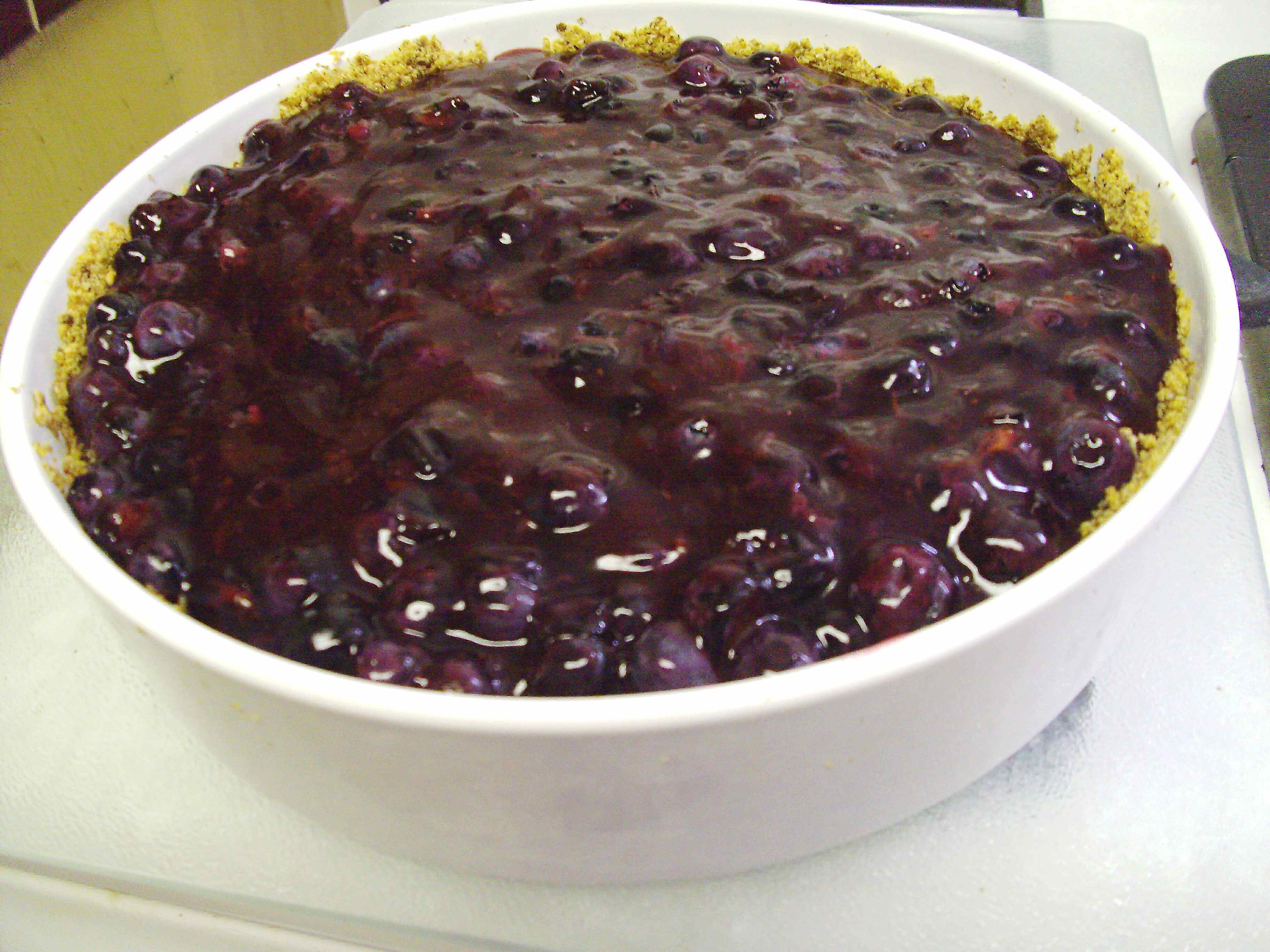
    raw blueberry pie with microwaveable filling and graham cracker crust

    This mostly-raw blueberry pie is a snap to make and very versatile--the filling microwaves in a few minutes, and you don't even have to bake the zippy gingered graham cracker crust--perfect for a hot Fourth of July and all summer long.

  • Recent Posts

  • Contents

  • Archives

  • Now Reading

  • See also my Book Reviews

  • Copyright 2008-2024Slow Food Fast. All writing and images on this blog unless otherwise attributed or set in quotes are the sole property of Slow Food Fast. Please contact DebbieN via the comments form for permissions before reprinting or reproducing any of the material on this blog.

  • ADS AND AFFILIATE LINKS

  • I may post affiliate links to books and movies that I personally review and recommend. Currently I favor Alibris and Vroman's, our terrific and venerable (now past the century mark!) independent bookstore in Pasadena. Or go to your local library--and make sure to support them with actual donations, not just overdue fines (ahem!), because your state probably has cut their budget and hours. Again.

  • In keeping with the disclaimer below, I DO NOT endorse, profit from, or recommend any medications, health treatments, commercial diet plans, supplements or any other such products.

  • DISCLAIMER

  • SlowFoodFast sometimes addresses general public health topics related to nutrition, heart disease, blood pressure, and diabetes. Because this is a blog with a personal point of view, my health and food politics entries often include my opinions on the trends I see, and I try to be as blatant as possible about that. None of these articles should be construed as specific medical advice for an individual case. I do try to keep to findings from well-vetted research sources and large, well-controlled studies, and I try not to sensationalize the science (though if they actually come up with a real cure for Type I diabetes in the next couple of years, I'm gonna be dancing in the streets with a hat that would put Carmen Miranda to shame. Consider yourself warned).

You must read this. Take an hour if you have to.

Today’s New York Times has an excerpt from investigative reporter Michael Moss’s forthcoming book on the processed food industry’s push to engineer addictive foods. It’s a long article, more than 12 pages, but well worth the read.

The Extraordinary Science of Addictive Junk Food – NYTimes.com.

Hunan Tofu, spare the salt (spoil the child)

tofu with broccoli

Last year my daughter kept hocking me that I never made enough meat. This year she’s going on twelve and decided, about a month before Passover, that she needed to be vegetarian because she has ambitions of becoming a veterinarian. Hard enough for anyone to deal with, but for a diabetic, it’s an added challenge, especially at Passover, which we got through with a lot of vegetables and a dispensation for tofu (though without soy sauce, which contains wheat) so she wouldn’t be stuck with only eggs and cheese and yogurt and nuts for protein. Next year, rice and beans are going back on the menu–I’m not stuck in Ashkenazi-think, and a lot of synagogues in the US are starting to reconsider the role of legumes, pulses and non-wheatlike grains at Passover. I’m all for it.

Still, we’re well past Passover now, and the issue today is tofu; see under: how to feed a vegetarian preteen some protein without overdosing her on sodium. One of our favorite Chinese restaurant dishes is tofu in black bean sauce, but no doubt about it, it’s loaded.

[Update Note, cue theme “Do the Math Yourself”: Check out the recent LA Times’ version of Hunan Tofu with Black Bean Sauce–looks wonderful, right? but the sodium stats at the bottom of the recipe are WAY off, even if Andrea Nguyen, the food writer, had been using low-sodium soy sauce. Perhaps the editors forgot to count the salt in the fermented black beans–which on its own is something like 850 mg per tablespoon, as far as I could find (it’s not listed in the USDA nutrient database). You really can’t rinse that kind of salt out, especially not if you’re using the rinse as a broth and adding it back into the dish. That plus 1/4 t. salt “or more” at 560 or so mg. and a couple of tablespoons of soy sauce–you’re looking at 750-1000 mg for each of 4 servings, or 1500-2000 each as “dinner for two”, or about an entire day’s worth of salt in a single dish–definitely not the 350 or so as stated in the article!]

Cooking at home is a lot cheaper in a number of ways (a 14-oz pack of firm tofu runs about $1.50 where we live), and we can figure out what to do about the sauce if we really want it. Invariably, the restaurant container is always swimming in sauce with a layer of oil on top, so I think just not doing that would be enough to improve the nutrition stats considerably.

Frying tofu at home won’t usually get you that crispy outside texture that you get in the Hunan tofu dishes from the restaurant–mostly, they’re shallow- or deep-frying the cubes or triangles in a lot more fat than you’d want to use at home for an ordinary dinner. A little less than that level of crispy is still okay by me. Getting any kind of brown on the outside would be a step up from the pale, flabby results I was used to achieving in the trusty nonstick pan.

So I started actually paying attention to the cookbooks I have on the shelf and to the techniques I invented for pan-browning things like salmon without salting the dickens out of them. I needed a (small amount of) sauce that tasted okay but wasn’t swamped with sodium. That means a little low-sodium soy sauce and a lot of ginger, garlic, maybe a bit of vinegar and sesame oil–and a surprise ingredient for browning and flavor depth: molasses.

Most syrups (agave included) run about 16 g. carb per tablespoon, a whisker more than a tablespoon of ordinary granulated sugar. Blackstrap molasses runs a bit less, at 11 g. per tablespoon. And it’s really thick, really strong-flavored, and really brownish-black. Also relatively inexpensive. Half a teaspoon will darken and thicken an ounce of sauce for frying tofu. It helps “stretch” the soy sauce–for looks as much as flavor and volume–without adding much sodium or carb to the dish. Even stranger (and better), molasses is a powerhouse source of potassium at 600 mg and iron at 20% of the RDA per tablespoon (not that we’re adding that much here, more like 1/6th tablespoon). The vinegar and sesame oil lend rich pungent flavor that doesn’t depend solely on the saltiness of the soy sauce, and ginger and garlic round out the combination.

So that’s the sauce. To get the tofu to brown in the frying pan, you have to get some of the extra water out of it first. There’s always the press-it-with-a-weighted-plate-on-top-for-30-minutes scheme, which always seems more of a pain than it’s worth. But I’m impatient.

There are two decent ways to press tofu other than the weighted plate setup. One requires thinking ahead (not my forte): slice the tofu and freeze the slices, then thaw them. The other–are you surprised yet?–is to slice and microwave the tofu on an open plate for a couple of minutes, say 4 minutes for a whole 14-oz. pad of firm tofu, or 2 minutes for half a pad. Then drain off the watery stuff that’s come out of the tofu (let it sit another few minutes and redrain), and pat the tofu dry.

To fry, heat a bit of olive or other vegetable oil in a nonstick pan. Brown some onion or scallion a few minutes. Make a frying sauce: 1-3 teaspoons of low-sodium soy sauce, depending on how much tofu you’re making, a minced clove of garlic, a teaspoon of fresh grated ginger, a few drops of sesame oil, a dash of vinegar and a pinch of brown sugar or better, a half-teaspoon of molasses. Hot pepper flakes or z’khug optional.

Pour the sauce into the hot pan and let bubble up a second or two. Then add the tofu cubes or triangles and toss a couple of times in the sauce. The sauce will be just enough to color the surfaces a little and get them started.  It’ll take another 5-10 minutes of stir-frying to get the tofu surfaces to brown nicely, but it does work. Serve atop microwaved broccoli and/or bok choy. Garnish at will with some chopped scallion, toasted almonds, fried mushrooms or slices of red bell pepper (or hot peppers and roasted peanuts for kung pao, if that’s your thing).

Sodium counts for this version:

If you figure the dish serves 3 people a decent meal-sized portion of protein, and the sodium is coming exclusively from the low-sodium soy sauce, a full tablespoon of soy sauce would be about 450-600 mg, so each serving is about 200 mg at the higher end. I don’t think I usually use quite that much for us, but even so it’s pretty reasonable. If you don’t mind doubling the sodium to about 400 mg per serving, you could make another dose of the frying sauce to drizzle the dish with at the last minute.

School nutrition opinions and the state of things now

In today’s LA Times, David Just and Brian Wansink weigh in on the behavioral fallout of revamping school cafeteria food choices by eliminating commercial fast food and flavored milks. They contend that giving kids a choice of foods increases the chance that kids will choose healthy foods at least some of the time instead of tossing out the tray and sneaking pizza orders into school.

A few of their observations–that fresh fruit is more appealing and gets chosen more often when placed in an attractive bowl right by the cash register checkout–make sense. Cafeterias could do more to arrange the choices they have in keeping with the way restaurants from banquet-style buffets to the corner Starbucks have found effective. Put the fruit right by the cash register and that impulse-buy instinct will kick in. Now if only they had a better strategy for vegetables. Or at least a more nutritious and less dismal choice than carrots vs. celery.

But what really struck me in this article wasn’t the fact that Wansink, the author of Mindless Eating: Why We Eat More Than We Think, and his colleague David Just seem to be condoning the continued availability of fast food in public school cafeterias.

The most striking thing about this article on an overchewed topic was the picture at the top of the page: a high school cafeteria display with single-serving “Uncrustables” white-bread sandwiches (Smucker’s brand) on a shelf that was labeled “Fresh Apple Slices” (none in sight, but I bet they would have been branded in baggies as well) and little bags of baby carrots (couldn’t tell which brand, only that there was one).

I know the existence of carrots is an improvement. I know that sandwiches are generally less awful than pizza and fries. But the bagginess of the whole thing–wrapping something in plastic pouches at a factory makes it officially dead and stale. Not fresh.

The apples, if they actually exist at that school, are already cut into pieces that are either browning or have had to be treated with ascorbic acid (well, that would be the best option, and would sneak in a little vitamin C) or another anti-browning agent. The sandwiches on white gummy-looking bread have the crusts removed. It’s as though the kids in the cafeteria were four years old and couldn’t handle biting into a whole apple or peeling an orange or eating a sandwich on actual bread with crusts (and I mean really, what about all those hamburger buns?) It’s disheartening.

I realize a lot of school cafeterias got rid of their dishwashers as well as their full-function kitchens a generation ago. But they could be offering food that looks and tastes fresher and less like it had been sitting for ages in a vending machine.

If you’re going to offer sandwiches in the cafeteria, why not let the kids choose bread and fillings at a sandwich line? It would take a staff person to assemble them, most likely for reasons of discipline as well as hygiene, but the food would look fresher and probably be fresher, and the act of choosing and ordering a bespoke sandwich would probably make it more appealing than taking another soulless packet off the shelf. There’d be less plastic trash too.

The labor issue–there’s always a labor issue with hand-assembled sandwiches, assuming you’re not going to let the kids make their own. But you could, maybe as much as once a week, let different clubs at the school take turns running a sandwich line as a fundraiser, get a free lunch that day themselves and charge a nickel or so above the standard lunch price for their cause. Or do a school-wide chili cookoff event once a year with different teams competing. It would be a lot more fun than the dim “choice” of celery vs. carrots (and of course 89% of students will choose carrots over celery–carrots are faintly sweet, while celery is overtly bitter even though it’s a savory bitter).

If the school isn’t already shackled by a year-long exclusive contract with a food-packaging company like Smucker’s, offering a student-run sandwich line once in a while might actually come out less expensive and wasteful.

LA County gets school lunch program wrong

The LA Times recently reported that the public school cafeteria revamp the county worked so hard on for this year is a dead flop; kids are dumping whole trays of the healthier dishes they approved of in focus groups over the summer.

But there’s a catch: the dishes, which replace the concession-stand burgers-fries-pizza formula, were prepared well over the summer. The students say a lot of the stuff they’re being served now in the guise of “healthy” whole-grain salads and so on in the actual cafeterias is inedible: undercooked or burnt rice and other grains, undercooked meat, moldy bread, milk and other sealed cartons past their due dates, and so on. And when the students brought it to media attention, some of the cafeterias responded by removing the due dates.

The story was so eye-catching the New York Times picked it up last week to throw the issue to its own readers for comment. (Or you could say it regurgitated it–near the truth; the major newspapers seem to be following each other a little too closely these days. What is this, Reader’s Indigestion? what’s the nation coming to???)

The comments–well, as always for newspaper free-for-alls, they’re not generally on the ball. Most bashed the school board for being too liberal and trying to shove ethnic variety dishes like pad thai down the throats of poor kids trained on burgers and fries and pizzas. A lot of them were bemoaning the complete success of the fast food concessionaires in conditioning our kids not to like or even tolerate real food. A few–those who can read and think?– pointed out the spoiled or miscooked food problems mentioned in the LA Times but not in the NY Times digest version.

They all seem to have missed the most serious point, though: the school district may have retooled the menus, but they haven’t restored proper working kitchens to the school cafeterias. There’s no proper cooking facility behind that wall–certainly not for a thousand or so kids in each school. A lot of the new dishes are still being prepared offsite, just as the pizzas and burgers and fries were. Those prepared onsite are handled by staff used to doing nothing more complicated than heating up a bunch of frozen boxes from a concession company using minimal “kitchen” facilities.

The fault in the LA Unified School District healthy food menu plan lies partly in its complexity and partly in its execution. Upscale restaurant-style dishes might not be the best way to go for a first run at better food, and not just because they might repel students used to commercial stodge. They’re a bad starting choice because they’re more complex than the minimally experienced and underequipped cafeteria workers can handle on site, and the facilities that produce them clearly haven’t got their protocols down for “quinoa salads for 1000”.

The freshness factor is another problem. With “just reheat” trays of frozen pizzas, burgers and fries, no one has to think about sell-by dates. Heck, the sodium level is so high they probably don’t even need to freeze the meals. We’ve all seen the blog post where the woman let a Happy Meal sit on one of her shelves for an entire year…and nothing appeared to have changed in all that time. Real food with expiration dates? The school cafeterias are now out of their depth.

But by the same token, the schools shouldn’t have to throw in the towel so easily and go back to pizza, burgers and fries.

What would have been easier to get right–better balanced, and with better buy-in from the students–might have been “build your own” sandwich and/or salad bars.

You see the complicated versions  at any Whole Foods or Souplantation. But pick one theme per day–brown-bag sandwiches, Italian subs or hoagies, felafel and pita, soft tacos… Offer two or three nutritious and fairly familiar choices for protein fillings, one of them vegetarian. Two or three raw, fresh vegetables as accompaniment and a choice of sauces or toppings, and fairly simple bread. Then you’ve got the makings of something students can deal with and find appetizing as well as nutritious, but without a lot of complicated prep.

You don’t have to provide a zillion choices for lunch every day. You don’t have to salt or bread the dickens out of the fillings, and you don’t have to provide sweetened, oversalted sauces for them. Fewer ingredients and processes are better. Just make sure the food is fresh.

I wish to god the school cafeterias and the board members who debate what they serve would stop trying to imitate the  chain restaurants or the upscale restaurants–or indeed any restaurants. It’s lunch, not a field trip downtown to the California Science Center, where the brand-name burger chain running its concession stand/cafeteria sends the smell of frying grease wafting up to every one of the exhibits to make sure you know what you’re really supposed to be paying attention to.

Why don’t school cafeterias do regular sandwiches anymore?


Medieval in LA: Sweet Spinach Tart

sweetened spinach tart for medieval feast

My daughter’s middle school social studies class has been preparing for this all month: today was the Medieval Feast. Lords, ladies, jesters, knights–and she chose to be the master chef. Others brought bags of apples and peas.

We baked a big Tart of Spinnage (courtesy of The English Huswife, 1615, by Gervase Markham) with adaptations. 1615–that’s Shakespeare and Elizabeth I, the early modern era, not the medieval. Still, some of the recipes were probably conserved, and some of the styles of flavoring as well. The fact that sugar is added to this one is reminiscent of Elizabeth I’s infamous sweet tooth, but it also makes the normally savory spinach a dish more in keeping with the earlier recipe collections so favored by Renaissance Faire participants.

Medieval recipes from the 1300s and 1400s indicate heavy use of cinnamon, ginger, mustard, pepper, galingale, and grains of paradise for the aristocratic classes, at least for their feast dishes. Fruits were routinely added to both meat and fish “Parma” tarts–those tarts, full of eggs, were probably much like today’s quiches.

But the recipe my daughter’s teacher e-mailed me had no eggs. The binder, an interesting choice, was “cast cream” or sour cream. Sour cream bakes up well in cheesecakes–labaneh, a Middle Eastern/Near Eastern version, is a lot thicker and bakes up even more nicely. I’ve made mini-cheesecakes from nothing but labaneh, sugar and lemon rind stirred together and baked in cookie crusts, and they came out beautifully. So I wasn’t too worried about the tart filling firming up enough.

The original recipe also contained no spices other than sugar (maybe I mean “flavorings” rather than “spices”), pepper and salt. Spinach, sour cream, sugar, pepper, salt…bland? Odd? Would the signature combination of vegetable and sweet get lost in the mix? No knowing. But for a medieval version, especially for a classroom tasting, we were going to have to do something slightly different, more purposeful.

A spinach tart with sugar? It was going to be a gustatory challenge for the class and its guests, a flavor combination we no longer encounter very much. Might as well make it interesting, and preferably good.

Which is why I adapted it to a sweetened tart of greens like Swiss chard. Versions of this are still served today in Nice (tourte de blettes or Swiss chard tart) and parts of Italy (torta di verdura or tart of greens) as a dessert. The filling often contains raisins and pine nuts as well as Parmesan cheese, and the pastry is often sweet and dusted with confectioner’s sugar before serving.  If it were awful, surely people like David Lebovitz wouldn’t be putting versions of it on their blogs. Novelty value can take you only so far. And his version contains a layer of apples on top of the chard…

The last thing I thought about was the learning experience for my daughter, the nascent (though not Re-nascent) master chef. The recipe her teacher sent home indicated “pastry shells”. As though you could go to the store and buy them.

No baking powder or soda allowed in the medieval era. No food processor. So my daughter cut up the butter and cut it into the flour with a pastry blender–once she realized the blades weren’t actually sharp–and then mashed it together with her hands, which was a lot more efficient. She made the spinach filling we decided on–very close to the assigned recipe, but with a bit of cinnamon and nutmeg, and a grating of lemon peel. In place of raisins, she put the extra bits of apple in the filling.

patting out the filling

She fit the pastry to the pan, pricked it out, filled it, and topped the spinach with a layer of finely sliced Granny Smith apples–most apples were probably tarter in those days than they are now.

slicing apples for the spinach tart

Dame Felidae demonstrates her knife skills

Then she placed the top layer of dough onto the tart, pinched it shut, slashed it in her own design and “endored” or gilded it with egg yolk/water glaze. We baked it in a (horrors! modern!) oven and thawed the “spinnage” out in the microwave before squeezing it, but other than that I think we were pretty much in the spirit. Continue reading

School lunch vs. Congress: Ketchup all over again

The House and Senate’s reconciled spending bill–surprise, surprise–now strips out the new USDA rules on school lunches. You know, the new rules to lower sodium, limit potatoes as in french fries, and debunk the idea that the smear of tomato paste on a commercial frozen pizza slice sold to the school through a fast food concession contract somehow counts as a vegetable. Those rules.

The spending bill is due for a final vote later this week and you won’t be surprised at all to find that the “no new lunch” provisions come primarily from the hands of a number of Republicans in both houses. Worse, one of their chief arguments is that because vegetables other than potatoes, corn and other starches are expensive, the schools shouldn’t have to comply.

But who made–and keeps making, take a look at the other parts of the spending bill–greens so much more expensive to grow than wheat, corn, soy, potatoes…the big heavily-subsidized commodity crops? You got it.

The shamelessness is everywhere though. While trying to verify the details of the bill in the Washington Post article, I looked up “House Budget Committee” (which isn’t exactly it; the official spending bills for the House come from the Appropriations Committee, but I wasn’t thinking official terminology first thing before coffee this morning).

I was disgusted to find an official House committee page apparently dedicated to singing the outsized praises of one party’s platform rather than to presenting actual public business–bill texts and status, committee assignments and mandate–conducted by and representing the work of all the members of the committee, whatever their party affiliations.

The Budget Committee’s chair, Paul Ryan, has commissioned a web site so grossly propagandist and silly it should be a public embarrassment. Go visit it. Am I wrong? Or does almost every single item on the front page mention Paul Ryan prominently in tones that suggest he led the Battle of the Bulge or launched NASA or some equally visionary achievement?

Given his performance in the GOP debates and the many polls that show his true popularity among voters, I shudder to think how much he had to spend out of the committee budget to get someone to put up such a flattering page.

If the House wants budget cuts, maybe this is where the supercommittee (and is that ever an overrating) should start. And then they should get back to work and put some actual food on the tables in public schools. $6.8 billion to improve school lunches and the federal breakfast program for low-income students is a pittance. It’s not enough to do everything students need, but it would do a lot if it weren’t wasted battling the processed food lobbyists over salt, potatoes, pizza, tomato paste and ketchup.

As it is, the food lobbies are likely to win this round in the legislature, or so the newspapers predict.

What power is left? Your purse. Your vote. Your phone calls to your senators and congressional representatives.

Likewise your ability not to pay for garbage. Boycott frozen pizza. Boycott french fries. Boycott soda. Stop buying this stuff for home and tell your kids why. These shameful food substitutes are a lot more expensive than they look. Pack your kids a real lunch–it could be leftovers or a sandwich, but pack something with protein, a little whole-grain starch, and actual vegetables. Maybe a fruit. Keep it cheap and whole–apples/oranges, not passionfruit.

I would also like to see students whose families can afford it to chip in by bringing a bag of apples to school, or a bag of carrot sticks, or a can of tuna, or a pound of cheese or a loaf of bread. Not every day, but every week or month. I have the idea that if all of that donated food went into a kitty for the low-income students, they might eat better than the way they do now.

Tomato paste rules…

School lunch debates now apparently hinge on the 30-year-old question: if tomatoes are a fruit and not a vegetable, what’s tomato paste?

The American Frozen Food Institute is quoted as objecting to new proposed government rules that a quarter-cup of tomato paste can no longer qualify as a serving of vegetable in public school cafeteria lunches. I’m shocked that it has up to now.

The organization’s spokesman actually tried to argue that putting enough tomato paste to qualify as a vegetable would swamp the pizza, which he called “a big part of school lunches”.

Well, yes. That’s one of the big contributing factors to the push for better nutrition guidelines. And in complaining so hard about the tomato paste rule, the spokesman effectively admitted that tomato paste isn’t incredibly nutritious in the quantities most people can consume. It may be vegetable in origin, or it may be “a fruit and not a vegetable” if you want to get prissy about it, but mostly, it’s just a condiment, like ketchup or mustard.

Anyone who’s managed to fool the public this far that the little smear of tomato sauce on a commercial pizza is a sufficient serving of vegetabalia for growing kids deserves every possible food-related and financial comeuppance.

And on the other hand…mustard. Hey. Wait a minute! Mustard is a Vegetable! (well, mustard leaves, anyway).

–  –  –  –  –

Actually, what all the hue and cry boil down to is money. The trade organizations for processed and fast food concessions to public schools stand to lose a lot of their profits if they have to provide nutrition along with the colored sawdust they sell as “pizza” and the greasy mush they sell as “french fries”.

They turn around and threaten the school districts with increased cost per meal, perhaps above what the Federal Government will pay per student.

The school districts panic and shake their heads, complaining that $2.79 government reimbursement per student per lunch isn’t enough as it is, and maybe the Federal Government should drag its heels even further on requiring low sodium meals and fewer potatoes and less tomato paste and more vegetables of worth.

–  –  –  –  –

Step on the brakes a second. $2.79 for lunch? Does that include labor and dishwashing? Or just the food?

If that’s just for the food, I have great news for the school districts. A peanut butter and fruit spread (disclaimer: doesn’t meet govt. standards for a full serving of fruit; this too is just a condiment) on whole wheat bread, with carrots and an apple, maybe if we’re feeling fancy some raw cabbage or green beans or cauliflower, comes to significantly less than $2.79 per serving.

And that’s retail with unpaid labor (mine), and it takes less than 5 minutes to prepare in the morning, even including all the standard parental yelling, “Let’s go, we’re gonna be late, it’s already 5 after, where are your socks?!” Believe me, if I can manage it before benefit of coffee, so can the schools.

Surely the school district bursars can figure out how to drive a harder bargain from their suppliers with so much at stake? Surely lunch should be a simpler thing to prepare?

Ice cream, enhanced

Sometimes your kid sees a new flavor of Dreyer’s ice cream at the store and decides she has to try it because “It’s Black Raspberry, Mom!” and it’s on sale. But mostly because it’s a trendy light purple (“Orchid or thistle?” I asked, calling on my distant memories of the Binney & Smith guide to the universe.  “Lavender” she retorted. I caved to her superior fashion sense.) It was made with real raspberries–that’s a plus, I suppose. And it came in a “half-the-fat” version, and it was enough on sale that I could get a safety flavor as well.

It’s been over 100 degrees here in Pasadena this week, so ice cream is practically a medical supply.

When we got it home though, it tasted sweet and kind of dull. The fruit flavor was there but not particularly strong, and the overall effect–particularly the smell, for some reason–reminded me suddenly of those horrible “berry-flavored” motion sickness lozenges my mother used to foist on us just before long car trips. Bonamine? I’m still shuddering forty years later.

My daughter, blissfully free of Bonamine-induced associations, still thought it had merit, though, so we kept the lavender-tinted ice cream and I wondered whether anyone else would eat it without having to be threatened. What was wrong with it and could it possibly be fixed?
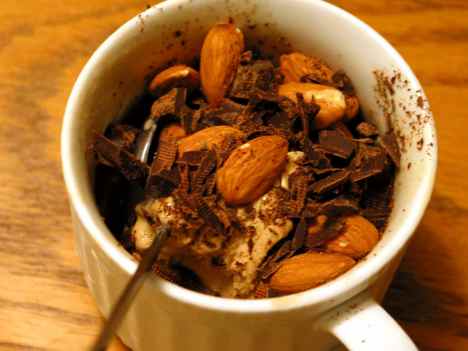
I’ve been potschkying around with store bought ice cream pretty much ever since I was old enough to buy it for myself–adding extra cocoa powder and some mint or almond extract to chocolate, leftover coffee and cinnamon to vanilla, and on and on. Not many people do this, or do this enough, I’ve discovered. You have to wonder why not, because most non-super premium ice cream in America is a little, or a lot, bland.

In fact, the only flavor I never messed with was Ben & Jerry’s Coffee Heath Bar Crunch, which was perfect and sublime and needed no help ever, other than a spoon. My husband and I were such devotees that when we had a chance to spend a late-summer week in Vermont and New Hampshire one year (way back when, in our 20s), we made sure to stop in at the factory in Stowe for a tour. CHBC was such a supreme flavor that I only gave it up when Ben and Jerry both retired and a new CEO took over. Somehow, the next pint I bought tasted a little off–weak on coffee flavor or something, hmmm…I looked at the ingredients and sure enough, they’d changed the formula and flavorings. It had also been monoglycerided down, even though the fat count was still in the stratosphere. I’m sure my ice cream snobbery saved me from a decade of extra arterial damage, but I’ve been sullen and resentful ever since (or at least that’s the explanation this week).

So anyway–back to the prosaic purple ice cream. It needed something–tartness–to liven it up, and probably would have been better as a frozen yogurt. Come to think of it, would yogurt work? Naah. Messy. Plus refreezing time. Lemon? Maybe, maybe not–it might end up seeming too sweet. Then I found a lime in the fridge–from who knows how many weeks ago; it had already lost its green, but it was still fine inside. Sometimes where lemon’s pure acidity underscores the sweetness and makes it more apparent, lime’s aromatic edge undercuts it and makes the flavor seem fresher. Works for ginger ale, works for blueberry jam…

A squeeze, a stir–from lavender to…raspberry pink (what else?) and I have to say, a BIG improvement in flavor. Much more like actual black raspberry. That’s all it took? Why couldn’t they have done that at the ice cream factory? But they didn’t.

I have another reason for punching up my storebought ice creams, and it’s not just boredom or fidgetiness (though those are obviously tops).

A long-ago-and-far-away gelato-eating expedition in Florence (it didn’t start out that way, but it’s the fulltime occupation in the summer–even more of a medical necessity when you’re wandering outside all day as a tourist) taught me the difference between Italian and American standards for ice creams: Americans expect big portions and don’t really pay attention to the flavor. Bland and sweet is acceptable. Italians are happy enough with small 1/3 cup portions as long as the flavors are wild and adventurous and vivid. If you can taste it well with one of those tiny gelato spoons, a gram at a time, it’ll last you.

Makes you wonder whether the lack of flavor punch in American ice cream (and maybe our other food as well) is the reason we typically eat biggish portions at a sitting, or seek out seconds. If it doesn’t taste like much, you eat it without paying attention, and end up not feeling like you’ve really eaten it. Interesting and vivid flavor seems like a good idea for health and portion control as well as pleasure–if you’re going to have ice cream, after all, you may as well taste it. Otherwise you could just suck on ice cubes.

So–a few suggestions for upping the flavor of store bought ice creams.

Go for plain flavors as your base

Try to find ones that are relatively low in carb and fat for a half-cup serving. Low here means about 15 grams of carb per half-cup, and maybe 2-3 grams of saturated fat.

Not only don’t the dressed-up flavors with loads of mix-ins need (or take well to) further tinkering at home, they’re not always as high in quality. Dreyer’s (Edy’s on the east coast), seems to try to keep the nutrition stats consistent across the line–ice creams with lots of mix-ins and/or caramel-type ribbon swirl are a bit higher in carb, up to maybe 22 grams per serving.

To keep things consistently low, though, the components or the ice cream itself have to compensate–so Reese’s Cup-style peanut butter and chocolate chip swirl has iffy peanut butter and iffier quality chocolate chips (well, so do the real Reese’s ™–don’t know whether authenticity is such a good thing in this case), plus the ice cream’s a bit icy, maybe even a little stale-tasting on occasion. You’d get more intense flavor from vanilla bean ice cream with a few squares of good dark chocolate chopped in and some peanuts or a bit of peanuts-only peanut butter.

Make flavors you can’t buy

Sometimes these are ones you grew up with, like Rum Raisin–I think only Haagen Daz still makes this. People got kind of prissy about feeding ice cream with rum flavoring in it to kids, I guess. Or raisins got too expensive.  So did pistachios, except in super premium ice creams.

No one makes ginger, or lemon-ginger, even though I’m pretty sure those were two of Bon Appétit‘s and Gourmet‘s big summer standbys for at least a decade (and I know because I once bought a decade’s worth of each magazine from my friends-of-the-library auxiliary at about a dime an issue. The seasons change, the same 10 recipes repeat…)

And no one makes Sabra (chocolate orange), or fig, or liquorice, or marzipan, or rose. Or pear. Or chocolate hazelnut with sour cherries.  Or even just plain bittersweet chocolate. There are home recipes for all of Continue reading

Cannoli that won’t bust the carb count

Cannoli paste my way

This is a story about frugality–of the serendipitous sort.

The other week my daughter was with me at the supermarket (sometimes a mistake, sometimes an inspiration), and asked if we could get a packet of sugar cones to go with a drum of Dreyer’s ice cream. This was a trade-off for forfeiting Baskin-Robbins, whose ice cream is consistently higher in fat and carb than Dreyer’s or Breyer’s.

(Shakespearean aside #1) The B-R nutrition brochure is worth a pretty serious look for calories, fat, carbs, the total picture. You can definitely eat a days’ worth of calories–upward of 1500–in a single sitting if you order one of the fancier items. Skip the soft serve and stick to the single cone, for sure.

Not that we never stop in for a cone, but we never knew what the sugar cones were worth carbwise so Abby was limited to a paper cup or a cake cone. And of course for the price of two modest single cones at B-R, you could buy a 1.5 qt. carton at the store and scoop about 10 servings out of it yourself.

In the supermarket, the box with the sugar cones says 10 grams for Keebler and 11 grams for the Ralph’s (Kroger-affiliated) store brand, which is on sale, and about 50 calories per cone. The sugar cones have surprisingly simple ingredient lists for a processed food–wheat, brown sugar, vegetable oil, oat fiber (Ralph’s version) and a bit of salt (though not much–20 mg/cone) and maybe a little caramel coloring and malt flavoring.

But of course the ice cream tends to run out a bit sooner than the cones. And then what? Here’s where the “frugality” comes into it again (okay, I’m sort of rolling my eyes too, but still.)

I had about half a quart of ricotta left over from manicotti (same idea as for the microwaved stuffed shells, only using a plastic baggie with a corner torn out to pipe the spinach and cheese filling into both sides of the parcooked pasta tubes–worked pretty well actually). And ricotta, even on sale, is kind of expensive if you just let half of it sit in the fridge until it goes bad because there isn’t quite enough for another batch of pasta and you don’t know what else to do with it.

So anyway, the availability of leftover ricotta (I’m too cheap to do it with a brand new carton) plus the leftover cones added up in my head the other night to “Hey! Impromptu cannoli! Right now! And I don’t even have to go back to the store!”

I should probably explain.

The first cannoli I ever had were also the best. The parents of one of my sister’s high school friends ran a tiny Italian deli and specialty shop way out near the airport of our town, and what can I say–it was worth the schlep. In addition to imported pastas and olives and pickled peppers and salami and so on, you could buy a tub of their own fresh cannoli paste and a box of carefully packed pastry tubes so you could assemble the cannoli yourself at home and not risk sogginess or breakage on the way.

The D’Elicios’ cannoli paste contained ricotta, of course, sugar, and something else that I finally pinned down as lemon (and possibly orange) rind. And it was heaven on a spoon. So good I asked my mom to bring a box of their cannoli instead of a birthday cake to my college dorm  for my 18th birthday.

How was I to know that would be the last of the really great cannoli for decades? Continue reading

Big Food mobilizes against child marketing guidelines

This Washington Post article isn’t the absolute clearest–looks like it was written as a last-minute rush piece, actually, but it’s worth getting to the end.

The basic idea is that in 2009 Congress demanded the CDC, FDA, USDA and FTC come up with a coherent set of voluntary nutrition guidelines for what the food industry can market directly to kids.

I’m not a big fan of voluntary nutrition or safety compliance guidelines for the food industry–mostly because industry players generally feel free to ignore or toy with them and then claim some kind of advertising advantage they haven’t earned. Voluntary guidelines also come with all kinds of soft landings and easy outs, and the proposed guidelines here are no great exception.

But in any case, now the four agencies have done it, and the food and restaurant industry is doing the predictable–throwing big lobbying bucks into a disinformation campaign-slash-tantrum.

How big? The campaign manager won’t say, but the preliminary guidelines report that US food industry marketing to kids 2-17 years old is currently something over $1 billion in three key categories (breakfast foods, restaurant chain food, and snacks).

So it probably won’t surprise you that companies like General Mills, Kellogg, and Pepsico have teamed up with ad-carrying media partners like Viacom (read: Nickelodeon) and Time Warner to try and quash the voluntary industry guidelines. Figure on the campaign to be spending in the mid-millions or more. They’d rather “salt and burn” instead of “cut the salt and learn.” And what a waste.

What will probably surprise you is just who this coalition–calling itself the “Sensible Food Policy Coalition”–?!!–hired to handle the campaign: Anita Dunn, a former Obama communications director whose husband, Robert Bauer, is  still White House counsel. Not a really lovely mashup, there.

Why she’s taking on the food industry campaign so they can keep protecting their ability to market garbage to the young and vulnerable is one question. Why the FDA and FTC, which have the power to decide what nutritional and medical claims, among other criteria, are valid and can be used in advertisements to adults, let alone kids and teens, are bothering with a voluntary measure instead of doing a proposed regulation to limit such marketing to youth is another.

In both cases, the answer is almost certainly money. The food and media industries have it, the federal agencies don’t.

[As it turns out, the FDA and FTC don’t have power to restrict Big Fo0d’s marketing to the under-17 crowd after all. They lost that specific ability in 1981–start of the Reagan administration… Reagan’s “ketchup is a vegetable” declaration was the beginning for drastically lowered nutritional standards and branded fast food concession contracts for public school lunches.]

So the right question under these circumstances is, where do you want to put YOUR money? How about this, if the federal agencies can’t get a decent result and the lobbies are buying off everyone else:

Boycott the Boxes. Hit ’em where it hurts.

Box 1–TV: If you have kids, limit their access to TV, and teach them to turn off the sound during the ads. Do it yourself. Treat the ads like the silly nuisance they are from the minute your kids are old enough to watch. Tell your kids the truth: most of the products advertised on kids’ shows are too shoddy–and overpriced–to market to grownups. The companies make them bright and loud and cheesy because they think kids can be fooled easier (your kids should be beautifully insulted at that if they’re about six or seven years old).  Go with PBS and videos you approve rather than commercial TV as much as you can.

Box 2–Packaged stuff parading as food: Skip almost everything that comes in a cardboard box or a plastic overwrap, or in a can. You can do this. You’ll save an awful lot of money by buying store brands only and cutting out the most pernicious items–sugared and high-salt packaged breakfast cereals, bags of starchy snack extras, and sodas, at least on an everyday basis. Save sodas and chips for parties, not for school lunch or part of dinner.

You’d do even better to go with fresh vegetables and whole fruits for most snacks and make a good habit for relatively cheap. They taste pretty good, don’t take long to fix, last at least a week in the fridge, and your kids won’t get sick overeating them.

There’s a reason the Pringle’s slogan is the very smug  “Betcha can’t eat just one.” No one says that about carrots or broccoli, or even about apples. Ever eaten too many of those in one sitting? Didn’t think so. Vegetables and whole fruits keep you satisfied longer, don’t hyperstimulate your appetite for snacks, and they don’t put on pounds that take a long time to work back off. They don’t promote cavities, either. Even nonsweet junk foods do–all that processed starchy stuff sticks to your molars like glue.