
• Enter your email address to subscribe to this blog and receive notifications of new posts by email.

    Join 241 other subscribers
  • Noshing on

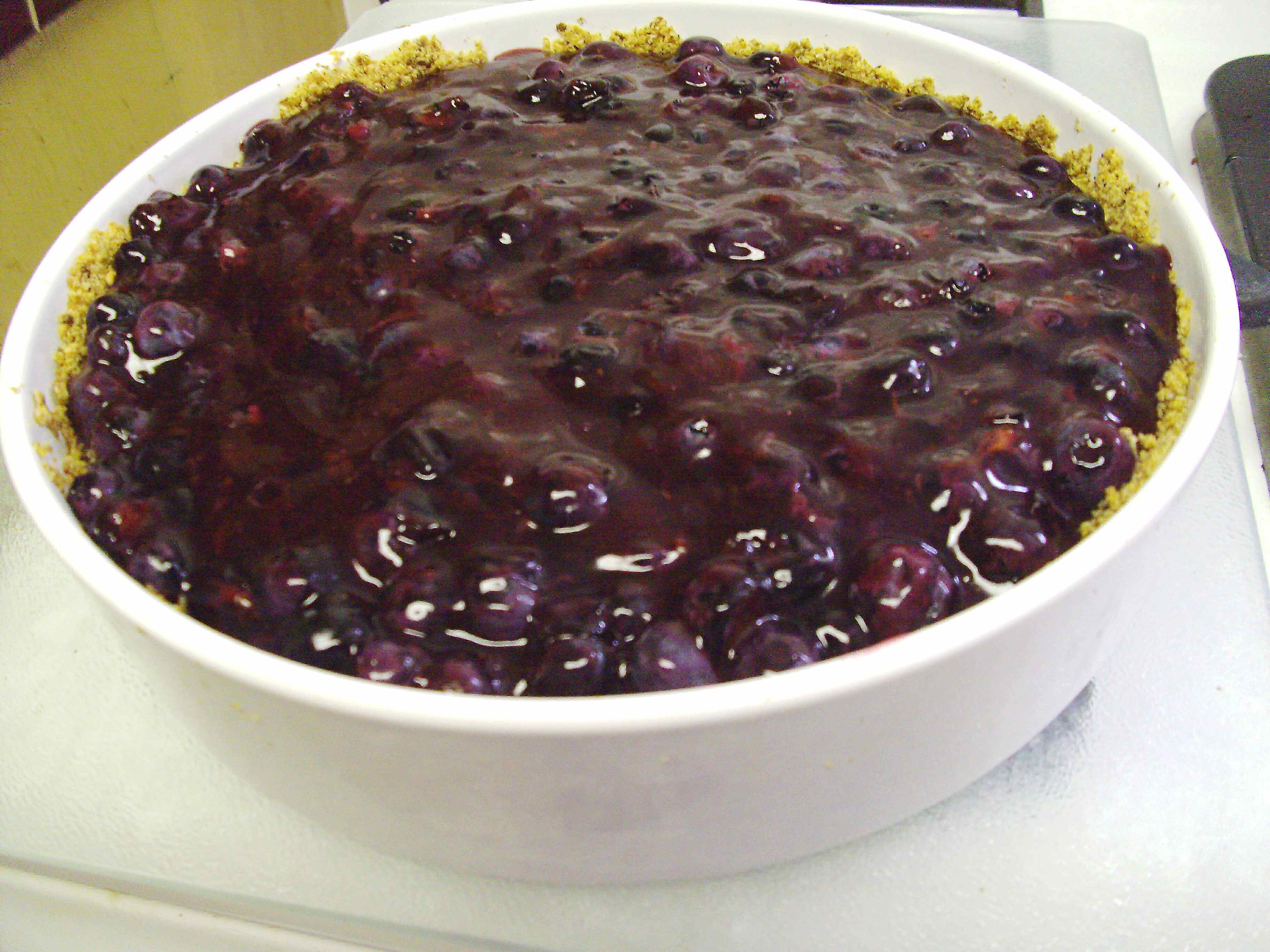
    raw blueberry pie with microwaveable filling and graham cracker crust

    This mostly-raw blueberry pie is a snap to make and very versatile--the filling microwaves in a few minutes, and you don't even have to bake the zippy gingered graham cracker crust--perfect for a hot Fourth of July and all summer long.

  • Recent Posts

  • Contents

  • Archives

  • Now Reading

  • See also my Book Reviews

  • Copyright 2008-2024Slow Food Fast. All writing and images on this blog unless otherwise attributed or set in quotes are the sole property of Slow Food Fast. Please contact DebbieN via the comments form for permissions before reprinting or reproducing any of the material on this blog.

  • ADS AND AFFILIATE LINKS

  • I may post affiliate links to books and movies that I personally review and recommend. Currently I favor Alibris and Vroman's, our terrific and venerable (now past the century mark!) independent bookstore in Pasadena. Or go to your local library--and make sure to support them with actual donations, not just overdue fines (ahem!), because your state probably has cut their budget and hours. Again.

  • In keeping with the disclaimer below, I DO NOT endorse, profit from, or recommend any medications, health treatments, commercial diet plans, supplements or any other such products.

  • DISCLAIMER

  • SlowFoodFast sometimes addresses general public health topics related to nutrition, heart disease, blood pressure, and diabetes. Because this is a blog with a personal point of view, my health and food politics entries often include my opinions on the trends I see, and I try to be as blatant as possible about that. None of these articles should be construed as specific medical advice for an individual case. I do try to keep to findings from well-vetted research sources and large, well-controlled studies, and I try not to sensationalize the science (though if they actually come up with a real cure for Type I diabetes in the next couple of years, I'm gonna be dancing in the streets with a hat that would put Carmen Miranda to shame. Consider yourself warned).

Superfoods and Magic Beans

“Top 10 (or 7, or 5, or whatever) Superfoods” lists seem to be popping up on the covers of all the in magazines this month. If I didn’t get a headache every time I tried it, I’d be rolling my eyes.

The classic bloated diet article with the even more classic bloated promise of magic beanhood is nothing new, I realize. But “superfoods”…

The premise of calling something a superfood is that if you eat this one special food, or at least shop your way down the list of 5, or 10, or whatever’s in the article, you’ll be so much healthier than someone who eats a regular food. Right?

Usually the items on these lists of so-called superfoods turn out to be expensive exotics like dried acai berries and pomegranate juice. Both of which just happen to have heavyhitter funding and marketing efforts behind branded packaged versions of them, and the companies that have started branding and marketing them have both recently come under FDA scrutiny for overinflated and unsubstantiated health claims.

Of course you don’t have to go branded to run into wide-eyed, breathless claims about supposed superfoods. More mundane choices like the sunflower seeds, green peas and garlic touted in this LA Times food section article are also now being highlighted as the new great green hope for America.

But not for the reasons that make the most sense–that these foods are relatively unprocessed vegetables, fruits, whole grains, nuts and seeds (occasionally someone remembers to add something from the beans and pulses category too). All of this vegetation has almost disappeared from the current mostly-processed, mostly restaurant diet of the American public. The general categories now touted as superfoods contain protein, fiber, vitamins and minerals. They’re wholesome and varied if you buy them fresh (or dried) and cook them yourself. Some of them are green (and they’re supposed to be!)

That’s in stark contrast to the now-standard and really dreary burger, ketchup, fries and soda that are all made out of the same three or four overused industrial ingredients (wheat, soy, corn and salt, with a little beef scrap or so thrown in for the burger, some leftover tomato paste for the ketchup, and much less potato than you’d think in the fries). I understand how something that’s actually recognizably plant-based would seem exotic and ultrahealthy in comparison. I do. Because frankly, you could take your soy-based green crayons and color a piece of all-natural bamboo-fiber cardboard and eat that and it would be healthier than the fast food special.

But does that mean vegetables, fruits, whole grains and nuts and seeds are suddenly superfoods?

What are superfoods supposed to be, exactly? Look at the captions for what’s so great about each featured food Continue reading

Microwave Tricks: Brown Rice Resolution

Resolution #15 from my last post was to figure out a decent “quick” method for cooking tougher grains like brown rice and pearl barley. These grains still have the skin on, which forms a barrier to quick absorption, so they take 45-50 minutes to cook on the stovetop, which is simply too much for me to babysit. Apparently I’m not alone on this–I see vacuum-packed packets of precooked brown rice at the Trader Joe’s (and similar bowls in the freezer both there and at Whole Foods).

To say the least, this is not the right way to go if you’re earnest about spending less on staples while going a little bit greener in the new year (think of all the freezer energy cost and coolant leaks, the cooking energy expended, the plastic packaging, etc.)

According to Nina Shen Rastogi of Slate.com, microwaving can be the greener cooking option as long as you don’t leave your microwave plugged in when you’re not using it–apparently the little digital clock display thingy takes up a surprising amount of energy (and do you really need a microwave to tell you the time? Hang a battery-operated clock in view of the kitchen and you’ve got it…)

So microwaving should be the way to go with brown rice, as it is for pasta (plain or whole-grain) and white rice. But unfortunately, microwaving brown rice, with its tough outer skin, really doesn’t work well at all if you just dump the raw rice into some water and try to nuke it straight up, the way you can with these quicker-soaking grains. Certainly not in 3-5 minutes of cooking time. Not without babysitting and worrying about boilover. Feh.

And it’s never a good idea to nuke something starchy more than a few minutes at a time, at least not without a lot of water in it–you could end up with plastic (think about what happens to bagels if you microwave them for more than 15-20 seconds).

But you know I don’t like to give up once I decide something should work. So–I thought about something I posted a couple of years ago on nuking oatmeal successfully and decided to try the presoak idea that had worked for steelcut oats. Only who wants to presoak rice overnight if they don’t have to? Steelcut oats–you know you’re going to make them for the next morning’s brunch (only do it on a weekend). Stick ’em in a bowl with water and a lid, let it sit overnight, nuke a few minutes in the morning and you’ve got it. It’s perfect.

Rice? I never know what I’m making for supper until about an hour before.

But a hot presoak worked pretty well to get things started, and it only took about 15 minutes (because I was impatient). The whole thing still took about an hour–well, maybe less in the strict sense, I wasn’t paying attention Continue reading

Cooking (and other important) Resolutions

(Of course)–I couldn’t leave 2010 on such a bitter note as the one in my last post, even though I think bitterness is a good, energizing, creative thing. Or as the great Eric Burdon once–or actually, quite any number of times–told an interviewer about his ordeal with getting paid for House of the Rising Sun, “I’m not bi’eh. I’m bi’ehsweet.” I have a thing for Burdon’s early stuff–voice like a hammer, great blues timing, pure nerve with a sense of humor, and clearly, a good appetite.

So I wish you all a Happy New Year, good eating, good cooking, good reading and good company, and thank everyone who’s visited and especially those who have taken the time to subscribe to Slow Food Fast. For myself, I’ve come up with about 11 new resolutions for 2011 (but as usual for me, it may will definitely run longer, since I’m terrible about following directions, even my own, whether cooking or resolving):

1. Learn the Dirty Dozen a little better and plan the weekly budget (see #3) to include buying these vegetables and fruits organic only. (I’ve got celery, potatoes, pears and strawberries down so far, but I know there’s gotta be at least 8 more, right?) Find places to buy them cheaper than Whole Foods.

1a. Learn to garden? Umm. Learn to schnorr backyard fruit from friends? More likely, ain’t it? Ok, ok, make more friends, schnorr backyard fruit and veg. And rosemary, which some people grow as a hedge here in Pasadena. Envy, envy, envy–turn it to a good purpose and offer to take some of the excess off their hands.

1b. Exercise basic civility towards other people’s food choices–your eat local is my eat kosher is his eat organic is her eat affordably. Everyone’s got different priorities, and you don’t know who is eating a particular way because they feel like it and who really needs to so they don’t end up in the hospital. Food shouldn’t be too huge a source of personal arguments. I mean, really, people, save some energy for the real issue–dark or milk chocolate?

2. Get the weekly food budget back down under $100 a week (holidays take it outta me). Make a list and (I cannot believe I’m saying this) check it twice. With a calculator. Include toilet paper and napkins and so on.

3. Use all the vegetables I buy sometime in the same week I buy them. This goes triple for any herbs. No brown broccoli (not usually a big problem in my house, actually) or rubbery carrots (didn’t mean to confess that). And NO cilantro or fresh dill left until it turns slimy while I dither over what to use it in… when in doubt, make soup (see #4), or with herbs, wash and freeze in baggies.

4. Make one big batch of soup each week (see #3 if necessary for motivation) and eat it.

5. Make one pound of beans each week and eat it in fabulously creative ways, or at least edible ones. Eat them as a substitute for, not addition to, fish or meat at least one dinner per week.

6. I’m stumped. Maybe I should make each of the previous resolutions count twice? Naaah. Put on some blues and think again.

The real #6: Eat vegetables at breakfast, Israeli-style.

7. Wash fewer dishes–make my kid do them! (oh, yeah, I’m rollin’ now!)

8. Reduce my dependence on oil–starting by using cocoa powder instead of a full-cocoa-butter chocolate fix…damn those holiday gift boxes. Hate See’s, hate it with a passion (unfortunately, not really)…

9. In the same vein–cut down to half-caf this week, decaf in two or three weeks. Start today. Too much hoppin’ around after midnight (or maybe just too much listening to Eric Burdon on YouTube–wait. Is there such a thing as too much, at least of his early stuff?).

10. Shop my neighborhood greengrocer’s first instead of the big box market. Buy and try a small amount of one new Silk Road ingredient each month (red pepper paste? knoug resin? green almonds? sea buckthorn nectar?)

11. Get a few new implements as long as they have a real multifarious use and a small kitchen footprint: stick blender? I hear it calling my name. Pasta machine? not so much–the box instructions say not to immerse in water. How are you supposed to wash it then? (see #7)

12. Make bread at home again.

13. Revamp a classic every so often, preferably with the intelligent use of a microwave to help speed things up where it will actually help. Like choux paste (at least for heating the liquid ingredients before adding the flour and eggs–that’s actually been done before, and not by me) or pretty-good fake-smoked whitefish salad (which is mine, see the end of this post). Continue reading

Soupe à l’oignon gratinée (or not)

French onion soup without the gloppy gratin

Sometimes it pays to think out the recipes you read before you try them. For example…

I love and miss French onion soup from my pre-kosher days (that would be up to about age 19, long, long ago…) Can’t be helped, though–if you keep kosher, beef stock does not combine with Gruyère. And I’ve never actually tried making it at home before, because, if you go by a traditional, official kind of recipe like the one published in the LA Times below, it’s a 3-hour ordeal.

RECIPE: Soupe à l’oignon gratinée – Los Angeles Times.

Total time: 3 hours  Servings: 8  Note: Adapted from Comme Ca.

  • 8 large yellow onions, halved and sliced lengthwise into 1/4 -inch strips
  • 1/4 cup unsalted butter
  • Salt
  • 2 2/3 cups water, divided
  • 2/3 cup dry Sherry
  • 5 cups chicken broth (with as little sodium as possible)
  • 2 2/3 cups beef broth
  • 8 sprigs fresh thyme and one bay leaf, tied together
  • Fresh ground black pepper
  • 1 loaf French bread
  • 1 pound Gruyère, grated

Pretty onerous just on the ingredients (lot of salt in them thar vacuumpaks of stock), not to mention the bread. The Swiss cheese, oddly enough, is a lower-salt cheese than most, about 120-150 mg sodium per ounce as compared with, well, anything else at 180-210. It makes up for the lack of salt with a huge OD of saturated fat–and 2 ounces per person’s got to be a lot, really, just for melting on top of soup. It would be another matter if this were a legitimate fondue, or a sumptuous grilled cheese on really good toasted pain levain, and you were actually going to eat it all, but if I recall correctly, you aren’t.

Because I never had French onion soup at home, I never had to face the task of scrubbing baked-on cheese off the rims of the bowls afterward. Maybe 1/3 of what was sprinkled on ended up stuck like Swiss barnacles to the bowl, which seems like a waste, especially if you shell out for real Gruyère.  The rest turned into goop that sank to the bottom of the bowl and stretched up for yards on the spoon only to stick to the front of your teeth. Or blouse.

Plus at home there’s all the rooting around in the cabinets hoping your soup bowls are the kind that can survive the broiler and that your oven mitts (and guests) can Survive The Gruyère.

But the real cruncher here is time.

The LA Times instructions don’t even include the time it takes to sliver 8 very large onions, but you should, because it’s not trivial: 20-30 minutes, plus crying time. Heat the oven to 400 degrees (15-20 min, they also forgot this bit, but maybe while you’re crying over the onions). Stew onions with butter and 1/4 t salt in lidded casserole in the oven until the onions are softened and a light golden-brown, about 1.5 hrs, during which you’re supposed to stir every 15 minutes (!) Take the casserole out and cook further on the stove top until the onions are a deep golden-brown and just begin to stick to the bottom of the pot to form a crust (10 min? 15? 20? more?–from the experience below, I’d say at least 20, maybe even 30). Add half of the water and cook until the water has evaporated, about 8 minutes (so specific?). Add the sherry and keep stirring until it has evaporated, 3 to 5 minutes. Stir in the remaining water, broth and the thyme bundle, bring to simmer (5-10 min) and simmer 40 minutes (why 40? who knows?). Slice and toast the bread. Fill 8 oven-proof soup bowls, lay the toasts on top of the soup, sprinkle the grated Gruyère evenly over the tops and place the bowls under the broiler just until the cheese is bubbling and begins to brown in places (5 minutes?). Serve immediately.

TOTAL TIME: At least 3 hours, probably more like 3 1/2.

KLUTZ FACTOR: HIGH–lot of hot transfers of heavy casserole dish, finding and broiling ovenproof soup bowls, transferring to the table without spilling…not to mention serving “immediately”.

Then there’s…(you knew this was coming)

Nutrition per serving: 490 cal; 27 g protein; 36 g carb; 3 g fiber; 26 g fat (15 g sat); 78 mg. cholesterol; 808 mg. sodium.

Wow! Am I wrong in thinking that almost no soup should be this much of a labor of love, not to mention love handles? For this much time, fat and salt, I’d demand at LEAST grilled marinated lamb. Or a good runny camembert, a perfectly ripe pear, some excellent sourdough toast and a half-glass of something complex and interesting in the way of wine.

Maybe it’s as delicious as promised. But all those hours, all that stirring, not to mention all that fat and sodium and cholesterol, just for a bowl of onion soup and a slice of toast with melted cheese? Is it any wonder Lipton’s is popular?

Still…Can we do better with the onion soup itself? Maybe as in, vegetarian but still opulent, and furthermore without the heavy-duty time and calorie burden? Let’s try, anyway.

The first objections I have are eight huge onions and 8-10 cups of salted broth. Do I want to make anywhere near that much onion soup? Do I have that many takers in my house? Unfortunately not. One huge onion just for me, then. Maybe my husband and daughter, but only if it’s obviously fabulous. In which case, I won’t really want to share with them.

The main thing here is getting the flavor out of the onions–you want to caramelize them thoroughly and evenly without breaking down their aromaticity too badly. But I personally think baking them slowly in a big oven for an hour and a half just to start to do that is insane. Even if we’re talking about eight big onions.

My first attempt at shortening this recipe did not go badly, exactly, but it didn’t get me soupe à l’oignon either. Continue reading

Bok Choy Broth

Bok choy-based hot and sour soup

Bok choy-based hot and sour

Usually when I get home from traveling I’m in a state where I don’t really want to cook, but I want real food, and I’m sick of the bread-and-cheese-sticks-and-carrots-and-nuts we bring on the plane in self-defense.  The other thing I really want right away is vegetabalia–restaurants, particularly hotel restaurants, seem reluctant to put any on the plate. Microwaved fresh vegetable soup is an easy and satisfying answer–15 minutes and you don’t have to go shopping for anything fancy.

It’s also the answer when it’s cold and rainy and everyone in the house has been down with the crud (aka “Losangelitis”). Today, I wanted something with greens in it like minestrone, but tasting more like hot and sour soup, to cut through the fog that had condensed in my head, and I did NOT want to work hard (also because of said mental/temporal fog). I had the basics for a vegetable broth–an onion, some celery stalks, a handful or so of “baby cut” carrots  more usually reserved for my daughter’s school lunches. A fat clove of garlic. Half a bunch of bok choy that was still in decent shape from two days ago when I microwaved it as a side to stretch leftover Chinese takeout. And in the cupboard, miraculously, I still had three dried shiitake mushrooms in a plastic bag.

Bok choy is one of the Cheap Vegetables ™–usually below a dollar a pound, even in big-chain supermarkets. Not baby bok choy, which is cute and pretty and mild; stores charge three times as much for that. I like the full-grown, poetically dark-leaved, white-stalked bok choy, the kind sumi-e masters choose for their still lives.

Sometimes for a vegetable at dinner (as mentioned above) I just nuke a cleaned and trimmed head of bok choy whole for a couple of minutes in a longish lidded container with a little water in the bottom, cut it up and serve it as-is or drizzled with a little soy sauce and sesame oil. You don’t need anything else to dress it up (and of course, I have pretty low standards for presentation). Its fresh, radishy flavor mellows into something richer and more aromatic as it cooks down and produces its pale-green pot liquor. You don’t want to waste that; it’s a perfect addition to a vegetarian consommé, especially when you’re going light on salt or calories.

I sometimes even skip the onion-carrot-celery-garlic vegetable stock base and make a really simple broth by just microwaving the bok choy all by itself with water to cover–especially when my head and stomach aren’t cooperating with me or with anything else. But that’s a little on the purist side of things, when I’m feeling so miserable all I want is something hot, clean-tasting and fresh with no distractions. For better times, I want a real soup with a bit more richness and variety, and bok choy definitely plays well with others.

Back to the hot-and-sour scenario, for example:

Shiitake mushrooms are expensive fresh at your local Whole Foods, about $13/lb. But a package of 15 or so dried caps sells for $3.50 in the Asian or International Foods section of your local supermarket, and the dried mushrooms are so much better for infusing a broth with pungent richness. They’re easiest to soak up in a microwave–a few minutes rather than half an hour.

Between those and the carrot-onion-celery aromatics, plus of course garlic, you’re set. Especially if you have a little container of z’khug (hot pepper-garlic-cilantro paste) in the freezer and can saw off a chunk to spice up your soup. Toasted sesame oil, vinegar, and low-sodium soy sauce–all optional. Ginger? You could. Ginseng? According to a friend from a Cantonese family, only if your mother insists. Continue reading

Speeding up Eggplant Parmigiana

On the last night of Hanukkah, I fried some more–but only a little this time.

When my daughter and I went vegetable shopping at my favorite corner grocery that day after school, we found a bin of eggplants on sale for 25 cents apiece. And they were pretty good, so I bought four of the firmest ones and we lugged them home.

The moment I spied the eggplants at the store, I was already thinking about eggplant parmigiana, or at least about involtini (cheese-filled eggplant rolls with tomato sauce), which comes to much the same thing. It’s mostly a geometrical difference at that point–rolled eggplant versus flat, crosswise rounds versus loopy lengthwise slices.

I’ve loved eggplant parmigiana since I was a kid and my parents would take us to a local Italian diner run by a friend of my mother’s. A different Italian diner, this one during my student days, served it either screamingly hot in a fresh-from-the-oven baking dish with so much incendiary mozzarella on top that you were guaranteed to scorch the roof of your mouth, or else sandwiched into a grinder roll with the best tomato sauce in the universe. I loved them both.

But there’s no denying the fact: the traditional parmigiana is one heavy kind of dinner. It’s designed to remind you (an hour or so after eating it, or perhaps again in the middle of the night) that suffering is all around us and wants us to share, so be humble and don’t forget the Tums.

Why is it so heavy? The eggplant, the tomato sauce, the garlic, even the cheese filling–all fine. I decided the main problems with eggplant parmigiana come down to two things: 1) frying the eggplant slices to cook them, because that takes a lot of time and a lot of oil, and 2) breading the eggplant with eggs and flour or breadcrumbs.

In the kibbutz kitchen where I worked after college, I did more than my share of slicing and breading eggplants and dipping them in eggs and redredging and frying, the whole works, enough for several hundred people (the other several hundred were smart enough not to eat them unless they happened to be hanging around the kitchen side room where the fryer was going and could snag a slice fresh off the cooling rack).

It’s more than ok to eat breaded eggplant hot off the press, as it were. Almost essential, in fact. But let the slices wait around at all, layer them with cheese and tomato sauce and bake for half an hour or so under foil, and what started out as fried eggplant, deliciously crunchy with a creamy texture inside, ends up shriveled and spongy or stringy between no-longer-crisp layers of bready gunk, and more than that, the frying oil is starting to make itself known again. Continue reading

Cranberry Sauce Without the Fuss

Cranberry sauce in the microwaveI love homemade cranberry sauce, and not just at Thanksgiving. It makes a pretty good jam for breakfast and (should the need arise) a pretty good tisane for a congested sore throat if you heat a dollop in a mug of water and sip it hot, berries and all. Despite the fact that it’s tart, which you’d think would make your throat hurt more, the cranberries actually contain something soothing that will give you at least temporary relief when you’re in the throes of Los Angelitis and the Tylenol hasn’t kicked in yet (you can trust my expertise on this one, unfortunately). But hopefully you won’t need it for anything medicinal this winter and can just enjoy fresh-made cranberry sauce for its own sake.

A lot of people are convinced that just opening a can is the easiest and least scary way to go. They must have read the package directions and decided it was too much work to make the syrup first (very intimidating-sounding) or that adding the berries and letting them pop was likely to spatter the stove until it looks like a magenta Dalmatian.

But really, you can just microwave cranberry sauce and it works fine. Throw all the ingredients (berries, sugar, water) into a 3-cup pyrex bowl, slap a lid on partway, and nuke it for 5 minutes. That’s it. No preboiling. Don’t even bother mixing it. In five minutes, you’ve got standard fresh-made cranberry sauce in a bowl that can go straight to the fridge once it’s cool. And no saucepan or stove top to wash before your guests arrive.

You can dress it up with some orange peel or juice, or a pinch of clove and cinnamon. You could add a chopped, peeled granny smith apple or a well-scrubbed chopped organic seedless orange with the peel to the berries for cooking, or else stir in a spoonful of Cointreau or Triple Sec after the jam cools, and you’d have something a little more sophisticated, but the basic recipe is worth having as a first run.

And most helpfully, if you’re looking for something less sugared, you can cut the typical cup of sugar per 12-oz bag of cranberries in half and it’ll still gel decently. Or you can do it with no sugar at all, let all the berries pop and thicken up just in water, and sweeten it with your preferred artifice after it’s cooled. It won’t be completely carb-free per tablespoon or so even with no added sugar, but it’ll be pretty low.

Approximate carb counts (total and per tablespoon, counting 1 T as ~1/16th c.):

Cranberry-only version without apple or orange

  • With 1 cup of sugar: 242 g carb per 2.5-3 c. cranberry sauce  or 5-6 g/T.
  • With 1/2 c. sugar: 142 g carb/recipe or ~3 g/T.
  • Artificially sweetened only: 42 g carb/recipe or ~1 g/T.

Cranberry sauce with apple or orange

With a good-sized apple or orange chopped in, figure 25 extra grams of carb per recipe or 0.5 gram extra carb per tablespoon.

Any way you go with it, though, homemade cranberry sauce has a good deal less carb per spoonful than other kinds of commercial jams, and probably a good deal less than the stuff in a can. It’s a lot better tasting too.

Microwave Cranberry Sauce

  • 12-oz package fresh cranberries, washed well
  • 1 c. water
  • 1 c. sugar (standard Thanksgiving back-of-package recipe), 1/2 c. sugar (my version this week, which was plenty sweet enough for me), OR no sugar during cooking but artificial sweetener added afterward to taste

optional additions: chopped peeled apple, finely chopped whole scrubbed organic orange, pinch or so of powdered cloves and/or cinnamon, a little grated orange or lemon peel, or a spoonful of orange liqueur or brandy

Put the cranberries, sugar if using, water, and apple or orange if using in a 3-cup pyrex bowl, cover loosely with a microwaveable lid so steam can escape but it won’t spatter, and microwave on HIGH 5 minutes. (If you’ve added an apple or orange, you might need an extra minute to account for the extra fruit.) Keep an eye on it toward the end, but it probably won’t boil over.

The mixture should already be thickening to a sauce/jam consistency (it’ll thicken more as it cools), and most of the berries should be popped. Stir well and microwave a minute or so more with a vented lid if you want it thicker. Let cool to room temperature and, if using artificial sweetener, sweeten to taste. Other flavorings–you could add grated lemon or orange peel (sparingly) or clove or cinnamon before cooking, but save any alcohol-based flavorings for after the jam has cooked so they don’t just evaporate in the microwave.

The Altered Cheese Project

I know. It sounds like the name of a really, really bad ’80s art rock tribute band. Not that there’s anything wrong with that. (Well, actually there is; I survived the ’80s by stubbornly ignoring everything from the Talking Heads onward, especially after I went to one of their concerts and heard the drummer. Maybe it was just a bad night, but I thought only David Byrne was allowed to be that far off.)

Altering cheese also sounds like the ultimate DIY, grow-your-own, cure-your-own, grind-your-own, fill-in-the-blank foodie optimism project. Weird, more work than it’s worth, but a good experiment to try once (if you’re under 30) so you’ll appreciate the effort that goes into it all when you go back to buying the professionally made version.

You might have noticed that all the nicer cheeses that get newspaper and food magazine reviews cost upwards of $15/lb and even though I’m a cheese freak, I’m just not in that league more than once a year, perhaps on my birthday. I deserve nicer cheese than I can get at the supermarket, I just know I do.

So let me just say it: I’m nobody’s idea of a dedicated cheesemaker or affineur. Mostly because I can’t stand heating and clabbering and then pressing large amounts of milk just to get the starting curd. I also hate scrubbing everything to death before and after, and the idea of cleaning scorched milk off the bottom of a soup pot is my idea of wrong. I’m not authentic. And I don’t wanna be. Even clabbering by microwave is probably not my idea of a good time when it comes to anything more complicated than paneer or yogurt–I’m not sure it wouldn’t destroy the cultures for hard cheeses.

Last year I got the idea to start with something already in cheese form–a lot less waste of both milk and time. After all, standard bland goat cheese is pretty inexpensive–an 11-oz log is about $5, about a quarter of the price of the goats’ milk you’d need to produce it (4-5 quarts at about $4 each). So are other fresh white cheeses. And you can get inexpensive domestic brie and bleu cheeses in supermarkets and–my preference–Trader Joe’s. They’re not bad, they’re just bland compared with the European originals. But they have the requisite blue or white mold cultures you need to add flavor to other cheeses, if the cultures will take.

Last year’s achievements may give you some idea of where I’m going with this:

  • Bucheron (fresh chèvre log, bit of white mold rind from inexpensive, bland Trader Joe’s Canadian brie, sealed in a sandwich baggie with some air for about 2 months in the fridge until it ripened)
  • Bleu de chèvre or Goatgonzola (another fresh chèvre log, this time with some crumbled cheap gorgonzola in the baggie, also about 1-2 months in the fridge)

and the accidental but serendipitous

  • Marbled Feta (the byproduct of storing above-mentioned source gorgonzola next to ziplock bag containing a block of feta cheese)

But ever since I posted these first attempts at turning boring American supermarket cheese into something more flavorful and interesting, I’ve been haunted by the thought that I’d only scratched the creative surface of cheap cheese transmogrification. So I’ve been cheating with cheese yet again.

A Fungus Among Us

Goat cheese and feta are both fairly wet fresh cheeses that take mold pretty well if you do it on purpose. What about drier standard American varieties–cheddar, for instance, or brick mozzarella? These are bound to be more difficult to persuade, but if you have a bit of patience, it might be worth a try.


Cheddar after aging with bleu cheese mold

Cheddar after aging with gorgonzola starter


Now I know, normally you look to cut any developing mold spots off your cheddar–it’s what we’ve all been taught for decades. But the blue and white mold cultures are key to developing flavor and–I shouldn’t even be spelling this out–when it comes to flavor, America’s standard supermarket cheeses are in dire need of help.

Four or five weeks ago, I put a small end piece of Bel Gioioso gorgonzola in a ziplock bag with a couple of ounces from a brick of ordinary Trader Joe’s extra-sharp yellow Wisconsin cheddar and some air and kept it in an isolated part of the fridge to see what would happen. I’d actually diced the cheddar into bite-sized pieces to increase the surface area and maybe decrease the culturing time if the bleu mold managed to take.

Nothing much seemed to have happened except that the cheese looked a bit drier. No visible culturing going on at the surface. The gorgonzola crumbs had shrunk and dried out as well. But I took a cube out and cut into it with a knife, and the flavor had stopped being tangy standard cheddar and was moving toward Morbier or Emmenthal–something nuttier and more subtle. All I could think was that the cheddar was aging without actually culturing and growing the blue mold. But because the mold is a penicillium strain, what there was of it might have inhibited unwanted bacterial intrusion and helped steer the cheese toward a more nicely controlled aging process.

And then again, a week later, the mold had taken on the remaining cheddar cubes, and the taste, once I cut into it, was like a mild cheddar heading toward blue. Still not very potent, but encouraging. Continue reading

Rising Expectations for Rosh Hashanah

Just a quick word to say L’Shanah Tova U’metuka! May you have a good and sweet New Year!

Here’s what my daughter and I baked the afternoon before the start of Rosh Hashanah. You can find the basic recipe here.

Crown challah for Rosh Hashanah

Crown challah for Rosh Hashanah

It’s the first time I’ve baked bread since my daughter became diabetic in February, but by now, six months along, we both feel like we have the approximate carb counts down well enough. I tend not to make my challah very sweet anyway, but this year I also left out the raisins, which are about a gram of carb each, to make things a little easier until we were sure we knew how to figure portions. It still came out pretty and tasted good.

Without raisins, we figure, a baked piece of challah is like most other bread, about 50% carb by weight in grams, and it seems to work. Using a simple ratio like this is a lot easier (when we’re home and have a scale handy, anyway) than worrying about exactly how many cups or grams of flour I put in the dough and calculating exact portion carbs–something I still tend to do for desserts and treat foods like berry scones since they’re so variable. Or as our endocrinologist said, “Everyone guesses wrong for birthday cake.” Next time, we’ll try it with raisins and see how it goes.

Challah birds

One thing we like to do with the extra dough–I make sure there is some–is to let my daughter make challah birds. Usually we shape these by making a small 6-inch rope of spare challah dough and tying it into an overhand knot. You can press a raisin into one of the ends for an eye, and the other end becomes the tail, which you can leave alone, stretch out a bit, or score with a knife tip for “feathers”. This year, my daughter went free-form so the rolls came out looking more like bollilos, but she liked them, which is the important thing.

Mine: A lot of people make spiral challahs for Rosh Hashanah with a single thick rope curled around in a turban shape. Tunisians and some other North African and Mizrahi Jews shape the top end into a hand shape. I like to braid my round challahs into a crown, though I admit they’re not always the most even at the joined end. They still seem to even out as they rise to the occasion.

Braided crown challah rising in the oven for Rosh Hashanah

Braided crown challah rising in the oven for Rosh Hashanah

Challah dough is so easy to put together (2 minutes by food processor, plus cleaning, or 5-7 minutes by hand and letting it rise right in the mixing bowl) that if you get the dough ready in the morning and have a couple of hours in the afternoon free for braiding (10-15 minutes unless you’re having too much fun), the second rise (40ish) and baking (another 40ish), it’s a lot of fun and less expensive than store-bought, and more individual too.

B’te’avon! (bon appétit!)

Why All the Mealy Peaches?

A lot of recent visitors to this site have come in desperate need of ways to redeem the disappointing peaches that are all you can find in the supermarkets these days. Even in peach season. The best I can tell them is that you can microwave the fruit with a little sugar and lemon juice to bring back some of the flavor, but of course it’ll be cooked, not raw. For a couple of suggestions on how to do it and what to use it for, see my original post.

I decided to take this topic up again because the idea of microwave peach jam as your only option is probably not what most of you were hoping for. Me either, frankly. I want great, aromatic, incredibly juicy height-of-season peaches, and I want to be able to eat them with no further ado. Cooking them runs a distant second as far as I’m concerned (though the jam and compote weren’t bad, to tell you the truth–and I just made another batch in about 5 minutes yesterday with some much better peaches from my father-in-law’s backyard trees).

But back to the more usual reality for a moment:

I really don’t think you can get a crummy, mealy unripenable peach to be juicy and fabulous and still raw by nuking it–though I might be wrong; I haven’t tried the lower-power settings or “defrost” yet, and I haven’t tried a shorter time than 3-5 minutes. If you’re determined to try one of these, at least take the poisonous pit out first–you really don’t want to risk infusing the flesh (the peach’s or your own!) with cyanide.

But all that begs the real question–

Why all these @#$*Q#R&*@F….etc. etc…. mealy peaches at the height of summer in the first place?

OK, I know that’s not a dignified way to phrase it, but it calms me down without actually specifying swear words for a situation that clearly deserves it. (And I do have some decent enough swear words beginning with “R” and “F”, but “Q” is going to be a challenge. I’ll have to work on it–get out the Scrabble Cussword Dictionary; it’s probably going to be something in Latin.)

The reason I get so upset about this is I remember looking forward to peaches every summer as a kid–you couldn’t get them in winter (for that matter, it’s debatable that what you get in winter now actually qualifies as peaches). They were so good, so reliably good when they did arrive that my mother once assured my younger brother, who was little enough at the time to worry about the fuzzy peel, that they tasted “like heaven”. She was right. You wouldn’t hear angels or anything insipid like that when you bit into one. You’d get a stream of juice down your chin and flavor so intense you wanted to take it somewhere private to eat so you wouldn’t embarrass yourself.

But things have changed. My post on microwaving unripenable peaches came out last summer, when I bought what turned out to be mealy peaches so many times in a row I started wondering if it was just me or were the peaches really a lot worse than I remembered in childhood. Maybe it was just a one-year blip, a bad crop, some kind of exception in the history of peach-harvesting.

Turns out, probably not. Crummy peaches are back in stock this year–judging from the visitors’ log, my experience, pretty much everyone’s. Even here in California where they do grow peaches.

So blithely scouting the web for answers I come up with two possibles:

Either all the good peaches are being shipped overseas for astronomical prices and our supermarkets are buying the good-looking but deceptive dregs and we’re allowing it by not returning the unacceptable goods and demanding refunds

OR

All the big supermarket chains are buying imported peaches from South America and the combination of long distance storage requirements and import quarantine protocols is ruining the peaches’ ability to ripen.

Of the two, I think the idea that all our domestic peach growers are sending their entire stock of acceptably good produce overseas is unlikely. We do export some fruit but the countries that were likeliest to buy from us ten years ago (Japan and Russia come to mind) have fallen on harder times and there’s more competition from sources that are geographically closer.

On the other hand, there’s a good bit of evidence to suggest the supermarket chains have been cheaping out by importing most of their summer fruit from Argentina and Chile even when it’s summer here–and winter down there. The stores have gotten used to importing all kinds of stone fruits from Chile when it’s winter here, and they may have decided to issue longer term contracts with their distributors. It’s probably cheaper than domestic fruit even after transportation and quarantine.

And that brings us to the main find: Continue reading