• Enter your email address to subscribe to this blog and receive notifications of new posts by email.

    Join 241 other subscribers
  • Noshing on

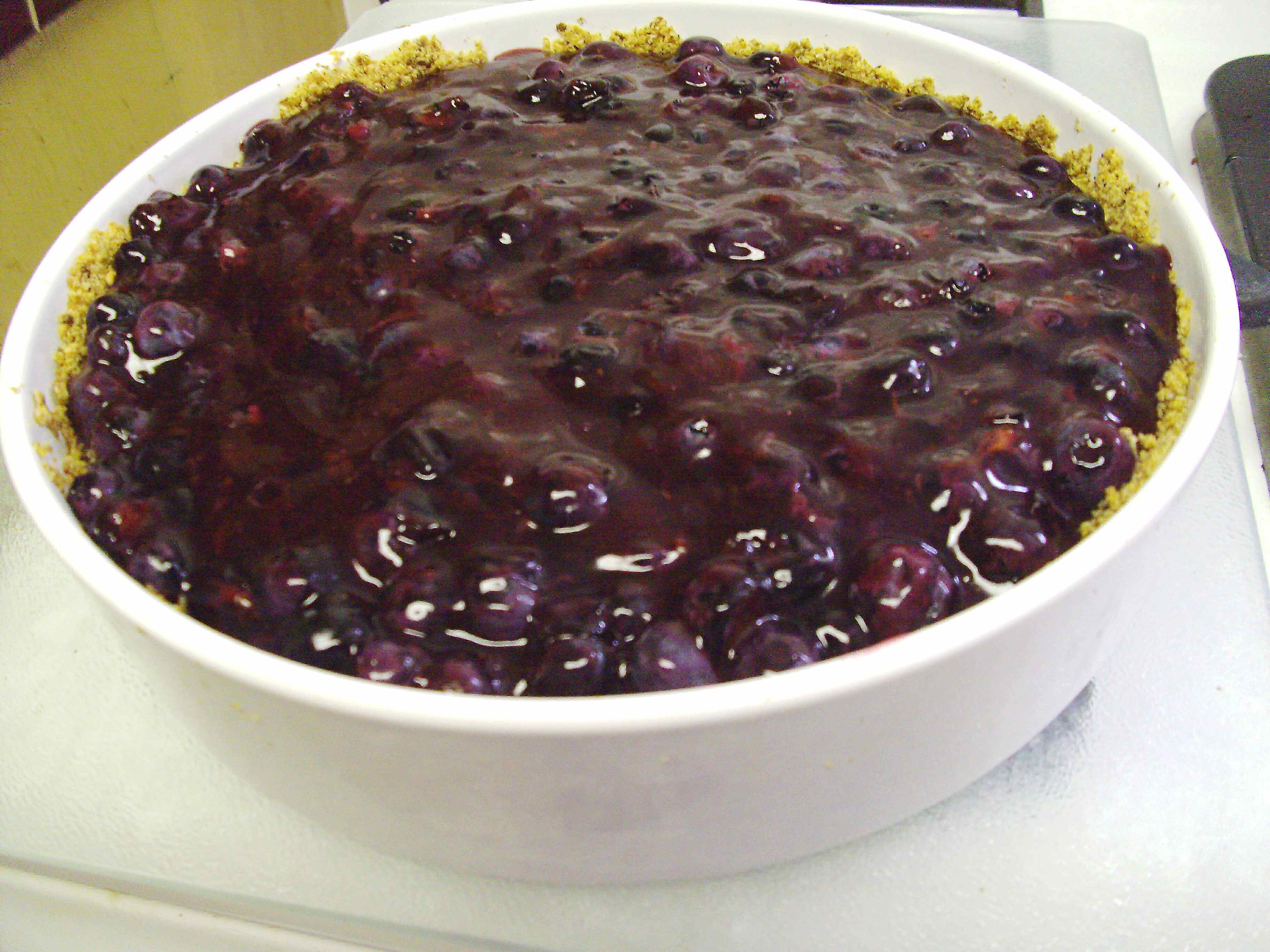
    raw blueberry pie with microwaveable filling and graham cracker crust

    This mostly-raw blueberry pie is a snap to make and very versatile--the filling microwaves in a few minutes, and you don't even have to bake the zippy gingered graham cracker crust--perfect for a hot Fourth of July and all summer long.

  • Recent Posts

  • Contents

  • Archives

  • Now Reading

  • See also my Book Reviews

  • Copyright 2008-2024Slow Food Fast. All writing and images on this blog unless otherwise attributed or set in quotes are the sole property of Slow Food Fast. Please contact DebbieN via the comments form for permissions before reprinting or reproducing any of the material on this blog.

  • ADS AND AFFILIATE LINKS

  • I may post affiliate links to books and movies that I personally review and recommend. Currently I favor Alibris and Vroman's, our terrific and venerable (now past the century mark!) independent bookstore in Pasadena. Or go to your local library--and make sure to support them with actual donations, not just overdue fines (ahem!), because your state probably has cut their budget and hours. Again.

  • In keeping with the disclaimer below, I DO NOT endorse, profit from, or recommend any medications, health treatments, commercial diet plans, supplements or any other such products.

  • DISCLAIMER

  • SlowFoodFast sometimes addresses general public health topics related to nutrition, heart disease, blood pressure, and diabetes. Because this is a blog with a personal point of view, my health and food politics entries often include my opinions on the trends I see, and I try to be as blatant as possible about that. None of these articles should be construed as specific medical advice for an individual case. I do try to keep to findings from well-vetted research sources and large, well-controlled studies, and I try not to sensationalize the science (though if they actually come up with a real cure for Type I diabetes in the next couple of years, I'm gonna be dancing in the streets with a hat that would put Carmen Miranda to shame. Consider yourself warned).

Food for thought?

According to MediaFinder.com, 193 new magazines launched in the US during 2010, while 176 folded. Closures were down from 596 defunct magazines in 2009–most famously including Gourmet, whose November 2009 final issue with the huge stuffed glazed turkey is still sitting forlornly on our local library branch’s magazine stand a year later.

But from MediaFinder’s other trends, it seems the closure of this flagship food magazine has only spurred the launch of a (not literal, at least I hope not) thousand to take its place. While more B2B titles folded than launched, food magazines represent the most launches of any single category.

What does it mean? Are they just trying to fill the void, capture some of the market share that Gourmet commanded? Or do they really think there’s room for growth and that more and more people will pick up food magazines at the checkout counter and then subscribe for an ever more splintered and specialized set of food topics?

Are Americans really that obsessed with food, given that fewer cook regularly than even 10 years ago? Or are we using food as a relatively noncontroversial substitute topic for everything else of importance that scares us more? Like the fact that our banks got bailed out but they didn’t reinvest in America by creating more loans or more jobs (where’s the surprise)? That our biggest corporations are undercutting the political power of the citizenry and our Supreme Court is granting them effective status as citizens even though they don’t pay proportional taxes to support the welfare of the nation? Worse, that we’re still stuck wasting billions and billions on a moribund set of wars in Iraq and Afghanistan, and that our troops and national reserves have been turned into indentured servants unable to exit service when their agreed-upon term is over, and it’s been swept under a rug? And that we’re still “processing” and foot-dragging our way through the Guantanamo cases Bush’s administration left behind, with less and less plausibility for holding those prisoners without trial, and the “Patriot Act” is still in force–mostly for what? More abuses of citizen privacy have been committed under it than actual terrorist plots detected.

Maybe it’s time to get off our couches after all as we head into the new year.


Play with your food…

In a season of too many boring holiday cookies, this take on playing with your food, from artist/New York Times blogger Christoff Niemann, caught my eye…

Let It Dough! – NYTimes.com

No idea how they taste when baked, but I suspect that’s not really the point, and anyway, reading Niemann’s column is a calorie-free splurge on a rainy Monday. Printed out, it could make a tasty impromptu greeting card (or several) as well, as long as you give copyright credit and a link so your friends can find the whole article easily.

I can’t wait ’til he takes on gingerbread. Gehry or Gaudì?


Green Eggs and Salm(onella)

I’m sure that’s not an original title. Bad puns abound. We’re in a situation where the FDA’s longstanding voluntary compliance approach to industrial food production safety has gone incredibly, visibly awry. Mostly because it sorely lacks the funds and the boots-on-the-ground manpower to enforce the regs in person. Also mostly because for a full 10 years, the few attempts made by the FDA to put some teeth into the safety regs for the egg industry were quashed from above. Those years, which ended this summer, were mostly Bush years. It’s probably not a coincidence.

380 million eggs recalled and counting in the past week. That’s a lot of eggs–it’s a lot of chickens too. Possibly some that you yourself bought, if you live anywhere west of the Mississippi River. From companies in Iowa that had a long record of not following standard egg-handling safety practices to prevent the spread of salmonella. They preferred to pay the occasional penalty or fine instead.

If you’re not thrilled with the way this was handled or the fact that it could have been prevented pretty easily, what can you do?

Check the FDA voluntary recall list for the commercial names and serial numbers. If your eggs are on the list, return them to the store. If not, cook your eggs fully anyway. Just because yours weren’t on this week’s list doesn’t mean they’re definitely clean.

Then call or email (or if you want to be especially annoying, fax a copy of the Dr. Seuss bookcover–you know which one) your local Congressional representative or senator to express your disgust demand more enforcement authority and more money for the FDA’s Food Safety Inspection Service.

But that’s not enough. In the past 10 years, the FDA has grown used to doing less. It’s just been a month since Congress passed legislation giving it new rights–but will the FDA use them without a strong push? Ask your congressional representatives to mandate an FDA report on how it’s strengthening its food safety oversight and enforcement under the new laws. A yearly report to Congress might be as much as the agency can handle at the moment, but a twice-yearly report would push them to apply their new oversight powers a little sooner and more vigorously.

Aug. 25–And demand hen vaccination against salmonella as a national requirement for operating any kind of poultry business.

Unappetizing: Nutrition “Awareness” on Top Chef

Perhaps it’s a futile attempt to understand how restaurant chefs think about food and nutrition, but lately I’ve been watching the very warped “Top Chef” episodes for the last couple of seasons–easy to do online. I can’t help wondering not only at the contestants, all of whom seem to display basic ignorance of what used to be called the “Four Food Groups,” but at some of the judges who fault them on nutritional challenges.

In this season there have been two, the School Lunch Challenge and–not that the judges even thought about it as a nutritional challenge, which they should have–the Baby Food Challenge. In both, the judges seemed at least as lacking in nutritional knowledge as the contestants, and in some aspects even worse.

The School Lunch Challenge brought out scathing comments on the show and on a number of blogs, particularly when the bottom-ranked chef, who went home for her gaffe, attempted to make a banana pudding palatable by adding sugar. Tom Colicchio made a big deal of her adding two pounds of sugar to the pudding–which was to feed 50 students.

And admittedly it’s not great for nutrition, but it was hardly the disaster he and the other judges made out. If anyone had bothered to whip out a calculator and known how to use it for pounds-to-kilos conversions, they’d have discovered that the two pounds of sugar amounts to 0.91 kilos. Or 909 grams, to be a little more precise (which we shouldn’t, the chef was eyeballing what she added). Divide by 50 and you get 18 grams per serving or about 4 teaspoons–not all that surprising an amount of sweetener in any prepared dessert. Add that to the starch already present as thickener and the sugars from the milk and bananas and you probably have 30-40 grams of carb or thereabouts per half cup of pudding.

It would be a lot for someone diabetic, like my daughter, but not disastrous as long as she knew how much carb was in it, and it certainly wouldn’t be disastrous for most school kids if the rest of the meal was balanced with low-fat protein and vegetables and not too much other starch.

But actually, most of the lunch entries were pretty starchy. The fact that they didn’t all have as much noticeable added sugar is almost immaterial–starches break down into sugars. You have to count them all.

What really stood out was the pathetic nature of the criterion “to include a vegetable.” One that was most-praised–a slab of caramelized (talking of sugar) sweet potato under a chocolate sorbet as a dessert–was mostly a starch, though in its favor it had vitamin A and fiber. Another team served celery (no vitamins and very low fiber, despite the stringiness) with a peanut-butter mousse (why, oh lord, not just peanut butter? chef-think at work?) piped out directly onto the celery, supposedly so kids would eat it. No one liked the mousse because it looked Continue reading

Why All the Mealy Peaches?

A lot of recent visitors to this site have come in desperate need of ways to redeem the disappointing peaches that are all you can find in the supermarkets these days. Even in peach season. The best I can tell them is that you can microwave the fruit with a little sugar and lemon juice to bring back some of the flavor, but of course it’ll be cooked, not raw. For a couple of suggestions on how to do it and what to use it for, see my original post.

I decided to take this topic up again because the idea of microwave peach jam as your only option is probably not what most of you were hoping for. Me either, frankly. I want great, aromatic, incredibly juicy height-of-season peaches, and I want to be able to eat them with no further ado. Cooking them runs a distant second as far as I’m concerned (though the jam and compote weren’t bad, to tell you the truth–and I just made another batch in about 5 minutes yesterday with some much better peaches from my father-in-law’s backyard trees).

But back to the more usual reality for a moment:

I really don’t think you can get a crummy, mealy unripenable peach to be juicy and fabulous and still raw by nuking it–though I might be wrong; I haven’t tried the lower-power settings or “defrost” yet, and I haven’t tried a shorter time than 3-5 minutes. If you’re determined to try one of these, at least take the poisonous pit out first–you really don’t want to risk infusing the flesh (the peach’s or your own!) with cyanide.

But all that begs the real question–

Why all these @#$*Q#R&*@F….etc. etc…. mealy peaches at the height of summer in the first place?

OK, I know that’s not a dignified way to phrase it, but it calms me down without actually specifying swear words for a situation that clearly deserves it. (And I do have some decent enough swear words beginning with “R” and “F”, but “Q” is going to be a challenge. I’ll have to work on it–get out the Scrabble Cussword Dictionary; it’s probably going to be something in Latin.)

The reason I get so upset about this is I remember looking forward to peaches every summer as a kid–you couldn’t get them in winter (for that matter, it’s debatable that what you get in winter now actually qualifies as peaches). They were so good, so reliably good when they did arrive that my mother once assured my younger brother, who was little enough at the time to worry about the fuzzy peel, that they tasted “like heaven”. She was right. You wouldn’t hear angels or anything insipid like that when you bit into one. You’d get a stream of juice down your chin and flavor so intense you wanted to take it somewhere private to eat so you wouldn’t embarrass yourself.

But things have changed. My post on microwaving unripenable peaches came out last summer, when I bought what turned out to be mealy peaches so many times in a row I started wondering if it was just me or were the peaches really a lot worse than I remembered in childhood. Maybe it was just a one-year blip, a bad crop, some kind of exception in the history of peach-harvesting.

Turns out, probably not. Crummy peaches are back in stock this year–judging from the visitors’ log, my experience, pretty much everyone’s. Even here in California where they do grow peaches.

So blithely scouting the web for answers I come up with two possibles:

Either all the good peaches are being shipped overseas for astronomical prices and our supermarkets are buying the good-looking but deceptive dregs and we’re allowing it by not returning the unacceptable goods and demanding refunds

OR

All the big supermarket chains are buying imported peaches from South America and the combination of long distance storage requirements and import quarantine protocols is ruining the peaches’ ability to ripen.

Of the two, I think the idea that all our domestic peach growers are sending their entire stock of acceptably good produce overseas is unlikely. We do export some fruit but the countries that were likeliest to buy from us ten years ago (Japan and Russia come to mind) have fallen on harder times and there’s more competition from sources that are geographically closer.

On the other hand, there’s a good bit of evidence to suggest the supermarket chains have been cheaping out by importing most of their summer fruit from Argentina and Chile even when it’s summer here–and winter down there. The stores have gotten used to importing all kinds of stone fruits from Chile when it’s winter here, and they may have decided to issue longer term contracts with their distributors. It’s probably cheaper than domestic fruit even after transportation and quarantine.

And that brings us to the main find: Continue reading

Veg-phobia II: Summer Edition

My daughter is at camp for two weeks, the longest she’s been away from home, learning to deal with meals and insulin on her own (with the camp nurse’s help). After six months of calculating and eight weeks of giving herself shots, I know she’s ready to do it, and the nurse is ready, and her counselors are ready. And I overprepared and brought more supplies than she’ll need (my daughter has nicknamed this “Mom-anoia”).

I brought everything and a little bit more–including carrots and celery sticks and low-fat cheese sticks, and a loaf of whole wheat bread for activity carbs. I felt like I was turning into my grandmother, who used to bring shopping bags full of real bagels and corn rye on the plane with her from New York whenever she and Grandpa visited us in small-town Virginia.

But really. The nurse laughed at first when I asked a couple of weeks ago if the camp kitchen had vegetables as an option for campers who needed a non-junk snack (I’d looked at the sample menus online and they looked a bit Boy-Ar-Dee to me), but then she admitted the camp doesn’t really serve a lot of vegetables and suggested I bring them for her to store in the infirmary fridge. They don’t have anything whole wheat either. I think she stopped laughing and started sounding rueful about a third of the way through her reply. “We have fruit,” she said half-heartedly, knowing immediately that it wouldn’t really do for a diabetic.

The food at camp is a smack in the face with the wet rag of reality: this is how the rest of the country eats today. And don’t get me wrong, it’s a great camp in every other respect, with a long track record all over the Americas and people of my generation who still feel immensely grateful to have gone as kids. We were very fortunate to get a scholarship for it.

So what’s gone wrong with the food? It’s like school cafeteria food in the ’70s, but without the kale or the stewed tomatoes, the half-hearted iceberg lettuce salads or the lima beans. Take all that away and you have spaghetti, turkey burgers, the occasional chicken or tuna fish, grilled cheese, pizza, some form of potatoes or corn, and fruit. Some protein, a surprising amount of fat, hidden and otherwise, highish salt and a lot of starches on top of starches. It’s also “all you can eat.” But what are you really getting that’s worth seconds? No fiber. No vitamins. Few minerals. Nothing green. Per the Sylvia cartoons, “We feature all-white meals.”

Vegetables? Salad if you’re lucky. Broccoli? Nearly unheard of. Tomatoes? only occasionally. Red cabbage, carrots, celery or any other noshing vegetable of worth? Um, not this summer.

And it is summer. Best time of year for greens. This is when it’s all happening at the farmers’ markets all over the country, and your local newspaper is probably exhorting you to get out there and try it. And did I mention this is California, prime place for vegetabalia all year round?

How did this happen? To a well-educated, professional and middle-class part of the population, no less? The nurse tried to explain to me, “This is what they’re used to at home. The kitchen figures the kids won’t eat them.”

Disheartening in the extreme. But she’s right about the way families tend to eat these days. We saw it firsthand when some dear friends of ours came to visit Continue reading

Is Extra-Virgin Just a Fancy Label?

The UC-Davis Olive Center has just released a report of its chemical and sensory tests on 10 California and 14 imported brands of supposedly “extra-virgin” olive oil. It concluded that many of the nationally available brands don’t meet the International Olive Council’s or the USDA’s quality standards for extra-virgin status.

The research team also reported that some newer chemical markers of fat oxidation being used in Germany and Australia matched sensory measures of low quality (fusty or rancid smell and taste) better than the standard IOC methods. It was a result almost guaranteed to raise hackles abroad.

The researchers compared the accepted IOC/USDA tests for oxidation and breakdown products with sensory panel evaluations (smell/taste/look/texture) and with a couple of new chemical assays from Germany’s and Australia’s government food quality labs. They had an Australian lab accredited for IOC tests conduct some of their assays.

Nine of the 10 California olive oils were evaluated as authentic extra-virgin oils by the sensory panels and had corresponding assay stats to confirm it.

Almost 70% or about 10 of the 14 international brands, most at least nominally Italian, failed the sensory panel evaluation and had some assay stats outside the acceptable limits for extra-virgin olive oil. Major brands that were deemed lower than extra-virgin quality in at least 2 of 3 sensory panel tests included:

Bertolli, Filippo Berio, Carapelli, Pompeiian, Colavita, Mezzetta, Mazola, Rachael Ray, Newman’s Own Organics, Safeway Select, and Whole Foods’ 365 house brand.

Surprisingly enough, Star and Kirkland Organics fared pretty well. No word yet on Trader Joe’s “Trader Giotto” olive oil–at those prices, though, I’m not holding my breath.

The producers of brands exposed by the report, along with the IOC itself, which was created by the UN in 1959 and is based in Spain, protested the research team’s methodology. Mostly they claimed that too few samples were tested to get statistically significant results, and that IOC tests find only 1% of more than 200 brands they test each year fall below extra-virgin standards. But the brands tested represent most of the common offerings for olive oil in American supermarkets, and results were reported separately for samples of each brand acquired in several cities apiece.

I don’t think, at least on a cursory glance, that the test parameters set for the study or the interpretation of assay results have been skewed purposely to favor Californian olive oils over Italian ones. Results for both were mixed and the researchers reported variations in results within the same brand–for example, some olive oils showed lowered quality in the Sacramento sample but not the San Francisco or Los Angeles ones.

What the researchers at UC-Davis found was not so much evidence of tampering (adulteration with cheaper oils like canola, though there might have been tampering with lower-grade olive oil), but rather higher than acceptable fat oxidation and rancidity due to aging, light exposure, poor (high-temperature) storage and shipping conditions, and possibly poor quality olives to start with.

What I would object to if I were going to find fault is that the study was funded by several members of California’s olive oil industry. Certainly if this were a clinical trial for a new drug instead of a food quality study, the fact that two of the study sponsors are also the producers of brands being studied would make me look twice at favorable results.

Where I think the study favors California olive oils over Italian ones is in the purchasing itself. It should be no great surprise if the imports on American shelves have been sitting there longer and were shipped under more damaging conditions and at higher cost than the California olive oils. It would also be no great surprise if many of them tested in better condition in the European labs before export than at UC-Davis’ labs months (or even longer) after they’d arrived in the US.

If the researchers had express-shipped pre-import samples of this year’s production from Europe to their labs at UC-Davis and their partners in Australia, and tested those results against similarly fresh California oils, the results might have been more to the IOC’s liking–or perhaps not. EU labeling rules allow Italy to claim that olive oil was produced there even if the olives or olive oil lots were acquired from other countries such as Tunisia or Morocco. I’m not knocking North African olives except to observe that they’re probably a lot cheaper than those grown in Italy. But even if they’re of equal quality, each delay in pressing or processing a harvest–not to mention repeat exposure to heat and light during shipping and warehousing from country to country–contributes to the breakdown of olive oil’s flavor components.

However, even if all the olive oil was pristine when tested in its country of origin, such a scrupulous comparison wouldn’t have reflected the real experience of California shoppers trying to get decent olive oil without having to drive out to an olive producer’s farm. Unfortunately, the California olive oils are not widely available in Los Angeles supermarkets (the researchers were stuck with Sacramento and San Fran for those) and most are not really being produced on a large enough scale to become national brands either. The imports are. If most of those really are losing quality through shipping and warehousing, should we be paying extra-virgin prices for them? Or should the companies ship and store them more carefully–and for less time?

The Hummus Debate

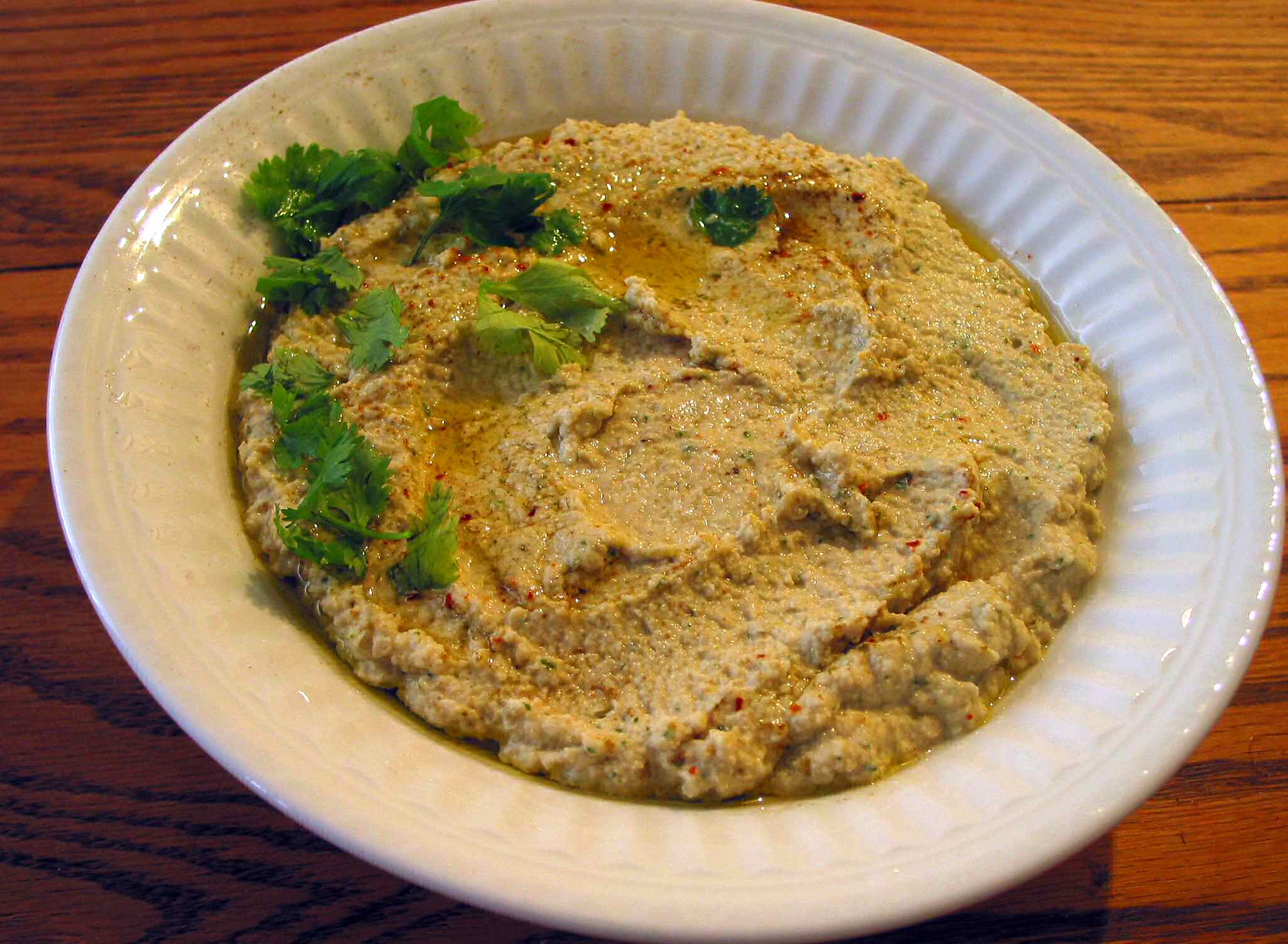
Hummus from scratchHummus is a highly politicized food these days, a situation most eaters outside Lebanon, and at a guess, most inside as well, consider slightly ridiculous. “Owning” hummus has become a point of national pride for a few higher-ups in Lebanon, which has in the past year or two followed Greece’s feta-labeling strategy and tried to appropriate sole credit for authentic hummus. At its more light-hearted, this struggle for hummus supremacy takes the form of an annual stunt in which chefs produce a hummus bowl almost the size of an Olympic swimming pool (or at least an Olympic-sized wading pool) and the triumphal photo makes the international news. But those who really take the Lebanese official origin issue seriously and grimace whenever hummus is served somewhere else are, as far as I can see, only hurting themselves.

The trouble with demanding official status is that both feta and hummus long predate the borders of the countries trying to claim them. Both are simple enough to make and so consistent from batch to batch that they don’t really exhibit much in the way of “terroir” the way aged cheeses, wines, vinegars and so on might. Feta–equally good, equally real, equally part of the native fare–is made in a lot of places neighboring modern-day Greece. Places like Bulgaria, which don’t have as much political clout in either the EU or the Slow Food organizations, and which don’t get half the international tourism. Also places further away, notably Denmark and France, which still have reasonably large sheep’s milk production. Greece may actually have succeeded for the moment in the food labeling tug-of-war, but it’s made the country look somewhat silly and petulant, unwilling to face the fact that they’ve closed the barn door at least a century after the sheep got out. Will they profit from the exclusive labeling? doubtful–and it might have been better ambassadorship to claim credit for spreading feta’s popularity and offer more recipes and products made with it.

Much to the chagrin of whoever decided in the past couple of years that hummus should be exclusively Lebanese, this simple spread is made and eaten in lots of other countries. In Egypt, it’s made with a half-and-half mixture of favas and chickpeas. And Israel, which is probably the “other country” being targeted most directly by the Lebanese hummus campaign, has eaten, breathed, and slept a more or less chickpeas-only version of hummus as an essential food (along with felafel) for longer than the state has been independent.

Unlike the partisanry in Lebanon (not that Israel has no partisanry of its own), when it comes to food, everyone in Israel–Jewish, Muslim, Christian or Druse–gives credit with a certain degree of pride that hummus is Arab food, especially if they’ve made it themselves rather than trotting down to the corner grocery to buy the bland ready-made version from a vat in the deli at the back.

That’s because everyone likes to eat it. It’s also because being a good host is really important and something of a formal habit and a chance to show off just a little–actually, I think that’s still true all throughout the Middle East. Everyone expects friends and neighbors and friends-of-friends to drop by at a moment’s notice, without invitation, especially on the weekend. The least you can do is have a bag of roasted sunflower or pumpkin seeds and a pot of hideously sweet mint tea to bring out if they show up to schmooze after supper, but in the afternoon, better if you can bring out a platter of pita, vegetables, and a bowl of hummus.

Hummus is simple Arab fare at its best–humble, nutritious, appetizing, and (now that we have food processors) easy to make a lot of so you can bring out a wide platter of it for your guests and drizzle a little olive oil and some za’atar or sumac or cumin or paprika over it for the finishing touch–right before everyone tears pita and dips in. The ceremonial thing is what makes it good hosting and is part of the fun.

Here in the US, most people buy their hummus in little plastic containers at the supermarket–not elegant at all, and a lot of money for what you get. Kind of depressing, even. Look at the ingredient list and it’s as long and discouraging as any other processed food–that’s so it can be shipped nationally and stored for a week or two in case it doesn’t all sell out the first day. Look at the nutrition label and you see highish salt, lowish protein and fiber. It’s been fluffed out with canola oil to stretch the expensive ingredient, tehina (sesame paste), and there’s not so much in the way of chickpeas even though they’re supposed to be the base.

While I’m not so much against the fluffy smooth stuff (it tastes ok, if all you’re expecting is a spoonful or two of party dip), I prefer homemade because it’s denser and more nutritious, with more iron and protein from the chickpeas, something you could eat packed in half a pita for lunch and not be starving within an hour. Continue reading

Prunes and Lentils III: The Lentil Variations

Today’s (and last week’s, and the week before’s) topic is STILL the lentils-and-prunes challenge.

Before I get on a roll about lentils, I should mention that the first Prunes and Lentils post was my 101st post for this blog. I don’t know if we should celebrate, but why not. Woo-hoo! Good enough. Consider it celebrated.

It’s taken me a full two weeks to put up this post because this is where the rubber meets the road, or at least where the lentils meet the prunes. The moment of courage. And I don’t know whether it’s going to be great or whether people will go back to wondering why anyone ever let me in a kitchen. (That’s easy: because no one wanted to do the cooking  themselves.)

Ordinary brownish-green lentils are kind of a workhorse ingredient in European, Mediterranean and Near East cooking (also in Indian and African cooking, though red lentils are better known). Unlike restaurant chain buffalo wings, lentils are actually rich in protein and iron, and they aren’t surreptitiously pumped up with sugar, salt and fat to entice you to overeat. The Center for Science in the Public Interest is not likely to sue, because a bag of lentils doesn’t come with a deceptive toy to con the kids. (See? we can be topical and up on the hot news of the moment even while discussing an arcane Slow Food subject like lentils).

And lentils are CHEAP–the whole point of starting this Prunes and Lentils challenge in the first place. Somehow even the big supermarkets that push shoppers to the middle aisles to buy boxes instead of actual food always carry dried store-brand lentils over near the bags of rice and split peas and kidney beans and such. It’s one of the few middle-aisle purchases that are worth it.

I don’t know if lentils have even kept up with inflation over the past 20 or 30 years, because they’re always something like $1-$1.25 for a one-pound bag. Same as when I was a student on a $20 a week food budget. And a pound makes 5-10 meals, not just one serving.

Actually, the recent agroeconomics of growing lentils in the US makes unexpectedly interesting behind-the-scenes reading for policy wonks like me. Lots of people are now clamoring for the US to change the crop subsidy laws to encourage more nutritious crops than corn, soy and wheat. Lentils are still a minor crop, but apparently the USDA introduced new marketing loans and other incentives for lentils, peas and chickpeas under the Farm Act revisions of 2002 and 2008, and exports for pulses have risen by about 45% in the last few years to India, Spain, the Philippines, and other major lentil and chickpea consumers. The rest are bought for animal feed and international food aid programs, especially those for sub-Saharan African nations.

That’s because lentils still fly under the radar here. The average annual consumption in the US is still just about a pound per person. Up from 0.8 pounds in 2008, so a 20 percent jump, but still. One pound per person in a year. If my continuation of the Prunes and Lentils Challenge posts has no other benefit to humankind, I would hope that it inspires you to buy and cook–and eat–at least one additional pound per year in a creative and satisfying way. Pass it on–Two pounds per year? At a cost of $2-3 total? We can but dream…

Of course, now that bean cuisine has become a point of pride for Meatless Mondays and other trends in eating green (if not eating local), lentils don’t just come dry in bags or bulk anymore–not glamorous enough, perhaps? If you’re upscale, you can get them precooked in little cans at your Whole Foods or steamed in vacuum packs at your Trader Joe’s, but those chic packages are much, much more expensive per meal and don’t taste as good. I frankly wouldn’t bother unless you’re on the road or camping or something and don’t have a kitchen at your disposal. Dried lentils don’t need a presoak to cook up within about half an hour even on the stove top, and they’re so easy to cook in a microwave (and avoid the watched-pot-never-boils problem) that the extra expense and time trying to find the precooked ones is usually not worth it. (And what about all that extra plastic and metal packaging? Be righteous–buy ’em dry.)

If you cook up a whole pound bag at once, you can use it throughout the week or (better, for a lot of people) freeze half of it with a bit of cooking liquid in a microwave container and save yourself some time the next time you want a batch. I keep thinking of that old “Cook Once, Eat Twice–That’s Italian!” lasagna ad (can’t remember if it was for noodles or sauce) from the 1970s. It’s a bit old-fashioned, but still a good idea for  when you’re too tired to cook for real.

In this post, I’ve got 3 or 4 main “strategic” ideas for the prunes and lentils challenge, along with more recipes and variations than should really go in a single post (and THREE more prune accompaniments as well), so just roll your eyes, bear with me, and if you decide never to let me in your kitchen, I’ll understand (plus I’ll never have to do the dishes–win/win!).

So first things first–gotta cook that bag of lentils (and recycle the bag). This recipe is probably longer than the actual process but it contains valuable Continue reading

Food Mags Rethinking Salt

For years, lobbyists and nutrition pundits have insisted–hopefully or despairingly–that government public health campaigns to cut sodium in processed and restaurant foods wouldn’t really do much good, that the public wouldn’t pay attention, that they wouldn’t care enough or that they’d resent the guidelines advice so much that they’d never change their habits.

But the past year has brought the brining of America into the headlines and people are starting to pay attention. Especially with state-led nutrition labeling laws for restaurant chains, large diet/health studies, and citizen/government coalitions to pressure the food industry to reformulate down to sane salt levels.

Gourmet-leaning media have been especially slow to come around from the enthusiasm of exotically named and sourced salts and imitation of the aggressive restaurant-style use (and overuse) of salt as a texturizing chemical rather than for flavor. As late as January, I was still seeing frequent “famous chef” defense commentaries, on food shows and in publications from Salon.com to the New York Times, on the absolute necessity of salting food at every turn.

I hope it’s not just a one-issue fluke, but a quick scan of the July issues of Bon Appétit and Saveur shows that both have cut out the insidious, automatic “1 teaspoon of salt” they used to list in most of their recipes. Sunset magazine doesn’t seem to have caught on yet, but Good Housekeeping appears to be ditching the extra salt, so maybe we’re on the cusp of a better trend. And maybe next year I’ll have nothing to kvetch about.

It could happen.