• Enter your email address to subscribe to this blog and receive notifications of new posts by email.

    Join 241 other subscribers
  • Noshing on

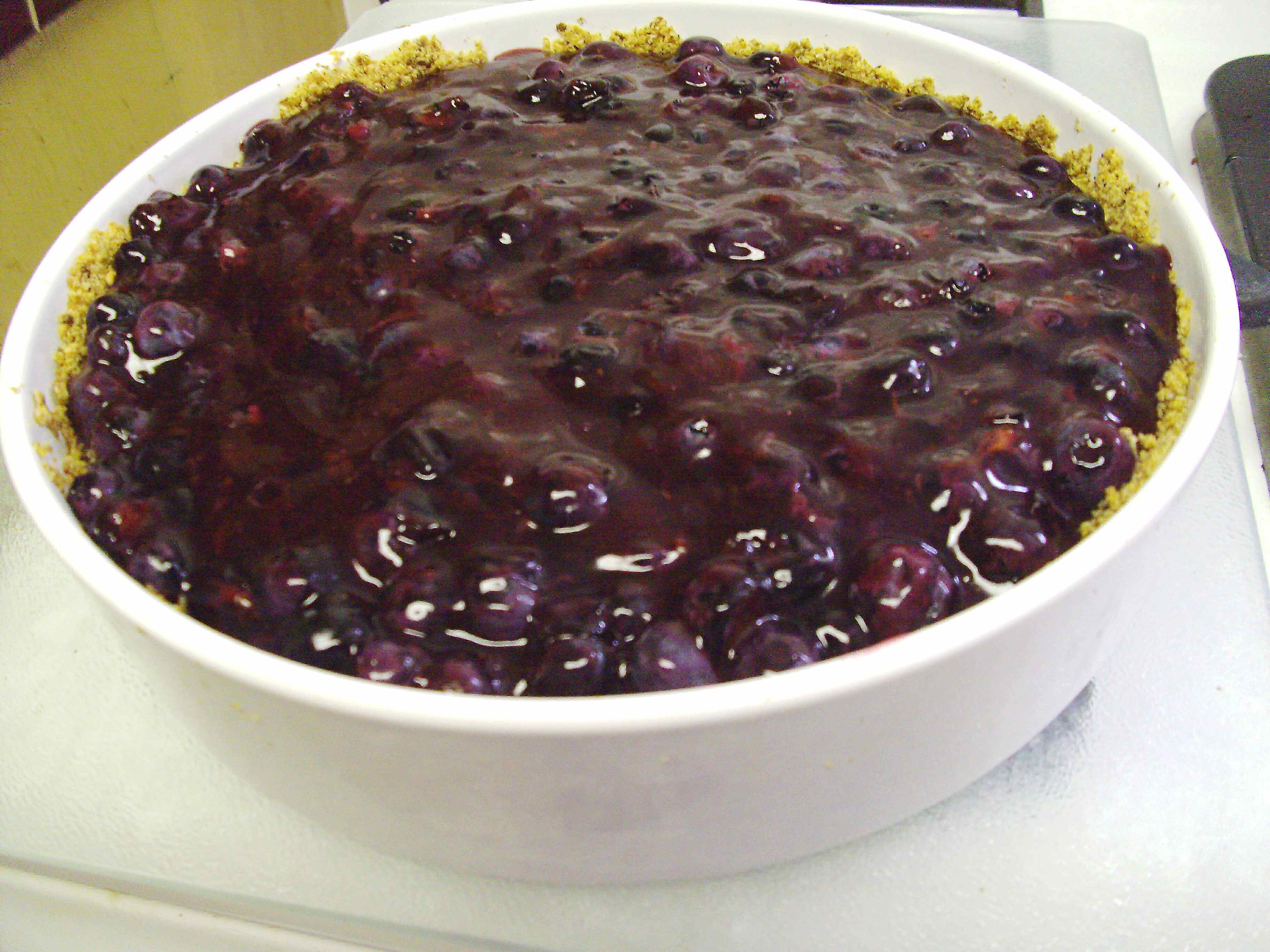
    raw blueberry pie with microwaveable filling and graham cracker crust

    This mostly-raw blueberry pie is a snap to make and very versatile--the filling microwaves in a few minutes, and you don't even have to bake the zippy gingered graham cracker crust--perfect for a hot Fourth of July and all summer long.

  • Recent Posts

  • Contents

  • Archives

  • Now Reading

  • See also my Book Reviews

  • Copyright 2008-2024Slow Food Fast. All writing and images on this blog unless otherwise attributed or set in quotes are the sole property of Slow Food Fast. Please contact DebbieN via the comments form for permissions before reprinting or reproducing any of the material on this blog.

  • ADS AND AFFILIATE LINKS

  • I may post affiliate links to books and movies that I personally review and recommend. Currently I favor Alibris and Vroman's, our terrific and venerable (now past the century mark!) independent bookstore in Pasadena. Or go to your local library--and make sure to support them with actual donations, not just overdue fines (ahem!), because your state probably has cut their budget and hours. Again.

  • In keeping with the disclaimer below, I DO NOT endorse, profit from, or recommend any medications, health treatments, commercial diet plans, supplements or any other such products.

  • DISCLAIMER

  • SlowFoodFast sometimes addresses general public health topics related to nutrition, heart disease, blood pressure, and diabetes. Because this is a blog with a personal point of view, my health and food politics entries often include my opinions on the trends I see, and I try to be as blatant as possible about that. None of these articles should be construed as specific medical advice for an individual case. I do try to keep to findings from well-vetted research sources and large, well-controlled studies, and I try not to sensationalize the science (though if they actually come up with a real cure for Type I diabetes in the next couple of years, I'm gonna be dancing in the streets with a hat that would put Carmen Miranda to shame. Consider yourself warned).

Lightening Up Apple and Almond Cake

Since Nigella Lawson’s Feast came out a few years ago, her “Damp Apple and Almond Cake” has been praised by food bloggers, morning tv show hosts, and just about everyone else who’s tried making it.

Most of her dessert recipes are not for the health-conscious. In the past 10 years, most of her food has become if anything a lot heavier and gooeyer and richer, migrating from Thai and Vietnamese summer salads with sharp clean flavors to avocado AND bleu cheese AND sour cream WITH taco chips, or chocolate bar AND non-natural peanut butter AND whipping cream AND caramel as an ice cream sauce. Or chicken pot pie WITH a lot of bacon in it and no vegetables AND a store-bought puff pastry top (a whole sheet goes for a mere two servings). I can’t think how far she’ll take things next.

But the  “Damp Apple and Almond Cake”–despite the less appetizing connotation of “damp” in American speech (I think “moist” would probably be the equivalent word over here, or at least I hope so. It would at least conjure up fewer images of seeping rot under the stairwell)……….. okay, where was I with all the parentheses? Oh yeah.

What people have to say about this recipe is that it works as written, and it’s really good. No mean thing these days.

So okay. I have almond meal, I have apples, I have a fresh lemon, and I have some decent vanilla for a change (the Kroger stuff I bought for my daughter’s birthday cake back in mid-summer was shamefully weak). And I have eggs. That’s basically what you need to make this cake.

But it’s blazingly, disgustingly hot, 100+ Fahrenheit, yet again in Pasadena. And–AND–I look at the original recipe (serves 10-12) and realize that while the almond meal is a good move–much, much lower carb than flour–the recipe requires 8 eggs. Eight. E-I-G-H-T. Which puts it in the European spongecake class of baking. My grandmother made a similar thing, only with flour and chocolate chips, and probably 12 eggs, for a huge wheel of a cake.

And the directions call for simmering the apples down to a thick applesauce, then cooling and blending in the food processor with a huge, heavy amount of almond meal and a fairly high amount of sugar and all the eggs, and it’s a “dense” cake. No wonder.

Three and a quarter cups of almond meal. Dense. And almond meal tends to require a little less sugar than flour-based cakes to register sweetness–maybe that could be cut down too?

Those eggs–do you need all the yolks? Do you need all eight eggs for that matter? And while you’re at it, why not take advantage of what eggs do best, since it’s a European-style cake with no other leavening. Separate them and whip the whites to fold into the batter.

So here was what I came up with on a hot September pre-Rosh Hashanah afternoon.

Lightened-Up Apple Almond Cake

  • 3 fairly big Granny Smith apples, peeled and sliced or chopped (~23-25g carb each or ~75)
  • 2 c. almond meal (see Trader Joe’s for a decent-priced 1-lb bag at about $4) (20 g carb/cup or 40)
  • 2 T. flour or matzah cake meal (~10 g carb)
  • 1 c. sugar (200 g carb)
  • 3 yolks
  • 4 egg whites
  • 1 t. vanilla
  • juice of a lemon
  • 1-2 oz. orange juice (optional) (~3-5 g carb)
  • grated rind of half a lemon
  • grating of nutmeg
  1. Put the apple slices or chunks on a microwaveable dinner plate and microwave on HIGH 3 minutes.
  2. Blend the almond meal and sugar in a food processor until very fine (whiz several seconds, good enough)
  3. Add the yolks, apples, flour or matzah meal, lemon juice and rind, vanilla, orange juice and nutmeg and blend well.
  4. Whip the egg whites separately in another bowl large enough to pour in the batter from the food processor. When the whites are stiff (can be done easily enough by hand in only a minute or so with a big balloon whisk, just tip up the bowl and hold it at a slight angle in your other hand, or else use your method of choice), start pouring the batter into them a little at a time and folding with the whisk. I know this is backward from the usual method but it works out ok and saves a third bowl…
  5. Pour into a deep-sided microwaveable casserole or a deep dish pyrex pie plate (chancy, may spill over a bit).
  6. Set a microwaveable soupbowl upside down in the middle of the microwave turntable. Center the casserole or pie plate on top, and microwave uncovered 7 minutes on 70% (for an 1150ishW oven). Stop if it seems to be overflowing and wait a minute before continuing. When it stops rising and settles back in the plate, you might cover with a dinner plate and microwave another minute or so on HIGH until you’re convinced it’s cooked all the way down to the bottom.

Cool and slice–the total carb count is about 325 for the recipe, so 1/16th should be about 20 grams, 1/10th, if you can eat that much, is 33 grams, etc. It’s light, soft, substantial and rich-tasting, and 1/16th slice was pretty good tonight for all the testers at my table. And it only took 4 eggs and a cup and a quarter less almond meal. And about half the sugar of Nigella’s recipe but all the apples.

Lightened-up microwave version of Nigella Lawson's "Damp Apple and Almond Cake"

Not a looker in the microwaved version here, which doesn't brown the top, and I didn't decorate with slivered almonds or lemon slices, but the flavor's so intense and tangy that the 1/16th wedges here were perfect for a quick light dessert.

Verdict—Really, really good, and when I do it again maybe I’ll have cool enough weather to try out the oven so it’ll brown as well (about 25 minutes). I would probably go for a deep-sided casserole or even a soufflé dish. Then I could top it with slivered almonds as in Lawson’s version, and perhaps capture a little more of the rise from the egg whites without it collapsing down afterward.

In a regular oven it’s best to oil the pan and dust it with a little almond meal, but I didn’t have to for the microwave–probably for the same reasons it doesn’t brown on top, it also doesn’t cause a lot of sticking on the bottom.

Another change I might make next time would be to add just a couple of drops of almond extract–not enough to overpower the lemon and apples, just enough to play up the almond meal. This time around when I reached for the little bottle I discovered it was bone dry–hence the nutmeg, which actually worked out quite well.

But all in all, and despite the fact that it LOOKS like a typical Passover choke cake, it really isn’t. It’s very moist and even this way the flavor was wonderful and satisfying. So b’te’avon (bon appétit in Hebrew) and kudos to Nigella Lawson, and maybe this will encourage you (and her) to lighten up a little.

Turkey breast with ta’am

I’m not a big fan of cooking meat–never really had a great knack for it, and the lack of easy access to kosher butchers and fresh, unfrozen meat for most of my working life has made it easier to move to dairy, vegetarian, and fish dishes as my mainstays. Out here in Pasadena, my Trader Joe’s carries reasonably priced kosher chicken, turkey, and occasionally beef. But in recent years, the Post, Iowa slaughterhouses that supplied the west coast kosher markets were treating both their cattle and their workers so badly before they were shut down that I just stopped buying meat altogether for a while.

In the past two months, though, I’ve tried to get back to cooking chicken once in a while–Trader Joe’s started carrying Empire poultry again, and my daughter and husband have been clamoring for it. But once you lose the habit of cooking meat, it’s hard to go back.

For one thing, chicken and turkey are so dense compared with fish and dairy. Doesn’t really matter how many or how few pieces you have, it still takes the better part of an hour to cook all the way through–something I’d forgotten about. Even microwaving doesn’t seem to help much. Contrast that with a fish fillet or steak in 15 minutes or less, an omelet in 5 minutes, filled pasta in 10. No wonder I don’t gravitate towards chicken now that I have a kid.

Still. I had a nice-looking half of a turkey breast, recent vintage (i.e., purchased a week or so before and stuck in the freezer, rather than one that had been buried in the freezer for 4 years unused and unloved. My personal record for this year: an abandoned rock cornish game hen from 2001!)

I knew from sore experience that it would take more than a day in the fridge to thaw properly, so this time I started 2 days ahead, and it seemed to go better from there. I also figured out enough time–at least 2 hours just in case, on a day when I wouldn’t end up frustrated and furious.

But turkey–I’ve never eaten turkey that was actively good. Well, not the white meat, anyway. Ta’am (“taste” in Yiddish and Hebrew), my grandmother’s first criterion for whether food was worth eating, is something I never really associated with turkey breast, and probably for good reason. A duty rather than a pleasure, and I always think it would have been better if it were chicken. What to do?

Then I thought about the way I often cook fish–brown an onion in oil, sear the fish on both sides, then microwave covered until the middle is just barely cooked through and still moist. The microwave didn’t seem like a good idea in this case because of the dense meat and my extreme impatience, but it’s pretty classic restaurant technique to brown poultry and then stick it in a hot oven to finish. Would it work for me? Continue reading

Salt reduction vs. hypertension meds–which would you choose?

One of the big complaints processed food companies, physicians in clinical practice, and the great gourmet media all have in common is that cutting back on salt would make food taste flat, and you as an individual wouldn’t necessarily get a big drop in your personal blood pressure from doing it. They argue that only “salt-sensitive” people have to worry about their intake, and anyway, a few points lower, they all say, isn’t really impressive enough to give up your 300-mg serving of sodium in a bowl of Kellogg’s raisin bran or 390 in a slice of La Brea sourdough. And don’t, for g-d’s sake, ask your favorite name brand celebrity chefs to stop salting early and often in each dish!

A big statistical modeling study in the New England Journal of Medicine this week knocks all this wishful thinking on the head, and does it very nicely. The study looked not at individual blood pressure drops but the health and cost benefit of dropping average salt intake by 3 grams a day over the entire U.S. population.

The researchers found that if everyone drops their salt intake back down, the benefits start to look like the ones from quitting smoking, cutting cholesterol and saturated fat, and losing weight to get to a normal BMI.

That’s because even when individual blood pressures drop by only a few points, they’re not going up (as they are today), and when a small average drop happens in a very large group, the big bell curve of disease shifts toward lower risk of consequences and later starts for developing heart disease and high blood pressure. After the first national cholesterol lowering guidelines were issued in the late 1960s, the nation’s heart disease and stroke risk dropped by about a third, and at least until obesity and blood pressure started to cause a back-reaction, the average age for a first heart attack went from 50 to 60 in men. That’s a huge kind of benefit.

The combined drop in heart disease and stroke deaths from cutting salt would be something like 200-400,000 people per year, a lot more than can be saved by simply putting everyone on blood pressure medications–the study made that comparison directly.

Altogether, a solid recommendation for dropping sodium levels in processed and restaurant foods, which make up about 80% of today’s sodium intake. And for not imitating processed food and chain restaurant thinking in your professional or home cooking, as Francis Lam seems to in his Salon.com commentary on the new NYC Department of Health initiative. And if there was any doubt that the Culinary Institute of America has been training Continue reading

Putting Pie Crust on a Diet

From a recent LA Times special on savory pies comes a classic calorie-bomb–only, it’s not even the pie. It’s the pie dough itself:

Basic savory pie dough No. 2 (cream cheese)

Servings: 1 double-crust (9-inch) pie or 6 individual hand pies

  • 1 (8-ounce) container cream cheese, at room temperature
  • 1 cup (2 sticks) butter, at room temperature
  • 1/4 cup cream
  • 1 teaspoon salt
  • 2 2/3 cups (11 1/2 ounces) flour

Each of 6 servings: 638 calories; 9 grams protein; 44 grams carbohydrates; 2 grams fiber; 48 grams fat; 29 grams saturated fat; 137 mg. cholesterol; 1 gram sugar; 518 mg. sodium.

Now come on. 638 calories before you ever get to the filling? Who wants to eat that much pie dough at a time, especially one so rich? OK, don’t answer that, but really. Gag.

Except for the extra cream and the teaspoon of added salt (and why do you even need those with a cream cheese dough anyway?) this is really just a classic rugelach dough–you mix the fats together and then stir in the flour a little at a time by hand. Only, rugelach dough is meant to be rolled out as thin as physically possible–1/16 inch thick or even less–before spreading with jam and nuts and chocolate and cinnamon and so on and rolling it up into a crescent shape. And a good thing too, because cream cheese doughs are notoriously rich. More dough per rugelach and you’d soon feel like you’d eaten an airline Danish–it would sit like lead in your stomach for hours.

I compared the recipe above with the one in my much-used spiral-bound 1984 edition of Joan Nathan’s The Jewish Holiday Kitchen (thank you, Hadassah rummage sale!) It was probably the one cookbook that influenced me most as a college student, and I still use it for the classics, especially baked things like rugelach and hamantaschen that I can’t just wing (note–her cookie-style hamantaschen recipe is the best I’ve ever tasted, a far cry from the usual chalky white horrors on the Purim carnival bake sale table).

Based on Nathan’s rugelach recipe, which is the same recipe everyone everywhere seems to use, the quantities in the LA Times recipe above should make something like 40 rugelach, so figure about 15-20 realistic servings, not six. The cooks at the LA Times must be rolling the dough out the standard 3/8 inch thick for their pies, but it seems like a complete waste of this dough’s particular talents. Continue reading

Gastropodiatry

Puzzling out the personal life of a famous food critic can be hazardous to your cherished impressions. I’ve just tripped over (I’m still not technically savvy enough to have “Stumbled Upon”) Regina Schrambling’s blog gastropoda.com, and it’s a little too revealing. Schrambling recently ended a five-year stint writing a food column for the LA Times, probably (though I’m not certain) in the aftermath of the newspaper gutting its departments and letting scores of award-winning journalists go.  If Schrambling’s column was adamantly butter-laden (and it was), it was also thought-provoking, ecumenical and wide-ranging. Civil in an intelligent way about all kinds of food.

She’s more famous than that, of course–a former editor of the more prestigious NY Times Dining section, and now a guest blogger for epicurious.com’s The Epi Log, with a focus on frugality. But the LA Times articles are where I knew her from.

So Gastropoda is a bit of a shock. It’s a blog with book reviews, short restaurant reviews, all the usual authory showcase kinds of links. But most of all, it’s a blog with quite a run of very short, very pungent entries that are almost too personal in their thinly cloaked vitriol. The editor of the Epi Log introduced Schrambling by calling Gastropoda witty and “famously acerbic”, but I think that’s putting it mildly, and perhaps even charitably. Targets include celebrity chefs who not only don’t write their own cookbooks but don’t ever even test the recipes that have been packaged into them by committee. News publishers who’ve sacked their veteran columnists in favor of wet-behind-the-ears food reviewers with no sense of journalistic ethics. Government officials who can be bought at an astonishingly low and low-class price.

It’s not that I don’t frequently agree with the basic points she’s making on Gastropoda. But in large part I’m embarrassed. The nicknames she provides her targets to avoid direct libel are childish in the extreme (e.g., “Chimpie” for George W. Bush, “The Drivelist” for a popular and successful NY Times food writer). Sometimes they’re too veiled and cryptic and make it hard to figure out who exactly she’s lambasting in these convoluted attacks. Not that I’m curious, of course.

But the tone–I wonder if she’s obsessing sincerely about the sorry state of food journalism today, or bitter toward those who still have solid writing gigs at the major newspapers (I know I am), or whether she just hasn’t noticed how far she’s gone in the direction of the classic rant blog. Throughout, you can discern the deep frustration of someone who does her own homework and legwork, and sees less and less of that career dedication in a field she regards as intellectually worth the effort as the times roll on.  Continue reading

Microwave tricks: Pasta You Don’t Have to Babysit

Mark Bittman’s post-Thanksgiving look into the brave new world of absorption pasta and Pete Wells’s “Cooking with Dexter” piece in the New York Times yesterday on the virtues of a pot of boiling water have me thinking hard about why neither of them has even tried the microwaves that must be sitting on their counters. Especially Wells, who has not one but two very young and active children to watch out for.

You can cook standard dried or frozen pasta very well in a microwave, with only a few minutes of actual cooking time and almost no need to stay close by. You can cook rice too–and we’re not talking Minute Rice, either. Basmati rice, the queen of difficult rices, cooks perfectly in a microwave.

The setup for microwaving tortelloni

The setup for microwaving tortelloni and other filled pasta

I started cooking pasta in a microwave when my daughter was a toddler. She was pretty active and I couldn’t leave a pot boiling away on the stove to go and chase her–either the pasta or I would have boiled over. By the same token, I had nightmares of her getting over the baby gate and into the kitchen as she got bigger and more impatient. My mother-in-law still has extensive scars from having a boiling pot tip over on her when she was a child, and it’s one of the reasons I decided to try microwaving pasta instead. Even though my daughter is now kitchen-savvy, it worked so well I’ve never been tempted to go back. Continue reading

Thanksgiving Vegetariots, or, How Can You Have Any Pudding If You Won’t Eat the Meat?

Newspapers all over the country are sweating to include vegetarian main dishes in their annual Thanksgiving features. But they’re not doing all that well. This week the LA Times food section proudly listed a whole bunch of Thanksgiving vegetable side dishes as if to say, “See how much there is for you vegetarians to eat without your hostess making any changes just for your special status?” Only, as readers quickly pointed out,  1) none of the dishes contained any noticeable protein, 2) most of them were overloaded with butter and salt and 3) two of them contained chicken broth or pancetta. Someone had forgotten to re-edit them for a vegetarian audience.

I pick on my local paper because we’re talking Los Angeles, with great produce available all year round and a very large vegetarian population–and a lot of ethnic groups with significant roles for vegetarian dishes in their traditional cuisines. We have less excuse for this kind of simple ignorance than most cities.

But it isn’t simple ignorance. Running very close to the surface of most food publications’ features on vegetarian fare at the big showdown holidays is a distinct tone of hysteria. How can anyone not want to eat meat? Nothing tastes like turkey, and nothing sells like it either! We don’t know anything about vegetarian proteins! they panic. Do vegetarians eat Durkee Fried Onions or Empress Yams? Do they eat marshmallows? They don’t even like pancetta! What’s wrong with them?

These are home questions for newspapers and food mags, because you know the real survival question is, “How are we going to sell advertising for chickpeas and lentils, for chrissakes?” That probably goes double or more for food shows on tv. If they don’t advertise, they don’t stay on the air.

It’s not like tofu has a big marketing presence in the nation’s newspapers or brand recognition outside of local markets. There are only so many brushed-steel and cherrywood designer kitchens anyone is willing to buy in a down economy, especially once they discover how badly brushed steel shows fingerprints. And cooking mags don’t get a lot of help from PepsiCo and CocaCola, Ralston-Purina or the many cigarette and pharmaceutical companies.

What’s left? Bacon, turkey, and processed food companies featuring starches and microwaveable tv dinners. This might not be such a problem for food pubs if they’d found a way to keep their features a little more independent of their ad base. Bacon is showing up these days as suddenly gourmet in so many inappropriate dishes–ice cream? chocolate bars? popcorn?–precisely because it’s relatively inexpensive, widely available in supermarkets, and sold by a few recognizable national namebrand companies that still advertise reliably in a down market. Young food bloggers who go for it think it’s something new and daring, but you have to wonder whether they realize how hard the commercial food media are pushing it and why.

In any case, the November and December issues or episodes really need to push meat for all they’re worth because American bacon is basically the same everywhere and straight-up turkey isn’t all that popular the rest of the year, and the companies know it. Meanwhile, vegetarianism in all its variations, and with a growing political undercurrent, is gaining ground among younger Americans, or at least those not too obsessed with bacon. What to do?

Apparently the answer is, panic and get mad at the vegetarians for wanting non-meat dishes that are worth something, but try hard not to admit it in front of the camera. Continue reading

Food as Barometer

The past week has seen a number of shock waves go through the food world.

Gourmet magazine’s announced closing yesterday is the latest and the one with the best PR. Gourmet‘s editor, Ruth Reichl, has turned what was once the flagship publication of foodie-ism into something more like Vogue for food–high-gloss, decorator restaurant food (the focus of her previous career) with recipes that ranged from routine to fanciful, from decadent but enticing to over-the-top, impractical, even wasteful and ridiculous, particularly in the last couple of years. A few memorable examples of the latter–lamb cooked with a stewing sauce that included something like a cup of whole coffee beans in an ingredient list some 20 or so items long, a chicken liver paté with a ton of added butter to simulate foie gras when that dish was outlawed in Chicago, and a chocolate and sesame butter tart with so many elaborate steps and so much extra fat in each layer–with nearly obvious clashes of flavor–you could practically choke.

Reichl, whose memoirs I have nonetheless enjoyed a great deal, seems to have been in on the official food world’s migration to recipe titles–and restaurant menu listings–so long they owe more to Proust, or perhaps Balzac, than to James Beard. Then again, Proust called madeleines madeleines, not “little ridged pure butter genoise microcakes with microplaned lime rind, baked in the shape of elongated shallow clamshells”. Goodness knows what today’s foodie superstar chefs would come up with for a title.

And yet Gourmet, with its glossy ads for show kitchens and olive oils and edible vacations in exotic locales, has tried to broaden readers’ ideas and ideals on occasion, and that’s Reichl’s influence too. If the cover one month showed coveted seating at a prestigious Paris restaurant, the tablecloth and glassware sternly hushed in preparation for the pre-theater crowd, or the cliffside view of an Italian trattoria table with a glass bowl in the foreground brimming voluptuously with prawns, greens, oysters and a coral-hued or purplish octopus, other issues sent staff into the mountainous inner reaches of China to report on the poverty and generosity of villagers there.

It’s hard to imagine how Reichl and her staff pictured reconciling the ultra-affluent with the world-conscious, and perhaps their attempts failed to convince either luxe advertisers or Condé Nast this year in particular. But I can see how Gourmet‘s underlying spirit of foodie-ism has led to the explosion of adventurous, hands-on food blogs of a younger working generation as they discover both real food and the desire to learn to cook it.

But Gourmet isn’t the most important food barometer, particularly because it represents a shrinking target audience at the top of the food chain, as it were. Rumbles farther down the scale have been quieter but with any luck perhaps one hopeful sign will be more lasting and more influential.

Last Thursday, the L.A. Times reported that the federal WIC  (Women, Infants and Children) food supplement program will now allow participants to spend their vouchers on fresh produce and whole grains. The allowance isn’t really big– $6/month per eligible child, $8 per pregnant woman or mother of a child under 5, and $10 per nursing mother, or about $14/month on average for a typical family, but it’s a start.

More promising is that the changes would push stores that want to accept WIC vouchers to stock fresh produce and whole grains. That might put at least modest quantities of decent foods within reach in lots of inner city neighborhoods, and it means farmers’ markets can also start qualifying to accept vouchers.

In the Los Angeles area and Orange County, the WIC program is especially important–out of more than 12 million people, something like 316,000 low-income people are enrolled in WIC. More than 8 million people are enrolled nationwide at a cost of slightly under $7 billion per year, with vouchers of about $60 total per family per month. Less than $1000 per family per year even counting the administrative costs of the program. It makes the Food Stamp program seem generous by comparison.

The new shift toward allowing fruits, vegetables, and whole grains under WIC isn’t adding anything to the total Congress allots–the cost for these vouchers has been taken from some of the dairy and juice allowance. But local WIC officers are still grateful and think it’ll make a big difference to their clients, some of whose children have never tasted fresh broccoli.

It’s a far cry from the fuss over the blight on homegrown heirloom tomatoes in the northeastern states this summer.

The Meaning of “Tasty”

One very strange description crops up in nearly every expert’s take on processed food and the way it’s overtaken fresh and whole foods in the American diet. Everyone from food industry veteran Hank Cardello (see the Stuffed book review) to NYU nutrition professor Marion Nestle in What to Eat talks about fast food and junk food as “tasty”. David Kessler goes even further: in The End of Overeating, he adds “irresistible,” which he says is the problem he faced most of his life.

Moreover, “tasty” has become the important word in processed food advertising. Driving home from the post office today I even saw it on a billboard for Vitaminwater10, with the tagline:  “10 CALORIES. 4 NEW FLAVORS. TASTIER THAN EVER.”

Tasty. It’s the word of champions, the key, the adword to beat.

And for the life of me, I’m not sure why. Because the words I would have chosen for most of it include stodgy, greasy, cardboardy, screamingly salty, day-glo ™ orange, and “a lot like airplane food, only on the ground.” Am I the only one?

But “tasty”–specifically that word–is clearly the accepted description, even among these food experts, and that points to a host of disturbing assumptions. Either they mean they find processed food tasty or they mean they think everyone else finds it tasty and irresistible–even if there’s something better to eat. That’s kind of defeatist, isn’t it? If everyone “knows” fast food is tastier than fresh produce, what hope is there for mainstream Americans to eat healthier than they do today?

What do they actually mean by “tasty” in the case of processed food? They don’t mean fresh, as in fresh produce. They don’t mean tangy, as in yogurt or a tangerine, or sharp as in horseradish or cheddar. Certainly not aromatic, like dill or fennel or rosemary or sage. Or rich and funky and thought-provoking, like aged camembert or shiitakes or asparagus or toasted sesame oil. And they don’t mean complex and savory and surprising, as in a palak paneer punctuated by smoky black cardamom pods, Armenian string cheese with nigella seed, or a long-cooked carbonnade or daube of beef with some cloves thrown in on a whim.

They can’t possibly, honestly, mean “these fresh hazelnuts are so sweet you’ll plotz” or “one bite and you’d better take this nectarine somewhere private.”

Most of the food experts who’ve posited that processed food is “tasty” in their books and articles are older than I am by about 10 years, old enough to remember eating late-July nectarines that devastatingly fragrant, backyard tomatoes earthily ripe and pungent, foods utterly unlike what’s available even in the produce section of most chain supermarkets today.

So I can’t help thinking that their casual use of the word “tasty” reflects and even perpetuates the hopelessly tattered, stunted and inexperienced taste imagination of the masses of people who don’t cook for themselves anymore and have given over completely to packaged food, with its excesses of salt and its bland, stale cardboardy background flavor. The ugly assumption they’ve bought into is that people who eat mostly processed food can’t change, won’t change, and most importantly, wouldn’t like fresh food if they tasted it.

Can the surge of food blogs with their encouragement to try something new, visit local farmers’ markets, maybe even take a share in a community garden plot, change this trend? I hope so, even though I know the open air markets are not often very available in poor neighborhoods and they tend to be as expensive as supermarkets. But when they are made available in urban areas, all kinds of people from the neighborhood suddenly come flocking to them, Continue reading

How to Eat Vegetables and Lose Weight and Save the Planet (Without Really Trying)

One of my favorite stops at the New York Times online is Mark Bittman’s “The Minimalist” column, a series of 5-minute videos in which he demonstrates simple but pretty good cooking with clear and manageable directions and an easy close-up view of the pots and pans in action.

I’d say he takes a no-nonsense approach to cooking, but that would be misleading. He takes a full-nonsense, marble rye approach to the patter while doing some very basic common sense things like cutting up, mixing, and sauteing. And he features vegetables prominently.

Bittman,  recently seen schmoozing around Spain in a top-down convertible,on PBS yet, with Gwyneth Paltrow and Michael Stipe and occasionally Mario Batali and trying to look interested in the food (which somehow got upstaged, can’t imagine how), is the author of several big yellow cookbooks, notably How to Cook Everything in both meat-eater and vegetarian editions.

This year he’s come out with a new, slimmer volume called Food Matters: A Guide to Conscious Eating* (and the asterisk leads to: *With More than 75 Recipes).

Unfortunately, we have to disregard the fact that Bittman’s title manages to evoke both Phil McGraw’s Self Matters and David Reuben, M.D.’s 1970s classic romp, Everything You Always Wanted to Know About Sex* … *But Were Afraid to Ask (or, more happily, Woody Allen’s movie send-up of same). This is a Serious Book. And like many Serious Books today (and anything at all with a “go green” theme), it’s a hybrid vehicle.

Between the asterisks on the cover sits a Granny Smith apple photoshopped with a map of the world and a red label, “Lose Weight, Heal the Planet.” The back blurb reads, “…the same lifestyle choice could help you lose weight, reduce your risk of many long-term or chronic diseases, save you real money, and help stop global warming…”

Food Matters is Bittman’s argument for getting the lard out and the greens in, for the sake of health, looks, and planet (quick, look holistic and place your hands reverently over your heart, if you can find it). The first half of the book is a set of essays reporting on the state of Big Food in the U.S., the state of obesity, the state of greenhouse gases and the global cost of raising a serving of beef as opposed to a serving of broccoli or tomatoes or whole grains.

Following Michael Pollan’s now-famous dictum “Eat food. Not too much. Mostly plants,” and citing him heavily, Bittman sets out to encourage readers to replace at least some of the earth-taxing meat and dairy in their daily eating with…plants. Which makes sense, of course.

The second half is a primer, with recipes, on how to eat more vegetation. Given that his pitch is geared at least partly to a male audience (he also writes a food column for Men’s Health, and the tone here is similar), you’d think his advice on the quickest route to getting vegetables into one’s diet would involve the least fuss: just wash and nosh. But no.

Bittman used to edit Cook’s magazine and the cookbooks he writes today do tend to feature recipes. It’s a common downfall, but what can you do? Continue reading