
• Enter your email address to subscribe to this blog and receive notifications of new posts by email.

    Join 241 other subscribers
  • Noshing on

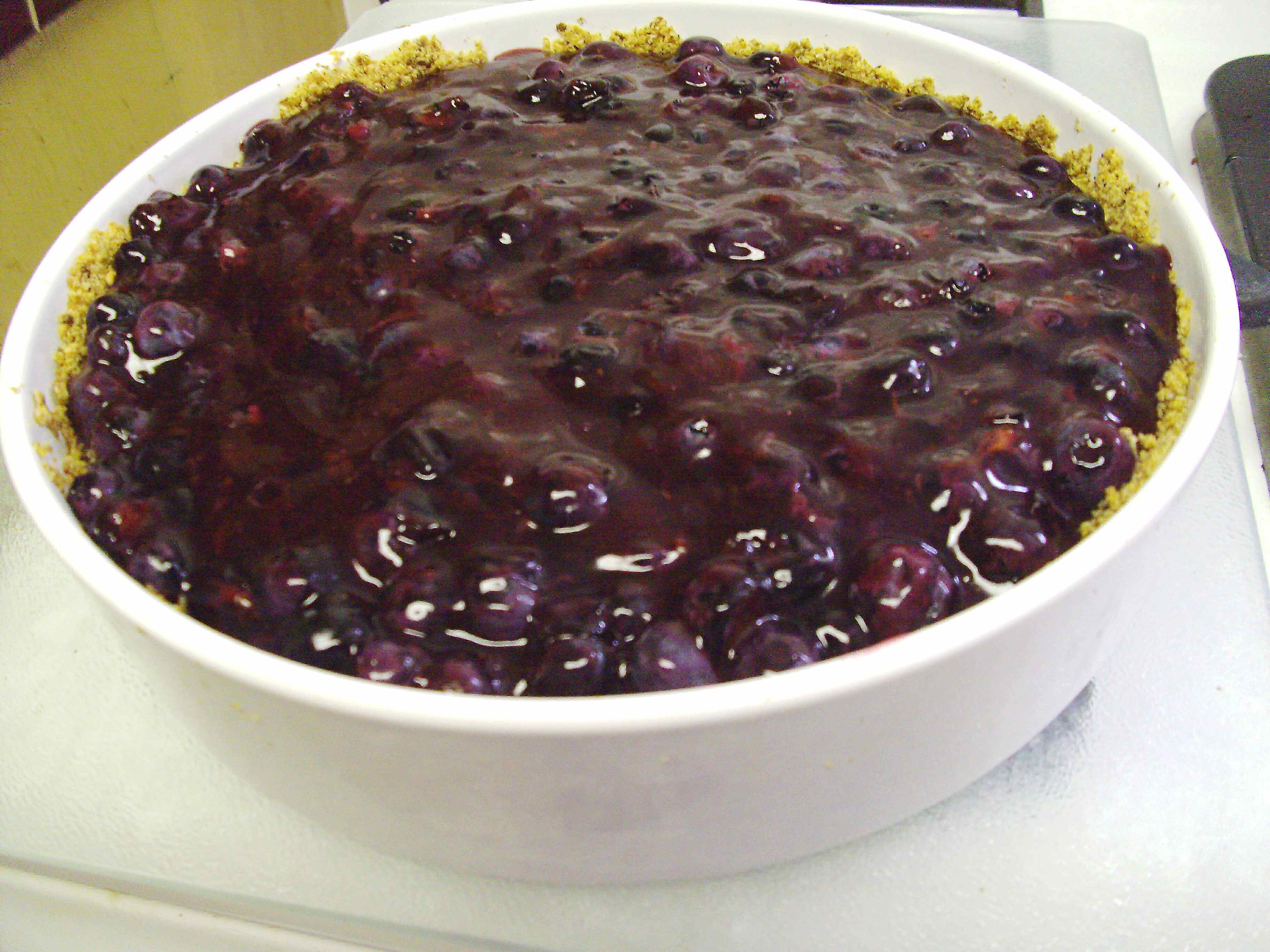
    raw blueberry pie with microwaveable filling and graham cracker crust

    This mostly-raw blueberry pie is a snap to make and very versatile--the filling microwaves in a few minutes, and you don't even have to bake the zippy gingered graham cracker crust--perfect for a hot Fourth of July and all summer long.

  • Recent Posts

  • Contents

  • Archives

  • Now Reading

  • See also my Book Reviews

  • Copyright 2008-2024Slow Food Fast. All writing and images on this blog unless otherwise attributed or set in quotes are the sole property of Slow Food Fast. Please contact DebbieN via the comments form for permissions before reprinting or reproducing any of the material on this blog.

  • ADS AND AFFILIATE LINKS

  • I may post affiliate links to books and movies that I personally review and recommend. Currently I favor Alibris and Vroman's, our terrific and venerable (now past the century mark!) independent bookstore in Pasadena. Or go to your local library--and make sure to support them with actual donations, not just overdue fines (ahem!), because your state probably has cut their budget and hours. Again.

  • In keeping with the disclaimer below, I DO NOT endorse, profit from, or recommend any medications, health treatments, commercial diet plans, supplements or any other such products.

  • DISCLAIMER

  • SlowFoodFast sometimes addresses general public health topics related to nutrition, heart disease, blood pressure, and diabetes. Because this is a blog with a personal point of view, my health and food politics entries often include my opinions on the trends I see, and I try to be as blatant as possible about that. None of these articles should be construed as specific medical advice for an individual case. I do try to keep to findings from well-vetted research sources and large, well-controlled studies, and I try not to sensationalize the science (though if they actually come up with a real cure for Type I diabetes in the next couple of years, I'm gonna be dancing in the streets with a hat that would put Carmen Miranda to shame. Consider yourself warned).

Food as Barometer

The past week has seen a number of shock waves go through the food world.

Gourmet magazine’s announced closing yesterday is the latest and the one with the best PR. Gourmet‘s editor, Ruth Reichl, has turned what was once the flagship publication of foodie-ism into something more like Vogue for food–high-gloss, decorator restaurant food (the focus of her previous career) with recipes that ranged from routine to fanciful, from decadent but enticing to over-the-top, impractical, even wasteful and ridiculous, particularly in the last couple of years. A few memorable examples of the latter–lamb cooked with a stewing sauce that included something like a cup of whole coffee beans in an ingredient list some 20 or so items long, a chicken liver paté with a ton of added butter to simulate foie gras when that dish was outlawed in Chicago, and a chocolate and sesame butter tart with so many elaborate steps and so much extra fat in each layer–with nearly obvious clashes of flavor–you could practically choke.

Reichl, whose memoirs I have nonetheless enjoyed a great deal, seems to have been in on the official food world’s migration to recipe titles–and restaurant menu listings–so long they owe more to Proust, or perhaps Balzac, than to James Beard. Then again, Proust called madeleines madeleines, not “little ridged pure butter genoise microcakes with microplaned lime rind, baked in the shape of elongated shallow clamshells”. Goodness knows what today’s foodie superstar chefs would come up with for a title.

And yet Gourmet, with its glossy ads for show kitchens and olive oils and edible vacations in exotic locales, has tried to broaden readers’ ideas and ideals on occasion, and that’s Reichl’s influence too. If the cover one month showed coveted seating at a prestigious Paris restaurant, the tablecloth and glassware sternly hushed in preparation for the pre-theater crowd, or the cliffside view of an Italian trattoria table with a glass bowl in the foreground brimming voluptuously with prawns, greens, oysters and a coral-hued or purplish octopus, other issues sent staff into the mountainous inner reaches of China to report on the poverty and generosity of villagers there.

It’s hard to imagine how Reichl and her staff pictured reconciling the ultra-affluent with the world-conscious, and perhaps their attempts failed to convince either luxe advertisers or Condé Nast this year in particular. But I can see how Gourmet‘s underlying spirit of foodie-ism has led to the explosion of adventurous, hands-on food blogs of a younger working generation as they discover both real food and the desire to learn to cook it.

But Gourmet isn’t the most important food barometer, particularly because it represents a shrinking target audience at the top of the food chain, as it were. Rumbles farther down the scale have been quieter but with any luck perhaps one hopeful sign will be more lasting and more influential.

Last Thursday, the L.A. Times reported that the federal WIC  (Women, Infants and Children) food supplement program will now allow participants to spend their vouchers on fresh produce and whole grains. The allowance isn’t really big– $6/month per eligible child, $8 per pregnant woman or mother of a child under 5, and $10 per nursing mother, or about $14/month on average for a typical family, but it’s a start.

More promising is that the changes would push stores that want to accept WIC vouchers to stock fresh produce and whole grains. That might put at least modest quantities of decent foods within reach in lots of inner city neighborhoods, and it means farmers’ markets can also start qualifying to accept vouchers.

In the Los Angeles area and Orange County, the WIC program is especially important–out of more than 12 million people, something like 316,000 low-income people are enrolled in WIC. More than 8 million people are enrolled nationwide at a cost of slightly under $7 billion per year, with vouchers of about $60 total per family per month. Less than $1000 per family per year even counting the administrative costs of the program. It makes the Food Stamp program seem generous by comparison.

The new shift toward allowing fruits, vegetables, and whole grains under WIC isn’t adding anything to the total Congress allots–the cost for these vouchers has been taken from some of the dairy and juice allowance. But local WIC officers are still grateful and think it’ll make a big difference to their clients, some of whose children have never tasted fresh broccoli.

It’s a far cry from the fuss over the blight on homegrown heirloom tomatoes in the northeastern states this summer.

The Meaning of “Tasty”

One very strange description crops up in nearly every expert’s take on processed food and the way it’s overtaken fresh and whole foods in the American diet. Everyone from food industry veteran Hank Cardello (see the Stuffed book review) to NYU nutrition professor Marion Nestle in What to Eat talks about fast food and junk food as “tasty”. David Kessler goes even further: in The End of Overeating, he adds “irresistible,” which he says is the problem he faced most of his life.

Moreover, “tasty” has become the important word in processed food advertising. Driving home from the post office today I even saw it on a billboard for Vitaminwater10, with the tagline:  “10 CALORIES. 4 NEW FLAVORS. TASTIER THAN EVER.”

Tasty. It’s the word of champions, the key, the adword to beat.

And for the life of me, I’m not sure why. Because the words I would have chosen for most of it include stodgy, greasy, cardboardy, screamingly salty, day-glo ™ orange, and “a lot like airplane food, only on the ground.” Am I the only one?

But “tasty”–specifically that word–is clearly the accepted description, even among these food experts, and that points to a host of disturbing assumptions. Either they mean they find processed food tasty or they mean they think everyone else finds it tasty and irresistible–even if there’s something better to eat. That’s kind of defeatist, isn’t it? If everyone “knows” fast food is tastier than fresh produce, what hope is there for mainstream Americans to eat healthier than they do today?

What do they actually mean by “tasty” in the case of processed food? They don’t mean fresh, as in fresh produce. They don’t mean tangy, as in yogurt or a tangerine, or sharp as in horseradish or cheddar. Certainly not aromatic, like dill or fennel or rosemary or sage. Or rich and funky and thought-provoking, like aged camembert or shiitakes or asparagus or toasted sesame oil. And they don’t mean complex and savory and surprising, as in a palak paneer punctuated by smoky black cardamom pods, Armenian string cheese with nigella seed, or a long-cooked carbonnade or daube of beef with some cloves thrown in on a whim.

They can’t possibly, honestly, mean “these fresh hazelnuts are so sweet you’ll plotz” or “one bite and you’d better take this nectarine somewhere private.”

Most of the food experts who’ve posited that processed food is “tasty” in their books and articles are older than I am by about 10 years, old enough to remember eating late-July nectarines that devastatingly fragrant, backyard tomatoes earthily ripe and pungent, foods utterly unlike what’s available even in the produce section of most chain supermarkets today.

So I can’t help thinking that their casual use of the word “tasty” reflects and even perpetuates the hopelessly tattered, stunted and inexperienced taste imagination of the masses of people who don’t cook for themselves anymore and have given over completely to packaged food, with its excesses of salt and its bland, stale cardboardy background flavor. The ugly assumption they’ve bought into is that people who eat mostly processed food can’t change, won’t change, and most importantly, wouldn’t like fresh food if they tasted it.

Can the surge of food blogs with their encouragement to try something new, visit local farmers’ markets, maybe even take a share in a community garden plot, change this trend? I hope so, even though I know the open air markets are not often very available in poor neighborhoods and they tend to be as expensive as supermarkets. But when they are made available in urban areas, all kinds of people from the neighborhood suddenly come flocking to them, Continue reading

You want fries with that?

You have no idea how much I’m looking forward to tomorrow at 8:35 a.m. That will be a good five minutes after the start of the parental summer relief program known best as Back to School. I’m counting down the minutes as we speak.

With the return to school, public debates over what children should eat and how parents should or shouldn’t step in have intensified. Obesity, the selling out of school cafeterias, new restrictions on sodas and junk food in said cafeterias, and the diet of choice at home are the topics of the day–all underlined with a sense of rising panic.

This year more than any other I can remember, reporters, bloggers, doctors, models, political figures, and just about everyone else has jumped on the bandwagon to report the ugly facts that were excused for years.

All the statistics are in–or pretty much so, and they boil down to this: We’re facing a tidal wave of blubber.

With it comes a tidal wave of early heart disease, diabetes, kidney disease, and more. How early? Physicians are seeing a rise in the diseases of middle age–something that, 20 years ago, had been successfully pushed back by an average of 10 years, from age 50 or so to age 60 and up for a first heart attack. We thought we were making progress. But for the past 10 to 15 years,  these diseases have started popping up in school children–Type II diabetes, kidney stones, high blood cholesterol and high blood pressure. No way should a 10-year-old be facing these threats.   No wonder parents and everyone else are panicked–the studies we have aren’t giving us a single, easy-to-deal-with  definitive  guide on how to stop the juggernaut. They mostly tell us that it keeps on rolling.

But the mystery of what to do really isn’t that mysterious. Take for example the responses to Frank Bruni’s recent article in the New York Times on feeding children. Some come from doctors on the front lines, others from nutritionists and fresh-food-in-schools activists, discussing different facets of the problem, but they come to a number of sensible recommendations you could probably have named yourself without much struggle.

The conclusions?

Sodas should be cut out altogether from children’s (and probably everyone’s) daily diet. Not just for calories (250ish for a 20-oz bottle–and why is it 20 0z these days? used to be 12 was the standard) but for sodium (about 100 mg per 12-oz can, whether full-cal or diet, 200+ for the 20-oz).

Fruit juices with a pretty picture on the box are nowhere near qualifying as actual fruit. Not even with added vitamin C.

And exercise time, including outdoor recess–something most schools have cut back in the past decades–makes a big difference that’s generally overlooked in the school lunch debates.

So far, no great surprises. But they do mention one more item, also no great surprise–fast food in the school cafeterias.  Nobody seems to have trouble zeroing in on french fries as the worst offender. Are they right or is this a replay of the cupcake wars? Is the french fry being unjustly accused, as the vendors claim?

Continue reading

Pack your own lunch

It’s almost time to head back to school, and my daughter’s finally old enough to pack her own lunch. Not that she wasn’t actually old enough last year. But now she wants to.

When I was nine, I’d been making my own school lunches for at least a year, if only to save my sandwiches from my mother’s clutches and keep her from adding butter to the jam–something that did, and still does, make me absolutely nauseous. Emergency grossout prevention is the mother of lunch-making independence.

As many of my friends with same-age kids do, I worry that I haven’t been pushing my daughter hard enough toward independence by having her fix her own lunch. Is it too late to impart the mysteries of the toaster oven? But all is not lost–the other morning she figured out how to cut up her own apples (she has braces and our orthodontist “charges extra for stupidity-related bracket repairs”). She doesn’t appear to have lost any fingers. So we’re good to go!

Which is fortunate because lately I’ve been seeing a slew of new books on how to pack your kid’s lunch–they range from “here are all the vegan-friendly brand-names that look just like everyone else’s school lunch, only cooler” to Alice Waters insisting that the first step is growing your own school garden (which I’m actually in favor of, but not if it means waiting 6-8 weeks for your lunch to germinate).

Few of these fabulously sophisticated new books even consider the things I took to school every day as a kid–peanut butter and jelly, apple, carrots and celery. Or peanut butter and jelly, orange, carrots and celery. My mother was dull. My sister and I had no cool foods like Ho-Hos or Cheetos to distract us, and we usually ate at least some of the vegetables and the apple. Actually, so did most of the other kids in our school. It was that or suffer the cafeteria kale. And almost no one was fat. I’d like to point that out.

Hip mamas today (mostly those still in their 30s) look horrified at my daughter’s lunches because out there in hipland PBJ on whole wheat is so…so ’70s. It doesn’t contain any of the seventy-two essential nutritional supplement buzzwords (like selenium and phytoestrogens and antioxidant) they’re convinced all healthy food has to have (well, it’s true you have to have those things on the label to compete in the ads). And it has fat. And sugar!

But you know what? A decent peanut butter and jelly sandwich on whole wheat is a lot better deal nutritionally than most of the prepackaged, often self-righteously labeled, crap the hip kids bring to school these days. Much of it is along the lines of Kraft Foods’ “Lunchables”–a processed meat and cheese cracker kind of thing packed with some ersatz juice and faky side items like jello and  candies (not even, as I check belatedly, a tiny tin of applesauce–and check out the Lunchables nutrition and ingredient stats!). But you know how popular these things are–because they’re a kit. Buy five boxes, throw one  in your kid’s backpack each day. They stack neatly in the pantry.

Very few of these children ever bring a substantial serving of fresh vegetables or actual fruit–not even apples. Those require washing, peeling–maybe even cutting up. And sometimes the apples turn a little brown on the cut sides. Organic fair-trade labeling aside, any remotely fruit-like substances in the hip-kids’ lunch bags arrive in a rectangular cardboard box with a plastic overwrap, a plastic straw attached, and a sanitized-for-your-protection seal. No wonder they stare.

Anatomy of a PBJ:

Straight-up peanuts-only butter (no salt, no sugars, no mono- and diglycerides, no emulsifiers or BHT or “natural flavoring” or any of the rest of it) has about 16 grams of fat per 2 T (1 oz) serving. True. Absolutely true. But it’s not the same as the heart-stopping blubber you find on a piece of meat, so stop shrieking. Most of the oil in natural peanut butter is polyunsaturated (the “good fat” kind of fat). And it separates (because of the lack of fakery and emulsifiers) so you can pour off a good bit of it if you want to when you first open the jar.

Furthermore, the same peanuts-only peanut butter contains 8 g protein, 3 g fiber, almost no sodium, and about 210 mg potassium. And a little iron. It’s a pretty good deal for a kid’s lunch item at about 200 calories.

Two slices of whole wheat bread without too much sodium or garbage ingredients gives you another 200 calories–we’re up to 400, but only 3 g. saturated fat, another 3-7 g fiber, another 4-6 g protein, and with a little care preferably less than 400 mg sodium (all from the bread). Add a spoonful of all-fruit jam with 8 g sugar, at about 35 calories, and you have something that will get your kid through school without tears or big sugar highs and lows.

It doesn’t have big vitamin- and calcium-fortified labeling. It doesn’t have a label. It’s not supposed to do it all on its own. Your kid will eat about half, maybe the whole thing if he or she is growing fast or running around a lot that week. But he or she will get the vitamins and calcium from the other things in the lunchbox–some crunchy raw vegetables and an apple or orange and a thermos or carton of plain unsweetened milk. That’s it and that’s enough.

Do your kid a huge favor and leave out all the chips, chocolate, go-gurt (real milk-and-cultures yogurt is ok, not the fake tapioca- and gelatin-stretched stuff), cookies, jello, sorta-applesauce, and fluorescent boxes of juice. School is hard enough without sugar crashes or cavities, and they don’t need any of it to have a good day.

Oh yeah. And for crying out loud, please skip the sushi. Your kid does NOT need to be that hip in the school cafeteria. Or that sick, if the sushi doesn’t stay cold enough.

(Why yes, I live in Southern California. What gave it away?)

Stuffed: A Food Industry Insider Attempts Moderation

It’s taken me over a week to read and figure out what I wanted to say about Stuffed: An Insider’s Look at Who’s [Really] Making America Fat. As usual, I’m about 6 or 7 months late to be the very first reviewer—I waited until my library acquired it. But having read it, I’m astonished that none of the bloggers, pro- or con-, have picked up on the fascination of reading a food politics book for its entertainment value as it unfolds and reveals its eccentricities. Because this is one strange concoction.

Hank Cardello, who spent most of his career as a marketing exec for General Mills, Coca Cola and other giants of the branded food world, is not the kind of player you’d expect to enter the current obesity debate, certainly not as a champion for health. His current organization is “a consulting firm that helps businesses take the lead on solving social issues.” Does that mean he’s pro-processed? Anti-processed? Well, not exactly.

Stuffed is neither a counterattack from the food industry nor the next go-green manifesto. It’s Cardello’s attempt to mediate between restaurant chains, supermarkets, Big Food manufacturers, Big Agro, the government, public schools, and pretty much every other player in food politics. It does pack some original insights about the interlock between food industry, government, and consumer behavior and a few genuine surprises among his recommendations—some reasonable, some so strange it’s worth reading just to find out how Big Food envisions its future.

Cardello spends the first part of his book dissecting the ways processed food companies, supermarkets and restaurants make decisions about the food they sell, and how they market it to consumers. Although some of it’s been done before–-usually with more indignation–-Cardello takes full advantage of his inside experience to shed light on the large web of influences surrounding profit, the bottom line, and manipulation of consumer perception and demand.

Why is a muffin or bagel twice as big as it was 30 years ago? How did Swanson’s TV dinners steer American expectations toward convenience over quality? Who decides what goes on the supermarket shelves? How did Pizza Hut get the cafeteria concession at your child’s school? How come the price of fruits and vegetables rose by 40% in a decade while the price of sodas and snacks fell?

His answers reveal the fundamental gridlock of businesses that have grown so successful that they can’t change easily without shutting down. Without exactly letting anyone off the hook for clinging to damaging business practices, Cardello contends that not only basic business constraints but government and consumer expectations are making it difficult to shift the system enough to improve the overall health of processed food. Continue reading

Dolmas by microwave

When we first moved to Pasadena 10 years ago, one of my favorite places for Sunday dinners out was Pita! Pita!, a family-run Lebanese restaurant in the “Old Town” section of the city. One of the reasons I loved it was the usual reason to love middle eastern food: the mostly vegetarian mezze were wonderful, and the main dishes were knockouts. Long-cooked lamb, roast chicken, fish grilled or under tehina sauce, vegetable stews with a surprising bite of pineapple in them. Even though I couldn’t eat the meat dishes, I could certainly appreciate them by smell. Everything was modestly priced and generous along with it.

The other reason I loved it was that the family that ran it had made their restaurant the kind of place families went for an old-country kind of Sunday dinner with all the uncles and aunts. Pita! Pita! was housed in one of a row of narrow spaces along Fair Oaks, converted from what I think was once a schoolhouse. The narrowness didn’t stop them from putting a couple of large old-fashioned dining room tables in with the smaller ones for couples. They treated their customers like family, you could sit and eat at a leisurely pace and converse, and we never came away anything less than happy. And certainly never hungry.

Which is why I still miss the place. The family ended up realizing they couldn’t make a go of it without charging astronomical prices or wearing themselves out and decided instead to run a smaller, cafeteria-style lunch spot with fewer and simpler dishes on the main business street. And I can’t blame them at all. The food they serve now–more mezze and fast grilled items–is still as good, but the long-cooked family-style dishes and the leisurely Sunday nights I’ll keep having to miss.

I grew up with hummus, tehina, felafel and tabbouleh, which are Israeli standards too and popular among Jews in the U.S. My mother made them from the dried mixes and cans of prepared tehina when they finally became available in our supermarket. In Israel I learned to make them from scratch, but one thing I didn’t know how to make was stuffed grape leaves or dolmas. My sister had married someone who did and on one weekend visit she showed me the ropes.

I love dolmas but they are not quick to make, not at all. We rolled a loooooottt of grape leaves that afternoon (her husband had bought the econo-jar at a local Arab market), and stuck them tight in a pot, plated down so they didn’t float and unwind, and boiled them with lemon and olive oil for more than an hour. They were wonderful but you would never want to do it on a regular basis!

In the spirit of “what can you cook in a microwave instead of the regular way,” I have gone back and made dolmas at home–in a microwave. It works! You can cook them in a few minutes rather than an hour-plus of boiling and having to top up the water so nothing scorches, and they come out beautifully.

Unfortunately, the microwave, miracle machine though it be, will not help at all with the rolling, which is the hard part. The best I can do is say that microwaving lets you do a few at a time if you feel like it–say, 10-20 dolmas, not 50-100. What you do with the rest of the grape leaves in the econojar is up to you.

Grape leaves come brined in rolls of 20 or so, either a single roll in a skinny jar (Krinos) or a big pickle-jar with four rolls (Cortas, other brands). When you buy them, inspect the rolls and make sure there are no little fluorescent green or yellow spots on them–you’ll know if you see them; capers also get this sometimes. I’m not sure if it’s harmful or not, but I stay away from it. I’d keep the other rolls in the brine in the fridge and make sure to use them up within a month, or else take the rolls and freeze them in ziplock sandwich bags with the air squeezed out–and use them within a couple of months so they don’t get freezer burn.

Dolmas in the Microwave

  • Roll of brined grape leaves ~ 20-30
  • 1 c raw rice (not “minute rice” or parboiled) or bulgur (cracked wheat or tabbouleh grain, plain)
  • 1 med/big ripe tomato
  • 1/4 onion or 1-2 scallions
  • 1 T dill (a few good sprigs fresh is best if you have fresh)
  • several sprigs or small handful fresh curly parsley
  • juice of 1/2 lemon
  • olive oil and the other half lemon for cooking

1. Partially or almost-completely cook the rice or tabbouleh in the microwave: put it in a pyrex bowl or microwaveable container, cover with ~1/2-3/4 inch of water, microwave covered on HIGH for ~2-2.5 minutes, let sit and absorb the water several minutes until nearly done, drain excess moisture.

2. While the grain is cooking, rinse off the roll of grape leaves and then soak them in a big Pyrex bowl to get rid of some of the salt. Change the water once. [Note: traditional recipes say soak the grape leaves an hour in cold water. Some others say pour boiling water over them and let them soak. If you want to split the difference in a microwaveable way, you could rinse them, put them in the Pyrex bowl with water to cover, nuke 2-3 minutes on HIGH and then change the water.]

3. Blend the tomato, onion or scallion, herbs and lemon juice in a food processor and mix with the drained rice or bulgur–include the tomato juice. Let cool enough to handle.

4. Stuff the grape leaves–this is the hard part. Take a stack of grape leaves and drain them on a plate. Cut off the stems carefully without tearing the leaves. Lay out one leaf vein-side up and stem end toward you. Put a spoonful of the filling–not more–on the leaf right above where the stem joint was. Roll the leaf over it–tightly but carefully so you don’t tear–and tuck the side leaves over it halfway through, then keep rolling away from you. Place each stuffed grape leaf, flap edge down, in a tight layer in a  microwaveable container or dish.

5. When you’re done rolling (nothing says you have to do the whole thing in one go if you get sick of it after 10 or you just want 10, just put the leftover filling and the grape leaves in the fridge) pour a little water carefully over the layer of grape leaf rolls. Maybe a quarter-inch of water. Squeeze the other half lemon over the whole thing, and drizzle a little olive oil over it– maybe a couple of tablespoons worth. Cover the dish or container and microwave on high 2-3 minutes for 10, maybe 3-4 minutes for 20+. Check one for doneness–careful, it’ll be pretty hot–you want the leaves tender and the grain cooked through. Maybe go another minute if you need to.

Let them cool and chill in the fridge. Serve with tzatziki, raita, tehina, or other yogurt-based dip.

Best new (fantasy) fresh produce ad

A few posts back I was daydreaming of a new campaign by the Ad Council promoting fresh produce. I’d thought the “Got Milk?” campaign would be something to model it on.

Washington Post columnist Paul Farhi, who was doing live chat with readers this week about why, when, and how fast food ads on tv started turning so skanky, has a more inspired take. After a fair number of comments on the increase in raunchiness of burger ads targeting 15-35 year old men, we get this exchange:

Okay, all this talk about burgers : is about to ruin my diet. I’m leaving the chat to go find some healthy fruit to snack on.

Paul Farhi: Opening scene: Long shot of Scarlett Johanssen strolling a city street. She stops at a corner grocer.

Close up: Apples, bananas, pears, etc.

Scarlett fondles the fruit seductively as wah-wah music rises up in background.

Close up: Scarlett enjoys eating fruit, in a kind of lascivious way.

Voiceover (Scarlett): “Fruit. It’s so sexy.”

End of ad.

So there you go. I wonder if Colin Firth is available for something involving asparagus?

Suing for Salt

The Center for Science in the Public Interest is supporting a New Jersey man’s class action lawsuit against Denny’s Restaurants after private talks apparently failed to convince the chain to lower the exaggeratedly high sodium content in its meals. Apparently CSPI combed through the nutrition data on the Denny’s web site. A couple of sample readings:

Denny’s double cheeseburger–3880 mg
Denny’s Meat Lover’s Scramble–5,690 mg
Denny’s “senior” menu scrambled eggs and cheddar cheese meal–2,060 mg
Spicy Buffalo Chicken Melt, and a side of seasoned fries–6700 mg sodium, 1700 calories

The lawsuit was filed in Superior Court of New Jersey in Middlesex County, and seeks to compel Denny’s to disclose on menus the amount of sodium in each of its meals and to place a notice on its menus warning about high sodium levels.

Naked Lunch: Nutrition labeling law in effect for California Chain Restaurants

California’s not the first state or municipality to require restaurants to declare their nutritional stats to customers, but as of today, the state will require chains with more than 20 in-state locations to post calories, carbs, sodium and fat information for each menu offering. The new law also bans sales of soda and junk foods to students at public schools–a big step toward reducing empty calories and sodium consumption among children and teens.

Patt Morrison of Pasadena-based public radio station KPCC interviewed the California Restaurant Association’s senior vice president for government affairs and the executive director of the California Center for Public Health Advocacy.

Surprisingly enough, the CRA’s representative said the association actually backs the legislation in its current form. When asked whether similar New York City legislation had had any effect so far, the CCPHA director said it had–chain restaurants had started reformulating popular high-calorie foods back downward. He also gave demographics: 89 percent of Democrats and 78 percent of Republicans polled said they were in favor of the new law. Most of the callers to the show also said they wanted or needed to know what was at the end of their forks.  A fascinating interview all the way around.

What’s in YOUR restaurant’s dumpster? David Kessler uncovers the addictive side of chain restaurant eating

David Kessler, the FDA commissioner who fought to bring the cigarette and tobacco companies to heel in the 1990s–has taken on the next big fight by doing something you wouldn’t think a man that eminent needs to do: he’s gone dumpster diving in the parking lots behind the fast-food chain restaurants in California. In a suit, according to his wife.

What’s in the dumpsters? Kessler’s new book, The End of Overeating: Taking Control of the Insatiable American Appetite, reveals a dirty secret. Kessler went in search of the nutrition labels on the boxes of food shipped to individual chain restaurants like Chili’s to find out what’s really in the food they serve and why people have so much trouble stopping at a normal portion and normal calorie intake when they make fast food a part of their lives.

He found the labels. Even ordinary-sounding foods were pumped abnormally, exaggeratedly, unconscionably high with fat, salt, and sugar. One appetizer–the Southwest Eggrolls–contained 910 calories, 57 grams of fat and 1,960 milligrams of sodium. Basically half a day’s calories for a normal healthy woman’s diet, about twice the recommended amount of fat if most of it was saturated, and nearly all of the recommended maximum for sodium.

Not really a big surprise–fat, salt and sugar are the three things most likely to provide a “quick hit” of satisfaction when you eat them, and all of them are cheap substitutes for actual flavor or (dare we dream) fresh ingredients you might otherwise expect in food. Most packaged snacks rely on at least one and usually all three–think Snickers; think Chees-Its; think just about any kind of vending machine item–fat, salt, sugar. It’s a hit.

But we know packaged snacks are junk food. We thought dinner at Chili’s — or Bennigan’s — or TGI Fridays — was an actual meal. It LOOKS like a meal. It looks like meat and vegetables and rice or potato. What Kessler discovered on the nutrition labels makes them seem more like giant-sized, glorified, salted, sugar-coated, oiled-up snack foods parading as meals.

That’s not a shocking kind of report anymore–the Center for Science in the Public Interest has been putting out shocker nutritional reports on all kinds of popular foods since it blasted into the headlines by calling fettucini Alfredo “a heart attack on a plate”. But since the CSPI Alfredo debacle, Americans have been swarming to fast food restaurants and sit-down chains in record numbers–not as a weekend jaunt but as a staple of their diet, reportedly eating out an average of 6 times a week.

Kessler ties these trends together with recent physiological research on fat, salt, and sugar consumption. Instead of satisfying hunger, the fat-salt-sugar combo acts as a stimulant, hitting up the dopamine receptors in the brain and triggering release of opiates as a “quick relief” response to eating the first bite of a fast food. Followed shortly, we would guess, by a let-down. And then a vicious cycle as the body suffers rapid hunger for more, even though you’ve just eaten.

So fat-salt-sugar really is a drug. Something we already knew,  but not in such detail. The fact that it’s being exploited not just in vending machine snack packs but in what we thought was real food, just restaurant-prepared, goes some way to explain why reports in the past year have clocked Americans eating 3800 calories a day.

The fact that that mass-prepared food has been manipulated to exaggerate the fat-salt-sugar content and encourage people to eat more than is reasonable in a chain restaurant sitting is even more insidious. The fact that high-class restaurants with big-name chefs are resorting to similar tactics–often unwittingly–to “boost flavor” and compete with chain food is just depressing.

Or in other words: Restaurant food is the new tobacco.