• Enter your email address to subscribe to this blog and receive notifications of new posts by email.

    Join 241 other subscribers
  • Noshing on

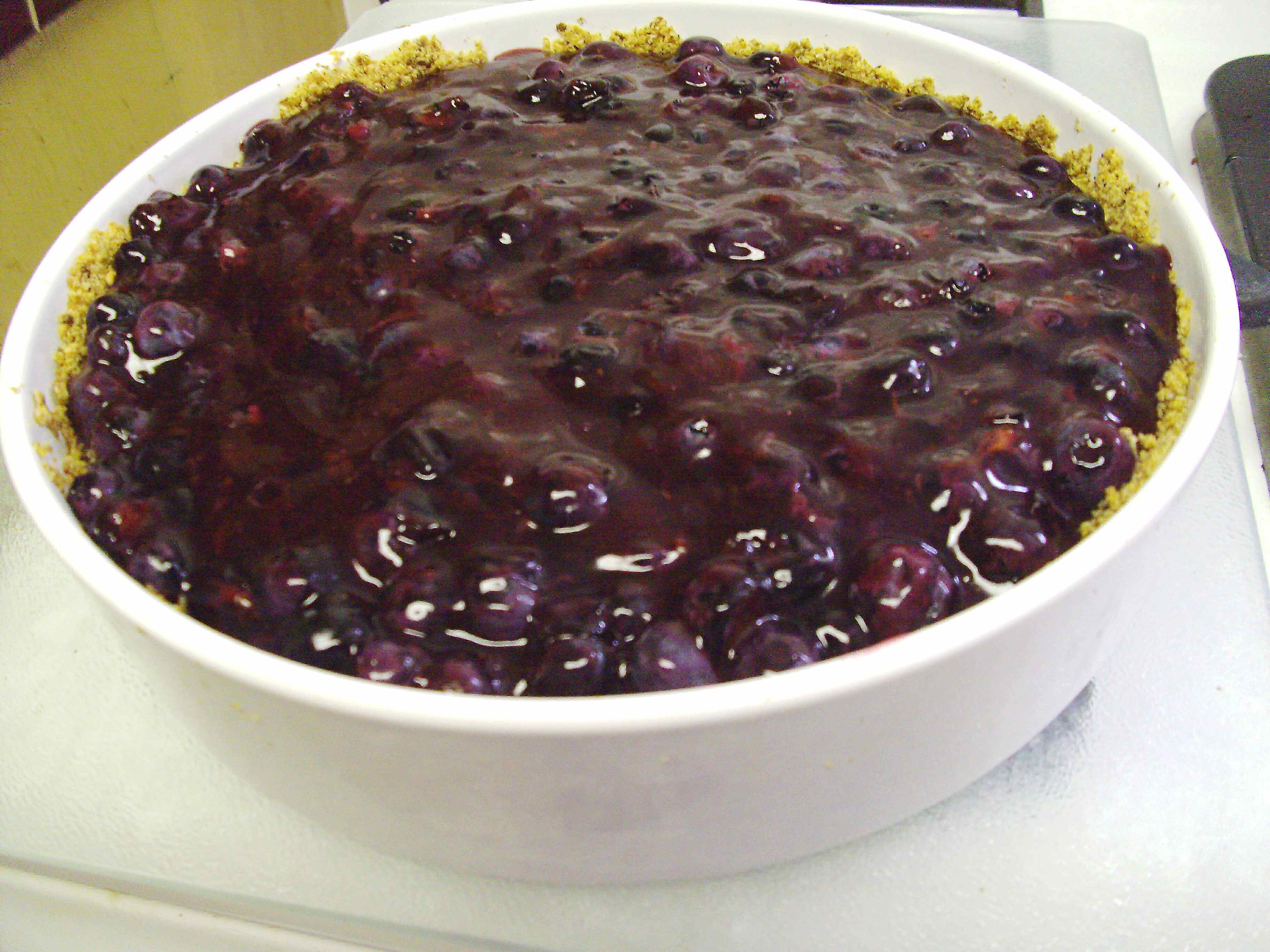
    raw blueberry pie with microwaveable filling and graham cracker crust

    This mostly-raw blueberry pie is a snap to make and very versatile--the filling microwaves in a few minutes, and you don't even have to bake the zippy gingered graham cracker crust--perfect for a hot Fourth of July and all summer long.

  • Recent Posts

  • Contents

  • Archives

  • Now Reading

  • See also my Book Reviews

  • Copyright 2008-2024Slow Food Fast. All writing and images on this blog unless otherwise attributed or set in quotes are the sole property of Slow Food Fast. Please contact DebbieN via the comments form for permissions before reprinting or reproducing any of the material on this blog.

  • ADS AND AFFILIATE LINKS

  • I may post affiliate links to books and movies that I personally review and recommend. Currently I favor Alibris and Vroman's, our terrific and venerable (now past the century mark!) independent bookstore in Pasadena. Or go to your local library--and make sure to support them with actual donations, not just overdue fines (ahem!), because your state probably has cut their budget and hours. Again.

  • In keeping with the disclaimer below, I DO NOT endorse, profit from, or recommend any medications, health treatments, commercial diet plans, supplements or any other such products.

  • DISCLAIMER

  • SlowFoodFast sometimes addresses general public health topics related to nutrition, heart disease, blood pressure, and diabetes. Because this is a blog with a personal point of view, my health and food politics entries often include my opinions on the trends I see, and I try to be as blatant as possible about that. None of these articles should be construed as specific medical advice for an individual case. I do try to keep to findings from well-vetted research sources and large, well-controlled studies, and I try not to sensationalize the science (though if they actually come up with a real cure for Type I diabetes in the next couple of years, I'm gonna be dancing in the streets with a hat that would put Carmen Miranda to shame. Consider yourself warned).

Quiche x Fillo = Yeah!

(…plus a few more cheap cheese tricks)

Cauliflower mushroom quiche wrapped in fillo pastry is crispy, elegant and light.

I had bought a packet of fillo dough a while back, in the thought that by now I’d have a couple of fun party-food ideas to suggest. But this week I’ve been feeling like I’d rather make and serve something nonsweet, nonfussy and not heavy–an easy main dish for summer, lighter and more serious at the same time, and something that could last more than one meal and reheat quickly.

This vegetable-filled quiche is a flexible dairy main dish with a Mediterranean vibe thanks to its fillo crust. It looks a little fancier than an ordinary quiche, but it’s not actually difficult to put together, and it’s also not a heart attack on a plate.

The only trick, other than needing to bake it in a conventional oven rather than attempting the microwave (so don’t do it during the heat of the day), is to control the temperature and moisture so you get the egg and cheese filling to cook through without letting the fillo casing scorch or, possibly worse, get soggy. It stores well in the fridge for next-day dinners, and you can reheat and recrisp individual pieces quickly in the toaster oven, especially if you microwave first for half a minute on an open plate just to warm them through, then slide onto foil and toast a few minutes at a baking temperature slightly below full-stun toasting so you don’t scorch the tops.

I’ve made two versions of this by winging it, essentially, and it’s worked nicely both times. The first was an open-faced spinach and ricotta fillo tart that went well at a Chanukah party back in December, and it led me to this second riff, a cauliflower-mushroom-smoked cheese filling, this time sandwiched between top and bottom fillo layers.

Before I get into the recipe and tips for working with fillo specifically, let’s talk a little about flexibility by highlighting one of my hobbies, getting cheap with cheese:

Continue reading

Oy, Chanukah, Already!

Artichoke-Olive spanakopita for Chanukah
Artichoke and olive spanakopita tastes authentic even though it’s
completely nondairy. The party round is pretty quick to put together, too.

Haven’t we just finished one holiday? Are we really ready to rummage through the candles and see if we have enough for tomorrow night? Do I really want to cook or fry anything at all today or tomorrow? I mean, I just got my booster shot and it’s starting to hit home. So I’m feeling a bit wrung out. But yes.

If you’re kind of in the same boat, and you’re also trying to behave a little–not too much–just enough so you won’t be size-challenged for party clothes by the time we hit New Year’s… well, I hear you. My husband and I are actually going to a potluck party for the first night of Chanukah tomorrow, and I’m making spanakopita again–why? because it’s got olive oil but not a ton, I’ve done it a number of times for Chanukah parties in the past several years and now I have it on the brain as Chanukah food. And it tastes good and looks like party food, but it’s a lot easier and quicker than you’d think, and folding fillo is a bit like origami or paper airplanes, which is always fun. And you can do the spinach in the microwave…so. Beats standing over a pan of oil frying latkes while everyone gets impatient–we’ll let our friends do that part since they said they would. And someone else promised a salad, so I’m happy.

If I can just pick my wilting carcass up tomorrow and put it together, and then remember where we put the candles from last year and my much-neglected party clothes (of course, here in California that could just mean a clean pair of jeans, I’d go for that) we can get it to our friends’ and have an actual celebration without too much trouble. Maybe.

I just have to convince myself. I have to convince my husband. Most of all I have to convince my cat that yes, I’m going to bed early tonight and that does not mean she should start poking her nose under my chin and trying to dislodge me just so I’ll pay attention. I used to have a similar problem with my kid, but now she’s grown up, mostly…

So–for anyone who needs a few mostly-fresh Chanukah ideas using olive oil–not too stodgy, and not too oily either–here’s the quick list to date, with a few fractured fairytales mixed in (I was always a fan of Rocky & Bullwinkle on Saturday mornings as a kid, and I just haven’t forgiven Robert deNiro and co. yet for the live-action dud).

But first, a (short, considering it’s me) health hock from your slightly wiped-out host:

—–HOCK—–

Give yourself the immense benefit of living! Get your COVID vaccines and/or boosters asap! A day or so of feeling schvach after getting your shot is nothing compared to being hospitalized or, worse, ending up with a long, hard aftermath that can include Type 1 diabetes, which is on the rise because of the huge spread of this virus. Type 2 may be caused by being a bit zaftig, but Type 1 is an autoimmune reaction to viral infection, and it’s for life. And no we didn’t know that either until my daughter was diagnosed in the wake of H1N1 bird flu 11 years ago. So take it from me, because I’m telling you you DO NOT WANT to try and “immunize” yourself or your kids by catching COVID or any other virus. Step up and get your shots and keep getting them as needed until this is actually over.

—-End hock—-

…and now, the ever-expanding Chanukah food list, which unlike all the newspaper food sections, Kosher.com and so on, actually features a few fresh vegetables here and there. Plus, as promised, a few geschichtes and bubbe meises…

OK, Fried PLUS Dairy for Chanukah

Posted on December 17, 2014 by DebbieN | Edit

Well…I figured out something quick to fry for the first night of Chanukah: slices of panela cheese, a white rubbery fresh cheese that’s almost exactly like halloumi. Only it’s Mexican rather than Greek, so it’s locally abundant.

Lightening up for Hanukkah (aka Chanukah)

Posted on December 16, 2014 by DebbieN | Edit

Tonight’s the first night of Chanukah, and not only haven’t I thought of presents, I haven’t thought of dinner. Here are links to Chanukah-worthy dishes from my previous posts.

Rugelach and the Chanukah Fairy

Posted on December 23, 2012 by DebbieN | Edit

You may be asking what on earth rugelach have to do with Chanukah. However, let me warn you, they’re entirely relevant to the holiday treats vs. self-control dilemma. Old-style rugelach are designed to prevent both tameness and pigging out.

Microwave Tricks: (Passover Haste and) Fresh Apple Sauce (which was actually from last Chanukah and very handy…)

Posted on March 26, 2021 by DebbieN | Edit

(What? no pictures of apples? How could this be?!! Somehow I’ve never taken any during Passover–maybe Tuesday…) I know, I know, it’s already Friday afternoon, Passover starts tomorrow night after sundown, and have I cleaned out my fridge? Have I found the all-important kosher-enough-for-me chocolate and kosher-enough-for-anyone cocoa powder? Um…no. I did just bake the […]

Artichoke-olive spanakopita for a party crowd (the big round pan done easily, vegan without seeming vegan, and taka with a fancy slideshow and everything)

Posted on January 2, 2015 by DebbieN | Edit

If you can’t have feta cheese in your spanakopita, this is definitely a good way to go. And making a big festive round tray is a lot easier than it looks. So I’ve put in a slideshow demonstration along with the recipe.

Cauliflower pakoras, lightened up (oh, yeah)

Posted on December 30, 2017 by DebbieN | Edit

By the time I was ready to start lighting candles and sing I had made two extra credit (but simple) sauces for the cauliflower pakoras. I was in the groove and feeling righteous and like I could do no wrong because the pakoras were smelling good. There has to be some time when it’s fun to be in the kitchen, right?

How to fly with a pie (for the 10-minute microwave-to-pan-browned brussels sprouts with hazelnuts recipe)

Posted on December 7, 2015 by DebbieN | Edit

How to fly with a pie…In which yours truly finds herself invited to a magazine-worthy Sonoma idyll for Thanksgiving and feels totally outclassed. Luckily Thanksgiving is about cooking together as much as eating, and we all got down to both pretty handily. I even got the honors of being up to my elbow prepping the turkey (the food glam magazines somehow never show that part; too much like an episode of “ER”).

More things to fry in olive oil (because)

Posted on December 3, 2010 by DebbieN | Edit

Even with mechanical assistance in the form of a food processor, I’m a one-latke-night-per-year-is-enough kind of person. I want something other than potatoes at Hanukkah if I’m going to be frying stuff in more than a spoonful or so of olive oil. Therefore I look for other maybe less starchy and more flavorful (one can always hope) things to fry.

And also….

Continue reading

Last-minute Thanksgiving 2021

Good reasonably fast bread makes for a better cheese plate–so I tell myself…

I’m always, always late to the table, I know it. Yes, it is sort of too late to do much more than give you the link to my Slow Food Fast Thanksgiving guide from a few years ago plus the few new ones from last year, and recommend “Thanksgiving” in the search box if you’re stuck for microwaveable but good ideas.

Last year was the first on-our-own-but-Zooming-it Thanksgiving and this is our second, and Chanukah starts Sunday evening. Maybe I’ll have something exciting and original by then.

Despite all that, I do have a few things I’ve been meaning to share but haven’t had time to post. The past few months seem to have sped up on me because my daughter’s aiming to graduate early this year, and because I’ve been helping host the still mostly-online Jewish Book Festival for our region and that means interviewing authors–some really eminent ones–for our local Federation magazine and moderating online for two of the events. So my “skill set,” both technical and staging, has had to rev up in a big way…

But Thanksgiving…I am doing most or at least some of the same menu I put together for “just us” last year–artichokes in the microwave, wild rice pilaf, salmon, broccoli, salad, pumpkin pie, cranberry sauce, and maybe some mushroom caps. All of it is good and almost all, everything but the salad, is microwaveable at least for part of it, and there will be good leftovers for lunch this weekend. So–not much new.

The things I did last year that I didn’t manage to post include a relatively quick whole wheat olive-rosemary faux-sourdough bread, which came out really well and I’m doing again, and the cheese plate à deux that manages to be interesting without breaking the bank…

These things may not come in time for today, depending where you are and how impatient or well-stocked, but they could come in handy in the next few weeks.

Whole wheat rapid faux sourdough with mix-ins

I usually keep a bowl of dough in the fridge for things like pita and calzone and it lasts me about a week. I’ve done proper sourdough rye and kornbroyt with medium success, and a yogurt-based 3-hour “faux” sourdough that wasn’t too bad, but lately I’ve decided that I can get a decent mildly sourdough flavor simpler and nondairy by just stirring a capful of apple cider vinegar into the flour as I’m making a regular yeast dough.

For this whole wheat bread, I’m doing a smaller ball of dough than my usual salad bowl worth–I want it quicker and it’s really just for this, so. I took a chunk of the regular dough since I had some in the fridge, maybe a heaping tablespoon or so, softened and pulled it apart with a fork in half a cup of warm water, sprinkled on about a cup each of whole wheat and regular bread/AP flour, less than half a teaspoon of salt, and a small capful of cider vinegar, and started stirring. I heated up another half a coffee mug of water a few seconds in the microwave, just to “finger-warm,” and added just enough to the bowl to get it to make a reasonable dough, kneaded it until smooth, drizzled on olive oil, covered the bowl and set it in a colander over a stockpot filled with hot tap water–and put a lid over it to shut out light. Hopefully it’s rising as we speak.

Olive rosemary bread in progress, as of Thanksgiving 2020–from the outcome, I’d say at least double the olives and throw in some chopped walnuts as well to get a more generous, nicer-looking distribution.

You can go a couple of different ways with mix-ins. Last year I chopped some Greek olives and minced a sprig or two of rosemary from the bush in the backyard, and when the dough was risen, I rolled it out into a rectangle and sprinkled everything on, rolled it up, let it rise again covered for 40 minutes or so while I heated the oven to 420F, and then threw a mugful of water into the oven and baked the bread for about an hour–it was a bigger loaf than I’m doing today, so I expect this one to take less time.

This year I’ll probably do the same but throw in a few chopped walnuts and maybe hot-soaked raisins as well. You could do raisins instead of olives if you prefer, nuts or no nuts, or just rosemary and thyme or sage if you want an herb bread.

Cheese plate with slight microwave assist (because, of course…)

The Ralph’s/Kroger in my neighborhood put in a fancy cheese counter two years ago, trying to rival Whole Foods and more or less doing a decent job of it. The Ralph’s cheeses are all stocked by Murray’s, which is headquartered in (I think?) the Hudson Valley in New York.

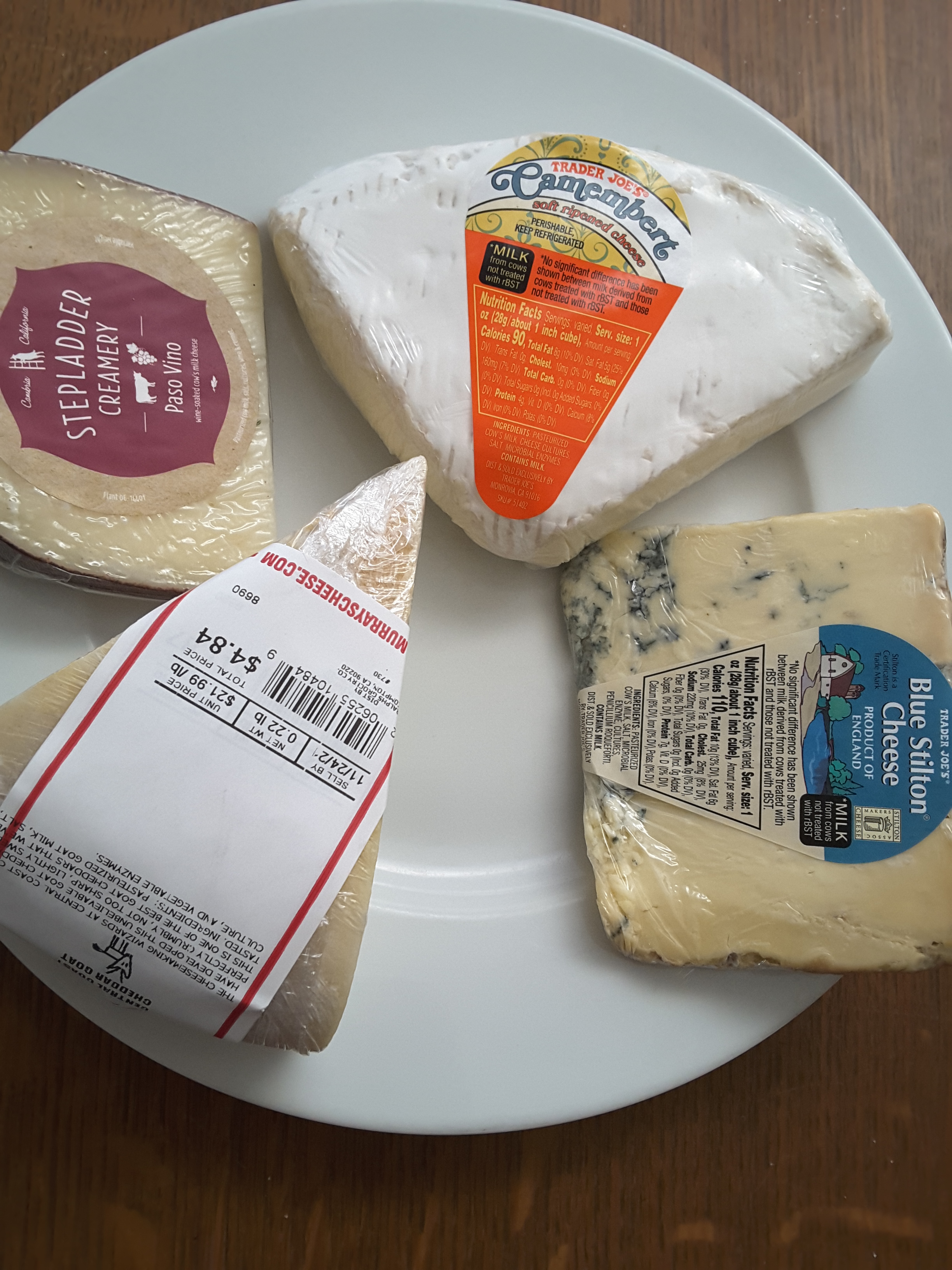
Now, that of course doesn’t sound incredibly affordable and the regular prices aren’t terrible but they’re still $10-25 a pound, which is a lot. However, the cheese counter always has a few “under $5” baskets out to attract those of us who don’t have champagne budgets or big parties to stock but are still sort of cheese freakish.

$20 cheese plate! Notes: 1. The Stepladder Creamery wedge, at $7, is the most expensive one here and full price; it’s still relatively inexpensive, wonderful and flavorful even in slivers, and produced by the dairy where my niece is a goat herd manager up near San Simeon. The other wedges are all over 5 ounces–the Ralph’s/Kroger/Murray’s Cheeses goat cheddar with vegetarian rennet at the lower left, contrary to what the upside down label says, is actually over 9 ounces, not the “0.22 lb” (3.5 oz) on the label. The full prices for the other two from Trader Joe’s: 3.60 for 5 ounces of stilton; 4.66 for 8 ounces of camembert, both vegetarian rennet.

And sometimes they’re actually big wedges, 6-8 ounces, that are nearing their sell-by date, or maybe they’re just not moving, so they discount and you can get a major bargain on things like Humboldt Fog or Cambozola, a stilton, or an aged goatsmilk cheddar or asiago-style cheese like Ewephoria. (Of course, occasionally you can find seriously discounted Limburger going for 75 cents a tightly-wrapped chunk, because they really, really want you to take it off their hands).

Continue reading

Microwave-Pickled Eggplant for Felafel

What goes into a classic felafel pita? Tomato/cucumber diced salad, yes. Chopped or shredded cabbage or Greek-style lahanosalata–maybe. Hummus and tehina–of course.  Dab of z’khug, harissa, salat turqi and other medium-hot red pepper condiments, up to you. Olives? if Greek-style and not the black rubbery cheap flavorless American ones from a can. “Chipsim” (aka, chips or French fries)–not my thing but okay as long as they’re fresh and crisp, not soggy or lukewarm.  Hilbe–a sour fenugreek-based sauce something like mustard dressing.

And pickled eggplants. The true pickles for felafel, if you ask me. You can probably find them in cans in Arab and Armenian groceries or online, but they’re pretty full-on brined and have a lot of the same deficits of both commercial cucumber-type pickles and canned vegetables. Lot of salt, a bit metallic from the cans, and a little less than fresh. Plus with cans, you have to either use them up all in one go (at your huge felafel party) or else store the unused pickles in a fresh nonreactive container in the fridge. Which isn’t necessarily that big a sacrifice, if you’re really into them, have a lot of takers to share them with, and/or are planning to eat leftover felafel for the rest of the week (month?) But fresh-made eggplant pickles are a lot better if you just want them for a meal or two, or you want to control the salt level so you don’t wake up the next day with swollen ankles and fingers like cucumbers.

Classic pickles are made with the little finger-sized eggplants like the ones I used for Syrian stuffed eggplants a few years ago or else with long, thin eggplants sliced crosswise. But regular large ones will also work, cut into bite-size pieces.

If you have fresh eggplants of whatever size, you can pickle them in one of two ways, depending on your patience level. The first is your basic half-sour pickles fermented in a couple of days to a week in a mason or canning jar on a counter–much the same as for half-sour kosher dill pickles or pickled green tomatoes but maybe without the dill. When I lived in Israel back in the ’80s, I was surprised to see jars of eggplant fingers pickling on many people’s home kitchen counters. It seemed so Mediterranean-idyllic to me, coming straight out of a mainstream college town in the days before wholesale foodieism. For eggplant, as for the green tomatoes and cucumbers, use a standard salt and distilled vinegar brine that you’ve boiled and cooled, and pour it over the eggplant chunks and flavorings in the jar. Instead of dill, throw some well-scrubbed organic lemon slices and small whole dried hot peppers into the jar with the halved garlic cloves and whole coriander seed, pack the raw eggplant slices in tightly, and pour the brine over before capping the jar and letting it sit to ferment a couple of days. You’re not going to process these in a hot water bath, so keep them in the fridge and use them within a week or so.

However…there is a much faster way to get to pickled eggplant heaven in about 5 minutes–microwave marinating. If you just want a few right now, you want eggplant pickles that taste fresher and have lower salt, or you’ve never tasted them before and you’re not sure what you’ll think of them, a microwave will get you a reasonably small taster batch in about 5 minutes flat, and you can make them in a snaplock container that goes straight to the fridge once it’s cooled down. The taste and texture are both surprisingly authentic, based on my last two tries.

Why would you bother pickling an eggplant instead of cooking it, anyway? Well…I had a big eggplant that I hadn’t gotten around to using for a week. It was developing soft brown spots in places and I wasn’t sure was really going to make it much longer if I didn’t get on and do something with it, but I thought it was probably now too tough for straight eating–eggplants get tougher and sometimes more bitter inside as they age. So I cut off the spots on the peel and started slicing the rest into small wedges to see if I could do a quick version of eggplant pickles in the microwave and get somewhere close.

I’ve done it before with mild hot peppers (and occasionally, accidentally, with peppers that turned out not to be mild) and sometime this past year I tried it with a couple of green tomatoes too, despite having made pretty good deli-style pickled green tomatoes the official way a few years ago. The microwave tomatoes came out basically identical to the two-day jar-fermented version, which surprised me. So I can say with confidence that this microwave method seems mostly good.

But here’s the tricky bit.

When you microwave in a brine, you have to work out how soft or crisp you want the vegetables to be, and play around with the microwaving times and what you put in when so that you cook the vegetables just enough and let the brine penetrate, but not so much as to end up with limp mush. The hot vinegar and/or lemon juice will also “cook” and discolor some vegetables more than others. Commercial operations offset these and other problems by adding sodium metabisulfite, alum, and other tricky preservatives and texturizers at various stages, but they’re not easy to obtain for home use and can be dangerous if mishandled. I’m pretty sure they don’t actually improve the taste.

It’s both easier and a lot safer–not to mention cheaper–to play around a bit and figure out a microwave method that gets you where you want to be or at least close. Because you can. Of course you can.

Here are a couple of strategies for microwave-pickling depending on the kind of vegetable you have and what texture you’re aiming for, and then we’ll look at what I did with the eggplant slices.

Microwave Marinating Combinations

Do you want to microwave the veg and brine ingredients together, all in one step, and let the brine cook the vegetable? That works well for things like marinated artichoke hearts or sweet and sour red cabbage. You could do that as a first try and see if you like the texture, adding a bit of time if it’s not cooked enough for you or cutting back the next time if the veg is too soft. Easy enough.

But you can also adjust which part cooks more, the veg or the brine. You know at some point you’re going to have vegetables in a container with brine and a lid, but the order and degree of cooking are up to you.

Continue reading

No, I don’t know what I’m making for Thanksgiving either

–And it’s already after noon! So it’s going to have to be quick. I did manage to figure out a Zoom meeting for later with my family on both coasts–I have the odd feeling of joining the 21st century a beat or so late while they all roll their eyes, but still. They’re used to me being late to the table, and always last-minute. If you are too, I have some reasonable (and a few not-so-reasonable) microwaveable options below.

This year, we’ve watched the spectacle of the election and its many, many, many entertaining lawsuits attempt to distract us from the huge, unfortunately predictable third spike in pandemic numbers all across the nation, and we’re facing facts: our kid is not coming home until finals, our parents on both coasts are being cautious and hunkering down as are we. The upside–we’re not traveling for Thanksgiving, or being required to smile and praise anyone’s turkey or attempt the groaning board. The obvious downside is what the heck do you make when it’s just you?

It’s just me, my husband and the cat, plus all of our family expecting to hear from us remotely so we don’t all feel as isolated as we feel. Which means mostly that we’re going to have to figure out how to Zoom everyone and not get cranberry sauce stuck in the laptop keyboard. And, of course, not reveal the exact state of our livingroom if we can help it.

This is going to require reserves of stagecraft, because when you’re stuck home with your husband and the cat instead of getting to dress up, sip champagne and hug all the people you haven’t seen in a year, the last thing you really want to have to do, besides cook all day, is straighten the livingroom for company.

The most important things, the essential things about Thanksgiving that I actually look forward to have nothing to do with the menu and everything to do with the experience (once we’ve recovered from schlepping halfway up California anyhow).

First is the getting together with family and friends–we’re Zooming and calling today and tomorrow, best we can.

Second is the sense of celebration–but how do you do that for yourself at home? My favorite part of Thanksgiving at my in-laws’, who are great hosts and savvy party people, is the way they welcome everyone into the house mid-afternoon, a couple of hours before the late-afternoon dinner. They set out cheeses, crackers, olives and nuts, raw vegetables with dip, and glasses–and break open a bottle of champagne for toasting. Sparkling apple juice for the kids, if they’re not already running through the house to the backyard for games.

I do have a frozen kosher turkey breast somewhere at the back of the freezer, but for just us, without our daughter home, it’s going to be microwave-assisted pan-grilled salmon, which I admit is kind of prosaic but still, after much testing, clearly the best indoor way to make it.

On the other hand, having fish rather than meat allows me to think, I can haz cheese platter? (the cat approves).

We never really do appetizers or cheese boards just for ourselves at home; that would probably be a good way to feel like it’s at least slightly partyish and worth celebrating something. Get out a nice bottle of wine and some glasses–I think I actually have a decent under-$20 bottle of Piper Sonoma champagne somewhere in the wilds, good enough for toasting, even though I still usually prefer reds and still whites.

Actually, if you’re home alone or with just your immediate family, that’s probably going to be a better way to make it feel like Thanksgiving than all the huge big-cooking thing. And put some sunshine on the plate too–good green (and/or purple) salads, a bowl of tangerines and apples that people can snag, something fresh.

In any case, if you’re really stuck for ideas, check out my mostly-microwaveable Slow Food Fast Thanksgiving Guide.

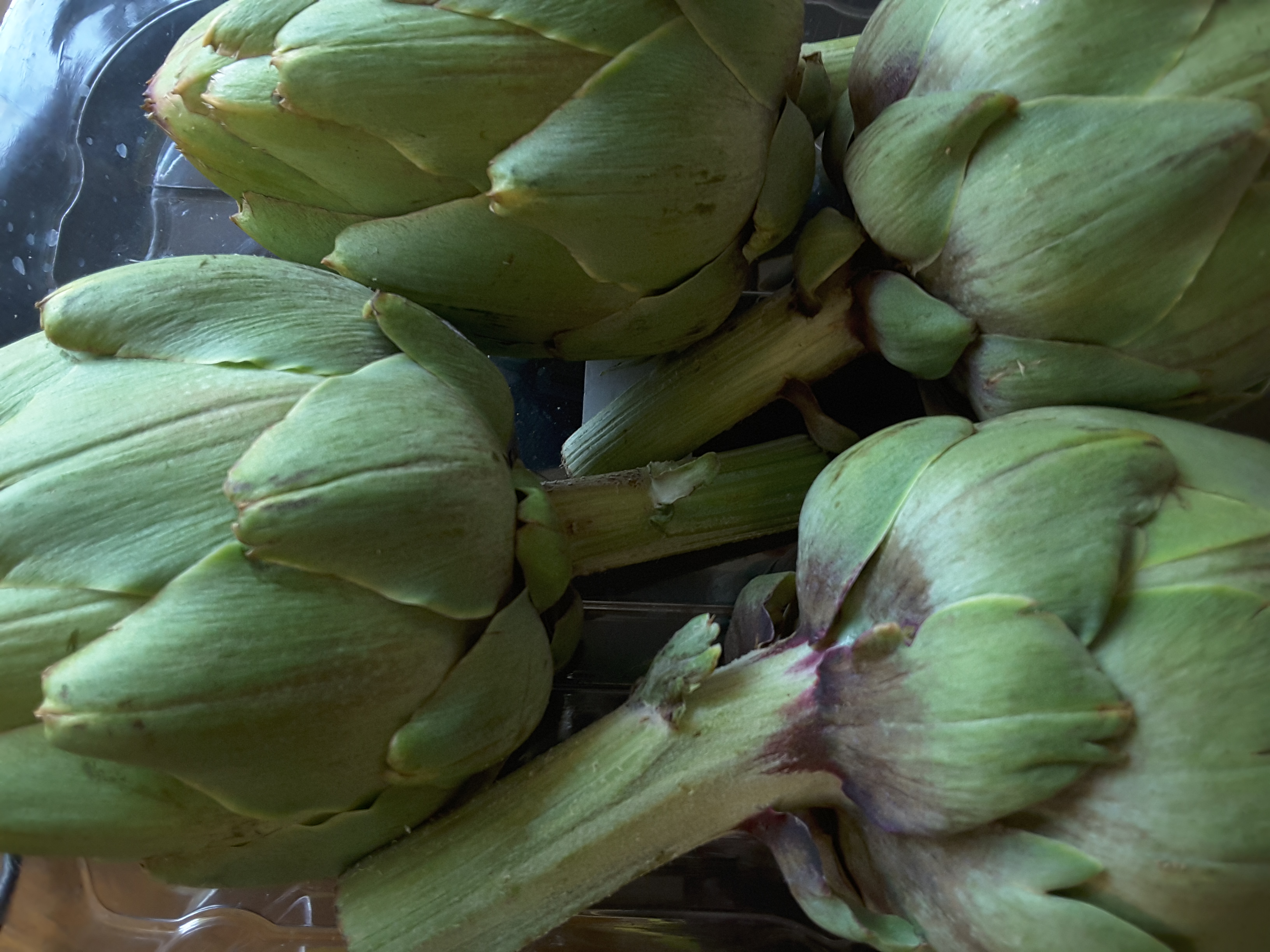
And I’d like to add two more mostly-microwaveable items to that list, because for just us, I’ve decided to snag a box of globe artichokes at my local Trader Joe’s and also a bag of wild rice for a pilaf with some chopped apple, onion, mushrooms and pecans or walnuts, and raisins or other dried fruit.

Artichokes I’ve already steamed successfully in the microwave in years past, but I don’t think I’ve ever posted the method here. It’s pretty straightforward and similar to my usual method for steaming broccoli or brussels sprouts or other cruciferous greens, just a few minutes longer per pound because they’re whole, they’re tough, and they contain less of their own water.

The wild rice I’m trying in a microwave for the first time–going by my brown rice experiments, I’m going to hot-soak it for a bit to crack the outer husks, then microwave it in earnest for a few minutes at a time, letting it sit and soak up the hot water for a while undisturbed before stirring and testing and deciding if it needs more time. Hopefully it won’t get mushy. It’s already after 1 pm so I’m going to break off with just this and then go microwave some cranberries, wash a few glasses, clean off the table (got to look better than it really is), and get dressed for company, at least sort of–I have a family to Zoom!

A toast to all of you–Happy Thanksgiving, make sure to give to your local food bank and homeless shelter this season, because even small amounts help, and may we all have a safe and better year.

Whole Artichokes in the Microwave

  1. Trim the thorny, tough outer leaves and the stems off a couple of large or a bowlful of baby whole artichokes. Open the centers carefully–there may still be a few thorns inside–and use a spoon to scoop out and discard all the dandelion-like fuzz and trim off any thorns at the top of the soft inner “heart” leaves.
  2. Squeeze some lemon juice on and inside, plop the artichokes in a microwaveable container with about 1/4-1/2 inch (~1 cm.) of water in the bottom, add the lemon half if it’s washed and organic, or just squeeze a little more juice into the water. Put on a lid and microwave on HIGH for about 7 minutes, then let sit a few minutes. 
  3. Test for doneness by pulling off one base leaf (should come away very easily) and/or poking gently through the bottom of one of them with a sharp knife to test if it’s tender enough. Add another minute or so if they’re not there yet.
  4. If you have more than one layer of artichokes in the bowl or container, the ones at the bottom may be less cooked than those at the top, so you may want to bring those up before adding any additional cooking time, or remove the fully cooked ones and then microwave the less-done ones a minute or so more with the lid on.

Serve with basic lemon-butter sauce that my husband prefers because his mother made it that way (melt a little butter, squeeze in some lemon juice, scoop out any seeds that fall in) or the more exciting tzatziki-type sauce I like better with artichokes: nonfat plain Greek yogurt, a dab of garlic, a drizzle of olive oil plus a squeeze of lemon juice, and a little thyme, dill and mint or basil chopped and mixed in, cracked black pepper optional.

Bourekas, Pastry Crust…How Low Can You Go? A Lower-Fat Flake-Off

Borekita "flakeoff" tests two types of dough

I know bourekas aren’t health food, they’re party food, but it doesn’t stop me from wanting to make and eat good ones in (small, sane, occasional) quantities.

Key to the desire for bourekas of worth is my never-ending hunt for a pastry dough with all the right qualities–lighter, tenderer, massively flaky, and oh, while we’re at it, much less heart-stopping than puff pastry or most pie dough, but still capable of flaking and puffing up nicely. I almost had it a couple of years ago with an Armenian dough that calls for a little vegetable oil in with the butter, a bit of cider vinegar for tenderness and an egg to help out the puff. But with butter, there’s automatically a lot of saturated fat, plus it takes more work than I like.

Enter the nondairy, oil-based borekita dough. Israeli (Turkish, Bulgarian, Sephardic…) bourekas, nowadays usually made with commercial puff pastry and sold in characterless boxes or plastic-wrapped trays from the supermarket, are nonetheless wildly popular with almost everyone in The Land whether they voted for Bibi or Benny. The boureka is not in doubt.

Puff pastry is nice enough in most circumstances–after all, it is what I’m aiming toward, or would ideally like to be aiming toward, if I can get away with something lighter. But after a while the packaged versions of puff-pastry bourekas all start to taste the same–salted potatoey stuff, indistinguishable through the mouthful of flakes, and not exactly fresh.

Homestyle boureka dough is much less puffy, more like the dough for sausage rolls. But still–less rich, usually made with oil rather than butter, so it’s both nondairy, to go with meat meals if you keep kosher, and lower in saturated fat (unless you go big on cheese fillings, anyhow) and lower on fat percentage generally. It’s also more economical, more delicate and less oversalted, and it doesn’t overwhelm the fillings.

But the real tests of how low on fat you can go–how well does it flake? How does it taste?–require a head-to-head comparison of different doughs with different fat content. Since it’s down in the 80s I decided to do small batches of each type and see how they worked.

There are two common versions of this home-style boureka dough, a more-oil version and a more-water version.

More oil than water

Al HaShulchan (“On the Table,” the Israeli food magazine) editor Janna Gur‘s recipe on her English-language site is very simple especially if you weigh everything out on a digital food scale (easier and more accurate than trying to juggle dry vs. wet measuring cups and scooping and sweeping and sifting). By weight, it’s about 50% fat to flour–four parts flour, two parts salad oil, one part water, a little but not too much salt. Her recipe makes about 50 borekitas; I decided to quarter that for this test because I’m not stupid and I know myself, and what was I going to do with 50?

Janna Gur borekita dough with more oil than water

The dough for this version has the texture of shortbread or playdoh, very short, and oil will definitely coat your hands when you pinch off walnut-sized balls to roll out for the borekitas, but at least it’s polyunsaturated, not solid fats. Because it’s so oily and you handle it so lightly, there’s no gluten built up. The dough is a bit fragile and rolls out a little ragged as you can see above, but you can roll, fill and bake right away.

Less oil, more water

Bureka Boy, whose Is-that-my-bureka blog, with its wealth of Sephardic and other Jewish recipes, paused for posterity in 2009 (though recently it looks like he may have shifted to Facebook or Instagram or both), has a smoother dough with the proportions of oil and water reversed, so about 25% oil to flour by weight. The water is added very hot when you stir it in (much like jao tze dough), so the dough develops gluten and needs an hour’s rest after mixing and kneading. It’s still quite oily when you go to pinch off individual balls for the borekitas, but it’s more elastic, with a smooth surface and better strength to roll it thin without breaking. You can handle it more and get neater pinched edges on the seal.

BurekaBoy's borekita dough with more water added hot to build gluten


So…on to the Flake-Off! Continue reading

Cauliflower pakoras, lightened up

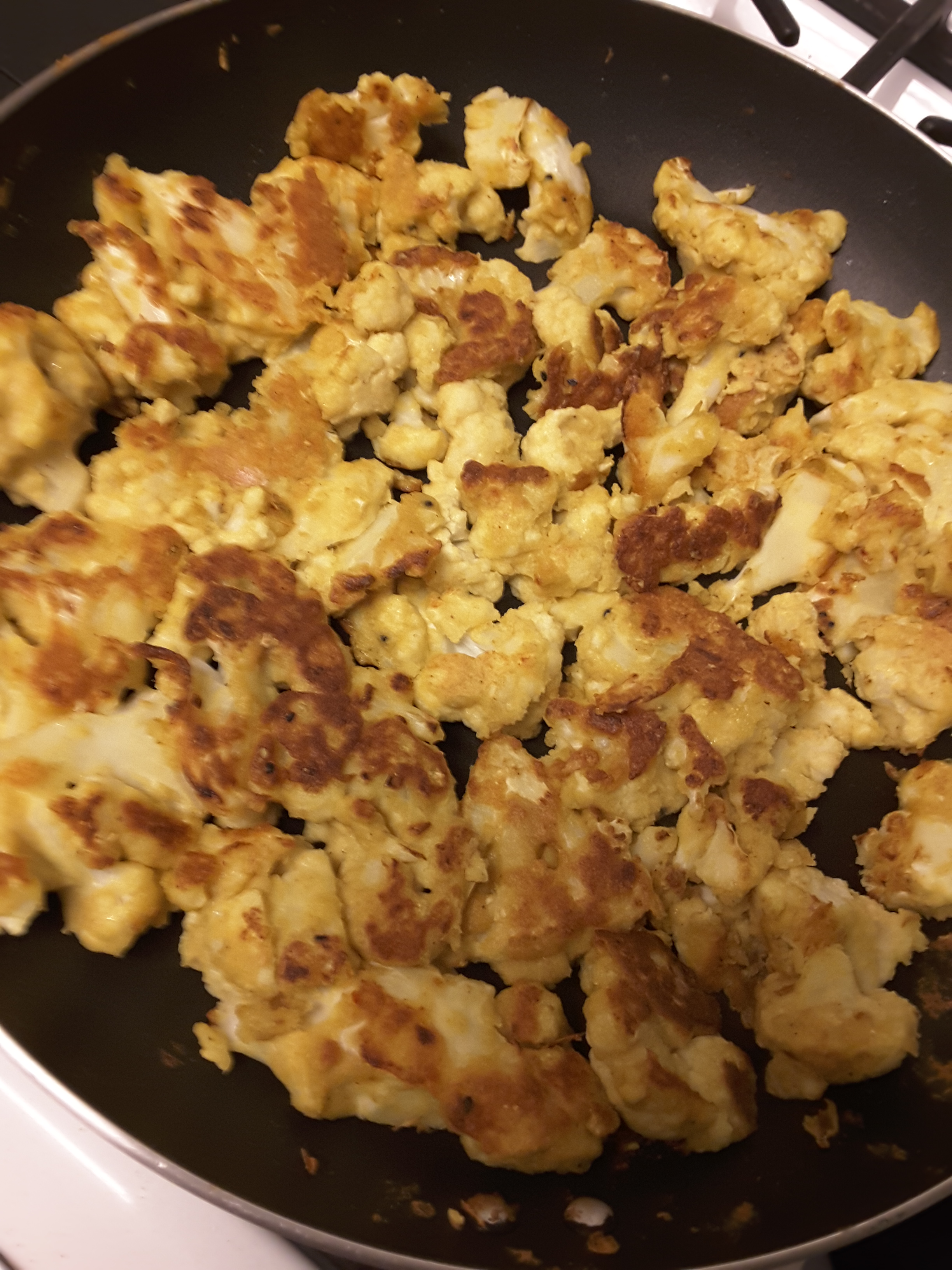
Cauliflower pakoras

Back at the beginning of Chanukah in mid-December, I was too busy to do much celebrating or posting. We were traveling more than usual and my daughter’s college application essays were still in rough shape and we were both a little panicked. My poor husband was working 13-hour days and trying to calm down the younger post-docs that this wasn’t ALWAYS how R&D goes–just sometimes. It’s the price you pay for doing rocket science.

And it was pretty hot and dry around Los Angeles–hence all those fires in the news. Makes it hard to feel safe breathing. Still, we did manage to celebrate modestly, even though the first night of Chanukah was during the nailbiter Alabama special election, whose results wouldn’t be in until after supper.

In any case, I’m posting this now because these are relatively quick and easy (and inexpensive) appetizers. They’re not super-svelte but not overloaded either, and they taste good, even after Chanukah is over (but please, make a fresh batch…)

I don’t do deep frying for Chanukah, particularly not with olive oil, which is expensive and wastes the oil and the calories (gotta save a few for the gelt–chocolate coins). And the cleanup. As my forebears did, I want to make a little olive oil last a longer time by using it sparingly with foods that deliver a slightly better svelte potential than potato latkes. Well–most of my forebears were more worried about getting enough food during the winter, not about eating too much, but let’s say my parents, who grew up in America with enough potatoes and enough oil to give you a gallbladder (and if that’s not a Jewish expression, I don’t know what is). In any case, frugality is warranted but so is enjoyment. How to balance the two?

I’m in love with gilded cauliflower–I think I’ve mentioned it a few (hundred) times. It’s quicker to prepare and probably even somewhat cheaper in salad bowl volumes than pasta or potato salad most of the year. Certainly more nutritious and sophisticated. And it contains garlic. I recently reinforced that view with my entire congregation when I brought a Sicilian (Roman? don’t exactly know) roasted cauliflower, pepper and artichoke salad to a brunch buffet after services. I was pleasantly surprised that by the end of the meal most of it was eaten and actually complimented on. I know, that’s not a true indicator in a lot of places, but Jews aren’t generally shy about telling each other what they really think, especially my congregation, and especially about food.

But I wasn’t totally in the mood for more of the same, even though I had about a third of a big head of cauliflower and some marinated artichokes left over from a frittata. Somewhere in the depths of my grains-and-beans drawer in the fridge (most people use it as a meat drawer; I use it to foil moths) I had stashed a bag of chickpea flour (Bob’s Red Mill; about $2-3 for a 16-ounce bag) because I thought I might make felafel (microwaved and pan-browned, still not deep-fried). But that seemed like a bit of work and kind of heavy.

When I went to pick up my daughter from school, I still hadn’t quite figured out how or what I was going to do quickly but semi-festively on a weeknight with homework and college applications looming. I knew I wasn’t even going to bother wrapping the presents I had for her and my husband, and I had to scrounge for enough candles to light the first night’s lights (note to self, get an extra box, one for next year).

As we passed a new Indian restaurant on the way home, though, it finally clicked.

“How about if I tried making some cauliflower pakoras?” I asked.

“That would be freaking delicious!”

OK, then. Continue reading

Surviving the holiday table

Yeah, yeah, I know. Last month every newspaper and online health magazine was brimming with handy top-10 tips to avoid stuffing yourself into a coma when you got over the river and through the woods to your in-laws’. Did it work? Did you try any of them? Was it even possible with the food available? MMMmmmph.

And…now we’ve started on the next round of holiday parties. And yes, I’m well aware, after last week’s “let the fools have their tartar sauce” tax subversion bill, that the tenor of my questions could equally apply to trickle-down economics, neocon “efficient” remote war management in Iraq and Afghanistan, “I am not a crook,” “too big to fail,” “No Collusion,” “FAKE NEWS,” and other fantasy favorites.

I don’t want to add to the burden of public speculation on the kinds of people who could genuinely fall for those slogans or excuse them in the face of the visible harm they do to all of us (okay, MOST of us. 99.9 percent of us). I’ve met some of these true believers, a few are actually friends, and they are otherwise decent, but really, stubbornly naïve is the kindest thing I can say. Tunnel vision, perhaps.

But back to holiday food–an even more fraught social topic. Because the same stubborn naïveté applies.

The trouble with most of the dutifully published top-10s for navigating party fare is how incredibly vague and trivial they are. They don’t give you a plate plan diagram like the ones for DASH/MyPlate balanced meals and the Idaho Plate™-style recommendations for Type II diabetes management. They don’t help you set a reasonable goal number for carb grams for the total meal including desserts and appetizers, and they don’t help you estimate anything or give you some sample sizes to go by.

Instead, they put the burden on you (or your kid) to select and use the fictitious ideal of self-control (more accurately known as “winging it”) in an environment that, to put it mildly, probably won’t support it. Oh, dear. JUST like the tax boondoggle.

There is also a big, big missing ingredient for most of these party suggestions: vegetables of worth. People don’t cook as much as they used to, chain restaurants and drive-thrus don’t really serve them, and the big food mags have almost dropped them from any party spread that isn’t for summer.

If there aren’t greens on the table, how do you fill half your plate with them as recommended by doctors and CDEs and RDs everywhere? If there’s one green vegetable dish and it’s breaded, panko’ed, crusted, dressed, nutted, topped, creamed or cream sauced, gratinéed, gravied, stuffed, sweetened, pancetta’ed, buttered or cheesed (I know, some of that litany is starting to sound a little obscene, as it should) to within an inch of its life, is it still worthwhile counting it as a green? Or is it actually mostly yet another starch with cheese, cream, butter, breadcrumbs, bacon bits and so on?

If you need to cover up any dish that thoroughly, it should tell you something pretty important about the recipe:

It is not exactly a taste explosion.*

Sorry, I WAS trying to get away from the obvious political metaphor, but it looks like it’s going to stick. (*And my thanks to the much-mourned Douglas Adams of The Hitchhiker’s Guide to the Galaxy series–and more specifically another of his books, Dirk Gently’s Holistic Detective Agency, for that line).

In any case, to survive the holidays and look good doing it, you need a winter holiday table that works better and tastes fresher and is actually lighter than the usual stuff and won’t leave you wishing for a sleigh to schlep your stomach home in after the party.

You need vegetabalia, ungunked. Some actual greens (or purples) on the table to lighten the load and redress the balance.

Actually, vegetabalia has always been a key part of classic dinner parties and it would be a shame to forget it, especially when you’re in the heart of winter. I don’t think I actually have ten ideas here, because as you may have seen in my previous attempts at top-10 lists, I tend to go a little overboard. Let’s see.

One way to do it without too much shock is to make the starch dishes a little smaller and the greens platters a little bigger and more numerous, colored, varied and–this is actually important, at least for a party–pretty.

Another is to add a green salad worthy of a celebration–keep it simple, elegant, just a couple of key and colorful ingredients that go together, not like something you scooped out of your local chain restaurant salad bar. See the big box of salad post for some inexpensive and winter-worthy vegetable selections that are easy to prep and store in the fridge for showtime and won’t look like “rabbit food.”

The third is to provide appetizers that are bigger on vegetabalia, ones that get beyond celery sticks, baby-cut carrots and bottled ranch dressing and are actually appetizing.

…Of course, the key element for avoiding idiots who take one look and say, “Oh. Rabbit food.” is not to invite them in the first place. The second strategy is surprise (in a good way, that is, not as in “celery with marshmallow fluff!”)

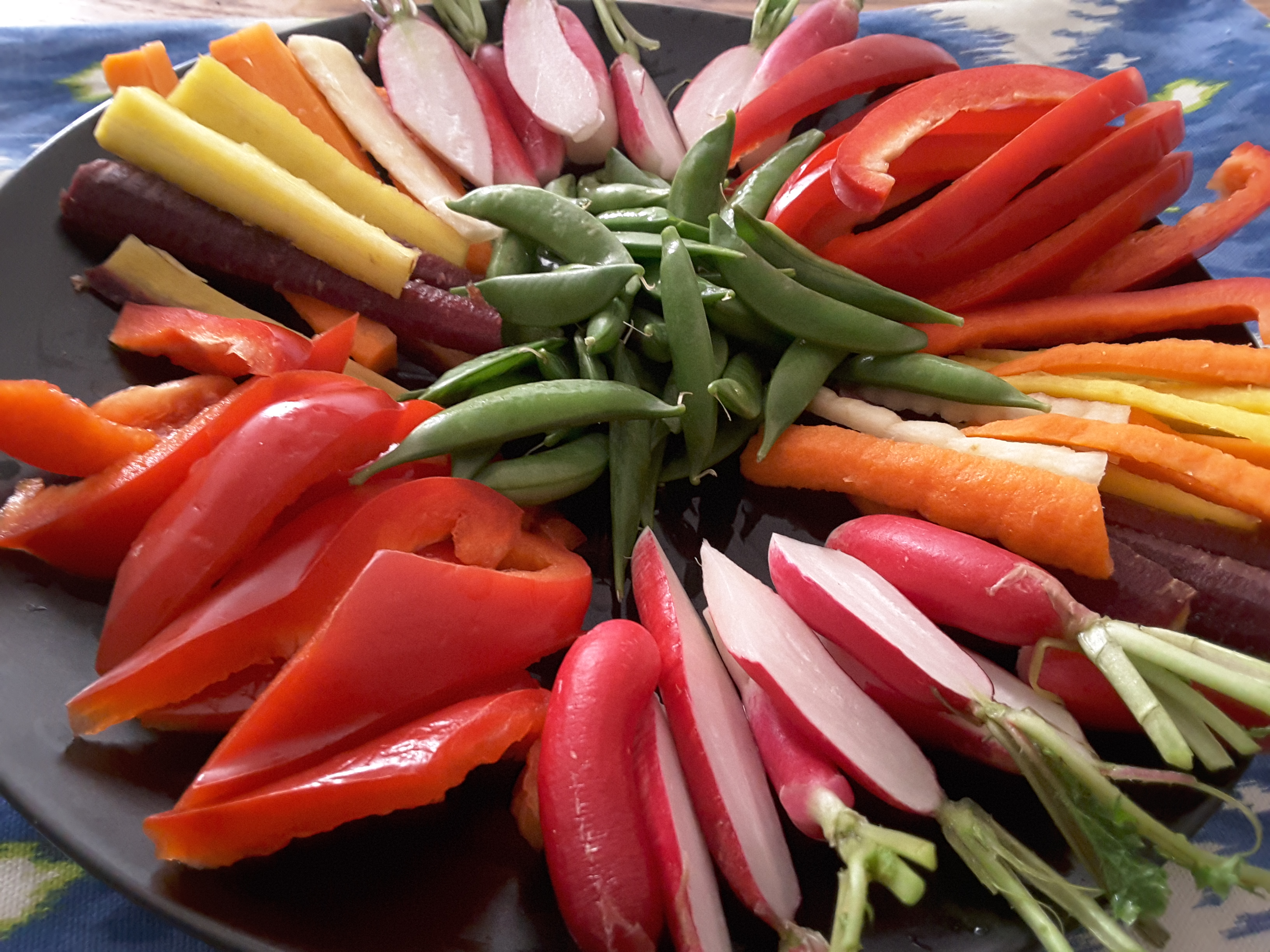
Good-looking vegetable appetizers that won’t bore people aren’t necessarily more expensive, especially if you buy bulk vegetables and wash and cut them up yourself. And some can actually be easier to make, and make look impressive, than lining up all those crackers and cheese slices neatly on a circular tray (my bane, I just don’t have the hostess/catering gene). The bonus: if you’re the host, you won’t have a load of crackers and cheese sitting around the house the next day, and you might have some fresh noshing vegetables left over, ready to grab and go.

Here are a couple of more specific (forgotten?) ways to make vegetabalia rock, cold and hot.

Crudités (#4)

The “just wash and nosh” scheme for raw vegetables is pretty easy and can even be elegant for a raw vegetable tray. You don’t need fancy chef-school knife skills or fancy expensive knife sets to make the magic happen, either.

You don’t have to do a massive tray or a zillion different expensive designer raw vegetables–three or four types on a medium platter with some contrast and a good fresh dip make a nice party display. At between $1 and $5-6 (for heirloom, top-end stuff or for portobello mushrooms) per pound, most noshing vegetables are also cheaper than many chips-and-dips junk foods, designer breads, cheeses, sliced deli meats, and premade party platters of just about any kind.

Do get away from the tedious carrots-and-celery-sticks-and-ranch-dressing version, even if you are doing carrots and/or celery. Celery and carrots are still good, mind you, but you might want to grow them up a bit, cut them differently, add one or two less common dipping vegetables for variety and something fresher and more interesting than ranch dressing for a dip or spread.

Usually I’m against “fashion vegetables,” heirloom everything and bagged, prewashed/pretrimmed veg because of the price markup compared to bulk. But if you’ve got access to something a little extra in an unexpected color (purple is good, so is bright yellow), like purple cauliflower or multicolored peppers, you might want to go for it just once in limited amounts and mix them up with the regular vegetables.

And there are non-designer vegetables with enough mix of color and flavor to do the pretty at a slightly lower price point.

  • Regular globe radishes are pretty bright and crunchy and eye-catching and peppery–lop off the thin root and most of the stem; wash them really well to get out any sand and keep them whole or slice them in half lengthwise. If you have a local farmer’s market that doesn’t slap on chichi markups in the price per pound, or you happen to see a bunch of longer or otherwise eye-catching radishes for about the same price in the produce section of your grocery store, go for it.
  • Fancy variety pods like sugar snap peas and snow peas–even raw green beans–are a nice choice too. You can get bulk snap and snow peas for about $3/lb. at the Ralph’s/Kroger’s and fresh green beans are sometimes on sale between Thanksgiving and New Year’s for under $1/lb. but usually about $2/lb.
  • Trader Joe’s sells 2-lb. bags of multicolored full-sized organic carrots for about $2 at this writing. White, deep purple with a gold core, bright yellow…pretty dramatic and they mix up nicely with the cheaper orange ones without being a lot more expensive.
  • If you can get colored full-sized bell peppers, maybe get one or two, and choose colors other than green. Sliced lengthwise they go pretty far in brightening up a vegetable tray.

Continue reading

Artichoke-olive spanakopita for a party crowd

Artichoke and olive spanakopita tastes authentic even though it's completely nondairy. The party round is pretty quick to put together, too.

Artichoke and olive spanakopita tastes authentic,  even though it’s completely nondairy by request–which makes it a good vegan choice too. And it’s easy to put together.

Last night we went to a big New Year’s Eve party–a rarity for us; we’re usually with family one coast or the other. Of course, getting to go to a party means rushing around the house a few hours ahead to find an outfit that fits, is clean, looks about right, doesn’t require very high heels or an engineering degree to figure out how to put it on. Luckily most of our friends are low-key that way.

The party was potluck–the hosts provided a couple of solid main dishes and we and the other guests brought the side dishes and accoutrements. A pretty good division of labor, I think. So I offered to bring spanakopita, which is pretty easy. Or at least, I figured out an easier way last week to get the spinach squeezed out than by doing three pounds of spinach handful by painful handful, and it was pretty good for the Chanukah party, so why not do it again?

But our hosts’ family, all five of them, have a cluster of serious food allergies–primarily eggs and dairy, but a couple of other odd ones like cinnamon as well, and not all of the allergies match up from person to person. It’s a testament to their bravery and sociability (which I admire and wish I had greater stores of) that they throw big parties and let other people bring food.

I decided to do spanakopita anyway and just leave out the dairy–butter isn’t a big deal if you have olive oil for the fillo leaves, and I don’t make it with eggs in the filling. So far, so good. But what should I substitute for the feta? Feta’s usually a big part of the show.

Tofu might have been easy, and it’s a protein source, but one of the kids can’t do soy, and it doesn’t really taste right. Nuts–don’t know. Nondairy cheese substitutes–I haven’t tasted these myself and they have so many ingredients plus loads of salt that it wasn’t worth chancing without consulting the family.

My best options to add to the spinach came down to:

1. Greek olives, pitted and chopped–right on the saltiness, but maybe odd-looking. No one else I know has ever paired up spinach filling with olives.

2. Cooked and drained mushrooms–I would do this, but my daughter confesses she doesn’t like them when I make spinach quiche. And she does like my spanakopita. So…

3. Marinated artichoke hearts–they have a little saltiness, but mostly lemon and garlic, which is just about right. And artichoke hearts pair pretty nicely with spinach and are a familiar enough combination that most people will probably be okay with them. You just have to remember to drain them well so they don’t make everything soggy.

I thought I’d go with the artichoke hearts alone, but after tasting the spinach and artichoke heart filling, adding more lemon and garlic (because you can never have enough) and herbs and scallions, I decided what the heck and threw in a handful of Alfonso olives I had in the fridge–12 big purple, winy olives, pitted and slivered, did not look weird after all and they gave just enough distinctive tang and salt for the big salad bowl worth of filling to satisfy without overpowering it.

I figure, when you try something new or off-beat with a substitution, you have to test-taste to know if it’s worth doing again or recommending to anyone else. Maybe no one will agree with you, or maybe they will, but if you don’t like the result to start with, you’ll feel bad serving it up. Or maybe you’re made of tougher stuff than I am and it depends on who you’re serving it to and what have they done for you lately?

So anyway, if you can’t have feta or other dairy, this is definitely a good way to go. The olives and marinated artichoke hearts are authentically Greek enough not to taste or feel like fakey or second-rate substitutions. The spanakopita ended up tasting pretty good, and got eaten up amid some serious competition.

Also, I’ve decided this is also a good time for a slideshow. For a while now I’ve been meaning to do a step-by-step post on setting up a round tray of spanakopita or baklava, because I think it’s simpler and quicker than a plain rectangular casserole, and it looks more impressive and party-ready too. So I took some pictures as I went along (note to self: wipe olive oil thumbprints off camera grip), Continue reading

Fennel Mania

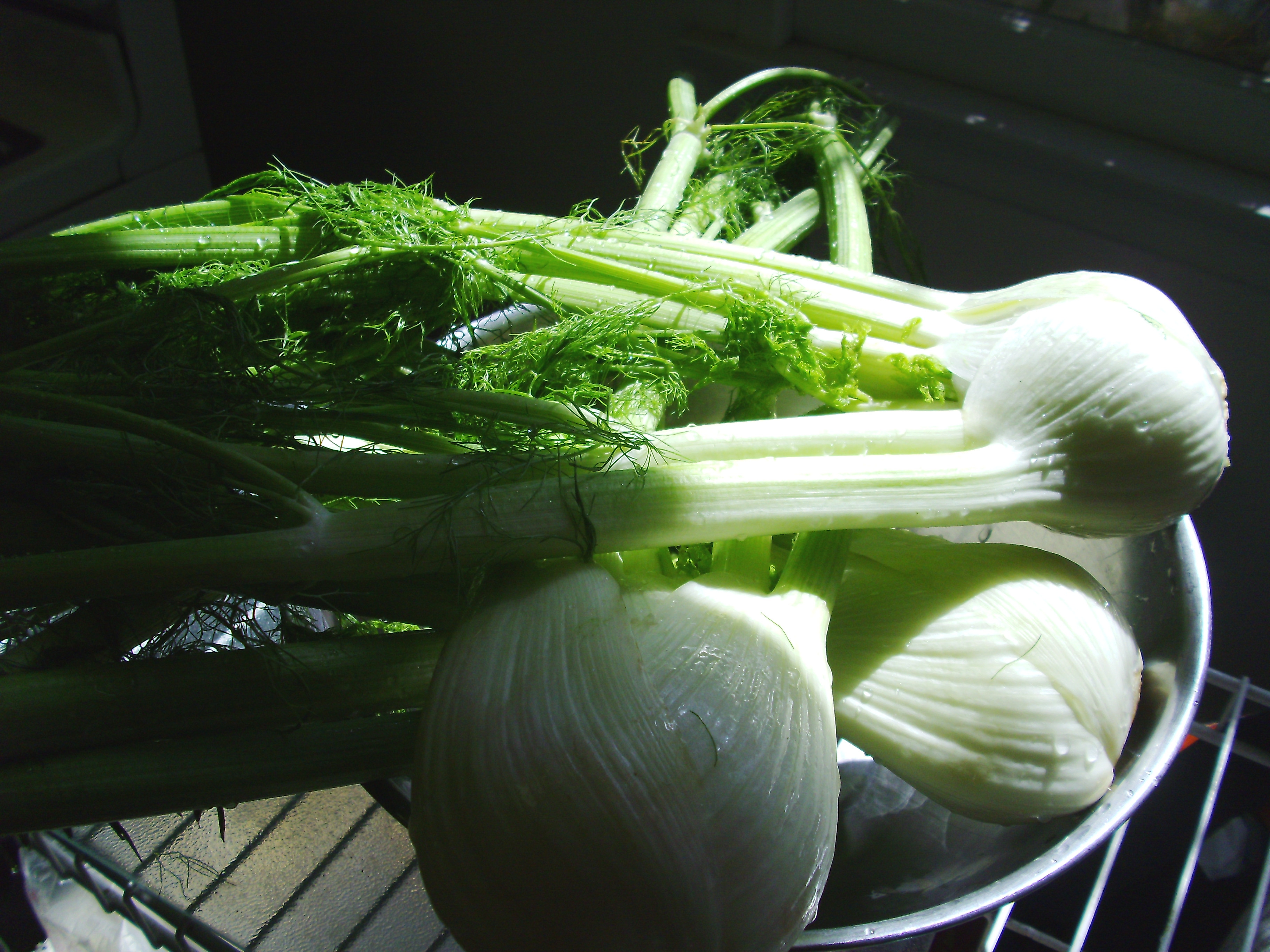
way too much fennel for one salad bowl

This much whole fennel kind of overwhelms my largest mixing bowl.
What was I thinking?

I hear a lot of complaints, among those of my friends and relatives who subscribe to CSAs, about weekly baskets arriving at the doorstep with surprise odd vegetables in unusually large amounts, and what the heck do you do with it all? I’ve never experienced that myself–I’m my own worst (or best) CSA challenge. So I can’t really blame this dilemma on anyone else, because I do my own shopping at my local greengrocer’s. And because the prices are low and the vegetables generally better than what I can get at the supermarket, I sometimes go a little overboard. Fresno tomatoes, when they’re in, are so good I end up with a 7 or 8 lb sack of them every week while I can. If I had more room in the fridge (oh, sacrilege! but they’re already so ripe it doesn’t hurt them), I’d buy even more. An overload of good tomatoes is no problem. However…

too much fennel from the greengrocer's

This week’s hot purchase: fresh fennel at a fabulous–too-fabulous?–price. Fifty cents apiece for large, clean-looking fennel bulbs with about two feet of stalk attached. They’re never less than two dollars apiece in the supermarket, and usually more like three.

So of course I couldn’t resist. I bought FOUR. Yeah. Two dollars total. For what turned out to be more than five pounds of useable produce, because if the fennel’s fresh, it’s all good eating. After washing and cutting it up into useable sections (only a 10-minute operation, surprisingly; fennel’s pretty cooperative for a big frondy vegetable), I actually weighed everything on our food scale.

Three pounds of bulbs for salads or grilling or whatever, two pounds of cleaned stalks chopped into celery-stick-length batons, and about six ounces of the cleaned chopped fronds to use as anise-to-dill-like herbs in tomato vegetable soup, fish, etc.

i1035 FW1.1

But how to use it all in a small household? We have only three people, and I’m the one who likes the anise-y taste of fennel most. Can I freeze some of it for later use (other than the fronds, which I did)? Are we going to be stuck eating it every day for weeks? How long before it starts going bad? What the heck was I thinking?

But it’s enough, and cheap enough, that I get to play around with it. Maybe I can find something good and even original to do with it that doesn’t require long roasting steps (Italian), stewing, or cheese-and-cream-filled gratin-type disguises (French) for the anise flavor, because really, for that you could have just bought celery.

The most obvious thing to do with fennel is slice it up and nosh on it raw. The first time I ever ate it was at the home of a large Moroccan Jewish family up in the  north of Israel. The mother, who invited me over for Shabbat lunch, started the meal with hraime, fish steaks (served cold, thank g-d) in a garlicky broth with enough evil birds’ eye chiles floating in it that the younger children (all the ones under 20, anyhow) started whimpering. “Only one pepper!” their mother replied, but none of them were fooled. I, the self-conscious guest just out of college, took the first bite and nearly fell off my chair as all the brothers and sisters laughed. Luckily the rest of the lunch was pretty unspiced–brisket, long-cooked eggs, farro with chickpeas, a lot of little cooked and raw vegetable salad dishes. I was still recovering from the “appetizer” though; I reached repeatedly for both water and the sliced fennel. Actually, I miss Esther’s hraime still, these many years later…

But mostly you don’t want to just gnaw on raw fennel for relief from the evil chiles. Fennel is pretty. Continue reading