• Enter your email address to subscribe to this blog and receive notifications of new posts by email.

    Join 241 other subscribers
  • Noshing on

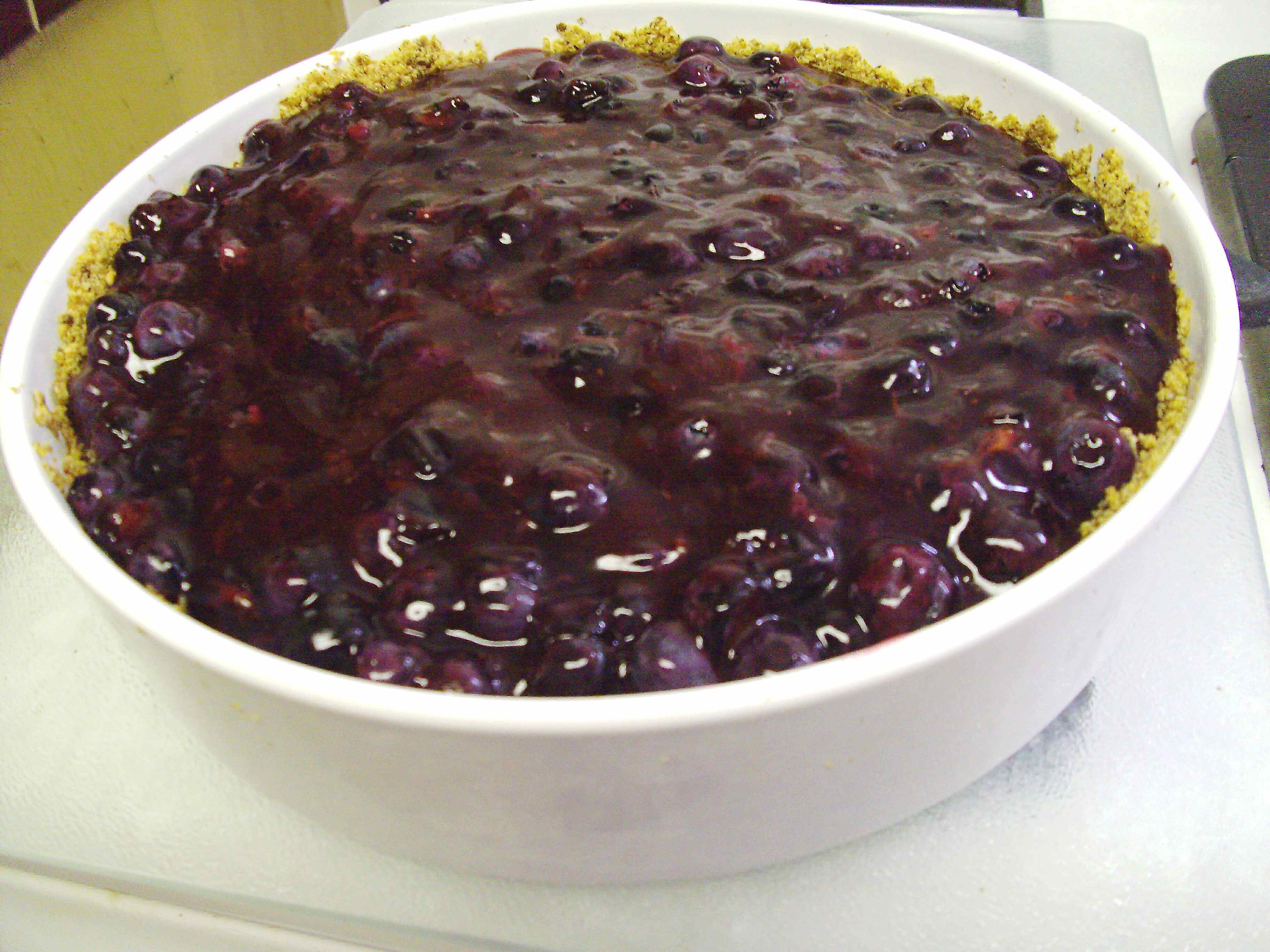
    raw blueberry pie with microwaveable filling and graham cracker crust

    This mostly-raw blueberry pie is a snap to make and very versatile--the filling microwaves in a few minutes, and you don't even have to bake the zippy gingered graham cracker crust--perfect for a hot Fourth of July and all summer long.

  • Recent Posts

  • Contents

  • Archives

  • Now Reading

  • See also my Book Reviews

  • Copyright 2008-2024Slow Food Fast. All writing and images on this blog unless otherwise attributed or set in quotes are the sole property of Slow Food Fast. Please contact DebbieN via the comments form for permissions before reprinting or reproducing any of the material on this blog.

  • ADS AND AFFILIATE LINKS

  • I may post affiliate links to books and movies that I personally review and recommend. Currently I favor Alibris and Vroman's, our terrific and venerable (now past the century mark!) independent bookstore in Pasadena. Or go to your local library--and make sure to support them with actual donations, not just overdue fines (ahem!), because your state probably has cut their budget and hours. Again.

  • In keeping with the disclaimer below, I DO NOT endorse, profit from, or recommend any medications, health treatments, commercial diet plans, supplements or any other such products.

  • DISCLAIMER

  • SlowFoodFast sometimes addresses general public health topics related to nutrition, heart disease, blood pressure, and diabetes. Because this is a blog with a personal point of view, my health and food politics entries often include my opinions on the trends I see, and I try to be as blatant as possible about that. None of these articles should be construed as specific medical advice for an individual case. I do try to keep to findings from well-vetted research sources and large, well-controlled studies, and I try not to sensationalize the science (though if they actually come up with a real cure for Type I diabetes in the next couple of years, I'm gonna be dancing in the streets with a hat that would put Carmen Miranda to shame. Consider yourself warned).

Food Mags Rethinking Salt

For years, lobbyists and nutrition pundits have insisted–hopefully or despairingly–that government public health campaigns to cut sodium in processed and restaurant foods wouldn’t really do much good, that the public wouldn’t pay attention, that they wouldn’t care enough or that they’d resent the guidelines advice so much that they’d never change their habits.

But the past year has brought the brining of America into the headlines and people are starting to pay attention. Especially with state-led nutrition labeling laws for restaurant chains, large diet/health studies, and citizen/government coalitions to pressure the food industry to reformulate down to sane salt levels.

Gourmet-leaning media have been especially slow to come around from the enthusiasm of exotically named and sourced salts and imitation of the aggressive restaurant-style use (and overuse) of salt as a texturizing chemical rather than for flavor. As late as January, I was still seeing frequent “famous chef” defense commentaries, on food shows and in publications from Salon.com to the New York Times, on the absolute necessity of salting food at every turn.

I hope it’s not just a one-issue fluke, but a quick scan of the July issues of Bon Appétit and Saveur shows that both have cut out the insidious, automatic “1 teaspoon of salt” they used to list in most of their recipes. Sunset magazine doesn’t seem to have caught on yet, but Good Housekeeping appears to be ditching the extra salt, so maybe we’re on the cusp of a better trend. And maybe next year I’ll have nothing to kvetch about.

It could happen.

Selling salt, one con at a time

Michael Moss’s new investigative piece,   “The Hard Sell on Salt” at the New York Times, traces the strategies used by the processed food industry over the past 30 years or more to fight any regulation on the amount of salt they dump into everything.

I have wondered for years why TV chefs (Moss ticks Alton Brown on this for having shilled in an ad for Cargill, a major salt producer), the Culinary Institute of America, big-name restaurant chefs and their fans (prominently Michael Ruhlman), and the food processing industry have all pushed salt so hard and why the discussion about reducing salt always, always turns to “what can we substitute” rather than “why not just leave it out.”

It’s not as if any of these players, other than the actual salt production companies, have an intrinsic mission that requires them to sell salt.

Moss turns up a few of the answers. Not surprisingly, products like low-salt tomato sauce require actual fresh ingredients (vine-ripened tomatoes, fresh herbs) to make up the difference in flavor from the current formulas for salted jar sauces, which contain dried herbs and low-grade tomatoes and range from 450-700+ mg. sodium per serving.The low-salt sauces are more expensive to produce. On the other hand, they’re higher quality and they do actually taste good.

But that’s about the simplest case. Tomato sauce actually is made from tomatoes, whether high- or low-grade, and is therefore (if you discount the addition of starch or gum thickeners, sugar or corn syrup, spice “extractives” and preservatives in so many brands) about as close to the actual homemade product as processed food gets. Most of the major processed foods aren’t so recognizable.

Peanut butter should be in the same category as tomato sauce–something with a simple real main ingredient that tastes like what it is. And a number of smaller companies do offer unsalted natural peanut butter–peanuts-only, and it tastes just fine. But the major brands insist that if you take out any of the salt (notably, not “all”) from their formulations, you “have to” add sugar or something else to compensate for the loss of flavor. Read the major brand labels and you realize why: their peanut butters are already mixed with corn syrup sweeteners and solids, gums and emulsifiers and mono- and diglycerides and starches and fillers. The salt is there not so much to highlight the peanuts but to cover all of that extra gunk. You have to wonder whether the nutrition is reduced as well–something like the case of bologna vs. actual meat.

Particularly telling (and entertaining, from my point of view), are the taste consequences of cutting salt in some very popular products:

Even as it was moving from one line of defense to another, the processed food industry’s own dependence on salt deepened, interviews with company scientists show. Beyond its own taste, salt also masks bitter flavors and counters a side effect of processed food production called “warmed-over flavor,” which, the scientists said, can make meat taste like “cardboard” or “damp dog hair.”

I have to admit I really adored that one. My general reaction to things like Lean Cuisine, South Beach Diet, etc microwave meals-for-one is that, with so much sodium per serving (up to 1200 mg or worse) you’d be better off tossing out the “meal” and eating the box. Tastes about the same, salt’s gotta be lower, and at least you’d get some fiber. Now we know it’s true.

As a demonstration, Kellogg prepared some of its biggest sellers with most of the salt removed. The Cheez-It fell apart in surprising ways. The golden yellow hue faded. The crackers became sticky when chewed, and the mash packed onto the teeth. The taste was not merely bland but medicinal.

“I really get the bitter on that,” the company’s spokeswoman, J. Adaire Putnam, said with a wince as she watched Mr. Kepplinger struggle to swallow.

They moved on to Corn Flakes. Without salt the cereal tasted metallic. The Eggo waffles evoked stale straw. The butter flavor in the Keebler Light Buttery Crackers, which have no actual butter, simply disappeared.

Perhaps there’s a lesson here. Kellogg’s certainly not the only company that’s been selling Americans the food equivalent of the Emperor’s New Clothes. Perhaps all the food execs should be required to eat their own products, without “benefit” of salt, and preferably in front of an FDA regulatory panel or a Congressional committee?

Salt reduction vs. hypertension meds–which would you choose?

One of the big complaints processed food companies, physicians in clinical practice, and the great gourmet media all have in common is that cutting back on salt would make food taste flat, and you as an individual wouldn’t necessarily get a big drop in your personal blood pressure from doing it. They argue that only “salt-sensitive” people have to worry about their intake, and anyway, a few points lower, they all say, isn’t really impressive enough to give up your 300-mg serving of sodium in a bowl of Kellogg’s raisin bran or 390 in a slice of La Brea sourdough. And don’t, for g-d’s sake, ask your favorite name brand celebrity chefs to stop salting early and often in each dish!

A big statistical modeling study in the New England Journal of Medicine this week knocks all this wishful thinking on the head, and does it very nicely. The study looked not at individual blood pressure drops but the health and cost benefit of dropping average salt intake by 3 grams a day over the entire U.S. population.

The researchers found that if everyone drops their salt intake back down, the benefits start to look like the ones from quitting smoking, cutting cholesterol and saturated fat, and losing weight to get to a normal BMI.

That’s because even when individual blood pressures drop by only a few points, they’re not going up (as they are today), and when a small average drop happens in a very large group, the big bell curve of disease shifts toward lower risk of consequences and later starts for developing heart disease and high blood pressure. After the first national cholesterol lowering guidelines were issued in the late 1960s, the nation’s heart disease and stroke risk dropped by about a third, and at least until obesity and blood pressure started to cause a back-reaction, the average age for a first heart attack went from 50 to 60 in men. That’s a huge kind of benefit.

The combined drop in heart disease and stroke deaths from cutting salt would be something like 200-400,000 people per year, a lot more than can be saved by simply putting everyone on blood pressure medications–the study made that comparison directly.

Altogether, a solid recommendation for dropping sodium levels in processed and restaurant foods, which make up about 80% of today’s sodium intake. And for not imitating processed food and chain restaurant thinking in your professional or home cooking, as Francis Lam seems to in his Salon.com commentary on the new NYC Department of Health initiative. And if there was any doubt that the Culinary Institute of America has been training Continue reading

You want fries with that?

You have no idea how much I’m looking forward to tomorrow at 8:35 a.m. That will be a good five minutes after the start of the parental summer relief program known best as Back to School. I’m counting down the minutes as we speak.

With the return to school, public debates over what children should eat and how parents should or shouldn’t step in have intensified. Obesity, the selling out of school cafeterias, new restrictions on sodas and junk food in said cafeterias, and the diet of choice at home are the topics of the day–all underlined with a sense of rising panic.

This year more than any other I can remember, reporters, bloggers, doctors, models, political figures, and just about everyone else has jumped on the bandwagon to report the ugly facts that were excused for years.

All the statistics are in–or pretty much so, and they boil down to this: We’re facing a tidal wave of blubber.

With it comes a tidal wave of early heart disease, diabetes, kidney disease, and more. How early? Physicians are seeing a rise in the diseases of middle age–something that, 20 years ago, had been successfully pushed back by an average of 10 years, from age 50 or so to age 60 and up for a first heart attack. We thought we were making progress. But for the past 10 to 15 years,  these diseases have started popping up in school children–Type II diabetes, kidney stones, high blood cholesterol and high blood pressure. No way should a 10-year-old be facing these threats.   No wonder parents and everyone else are panicked–the studies we have aren’t giving us a single, easy-to-deal-with  definitive  guide on how to stop the juggernaut. They mostly tell us that it keeps on rolling.

But the mystery of what to do really isn’t that mysterious. Take for example the responses to Frank Bruni’s recent article in the New York Times on feeding children. Some come from doctors on the front lines, others from nutritionists and fresh-food-in-schools activists, discussing different facets of the problem, but they come to a number of sensible recommendations you could probably have named yourself without much struggle.

The conclusions?

Sodas should be cut out altogether from children’s (and probably everyone’s) daily diet. Not just for calories (250ish for a 20-oz bottle–and why is it 20 0z these days? used to be 12 was the standard) but for sodium (about 100 mg per 12-oz can, whether full-cal or diet, 200+ for the 20-oz).

Fruit juices with a pretty picture on the box are nowhere near qualifying as actual fruit. Not even with added vitamin C.

And exercise time, including outdoor recess–something most schools have cut back in the past decades–makes a big difference that’s generally overlooked in the school lunch debates.

So far, no great surprises. But they do mention one more item, also no great surprise–fast food in the school cafeterias.  Nobody seems to have trouble zeroing in on french fries as the worst offender. Are they right or is this a replay of the cupcake wars? Is the french fry being unjustly accused, as the vendors claim?

Continue reading

Suing for Salt

The Center for Science in the Public Interest is supporting a New Jersey man’s class action lawsuit against Denny’s Restaurants after private talks apparently failed to convince the chain to lower the exaggeratedly high sodium content in its meals. Apparently CSPI combed through the nutrition data on the Denny’s web site. A couple of sample readings:

Denny’s double cheeseburger–3880 mg
Denny’s Meat Lover’s Scramble–5,690 mg
Denny’s “senior” menu scrambled eggs and cheddar cheese meal–2,060 mg
Spicy Buffalo Chicken Melt, and a side of seasoned fries–6700 mg sodium, 1700 calories

The lawsuit was filed in Superior Court of New Jersey in Middlesex County, and seeks to compel Denny’s to disclose on menus the amount of sodium in each of its meals and to place a notice on its menus warning about high sodium levels.

Misunderstanding Salt Research: Bon Appetit’s Shameful “Health Wise” Column

I started this blog last spring more or less just to test out blogging lightheartedly about food. However, I have just read Bon Appetit‘s appalling “Health Wise” column from the May issue, “The Saline Solution” by John Hastings.

I do actually love to cook and eat well, and that’s my main purpose for this blog, but seeing this kind of blithely irresponsible “health” advice on salt makes my blood boil (not appetizing). Worse, it starts dragging me back to my work roots and up on my soapbox (also not appetizing, though kind of fun), because I trained as a biochemist and worked for several years as a science journalist. I worked for the National Heart, Lung, and Blood Institute at NIH at the time some of the bigger studies Hastings refers to were first being published. It was my job to know about them and write about them in plain (and preferably short) English for Congress and the public. To do it I talked to national experts, interviewed the leaders of the National High Blood Pressure Education Program, and combed through a century’s worth of research on salt and high blood pressure.

But you don’t have to be a scientist to find this stuff out. Descriptions of the studies AND their updates AND the reasoning behind the basic public health guidelines calling for Americans to watch their salt AND how to do it without eating a restricted diet of cardboard and baby cereal are all easily available from the NHLBI web site or the American Heart Association.

Hastings, a former editor of Prevention and health column contributor to O, the Oprah Magazine, is someone you’d expect to be reasonably accurate in reporting health research findings. But here he gets the science on salt and high blood pressure just about as backwards and upside down as he possibly can.

Worse yet, he does it in a strangely breezy, cheerleading tone that’s really hard to believe.

Hastings’ argument goes something like this:

…here’s a little secret: salt isn’t a problem. If that sounds crazy, it’s because the public health message about salt causing high blood pressure has been very, very effective, and it’s backed by reams of scientific research…Upon this, nearly everyone agrees. The controversy arises when you ask experts about the connection between salt intake and high blood pressure…All of this is fantastic news for those of us who are already cooking with high-quality meats and farmers’-market produce…

Did you follow all that? Probably you felt like you did for the few seconds you were reading it, but look again and you start to pick out the self-contradictions–“If it sounds crazy” that salt isn’t a problem, “it’s because the public health message that salt causes high blood pressure… is backed by reams of scientific research.”

Well, yes it is. The way Hastings phrases it, you’re supposed to think that was a bad thing, that health research in general and carefully designed tests of the effects of diet on cardiovascular health in particular are part of some kind of unnamed conspiracy against the public’s right to eat every bit of salt it can get.  Personally, I’d rather that broad public health messages were backed by reams of scientific research rather than by some diet guru or brand-name chef’s nutritional fantasy that will help sell his next book or tv program, or–more realistically–by corporate marketing and pressure campaigns from big pharma and big agro. Of course, it’s less profitable if people simply eat less salt–and less processed food–and never develop hypertension in the first place than if they eat salt like it’s going out of style and call it gourmet, and then have to make up for their diet by taking hypertension pills…hmm. Food, Inc., anyone?

“Upon this nearly everyone agrees”, but somehow there’s still a great controversy over it? Really? No. Not really.

The vast majority of salt researchers look at the bulk of the study results and conclude–repeatedly, for decades now–that salt is, in fact, a direct and modifiable risk factor for hypertension (high blood pressure). Which is both a disease in its own right and a leading risk factor for heart disease, stroke, and chronic kidney disease. Combine that with the fact that the average current salt intake is about twice what the consensus guidelines recommend and that more than half the adult population in the U.S. is crossing the line into overweight and obesity–and…well, yes.

Salt IS actually a health problem for most people. Gee.

The Bon Appetit article is a jumble of self-contradictions and serious misinterpretations of the findings from two older salt research studies, one of which has since been revised,  plus a cherry-picking recent review that comes to a different conclusion about salt than most of the other reviews of the same data on diet and health. That one comes from the lab of Mickey Alderman, an otherwise eminent researcher who just happens to be a long-time, much-trumpeted advisor and consultant for the Salt Institute.

Hastings  doesn’t indicate that he interviewed the man or even recognized his name on the journal article, but he should have. Anytime somebody in the media wants to come up with the magical–and really, really popular–conclusion that lots of salt, any day, any time, anywhere, please add more, is perfectly harmless and even good for you, they go to Mickey Alderman because they can paint him as a lone hero against the Food Police (the typical name they give the National Institutes of Health and the American Heart Association in such cases). Because what Alderman will say–with precision, but with disregard for the bigger public health picture–is that high salt intake isn’t directly proven to cause death from cardiovascular disease.

And it isn’t. It can’t be proven directly in a well-controlled diet study large enough to reach statistical significance, because that would require thousands of participants to follow a carefully prepared diet throughout their entire lifetimes, with no deviations for dates, wedding receptions, pizza parties, etc., and it would take 50-75 years to collect the majority of the data. You’d literally have to wait until most of the participants died before you could make a public health recommendation about salt. And the cost of doing that study “right” would run into the billions. It would bankrupt the federal science budget. And maybe a few other budgets as well.

That’s why the NHLBI and the AHA have sponsored studies that look at signs of developing cardiovascular illness–heart attacks, stroke, phlebitis, high blood pressure, kidney disease–rather than death. When you look at these ailments, you find that dietary salt actually matters quite a bit–contrary to what Hastings thought he understood from the studies he mentions.

Continue reading

Taking on “Recipes for Health”

Martha Rose Shulman’s “Recipes for Health” column in the New York Times typically offers quick stir-fry vegetarian fare that anyone can do at home. Shulman is a good and popular cookbook author, and I give her credit for her intentions. But the column reveals some serious flaws in her understanding when it comes to the actual healthiness of the recipes.

First, the recipes never include standard nutritional breakdowns. I wouldn’t expect that for glamor food magazines, but any major newspaper or magazine claiming “healthy” recipes should declare the nutrition stats per serving so people can gauge calories, fats, carbs, fiber, and especially, because we’re not used to thinking consciously about it these days, salt.

And salt is where Shulman’s recipes go seriously wrong. Time after time, they contain surprisingly and unnecessarily high salt per serving. Where does it come from? Take this week’s recipe, “Stir-Fried Snow Peas with Soba”. It’s basically Japanese whole-wheat noodles (soba) with snow peas and tofu in a peanut sauce, and serves four. Seems simple enough, but the ingredients Shulman chooses are hiding an awful lot of extra salt:

* You expect the soy sauce to contain salt. OK. It’s only a tablespoon. But it isn’t the reduced-sodium version–and why isn’t it?–so figure  1200 mg.
* Half a cup of vegetable or other broth–also not specified low-sodium. Figure 250-500 mg sodium; maybe even more.
* Salt “to taste”–TV chefs tend to sprinkle in a pinch or more. Figure 1/8-1/4 teaspoon, 300-600 mg, if you imitate them.
* Peanut butter. Not specified unsalted. Figure 1 tablespoon is 100 mg.
* And then there’s the soba itself. Ordinary Italian-style whole wheat spaghetti or fettucine has almost no sodium in it, just flour and water, but authentic Japanese soba dough contains quite a bit, 250 mg or so per serving. Times four is about 1000 mg.

Grand total for 4 servings: 2300-2800 mg, or 600-700 mg sodium per serving.

If that’s your whole dinner, ok, but most of that sodium could easily be cut without sacrificing taste. Plus, two ounces of snow peas per person isn’t enough to call it vegetabalia and get away with it in my book. You’ll notice that the glossy photo in Shulman’s article shows a generous two snow pea pods, a few slices of radish, and none of the promised cubes of tofu–her version’s a side dish, not a proper meal. Let’s revise this one.

Continue reading

What’s in YOUR restaurant’s dumpster? David Kessler uncovers the addictive side of chain restaurant eating

David Kessler, the FDA commissioner who fought to bring the cigarette and tobacco companies to heel in the 1990s–has taken on the next big fight by doing something you wouldn’t think a man that eminent needs to do: he’s gone dumpster diving in the parking lots behind the fast-food chain restaurants in California. In a suit, according to his wife.

What’s in the dumpsters? Kessler’s new book, The End of Overeating: Taking Control of the Insatiable American Appetite, reveals a dirty secret. Kessler went in search of the nutrition labels on the boxes of food shipped to individual chain restaurants like Chili’s to find out what’s really in the food they serve and why people have so much trouble stopping at a normal portion and normal calorie intake when they make fast food a part of their lives.

He found the labels. Even ordinary-sounding foods were pumped abnormally, exaggeratedly, unconscionably high with fat, salt, and sugar. One appetizer–the Southwest Eggrolls–contained 910 calories, 57 grams of fat and 1,960 milligrams of sodium. Basically half a day’s calories for a normal healthy woman’s diet, about twice the recommended amount of fat if most of it was saturated, and nearly all of the recommended maximum for sodium.

Not really a big surprise–fat, salt and sugar are the three things most likely to provide a “quick hit” of satisfaction when you eat them, and all of them are cheap substitutes for actual flavor or (dare we dream) fresh ingredients you might otherwise expect in food. Most packaged snacks rely on at least one and usually all three–think Snickers; think Chees-Its; think just about any kind of vending machine item–fat, salt, sugar. It’s a hit.

But we know packaged snacks are junk food. We thought dinner at Chili’s — or Bennigan’s — or TGI Fridays — was an actual meal. It LOOKS like a meal. It looks like meat and vegetables and rice or potato. What Kessler discovered on the nutrition labels makes them seem more like giant-sized, glorified, salted, sugar-coated, oiled-up snack foods parading as meals.

That’s not a shocking kind of report anymore–the Center for Science in the Public Interest has been putting out shocker nutritional reports on all kinds of popular foods since it blasted into the headlines by calling fettucini Alfredo “a heart attack on a plate”. But since the CSPI Alfredo debacle, Americans have been swarming to fast food restaurants and sit-down chains in record numbers–not as a weekend jaunt but as a staple of their diet, reportedly eating out an average of 6 times a week.

Kessler ties these trends together with recent physiological research on fat, salt, and sugar consumption. Instead of satisfying hunger, the fat-salt-sugar combo acts as a stimulant, hitting up the dopamine receptors in the brain and triggering release of opiates as a “quick relief” response to eating the first bite of a fast food. Followed shortly, we would guess, by a let-down. And then a vicious cycle as the body suffers rapid hunger for more, even though you’ve just eaten.

So fat-salt-sugar really is a drug. Something we already knew,  but not in such detail. The fact that it’s being exploited not just in vending machine snack packs but in what we thought was real food, just restaurant-prepared, goes some way to explain why reports in the past year have clocked Americans eating 3800 calories a day.

The fact that that mass-prepared food has been manipulated to exaggerate the fat-salt-sugar content and encourage people to eat more than is reasonable in a chain restaurant sitting is even more insidious. The fact that high-class restaurants with big-name chefs are resorting to similar tactics–often unwittingly–to “boost flavor” and compete with chain food is just depressing.

Or in other words: Restaurant food is the new tobacco.

Impatience is its own reward

I learned to cook at the ripe old age of eleven. My mother had gone back to school, I had a younger sister and brother, and I had a problem. Mom said to make spaghetti–so far, so good–but when I got to the kitchen, I discovered there was no tomato sauce in the house. Luckily, there was a little can of tomato paste, and a cabinet full of dried spices that included the essential garlic powder and oregano, plus a bunch of herbs (they came as a set) that my mother owned but never actually touched. And, as I’ve mentioned, there were two guinea pigs available. Good enough.

I learned to cook again when I hit college and started helping a friend with Friday night dinners at the Hillel House. That’s also where I learned how to keep kosher.

I learned a third time when I moved in upstairs as a resident after my sophomore year–I was working a strenuous lab job on a tight budget–no more than $25 a week for anything–and I walked everywhere. My housemates introduced me to two basic spaghetti sauces–one red, one white–and the rest of the time I ate omelettes because eggs were a dollar a carton. I shudder now to think I got through a carton a week, and didn’t ditch any of the yolks. At the time I reasoned that I wasn’t eating meat–couldn’t get kosher meat easily, and it was beyond my budget. I did lose 20 pounds without realizing it. And I started baking my own bread–challah for Friday nights; pita the rest of the week. No real recipes; I went by feel.

The next time I learned to cook was after college, on a year’s study in Israel. In the kitchens of Kibbutz Ma’agan Michael, everything had to be done in a rush because we were feeding 1000 people a day. But they knew their way around an eggplant or seventy (we used the bread machines to slice them all). Up in Ma’alot, I worked in a clinic with everyone from the surrounding towns–Jewish, Muslim, Christian, and Druse–in one of the few truly friendly workplaces in the country, and I spent afternoons tutoring and being fed in people’s homes or else learning to haggle for vegetables in the Thursday open air market. There I learned how to brew tea with mint (in summer) or sheba (petit absinthe) in winter, how to cook with real garlic, how to use a “wonderpot” on top of a gas ring, and how to eat z’khug (chile-garlic-cilantro paste) with just about everything.

When I returned to the U.S., I had to learn to cook all over again. I started keeping a “blank book” (remember those?) for recipes, and I learned, over the course of twenty years, how to cook real food, better food, from scratch, but faster than the cookbooks called for. When my grandmother had a major stroke, I was still in my mid-20s and realized I probably couldn’t get away with an all-eggs-and-cheese diet. Eventually I went to work up at NIH, and discovered that cutting back on saturated fat, cholesterol, salt, and calories really does help cut the national risk of heart attacks and strokes.

After talking with a nutrition expert there, I learned that our tastebuds can adjust to almost any level of sodium and consider it “normal” within just two weeks. Dangerous if you develop a tolerance for high salt and consider it normal even at really exaggerated levels–as many people do. The good news is that we can retrain our palates downward just as quickly, so I tried a completely salt-free, unprocessed food diet for two weeks–with surprising rewards. Without salt to swamp the taste receptors, the natural flavors of vegetables and fruits seem particularly brilliant and clean.

And then I had a kid. And I had to learn to cook all over again–this time, using a microwave oven, because I didn’t want to leave my kid unsupervised while I stood trapped at the stove. I wanted something that would shut itself off when done. But by now I had gotten used to real ingredients and fresh foods, and I had to come up with microwave methods for them. So I did. This blog is the result.