
• Enter your email address to subscribe to this blog and receive notifications of new posts by email.

    Join 241 other subscribers
  • Noshing on

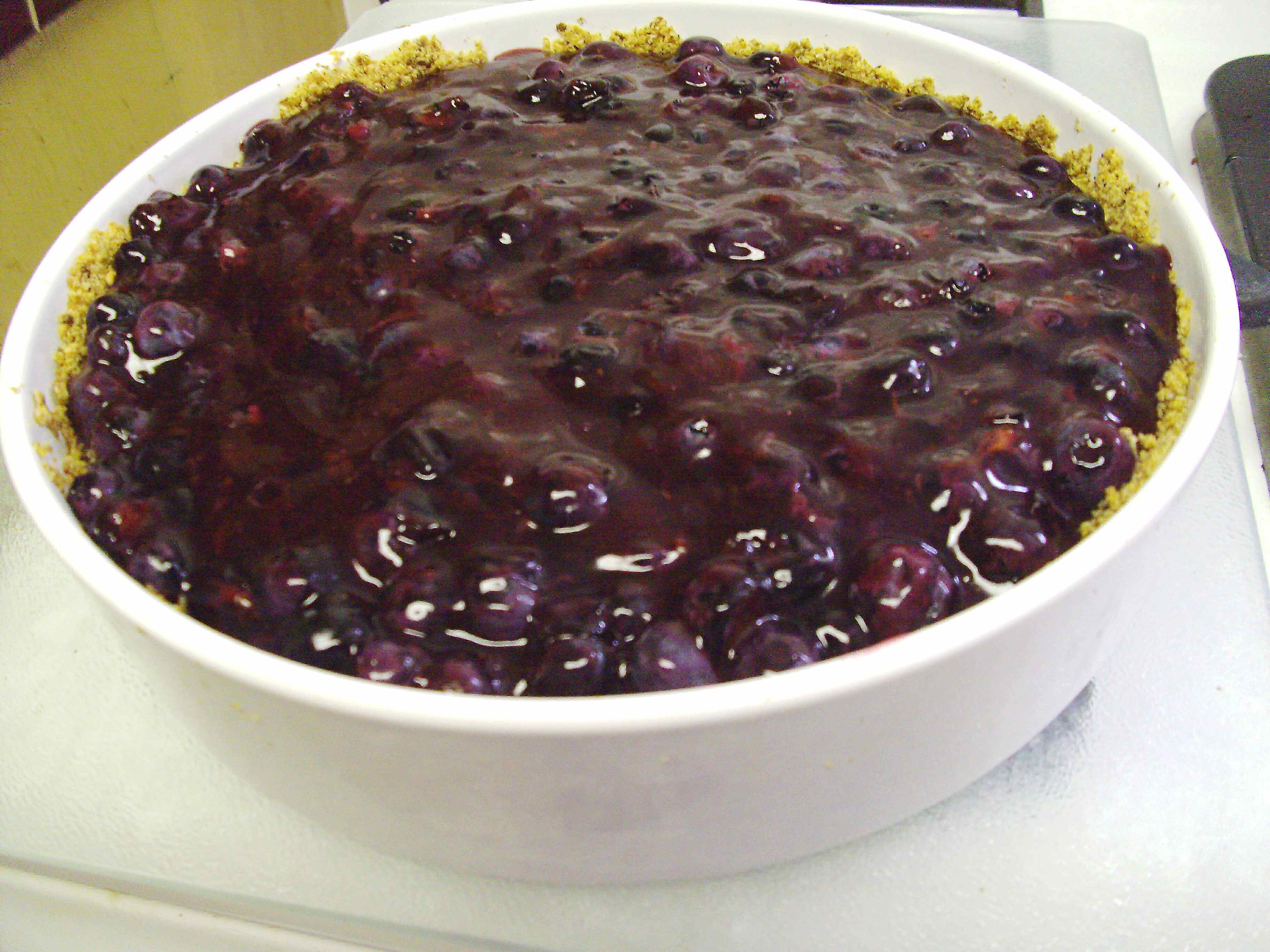
    raw blueberry pie with microwaveable filling and graham cracker crust

    This mostly-raw blueberry pie is a snap to make and very versatile--the filling microwaves in a few minutes, and you don't even have to bake the zippy gingered graham cracker crust--perfect for a hot Fourth of July and all summer long.

  • Recent Posts

  • Contents

  • Archives

  • Now Reading

  • See also my Book Reviews

  • Copyright 2008-2024Slow Food Fast. All writing and images on this blog unless otherwise attributed or set in quotes are the sole property of Slow Food Fast. Please contact DebbieN via the comments form for permissions before reprinting or reproducing any of the material on this blog.

  • ADS AND AFFILIATE LINKS

  • I may post affiliate links to books and movies that I personally review and recommend. Currently I favor Alibris and Vroman's, our terrific and venerable (now past the century mark!) independent bookstore in Pasadena. Or go to your local library--and make sure to support them with actual donations, not just overdue fines (ahem!), because your state probably has cut their budget and hours. Again.

  • In keeping with the disclaimer below, I DO NOT endorse, profit from, or recommend any medications, health treatments, commercial diet plans, supplements or any other such products.

  • DISCLAIMER

  • SlowFoodFast sometimes addresses general public health topics related to nutrition, heart disease, blood pressure, and diabetes. Because this is a blog with a personal point of view, my health and food politics entries often include my opinions on the trends I see, and I try to be as blatant as possible about that. None of these articles should be construed as specific medical advice for an individual case. I do try to keep to findings from well-vetted research sources and large, well-controlled studies, and I try not to sensationalize the science (though if they actually come up with a real cure for Type I diabetes in the next couple of years, I'm gonna be dancing in the streets with a hat that would put Carmen Miranda to shame. Consider yourself warned).

Fish Tale: Omega-3s and Greenland’s shores

Well…another shining example of “magic bean” and “superfoods” wishful thinking has bitten the dust, thanks to more careful research. It may be a good thing.

In recent years, several reassessments of the heart health benefits of popular fish oil supplements have failed to find a significant protective effect from omega-3 fatty acids. A new genetic study of the Inuit in Greenland revisits the old 1970s finding that started the whole fish oil phenomenon (and salmon farming) and explains a lot of that failure. The researchers found a specific gene variant in almost all the participants but not in other populations.

The gene in question helps package fatty acids from the Inuits’ traditional all-fish-whale-and-seal-meat diet more efficiently to keep blood lipid levels down. Researchers noted another striking effect: participants who have two copies of this particular gene variant are also significantly shorter and ten pounds lighter on average than those without it. And although this gene variant is very common among people of mostly-Inuit descent (today a lot of Greenlanders have mixed Inuit and Danish heritage), the ethnic and racial group with the next highest concentration of this gene variant, as far as it’s been tested, appears to be the Chinese, but only about 25 percent of them have it. People of European descent mostly don’t have this variant.

What does this mean for omega-3s and fish oil supplements in North American popular culture? The New York Times article didn’t go that far, but the implication should be clear: Unless you’re Inuit, you probably don’t have the specific gene variant that helps your body deal with omega-3s, so for you, omega-3s are like most other animal-derived fatty acids–adding more to your diet is just adding more to your blood lipid burden. Rich fish like salmon may taste nice, but lipids are lipids, and calories are calories. Given the likelihood that they’re really not cardioprotective after all, overeating them doesn’t make sense, especially for a population as overweight as ours has become.

Fish oil supplements are probably even less of a good idea, and they don’t even taste good. They won’t really protect your health as claimed, not for omega-3s, anyway (cod liver oil is still probably good for vitamin D, if you can still find it, but most people would probably prefer a mercifully flavorless vitamin pill).  So save your shekels, buy actual salmon once in a while, and enjoy it–but sparingly.

Microwave Tricks: Indoor Grilling When the Heat’s On

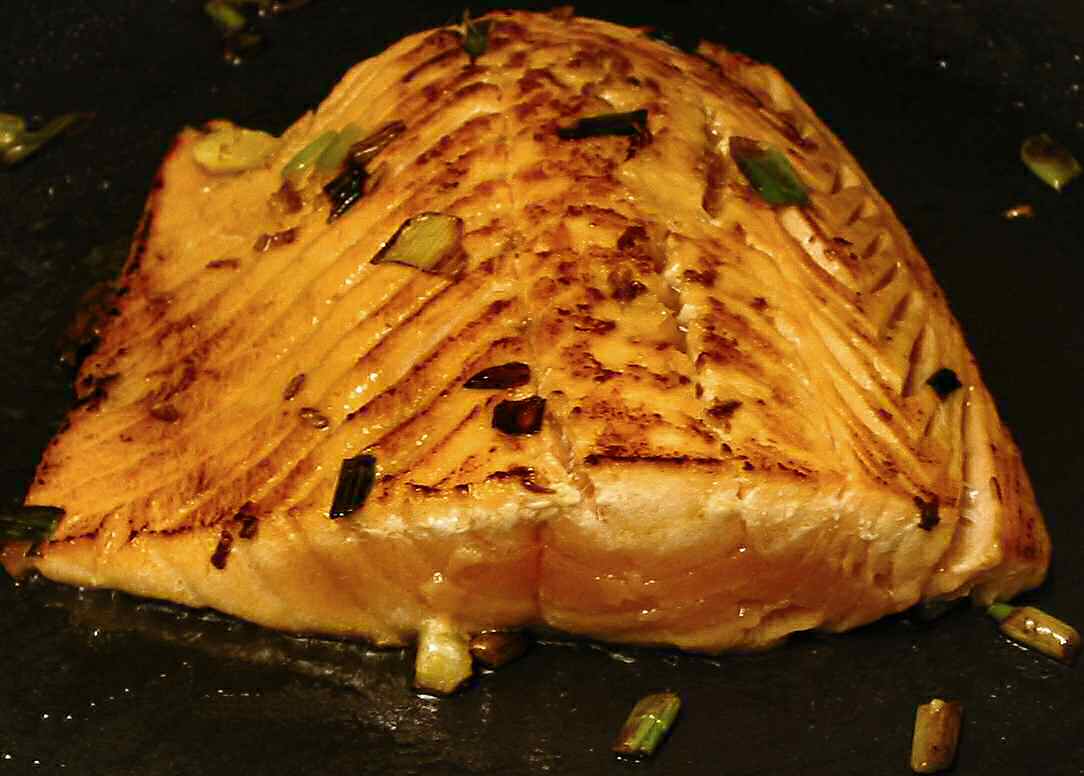
Pan-seared salmon, ready for the microwave

Pan-seared salmon, ready for the microwave

You almost never hear the words “microwave” and “slow food” in the same sentence unless someone’s casting the two as opposites with an easy sneer. The one and only time I’ve read anything about microwaving by a Real Restaurant Chef was Tony Bourdain in Kitchen Confidential when he mentioned something about hitting a plate gone cold with some “Radar Love” before sending it out. He meant it as a dirty back kitchen secret.

Gourmet cookbooks (other than Barbara Kafka’s Microwave Gourmet, a scarily extensive tome from 1987) never call for microwaving anything more exciting than butter or chocolate chips, and none of the Food Network shows do either. It’s a shame. Can you see Giada De Laurentiis microwaving? Mario Batali? No–it would probably zap the studio camera or melt Mario’s clogs or something. And it would ruin the vicarious glamor of slow cooking. But it would be fun while it lasted, wouldn’t it?

Some things, let’s face it, don’t do incredibly well in a microwave–deep fat frying (Kafka claims you can in small quantity, but I’m scared of sloshing hot oil around a small box), birthday cakes (though Kafka has found a reasonable way to do cake layers and her recipes get good reviews), an entire raw turkey (stuffed or un-)…. And fish? That may be the trickiest of all, since fish goes from almost cooked to shoe leather in 20 seconds if you’re not careful, and it still won’t brown nicely.

For example, take the lowly, farm-raised salmon fillet. Now I know it’s not wild, I know it’s not King or Sockeye, it’s not elegantly 2″ thick–but it’s also not $17.99/lb and up. And it can still be pretty good, especially grilled.

Only it’s summer in L.A., and the last thing I want to do in my townhouse with a distinct lack of outdoor grilling facilities is heat up the house or cook the salmon long enough under a broiler for the edge fat to start sending acrid smoke up the stairway.

But combine the microwave’s ability to cook things through with a quick browning technique like pan-searing, and suddenly you have a strategy for some nice main dishes that taste better than they should in a lot less time, and don’t heat up the house. Incidentally Kafka mentioned this method in passing while discussing the fact that microwaves don’t brown food. She then proceeded to ignore it completely, don’t ask me why.

Most restaurant chefs insist they can’t get a good sear on anything with a nonstick pan, but that’s not entirely true (plus I hate washing dishes any more than I have to, and I’m really determined, so nonstick it is). I’m borrowing from Martin Yan on this one–it’s a technique I saw him do for a stir-fried shrimp recipe on PBS, sometime way, way back in the 1980s, and it works surprisingly well here. Continue reading