
• Enter your email address to subscribe to this blog and receive notifications of new posts by email.

    Join 241 other subscribers
  • Noshing on

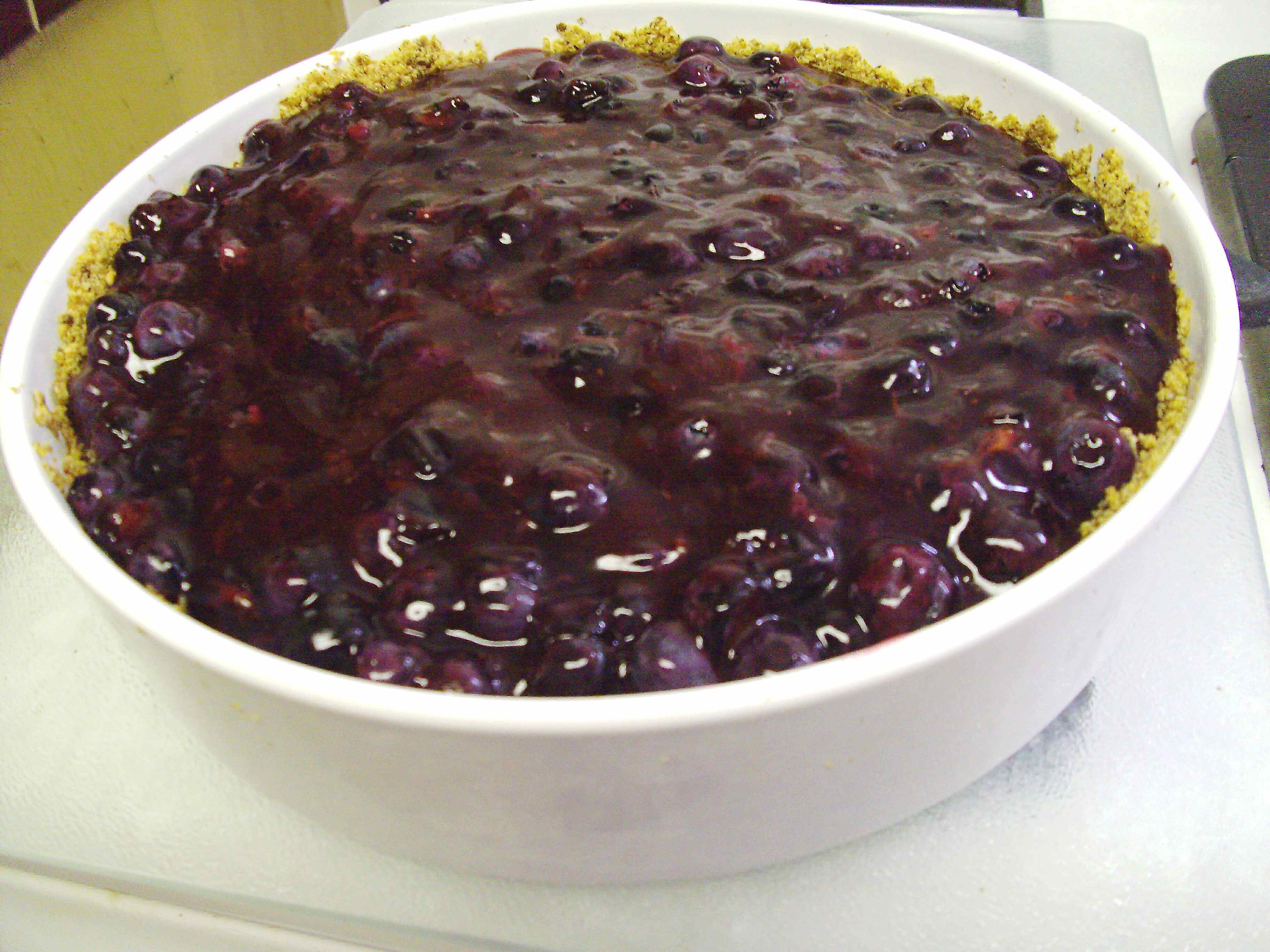
    raw blueberry pie with microwaveable filling and graham cracker crust

    This mostly-raw blueberry pie is a snap to make and very versatile--the filling microwaves in a few minutes, and you don't even have to bake the zippy gingered graham cracker crust--perfect for a hot Fourth of July and all summer long.

  • Recent Posts

  • Contents

  • Archives

  • Now Reading

  • See also my Book Reviews

  • Copyright 2008-2024Slow Food Fast. All writing and images on this blog unless otherwise attributed or set in quotes are the sole property of Slow Food Fast. Please contact DebbieN via the comments form for permissions before reprinting or reproducing any of the material on this blog.

  • ADS AND AFFILIATE LINKS

  • I may post affiliate links to books and movies that I personally review and recommend. Currently I favor Alibris and Vroman's, our terrific and venerable (now past the century mark!) independent bookstore in Pasadena. Or go to your local library--and make sure to support them with actual donations, not just overdue fines (ahem!), because your state probably has cut their budget and hours. Again.

  • In keeping with the disclaimer below, I DO NOT endorse, profit from, or recommend any medications, health treatments, commercial diet plans, supplements or any other such products.

  • DISCLAIMER

  • SlowFoodFast sometimes addresses general public health topics related to nutrition, heart disease, blood pressure, and diabetes. Because this is a blog with a personal point of view, my health and food politics entries often include my opinions on the trends I see, and I try to be as blatant as possible about that. None of these articles should be construed as specific medical advice for an individual case. I do try to keep to findings from well-vetted research sources and large, well-controlled studies, and I try not to sensationalize the science (though if they actually come up with a real cure for Type I diabetes in the next couple of years, I'm gonna be dancing in the streets with a hat that would put Carmen Miranda to shame. Consider yourself warned).

Raw Dough Carbs: Playing for Pizza, Calculating for Calzone

calzone

Calzone–one of my favorite Italian dishes–is extremely easy to make once you’ve got some basic pizza or bread dough risen and ready to shape. Flatten out individual rounds of dough, mix up a ricotta-based or roasted vegetable filling, fill and fold the dough over into half-moons, crimp the edges, brush with olive oil, and bake on a sheet in a hot oven until they’re puffed and golden. A satisfying but fairly light supper dish, especially if you have a good thick spicy tomato sauce to go with it and a salad on the side.

But even if you don’t, they’re a good consolation on a Sunday night for a kid with frustratingly advanced math homework the teacher didn’t quite prepare himself or the class for (11th-grade precalculus techniques popping up in a sheet of homework for 11-year-olds? The dangers of pulling your homework handouts from a math site on the internet. I keep reminding myself that he’s young yet). All I can say is, you know you’re in trouble when the heartburn is coming from the homework and not the food.

Grrrr. I’m almost over it. Anyway, here’s a much easier calculation trick that doesn’t require factorials…

The trick about making dinner from homemade dough is that the kid in question is diabetic and needs to know how many grams of carb she’s going to get in her calzone. Pizza, calzone, any kind of handmade entrée with dough plus noncarb ingredients, is tricky to calculate carbs for because you can’t easily tell by eye how much bread you’re getting in a serving. Check out any of the commercial pizza companies’ nutrition stats per slice–they’ll often state carbs as a range rather than a set value. How thick the dough is, how large the slice, etc, can really throw things off. Most people don’t need to know more precisely than “35-50 grams per slice”, but diabetics really do. Fifteen grams is a pretty big variation.

So how do you deal with it at home? If you’re making lasagne or stuffed shells or spanakopita, you can calculate the carb by counting the noodles or sheets of fillo dough you use and looking on the package nutrition label, then figuring a total carb count for the tray and dividing by the number of portions. A little tedious, but manageable.

Bread that’s already baked is also easy enough to calculate for–just weigh it out on a food scale in grams and figure 50 percent carb by weight. Most nonsweetened bread is pretty consistent, whatever density its texture. Weigh out a 70-gram piece of bread, and you’re usually looking at 35 grams of carb.

But for calzone or pizza you’re dealing with a bowl of wet dough to start, and once the dish is baked, it’s got lots of other stuff on or in it so you won’t be able to weigh it cooked and really know what carbs you’ve got. You need to test a portion of your raw dough, only raw dough is heavier than it will be once baked. Depending how wet the dough is, the proportion of carb could vary from a little less than half to a lot less.

Weighing a sample of raw dough to figure carbs after baking

Weighing a sample of raw dough to figure carbs after baking

The only thing to do is test a bit of dough by weighing it out raw, then reweighing it once it’s baked. Doing this in a conventional oven just for a single test ball of dough can be time-consuming unless you’re already heating it for the main event. Still, you want to get ahead with making the actual calzone so dinner will be sometime before midnight.

Enter the microwave. Yes, really. A nectarine-sized ball of dough, say 100 grams raw weight, will cook through lightly in 40-50 seconds in the microwave if you put it on a saucer and punch the “nuke” button. It’ll still be white and pale, but it’ll have risen fairly well to the size of a large dinner roll and won’t have gooey raw spots (you can check by breaking it open, just watch out for steam). Then just pop it in the toaster oven for about 5 minutes and it’s browned and baked through. When you reweigh it, you’ll know how much a 100-gram ball of your dough weighs cooked, and then figure 50 percent of that weight for carbs.

Aside: This nuke-and-toast scheme works pretty well for making a fast sandwich roll from a bowl of dough in the fridge. When I first came up with the idea, it was with great reluctance, because my only previous experience with microwaving bread had been the horrible, horrible mistake of Continue reading

DIY Pasta–no chic gadgets needed


handmade pasta, cut for ravioli

A few months ago I was surprised to read an interview with the British actress Emma Thompson–not about her acting, or producing, or screenwriting, or whatever, but about her having acquired a pasta machine so that she and her family could have fresh pasta at home.

What surprised me is that she called it a revelation, or revolutionary, can’t remember which. I think it came up in relation to a short dramatic interpretation of a poem called “Song of the Lunch” that she and Alan Rickman did for the BBC last year. It’s about 20 minutes long, posted on YouTube in sections but in its entirety, and it’s actually not bad, though not as funny about foodieism as “The Trip”. The main thing about it is that it takes place in an Italian restaurant in London. Hence the pasta issue.

Over the course of a misspent youth (which I’m still in, thank you very much) I have tried a number of times to make sheet pasta myself, with varying degrees of success.

  • Buckwheat noodles–grainy and dry. Try this soba recipe instead.
  • Jao tse dough made with flour, salt, and boiling water–a little thick but it worked well enough to boast about
  • Ravioli dough made with half egg, half water (this was a few weeks ago)–grainy, sticky, hard to roll evenly to the right thickness.
  • Yesterday’s classic pasta dough from Marcella Hazan, just flour and eggs–just right. In fact, the only right recipe there is, I’m now convinced.

So of course this post isn’t really revolutionary–I’m about 20 years behind the “Wow, you can make pasta at home” trend. And I refuse to call it “a revelation”, as fresh food that includes actual garlic always seems to be for the British. It’s just that it finally worked, came out pretty well, and wasn’t as hard or as time-consuming as I thought. Take it as read.

I should back up and say I never actually managed to pick up either a proper cranking pasta machine, even though you can sometimes find one at Ross for Less at under $20, or a proper long dowel-style rolling pin, which Hazan deems necessary for hand-rolling. This still worked very well.

Why no pasta crank for the crank? Why no artisan rolling pin? I’m not good about kitchen implements that are hard to store, particularly now that the drawers are out in the garage and the counter space is severely limited. I use an empty wine bottle, the tall hunch-shouldered kind with a long straight barrel and short neck. It stands up in a corner when not in use and doesn’t take up space. I also don’t roll any dough directly, but between two sheets of plastic wrap with a little flour or–my great new discovery, especially for this pasta dough–parchment paper. Works incredibly well, better than the plastic wrap, because it doesn’t wrinkle and stick.

In any case, the one kitchen gadget (other than the microwave, the toaster oven, or the coffee maker) that I’m always willing to give counter space to is my food processor (also not fancy–a $30 Hamilton Beach with a big work bowl, not a $200 Cuisinart).

Because although I’ve watched my share of “Make Your Own Pasta” cooking demos over the years where Mary Ann Esposito or the guest du jour on Julia Child cracks eggs into a well in a bowl of flour and “incorporates them” gradually, I know perfectly well from hard experience that kneading by hand is going to precede rolling out by hand, and that the food processor will make at least one of these ordeals a lot faster and less of a pain. It will also give me a better product. Pasta needs a lot of kneading–8-10 minutes!–to develop the gluten and get it to a smooth uniform texture that will hold when you roll and stretch it very thin.  I’m not that good or that patient. Or at least I wasn’t yesterday.

The rolling is the big thing–you have to get that dough thin enough to the point where you just begin to see through it. You don’t want it breaking, but it really Continue reading

Cannoli that won’t bust the carb count

Cannoli paste my way

This is a story about frugality–of the serendipitous sort.

The other week my daughter was with me at the supermarket (sometimes a mistake, sometimes an inspiration), and asked if we could get a packet of sugar cones to go with a drum of Dreyer’s ice cream. This was a trade-off for forfeiting Baskin-Robbins, whose ice cream is consistently higher in fat and carb than Dreyer’s or Breyer’s.

(Shakespearean aside #1) The B-R nutrition brochure is worth a pretty serious look for calories, fat, carbs, the total picture. You can definitely eat a days’ worth of calories–upward of 1500–in a single sitting if you order one of the fancier items. Skip the soft serve and stick to the single cone, for sure.

Not that we never stop in for a cone, but we never knew what the sugar cones were worth carbwise so Abby was limited to a paper cup or a cake cone. And of course for the price of two modest single cones at B-R, you could buy a 1.5 qt. carton at the store and scoop about 10 servings out of it yourself.

In the supermarket, the box with the sugar cones says 10 grams for Keebler and 11 grams for the Ralph’s (Kroger-affiliated) store brand, which is on sale, and about 50 calories per cone. The sugar cones have surprisingly simple ingredient lists for a processed food–wheat, brown sugar, vegetable oil, oat fiber (Ralph’s version) and a bit of salt (though not much–20 mg/cone) and maybe a little caramel coloring and malt flavoring.

But of course the ice cream tends to run out a bit sooner than the cones. And then what? Here’s where the “frugality” comes into it again (okay, I’m sort of rolling my eyes too, but still.)

I had about half a quart of ricotta left over from manicotti (same idea as for the microwaved stuffed shells, only using a plastic baggie with a corner torn out to pipe the spinach and cheese filling into both sides of the parcooked pasta tubes–worked pretty well actually). And ricotta, even on sale, is kind of expensive if you just let half of it sit in the fridge until it goes bad because there isn’t quite enough for another batch of pasta and you don’t know what else to do with it.

So anyway, the availability of leftover ricotta (I’m too cheap to do it with a brand new carton) plus the leftover cones added up in my head the other night to “Hey! Impromptu cannoli! Right now! And I don’t even have to go back to the store!”

I should probably explain.

The first cannoli I ever had were also the best. The parents of one of my sister’s high school friends ran a tiny Italian deli and specialty shop way out near the airport of our town, and what can I say–it was worth the schlep. In addition to imported pastas and olives and pickled peppers and salami and so on, you could buy a tub of their own fresh cannoli paste and a box of carefully packed pastry tubes so you could assemble the cannoli yourself at home and not risk sogginess or breakage on the way.

The D’Elicios’ cannoli paste contained ricotta, of course, sugar, and something else that I finally pinned down as lemon (and possibly orange) rind. And it was heaven on a spoon. So good I asked my mom to bring a box of their cannoli instead of a birthday cake to my college dorm  for my 18th birthday.

How was I to know that would be the last of the really great cannoli for decades? Continue reading

Matzah Brei–blintzes?

Matzah Brei Blintzes

Thursday morning I broke down and decided to cook  breakfast for my daughter instead of leaving it at matzah, jam, yogurt and fruit. I’m not a big fan of matzah brei, a poor substitute for french toast in which the eggs never really seem to absorb very well and you’re left swallowing the hard corners of the matzah. Neither crisp nor soft, it always seems like a wrong turn to me.

On the other hand, I didn’t have any matzah meal in the house for pancakes (how much extra matzah product do you really need when you’re trying to eat less of it?) So I broke down and took a couple of sheets of the whole wheat matzah from the latest box and prepared to do battle.

I think I’ve mentioned once or twice that I hate waiting for water to boil. But a pyrex pie plate with half an inch of water in the bottom takes only 2 minutes to heat up fairly well in the microwave. And it has room for the matzah, which I broke up into halves. But whole wheat matzah doesn’t soak up all that well, even after several minutes in hot water. It’s the tougher bread of affliction. What now?

I fished out a dinner plate and covered the pie plate with it, stuck it all back in the microwave, and hit stun for another minute. To my surprise, it worked–really worked. The matzah didn’t fluff up or anything–but it was soft and pliable and even a bit elastic, something like just-cooked lasagne noodles. No hard corners. I drained off the hot water and poured on the egg-milk soak, which didn’t really soak in much even though the matzah was now soft. Sigh.

My daughter came around a corner, looked at me fishing one of these matzah halves out of the pie plate, and said, “I wish we could have blintzes” and I thought–well, these actually bend–could we? Why not?

Matzah brei blintz ready for frying

Matzah brei blintz, ready for frying

Continue reading