• Enter your email address to subscribe to this blog and receive notifications of new posts by email.

    Join 241 other subscribers
  • Noshing on

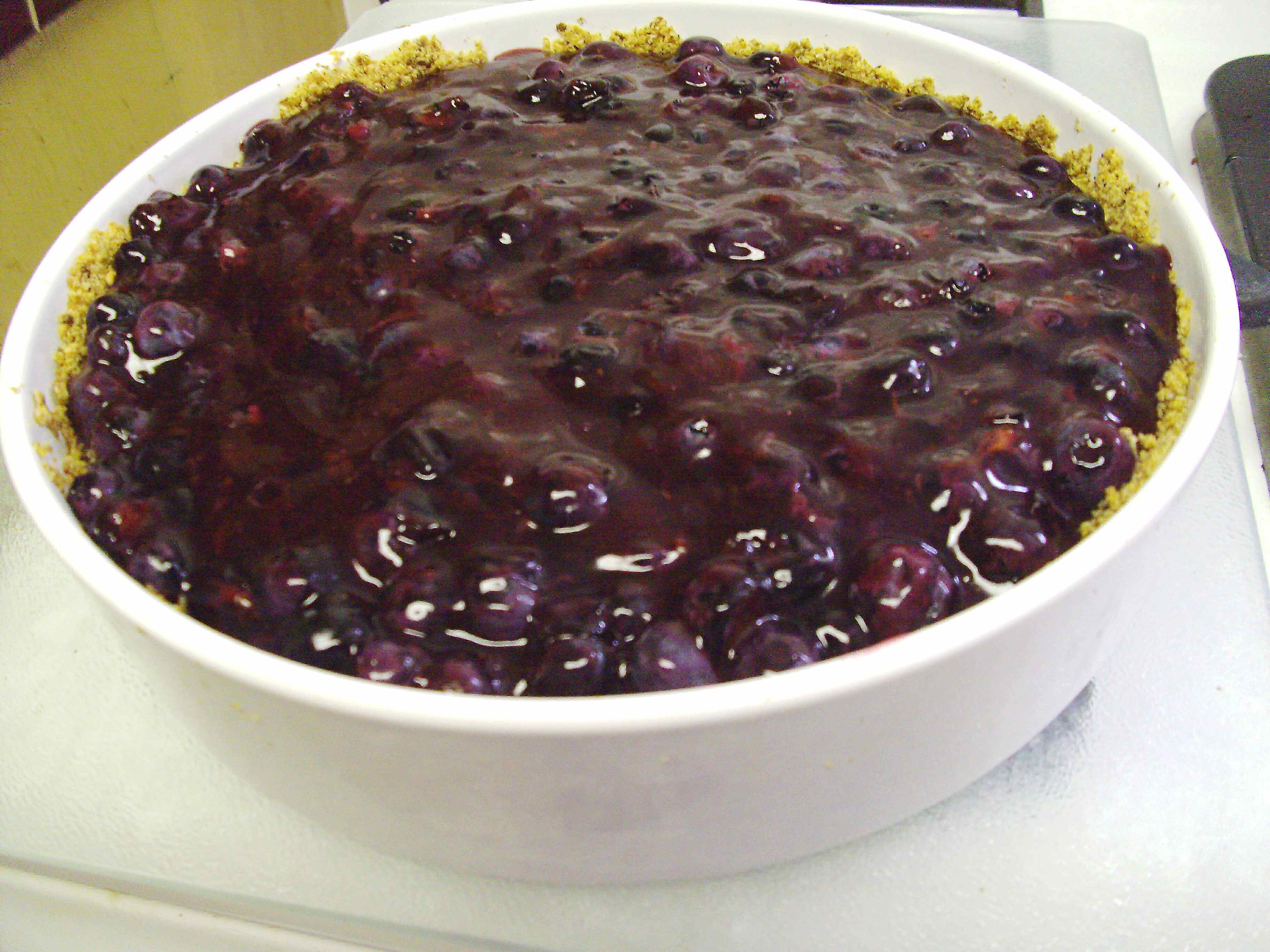
    raw blueberry pie with microwaveable filling and graham cracker crust

    This mostly-raw blueberry pie is a snap to make and very versatile--the filling microwaves in a few minutes, and you don't even have to bake the zippy gingered graham cracker crust--perfect for a hot Fourth of July and all summer long.

  • Recent Posts

  • Contents

  • Archives

  • Now Reading

  • See also my Book Reviews

  • Copyright 2008-2024Slow Food Fast. All writing and images on this blog unless otherwise attributed or set in quotes are the sole property of Slow Food Fast. Please contact DebbieN via the comments form for permissions before reprinting or reproducing any of the material on this blog.

  • ADS AND AFFILIATE LINKS

  • I may post affiliate links to books and movies that I personally review and recommend. Currently I favor Alibris and Vroman's, our terrific and venerable (now past the century mark!) independent bookstore in Pasadena. Or go to your local library--and make sure to support them with actual donations, not just overdue fines (ahem!), because your state probably has cut their budget and hours. Again.

  • In keeping with the disclaimer below, I DO NOT endorse, profit from, or recommend any medications, health treatments, commercial diet plans, supplements or any other such products.

  • DISCLAIMER

  • SlowFoodFast sometimes addresses general public health topics related to nutrition, heart disease, blood pressure, and diabetes. Because this is a blog with a personal point of view, my health and food politics entries often include my opinions on the trends I see, and I try to be as blatant as possible about that. None of these articles should be construed as specific medical advice for an individual case. I do try to keep to findings from well-vetted research sources and large, well-controlled studies, and I try not to sensationalize the science (though if they actually come up with a real cure for Type I diabetes in the next couple of years, I'm gonna be dancing in the streets with a hat that would put Carmen Miranda to shame. Consider yourself warned).

Thanks

I want to give a quick thanks to Dr. Marion Nestle, who took the time to let her readers and colleagues know about Sunday’s Dietary Guidelines post in her Twitter feed and on her blog, foodpolitics.com, which I’ve read with interest ever since starting this blog. The response has been overwhelmingly positive and I appreciate it very much.

Media misread on the new USDA dietary guidelines

The new USDA public nutrition guidelines are being updated again, as scheduled, and the Dietary Guidelines Advisory Committee’s version now says some egg yolks are okay and to limit carbs and sugar instead. A variety of media commentators have jumped all over that, even though it’s not very different from what the guidelines have been emphasizing for years. Now, if anything, I would have hoped that most of the commentaries in the newspapers of record would be critical of the industry influence on the USDA’s nutrition guidelines for the general public each time, but no.

The most prominent commentators, notably Nina Teicholz, whose op-ed in last Sunday’s New York Times really bothered me, are well-educated and should know how to “read a french fry” as it were. But instead of looking at the likely effect of loosened USDA dietary limitations on a public that has gone so seriously overboard on calorie-dense food, they’ve taken the opposite tack. Mostly to declare self-righteously that the new relaxation of standards really means all the previous recommendations to limit saturated fat and cholesterol were bunk and a waste of time based on “uncertain” and “weak” or even “junk” science.

Which is untrue. Epidemiologic research–large observation studies and surveys, like the NHANES diet and cardiovascular health survey series from the 1970s onward, and the big Framingham Heart Study of the 1950s onward, are not junk science. They do what clinical feeding trials can’t: they look for the contribution of individual dietary risk factors to chronic and complex-origin health conditions like heart disease and stroke across very large population groups. Both the processed food industry and people like Teicholz claim that clinical feeding trials are the only legitimate way to provide “proof” of cause and effect, but the cost of conducting them carefully long enough and with a big enough participant pool for meaningful results would bankrupt the nation halfway through.

Epidemiologic findings matter on the large public scale. Not every specific applies absolutely and equally to every single person, but that’s not what population-wide studies are for. The big studies, loose as they might seem compared with DNA fingerprinting and perfectly demonstrated cause-and-effect kinds of lab workups for individual cases, give best-bet recommendations for most people to reduce their risk.

Your genetics determine how well that works for you specifically, but most of us don’t have access to DNA testing on that level, and the “big six” lifestyle risk factors (high sat fat, high blood cholesterol and blood pressure, overweight, lack of exercise and smoking) are a lot easier to change and get some control over. After all, you can’t change your genetics much (and yes, my daughter is quite disgruntled that she can’t pick cooler parents. But tough. We couldn’t pick ours either).

So anyway, I know I’m unusually irritated with any news about USDA dietary guidelines–I used to work at NIH, and some of my colleagues had attempted to serve on the dietary guidelines committee and ended up completely frustrated at how “bought” the process became. The USDA has always had a conflict of interest when it comes to public health recommendations because its main mission is support of US agriculture, and public health always comes a distant second to big business. The committees have repeatedly subverted and weakened the scientific nutrition panelists’ best-finding recommendations by including food industry participants and weighting toward industry priorities in the consensus mix. There’s no great reason to expect the food industry isn’t still playing and winning the same game on the same committee this time around. [Update: the meat industry has just asked for an additional 75 day comment period].

But the main problem I see at this point is how poorly mainstream journalists and editors have handled the announced overhaul. None really seem to have dug into the comparison between current and previous issues of the guidelines, much less compared the USDA’s final takes with dietary guidelines from the DGAC, a combined group of more purely biomed/scientific research experts representing HHS (including NIH) and the FDA, or those of the major health advocacy organizations such as the American Heart Association.

And declaring that it’s now fine for anyone to eat all fats without limitation is nonsense and a misread. The USDA guidelines don’t say that–the DGAC draft guidelines certainly don’t say that. And if the USDA does attempt to drift in that direction for the final release, as some of the director’s announcements suggest, given the participation of Big Food and Big Agriculture hoping to sell the public more meat, eggs, and cheese, along with more profitable processed goods, would you necessarily believe them?

Is it really the fault of the scientists on the panels over the years, as Teicholz claims (“How did they get it so wrong?”), that the epidemiology findings they relied on for previous rounds of recommendations weren’t borne out by much smaller and less conclusive clinical studies?

Maybe the role of saturated fat is less apparent in a clinical study. I don’t doubt that. But as noted above, the statistical power of the comparatively short-term clinical trials for cardiovascular disease effects is bound to be a lot lower than in a long-term population-wide study, even if the controls are tighter. There are so many interfering factors–other dietary and lifestyle factors, and so many varieties of genetic risk factors within and among different population groups, genders, and age groups, that you need the big numbers and the large timescale to see effects above the noise. Meta-analysis of a lot of limited clinical studies with iffy results doesn’t make up for that. If anything, it compounds their individual uncertainties.

[And in fact it turns out that much of Teicholz’s assumption on that point is based on a very poorly conducted, much criticized meta-analysis of studies on saturated fat and cardiovascular disease published last spring. Most inclusive meta-analyses performed using standard stats analysis best practices actually show reductions of between 14 and 26% in CV events and deaths when subjects cut their saturated fat intake below 10% of calories and ate more vegetables instead of carbs, or else substituted polyunsaturated fats for them.]

Teicholz’s op-ed had carefully modulated but still overt indignation at the imperfect scientific basis behind previous recommendations to cut saturated fat and limit egg yolks and other high-cholesterol foods. What should be there and isn’t is the acknowledgement that when those recommendations were first announced to the public–by the AHA, the CDC and the USDA in the late 1960s, population trend studies over the next 10 years showed a stark drop in the rate of heart attacks–about a 30 percent drop. In other words, it worked. Big time.

And the broad peak of the population curve for a first heart attack shifted to the right by 10 years–that is, the average age for men went from about 50 to about 60, and for women from about 60 to 70. These were huge improvements in public health overall, and they were achieved partly because the public believed and paid attention, and partly because the nutrition and health experts hadn’t given up and abdicated responsibility in the face of industry pushback.

Clearly these results didn’t last; but is that the fault of the studies that identified saturated fat and cholesterol as things to reduce (note: not eliminate completely, just reduce)? The 1980s ushered in a long Republican-led era of unfettered, uncritical support of corporate priorities over public health, Reagan’s “ketchup is a vegetable” quip and the conversion of school lunches to chain restaurant concession contracts, a popular nose-thumbing at so-called “food police” health recommendations, the rise of high-fat-and-sugar-and-oversized-portion “comfort” and “indulgent” foods in restaurants and food magazines, and an entrenched anti-science bias in Congress that still haunts us today.

Not that much has changed from Reagan’s time in office–including the sad observable fact that most Americans for the past decade or so clearly aren’t paying serious attention to or even attempting to follow those modest earlier USDA recommendations, particularly the recommendations to eat more vegetables rather than more boxed, labeled namebrand processed foods, whether Big Macs or Ding Dongs or Froot Loops…

So few Americans today eat any vegetables at all compared with people of the same ages in the 1970s. As I’ve mentioned before, a shocking number of my friends, in their 40s and 50s already, do not cook at all. They have advanced degrees, if mostly in the humanities. They nervously repeat but don’t understand how to  read between the lines of whatever diet and health claims are in the news, and they’ve come to think cooking is too hard. They have a lot of takeout menus on their iPhones.

There is just one more factor to mention here: the profit motive. Teicholz, a former contributor to NPR, Gourmet and Men’s Health, wrote that op-ed in part to promote her new book, The Big Fat Surprise, which claims that diets high in meat, butter, Continue reading

The new MyPlate icon–fantastic or plastic?

Everyone in the food press seems to be weighing in on the new replacement for the much-cursed USDA Food Pyramid in all (both?) its glorious confusion and obfuscation of real nutritional goals that might have (and should have) undermined the beef, corn, pork, corn, sugar, corn, and soy industries if they’d ever been presented honestly.

So where does that leave us? With ears of fresh corn that are more than 50 cents apiece in Los Angeles supermarkets, and the new…

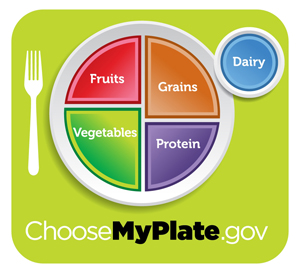
USDA MyPlate logo

Already, the USDA’s MyPlate web site is in a certain amount of branding trouble (and of course, that’s what counts most in America): the Texas DMV had already bagged “MyPlates.com” for its vanity license plate division (highly unappetizing), and Livestrong.com already has its own well-established “MyPlate” food calculator and fan base. And those items come up first on Google searches. As in, the whole first page or more. The government site ranks way down the list and had to water down the impact of its original name choice with “choose” just to get a URL. Can it elbow out the competition just by bolding the “MyPlate” part?

What really counts are the food and nutrition opinion maker comments, though. And a lot of those are detracting in a nitpicking way that I think kind of misses the point.

The first thing they all have to say is that the plate looks dumbed down. Forgive me, but wasn’t the Food Pyramid’s unreadable and unusable design a large part of the problem? The MyPlate icon is simpler and more direct, and it names real food groups, not “Big Mac” or, on the haute side of things, any of Ferran Adrià’s foams. No wonder foodies and populists alike are wondering what it has to do with them.

A small sampling of the main arguments:

MyPlate: The Food Pyramid for dummies? (LA Times): Dr. Andrew Weil and others discuss what’s still wrong with the new icon. Weil says “fruits” could still include fruit juice, which is usually a useless sugar bomb in comparison with whole fruit, and he worries that the protein section, which comes with a guideline to eat 8 oz. of fish per week, might encourage unthinking people to increase their mercury intake since swordfish is on the guideline menu, as are some of the generally overfished popular species of fish. Weil’s not wrong about the fruit juice vs. actual fruit, but his hand-wringing about fish is really geared for well-off readers who can afford to eat much of it. All the fishes he names are Continue reading

Salt reduction vs. hypertension meds–which would you choose?

One of the big complaints processed food companies, physicians in clinical practice, and the great gourmet media all have in common is that cutting back on salt would make food taste flat, and you as an individual wouldn’t necessarily get a big drop in your personal blood pressure from doing it. They argue that only “salt-sensitive” people have to worry about their intake, and anyway, a few points lower, they all say, isn’t really impressive enough to give up your 300-mg serving of sodium in a bowl of Kellogg’s raisin bran or 390 in a slice of La Brea sourdough. And don’t, for g-d’s sake, ask your favorite name brand celebrity chefs to stop salting early and often in each dish!

A big statistical modeling study in the New England Journal of Medicine this week knocks all this wishful thinking on the head, and does it very nicely. The study looked not at individual blood pressure drops but the health and cost benefit of dropping average salt intake by 3 grams a day over the entire U.S. population.

The researchers found that if everyone drops their salt intake back down, the benefits start to look like the ones from quitting smoking, cutting cholesterol and saturated fat, and losing weight to get to a normal BMI.

That’s because even when individual blood pressures drop by only a few points, they’re not going up (as they are today), and when a small average drop happens in a very large group, the big bell curve of disease shifts toward lower risk of consequences and later starts for developing heart disease and high blood pressure. After the first national cholesterol lowering guidelines were issued in the late 1960s, the nation’s heart disease and stroke risk dropped by about a third, and at least until obesity and blood pressure started to cause a back-reaction, the average age for a first heart attack went from 50 to 60 in men. That’s a huge kind of benefit.

The combined drop in heart disease and stroke deaths from cutting salt would be something like 200-400,000 people per year, a lot more than can be saved by simply putting everyone on blood pressure medications–the study made that comparison directly.

Altogether, a solid recommendation for dropping sodium levels in processed and restaurant foods, which make up about 80% of today’s sodium intake. And for not imitating processed food and chain restaurant thinking in your professional or home cooking, as Francis Lam seems to in his Salon.com commentary on the new NYC Department of Health initiative. And if there was any doubt that the Culinary Institute of America has been training Continue reading

Getting the Salt Out: NSRI and Voluntary Compliance, Again

In the wake of its city-wide diabetes reduction and restaurant nutrition labeling initiatives, the New York City Department of Health is leading yet another dietary health campaign, this time one that involves a national coalition of cities, states, and medical organizations. My hat’s off to them, even though I think the demands they intend to make of the food industry are much too light and much too toothless.

The National Salt Reduction Initiative, announced on Monday, will  encourage “voluntary compliance” from the processed food and restaurant industries to lower their sodium content by about 20% over the next 5 years. That’s pretty modest considering that both industries have doubled the standard sodium content of many common foods in the past 20-30 years, and that the national obesity epidemic seems to have coincided pretty nearly with that trend.

The UK’s national salt reduction campaign, which started in 2003 and serves as a model for NSRI, has government backing and its goal is 40% reduction of sodium in processed foods within 5 years, not 20%. They seem to be getting there, too.

NSRI’s coalition includes the Los Angeles Department of Health and a variety of medical organizations like the American Heart Association and the American College of Cardiology. What it doesn’t include this year, to my surprise–and, frankly, dismay–is involvement, funding or guidance from the National Heart, Lung and Blood Institute at NIH.

Ten years ago the NHLBI would have participated one way or another in encouraging this sort of initiative, but that was before the Bush years. NHLBI has been reorganized several times in the last decade. Two of its key diet-related outreach and education programs–the National Cholesterol Education Program and the National High Blood Pressure Education Program, which would have been the leading outreach proponent for NSRI–have receded from view, with perfunctory descriptions on the agency web site, no functioning links to current activities if there are any or to updated program pages, and no clear leadership or place in the agency’s organizational chart. But the need for them certainly hasn’t ended.

Voluntary compliance programs don’t have a great track record in the processed food industry. Look at the recent Smart Choices nutrition labeling program fiasco (see under, Froot Loops) from October.

Starting a national  program like this with voluntary compliance as a key component means the designers don’t think there’s much way to enforce the changes other than persuasion. It also means the government doesn’t have the tools, the money, or–and here is the crux of it–the will to enforce even modest limits on sodium content. Both the AHA and the AMA have been working on the FDA for years to get salt off the “generally harmless Continue reading

The Case Against Bologna

(Beside the fact that I’ve never actually liked it, not even as a kid. Too flabby and bland.)

It would be so nice if once in a while, just occasionally–every other Thursday would probably be enough–the processed food industry judged nutritional value the way the CDC or NIH public health guidelines do. (The USDA and its Food Pyramid scheme, all versions, are too compromised toward the food industry for me to include.)

Take a small health column in today’s Washington PostJennifer LaRue Huget comments on Oscar Meyer’s claim that a classic peanut butter and jelly sandwich has nothing on a classic bologna sandwich for health. Their contention is that the bologna sandwich is healthier because it has only 4 grams of sugar, and somewhat less total fat than a sandwich’s worth of peanut butter, about 2 tablespoons.

Huget proceeds to tear that argument down with a simple look at the nutrition label stats for both and a smidgen of common sense–why would bologna have sugar in it anyway? The bologna has less total fat but somewhat more saturated fat and cholesterol, and it has only 3 grams of protein for peanut butter’s 8. And what about the salt–800 mg for a sandwich with a single slice of bologna, compared with a PBJ at 490 mg–which is still high by my standards, but I guess it’s salted peanut butter, and quite a bit of the salt is probably in the bread itself (incidentally, did Oscar Meyer include bread in its sodium count for the bologna sandwich? did it use the same kind of bread in the PBJ comparison? Hmmm….)

Well anyway, Huget doesn’t need to work too hard to make her case. Still, there are issues she doesn’t even scratch. Obviously Oscar Meyer is trying to play up its few nutritional points and hide its glaring weaknesses–most of the processed food players have been doing this aggressively for years now. We’re mostly inured to it, and frankly we expect bologna to be high-salt and kind of fatty. No big surprises there.

So let’s get back to the main strangeness of this comparison and ask the key questions: How could peanut butter possibly have more protein than bologna? Isn’t bologna meat? What’s going on?

I headed for the USDA Nutrient Database to find out. As much as I distrust the USDA’s dietary advice and its Food Pyramid, the nutrient database is pretty vast and pretty consistent, and its holdings aren’t branded.

The protein in bologna and most other processed sandwich meats–not just Oscar Meyer brand but others as well–is considerably lower than in the same amount of plain unprocessed cooked meat. We’re talking 3 grams of protein in a 28-gram (1-oz) slice.

Oscar Meyer’s bologna is made in descending order of “mechanically separated” chicken and pork bits and then a variety of corn derivatives, both syrup and starch, plus gelatin and other fillers.

Normally you look at the top two ingredients and think “Meat! That’s the main ingredient! It’s chock-full of protein!” Actual chicken and pork–the solid meat, not the skin or fat of the chicken, and not bacon–contain about 25 grams of protein per 100 grams of meat, according to the USDA nutrient database, or about 7 grams of protein per 28 grams of meat. Not 3 grams per 28. By the time you get to bologna, you’ve got less than half the protein of actual meat.

You have two possibilities here for how that happens:

1. The company’s definition of “chicken” and “pork” includes a hefty proportion of skin and solid fat most people trim away and throw out rather than eat when they buy actual chicken or pork. Fat doesn’t have protein in it but it does weigh something. Should it be allowed to qualify as “meat”?

2. The percentages of the chicken and pork bits in the bologna are just enough higher than those of each of the filler ingredients to qualify as leading ingredients on the label, but the actual proportion of chicken-plus-pork to the total filler is something under half.

So bologna leaves a lot to be desired even compared to an old standard like PBJ, especially today when you can get peanuts-only peanut butter without fillers, and fruit-only fruit spreads without added sugars or corn syrup. And you can look on the nutrition label to find out what’s in it and what it’s worth nutritionally.

But what disturbs me, even more than the clear and present need for Huget’s column to point out Oscar Meyer’s casual sophistry in this over-informed day and age, are some of the comments her column generated. The Washington Post has a pretty liberal comment policy on just about every opinion article.

I expected some type of Food Police accusations to crop up. I’m not sure they didn’t, eventually, but when I read the piece this morning, what struck me was just how many of the commenters waxed nostalgic about how much they loved bologna. How, even with all its and Oscar Meyer’s obvious flaws, they still craved bologna when they saw the word in print. Even when they’d actually read the whole article. Brought them right back to the good old days of the elementary school cafeteria. Worse, it brought them a specific craving for bologna with mayonnaise on white bread. That plus Velveeta to cap things off.  I ask you, is there any hope?

Can Better Nutrition Curb Violence?

In the news section of the journal Science this week comes word of a new UK diet study that may have significance for the general population. Researchers have set up a large double-blind study at a prison in Scotland to test the possible effect of nutritional supplementation — vitamins, minerals, and essential fatty acids — on lowering the frequency of violence. Listen to Science news correspondent John Bohannon’s podcast.

It’s not the first study of its kind–about 30 years of studies in both prisons and schools suggest that diet can affect antisocial behavior–but it’s the biggest and best-designed one to date. Because the study is double-blind, neither the researchers nor the prisoners participating know which ones are getting vitamin supplements and which are getting placebos.  The researchers are also conducting cognitive and behavioral tests and taking blood samples in the subjects both before and after the study so they can try to trace which of 12 essential vitamins, minerals, and essential fatty acids make some kind of a difference to behavior.

The researchers say that, at least anecdotally, incidents at the prison seem to have dropped from two per day to one per day in the few months since the study began, but it’s too soon to tell why or whether the new nutritional supplementation or the study as a whole has anything to do with it. Solid results from the study itself won’t be in until 2012.

If the study does show a real connection between malnutrition and violence in prisons, it may also have implications for school cafeteria food offerings and the fate of American civility under a massively processed diet (or am I reading in based on last week’s live and unscripted entertainments, all three or so, on national television?). It could also bolster current efforts to attract grocery stores to poor urban neighborhoods where fresh foods are scarce–such as the municipal zoning and tax incentives approved yesterday in New York City.

And that brings me to my reservation about this study–the researchers are studying improved nutrition, but they’re attempting to improve the prisoners’ nutrition with supplements–vitamin pills–and not with a better integrated diet.

The prison study is kind of bare-bones in that the outcome they’re looking to measure  is a drop in violent behavior. Certainly using vitamin supplements and placebo pills is a neat, controllable way to study nutritional supplementation–neater and more precise than testing whole-foods kinds of diets. I’m not saying it’s the wrong way to design this particular study, and if it’s a real improvement in nutrition over the usual prison diet, then it may actually work well enough. But it’s something that’s just begging for exploitation if it does work, because magic bullet-style remedies are so popular in the world of Big Food, government, and even the general public.

In poor neighborhoods, prisons, and other places where malnutrition is common, vitamin and other nutritional supplements may be the fastest, most efficient and inexpensive way to remedy the severe shortages of fresh unprocessed food. That’s what those pills were designed to do, back in the days when there wasn’t much junk food or fast food, and malnutrition walked with starvation, not obesity. And I would never begrudge anyone who needs them. But they shouldn’t become the end of the road.

I reject the idea that you can feed people any kind of processed slop, and as long as you dose it or them with vitamin pills, everything will be great. I know, I know, that’s partly because I like to cook actual food and think processed stuff tastes a lot more like the cardboard and styrofoam packaging it came in than the packaging itself.

I also know I’m out of step. The fact is that people have been eating this way for a generation or more. Vitamin pills have been around in both adult and children’s versions, heavily advertised on TV, since I was a kid. And they’re really cheap–cheaper than fresh food. And even so they’re very high-profit margin items.

In the larger context I would hope that for most people, the big take-home message from the study (if it proves a connection) doesn’t become, “Just add more processed vitamins to processed food–that’s eating twice as healthy!”

Outside of prison walls, I want to see vulnerable neighborhoods get grocery stores that sell fresh produce at affordable prices. Ironically, up to now, the only major grocery chain willing to take on America’s inner city neighborhoods (before the offer of zoning and tax incentives as far as I know) has been the UK’s Tesco, not an American chain.

Tesco has been trying to get its small-scale Fresh&Easy markets up to speed now for two years. In April, news tickers reported shortfalls for the Fresh&Easy stores, some of which were built, stocked, and then left shuttered–they’d expanded too quickly and US pundits at the time thought they hadn’t really tested their markets well enough ahead of opening.

But in fact since that time, most of the open ones have stayed open, and few have actually failed–maybe 15 percent. The new incentives should help attract American supermarkets, but so should the relative success of Tesco’s model in what everyone expects to be a high-fail zone. If they can hang on they might change the game and make inner city life more civilized and more livable. Who knows? Now Whole Foods is mulling it over.

Naked Lunch: Nutrition labeling law in effect for California Chain Restaurants

California’s not the first state or municipality to require restaurants to declare their nutritional stats to customers, but as of today, the state will require chains with more than 20 in-state locations to post calories, carbs, sodium and fat information for each menu offering. The new law also bans sales of soda and junk foods to students at public schools–a big step toward reducing empty calories and sodium consumption among children and teens.

Patt Morrison of Pasadena-based public radio station KPCC interviewed the California Restaurant Association’s senior vice president for government affairs and the executive director of the California Center for Public Health Advocacy.

Surprisingly enough, the CRA’s representative said the association actually backs the legislation in its current form. When asked whether similar New York City legislation had had any effect so far, the CCPHA director said it had–chain restaurants had started reformulating popular high-calorie foods back downward. He also gave demographics: 89 percent of Democrats and 78 percent of Republicans polled said they were in favor of the new law. Most of the callers to the show also said they wanted or needed to know what was at the end of their forks.  A fascinating interview all the way around.