
• Enter your email address to subscribe to this blog and receive notifications of new posts by email.

    Join 241 other subscribers
  • Noshing on

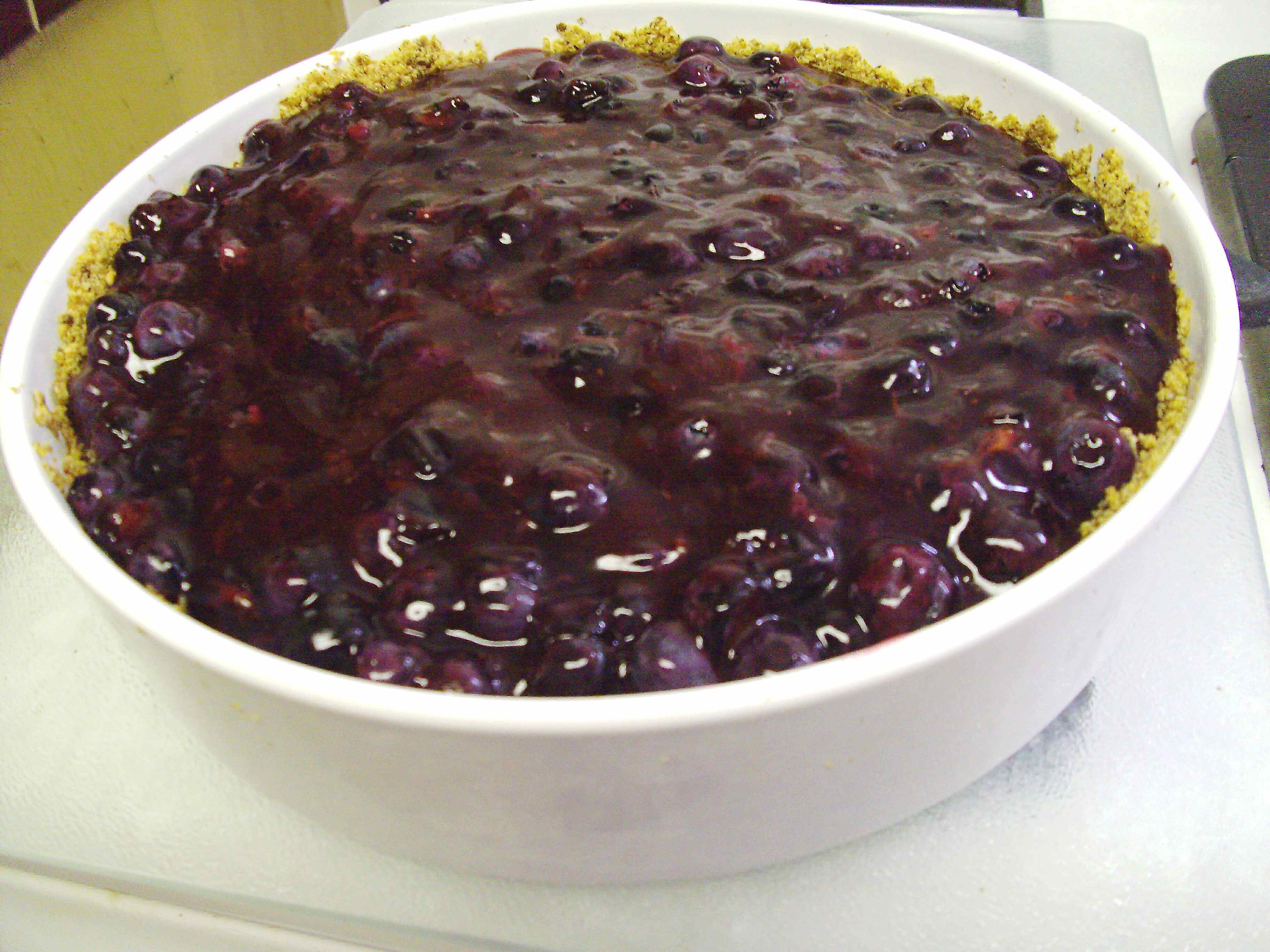
    raw blueberry pie with microwaveable filling and graham cracker crust

    This mostly-raw blueberry pie is a snap to make and very versatile--the filling microwaves in a few minutes, and you don't even have to bake the zippy gingered graham cracker crust--perfect for a hot Fourth of July and all summer long.

  • Recent Posts

  • Contents

  • Archives

  • Now Reading

  • See also my Book Reviews

  • Copyright 2008-2024Slow Food Fast. All writing and images on this blog unless otherwise attributed or set in quotes are the sole property of Slow Food Fast. Please contact DebbieN via the comments form for permissions before reprinting or reproducing any of the material on this blog.

  • ADS AND AFFILIATE LINKS

  • I may post affiliate links to books and movies that I personally review and recommend. Currently I favor Alibris and Vroman's, our terrific and venerable (now past the century mark!) independent bookstore in Pasadena. Or go to your local library--and make sure to support them with actual donations, not just overdue fines (ahem!), because your state probably has cut their budget and hours. Again.

  • In keeping with the disclaimer below, I DO NOT endorse, profit from, or recommend any medications, health treatments, commercial diet plans, supplements or any other such products.

  • DISCLAIMER

  • SlowFoodFast sometimes addresses general public health topics related to nutrition, heart disease, blood pressure, and diabetes. Because this is a blog with a personal point of view, my health and food politics entries often include my opinions on the trends I see, and I try to be as blatant as possible about that. None of these articles should be construed as specific medical advice for an individual case. I do try to keep to findings from well-vetted research sources and large, well-controlled studies, and I try not to sensationalize the science (though if they actually come up with a real cure for Type I diabetes in the next couple of years, I'm gonna be dancing in the streets with a hat that would put Carmen Miranda to shame. Consider yourself warned).

New York big-soda ban, long overdue
All the food behavioral experts on both coasts seem to be whining that New York City’s new ban on oversized sodas “won’t work”. Well, all the experts in New York and LA. Even Michelle Obama has backed off delicately from taking a position on it. Oy. People!

The Washington Post‘s columnists Ruth Marcus and Alexandra Petri have two different takes–one more serious but employing Yiddish to describe the psychology of the whole protest, the second, despite lack of Yiddish, funnier about people who insist on their right to drink a whole tubful of soda at a go. So I’m going to take the middle road–oh, screw it, I’m going to use Yiddish if I feel like it and still be hilarious despite my gravitas. Because it really is hilarious. If only it weren’t so sad.

Jon Stewart is quoted as kvetching that Mayor Bloomberg’s proposed ban is the only thing that can make him agree with conservatives. David Just, partner expert to Brian Wansink, says people “want” their big drinks and will surely just find a way to work around the restrictions.

Well, maybe a few will really want 20+ ounces of soda at a sitting badly enough to go back to the concession stands and wait in line three times to get 3 separate drinks of 8 ounces or so. Or juggle 3 small bottles back to wherever they’re drinking it all. But I’m betting most people won’t.

Why do people supposedly “want” such huge drinks in the first place? The oversized Big Gulp-style cups were a marketing ploy that started about 15-20 years ago at the burger franchises and the 7-Elevens. They were supposed to look like a huge bargain–for an extra however many cents, they’d double the amount of soda they gave you. What a deal! And the ploy worked–created a habit.

Most people don’t really need or even want that much soda, but as many of my coworkers–women especially–used to say, shrugging helplessly, “Well, I don’t really want this much, but this is the only size they sell.” And you really can’t split a 20-ounce with ice back at the office unless you have cups. Everyone will wonder whether you got tempted on the way back and started sipping from it. Eeeewww. You can’t save it in the fridge for later either because it goes flat pretty quickly.

The soda companies got the concessions for school cafeterias–why not brand the captive audience early–in exchange for money the schools have lost from their cities and states anytime those governments wanted to hand out tax relief to corporations–like soda bottling plants. A different version of “eat local”.

By now, people are so used to the soda bloat they’ve started to decide it’s their right to drink bigger than their stomachs–or bladders–can handle. And it is–you’re allowed to be stupid if you want to.  Only problem is, did the soda companies also offer to build more bathrooms to handle the outflow?

So I say Mayor Bloomberg, who’s in charge of the biggest city in America, is doing his city a huge favor by trying to get the soda industry’s claws back out of them. There’s no way the industry will scale back its sizes voluntarily, especially not if they can get experts like David Just to voice their incredible “the-consumer’s-the-one-who-wants-the-elephant-sized-drinks-we’re-just-providing-it-for-them” act.

When you get the big gulp-style Coke, how much of it are you really tasting? Maybe the first third of it? Maybe less. After that, are you drinking it while reading your computer screen? Driving? Watching tv or a movie? Would you really want someone to film–and then post on YouTube–footage of you slurping mindlessly throughout the day?

If you’re not paying attention to what you drink, is it worth drinking just because it’s there? Same for eating. And David Just and Brian Wansink–weren’t these the guys who did all that people-eat-30-percent-more-when-parked-in-front-of-a-tv-screen-than-at-the-table research? I do believe they were.

So getting back to a small Coke that you’ll actually pay enough attention to to taste? That might be worthwhile. Then you can think about what you’re tasting and decide if it’s good enough to keep drinking. Or whether, like me, you’d rather wait until next Passover, when Coke and other big soda manufacturers put out limited editions made with cane sugar instead of corn syrup.

I haven’t been a big soda drinker for years, and I usually don’t miss it at all. It was astoundingly easy to give up, and my teeth have thanked me ever since. On the rare occasion when I have a little at a party, my preferred soda is and always was definitely root beer or ginger ale, not cola, and usually I can only take about half a glass–it’s all way too sweet, even with ice. So I’m not the right person to sympathize with habitual soda drinkers–I just can’t get into it, and diet is gross.

But having tasted the sugar version of both Coke and Pepsi, I can say the difference it makes to both versions is amazing–much cleaner flavor, and a little is enough to be happy with it.

Meanwhile, a better idea would be to drink water instead of the big-3 flavors and save your shekels for small niche sodas with better, realer, more interesting flavors as an occasional treat.

Case in point: a summer soda tasting event in Los Angeles to raise money to reopen exhibitions from the shuttered Southwest Museum in Highland Park. The Southwest museum had wonderful Native American collections–kachinas, headdresses, Bakelite jewelry of the 1930s, photos, and much more. It was taken over by the Autry Museum a couple of years ago, but has remained dormant since then with a lot of its collections in storage and out of the public eye. I was fortunate enough to have taken my husband and daughter there about 10 years ago, before it closed.

Galco’s Soda Pop Stop, an independent soda market run by curator John Nese in Highland Park, is hosting the soda tasting–his second–with something like 500 different small brands, including plenty of nostalgia brands (though no NeHi Grape–don’t know if they’re still around) and imports.

According to a profile of Nese in The Quarterly Magazine, Galco’s motto is “Freedom of Choice”, with flavors like coffee, bananas, spruce, cucumber, mint julep, and many others–check out their huge soda list, which includes ingredients, prices and bottle sizes! Amazing. Maybe that’s the kind of freedom soda fans should be going for. Amazingly enough, most of these flavors don’t come in 20-ounce monstrosities, or even in plastic.

If you’re in Los Angeles on July 22, check it out–tickets are only $12 in advance, $15 the day of the event, and you can get them at Galco’s on York Blvd. or through the Friends of the Southwest Museum web site.

Raw Dough Carbs: Playing for Pizza, Calculating for Calzone

calzone

Calzone–one of my favorite Italian dishes–is extremely easy to make once you’ve got some basic pizza or bread dough risen and ready to shape. Flatten out individual rounds of dough, mix up a ricotta-based or roasted vegetable filling, fill and fold the dough over into half-moons, crimp the edges, brush with olive oil, and bake on a sheet in a hot oven until they’re puffed and golden. A satisfying but fairly light supper dish, especially if you have a good thick spicy tomato sauce to go with it and a salad on the side.

But even if you don’t, they’re a good consolation on a Sunday night for a kid with frustratingly advanced math homework the teacher didn’t quite prepare himself or the class for (11th-grade precalculus techniques popping up in a sheet of homework for 11-year-olds? The dangers of pulling your homework handouts from a math site on the internet. I keep reminding myself that he’s young yet). All I can say is, you know you’re in trouble when the heartburn is coming from the homework and not the food.

Grrrr. I’m almost over it. Anyway, here’s a much easier calculation trick that doesn’t require factorials…

The trick about making dinner from homemade dough is that the kid in question is diabetic and needs to know how many grams of carb she’s going to get in her calzone. Pizza, calzone, any kind of handmade entrée with dough plus noncarb ingredients, is tricky to calculate carbs for because you can’t easily tell by eye how much bread you’re getting in a serving. Check out any of the commercial pizza companies’ nutrition stats per slice–they’ll often state carbs as a range rather than a set value. How thick the dough is, how large the slice, etc, can really throw things off. Most people don’t need to know more precisely than “35-50 grams per slice”, but diabetics really do. Fifteen grams is a pretty big variation.

So how do you deal with it at home? If you’re making lasagne or stuffed shells or spanakopita, you can calculate the carb by counting the noodles or sheets of fillo dough you use and looking on the package nutrition label, then figuring a total carb count for the tray and dividing by the number of portions. A little tedious, but manageable.

Bread that’s already baked is also easy enough to calculate for–just weigh it out on a food scale in grams and figure 50 percent carb by weight. Most nonsweetened bread is pretty consistent, whatever density its texture. Weigh out a 70-gram piece of bread, and you’re usually looking at 35 grams of carb.

But for calzone or pizza you’re dealing with a bowl of wet dough to start, and once the dish is baked, it’s got lots of other stuff on or in it so you won’t be able to weigh it cooked and really know what carbs you’ve got. You need to test a portion of your raw dough, only raw dough is heavier than it will be once baked. Depending how wet the dough is, the proportion of carb could vary from a little less than half to a lot less.

Weighing a sample of raw dough to figure carbs after baking

Weighing a sample of raw dough to figure carbs after baking

The only thing to do is test a bit of dough by weighing it out raw, then reweighing it once it’s baked. Doing this in a conventional oven just for a single test ball of dough can be time-consuming unless you’re already heating it for the main event. Still, you want to get ahead with making the actual calzone so dinner will be sometime before midnight.

Enter the microwave. Yes, really. A nectarine-sized ball of dough, say 100 grams raw weight, will cook through lightly in 40-50 seconds in the microwave if you put it on a saucer and punch the “nuke” button. It’ll still be white and pale, but it’ll have risen fairly well to the size of a large dinner roll and won’t have gooey raw spots (you can check by breaking it open, just watch out for steam). Then just pop it in the toaster oven for about 5 minutes and it’s browned and baked through. When you reweigh it, you’ll know how much a 100-gram ball of your dough weighs cooked, and then figure 50 percent of that weight for carbs.

Aside: This nuke-and-toast scheme works pretty well for making a fast sandwich roll from a bowl of dough in the fridge. When I first came up with the idea, it was with great reluctance, because my only previous experience with microwaving bread had been the horrible, horrible mistake of Continue reading

School nutrition opinions and the state of things now

In today’s LA Times, David Just and Brian Wansink weigh in on the behavioral fallout of revamping school cafeteria food choices by eliminating commercial fast food and flavored milks. They contend that giving kids a choice of foods increases the chance that kids will choose healthy foods at least some of the time instead of tossing out the tray and sneaking pizza orders into school.

A few of their observations–that fresh fruit is more appealing and gets chosen more often when placed in an attractive bowl right by the cash register checkout–make sense. Cafeterias could do more to arrange the choices they have in keeping with the way restaurants from banquet-style buffets to the corner Starbucks have found effective. Put the fruit right by the cash register and that impulse-buy instinct will kick in. Now if only they had a better strategy for vegetables. Or at least a more nutritious and less dismal choice than carrots vs. celery.

But what really struck me in this article wasn’t the fact that Wansink, the author of Mindless Eating: Why We Eat More Than We Think, and his colleague David Just seem to be condoning the continued availability of fast food in public school cafeterias.

The most striking thing about this article on an overchewed topic was the picture at the top of the page: a high school cafeteria display with single-serving “Uncrustables” white-bread sandwiches (Smucker’s brand) on a shelf that was labeled “Fresh Apple Slices” (none in sight, but I bet they would have been branded in baggies as well) and little bags of baby carrots (couldn’t tell which brand, only that there was one).

I know the existence of carrots is an improvement. I know that sandwiches are generally less awful than pizza and fries. But the bagginess of the whole thing–wrapping something in plastic pouches at a factory makes it officially dead and stale. Not fresh.

The apples, if they actually exist at that school, are already cut into pieces that are either browning or have had to be treated with ascorbic acid (well, that would be the best option, and would sneak in a little vitamin C) or another anti-browning agent. The sandwiches on white gummy-looking bread have the crusts removed. It’s as though the kids in the cafeteria were four years old and couldn’t handle biting into a whole apple or peeling an orange or eating a sandwich on actual bread with crusts (and I mean really, what about all those hamburger buns?) It’s disheartening.

I realize a lot of school cafeterias got rid of their dishwashers as well as their full-function kitchens a generation ago. But they could be offering food that looks and tastes fresher and less like it had been sitting for ages in a vending machine.

If you’re going to offer sandwiches in the cafeteria, why not let the kids choose bread and fillings at a sandwich line? It would take a staff person to assemble them, most likely for reasons of discipline as well as hygiene, but the food would look fresher and probably be fresher, and the act of choosing and ordering a bespoke sandwich would probably make it more appealing than taking another soulless packet off the shelf. There’d be less plastic trash too.

The labor issue–there’s always a labor issue with hand-assembled sandwiches, assuming you’re not going to let the kids make their own. But you could, maybe as much as once a week, let different clubs at the school take turns running a sandwich line as a fundraiser, get a free lunch that day themselves and charge a nickel or so above the standard lunch price for their cause. Or do a school-wide chili cookoff event once a year with different teams competing. It would be a lot more fun than the dim “choice” of celery vs. carrots (and of course 89% of students will choose carrots over celery–carrots are faintly sweet, while celery is overtly bitter even though it’s a savory bitter).

If the school isn’t already shackled by a year-long exclusive contract with a food-packaging company like Smucker’s, offering a student-run sandwich line once in a while might actually come out less expensive and wasteful.

ANDI Scores, Whole Foods, and diet scheme cha-ching

If you’ve taken a walk through your local Whole Foods Market in the past year, you’ve probably seen a stand with purple and green information sheets listing foods in order of “ANDI Top 10 for Produce”, “ANDI Top 10 Super Foods” and so on. Coordinated recipe cards, a suggested shopping list, and an attractive-looking book round out the offering. And the produce and bulk bins sport matching ANDI score labels. It’s a whole system. But is it right, or just another fad?

What is the ANDI Score system, anyway, and who owns it?

ANDI stands for Eat Right America ™’s Aggregate Nutrient Density Index, a proprietary nutrients-per-calorie scoring system that rates for foods from kale to cooking oil and everything in between on a scale of 1 to 1000 points.

The ANDI scoring system started with Dr. Joel Fuhrman, the author of the diet book Eat to Live. On his home page, Fuhrman describes himself as a family physician and nutrition researcher.  His diet, which he calls “nutritarian” (and you can become a nutritarian too by signing up) is a highly prescriptive weight loss regimen that focuses on high-value vegetables and fruits and eliminates most meats, fats and carbohydrates. His evaluation of vegetables as high-scoring and processed foods, meats, starches and so on as low-scoring seems only common sense.

Fuhrman’s site claims hundreds of articles and interviews as well as numerous appearances as a nutrition expert on national TV. The site also prominently mentions his two US Nationals pairs figure skating wins back in the 1970s. Does he need to have that information on there if what he’s promoting is serious, science-based dietary advice? Altogether, the site has a very infomercial feel about it, with lots of testimonials from members who’ve lost over 75 pounds with before-and-after photos. Fuhrman himself looks very fit and tanned and taut-faced–maybe a little too much? Maybe it’s just the heavy pancake makeup that infomercial packagers are famous for plastering on their experts’ faces.

Eat to Live is a popular book. Fuhrman’s Kindle edition of Eat to Live is the #700-ranked download on Amazon.com. His web site has something on the order of 4000 subscribers, whose questionnaire responses he mines for some of his journal articles. According to one of the journal papers, his audience is about 65% female, 71% married, the largest proportion college-educated with household incomes over$100K.  (At this point, I thought, bingo, the perfect infomercial audience. This is clearly a commercial diet with legs. But wait, there’s more…)

Ahem! Enter Eat Right America, a company started by a businessman who became a fan of Dr. Fuhrman’s. The founder figured there must be a good way to automate the multi-nutrient density calculations for a wider variety of foods and developed a proprietary algorithm based on nutrient values in the USDA’s NAL database. What makes the ANDI algorithm attractive, the company says, is that they weight these calculations per calorie, not per serving. Finally, they claim, you’re getting the “right” comparison of nutrient density for the calories.

But a closer look at the the diet and menus offered on both the Eat Right America and Fuhrman web sites raises a few warning flags. Scan the ingredients list in the Eat Right America 3-day sample menu and you see frequent uses of high-priced fruits, vegetables and grains like quinoa (no surprise there about why Whole Foods might be happy with the shopping list) as well as some trendy and expensive ingredients that don’t sound all that nutritious. Dates? Avocado? Coconut?  Sun-dried tomatoes? Cashews–one of the lower-fiber and more expensive nuts, incidentally. Those are usually extras, snacks, not staples, even in a vegan diet.

More seriously, the menu designers seem to have a penchant for bottled carrot juice. They put 7 whole cups of it in a bean stew that feeds 10. Now, carrots, whole carrots, are fine raw or cooked into a stew. They have fiber and vitamin A and in whole form are relatively low-carb as well. But juice them, and you filter out the fiber. You concentrate the vitamin A and carotenoids about 3-4-fold, well beyond the RDA–risking vitamin A overdose–and you concentrate the sugars. What would ordinarily be a bean and vegetable soup with a reasonable amount of carb per serving–about 15 g per half cup or 30 g for a full cup–quickly rises, with the addition of a big 7-cup dose of carrot juice in the pot (NB also much more expensive than plain carrots) to 75 grams. That’s the amount of carb my diabetic daughter would figure for an entire holiday meal that includes a decent-sized slice of cake or pie.

Some of the Eat Right America recipe nutrition counts look like the ingredients as listed don’t quite account for them. The carb is high–occasionally the sodium doesn’t add up right either. And the overall protein is low. In the vegan versions on Fuhrman’s site, which prescribes a six-week starter regimen of a pound of vegetables a day, a pound of fruit, and a cup of beans, the protein is also incomplete or close to it. No grains, and no dairy or meat or fish. No tofu. Avocado and flax seed, two darlings of the vegan world, are recommended to supplement the caloric intake so you don’t lose too much weight (which I thought was the point, but maybe not for a whole six weeks at a time).

All these recommendations flow from the ANDI scores of the food and produce some logical puzzles. Somehow, you never see plain tofu or fish or cheese or yogurt. Apparently they don’t score as high as avocado. How is this possible? Isn’t avocado pulp high-fat and not too exciting as a vegetable?

So the next thing to check–is the ANDI food-rating method right? If you’re judging solely on the micronutrients list, which is what Eat Right America claims to be weighing into its ANDI scoring formula, no it isn’t. Continue reading

Paula Deen and the diet that bites you back

This week’s “revelation” that Paula Deen, “the Butter Queen” is now a Type II diabetic was a surprise to nearly nobody. Deen, who revealed a harrowing backstory in her memoir of a bootstrapped career in catering, has enjoyed a surprising rise to fame on television. Two weeks ago, following in Emeril Lagasse’s footsteps, she appeared as Grand Marshal for the Rose Parade right here in Pasadena.

Of course, her otherwise ordinary “Southern Cooking” has been exaggerated out of all recognition with extra excess butter and sugar and mayonnaise, and so for years now cads like Anthony Bourdain have called her a scourge on the culinary scene (well, actually, he called her a lot worse than that, but he’s Anthony Bourdain. I’m paraphrasing politely, even though I kind of agree, at least foodwise).

With the revelation that she’s Type II, which everyone knows and fears due to their own increasing girth, Deen is bound to be the butt of predictable jokes this week and next, or until the next big Kardashian “revelation” that newspaper readers apparently care deeply about, or at least they do according to the reality TV networks footing the ad bills. (Even the New York Times has wasted column inches on this kind of drivel this year. Journalistic standards are dropping all over the place, I tell ya.)

But tell the truth, y’all: she ain’t the only one responsible. Not by a long shot. Read any “major” chef’s cookbooks and magazine offerings, other than perhaps those of Nobu, who deals mainly in raw seafood unadorned by carbs or noticeable layers of fat, and you’ll quickly realize that MOST of them exaggerate the salt, sugar and fat content of their dishes well beyond reason. Very few of them deal out plain vegetables on the plate. Very few deal out meats or fish without big sauces.

The other big, big feature stories on food in the New York Times this week:

1. Mark Bittman doing a quasi-deep bankruptcy commentary on Hostess that manages to recount his entire childhood consumption of Twinkies and co. in loving, fine-grained detail. He still attempts to sound self-righteous about it by the end because the ingredients include “ultra-processed flour”.

2. David Tanis of Chez Panisse, waxing lyrical about French lentils (du Puy or Die) as a salad with vinaigrette, hard-boiled eggs (so far, so good), some lettuce and….big fatty slabs of pork belly on top. Five or six of them per plate.

3. “The Miracle of Bo Ssam”–which turns out to be David Chang of Momofuku’s recipe for pork shoulder slathered in salt and brown sugar–twice–and cooked down for six hours in the oven. Caramelized barbecue. In fact, “crack” barbecue, to match Momofuku Milk Bar’s world-famous (to bloggers, anyway) “crack” pie made with most of the same ingredients.

Now people. With all of that going on, with Thomas Keller still boiling his vegetables in brine and poaching his lobster bits in butter, with the Culinary Institute of America instructing its naive young students to salt, salt some more, and salt yet again to achieve that perfect degree of salting in each dish (Coronaries ‘R’ Us), and with Congress sucking its collective thumb about local schools’ move this year to exclude french fries and pizza from the “vegetable” categories in their cafeterias—–

Does anyone really think that Paula Deen is NOT a woman of her time?

She’s nowhere near the worst–she’s just not as fashionable as all the tatted-up young bucks who get picked for Top Chef. She’s also not dishy, like Nigella Lawson, whose cookbooks, which started out about 10-15 years ago emphasizing lighter fare like Vietnamese salads with chiles, have also drifted drastically in the direction of high-calorie “indulgence” foods–some of them utter unmitigated goo-fests (avocado, mayo, roquefort? peanut butter, corn syrup, marshmallow fluff, chocolate bars? puff-pastry chicken pot pies-for-one?). Lawson makes the national news, at least in the UK, when she comes back out in public looking svelte again after puffing up too far past the point where male reviewers are still drooling. Will her next book of recipes slim down commensurately?

Unlike the more fashionable TV chefs on her network, Paula Deen is middle-aged and looks it. She’s fat, she’s gray though beautifully coiffed, she’s politely made up and decently dressed–no orange signature clogs–and she smiles. Maybe a little dippily, but if you didn’t know who she was, Continue reading

Cannoli that won’t bust the carb count

Cannoli paste my way

This is a story about frugality–of the serendipitous sort.

The other week my daughter was with me at the supermarket (sometimes a mistake, sometimes an inspiration), and asked if we could get a packet of sugar cones to go with a drum of Dreyer’s ice cream. This was a trade-off for forfeiting Baskin-Robbins, whose ice cream is consistently higher in fat and carb than Dreyer’s or Breyer’s.

(Shakespearean aside #1) The B-R nutrition brochure is worth a pretty serious look for calories, fat, carbs, the total picture. You can definitely eat a days’ worth of calories–upward of 1500–in a single sitting if you order one of the fancier items. Skip the soft serve and stick to the single cone, for sure.

Not that we never stop in for a cone, but we never knew what the sugar cones were worth carbwise so Abby was limited to a paper cup or a cake cone. And of course for the price of two modest single cones at B-R, you could buy a 1.5 qt. carton at the store and scoop about 10 servings out of it yourself.

In the supermarket, the box with the sugar cones says 10 grams for Keebler and 11 grams for the Ralph’s (Kroger-affiliated) store brand, which is on sale, and about 50 calories per cone. The sugar cones have surprisingly simple ingredient lists for a processed food–wheat, brown sugar, vegetable oil, oat fiber (Ralph’s version) and a bit of salt (though not much–20 mg/cone) and maybe a little caramel coloring and malt flavoring.

But of course the ice cream tends to run out a bit sooner than the cones. And then what? Here’s where the “frugality” comes into it again (okay, I’m sort of rolling my eyes too, but still.)

I had about half a quart of ricotta left over from manicotti (same idea as for the microwaved stuffed shells, only using a plastic baggie with a corner torn out to pipe the spinach and cheese filling into both sides of the parcooked pasta tubes–worked pretty well actually). And ricotta, even on sale, is kind of expensive if you just let half of it sit in the fridge until it goes bad because there isn’t quite enough for another batch of pasta and you don’t know what else to do with it.

So anyway, the availability of leftover ricotta (I’m too cheap to do it with a brand new carton) plus the leftover cones added up in my head the other night to “Hey! Impromptu cannoli! Right now! And I don’t even have to go back to the store!”

I should probably explain.

The first cannoli I ever had were also the best. The parents of one of my sister’s high school friends ran a tiny Italian deli and specialty shop way out near the airport of our town, and what can I say–it was worth the schlep. In addition to imported pastas and olives and pickled peppers and salami and so on, you could buy a tub of their own fresh cannoli paste and a box of carefully packed pastry tubes so you could assemble the cannoli yourself at home and not risk sogginess or breakage on the way.

The D’Elicios’ cannoli paste contained ricotta, of course, sugar, and something else that I finally pinned down as lemon (and possibly orange) rind. And it was heaven on a spoon. So good I asked my mom to bring a box of their cannoli instead of a birthday cake to my college dorm  for my 18th birthday.

How was I to know that would be the last of the really great cannoli for decades? Continue reading

Who the federal spending cuts are hurting: Food pantries

The LA Times reported today on Southern California’s food pantries.  Demand in Los Angeles and Orange County has gone up 70 percent since 2008. Between LA and OC, the food banks are reaching more than half a million people. The LA Regional Food Bank alone is serving something like 1.25 million pounds of food a week. They’ve received increased contributions in that time from the USDA and FEMA, quite a change from the shameful 50 percent cuts the USDA made to food bank aid in the mid-2000s during the Bush administration, but that’s being considered emergency funds, not standard support. Ripe for cutting the moment Obama decides to try and look flexible with the Republican House leaders once again.

And thanks to the repeated budget cuts to domestic federal spending while military spending and bank bailouts continue to be preserved, even that emergency aid is now down considerably from last fall. But the demand isn’t.

The shortfall has to be made up in private contributions. But a lot of the shortfall is just that–shortfall.

On the inevitable hot dog eating contests

I did something at my in-laws’ Fourth of July cookout that I haven’t done in years: I ate a hot dog. So did my husband. I think my daughter ate two and a half hot dogs (actually, I think she ate more and gave us a story, but her grandfather maintains that someone else may have gotten the extras in the pack). Given how crappy hot dogs generally are, you may be wondering why we did this: because my in-laws made the effort to buy kosher ones for us, and because Hebrew National hot dogs don’t have much in the way of carb, and my daughter is fairly crazy about them (because we don’t cook enough meat for her tastes at home).

What hot dogs, kosher or otherwise, do have–and this is why I have to put in a huge caveat–is sodium. And saturated fat. A regular H-N hot dog has about 490 mg sodium. A knockwurst (which we decided against; the flavor’s not really very different, it’s just bigger) has 810 mg. Plus more calories and saturated fat, though the regular’s no great bargain–as much fat as protein, easily.

I have to admit they taste a lot better grilled outdoors on an actual grill than they do indoors in a grease-laden cafeteria service pan, especially since you can dress them up significantly with sharp mustard, crusty French rolls instead of whitebread buns, and sauerkraut and browned onions instead of the usual insipid cafeteria ketchup. So I can go with the “once a year, enjoy, and just eat a little more carefully the rest of the week” argument.

However. Hot dog eating contests are just wrong. Sixty-two or however many hot dogs appear in the “ain’t it amazing?” recordbreaking stories section of your local newspaper the next morning? Enough hot dogs for 30 people or so? That’s not enjoyment, that’s not even tasting the food–tasting slows one down, and possibly triggers the dire appetite signal to retreat or suffer an immediate reversal of fortune after just a few hot dogs. Even for teenage contestants.

For the non-contestants among us (such as my daughter), I say, two hot dogs is probably the outer limit of sanity in one day–so just figure you’ll eat the other sixty another time. Two is about half your recommended daily max for sodium intake and about the max for saturated fat. And it’s not really delivering much in the way of protein. What’s true of bologna is just about as true for hot dogs–they’re made of meat, but they don’t add up nutritionally to actual meat (about 6 or 7 grams of protein per dog), and they sure have a lot of downsides without delivering the really distinctive flavors and variety of, say, gourmet specialty sausages.

There aren’t a lot of kosher specialty sausages made widely available in the US at this point. Actually, according to my father-in-law, there aren’t enough true (pork) and high-quality bratwurst distributors either anymore, and the owner of the one available to them, who happens to operate in my mother-in-law’s native state of Wisconsin, has openly supported political causes and candidates that are thoroughly repugnant to them.

I suspect that leaves a bad taste in everyone’s mouth on the Fourth of July.


The new MyPlate icon–fantastic or plastic?

Everyone in the food press seems to be weighing in on the new replacement for the much-cursed USDA Food Pyramid in all (both?) its glorious confusion and obfuscation of real nutritional goals that might have (and should have) undermined the beef, corn, pork, corn, sugar, corn, and soy industries if they’d ever been presented honestly.

So where does that leave us? With ears of fresh corn that are more than 50 cents apiece in Los Angeles supermarkets, and the new…

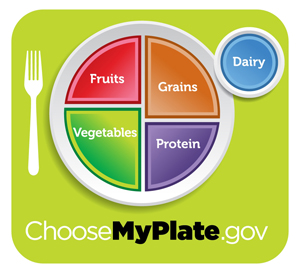
USDA MyPlate logo

Already, the USDA’s MyPlate web site is in a certain amount of branding trouble (and of course, that’s what counts most in America): the Texas DMV had already bagged “MyPlates.com” for its vanity license plate division (highly unappetizing), and Livestrong.com already has its own well-established “MyPlate” food calculator and fan base. And those items come up first on Google searches. As in, the whole first page or more. The government site ranks way down the list and had to water down the impact of its original name choice with “choose” just to get a URL. Can it elbow out the competition just by bolding the “MyPlate” part?

What really counts are the food and nutrition opinion maker comments, though. And a lot of those are detracting in a nitpicking way that I think kind of misses the point.

The first thing they all have to say is that the plate looks dumbed down. Forgive me, but wasn’t the Food Pyramid’s unreadable and unusable design a large part of the problem? The MyPlate icon is simpler and more direct, and it names real food groups, not “Big Mac” or, on the haute side of things, any of Ferran Adrià’s foams. No wonder foodies and populists alike are wondering what it has to do with them.

A small sampling of the main arguments:

MyPlate: The Food Pyramid for dummies? (LA Times): Dr. Andrew Weil and others discuss what’s still wrong with the new icon. Weil says “fruits” could still include fruit juice, which is usually a useless sugar bomb in comparison with whole fruit, and he worries that the protein section, which comes with a guideline to eat 8 oz. of fish per week, might encourage unthinking people to increase their mercury intake since swordfish is on the guideline menu, as are some of the generally overfished popular species of fish. Weil’s not wrong about the fruit juice vs. actual fruit, but his hand-wringing about fish is really geared for well-off readers who can afford to eat much of it. All the fishes he names are Continue reading

Superfoods and Magic Beans

“Top 10 (or 7, or 5, or whatever) Superfoods” lists seem to be popping up on the covers of all the in magazines this month. If I didn’t get a headache every time I tried it, I’d be rolling my eyes.

The classic bloated diet article with the even more classic bloated promise of magic beanhood is nothing new, I realize. But “superfoods”…

The premise of calling something a superfood is that if you eat this one special food, or at least shop your way down the list of 5, or 10, or whatever’s in the article, you’ll be so much healthier than someone who eats a regular food. Right?

Usually the items on these lists of so-called superfoods turn out to be expensive exotics like dried acai berries and pomegranate juice. Both of which just happen to have heavyhitter funding and marketing efforts behind branded packaged versions of them, and the companies that have started branding and marketing them have both recently come under FDA scrutiny for overinflated and unsubstantiated health claims.

Of course you don’t have to go branded to run into wide-eyed, breathless claims about supposed superfoods. More mundane choices like the sunflower seeds, green peas and garlic touted in this LA Times food section article are also now being highlighted as the new great green hope for America.

But not for the reasons that make the most sense–that these foods are relatively unprocessed vegetables, fruits, whole grains, nuts and seeds (occasionally someone remembers to add something from the beans and pulses category too). All of this vegetation has almost disappeared from the current mostly-processed, mostly restaurant diet of the American public. The general categories now touted as superfoods contain protein, fiber, vitamins and minerals. They’re wholesome and varied if you buy them fresh (or dried) and cook them yourself. Some of them are green (and they’re supposed to be!)

That’s in stark contrast to the now-standard and really dreary burger, ketchup, fries and soda that are all made out of the same three or four overused industrial ingredients (wheat, soy, corn and salt, with a little beef scrap or so thrown in for the burger, some leftover tomato paste for the ketchup, and much less potato than you’d think in the fries). I understand how something that’s actually recognizably plant-based would seem exotic and ultrahealthy in comparison. I do. Because frankly, you could take your soy-based green crayons and color a piece of all-natural bamboo-fiber cardboard and eat that and it would be healthier than the fast food special.

But does that mean vegetables, fruits, whole grains and nuts and seeds are suddenly superfoods?

What are superfoods supposed to be, exactly? Look at the captions for what’s so great about each featured food Continue reading