
• Enter your email address to subscribe to this blog and receive notifications of new posts by email.

    Join 241 other subscribers
  • Noshing on

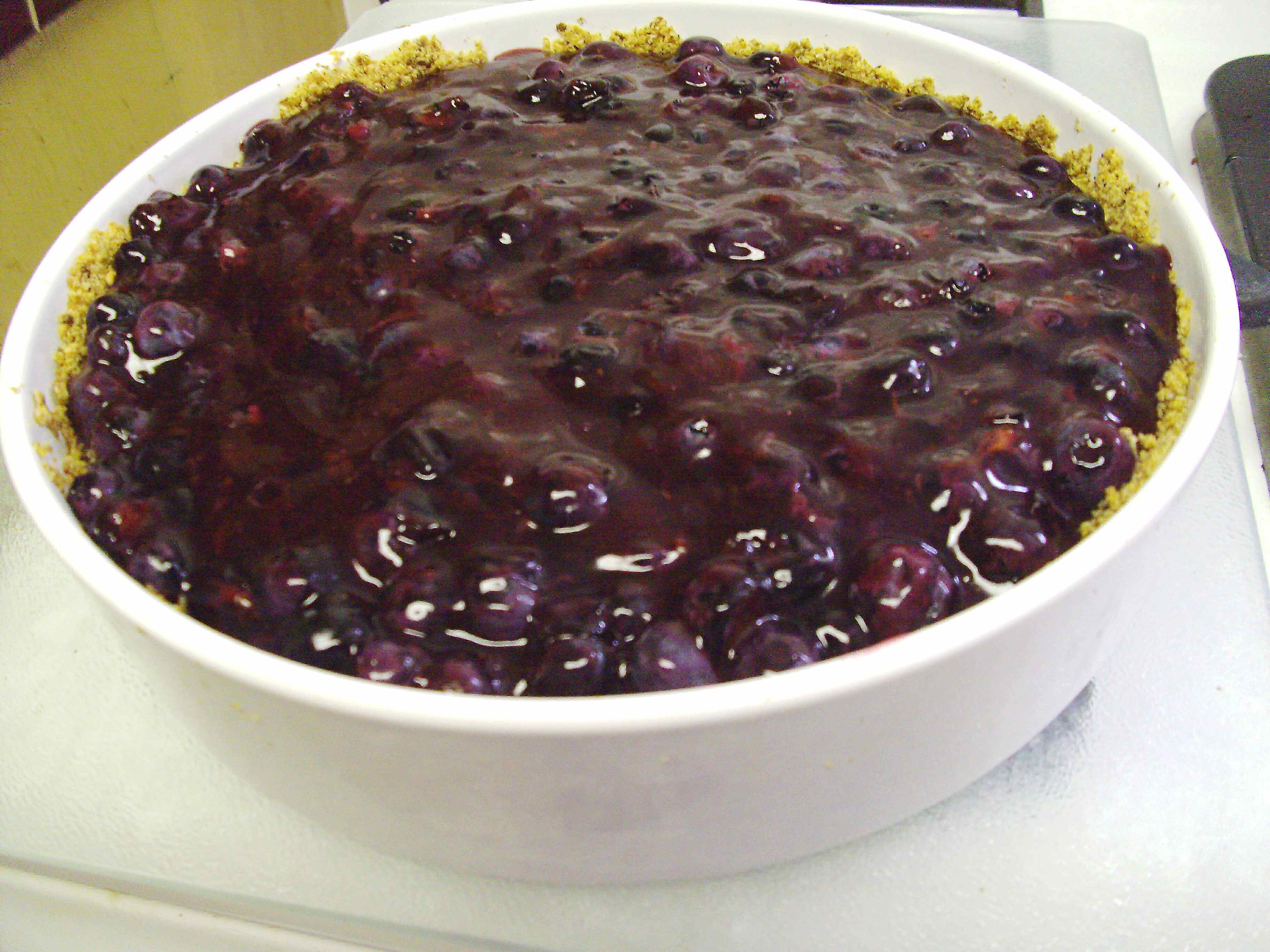
    raw blueberry pie with microwaveable filling and graham cracker crust

    This mostly-raw blueberry pie is a snap to make and very versatile--the filling microwaves in a few minutes, and you don't even have to bake the zippy gingered graham cracker crust--perfect for a hot Fourth of July and all summer long.

  • Recent Posts

  • Contents

  • Archives

  • Now Reading

  • See also my Book Reviews

  • Copyright 2008-2024Slow Food Fast. All writing and images on this blog unless otherwise attributed or set in quotes are the sole property of Slow Food Fast. Please contact DebbieN via the comments form for permissions before reprinting or reproducing any of the material on this blog.

  • ADS AND AFFILIATE LINKS

  • I may post affiliate links to books and movies that I personally review and recommend. Currently I favor Alibris and Vroman's, our terrific and venerable (now past the century mark!) independent bookstore in Pasadena. Or go to your local library--and make sure to support them with actual donations, not just overdue fines (ahem!), because your state probably has cut their budget and hours. Again.

  • In keeping with the disclaimer below, I DO NOT endorse, profit from, or recommend any medications, health treatments, commercial diet plans, supplements or any other such products.

  • DISCLAIMER

  • SlowFoodFast sometimes addresses general public health topics related to nutrition, heart disease, blood pressure, and diabetes. Because this is a blog with a personal point of view, my health and food politics entries often include my opinions on the trends I see, and I try to be as blatant as possible about that. None of these articles should be construed as specific medical advice for an individual case. I do try to keep to findings from well-vetted research sources and large, well-controlled studies, and I try not to sensationalize the science (though if they actually come up with a real cure for Type I diabetes in the next couple of years, I'm gonna be dancing in the streets with a hat that would put Carmen Miranda to shame. Consider yourself warned).

“Healthy” breakfast muffins? Miscalculated.

Julia Moskin’s latest “Recipe Lab” in the New York Times food section revisits one of my (cranky, irascible) pet peeves: the “healthy” muffin. She claims her version, filled with an expensive and lengthy list of the latest buzzword ingredients and yet supposedly lighter-textured than most bakery offerings, is healthy, always a warning sign, especially when paired with the instruction to make sure it’s well-leavened and to use “unprocessed” oils. These are code words for a heavy dose of baking soda and baking powder on the one hand and coconut oil, the newest darling of the hipster food world, on the other.

But–benefit of the doubt–I looked at the recipe and scrolled down to mouse over the nutrition stats. They’re provided in a popup link you can’t copy, with a very faint “i-in-a-circle” watermarked icon below the ingredient list. Not a good sign, generally: hiding the nutrition stats signals that they’re kinda suspish, or at least unflattering. But okay, at least they’re posted here.

Edamam provides the analysis–and per average muffin, 20 to the batch, claims the following stats:

318 cal, 16 g total fat, 1 g saturated fat, 0 trans, 9 g monounsaturated, 4 g polyunsaturated, 39 g carbohydrate, 2 g fiber, 19 g sugars, 4 g protein, 38 mg cholesterol,260 mg sodium

Something didn’t sit quite right with that. I looked up at the ingredient list.

Sure enough, the fat was provided by 1 1/3 cup of coconut oil. Yick. But never mind. The point here is that Edamam lists the saturated fat at a very improbable 1 gram per muffin.

There is–being kind about it–no way this is correct. The only thing I can think of is that Edamam used the soybean or canola oil option for the calculation, but why would that be? Coconut oil is listed as the much-preferred fat. And it’s got more saturated fat per gram than lard. About 82% saturated fat by weight, if you check the most reliable lab analysis at the USDA National Agricultural Library’s nutrient database. And actually, the mono and poly stats suggest something closer to olive oil than soybean or canola.

The correct calculation for 315 ml of coconut oil is 260 grams of saturated fat for the recipe. For 20 muffins, that’s almost 14 grams of saturated fat per muffin, not 1. And 14 grams is pushing the recommended daily max of 20 grams of sat fat for a 2000 calorie-per-day diet. Just for a muffin.

Given the nice way the New York Times provided the grams as well as cups and spoons measures in the recipe, here’s what I came up with, direct from the USDA NAL database and averaging a bit for the different options between apples and carrots and between walnuts and pecans.

  • Total calories for the recipe: 7213, per 1/20th (1 muffin): 361
  • Total saturated fat: 273 g,  per muffin: 13.7 g
  • Total monounsaturated fat: ~50 g, per muffin: 2.5 g
  • Total polyunsaturated fat: ~50 g, per muffin: 2.5 g
  • Total cholesterol: 744 mg, per muffin: 37 mg
  • Total carb for the recipe: 699 g, per muffin: 35 g
  • Total sugars: 390 g, per muffin: 19.5 g
  • Total fiber: 49 g, per muffin, 2.5 g
  • Total sodium: ~4670 mg, per muffin, 234 mg.

And yes, it’s kind of a pain to navigate all the USDA data chart by chart, ingredient by ingredient, put in the actual amounts in grams, have it recalculate the whole chart, add the totals up nutrient by nutrient, and then divide by 20. It would be so nice to find an accurate and complete free recipe-style app to pull all the relevant data and stick it in a single spreadsheet. The myfitnesspal.com recipe calculator is about the best I’ve found so far, but it’s not as complete, and neither unfortunately is the USDA’s Supertracker calculator, as far as I can tell.

How did Edamam and the New York Times Food Section do? The sodium, though a bit much for a single bready item (4 t. baking powder, 1 t baking soda and half a teaspoon of salt on top of that, plus whatever’s in the buttermilk), came out about right at 260 mg (I got 234 per muffin). The carbs are about right too, if kind of a lot. Sugar at 19 grams is about half the total carb and makes it no great bargain (not to mention, brown sugar plus maple syrup? cha-ching, and the maple flavor probably disappears with all the other stuff. Kind of a waste.). This is still a pretty cakey item, despite Moskin’s protestations to the contrary and all the grated carrot and blueberries and multigrain ethos. Edamam’s calorie estimate is a bit low by 40 cal per muffin. You could probably live with that.

But you shouldn’t. Because with the trendy, expensive coconut oil option, the published saturated fat estimate is way, way, way off. Way off. Bizarrely off.

I visited Edamam’s web site to see if I could figure out how they calculated this–whether their own calculator would give me the right result if I input “315 ml. coconut oil,” or whether their API, which features natural language processing, somehow makes  errors this big when it parses a recipe and does the lookup in the USDA database. Did it pull the wrong ingredient, or did the NY Times staff type the wrong thing into their recipe submission? Or what? Continue reading

“High Protein Bran Muffin”–A good idea gone bad?

This is what’s wrong with American thinking today:

  1. That muffins are healthy, or as in the example below, “healthful”
  2. That bran muffins are really healthy and therefore can be eaten big
  3. That such healthy muffins should be eaten as a source of protein.
  4. That muffins this perfect can and perhaps even should be eaten as a substitute for meals.

Exhibit A, from a recent “Culinary SOS” recipe request column of the LA Times Food Section.

Dear SOS: Have you ever tasted the muffins at —–‘s Bakery? They are huge, delicious, healthful and so satisfying. There is a particular favorite of mine, a high protein muffin that, when eaten, makes one glow inside and feel healthy all day…
–Shirley

Dear Shirley: These generously sized muffins pack a medley of flavors and textures in every bite. A batch’ll go quickly — they make for a fun, quick breakfast or perfect snack.

Well. Can’t wait. Let’s take a look at the ingredients list as given in SOS.

High protein muffin
Total time: 45 minutes plus cooling time  Makes 14 muffins

1 (12-ounce) can frozen apple or white grape fruit juice concentrate
2 1/4 cups wheat bran
1 cup (4 1/4 ounces) flour
3 1/4 teaspoons baking soda
3 1/2 teaspoons baking powder
1 1/2 teaspoons salt
2 1/4 cups buttermilk
1 cup plus 2 tablespoons canola oil
4 eggs, lightly beaten
1/2 cup sesame seeds
1/2 cup shelled pumpkin seeds
1/2 cup flaxseeds
1/2 cup coconut
1 1/2 cups granola
2 cups raisins

I’ll skip the instructions–they’re involved and painful. All I’ll say is, the  recipe involves boiling down Ingredient #1 (and wasn’t that a shock in a health muffin recipe) and still throwing some of it out.

Now the nutrition. I have to say I’m tempted to use the ingredient list as a small practical quiz to see if anyone can ballpark the calories, fat, carbs and sodium per serving from it. Anyone? Anyone? No? OK, then. Fasten your seatbelt. Or perhaps just your belt.

Each muffin: 515 calories; 11 grams protein; 54 grams carbohydrates; 9 grams fiber; 32 grams fat; 5 grams saturated fat; 62 mg. cholesterol; 742 mg. sodium.

Now wait a minute. 500+ calories? for a muffin? 700+ mg sodium? 32 g fat? For that much fat and salt you could eat a chunk of cheddar almost the size of a deck of cards. Straight.

Anyway, this is clearly one overloaded muffin, with tons of expensive extras. Heavy too–or why the 7 teaspoons of leavening for a single batch? And the irony is, after all that stuff, it still only delivers 11 g protein per muffin. You could get that with a large glass of skim milk.

But you know what’s really sad about this muffin recipe? It’s not alone. Even the classic Weight Watchers Cookbook recipe for bran muffins still weighs in at 300-plus calories per and 500-plus mg. sodium.

What gives? Should we simply not eat muffins? Can a bran muffin recipe ever be actually delicious AND low-fat, low-salt, moderate-carb, and perhaps, dare we dream it, less than 200 calories per, so you don’t feel stupid not having asked for something a little more actively delicious for the same calories–maybe a croissant or a slice of flourless chocolate cake instead? With, obviously, raspberry coulis?

How would you go about it? Maybe it would be better to go with something like the cake-style gingerbread recipe in the Silver Palate Cookbook–makes 12 servings with a lot less starch (1 2/3 c. flour), no nuts and seeds and extras, only one egg, only 1 1/4 t. baking soda, a bunch of gingerbread spices, 1/2 c. oil you can skip in favor of applesauce with no problems at all and a huge cut in calories, half a cup each of sugar and molasses or honey, some boiling water right before baking, and that’s pretty much it. You can even microwave it for about 5-7 minutes at half power instead of baking it conventionally.

Now granted, it’s not bran–but it could be at least whole wheat without ruining the aesthetic. It’s not 500 calories a square either–by my reckoning more like 120 in the applesauce version, and something like 150-200 mg sodium. And no one expects it to substitute in for a meal’s worth of fiber and protein, but with raisins and whole wheat flour, it would probably have 4-5 g fiber and you could always serve it with skim milk.

If you’ve convinced yourself that nothing but a “high-protein” muffin will do, and simply drinking some milk with it isn’t glamorous enough, throw in a packet of nonfat powdered dry milk. But really, unless it’s your only meal of the day, you don’t actually need the added protein. Muffins weren’t made to be steak.

Finally, why make huge muffins? Unless you want to end up looking like a Mack Truck, make decent medium-sized or cupcake-sized muffins, and if you’re still hungry afterward, eat an apple. And drink a glass of milk.