
• Enter your email address to subscribe to this blog and receive notifications of new posts by email.

    Join 241 other subscribers
  • Noshing on

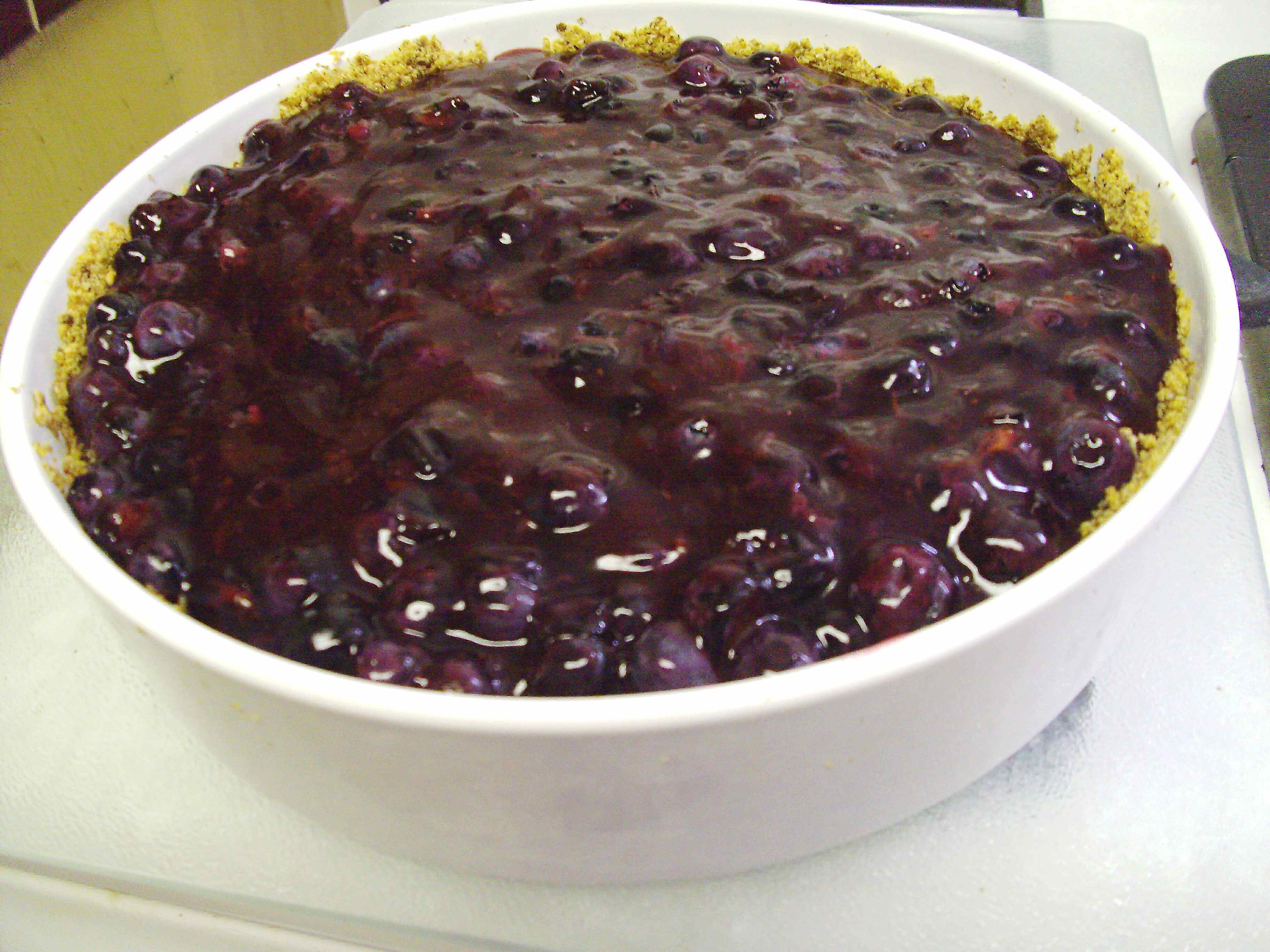
    raw blueberry pie with microwaveable filling and graham cracker crust

    This mostly-raw blueberry pie is a snap to make and very versatile--the filling microwaves in a few minutes, and you don't even have to bake the zippy gingered graham cracker crust--perfect for a hot Fourth of July and all summer long.

  • Recent Posts

  • Contents

  • Archives

  • Now Reading

  • See also my Book Reviews

  • Copyright 2008-2024Slow Food Fast. All writing and images on this blog unless otherwise attributed or set in quotes are the sole property of Slow Food Fast. Please contact DebbieN via the comments form for permissions before reprinting or reproducing any of the material on this blog.

  • ADS AND AFFILIATE LINKS

  • I may post affiliate links to books and movies that I personally review and recommend. Currently I favor Alibris and Vroman's, our terrific and venerable (now past the century mark!) independent bookstore in Pasadena. Or go to your local library--and make sure to support them with actual donations, not just overdue fines (ahem!), because your state probably has cut their budget and hours. Again.

  • In keeping with the disclaimer below, I DO NOT endorse, profit from, or recommend any medications, health treatments, commercial diet plans, supplements or any other such products.

  • DISCLAIMER

  • SlowFoodFast sometimes addresses general public health topics related to nutrition, heart disease, blood pressure, and diabetes. Because this is a blog with a personal point of view, my health and food politics entries often include my opinions on the trends I see, and I try to be as blatant as possible about that. None of these articles should be construed as specific medical advice for an individual case. I do try to keep to findings from well-vetted research sources and large, well-controlled studies, and I try not to sensationalize the science (though if they actually come up with a real cure for Type I diabetes in the next couple of years, I'm gonna be dancing in the streets with a hat that would put Carmen Miranda to shame. Consider yourself warned).

Losangelitis: ‘Tis the season for tisanes

I didn’t want to be writing this post. I really didn’t. It’s 85 degrees outside, for crying out loud! And I have Losangelitis again anyway–the local sinus and cough misery that sometimes leads to laryngitis if you strain your voice yelling at your kid to practice piano while you have it. It’s got no agreed-on cause or cure, and absolutely no respect for sunshine and palm trees and tomato plants that are starting to bloom in my backyard (because Pasadena is weird, and for no better reason–I’m a purple thumb gardener at best, but if we get tomatoes out of this I’m good with it…)

I know the rest of the country is suffering worse than I am (and my husband; a coughing fit out of me at 3 a.m. is no joy for him either). I know it’s cold and snowy and icy and I don’t exactly miss it this time around.

But if you’re stuck at home with a cold and you want to lessen the misery a little without resorting to cold medicines and menthol-eucalyptus lozenges and other disorienting and/or sugary stuff, I actually have a few suggestions.

The first (if it’s definitely a cold virus and not a bacterial thing) is ibuprofen–helps shrink the sinus and upper airways inflammation so there’s less “production” to congest you. Also reduces pain–you might cough less and feel less sore and worn out. Always a plus.

The second is un- or very lightly sweetened (your option) tisanes, which you can make the regular boil-water-and-pour-over-herbs-etc-in-mug way or just microwave a mugful of water with the desired additions until hot (1-2 minutes depending on your microwave and mug of choice, make sure the handle doesn’t get too hot). You don’t have to pay for a box of exotic tea-like mixtures unless you happen to like them, in which case, go ahead.

Not everyone thinks tisanes should taste medicinal, and I’m with them generally. Why be weird for weirdness’ sake? But they give you the option of mixing reasonable flavors you might not otherwise consider.

Sweet-ish tisanes

I generally go for something aromatic and herbal and vaguely sweet  plus maybe something “hot”–either ginger or clove–and something mildly citrus–a little lemon or orange or lime juice. I don’t want too much sweet or acid when I’m sick; I want a combination of soothing plus heat.

Mint leaves–fresh is much better than dried–are an obvious choice for tea and tisanes, especially for when you have a cold. A good couple of stalks in a mug of boiling water and let steep a minute or so. A squeeze of lemon works fine. A quarter-to-half teaspoon of sugar will keep the leaves greener if you’re microwaving, but it’s optional. Moroccans and plenty of others require black tea and a lot more sugar (I’ve heard “three handfuls per pot” as a boast, and I’ve tasted it, and my teeth still haven’t forgiven me). If you’re skipping the caffeine or theophylline (the tea version of caffeine), leave it out. Continue reading

Say “Celà n’est sûre[-gelée-]ment pas le cas”

Following on reports this spring that Polish (and probably other-sourced) horsemeat made it through France and into British frozen supermarket lasagne, now we get word of even more devious (and frankly depressing) culinary misdeeds in today’s Washington Post online:

French restaurants acknowledge serving factory-frozen food

A surprising number of cafés are apparently serving up microwaved meals instead of cooking them in-house. Even the éclair, which doesn’t take a lot of time to cobble together, even for an amateur like me, is no longer safe. The profit margin is too high on these items, and the savings in cooking staff are phenomenal. In a down market, what else would you expect?

But it’s a big embarrassment for a country that’s traded primarily on its gastronomic leadership for decades since WWII. No, WWI. No, wait–probably since the Napoleonic era. Or before the Revolution. Cyrano de Bergerac does a soliloquy based on cream horns and other such items, if I recall.

Well, to tell you the truth, though, I’m not sure whether I’m shocked or relieved. Judging from what my family and I were able to eat in 2006 in Paris, I’d say that in a few cases (cafés within walking distance of museum exits, chosen in part for meltdown-avoidance) frozen might even be a step up from one or two of the overpriced restaurant meals we had (a horrid, horrid “salade niçoise” featuring canned green beans comes to mind). Those few meals were, and I can be generous when I have to, mediocre in a way that would be excusable in suburban America on travel but which were much less than okay given that it was Paris.

Mostly we ate food that wasn’t (comparatively, anyhow) too expensive (we skipped the meat dishes, since we keep kosher) and couldn’t be frozen well enough to fool customers who know how to cook. So omelets cooked where we could see them, felafel served with freshly chopped red cabbage, open-faced sandwiches, breads from a bakery that smelled like yeast and flour, not like plastic bags, and so on. The frozen items tended to be ice cream, which is supposed to be frozen. But that was a year or so before the big bank crashes, the collapse of the housing bubble in America and “too big to fail” and even the Madoff scandal. And even then things weren’t quite as glam, at the moderate end, as we’d been primed for.

And on the other other hand, what does it mean that so many French restaurants have resorted to this kind of tactic, microwaving (and charging for) tuna steaks with ratatouille accompaniment, as in the article? What, other than money of course, and the effects of a deep recession that’s hit France pretty hard this past year.

What it means, in part, is that (also according to the article) flash-freezing techniques are now at a point, at least in France, where they can keep the food acceptable in quality and that the suburban factories where these dishes are put together and frozen are doing a pretty fair job, fair enough to fool even moderately experienced diners (not just tourists). And that the “restaurants”–who knows if they’ll get to keep that title now that they’ve been exposed–have figured out how to be at least marginally competent at microwaving so they don’t just ruin the food.

Better if they were cooking fresh. Or, from the perspective of an avid microwaver, better if they were using their microwaves for something more sophisticated than defrost-and-warm. Better, since so many of the younger working French no longer cook for themselves very much, if the restaurants, cafés and bistros took their role as gastronomic role-model and rallying point a little more to heart. Certainly they shouldn’t be pretending to cook from scratch and charging commensurate prices.

But I wonder–is the food they’re serving significantly better in quality than America’s mass-produced frozen meals-for-one? It might just be, since it’s a more recently introduced phenomenon in France, and it’s been designed to pass muster as though it were cooked fresh. For such a fraud to be successful, the flash-frozen food cannot be like American tv dinners. It just can’t. It might be that many of these factory-produced dishes are still a lot less processed than the miseries perpetrated by Swanson, Kraft, Stouffer’s and so on over here. So maybe we need to take another look at their techniques and demand better quality in the frozen food section here, foods that don’t have aroma of oversalted wet cardboard clinging to them once thawed.

Pyrex and Anchor Hocking now both unsafe for cooking

I’m not sure how I happened upon Consumer Reports’ disturbing feature from January on exploding glassware cooking accidents in both Pyrex and Anchor Hocking tempered glassware. Since a lot of my microwave directions call for Pyrex bowls, I thought I’d better post about it asap.

Here’s the link explicitly:

http://www.consumerreports.org/cro/magazine-archive/2011/january/home-garden/glass-cookware/glass-cookware/index.htm

Because I’ve used my current Pyrex bowls and bakeware for more than 10 years, I’ve been looking recently to replace and/or add to my collection. But every time I’ve looked for it in the past year or so, I’ve hesitated–the stuff on sale is a blueish color. Or it’s a little thinner than I remember. Or it doesn’t feel or even sound right when I pick it up. And the cardboard overwrap has a lot of new warnings about when and how you can or can’t use it that are different than the old classic Pyrex. It’s confusing–can I use it the way I’m used to or not?

So even though the casseroles and pie plates are bright and shiny and new and usually on sale at my local supermarket and the Target, I’ve passed them up, thinking, “I’ll do it next time.”

According to the Consumer Reports piece, it’s a damn good thing I did. Read the article. Now. Please. Before you put any of this generation of Pyrex in an oven or microwave. Before you give a set to some newlywed as a kitchen gift.

And don’t buy this stuff. If you did, don’t use it for any kind of heating up, conventional oven or microwave (I know, so what good is it if you can’t heat stuff up in it? Wasn’t that the whole point?)

Apparently both companies are claiming that the explosions–which have caused burns and lacerations when the victims took a hot casserole out of the oven or microwave and set it down–are the result of misuse, or perhaps the glassware had gotten dinged or scratched and therefore the flaws had weakened it, and that it was a rare phenomenon. The article authors estimated a fairly high number of incidents in the past few years based on hospitalization records and other outside evidence.

Consumer Reports debunked the companies’ blame-the-victims ploy by testing both brands of glass cookware at various temperatures and setting the pans down on a variety of typical kitchen surfaces.

The results were not pretty–Pyrex had a slight temperature range advantage over Anchor Hocking, but a fairly high percentage of both broke or exploded if they weren’t used exactly within the laundry list of restrictions on the cardboard overwrap that came with the new bakeware.

Altogether, conducting the tests and videorecording them took more guts than I would have without lexan armor and a full face shield.

But, as I’ve said, I’ve been using my mixing bowls and pie plates for years without problems. What’s going on?

The article authors did track down a probable explanation for all this breakage in what’s supposed to be very durable glassware. Both brands have recently switched to a cheaper formulation for their glass. Pyrex–note, no longer made by Corning–at least used to be borosilicate glass but now uses soda lime glass, as does Anchor Hocking’s tempered glass. Borosilicate is the standard for laboratory grade glassware; it’s stronger and somewhat more expensive to produce–probably the mineral shortages of the past few years have made it more so.

Technically, you can temper soda lime glass, but even when tempered it’s not as strong as the old classic tempered borosilicate. It also seems to be less uniform–and the little unevennesses in the material create local instabilities that can cause cracks and even explosions when subjected to rapid or uneven heating and cooling. It only takes a split second in some cases.

Borosilicate is almost certainly what my old Pyrex standbys are made of, and I’m standing by them. I just wish I could have bought more at the time, or that someone else made them now. I wish Pyrex’s current manufacturers in particular had not ruined their product by changing glass to reduce costs, and that their managers weren’t scrambling to deny it.

For now, I’d say please DON’T use the newer Pyrex or tempered glass bakeware items for microwaving. They’re just not the same anymore. Use microwave-safe ceramic instead.