
• Enter your email address to subscribe to this blog and receive notifications of new posts by email.

    Join 241 other subscribers
  • Noshing on

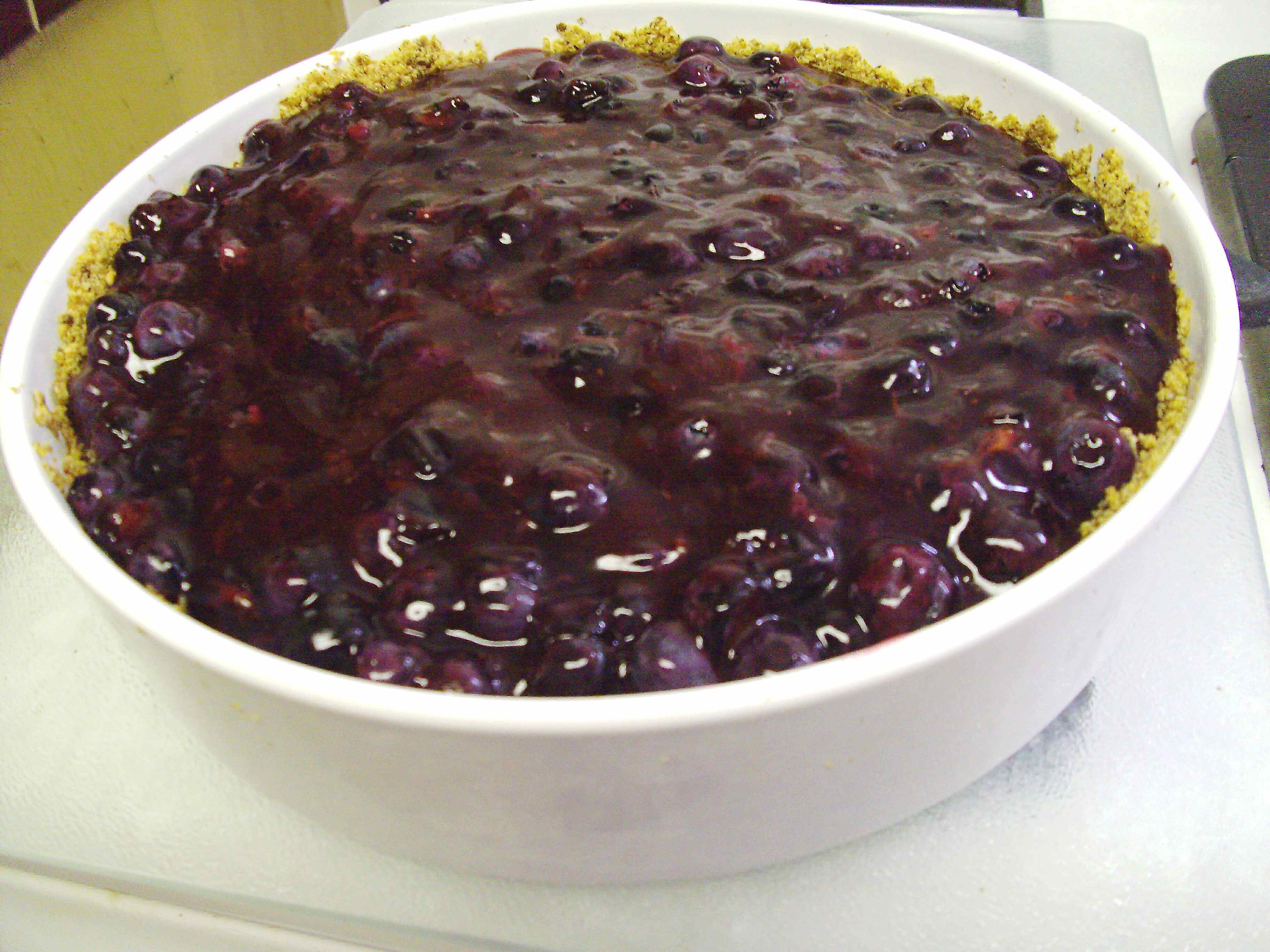
    raw blueberry pie with microwaveable filling and graham cracker crust

    This mostly-raw blueberry pie is a snap to make and very versatile--the filling microwaves in a few minutes, and you don't even have to bake the zippy gingered graham cracker crust--perfect for a hot Fourth of July and all summer long.

  • Recent Posts

  • Contents

  • Archives

  • Now Reading

  • See also my Book Reviews

  • Copyright 2008-2024Slow Food Fast. All writing and images on this blog unless otherwise attributed or set in quotes are the sole property of Slow Food Fast. Please contact DebbieN via the comments form for permissions before reprinting or reproducing any of the material on this blog.

  • ADS AND AFFILIATE LINKS

  • I may post affiliate links to books and movies that I personally review and recommend. Currently I favor Alibris and Vroman's, our terrific and venerable (now past the century mark!) independent bookstore in Pasadena. Or go to your local library--and make sure to support them with actual donations, not just overdue fines (ahem!), because your state probably has cut their budget and hours. Again.

  • In keeping with the disclaimer below, I DO NOT endorse, profit from, or recommend any medications, health treatments, commercial diet plans, supplements or any other such products.

  • DISCLAIMER

  • SlowFoodFast sometimes addresses general public health topics related to nutrition, heart disease, blood pressure, and diabetes. Because this is a blog with a personal point of view, my health and food politics entries often include my opinions on the trends I see, and I try to be as blatant as possible about that. None of these articles should be construed as specific medical advice for an individual case. I do try to keep to findings from well-vetted research sources and large, well-controlled studies, and I try not to sensationalize the science (though if they actually come up with a real cure for Type I diabetes in the next couple of years, I'm gonna be dancing in the streets with a hat that would put Carmen Miranda to shame. Consider yourself warned).

Tehina goes with fish

tilapia pan-fried with tehina, hummus, onions and curry spices

Two large tilapia fillets pan-fried with a hummus, tehina and yogurt coating. The fillets pick up a lattice of browned onions and curry spices when you flip them over.

This is no great surprise if you like Middle Eastern food, I suppose, but tehina or sesame paste is not just for hummus, felafel and eggplant (or roast butternut squash, for fans of Yotam Ottolenghi). It’s also a great match for white-fleshed fishes such as sole, red snapper and tilapia, because it’s rich-tasting and smoky, goes really well with cumin-type spice combinations, and can be dressed up or down.

But despite its richness (it is an oily paste like peanut butter, after all) it has very little saturated fat, mostly mono- and poly-unsaturated fats (the heart-healthy kinds) and it has enough flavor that a little goes a long way. So if you like fish and have a jar of tehina handy and some garlic (a must) and a few basic spices like cumin on your shelf, you can take advantage a couple of different ways without a lot of work.

I’ve already tried Poopa Dweck’s recipe for cold whitefish salad (much like tuna salad, but made with lighter-textured cooked white fish) where tehina, lemon juice, cumin, paprika and garlic stand in for the more usual mayonnaise, sour cream or yogurt in conventional western versions. The basic version was very good, even though I cut the quantities severely for home use and didn’t bother making sliced-cucumber scales to lay out over the whitefish salad (because I’m not that arty just for us). Although maybe if I do a brunch sometime later this year I’ll “scale up” in both senses…

More often, though, I cook tilapia as a standard hot weeknight dinner. It’s relatively inexpensive for fish, lighter and much quicker to cook than chicken, can be served with dairy in kosher homes like mine, and it’s pretty adaptable. But as with skinless, boneless chicken breasts, it can get a little boring if you don’t do something new with it once in a while.

One of the dishes I recall fondly and still miss from the Pita!Pita! Lebanese restaurant when it was still on Fair Oaks in Old Town Pasadena (must be something like 10 years ago now!) was sole fillets baked under tehina sauce. May Bsisu gives a recipe for two similar dishes (samak harra b’tehina and tagen al-samak) in The Arab Table, which I highly recommend. I think I mentioned this book in passing in a post about making your own yogurt in the microwave, but it really deserves more attention.

I think the elegant casseroles of fish baked in tehina sauce are worth doing for a larger crowd and with more time than I usually have. But I’ve always thought the flavors would be good in a quick frying-pan version with tilapia too. The coating in this version is a mixture of  hummus and a thick Greek yogurt/tehina/garlic spread I had originally made for pita and vegetables (and uncooked, it’s pretty good  for that). Because of the hummus, the coating cooks to a breading on individual fillets rather than remaining saucy, but the flavors are really good and it takes maybe 20 minutes, including browning the onions well. I tried this twice last week and it was terrific both times. Continue reading

Yogurt in the microwave

Back in the early 1970s, when yogurt first started to become popular in the U.S. but wasn’t yet widely available in supermarkets, manufacturers like Salton started selling home yogurt machines that would run overnight with a temperature-controlled water bath and six or so individual-sized covered containers. Those machines are hard to find today but you don’t really need them to make your own yogurt.

You can make very good yogurt in the microwave without any special equipment, and it’s very easy. But although a few older, less fashionable shared recipe sources on the web still mention it, none of the current slow food mavens ever seem to go this route. I’m not sure why–microwaving works beautifully.

Traditional instructions have you heat up the milk to something under a boil and let it cool to just a little hotter than lukewarm–measured either by thermometer at about 118 degrees F, or by testing with a finger before you can stir in the yogurt. That takes a fair amount of time on the stove top, and you have to stand there and stir or risk scorching the bottom of the pan (which you have to scrub).  It’s probably a half hour of preparation just to get it going. Then you have to  insulate or keep it heating very slightly for 6-12 hours. The most common insulation schemes from the new-slow-food crowd involve all-night ovens kept at 100 degrees F, towels or blankets wrapped around the yogurt pot, hot water jugs surrounding multiple small yogurt pots in a beer chest, crockpots, and other hard-to-believe and hard-to-clean setups.

Just reading about it all–the jumble-sale setups, the 24-step “guides”, the incredible number of pots and things that need washing before, during and after–makes you want to run to the store and buy a tub of ready-made.

Microwaving is a much easier and dare I say better method. It requires a grand total of a microwave oven, a large pyrex bowl, a pyrex or ceramic pie or dinner plate, and a spoon. The milk heats in just a few minutes with no need for stirring and doesn’t scorch at all. Once you stir in the cultures, you let the yogurt sit covered in the microwave with the power off and the door shut. The oven’s a very good insulator, especially in combination with the pyrex bowl and lid. You already have it on your counter–no need to dig weird items out of closets or the garage. The yogurt stays warm for hours with no cockeyed, jury-rigged insulation schemes, and the washing up is, unsurprisingly, simple.

Unlike most microwaving, this is still a slow business–as in, overnight–because it’s the real thing. No matter how you set it up, it takes between 6 and 12 hours for a couple of quarts of warm-to-hot milk with a few spoonfuls of yogurt stirred in to sit and culture undisturbed in the microwave, minding their own business, before the new batch of yogurt is ready to eat.

So it’s not fast, per se, but it’s a perfect thing to set up after supper and revisit the next morning. When you open the microwave door at the end, you can jiggle the bowl gently and see that the milk has set as yogurt. Continue reading