
• Enter your email address to subscribe to this blog and receive notifications of new posts by email.

    Join 241 other subscribers
  • Noshing on

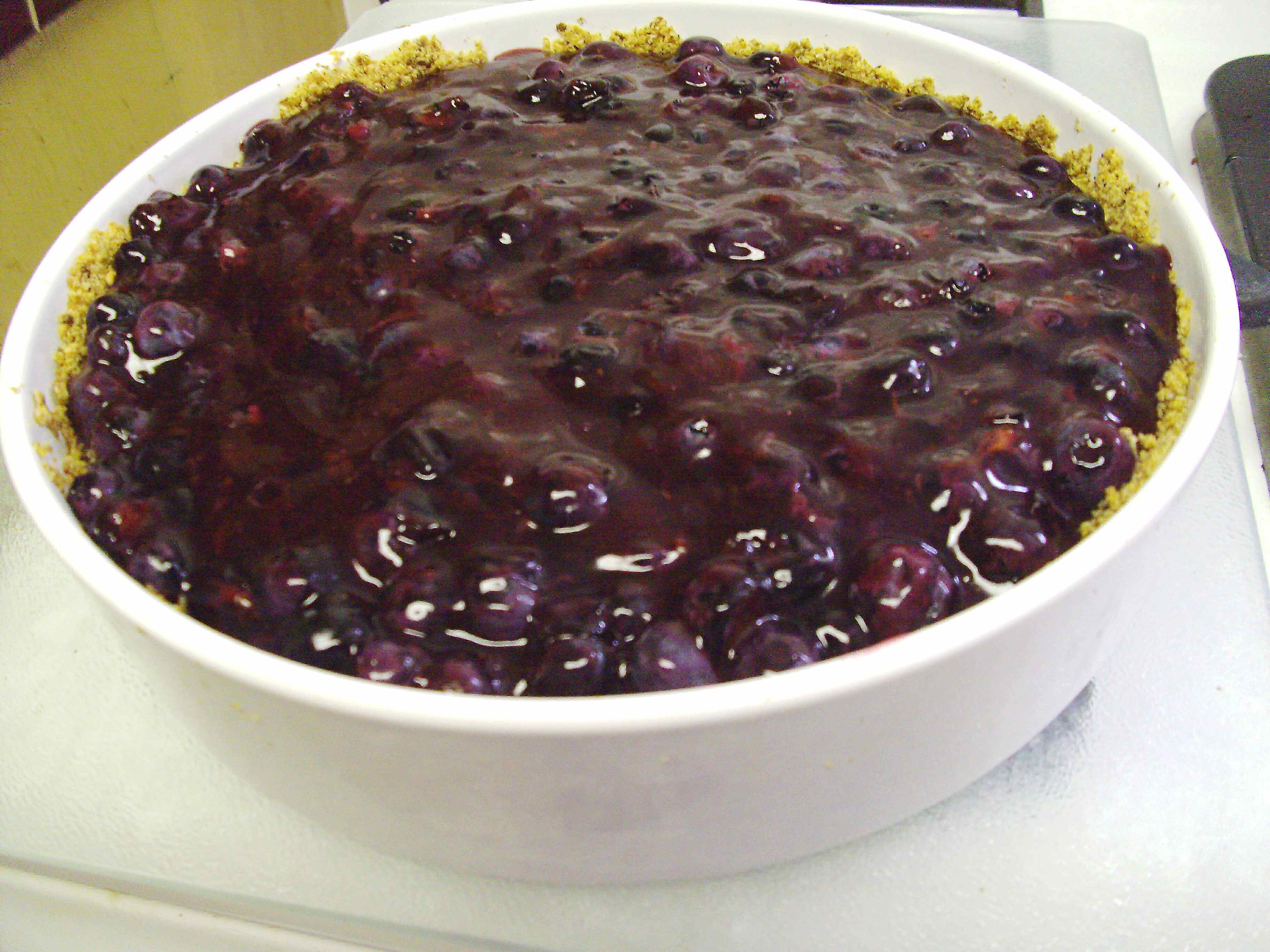
    raw blueberry pie with microwaveable filling and graham cracker crust

    This mostly-raw blueberry pie is a snap to make and very versatile--the filling microwaves in a few minutes, and you don't even have to bake the zippy gingered graham cracker crust--perfect for a hot Fourth of July and all summer long.

  • Recent Posts

  • Contents

  • Archives

  • Now Reading

  • See also my Book Reviews

  • Copyright 2008-2024Slow Food Fast. All writing and images on this blog unless otherwise attributed or set in quotes are the sole property of Slow Food Fast. Please contact DebbieN via the comments form for permissions before reprinting or reproducing any of the material on this blog.

  • ADS AND AFFILIATE LINKS

  • I may post affiliate links to books and movies that I personally review and recommend. Currently I favor Alibris and Vroman's, our terrific and venerable (now past the century mark!) independent bookstore in Pasadena. Or go to your local library--and make sure to support them with actual donations, not just overdue fines (ahem!), because your state probably has cut their budget and hours. Again.

  • In keeping with the disclaimer below, I DO NOT endorse, profit from, or recommend any medications, health treatments, commercial diet plans, supplements or any other such products.

  • DISCLAIMER

  • SlowFoodFast sometimes addresses general public health topics related to nutrition, heart disease, blood pressure, and diabetes. Because this is a blog with a personal point of view, my health and food politics entries often include my opinions on the trends I see, and I try to be as blatant as possible about that. None of these articles should be construed as specific medical advice for an individual case. I do try to keep to findings from well-vetted research sources and large, well-controlled studies, and I try not to sensationalize the science (though if they actually come up with a real cure for Type I diabetes in the next couple of years, I'm gonna be dancing in the streets with a hat that would put Carmen Miranda to shame. Consider yourself warned).

Another Reason to Make Your Own Salad Dressings
My husband came home this weekend loaded down with leftovers from a brunch he’d helped set up. Among the cartons of pasta salad and regular salad and dubious mass-market hummus and two–two? really?–homemade onion pies was a jug of something reddish. It turned out to be more than a quart of prepared raspberry vinaigrette, the kind of thing a caterer would pick up at a bulk commodities store. More than we would ever use in a year, but let it pass. He meant well.

So we found space for most of the stuff in the fridge, threw out the hummus because we didn’t know if it had been dipped into or not, and then there was this jug of vinaigrette hanging out on the counter. I took a look at the ingredients. Canola oil (boring but expected), sugar (enhhh–not a fan of sweet salad dressings, personally), salt, distilled vinegar, raspberry extract was somewhere down in the lower middle, more for color than flavor no doubt, paprika extractives (so much easier than actual paprika?)…yada yada yada…some kind of starch and emulsifiers to keep the oil and vinegar more or less together…polyethylene glycol…

Bleagggh. PEG? As my college lab partner once remarked, in a toney City Line (Philadelphia) accent, “It smells so….bio-laahhhgical.” And it does.

Not to mention the “nutrition” counts–and here I mean the sodium count per serving, which alone, minus any actual salad fixings, comes to 240 mg. It’s not so hard to see why chain restaurant salads typically hover above 500 mg sodium and frequently up to 900 mg.

So a couple of suggestions:

1. Make your own salad dressings–it’s quick and they’ll be fresher. You don’t need exact recipes, do you? Try a few of these.

2. Don’t automatically add salt–get the majority of your dressing flavors from the real ingredients. The satisfaction of a salad dressing comes from a combination of tart and savory ingredients to startle and intrigue the palate and make the freshness of the salad itself more apparent, so start with that. Flavor your dressing with garlic or shallots, lemon juice or vinegar, mustard or sharp cheese, olive or walnut oil, maybe yogurt or buttermilk, herbs, etc., but flavor it, don’t salt it. Real ingredients are also less likely to suffer flavor fatigue–salt’s a moving target that most people stop being able to taste when they eat a lot of it habitually (see the Salt Rant).

2b. If you’re following a recent cookbook or food magazine recipe, there’s sure to be a routine, unthinkingly added teaspoon of salt called for in just about every recipe. That’s much more than you really need to enhance a salad or make the dressing piquant. But those recipes are based on restaurant think, where salt is the cheap substitute for the expensive ingredients that need to be stretched. You don’t have that problem–you’re not making vats of bleu cheese dressing on a shoestring budget, you’re making dinner.

So leave out the salt, mix everything else together, and taste.

3. Time is your friend. You can make a basic vinaigrette right at the table–a dollop of mustard, a few spoonfuls of red wine vinegar or lemon juice, a pinch of salt if you must, and a couple or so spoonfuls of olive oil whisked in. Maybe a few herbs or a clove of garlic to boost it, and cracked black peppercorns over the top. Or nasturtiums.

But if the dressing–a yogurt or buttermilk-based one, say– is mostly about herbs, garlic, onion, shallot, scallions, bleu cheese or the like, let the dressing sit awhile to develop. If you make a yogurt/buttermilk/herb and garlic ranch-style dressing a day ahead, it’ll be much stronger and also more integrated after a night in the fridge. Right before serving, taste a bit of lettuce in the dressing and see what you think. If you still feel like salt is genuinely missing after you taste it in action, add a pinch or two. Not more. You can always add more to your own serving at the table if you’re craving salt for its own sake, and you’ll have the advantage of being able to taste it because the crystals will be on the surface of the food, where your tastebuds can get to them easily.

4. Unless it’s just olive oil and red wine vinegar, don’t toss the dressing in before serving, let people dress their own. Not everybody likes or can tolerate every dressing, and everyone’s got their own right amount. If you have to dress the salad ahead for a banquet setup, do it lightly. Less is more.

Microwave Tricks: Indoor Grilling When the Heat’s On

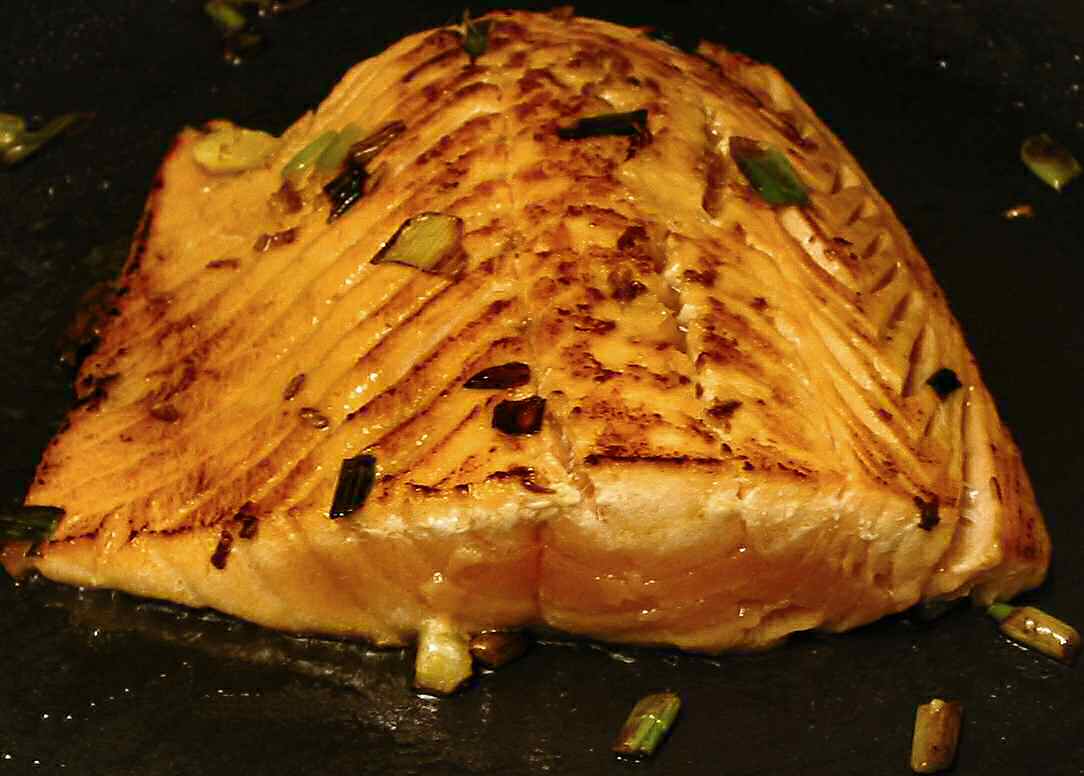
Pan-seared salmon, ready for the microwave

Pan-seared salmon, ready for the microwave

You almost never hear the words “microwave” and “slow food” in the same sentence unless someone’s casting the two as opposites with an easy sneer. The one and only time I’ve read anything about microwaving by a Real Restaurant Chef was Tony Bourdain in Kitchen Confidential when he mentioned something about hitting a plate gone cold with some “Radar Love” before sending it out. He meant it as a dirty back kitchen secret.

Gourmet cookbooks (other than Barbara Kafka’s Microwave Gourmet, a scarily extensive tome from 1987) never call for microwaving anything more exciting than butter or chocolate chips, and none of the Food Network shows do either. It’s a shame. Can you see Giada De Laurentiis microwaving? Mario Batali? No–it would probably zap the studio camera or melt Mario’s clogs or something. And it would ruin the vicarious glamor of slow cooking. But it would be fun while it lasted, wouldn’t it?

Some things, let’s face it, don’t do incredibly well in a microwave–deep fat frying (Kafka claims you can in small quantity, but I’m scared of sloshing hot oil around a small box), birthday cakes (though Kafka has found a reasonable way to do cake layers and her recipes get good reviews), an entire raw turkey (stuffed or un-)…. And fish? That may be the trickiest of all, since fish goes from almost cooked to shoe leather in 20 seconds if you’re not careful, and it still won’t brown nicely.

For example, take the lowly, farm-raised salmon fillet. Now I know it’s not wild, I know it’s not King or Sockeye, it’s not elegantly 2″ thick–but it’s also not $17.99/lb and up. And it can still be pretty good, especially grilled.

Only it’s summer in L.A., and the last thing I want to do in my townhouse with a distinct lack of outdoor grilling facilities is heat up the house or cook the salmon long enough under a broiler for the edge fat to start sending acrid smoke up the stairway.

But combine the microwave’s ability to cook things through with a quick browning technique like pan-searing, and suddenly you have a strategy for some nice main dishes that taste better than they should in a lot less time, and don’t heat up the house. Incidentally Kafka mentioned this method in passing while discussing the fact that microwaves don’t brown food. She then proceeded to ignore it completely, don’t ask me why.

Most restaurant chefs insist they can’t get a good sear on anything with a nonstick pan, but that’s not entirely true (plus I hate washing dishes any more than I have to, and I’m really determined, so nonstick it is). I’m borrowing from Martin Yan on this one–it’s a technique I saw him do for a stir-fried shrimp recipe on PBS, sometime way, way back in the 1980s, and it works surprisingly well here. Continue reading