
• Enter your email address to subscribe to this blog and receive notifications of new posts by email.

    Join 241 other subscribers
  • Noshing on

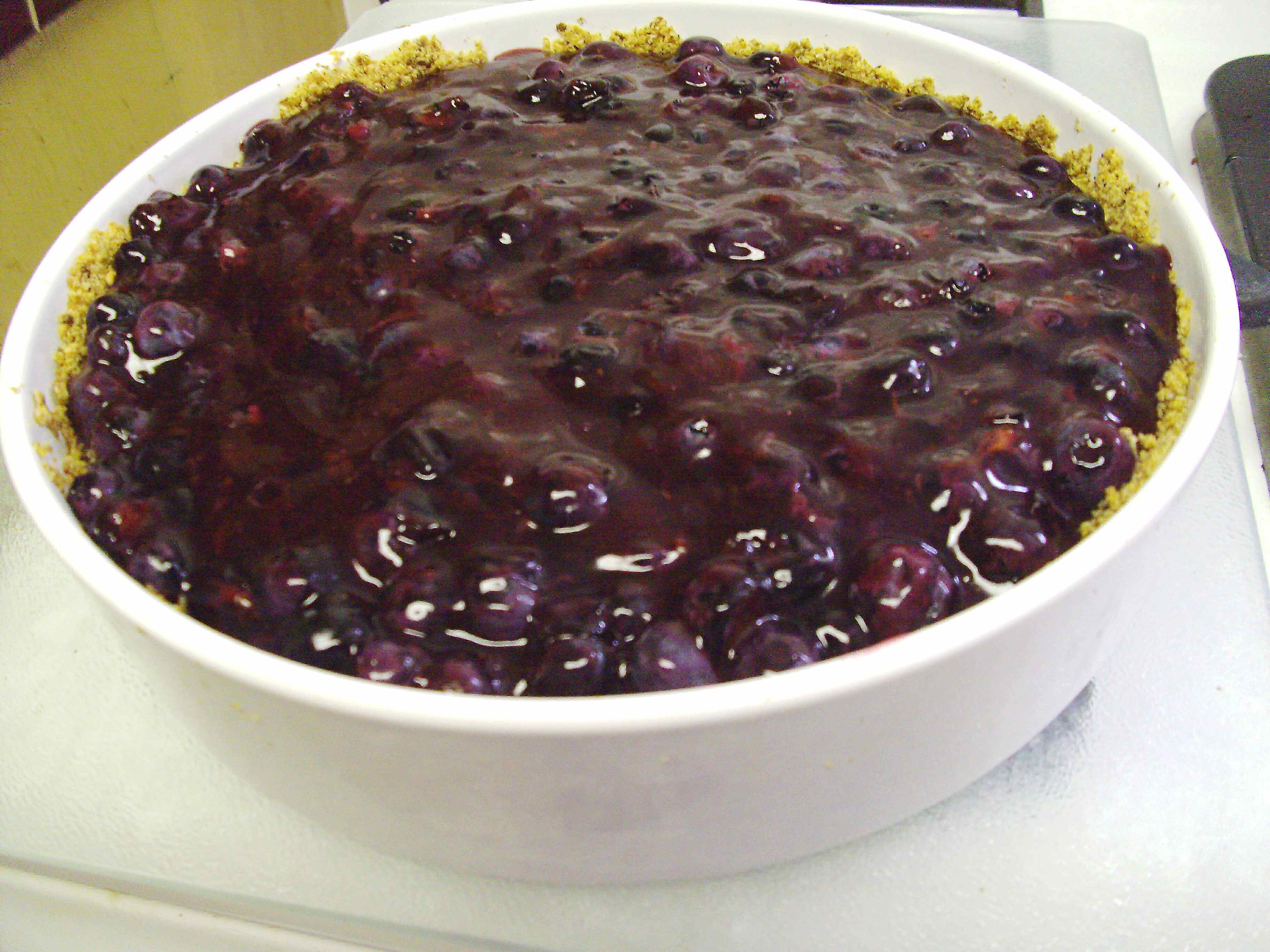
    raw blueberry pie with microwaveable filling and graham cracker crust

    This mostly-raw blueberry pie is a snap to make and very versatile--the filling microwaves in a few minutes, and you don't even have to bake the zippy gingered graham cracker crust--perfect for a hot Fourth of July and all summer long.

  • Recent Posts

  • Contents

  • Archives

  • Now Reading

  • See also my Book Reviews

  • Copyright 2008-2024Slow Food Fast. All writing and images on this blog unless otherwise attributed or set in quotes are the sole property of Slow Food Fast. Please contact DebbieN via the comments form for permissions before reprinting or reproducing any of the material on this blog.

  • ADS AND AFFILIATE LINKS

  • I may post affiliate links to books and movies that I personally review and recommend. Currently I favor Alibris and Vroman's, our terrific and venerable (now past the century mark!) independent bookstore in Pasadena. Or go to your local library--and make sure to support them with actual donations, not just overdue fines (ahem!), because your state probably has cut their budget and hours. Again.

  • In keeping with the disclaimer below, I DO NOT endorse, profit from, or recommend any medications, health treatments, commercial diet plans, supplements or any other such products.

  • DISCLAIMER

  • SlowFoodFast sometimes addresses general public health topics related to nutrition, heart disease, blood pressure, and diabetes. Because this is a blog with a personal point of view, my health and food politics entries often include my opinions on the trends I see, and I try to be as blatant as possible about that. None of these articles should be construed as specific medical advice for an individual case. I do try to keep to findings from well-vetted research sources and large, well-controlled studies, and I try not to sensationalize the science (though if they actually come up with a real cure for Type I diabetes in the next couple of years, I'm gonna be dancing in the streets with a hat that would put Carmen Miranda to shame. Consider yourself warned).

Questionable sodium study, even more questionable comments

A new European study that purportedly shows low-sodium diets to be ineffective in preventing high blood pressure, and even more unlikely, that they increase the risk of death from heart attack or stroke, is being published in the May 4 issue of JAMA, and predictably it’s already excited a variety of comments in Gina Kolata’s current New York Times article from the CDC and from…Dr. Michael Alderman.

Predictably, because the CDC researchers think too few people were studied for too short a time with unreliable methods (24-hour urine collection to measure sodium intake indirectly, after the fact as it were.)

Alderman’s reaction was also predictable: he’s still insisting that only a nation-wide feeding study sort of clinical trial that follows its subjects until they die is sufficient to prove a true link between sodium intake and cardiovascular disease. Something so expensive and unwieldy it couldn’t be completed even if it were started, and we’d still be waiting around 30 years later wondering if salt had anything to do with heart attacks or strokes. Very convenient for the processed food industry, but pretty useless for public health. And also conveniently, Gina Kolata found more than one expert to say so.

What she didn’t find, but could have, is that a number of large-scale feeding studies have already been done and shown that eating a balanced lower-sodium diet helps reduce blood pressure and prevent blood pressure increases. DASH-Sodium is one of them. And no one had to wait until the study subjects died to figure it out.

AHA: Diet sodas and excess salt both linked to strokes

The latest from the American Heart Association and American Stroke Association’s joint International Conference on Stroke 2011, which is going on in Los Angeles this week from Wednesday through Friday.

Diet soda may raise odds of vascular events; salt linked to stroke risk.

Two large studies on a mixed-race/age/gender/other health status population have just shown that:

1. Drinking diet soda every day increases your risk of a heart attack or stroke in the next 9-10 years. In the study, diet soda regulars had a 48% higher rate than nondrinkers even after accounting for metabolic syndrome and existing or past heart disease.

2. For every 500 milligrams of sodium you eat per day over the AHA’s recommended 1500 max, you have a 16% higher risk of getting a stroke–no matter whether you have high blood pressure or normal blood pressure.

There was one other piece of really bad news announced:

The Centers for Disease Control’s analysts looked at hospitalizations for ischemic stroke (blocked arteries to the brain) between 1994 and 2007 and found that while strokes are decreasing in people over 65 (which is good), they’re INCREASING in children, teens and younger adults. Although older adults still have much higher overall risk of stroke than younger people, the trend toward higher stroke hospitalization rates for younger people is significant and needs to be explored further. Stroke hospitalizations increased by:

  • 31% among boys 5-14; 36% among girls 5-14
  • 51% in men 15-34, 17% in women 15-34
  • 47% in men 35-44, 36% in women 35-44

The CDC researchers didn’t have clear evidence of a cause for the rise in strokes among younger people, but said the rise in average body weight, blood pressure and diabetes, which are known risk factors for stroke, bore a closer look.

The fact that stroke hospitalization rates started rising in children over 5 (the researchers looked at younger children as well but didn’t find an increase under age 5) suggests to me that part of the trend may be due to a more processed diet with higher salt consumption as children head for school. All in all, it gives you the impression that we are the junk food generation, and it’s catching up with us as we speak.

Unappetizing: Nutrition “Awareness” on Top Chef

Perhaps it’s a futile attempt to understand how restaurant chefs think about food and nutrition, but lately I’ve been watching the very warped “Top Chef” episodes for the last couple of seasons–easy to do online. I can’t help wondering not only at the contestants, all of whom seem to display basic ignorance of what used to be called the “Four Food Groups,” but at some of the judges who fault them on nutritional challenges.

In this season there have been two, the School Lunch Challenge and–not that the judges even thought about it as a nutritional challenge, which they should have–the Baby Food Challenge. In both, the judges seemed at least as lacking in nutritional knowledge as the contestants, and in some aspects even worse.

The School Lunch Challenge brought out scathing comments on the show and on a number of blogs, particularly when the bottom-ranked chef, who went home for her gaffe, attempted to make a banana pudding palatable by adding sugar. Tom Colicchio made a big deal of her adding two pounds of sugar to the pudding–which was to feed 50 students.

And admittedly it’s not great for nutrition, but it was hardly the disaster he and the other judges made out. If anyone had bothered to whip out a calculator and known how to use it for pounds-to-kilos conversions, they’d have discovered that the two pounds of sugar amounts to 0.91 kilos. Or 909 grams, to be a little more precise (which we shouldn’t, the chef was eyeballing what she added). Divide by 50 and you get 18 grams per serving or about 4 teaspoons–not all that surprising an amount of sweetener in any prepared dessert. Add that to the starch already present as thickener and the sugars from the milk and bananas and you probably have 30-40 grams of carb or thereabouts per half cup of pudding.

It would be a lot for someone diabetic, like my daughter, but not disastrous as long as she knew how much carb was in it, and it certainly wouldn’t be disastrous for most school kids if the rest of the meal was balanced with low-fat protein and vegetables and not too much other starch.

But actually, most of the lunch entries were pretty starchy. The fact that they didn’t all have as much noticeable added sugar is almost immaterial–starches break down into sugars. You have to count them all.

What really stood out was the pathetic nature of the criterion “to include a vegetable.” One that was most-praised–a slab of caramelized (talking of sugar) sweet potato under a chocolate sorbet as a dessert–was mostly a starch, though in its favor it had vitamin A and fiber. Another team served celery (no vitamins and very low fiber, despite the stringiness) with a peanut-butter mousse (why, oh lord, not just peanut butter? chef-think at work?) piped out directly onto the celery, supposedly so kids would eat it. No one liked the mousse because it looked Continue reading