


 Hummus is a highly politicized food these days, a situation most eaters outside Lebanon, and at a guess, most inside as well, consider slightly ridiculous. “Owning” hummus has become a point of national pride for a few higher-ups in Lebanon, which has in the past year or two followed Greece’s feta-labeling strategy and tried to appropriate sole credit for authentic hummus. At its more light-hearted, this struggle for hummus supremacy takes the form of an annual stunt in which chefs produce a hummus bowl almost the size of an Olympic swimming pool (or at least an Olympic-sized wading pool) and the triumphal photo makes the international news. But those who really take the Lebanese official origin issue seriously and grimace whenever hummus is served somewhere else are, as far as I can see, only hurting themselves.
The trouble with demanding official status is that both feta and hummus long predate the borders of the countries trying to claim them. Both are simple enough to make and so consistent from batch to batch that they don’t really exhibit much in the way of “terroir” the way aged cheeses, wines, vinegars and so on might. Feta–equally good, equally real, equally part of the native fare–is made in a lot of places neighboring modern-day Greece. Places like Bulgaria, which don’t have as much political clout in either the EU or the Slow Food organizations, and which don’t get half the international tourism. Also places further away, notably Denmark and France, which still have reasonably large sheep’s milk production. Greece may actually have succeeded for the moment in the food labeling tug-of-war, but it’s made the country look somewhat silly and petulant, unwilling to face the fact that they’ve closed the barn door at least a century after the sheep got out. Will they profit from the exclusive labeling? doubtful–and it might have been better ambassadorship to claim credit for spreading feta’s popularity and offer more recipes and products made with it.
Much to the chagrin of whoever decided in the past couple of years that hummus should be exclusively Lebanese, this simple spread is made and eaten in lots of other countries. In Egypt, it’s made with a half-and-half mixture of favas and chickpeas. And Israel, which is probably the “other country” being targeted most directly by the Lebanese hummus campaign, has eaten, breathed, and slept a more or less chickpeas-only version of hummus as an essential food (along with felafel) for longer than the state has been independent.
Unlike the partisanry in Lebanon (not that Israel has no partisanry of its own), when it comes to food, everyone in Israel–Jewish, Muslim, Christian or Druse–gives credit with a certain degree of pride that hummus is Arab food, especially if they’ve made it themselves rather than trotting down to the corner grocery to buy the bland ready-made version from a vat in the deli at the back.
That’s because everyone likes to eat it. It’s also because being a good host is really important and something of a formal habit and a chance to show off just a little–actually, I think that’s still true all throughout the Middle East. Everyone expects friends and neighbors and friends-of-friends to drop by at a moment’s notice, without invitation, especially on the weekend. The least you can do is have a bag of roasted sunflower or pumpkin seeds and a pot of hideously sweet mint tea to bring out if they show up to schmooze after supper, but in the afternoon, better if you can bring out a platter of pita, vegetables, and a bowl of hummus.
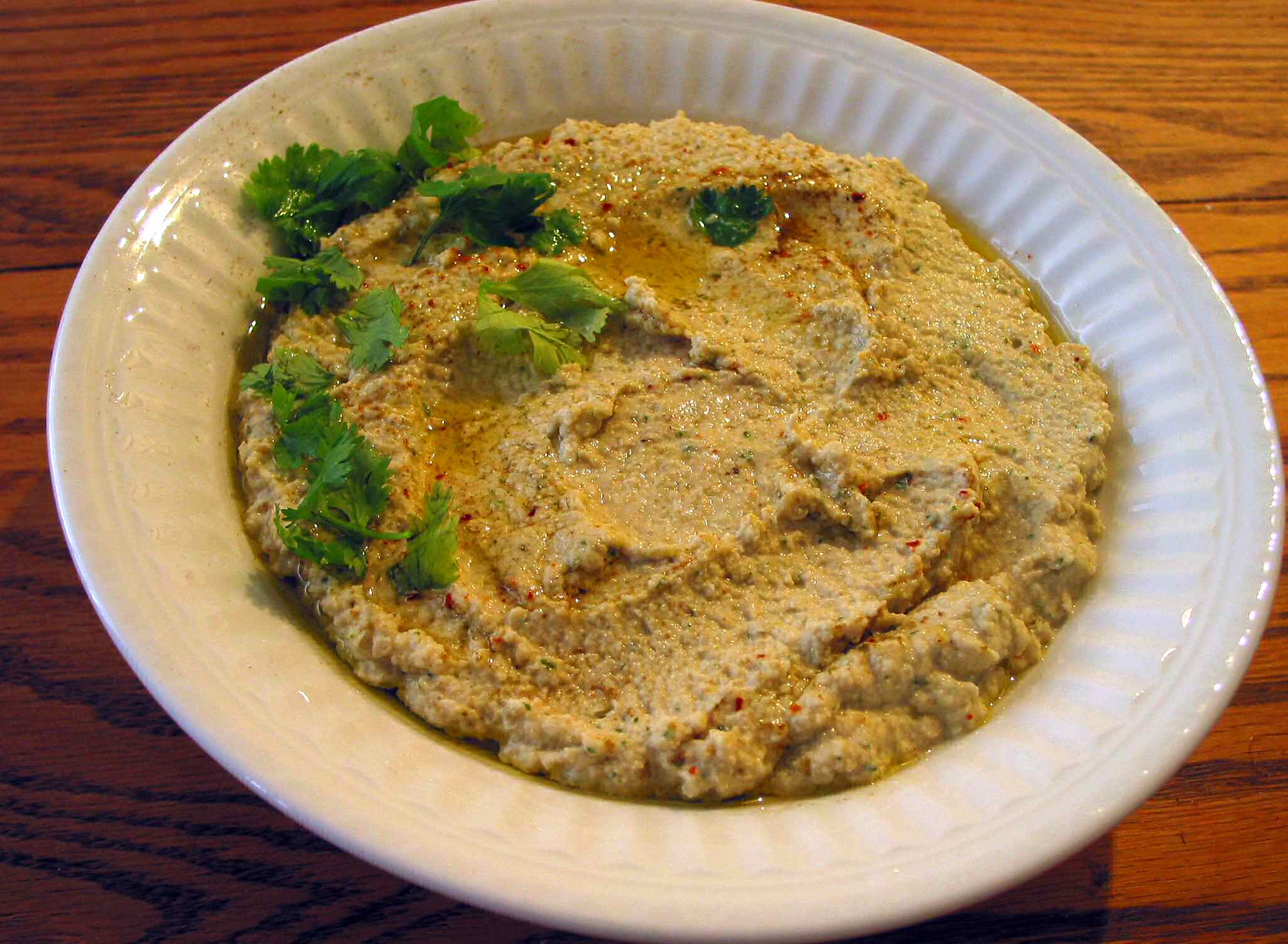
Hummus is simple Arab fare at its best–humble, nutritious, appetizing, and (now that we have food processors) easy to make a lot of so you can bring out a wide platter of it for your guests and drizzle a little olive oil and some za’atar or sumac or cumin or paprika over it for the finishing touch–right before everyone tears pita and dips in. The ceremonial thing is what makes it good hosting and is part of the fun.
Here in the US, most people buy their hummus in little plastic containers at the supermarket–not elegant at all, and a lot of money for what you get. Kind of depressing, even. Look at the ingredient list and it’s as long and discouraging as any other processed food–that’s so it can be shipped nationally and stored for a week or two in case it doesn’t all sell out the first day. Look at the nutrition label and you see highish salt, lowish protein and fiber. It’s been fluffed out with canola oil to stretch the expensive ingredient, tehina (sesame paste), and there’s not so much in the way of chickpeas even though they’re supposed to be the base.
While I’m not so much against the fluffy smooth stuff (it tastes ok, if all you’re expecting is a spoonful or two of party dip), I prefer homemade because it’s denser and more nutritious, with more iron and protein from the chickpeas, something you could eat packed in half a pita for lunch and not be starving within an hour. Continue reading
Filed under: Beans and legumes, cooking, DASH Diet, Dips, Food Politics, frugality, history, Microwave tricks, nutrition, Vegetabalia | Tagged: appetizers, chickpeas, hummus, Israeli food, Lebanese food, mezze, microwave cooking, Middle Eastern food | 1 Comment »
 Slow Food Fast