
• Enter your email address to subscribe to this blog and receive notifications of new posts by email.

    Join 241 other subscribers
  • Noshing on

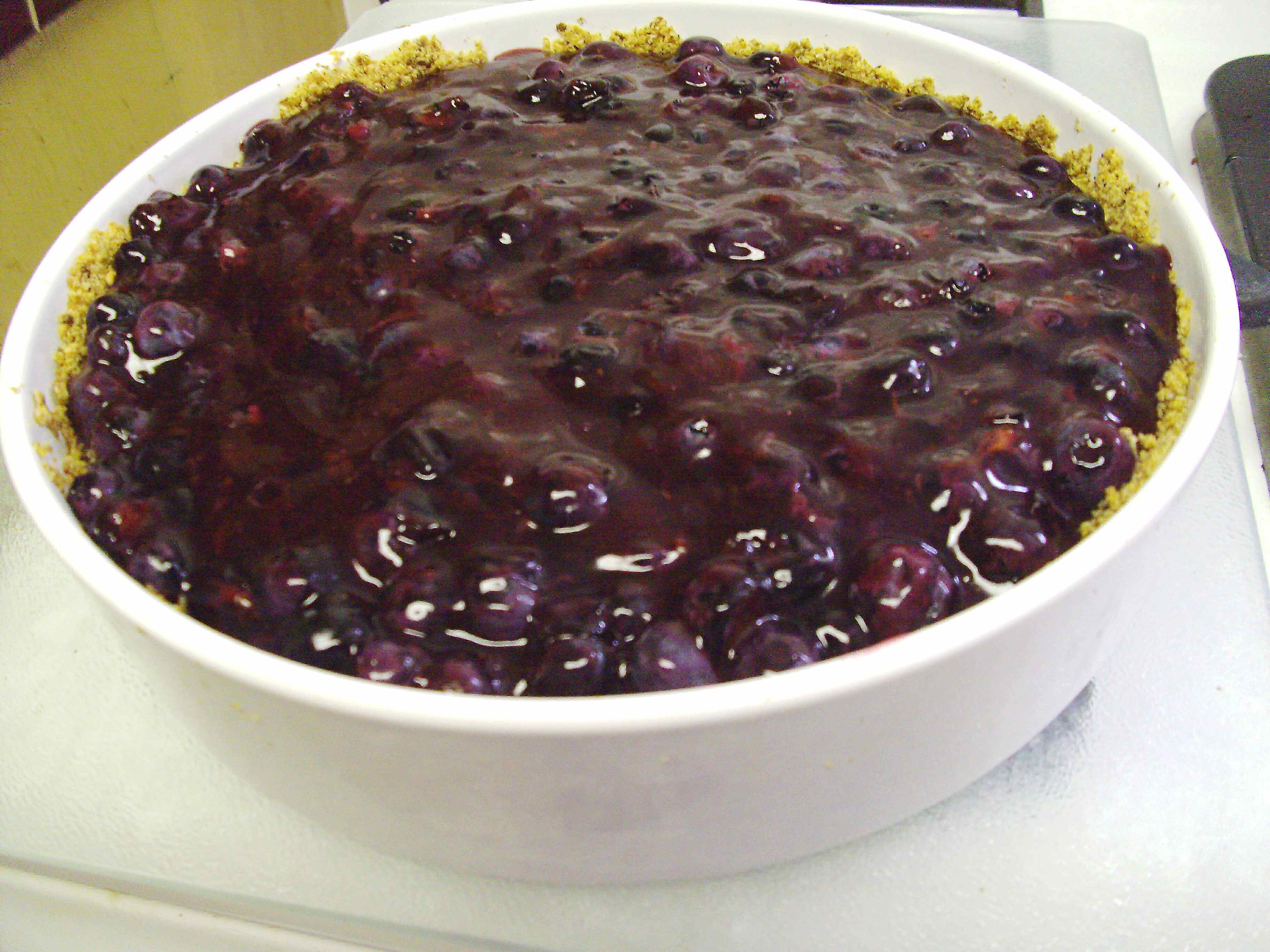
    raw blueberry pie with microwaveable filling and graham cracker crust

    This mostly-raw blueberry pie is a snap to make and very versatile--the filling microwaves in a few minutes, and you don't even have to bake the zippy gingered graham cracker crust--perfect for a hot Fourth of July and all summer long.

  • Recent Posts

  • Contents

  • Archives

  • Now Reading

  • See also my Book Reviews

  • Copyright 2008-2024Slow Food Fast. All writing and images on this blog unless otherwise attributed or set in quotes are the sole property of Slow Food Fast. Please contact DebbieN via the comments form for permissions before reprinting or reproducing any of the material on this blog.

  • ADS AND AFFILIATE LINKS

  • I may post affiliate links to books and movies that I personally review and recommend. Currently I favor Alibris and Vroman's, our terrific and venerable (now past the century mark!) independent bookstore in Pasadena. Or go to your local library--and make sure to support them with actual donations, not just overdue fines (ahem!), because your state probably has cut their budget and hours. Again.

  • In keeping with the disclaimer below, I DO NOT endorse, profit from, or recommend any medications, health treatments, commercial diet plans, supplements or any other such products.

  • DISCLAIMER

  • SlowFoodFast sometimes addresses general public health topics related to nutrition, heart disease, blood pressure, and diabetes. Because this is a blog with a personal point of view, my health and food politics entries often include my opinions on the trends I see, and I try to be as blatant as possible about that. None of these articles should be construed as specific medical advice for an individual case. I do try to keep to findings from well-vetted research sources and large, well-controlled studies, and I try not to sensationalize the science (though if they actually come up with a real cure for Type I diabetes in the next couple of years, I'm gonna be dancing in the streets with a hat that would put Carmen Miranda to shame. Consider yourself warned).

Sleepover fare

My daughter who loves vegetables and will often eat them ahead of whatever else is on the plate at supper suddenly became selfconscious yesterday about serving them to her friends at her birthday sleepover–no, no, no, Mom, none of my friends will eat them, and they probably don’t want fish, we want pizza. Not your pizza. Pizza from the good takeout place in Sierra Madre. And no anchovies this time.

We’ve known these girls since kindergarten–or earlier. They eat vegetables. But pizza it was. With some raw veggies for snack thrown in beforehand.

Our experience with the standard kid party fare is not very happy. Chips, soda, candy, popcorn–and that’s just the open bowls sitting around. Then pizza, cake, ice cream, possibly more candy.You’ve got to wonder what kind of parents actively choose such a menu–and the answer these days is, most people. All of these things are pretty addictive–everyone grabs for seconds without thinking.

Our daughter has been to a few of these parties and discovered the hard way that everything she knows how to do as a Type I diabetic flies out the window the instant she gets there. All her friends are grabbing handfuls of these very high-carb, mostly processed foods which we never get at home (except for ice cream), and the behavior is as addictive as the snacks. Even when she plans a strategy ahead of time with a goal for a limited reasonable maximum of carb grams and she calculates insulin for everything meticulously, she ends up pretty high hours later–as in, at 3 a.m., long after the insulin for the food has run its course.

It’s extremely hard to calculate carbs accurately enough with most processed snack foods at a party to avoid big glucose spikes later on. Even if you do everything right. There’s just something about junk foods–either you end up eating three meals’ worth of carbs in an hour of snacking without even feeling it because your friends are eating that way and it seems normal at the time, or these foods really digest a lot differently from standard things like bread or pasta. If it’s happening to our daughter, who can see the ugly results by getting a fingerstick three or four hours down the road, when she’s antsy and fractious and can’t sleep at 3 a.m., you know it’s also putting an extra burden on your kid who has a working pancreas.

So it might be a good idea to get fresh with the standard teen birthday party menu–if you’re doing pizza, skip the bags of chips and soda, add some veg and lighten up on dessert.

Salad was not achieved despite best intentions only because there was no room to get through to the kitchen where the vegetables of the week were lounging in the fridge. With the girls suddenly launching into “girl tawk” over pizza (a less appetizing combo would be difficult to imagine), and since we don’t have a separate den, our living room and dining room quickly became no-parent territory. My husband and I sidled up, grabbed some pizza and some carrot sticks and hid out in our bedroom so as not to intrude or have to hear any of it–win/win.

So given the awkwardness of getting past them and into the kitchen, vegetabalia last night was reduced to the bag of sugar snap peas and a bag of baby carrots we’d put out for a snack–not up to par, really, but it worked out fine. The girls ate them happily enough and didn’t notice the lack of or even seem to miss chips, cheetos, popcorn, potato chips, pretzels, goldfish etc. They were all too busy watching “Big Bang Theory” episodes and gossiping nonstop. It just goes to show you–the party is not in the bag [of chips, as per the tv ads], it’s in the participants.

I’d made a rather large and beautiful raw blueberry pie for dessert–chocolate cake after pizza just seems so wrong when it’s so hot out, and besides it’s summer with a vengeance. All indications (pretested and verified by my kid) were that both the crust and the filling were up to snuff. My daughter calculated for her best chances of being happy and more or less within range at her own party so she could have a piece with her friends, and she stopped worrying about the lack of junk food. I mean, pizza serves perfectly well as its own form of junk food–you don’t need any extra.

Plus you don’t want to be crunching too loudly when Sheldon and Leonard are going at it over whichever comic book hero’s superpower is the more mathematically sound.


New Page Up: Carb Counts and Ratios

I’ve just uploaded a new page (see the top menu tabs) with a couple of tables of the most useful rules of thumb I’ve found for carb counting. Since my daughter became a Type I (insulin-dependent) diabetic back in February, we’ve both had to become pretty familiar with the amounts of carbohydrate in a given amount of different foods.

Although the American Dietetic Association’s “Choose Your Foods” carb count guide for diabetics is pretty helpful (and pretty inexpensive, about $3 per copy if you order from them direct on www.eatright.org), it’s written from the perspective of the eater, not the cook.

So (as the cook in the family) I’ve worked out the approximate ratios of carb grams per total weight of some common foods I serve routinely. Rice and beans are easy enough to remember. But when I want to know how much of a given potato my daughter can eat as one carb serving (15 g), it helps to be able to know that a regular potato is about 1/6th carbohydrate. Then all I have to do is weigh it on the food scale in grams and divide by 6.

The 2/3 carb ratio for moderately sweet baked goods like pie, scones, cookies and muffins is also pretty helpful if we’re home and can weigh a portion for my daughter. Sweets are one of the hardest things to guess right consistently by eye, even when you’ve made them yourself. If there’s a nutrition label, by all means go with it; if not, weighing a portion and figuring 2/3 has been a pretty good approximation so far.

Ice cream is its own thing–again, hard to figure. Dreyer’s 1/2-the-Fat is our standard home brand, and hovers around 15-18 grams per half-cup (small scoop). But Baskin Robbins 31 Flavors are all over the map–when you go in for a cone, you really need to ask them to look it up for whatever size scoop, then figure the cone separately. A junior scoop in a cake cone for pistachio almond turned out to be something like 25 grams, plus 4 grams for the cone. Almost double what a plain scoop would have been at home.

Over-the-top caramel-syrup-fudge-frosting types of confections are a little out of my league, closer to candy bars than cakes, and would probably be more like 80-90% carb by weight (or mass, if you’re being excessively metric about the properties of grams).  I haven’t listed them because they’re so laden it’s hard to think of serving them very often, but I do have a basic rule-of-thumb candy list at the bottom of the carb counts page (saving the best for last) and a link to a much better, more comprehensive one so kids don’t have to feel completely shut out at Halloween or Valentine’s Day. Or birthdays.

I also have a short (for me) bit of hard-won advice on how to strategize with a (school-aged) diabetic kid before they have to face candy-prone situations where their friends are free to eat right away and they aren’t. Good for braces-wearers too…actually maybe we should all take the hint.

In any case, I hope you find this new page helpful whether you’ve got diabetics in the family or you just want to know what you’re eating.

Let me know what you think!

Veg-phobia II: Summer Edition

My daughter is at camp for two weeks, the longest she’s been away from home, learning to deal with meals and insulin on her own (with the camp nurse’s help). After six months of calculating and eight weeks of giving herself shots, I know she’s ready to do it, and the nurse is ready, and her counselors are ready. And I overprepared and brought more supplies than she’ll need (my daughter has nicknamed this “Mom-anoia”).

I brought everything and a little bit more–including carrots and celery sticks and low-fat cheese sticks, and a loaf of whole wheat bread for activity carbs. I felt like I was turning into my grandmother, who used to bring shopping bags full of real bagels and corn rye on the plane with her from New York whenever she and Grandpa visited us in small-town Virginia.

But really. The nurse laughed at first when I asked a couple of weeks ago if the camp kitchen had vegetables as an option for campers who needed a non-junk snack (I’d looked at the sample menus online and they looked a bit Boy-Ar-Dee to me), but then she admitted the camp doesn’t really serve a lot of vegetables and suggested I bring them for her to store in the infirmary fridge. They don’t have anything whole wheat either. I think she stopped laughing and started sounding rueful about a third of the way through her reply. “We have fruit,” she said half-heartedly, knowing immediately that it wouldn’t really do for a diabetic.

The food at camp is a smack in the face with the wet rag of reality: this is how the rest of the country eats today. And don’t get me wrong, it’s a great camp in every other respect, with a long track record all over the Americas and people of my generation who still feel immensely grateful to have gone as kids. We were very fortunate to get a scholarship for it.

So what’s gone wrong with the food? It’s like school cafeteria food in the ’70s, but without the kale or the stewed tomatoes, the half-hearted iceberg lettuce salads or the lima beans. Take all that away and you have spaghetti, turkey burgers, the occasional chicken or tuna fish, grilled cheese, pizza, some form of potatoes or corn, and fruit. Some protein, a surprising amount of fat, hidden and otherwise, highish salt and a lot of starches on top of starches. It’s also “all you can eat.” But what are you really getting that’s worth seconds? No fiber. No vitamins. Few minerals. Nothing green. Per the Sylvia cartoons, “We feature all-white meals.”

Vegetables? Salad if you’re lucky. Broccoli? Nearly unheard of. Tomatoes? only occasionally. Red cabbage, carrots, celery or any other noshing vegetable of worth? Um, not this summer.

And it is summer. Best time of year for greens. This is when it’s all happening at the farmers’ markets all over the country, and your local newspaper is probably exhorting you to get out there and try it. And did I mention this is California, prime place for vegetabalia all year round?

How did this happen? To a well-educated, professional and middle-class part of the population, no less? The nurse tried to explain to me, “This is what they’re used to at home. The kitchen figures the kids won’t eat them.”

Disheartening in the extreme. But she’s right about the way families tend to eat these days. We saw it firsthand when some dear friends of ours came to visit Continue reading

Sorry, Starbucks, no doughnut

On Sunday mornings, my daughter likes to drag her father out around the corner without me to the local Starbucks so he can buy himself coffee and get her some kind of small baked good that I’m not supposed to know about. Because I am, in fact, generally opposed to “doughnuts for breakfast” and both of them know it. It’s a ritual that had to be suspended for a while this spring, until we could figure out what kind of treat had how many grams of carbohydrate and how much of it she could eat and still eat something else more nutritious as the majority of breakfast.

Most of the pastries will never be what I consider top baking, but it’s not me who’s going to eat them. And my daughter wanted a doughnut, or part of a doughnut, if she could make it work out.

So–I went online to the Starbucks web site to try and hash out the vagaries of “petite” mini scones, mini doughnuts, coffee cake slices, and all the rest of it. Starbucks markets itself to the upscale, the midscale, and the would-be midscale of my town with all kinds of brochures about fair trade and global responsibility, and their web site is not much different. The do-right message is right up there with the latte of the week, and you’d expect the nutrition info to be present and helpful without the usual twisty chain-restaurant disguises and trickery.

Or would you? Starbucks got its tail caught several years ago when numerous commentators, among them its own employees, let the public know that some of the lattes and other mixed coffee drinks were topping out at over 700 calories per, with more fat than some burger chain offerings. Since then Starbucks has offered more health-conscious choices below the pastry case and taken a pro-active posture on nutrition and informing the customer and so on. But how do they really feel?

The nutrition info page falls under the “menus” navigation item at the top. OK. It’s readable, not a shrunken PDF file–good. You find a long scrolling list of each of the bakery items with calories, fat, carbs, and proteins. Doughnut, doughnut–old-fashioned glazed doughnut…440 calories, 21 grams of fat (10 saturated), 57 grams of carb…Ouch. Well, she could have half of one, I suppose, with a small bowl of oatmeal and some milk, and eat something better at lunch…but wait a minute. Where’s the sodium info?

All I could find about sodium was a little note about “healthy choices”, in which the Starbucks nutrition page asserts that such items have fewer than 10 grams of fat and fewer than 600 mg sodium. A stunner–that’s more than the classic 500-mg bowl of Campbell’s Tomato Soup that caused all the corporate protests against the NIH dietary salt guidelines in the 1980s. Who on earth would claim 600 mg sodium for a single snack or breakfast item was “healthy”–especially with the growing public and government concern over excessive salt in restaurant food?

And I still couldn’t find any specific sodium stats for doughnuts or mini scones or the other things my daughter was hoping for, much less an ingredients list. So I searched a variety of diet and nutrition web sites that catalog such things. The closest I could get to a current verified  standard nutrition label was from livestrong.com (accessed 5/3/10):

Starbucks Top Pot Old-Fashioned Glazed Doughnut

Serving Size: 1 Pastry (113g) Calories 480 Calories from Fat 210

  • Total Fat 23g 35%
  • Saturated Fat 9g 45%
  • Trans Fat 0g
  • Cholesterol 20mg 7%
  • Sodium 410mg 17%
  • Total Carbohydrate 64g 21%
  • Dietary Fiber 0.5g 2%
  • Sugars 39g
  • Protein 4g 8%
  • Vitamin A0%
  • Vitamin C 0%
  • Calcium 2%
  • Iron 10%

Est. Percent of Calories from: Fat 43.1% Carbs 53.3% Protein 3.3%

These stats are higher than what’s stated at the Starbucks page (see below). And the sodium in a single doughnut is pretty high. So’s the carb. So’s the fat. So’s the increase in size and calorie stats and so on from the glazed doughnuts they were offering in 2006, according to archived nutrition labels on a number of older diet web sites. Continue reading

Low-Carb Hamantaschen Without Artificial Sweeteners

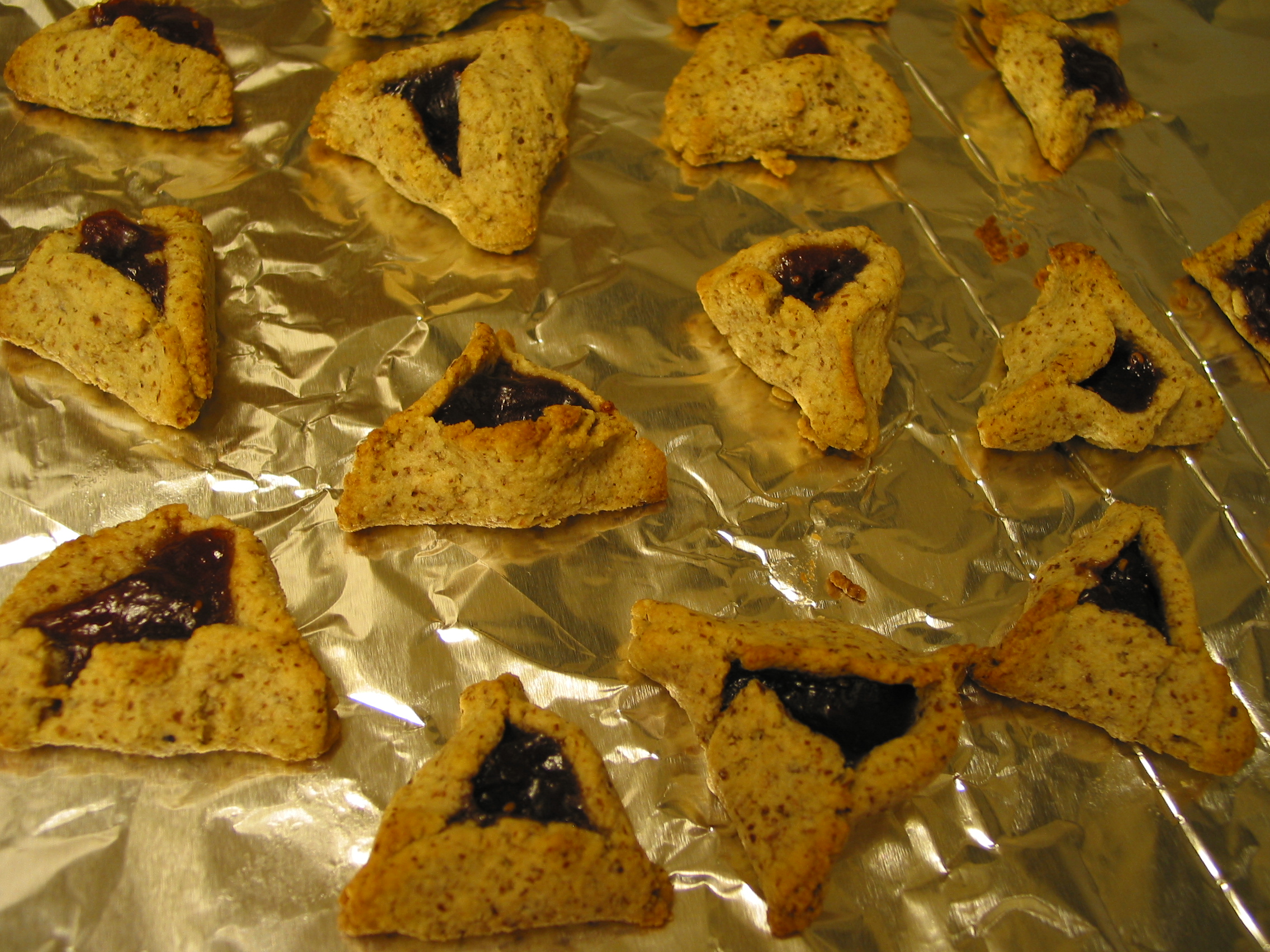
Almond meal-based low-carb hamantaschen

The first batch didn't roll out so easily, but these coin-sized minis tasted pretty good. The next batch rolled out thinner and held together better for a larger cookie with a delicate crust.

Baked goods are a big part of Jewish holidays at this time of year. Purim, being celebrated this weekend, is the last big baking bash before Passover, and hamantaschen (named for the hat, ears or purse of Haman, the villain of the story of Esther) are the cookie of choice. But with a diabetic kid in the house, the usual prospect of baking them takes on a bitter edge.

Hamantaschen–in fact, most cookies–have enough grams of carbohydrate that just two medium-sized cookies contain about half of what she’s supposed to have in any given large meal, twice what’s recommended for a snack, and they don’t have enough fiber or protein to slow down the sugars and avoid a spike in blood glucose. In short, not high-quality nutrition (not that we expect cookies to be). A grownup would have trouble dealing with the prospect of leaving them alone when everyone else gets to have them, but a kid faced with Purim celebrations at school or synagogue is bound for a certain degree of heartbreak.

It’s made me rethink our whole attitude toward things like Girl Scout cookies (this is also the season for that), chips, M&Ms, in fact any casual snack food that gets handed out innocently at school (our current woe–apparently my daughter’s teacher does this kind of thing at least weekly). The snack habit–anytime, anywhere, any or no reason–has become so ingrained in daily life we hardly think about whether it’s appropriate or not. Certainly the handouts are happening more and more frequently in class than I remember when I was a kid–did teachers even hand out treats back then? Not in my elementary school. It’s especially hard for a kid to “just say no” (and we already know how well that advice works in other contexts) when everyone else is taking a cookie or some M&Ms as a reward for answering a question (can they even keep their minds on the subject)? And even worse when it’s the teacher handing them out, because the teacher’s supposed to know whether it’s ok to eat or not.

Maybe we shouldn’t be handing these things out so casually or so often? Because while most people can handle surprise extras like these, they’re probably not all that good for anyone to eat indiscriminately at just any time of day. If they’re spiking a diabetic kid’s blood sugar, you can be sure they’re doing the same thing to your kid’s blood sugar too, only his or her body is responding with extra insulin to cover it. We get to see the results directly every couple of hours with our daughter–complete with sudden attacks of giddiness or tears if things peak and crash too quickly. But the same kind of thing happens to some degree to a lot of kids who aren’t diabetic, and they probably get reprimanded for it. Probably happens to a lot of adults, too.

Still, it’s the holiday, and total deprivation from treats is not really my aim today. So I’ve been trying to figure out a revised recipe for hamantaschen with a more manageable carb count, and preferably one without artificial sweeteners since my kid is still a kid. And neither of us wants it to taste like chalk. Very important.

I start most years with Joan Nathan’s cookie-dough hamantaschen recipe from The Jewish Holiday Kitchen because it’s the best dough I’ve ever tasted for these, even though it’s pareve (non-dairy, non-meat) and doesn’t have butter or cream cheese or the like. It’s not too sweet or too dry, and it doesn’t look or taste chalky or pasty like some of the dead-white offerings at the Purim carnivals. It tastes like a pretty good cookie, and it works really well for rolling out.

Looking at the carb count breakdown for that recipe, at about 12-15 g each, it might not be so bad to do regular hamantaschen, but my daughter would need to eat one or at most two with something protein or fiber, and she’d need insulin for it, so she couldn’t just grab one in between the planned meals. Kind of a pain, no doubt about it.

I was hoping for something closer to carb-free so she could eat hers with impunity when everyone else is eating theirs. This year I scanned the web for low-carb hamantaschen recipes and found only one Continue reading

Rethinking everything

I’ve been away from my desk, my notebooks, this blog for two weeks now. I never expected to be–it’s become a weekly adventure to seek out new topics in food, food politics, nutrition, and alternate methods for cooking real food faster. And then last week my daughter was diagnosed with Type I diabetes.

Diabetes is one hell of a verdict when you think your kid is just growing, and then just has a simple stomach virus, and it turns out to be neither of those things. It was also one of those strange fairytale paradoxes by which a cursed or poisoned feather turns out to save the princess in rags. She’d come home from school three weeks ago with what seemed like a routine stomach bug, but it wasn’t. Instead of a bit of fever, antsy impatience at having to rest and then bouncing back, she was cool, sleeping around the clock, drinking a lot even when she couldn’t stand to eat, and losing weight fast. Taking her back to the doctor the second week, we were thinking anemia, mono–afraid to think anything worse. Thank god our doctor threw in a glucose test along with the usual suspects. By afternoon he’d called and told us to get her down to the ER.

A night in the hospital is no picnic, even if all they’re doing to your kid is putting her on an i.v. and pricking her fingers with a lancet for testing once in a while. The second night is no fun either–everything the doctors have been telling you goes in one ear and slides right out the other as you wonder what your kid will ever be able to do normally again, and how much you’ll have to worry for her the rest of her life, and how you’re going to keep from laying those worries on her. And yet–at some point in the middle of the second night, unable to sleep much between nurse interruptions–I started to realize my daughter’s legs and arms and face were already filling back out, and in fact she had spent a good part of the second day sitting up reading Charlie and the Chocolate Factory for all she was worth, reading me her favorite bits in a silly voice  and cackling every once  in a while. More energy than I’d seen in three weeks. Whatever they’d done to lower her sugars and balance her electrolytes again was really working. She was reappearing before my eyes. I had no idea how to feel anymore except shocked, grateful and slightly absurd.

Furthermore, every time the orderly came by to pick up a menu or leave a meal, my daughter tucked into the food as though it had been catered by Daniel Boulud. (Of course, most of the meals featured meat, which she loves but I don’t make very often.) It is fairly humiliating to have your kid announce that the hospital meals are better than those at home…

Then she started talking about which kinds of potatoes she likes or doesn’t, whether and how soon she can have pizza, how will she ever be able to go to a birthday party and stand not having cake or candy or ice cream without having to figure out the carbs and the insulin beforehand, what about Valentine’s Day and on and on.  Somehow oatmeal raisin cookies became the benchmark of whether she was going to be able to eat like a person or not–and she hasn’t even had a taste for them in at least six months.

The shrinkage, the re-blossoming, and the total fixation on treats and sweets, all within a few days in a hospital bed–suddenly Charlie Continue reading