
• Enter your email address to subscribe to this blog and receive notifications of new posts by email.

    Join 241 other subscribers
  • Noshing on

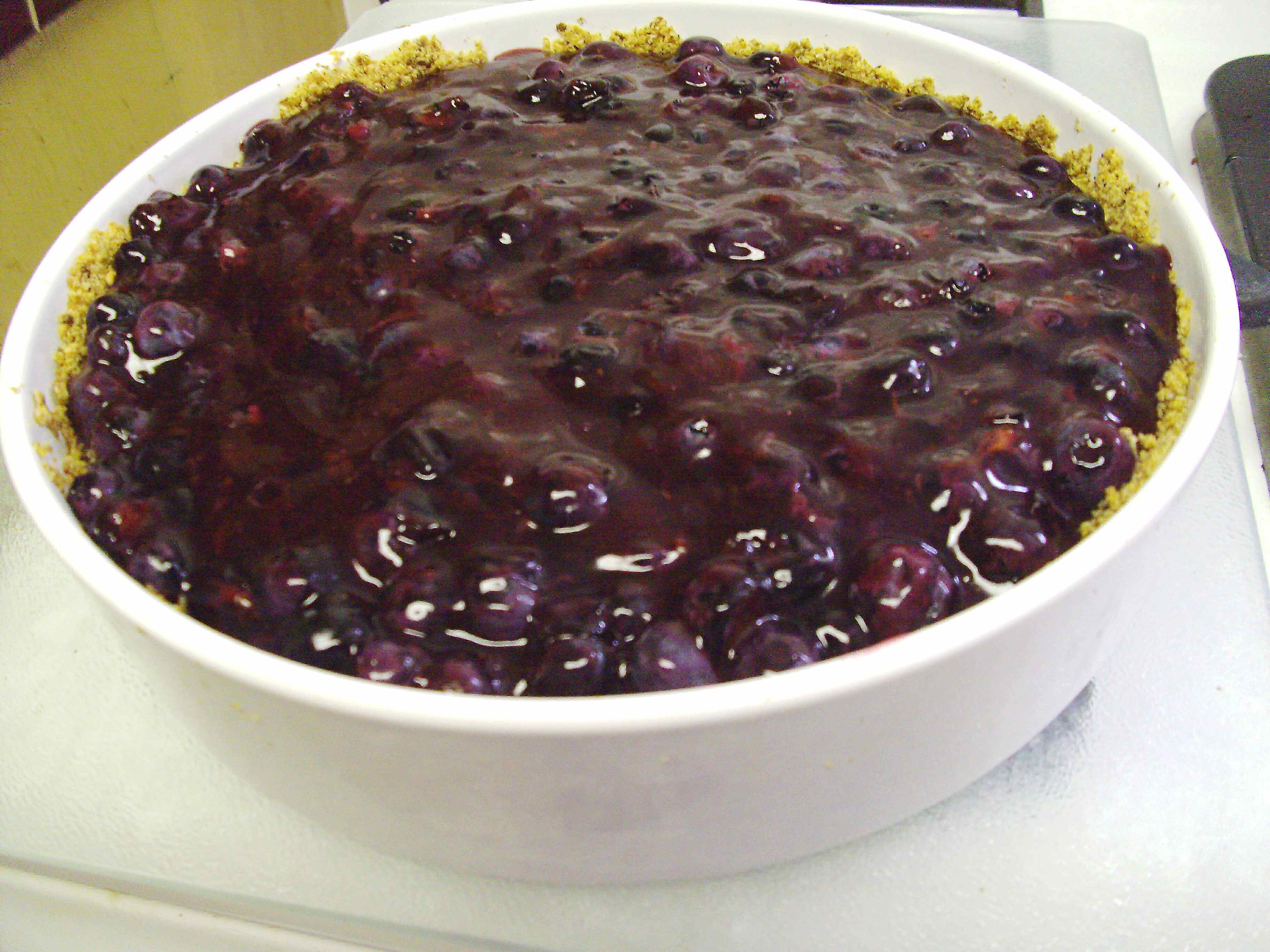
    raw blueberry pie with microwaveable filling and graham cracker crust

    This mostly-raw blueberry pie is a snap to make and very versatile--the filling microwaves in a few minutes, and you don't even have to bake the zippy gingered graham cracker crust--perfect for a hot Fourth of July and all summer long.

  • Recent Posts

  • Contents

  • Archives

  • Now Reading

  • See also my Book Reviews

  • Copyright 2008-2024Slow Food Fast. All writing and images on this blog unless otherwise attributed or set in quotes are the sole property of Slow Food Fast. Please contact DebbieN via the comments form for permissions before reprinting or reproducing any of the material on this blog.

  • ADS AND AFFILIATE LINKS

  • I may post affiliate links to books and movies that I personally review and recommend. Currently I favor Alibris and Vroman's, our terrific and venerable (now past the century mark!) independent bookstore in Pasadena. Or go to your local library--and make sure to support them with actual donations, not just overdue fines (ahem!), because your state probably has cut their budget and hours. Again.

  • In keeping with the disclaimer below, I DO NOT endorse, profit from, or recommend any medications, health treatments, commercial diet plans, supplements or any other such products.

  • DISCLAIMER

  • SlowFoodFast sometimes addresses general public health topics related to nutrition, heart disease, blood pressure, and diabetes. Because this is a blog with a personal point of view, my health and food politics entries often include my opinions on the trends I see, and I try to be as blatant as possible about that. None of these articles should be construed as specific medical advice for an individual case. I do try to keep to findings from well-vetted research sources and large, well-controlled studies, and I try not to sensationalize the science (though if they actually come up with a real cure for Type I diabetes in the next couple of years, I'm gonna be dancing in the streets with a hat that would put Carmen Miranda to shame. Consider yourself warned).

Starting with Breakfast

“The Well” blog at the New York Times has posted a new interview with pediatric endocrinologist Dr. Robert Lustig about his new book, the Fat Chance Cookbook, and about the possibilities for treating obesity in children with a better, less processed diet.

Two or three takeaways from the interview surprised me by echoing things I’ve either thought or written about here since my daughter became a Type I diabetic four years ago.

Almost always, we see an obese kid come in with an obese parent. And when the kid loses weight, the parent loses weight, because the parent actually changed what’s going on in the home.

We do something called “the teaching breakfast.” Every kid comes in fasting because we’re drawing blood. So they’re all hungry. They go to the teaching breakfast with their parents – it’s six families all at a communal table – and our dietitian spends an hour with them. The dietitian narrates exactly what’s on the table and teaches the parent and the kid at the same time….We make sure four things happen. No. 1, we show the parent the kid will eat the food. No. 2, we show the parent that they will eat the food. No. 3, we show the parent that other kids will eat the food, because they have other kids at home and they have to be able to buy stuff that they know other kids will eat. And No. 4, we show them the grocery bill, so they see that they can afford the food. If you don’t do all four of those, they won’t change.

Also, and I think this is my favorite:

…my wife is Norwegian… When she’s mad at me, she bakes…My wife has learned by experimenting that she can take any cookie recipe, any cake recipe, and reduce the amount of sugar by one third, and it actually tastes better…. And you can taste the chocolate, the nuts, the oatmeal, the macadamia – whatever is in it.

Right on!

Back to the top, though, I’ve got to say I love the idea of the teaching breakfast. My one concern is the reality of time cost for families with school-aged children, because eggs and vegetables, two of the (sometimes) inexpensive staples of the UCSF clinic’s teaching breakfast, take more time to prepare than a bowl of cereal, and require more cleanup. On weekdays, that might be a real challenge, especially for families with two working parents and/or long drives to school. A lot of the families I know in this situation (long drives and no school buses being a common problem in Southern California) are used to tossing their kids in the car with some kind of makeshift breakfast to eat on the way–often resorting to bagels, pop tarts, or bananas, none of which are great choices.

Perhaps if the dietician showed some simple microwaveable 5-minute meals like oatmeal or an easy vegetable-filled frittata (with some of the yolks left out) that can be made the night before and refrigerated? The plain yogurt with fresh fruit idea is also quick and simple but not especially cheap–these days a quart of plain non-Greek yogurt goes for $2.50 at Trader Joe’s, almost the same as a gallon of milk, and costs even more at the local Ralph’s (west coast Kroger affiliate), but it serves only 4 if each serving is a whole cup. Cereal with milk is a lot cheaper–but it could certainly be better cereal, high in fiber and low in sugar and salt, and measured by the cup or on a scale before pouring it into the bowl to make sure you don’t get more than you think you’re getting.

Cutting up fruit and vegetables takes time that parents usually feel they don’t have. And berries, which don’t need cutting up, are relatively expensive fruits, even when frozen. So showing parents a couple of “instantly grabbable” ways to serve the less expensive fresh (or fresh-frozen) fruits and vegetables instead of Froot Loops might be key.

A simple “just wash and nosh” approach would probably be a good start. I know I generally rail against buying precut, expensive little baggies of manicured (and dried out) vegetables in the supermarket, but the big bags of “baby carrots” that don’t require peeling and are finger-food size would be an okay starting point to get kids and parents to think about vegetables as a good snack or even breakfast choice. My daughter lived on them for lunches (along with a PBJ on whole wheat and an apple) for most of her grade school years, and even though she has (and will probably always have) a mean sweet tooth, she still seeks out raw green beans, wedges of red cabbage, roma tomatoes and broccoli or cauliflower branches to break off, rinse under the tap and nosh on after school.

Veg-phobia II: Summer Edition

My daughter is at camp for two weeks, the longest she’s been away from home, learning to deal with meals and insulin on her own (with the camp nurse’s help). After six months of calculating and eight weeks of giving herself shots, I know she’s ready to do it, and the nurse is ready, and her counselors are ready. And I overprepared and brought more supplies than she’ll need (my daughter has nicknamed this “Mom-anoia”).

I brought everything and a little bit more–including carrots and celery sticks and low-fat cheese sticks, and a loaf of whole wheat bread for activity carbs. I felt like I was turning into my grandmother, who used to bring shopping bags full of real bagels and corn rye on the plane with her from New York whenever she and Grandpa visited us in small-town Virginia.

But really. The nurse laughed at first when I asked a couple of weeks ago if the camp kitchen had vegetables as an option for campers who needed a non-junk snack (I’d looked at the sample menus online and they looked a bit Boy-Ar-Dee to me), but then she admitted the camp doesn’t really serve a lot of vegetables and suggested I bring them for her to store in the infirmary fridge. They don’t have anything whole wheat either. I think she stopped laughing and started sounding rueful about a third of the way through her reply. “We have fruit,” she said half-heartedly, knowing immediately that it wouldn’t really do for a diabetic.

The food at camp is a smack in the face with the wet rag of reality: this is how the rest of the country eats today. And don’t get me wrong, it’s a great camp in every other respect, with a long track record all over the Americas and people of my generation who still feel immensely grateful to have gone as kids. We were very fortunate to get a scholarship for it.

So what’s gone wrong with the food? It’s like school cafeteria food in the ’70s, but without the kale or the stewed tomatoes, the half-hearted iceberg lettuce salads or the lima beans. Take all that away and you have spaghetti, turkey burgers, the occasional chicken or tuna fish, grilled cheese, pizza, some form of potatoes or corn, and fruit. Some protein, a surprising amount of fat, hidden and otherwise, highish salt and a lot of starches on top of starches. It’s also “all you can eat.” But what are you really getting that’s worth seconds? No fiber. No vitamins. Few minerals. Nothing green. Per the Sylvia cartoons, “We feature all-white meals.”

Vegetables? Salad if you’re lucky. Broccoli? Nearly unheard of. Tomatoes? only occasionally. Red cabbage, carrots, celery or any other noshing vegetable of worth? Um, not this summer.

And it is summer. Best time of year for greens. This is when it’s all happening at the farmers’ markets all over the country, and your local newspaper is probably exhorting you to get out there and try it. And did I mention this is California, prime place for vegetabalia all year round?

How did this happen? To a well-educated, professional and middle-class part of the population, no less? The nurse tried to explain to me, “This is what they’re used to at home. The kitchen figures the kids won’t eat them.”

Disheartening in the extreme. But she’s right about the way families tend to eat these days. We saw it firsthand when some dear friends of ours came to visit Continue reading

The Cheap Vegetables–Snack Edition

A food marketing study released findings a few days ago about the top 10 fastest growing snack food preferences for kids 2 to 17 years old. Yogurt came out as number one, then potato chips, then–very surprisingly to me–fresh fruit. The others down the rest of the list were a soggy but predictable mash of candy, chips, “donuts” [sic], and other junk foods, though I think cheese cubes were in there somewhere. If yogurt and fresh fruit are in the top three, though, the news must be good, right?

Um. Maybe. But both of them are sweet or sweetened (in the case of most flavored yogurts, very heavily sweetened compared with plain)–so they kind of fit in with the candy, donut, carb-carb-carb kinds of snacks in the rest of the list.

What’s missing from the top 10 list? Plain milk, pasta or beans, bread and jam, the simpler unpackaged, unprocessed, or unbranded stuff you could bring from home, are all missing. But most of those are hard to take to school, and none of them are crunchy, which is a big part of the pleasure of snack. Actually, few of the packaged snacks are crunchy any more either. It’s a sad state of affairs, but there is a simple way to restore the full joy of snacktime.

Because mostly what you don’t see on the marketing study list are vegetables. Raw, crunchy vegetables, low in calories, starches and sugars, fats and  sodium, are high in potassium and fiber and vitamins, easy to prepare (another chorus of “just wash and nosh”) and perfect for snack. A handful of red cabbage or a couple of carrot or celery sticks along with a piece of cheese or a few nuts will keep kids from hunger for a lot longer than the carb-laden snacks on that list, and they’re a lot less expensive–on your wallet or your kids’ waistline.

Parents at school complain all the time that vegetables are too expensive, too time-consuming, take too much preparation by hand, and are not convenient to deal with, and their kids “won’t eat them”. But I wonder if that’s true, because whenever I go at lunchtime, I see many of those same kids enjoying the vegetables that come out of the school garden. They aren’t whining and they don’t appear to be suffering, and nobody seems to be sneering at anyone else that their lunch has Brand A taco chips and all the other poor schlub’s mother packed was vegetables. They’re all waving broccoli or lettuce leaves around, holding them up for comparison, and using them as props for one or another comic performance before chomping into them with savage glee.

And I know an ordinary bunch of celery–even a head of cauliflower–is the same price or cheaper than an econo bag of Doritos. Even at the big brand supermarkets. Celery. Carrots. Red or green cabbage. Raw green beans or if you’ve got the extra cash, snow pea pods. Broccoli or cauliflower. Lettuce wedges. Tomatoes. Cucumber. Bell pepper. None of these are hideously expensive, all of them taste good raw, and all of them store well washed, dried gently, and kept in the fridge.

So what’s stopping the parents from packing vegetables as lunchbox fare? The fact that they have to wash them to get the dirt off? Get their hands wet doing it? Maybe peel some of the vegetables? Find a knife to cut them up with? Use them up within a week or so of buying them? I honestly don’t know, but a lot of the parents seem whinier than their kids. Maybe they should all learn to just wash and nosh.

It only takes a minute or two to deal with a full head of broccoli or cauliflower, or a bunch of celery, and it’ll last you several days’ worth of school and work snacks at a cost of under $2. The most prep required is for carrots, if you start with an actual bunch. Not that I’m advocating the prepacked “baby cut carrots” bags, which are more expensive, but if you really hate peeling and cutting up carrots, you could go this way and still do better than chips and snack packs and the like.

All I can tell you is, if the vegetables are fresh and crunchy, most kids will get into them as long as their friends are doing it too, and there’s no great way to overeat them (except maybe for carrots). And some vegetables are just plain fun–red cabbage in particular is handy for revealing secret invisible baking-soda messages, and if your kids eat it at recess they can compare purple tongues with their friends afterward.  Can’t do that with taco chips.

Getting Sensitive to Snacks

In the past two weeks since my daughter returned to school as a newly diagnosed diabetic, we’ve started finding out just how many times a week students are presented with treat foods as extra snacks, even outside of what they bring from home. Happens at least twice a week. Why? They’re not in kindergarten.

I know I kind of “got into this” in my post two days ago about making hamantaschen lower in carbs. But my lingering amazement at the automatic and frequent food handouts in class, between snack and lunch even, got a boost this morning when I read the New York Times article by Tara Parker-Pope on the big rise in kids’ snacking over the past 30 years.

Barry Popkin, a nutrition researcher at UNC-Chapel Hill, and one of his students have just published an analysis of American kids’ snacking over the past 3o years. They compiled data from four national diet and health surveys and found that kids are now snacking an average of 3 times a day, mostly on cookies, chips, candy, sodas etc., not vegetables or whole fruits. They’re taking in more than a quarter of their daily energy, about 600 calories, from these low-nutrition processed foods. That’s 168 more calories on average than 30 years ago, and kids 2-6 seemed to be in even worse shape.

The percentage of kids who snacked at least once a day in 1977 was about 75%, but now it’s up to about 98%. About half the kids today snack 4 times or more per day. Some snack 10 times a day. What on earth?

This article in the NY Times “The Well” section was quickly followed by another in which Parker-Pope reviews countering arguments about the real harm a single cookie a day may or may not be doing. Studies cited a bit more vaguely than the Popkin study may suggest a lack of consistent benefit to insisting that everyone cut out a cookie a day to lose weight.

Will cutting out a cookie a day help if you’re eating other extras instead or not exercising? Maybe not–in fact, probably not. But I have to wonder why this hedging, wishy-washy kind of article followed so quickly on the heels of the report on the bigger study with hard numbers.  Does Parker-Pope’s second piece negate what Popkin and his student Carmen Pierna have reported on snacking trends? Not legitimately.

My daughter actually needs to eat a snack between meals these days. But she’s an exception, not only for needing it at age 9 but for eating a specific and limited snack with some nutrition to it in a timely, coordinated way rather than grabbing up unlimited treat foods without regard to the regular meal plan.

Automatic, constant, reason-free snacking–now not even limited to snack time!–is just not a necessity. It’s a habit that’s snowballed until it seems so normal people don’t even realize they’re doing it anymore or why it’s not a good idea.

All I can say is, it shouldn’t take having to be diabetic to notice the excess snack habit and steer clear. Is it time for the Great American Snack-Out?

The Case Against Bologna

(Beside the fact that I’ve never actually liked it, not even as a kid. Too flabby and bland.)

It would be so nice if once in a while, just occasionally–every other Thursday would probably be enough–the processed food industry judged nutritional value the way the CDC or NIH public health guidelines do. (The USDA and its Food Pyramid scheme, all versions, are too compromised toward the food industry for me to include.)

Take a small health column in today’s Washington PostJennifer LaRue Huget comments on Oscar Meyer’s claim that a classic peanut butter and jelly sandwich has nothing on a classic bologna sandwich for health. Their contention is that the bologna sandwich is healthier because it has only 4 grams of sugar, and somewhat less total fat than a sandwich’s worth of peanut butter, about 2 tablespoons.

Huget proceeds to tear that argument down with a simple look at the nutrition label stats for both and a smidgen of common sense–why would bologna have sugar in it anyway? The bologna has less total fat but somewhat more saturated fat and cholesterol, and it has only 3 grams of protein for peanut butter’s 8. And what about the salt–800 mg for a sandwich with a single slice of bologna, compared with a PBJ at 490 mg–which is still high by my standards, but I guess it’s salted peanut butter, and quite a bit of the salt is probably in the bread itself (incidentally, did Oscar Meyer include bread in its sodium count for the bologna sandwich? did it use the same kind of bread in the PBJ comparison? Hmmm….)

Well anyway, Huget doesn’t need to work too hard to make her case. Still, there are issues she doesn’t even scratch. Obviously Oscar Meyer is trying to play up its few nutritional points and hide its glaring weaknesses–most of the processed food players have been doing this aggressively for years now. We’re mostly inured to it, and frankly we expect bologna to be high-salt and kind of fatty. No big surprises there.

So let’s get back to the main strangeness of this comparison and ask the key questions: How could peanut butter possibly have more protein than bologna? Isn’t bologna meat? What’s going on?

I headed for the USDA Nutrient Database to find out. As much as I distrust the USDA’s dietary advice and its Food Pyramid, the nutrient database is pretty vast and pretty consistent, and its holdings aren’t branded.

The protein in bologna and most other processed sandwich meats–not just Oscar Meyer brand but others as well–is considerably lower than in the same amount of plain unprocessed cooked meat. We’re talking 3 grams of protein in a 28-gram (1-oz) slice.

Oscar Meyer’s bologna is made in descending order of “mechanically separated” chicken and pork bits and then a variety of corn derivatives, both syrup and starch, plus gelatin and other fillers.

Normally you look at the top two ingredients and think “Meat! That’s the main ingredient! It’s chock-full of protein!” Actual chicken and pork–the solid meat, not the skin or fat of the chicken, and not bacon–contain about 25 grams of protein per 100 grams of meat, according to the USDA nutrient database, or about 7 grams of protein per 28 grams of meat. Not 3 grams per 28. By the time you get to bologna, you’ve got less than half the protein of actual meat.

You have two possibilities here for how that happens:

1. The company’s definition of “chicken” and “pork” includes a hefty proportion of skin and solid fat most people trim away and throw out rather than eat when they buy actual chicken or pork. Fat doesn’t have protein in it but it does weigh something. Should it be allowed to qualify as “meat”?

2. The percentages of the chicken and pork bits in the bologna are just enough higher than those of each of the filler ingredients to qualify as leading ingredients on the label, but the actual proportion of chicken-plus-pork to the total filler is something under half.

So bologna leaves a lot to be desired even compared to an old standard like PBJ, especially today when you can get peanuts-only peanut butter without fillers, and fruit-only fruit spreads without added sugars or corn syrup. And you can look on the nutrition label to find out what’s in it and what it’s worth nutritionally.

But what disturbs me, even more than the clear and present need for Huget’s column to point out Oscar Meyer’s casual sophistry in this over-informed day and age, are some of the comments her column generated. The Washington Post has a pretty liberal comment policy on just about every opinion article.

I expected some type of Food Police accusations to crop up. I’m not sure they didn’t, eventually, but when I read the piece this morning, what struck me was just how many of the commenters waxed nostalgic about how much they loved bologna. How, even with all its and Oscar Meyer’s obvious flaws, they still craved bologna when they saw the word in print. Even when they’d actually read the whole article. Brought them right back to the good old days of the elementary school cafeteria. Worse, it brought them a specific craving for bologna with mayonnaise on white bread. That plus Velveeta to cap things off.  I ask you, is there any hope?

Pack your own lunch

It’s almost time to head back to school, and my daughter’s finally old enough to pack her own lunch. Not that she wasn’t actually old enough last year. But now she wants to.

When I was nine, I’d been making my own school lunches for at least a year, if only to save my sandwiches from my mother’s clutches and keep her from adding butter to the jam–something that did, and still does, make me absolutely nauseous. Emergency grossout prevention is the mother of lunch-making independence.

As many of my friends with same-age kids do, I worry that I haven’t been pushing my daughter hard enough toward independence by having her fix her own lunch. Is it too late to impart the mysteries of the toaster oven? But all is not lost–the other morning she figured out how to cut up her own apples (she has braces and our orthodontist “charges extra for stupidity-related bracket repairs”). She doesn’t appear to have lost any fingers. So we’re good to go!

Which is fortunate because lately I’ve been seeing a slew of new books on how to pack your kid’s lunch–they range from “here are all the vegan-friendly brand-names that look just like everyone else’s school lunch, only cooler” to Alice Waters insisting that the first step is growing your own school garden (which I’m actually in favor of, but not if it means waiting 6-8 weeks for your lunch to germinate).

Few of these fabulously sophisticated new books even consider the things I took to school every day as a kid–peanut butter and jelly, apple, carrots and celery. Or peanut butter and jelly, orange, carrots and celery. My mother was dull. My sister and I had no cool foods like Ho-Hos or Cheetos to distract us, and we usually ate at least some of the vegetables and the apple. Actually, so did most of the other kids in our school. It was that or suffer the cafeteria kale. And almost no one was fat. I’d like to point that out.

Hip mamas today (mostly those still in their 30s) look horrified at my daughter’s lunches because out there in hipland PBJ on whole wheat is so…so ’70s. It doesn’t contain any of the seventy-two essential nutritional supplement buzzwords (like selenium and phytoestrogens and antioxidant) they’re convinced all healthy food has to have (well, it’s true you have to have those things on the label to compete in the ads). And it has fat. And sugar!

But you know what? A decent peanut butter and jelly sandwich on whole wheat is a lot better deal nutritionally than most of the prepackaged, often self-righteously labeled, crap the hip kids bring to school these days. Much of it is along the lines of Kraft Foods’ “Lunchables”–a processed meat and cheese cracker kind of thing packed with some ersatz juice and faky side items like jello and  candies (not even, as I check belatedly, a tiny tin of applesauce–and check out the Lunchables nutrition and ingredient stats!). But you know how popular these things are–because they’re a kit. Buy five boxes, throw one  in your kid’s backpack each day. They stack neatly in the pantry.

Very few of these children ever bring a substantial serving of fresh vegetables or actual fruit–not even apples. Those require washing, peeling–maybe even cutting up. And sometimes the apples turn a little brown on the cut sides. Organic fair-trade labeling aside, any remotely fruit-like substances in the hip-kids’ lunch bags arrive in a rectangular cardboard box with a plastic overwrap, a plastic straw attached, and a sanitized-for-your-protection seal. No wonder they stare.

Anatomy of a PBJ:

Straight-up peanuts-only butter (no salt, no sugars, no mono- and diglycerides, no emulsifiers or BHT or “natural flavoring” or any of the rest of it) has about 16 grams of fat per 2 T (1 oz) serving. True. Absolutely true. But it’s not the same as the heart-stopping blubber you find on a piece of meat, so stop shrieking. Most of the oil in natural peanut butter is polyunsaturated (the “good fat” kind of fat). And it separates (because of the lack of fakery and emulsifiers) so you can pour off a good bit of it if you want to when you first open the jar.

Furthermore, the same peanuts-only peanut butter contains 8 g protein, 3 g fiber, almost no sodium, and about 210 mg potassium. And a little iron. It’s a pretty good deal for a kid’s lunch item at about 200 calories.

Two slices of whole wheat bread without too much sodium or garbage ingredients gives you another 200 calories–we’re up to 400, but only 3 g. saturated fat, another 3-7 g fiber, another 4-6 g protein, and with a little care preferably less than 400 mg sodium (all from the bread). Add a spoonful of all-fruit jam with 8 g sugar, at about 35 calories, and you have something that will get your kid through school without tears or big sugar highs and lows.

It doesn’t have big vitamin- and calcium-fortified labeling. It doesn’t have a label. It’s not supposed to do it all on its own. Your kid will eat about half, maybe the whole thing if he or she is growing fast or running around a lot that week. But he or she will get the vitamins and calcium from the other things in the lunchbox–some crunchy raw vegetables and an apple or orange and a thermos or carton of plain unsweetened milk. That’s it and that’s enough.

Do your kid a huge favor and leave out all the chips, chocolate, go-gurt (real milk-and-cultures yogurt is ok, not the fake tapioca- and gelatin-stretched stuff), cookies, jello, sorta-applesauce, and fluorescent boxes of juice. School is hard enough without sugar crashes or cavities, and they don’t need any of it to have a good day.

Oh yeah. And for crying out loud, please skip the sushi. Your kid does NOT need to be that hip in the school cafeteria. Or that sick, if the sushi doesn’t stay cold enough.

(Why yes, I live in Southern California. What gave it away?)