• Enter your email address to subscribe to this blog and receive notifications of new posts by email.

    Join 241 other subscribers
  • Noshing on

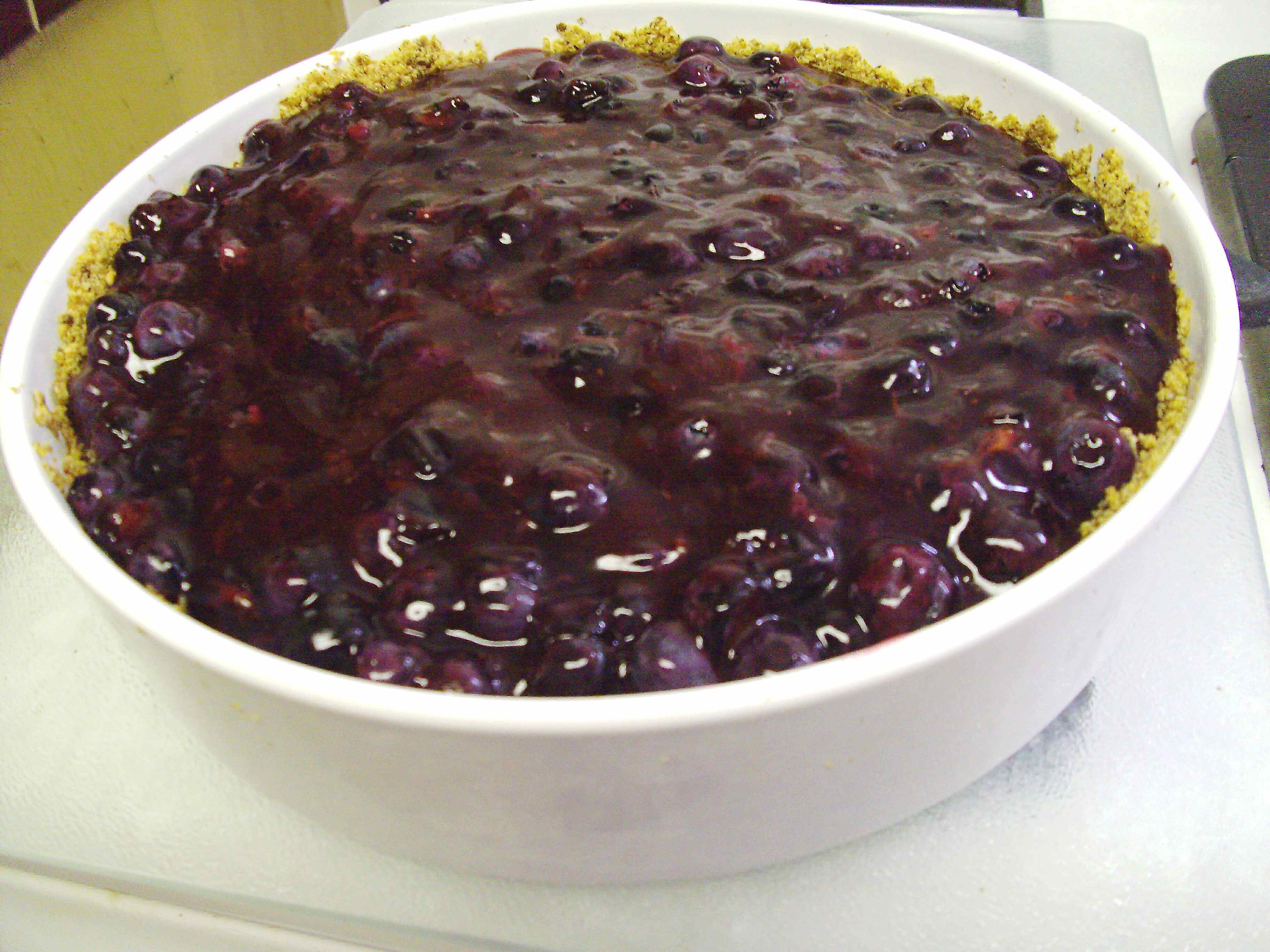
    raw blueberry pie with microwaveable filling and graham cracker crust

    This mostly-raw blueberry pie is a snap to make and very versatile--the filling microwaves in a few minutes, and you don't even have to bake the zippy gingered graham cracker crust--perfect for a hot Fourth of July and all summer long.

  • Recent Posts

  • Contents

  • Archives

  • Now Reading

  • See also my Book Reviews

  • Copyright 2008-2024Slow Food Fast. All writing and images on this blog unless otherwise attributed or set in quotes are the sole property of Slow Food Fast. Please contact DebbieN via the comments form for permissions before reprinting or reproducing any of the material on this blog.

  • ADS AND AFFILIATE LINKS

  • I may post affiliate links to books and movies that I personally review and recommend. Currently I favor Alibris and Vroman's, our terrific and venerable (now past the century mark!) independent bookstore in Pasadena. Or go to your local library--and make sure to support them with actual donations, not just overdue fines (ahem!), because your state probably has cut their budget and hours. Again.

  • In keeping with the disclaimer below, I DO NOT endorse, profit from, or recommend any medications, health treatments, commercial diet plans, supplements or any other such products.

  • DISCLAIMER

  • SlowFoodFast sometimes addresses general public health topics related to nutrition, heart disease, blood pressure, and diabetes. Because this is a blog with a personal point of view, my health and food politics entries often include my opinions on the trends I see, and I try to be as blatant as possible about that. None of these articles should be construed as specific medical advice for an individual case. I do try to keep to findings from well-vetted research sources and large, well-controlled studies, and I try not to sensationalize the science (though if they actually come up with a real cure for Type I diabetes in the next couple of years, I'm gonna be dancing in the streets with a hat that would put Carmen Miranda to shame. Consider yourself warned).

Halloween Candy Carb Guide

Halloween is coming…if you have a diabetic kid, as I do, it’s more difficult than Valentine’s Day to deal with the ups and downs. This year my daughter is in college and making her own decisions, but we’ve been strategizing since her first Halloween with T1D (Type 1 diabetes, the kind that requires insulin round the clock) about how to handle the (several pounds of) candy haul safely without spoiling all the fun.

She will tell you I spoiled it by throwing out one or more pounds (out of 3, more than we even handed out) behind her back a couple of years later, and she still feels ripped off. I will tell you that she eked out at least 2 of her 3 pounds of junk for over a month of getting to eat a piece or two every day with a meal, so what’s she complaining about?

Now of course she prefers actual chocolate, high-percentage, with some actual chocolate flavor instead of light-brown oversweetened waxy mush. But the appeal of trick-or-treating lasted a long time and is probably still going strong.

The point being, people with Type 1 diabetes still like candy and can in fact eat some of it with insulin to cover it, just “in moderation” as the Juvenile Diabetes Research Foundation puts it. In moderation meaning a little at any one time, preferably not on its own but with an actual meal that contains protein and vegetables and fiber to help de-spike it (for Halloween, I suppose I should say, “defang it”). And always with known and limited carb counts and the right amount of insulin to cover it.

Regular candy bars come with nutrition labels and carb counts, and you usually only buy one at a time, but Halloween throws everything off. The little minis and fun-sized and so on? And artificial sweeteners aren’t really the answer, especially not for kids, because there are some emerging health issues. If your kid (or you) have a candy haul with no labels, how do you carb count?

There are three ways to deal and you’ll want them all.

Start with the eyeball method

This is good for when you’re still on the street or at a party, or whenever you don’t have better measurement methods or official info handy…

If it’s a chocolate, the square minis (less than an inch on a side) are about 5 grams of carb apiece, and so are the small wrapped hard candies (“boiled sweets” in the UK) like Brach’s or Kraft peppermints and butterscotch, regular-sized thin 1″ plain lollipops and so on.

The slightly bigger 1 1/2″ long by 1/2″-5/8″ rectangles of standard chocolates are about 8-11 grams apiece.

The JDRF’s annual official guide to Halloween candy carbs

Once you get your haul home, or if you have a smartphone on you, use the official carb counts for any common candies with brand names. The  JDRF Halloween Candy Carb Guide is a PDF list you can print out and stick on the fridge or keep handy on your smartphone. They update it every year to keep it current.

When in doubt, weigh it out

Your best bet for any candy without a label–gummy worms, home-made or unwrapped chocolates, candy-bowl candy, etc.–is to weigh it on a scale that shows grams. Almost anything but sesame halvah (which you’re unlikely to pick up trick-or-treating) will be more than 85% carb by weight. (Halvah is about 50% by weight because it’s half sesame paste, half sugar syrup, but really. It’s kind of the exception.) Regular fudge is similar in texture but in terms of carb, it’s right up there around 90% like most commercial candies.

Most mass-market chocolate candy (i.e., Mars and Hershey, not the high-percentage bars) is 85-95% carb by weight, so if you weigh it in grams, multiply by 0.9 and you’ve got a pretty good estimate at least in reasonable single portions (1-2 pieces of candy, half an ounce or so). Hard candies like peppermints or butterscotch, Jolly Rancher, Lifesavers, etc. are basically 100% carb, so whatever they weigh in grams is the number of grams of carb. Jelly beans and gummy worms are in-between but figure 90-100% carb by weight.

Those percentages are a bit finicky and not everyone needs to know the carb to within a gram or so. If you don’t have a head for math or a calculator handy, just weigh it and figure it’s all carb, keep the portions limited to half an ounce (15-20 grams of candy) and and you won’t be off by more than 1-2 grams of carb.

For more tips on helping a young kid deal with diabetes and candy at Halloween, and more on general carb counting by weight for regular foods, check out the Carb Counts page (or just click the tab at the top of the blog).

Somewhat Scary Food

Today’s topic is particularly revolting, because it’s never too late to start considering what lies ahead at the end of this month I mean, tonight–and yes, we’re already late for the door. Yes, buying bags of generically sorta-chocolate Hershey’s and Mars brand mini candies is the accepted, sterile, utterly safe way to go on Halloween. But really, it’s not very interesting. Especially not for kids. And it’s gotten a lot more expensive in the last year, as far as I can tell.

(Though if you’re going that route–or your kid is going out trick-or-treating elsewhere–check out the Buzzle.com comprehensive candy carbs list if you need to know about that kind of thing in detail, or the little rule-of-thumb chart at the bottom of my Carb Counts page. If nothing else, it’ll keep you away from the communal candy dish at work.)

When I was a kid we went out trick-or-treating with the exhortation to touch nothing, TASTE NOTHING, until we got home and my mother could inspect it all for razor blades or dimes or other nasties that might unimaginably (except to my mom; dimes are not something most people will part with these days except for a venti with extra whipped cream and a cherry on top) be stuck in things like apples. It was an annual ritual of paranoia that lent that unnameable something–a hint of danger and excitement–to the otherwise blatantly fake costume horror. Because, of course, we were usually walked strategically to the homes of families our parents knew, just as they walked their kids to ours.

Then there was the time a friend invited me to her church’s haunted house–the activities mostly consisted of blindly sticking our hands in bowls of cold spaghetti or reaching out for something that turned out to be grapes with the skins peeled off. We were getting too old for it, really, and it was more icky than scary. But still. Somehow the innocent days of bobbing for apples and sticking your hand in cold spaghetti have gotten lost in the too-adult fear of sharing germs or getting pneumonia from having to plunge your head into a bowl of cold water.

Kids don’t get to help set up anything but the store-bought decorations anymore, and if they have any say in what treats to hand out, it’s through the universally accepted point-and-whine technique at the supermarket Halloween aisle. Reading the teeny-tiny fine print on the ingredient lists for all those mini candies, spooky and mysterious as the 4-syllable chemical names may be,  just doesn’t cut it for scariness or adventure. Nor do the huge blowup animatronic decorations–the creepy hand, the dancing skeleton, the vampire rising from the coffin to a boogie-woogie soundtrack like so many Halloween versions of the Singing Trout–is this Robert Pattinson’s future?

Most kids can’t even make their own toast these days. How are they supposed to cope with creating pickled porcupine quills or tarred hornet brittle?

Fortunately, a number of cookbooks (from before the sterilized-and-wrapped-for-your-protection era) are available from the ether or at your local library with answers to just these sorts of dilemmas. If you have a stove and a freezer and possibly a food processor or electric mixer, you stand a good chance of rescuing your young innocents from the debilitating descent into middle-aged indifference, incapacity and accountancy.

I refer here, first and foremost, to the slim but venomous contents of Roald Dahl’s culinary imagination (and that of his widow, Felicity Dahl, who unearthed these books and made sure they saw light of day). To be absolutely sure I’m doing it right, I’m starting with Volume II, Roald Dahl’s Even More Revolting Recipes (Penguin Putnam, 2001), because Volume I, Revolting Recipes, clearly wasn’t revolting enough. Only the best for my child!

What could such books possibly contain? Roald Dahl’s Even More Revolting Recipes is a fair mix of candies, sweet drinks, desserts and actual non-sweet food–this last is the real surprise. But no vegetables, unfortunately, other than a bit of decorative tomato and some oddly Martian-looking potatoes (I fervently hope they don’t sing).

In keeping with modern ideas about kids and cooking, a number of the recipes call for prefab products (the one for Tongue Rakers, a kind of onion-and-garlic-laced bread shaped like a pitchfork, calls for a “packet” of your favorite pizza dough mix rather than the basic flour-water-yeast-and-salt), and several involve the strategic use of food coloring (Hornets Stewed in Hot Tar, a black-dyed pumpkin- and other-seed brittle) or fluorescent paint Continue reading