
• Enter your email address to subscribe to this blog and receive notifications of new posts by email.

    Join 241 other subscribers
  • Noshing on

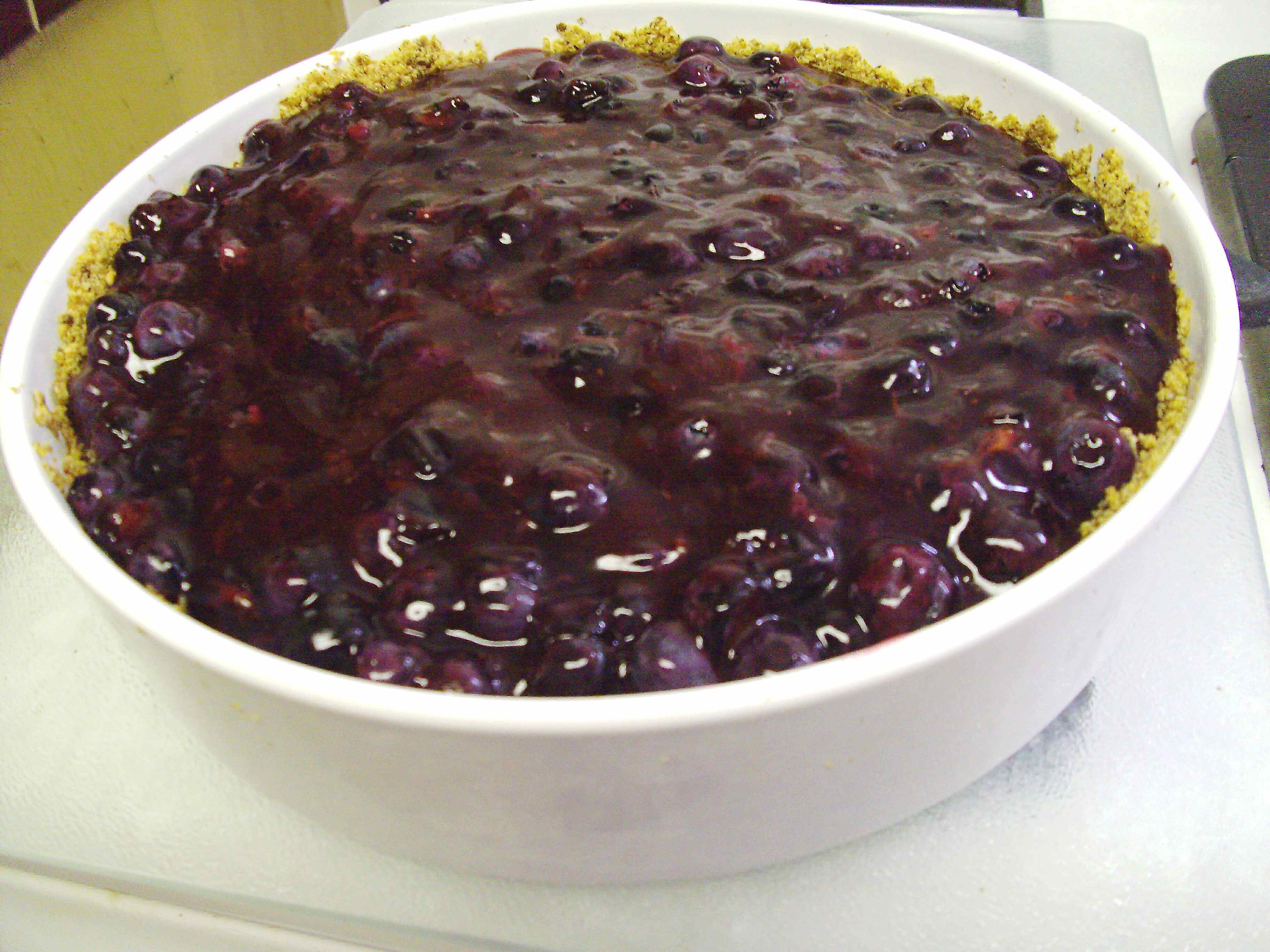
    raw blueberry pie with microwaveable filling and graham cracker crust

    This mostly-raw blueberry pie is a snap to make and very versatile--the filling microwaves in a few minutes, and you don't even have to bake the zippy gingered graham cracker crust--perfect for a hot Fourth of July and all summer long.

  • Recent Posts

  • Contents

  • Archives

  • Now Reading

  • See also my Book Reviews

  • Copyright 2008-2024Slow Food Fast. All writing and images on this blog unless otherwise attributed or set in quotes are the sole property of Slow Food Fast. Please contact DebbieN via the comments form for permissions before reprinting or reproducing any of the material on this blog.

  • ADS AND AFFILIATE LINKS

  • I may post affiliate links to books and movies that I personally review and recommend. Currently I favor Alibris and Vroman's, our terrific and venerable (now past the century mark!) independent bookstore in Pasadena. Or go to your local library--and make sure to support them with actual donations, not just overdue fines (ahem!), because your state probably has cut their budget and hours. Again.

  • In keeping with the disclaimer below, I DO NOT endorse, profit from, or recommend any medications, health treatments, commercial diet plans, supplements or any other such products.

  • DISCLAIMER

  • SlowFoodFast sometimes addresses general public health topics related to nutrition, heart disease, blood pressure, and diabetes. Because this is a blog with a personal point of view, my health and food politics entries often include my opinions on the trends I see, and I try to be as blatant as possible about that. None of these articles should be construed as specific medical advice for an individual case. I do try to keep to findings from well-vetted research sources and large, well-controlled studies, and I try not to sensationalize the science (though if they actually come up with a real cure for Type I diabetes in the next couple of years, I'm gonna be dancing in the streets with a hat that would put Carmen Miranda to shame. Consider yourself warned).

Say “Celà n’est sûre[-gelée-]ment pas le cas”

Following on reports this spring that Polish (and probably other-sourced) horsemeat made it through France and into British frozen supermarket lasagne, now we get word of even more devious (and frankly depressing) culinary misdeeds in today’s Washington Post online:

French restaurants acknowledge serving factory-frozen food

A surprising number of cafés are apparently serving up microwaved meals instead of cooking them in-house. Even the éclair, which doesn’t take a lot of time to cobble together, even for an amateur like me, is no longer safe. The profit margin is too high on these items, and the savings in cooking staff are phenomenal. In a down market, what else would you expect?

But it’s a big embarrassment for a country that’s traded primarily on its gastronomic leadership for decades since WWII. No, WWI. No, wait–probably since the Napoleonic era. Or before the Revolution. Cyrano de Bergerac does a soliloquy based on cream horns and other such items, if I recall.

Well, to tell you the truth, though, I’m not sure whether I’m shocked or relieved. Judging from what my family and I were able to eat in 2006 in Paris, I’d say that in a few cases (cafés within walking distance of museum exits, chosen in part for meltdown-avoidance) frozen might even be a step up from one or two of the overpriced restaurant meals we had (a horrid, horrid “salade niçoise” featuring canned green beans comes to mind). Those few meals were, and I can be generous when I have to, mediocre in a way that would be excusable in suburban America on travel but which were much less than okay given that it was Paris.

Mostly we ate food that wasn’t (comparatively, anyhow) too expensive (we skipped the meat dishes, since we keep kosher) and couldn’t be frozen well enough to fool customers who know how to cook. So omelets cooked where we could see them, felafel served with freshly chopped red cabbage, open-faced sandwiches, breads from a bakery that smelled like yeast and flour, not like plastic bags, and so on. The frozen items tended to be ice cream, which is supposed to be frozen. But that was a year or so before the big bank crashes, the collapse of the housing bubble in America and “too big to fail” and even the Madoff scandal. And even then things weren’t quite as glam, at the moderate end, as we’d been primed for.

And on the other other hand, what does it mean that so many French restaurants have resorted to this kind of tactic, microwaving (and charging for) tuna steaks with ratatouille accompaniment, as in the article? What, other than money of course, and the effects of a deep recession that’s hit France pretty hard this past year.

What it means, in part, is that (also according to the article) flash-freezing techniques are now at a point, at least in France, where they can keep the food acceptable in quality and that the suburban factories where these dishes are put together and frozen are doing a pretty fair job, fair enough to fool even moderately experienced diners (not just tourists). And that the “restaurants”–who knows if they’ll get to keep that title now that they’ve been exposed–have figured out how to be at least marginally competent at microwaving so they don’t just ruin the food.

Better if they were cooking fresh. Or, from the perspective of an avid microwaver, better if they were using their microwaves for something more sophisticated than defrost-and-warm. Better, since so many of the younger working French no longer cook for themselves very much, if the restaurants, cafés and bistros took their role as gastronomic role-model and rallying point a little more to heart. Certainly they shouldn’t be pretending to cook from scratch and charging commensurate prices.

But I wonder–is the food they’re serving significantly better in quality than America’s mass-produced frozen meals-for-one? It might just be, since it’s a more recently introduced phenomenon in France, and it’s been designed to pass muster as though it were cooked fresh. For such a fraud to be successful, the flash-frozen food cannot be like American tv dinners. It just can’t. It might be that many of these factory-produced dishes are still a lot less processed than the miseries perpetrated by Swanson, Kraft, Stouffer’s and so on over here. So maybe we need to take another look at their techniques and demand better quality in the frozen food section here, foods that don’t have aroma of oversalted wet cardboard clinging to them once thawed.

I have GOT to see this

Kings of Pastry

Kings of Pastry

“Kings of Pastry”, a new documentary about the Meilleurs Oeuvriers de France competition by D.A. Pennebaker (Bob Dylan documentary “Don’t Look Back”) and Chris Hegedus (“The War Room”). Unfortunately I missed it last night at the LA Film Festival–what can you do?

See the trailer–looks like a good time.

Bistro + Cartoons = Stephane Reynaud’s French Feasts

French Feasts by Stephane ReynaudFrench Feasts: 299 Traditional Recipes for Family Meals and Gatherings by Stéphane Reynaud (2009 Stewart, Tabori & Chang, $40.00)

It’s a huge book. Daunting. Heavy as a couple of bricks. Padded cover, even, with a zillion miniphotos of intimidating French bistro classics in their raw and cooked forms (an octopus, a roasting tray of vegetables with leeks, a crème caramel, and several red-checked tablecloths, for that seemingly effortless retro chic, laid out under rustic-looking pot-au-feu types of stews. And a cutting board with six stuffed marrow bones stood on end.)

Flip open the front cover and you get a classic bistro menu with way too many choices (luckily it’s printed with a little English and page numbers, not handwritten on a chalkboard across the room, so you don’t have to squint). Read down the page (continue inside the back cover) and you start to dig up little puns and odd bits of humor here and there. They finally bubble up into something definite in the introduction, where the author, a medium-youngish guy seated in front of a casserole with a chef’s knife and a two-pronged barbecue fork, reminisces about a childhood stuffed with too much good food on family Sundays with his grandmère. Replete with escargot-burping uncles.

And from then on, you realize why this book is so fat: not only is there a heavy emphasis on meats and charcuterie (and six or seven different preparations for foie gras, 12 or so variations on soft-boiled eggs and omelets, etc.), but every other page is a photograph, or a profile of a couple who run one or another bistro, a venerable Lyonnaise sausage maker, vintner, baker, or cheese affineur…

Or — quite frequently — a cartoonist’s demonstration, only a little less improbable than Rube Goldberg’s, for making wine or cheese, or canning preserves (watch out for the orange tabby in the “catsup” jar). Check out the last chart, next to the Armagnac and Cognac page, which presents  increasing girths and grades of cigars appropriate for the increasing girths and ages of the smokers. Is it by way of including the classic end to a classic meal, never mind the known risks, or a subtle message the other way–that these days it’s more savvy to laugh at the cigar nostalgia die-hards than become one?

And speaking of nostalgia…There are even songsheets for Moulin Rouge classics so you can join in with your French friends after dinner. You kind of need those. You definitely need those.

Just what kind of cookbook have we lugged home?

Actually, Stéphane Reynaud is a well-regarded restaurateur on the outskirts of Paris and the well-trained son and grandson of a line of pork butchers. His previous book, Pork & Sons, arrived in the US a couple of years ago, and this one was published here in English sometime last fall. Despite the fact that I don’t eat pork and don’t think it’s a glorious profession to “break down a pig” or any other large animal, as glamorized on adventure cooking shows, French Feasts is well worth the read. Because Reynaud clearly knows his stuff, and not just about meat.

I’m not sure whether he got a translator to help, or he’s just really fluent in English–if so, my hat’s off to him, because his sense of humor really comes through fairly naturally, and it probably meant rewriting a fair amount of the text to come up with accurate and still funny equivalents for English speakers. Translating (and having to explain!) puns from French to English would be a job and a half for just about anyone. Most people would rather scrub dishes than have to explain a joke. Even me.

The recipes themselves are classics–untrammeled and unfutzed-with–and unexpectedly instructive in their simplicity.

Most have fewer than 10 ingredients, and often fewer than six. Here there are no dishes calling for 20 different special vinegars or sweeteners, as in American food-glam magazines and cookbooks. Not too many luxury ingredients, other than that many of the “proteins”–shellfish, goose, duck, game, foie gras–are hard to find in the US and kind of chi-chi expensive these days outside of Europe, but you could probably substitute with some success. And the titles are simple too–English translations of the classic French names, not mile-long lists of every special new “twist” ingredient it’s been tweaked with to up its audience appeal. Or advertiser appeal.

And the food photos. Nice photography but no attempt to make restaurant-pretty “tall food” plates with lots of garnishes. These are stews and soups and unsliced terrines–unstyled, many of them, or at least not overstyled with voguish background blur and enhanced color and gloss on every dish. Cooked cabbage looks like cooked cabbage. Turnips look like turnips, not like  flaming purple orchids turned suddenly solid. The stews look like stews you’d make at home–well, except for the lobster one, or the terrine with the crossed strips of fatback over it, or the baked fish in a glossy brown flake pastry crust. That’s just showing off, right there.

But really, most of these dishes are photographed while still in the cooking pots–which aren’t the bright shiny brand-new brand-name items you can order directly by clicking on the picture. They’re well-used, old, blackened, ugly even. Not glamorous. They don’t go with the brushed steel decorator kitchens we’re used to seeing in all the glossy cookbooks on our shelves. They have a bit of grime and wear about them, and make us feel better about our own dowdy day-to-day kitchenware that we’ve been using since we got out of school umpty-nine years ago and haven’t replaced because it’s reliable.

And now what I thought at first was a detour:

To my great surprise, given the author’s “slow food” cred, Reynaud’s recipes don’t contain any of the rote “1 teaspoon of salt” in each recipe that most recent American cookbooks have fallen into. Few of his recipes are seasoned more than once if at all, and usually just the sauce, or just the surface, right before serving. He doesn’t dictate how much, but from the context it’s obviously closer to a pinch than a spoonful, and often he skips it altogether.

He also doesn’t boil his vegetables in salted water, which is very chic right now in the US just because Thomas Keller said he does it and Michael Ruhlman trumpeted it as gospel. With only one exception–in fact, the only recipe in the book with a specified teaspoon of salt–even the desserts in French Feasts, including all of the pastry doughs from shortbread to puff pastry, are almost entirely free of added salt. The sheet cakes have baking powder, and a handful of the pastries call for salted butter rather than plain, but neither comes anywhere close to a contemporary American version’s salt content.

It’s not that Reynaud never uses salt or salted ingredients like capers or sausage or parmesan. But unlike American recipe developers, he doesn’t throw extra salt on top of them, and in fact he warns against it in one of the smoked pork-plus-sausage-plus-three-other-preserved-meats kinds of dishes.

SO—If these are the classics and the methods American chefs and recipe test kitchens have been aping and trying to bring to the table in our best restaurants for decades, French Feasts makes it clear there’s been more than a little “tweaking” or “drift” going on, particularly for the increasingly popular baked goods. Almost every American version of the classic French desserts, from mousse to napoleon to baba to charlotte and crêpes and on to cannelés, has had an automatic teaspoon or worse of salt dumped into it before it went to press. In comparison with the traditional style of French Feasts, we seem to be pickling ourselves. You have to wonder who put it there and why, and what our sorta-French desserts are really supposed to taste like when you skip the commercial interest that seems to be behind all the routine, mindless oversalting.

And you have to ask–in romanticizing Slow Food but presenting commercially tainted, overly fussy, overly expensive and oversalted versions of traditional European dishes, how far has American foodieism drifted away from reality? How badly have we lost the thread?

In contrast to the younger wave of foodie restaurant chefs and specialty purveyors in the US, most of the folks profiled in French Feasts are not sporting extensive surfer tattoos or orange clogs to proclaim their indy cred. They’re also not Glamorous-Looking French People With Scarves ™, except Continue reading

Not Your Parents’ Mom & Pop

Mom & pop stores–the little independent family-run corner grocery, hardware store, café, bakery, or barber shop–are, like local farmers’ markets, neighborhood gems just waiting to be rediscovered by a new generation. Some are the old-fashioned kind, limping along in the recession but fostering a friendly atmosphere and clientèle. Others mix old-fashioned personal service with cutting-edge specialties. Within five minutes of my house are five worth spending time in.

The bike shop at the other end of my block sells and fixes everything from used kids’ bikes with training wheels (which they’ll adjust for you) to the fancy $4000-plus professional racing bikes (ditto). Around the corner, beyond the Starbuck’s, is a young-chic type all-day café with arty rectangular plates, pretty good coffee–and outlets for every patron’s laptop. Down the street is a British pub owned by the chef and his wife, with the world’s crispest, most astonishing fish & chips and dozens of artisan beers on tap. No outlets here, but you can play darts on the bar side of the pub. The coffee shop across from my daughter’s school hosts tutoring sessions and keeps a frequent customer card file for regulars as well as a shelf of books  you can buy or just borrow while catching a break. And the fifth, my personal favorite, is an Armenian corner grocery with great deals, lots of unusual ingredients and spices, actual ripe tomatoes and one or another family member always willing to discuss the best way to cook something–or debate the merits of the latest Rose Parade.

These businesses are always under siege from the chain restaurants and big box price cutters, which pop up and then close suddenly whenever something better comes along for the long-distance investors, undercut the locals while they’re here, and leave a trail of mistreated minimum-wage employees and other forms of exploitation in their wake.  And yet often the mom & pop stores offer a better deal, unique merchandise, and certainly better service.

Most important is the way local shops change the way we interact when we come in to buy something. The owners treat everyone like a neighbor or a member of their congregation (in the case of the corner grocery, they usually are). The staff are usually the sons and daughters and grandchildren of the owners. Even shy customers come in ready to say hello, ask questions, compliment the new light fixtures, complain about the state budget cuts or the new parking meters near the center of town and generally catch up on the latest. They don’t ignore or avoid the staff the way everyone does at the big box stores, and they don’t feel ignored or pestered either. Kibbitzing and schmoozing are almost lost arts everywhere else, but the better mom & pop businesses have a way of restoring that sense of belonging to neighborhood shoppers.

So it’s with pleasure that I recommend two fairly recent books on the mom & pop phenomenon, with a side dish of a newly released French film.

Dough (2006), by Mort Zachter, is a well-told cautionary tale about working for family, especially if that family’s roots are in the Great Depression. Zachter, a former tax lawyer, learned the hard way that his uncles’ family bread business wasn’t exactly what he’d assumed as a kid. One day a phone call from his uncles’ stockbroker revealed that while his uncles almost never closed the shop, lived together like paupers in a dingy run-down tenement apartment, and certainly never paid Zachter’s mother anything for helping out, they had been sitting on a multimillion dollar account balance for decades. How they came by such wealth and why they never used it to better their lives or anyone else’s in the family is the riddle Zachter works to solve. Although there’s a bitter line of frustration Continue reading