
• Enter your email address to subscribe to this blog and receive notifications of new posts by email.

    Join 241 other subscribers
  • Noshing on

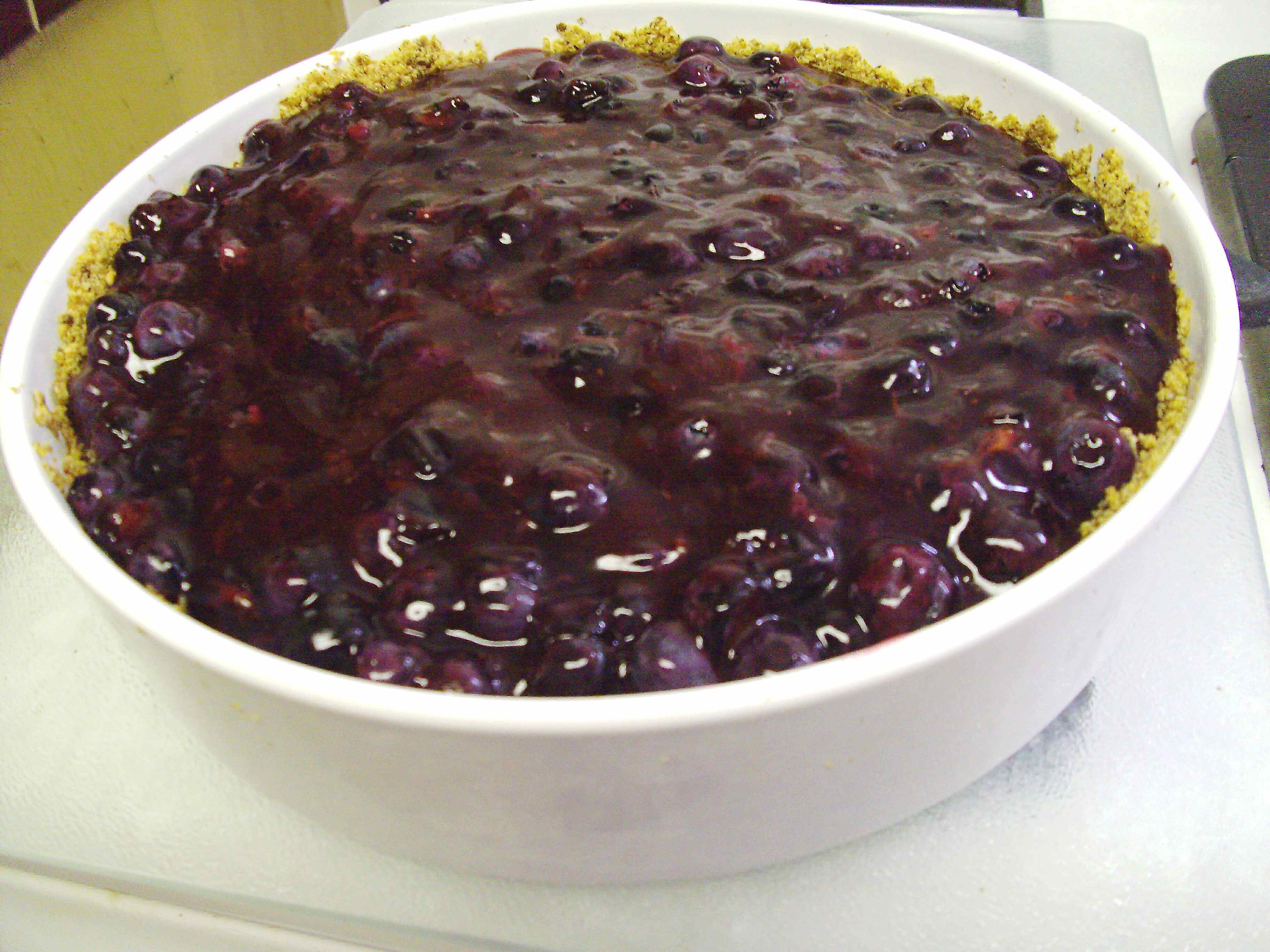
    raw blueberry pie with microwaveable filling and graham cracker crust

    This mostly-raw blueberry pie is a snap to make and very versatile--the filling microwaves in a few minutes, and you don't even have to bake the zippy gingered graham cracker crust--perfect for a hot Fourth of July and all summer long.

  • Recent Posts

  • Contents

  • Archives

  • Now Reading

  • See also my Book Reviews

  • Copyright 2008-2024Slow Food Fast. All writing and images on this blog unless otherwise attributed or set in quotes are the sole property of Slow Food Fast. Please contact DebbieN via the comments form for permissions before reprinting or reproducing any of the material on this blog.

  • ADS AND AFFILIATE LINKS

  • I may post affiliate links to books and movies that I personally review and recommend. Currently I favor Alibris and Vroman's, our terrific and venerable (now past the century mark!) independent bookstore in Pasadena. Or go to your local library--and make sure to support them with actual donations, not just overdue fines (ahem!), because your state probably has cut their budget and hours. Again.

  • In keeping with the disclaimer below, I DO NOT endorse, profit from, or recommend any medications, health treatments, commercial diet plans, supplements or any other such products.

  • DISCLAIMER

  • SlowFoodFast sometimes addresses general public health topics related to nutrition, heart disease, blood pressure, and diabetes. Because this is a blog with a personal point of view, my health and food politics entries often include my opinions on the trends I see, and I try to be as blatant as possible about that. None of these articles should be construed as specific medical advice for an individual case. I do try to keep to findings from well-vetted research sources and large, well-controlled studies, and I try not to sensationalize the science (though if they actually come up with a real cure for Type I diabetes in the next couple of years, I'm gonna be dancing in the streets with a hat that would put Carmen Miranda to shame. Consider yourself warned).

Cooking (and other important) Resolutions

(Of course)–I couldn’t leave 2010 on such a bitter note as the one in my last post, even though I think bitterness is a good, energizing, creative thing. Or as the great Eric Burdon once–or actually, quite any number of times–told an interviewer about his ordeal with getting paid for House of the Rising Sun, “I’m not bi’eh. I’m bi’ehsweet.” I have a thing for Burdon’s early stuff–voice like a hammer, great blues timing, pure nerve with a sense of humor, and clearly, a good appetite.

So I wish you all a Happy New Year, good eating, good cooking, good reading and good company, and thank everyone who’s visited and especially those who have taken the time to subscribe to Slow Food Fast. For myself, I’ve come up with about 11 new resolutions for 2011 (but as usual for me, it may will definitely run longer, since I’m terrible about following directions, even my own, whether cooking or resolving):

1. Learn the Dirty Dozen a little better and plan the weekly budget (see #3) to include buying these vegetables and fruits organic only. (I’ve got celery, potatoes, pears and strawberries down so far, but I know there’s gotta be at least 8 more, right?) Find places to buy them cheaper than Whole Foods.

1a. Learn to garden? Umm. Learn to schnorr backyard fruit from friends? More likely, ain’t it? Ok, ok, make more friends, schnorr backyard fruit and veg. And rosemary, which some people grow as a hedge here in Pasadena. Envy, envy, envy–turn it to a good purpose and offer to take some of the excess off their hands.

1b. Exercise basic civility towards other people’s food choices–your eat local is my eat kosher is his eat organic is her eat affordably. Everyone’s got different priorities, and you don’t know who is eating a particular way because they feel like it and who really needs to so they don’t end up in the hospital. Food shouldn’t be too huge a source of personal arguments. I mean, really, people, save some energy for the real issue–dark or milk chocolate?

2. Get the weekly food budget back down under $100 a week (holidays take it outta me). Make a list and (I cannot believe I’m saying this) check it twice. With a calculator. Include toilet paper and napkins and so on.

3. Use all the vegetables I buy sometime in the same week I buy them. This goes triple for any herbs. No brown broccoli (not usually a big problem in my house, actually) or rubbery carrots (didn’t mean to confess that). And NO cilantro or fresh dill left until it turns slimy while I dither over what to use it in… when in doubt, make soup (see #4), or with herbs, wash and freeze in baggies.

4. Make one big batch of soup each week (see #3 if necessary for motivation) and eat it.

5. Make one pound of beans each week and eat it in fabulously creative ways, or at least edible ones. Eat them as a substitute for, not addition to, fish or meat at least one dinner per week.

6. I’m stumped. Maybe I should make each of the previous resolutions count twice? Naaah. Put on some blues and think again.

The real #6: Eat vegetables at breakfast, Israeli-style.

7. Wash fewer dishes–make my kid do them! (oh, yeah, I’m rollin’ now!)

8. Reduce my dependence on oil–starting by using cocoa powder instead of a full-cocoa-butter chocolate fix…damn those holiday gift boxes. Hate See’s, hate it with a passion (unfortunately, not really)…

9. In the same vein–cut down to half-caf this week, decaf in two or three weeks. Start today. Too much hoppin’ around after midnight (or maybe just too much listening to Eric Burdon on YouTube–wait. Is there such a thing as too much, at least of his early stuff?).

10. Shop my neighborhood greengrocer’s first instead of the big box market. Buy and try a small amount of one new Silk Road ingredient each month (red pepper paste? knoug resin? green almonds? sea buckthorn nectar?)

11. Get a few new implements as long as they have a real multifarious use and a small kitchen footprint: stick blender? I hear it calling my name. Pasta machine? not so much–the box instructions say not to immerse in water. How are you supposed to wash it then? (see #7)

12. Make bread at home again.

13. Revamp a classic every so often, preferably with the intelligent use of a microwave to help speed things up where it will actually help. Like choux paste (at least for heating the liquid ingredients before adding the flour and eggs–that’s actually been done before, and not by me) or pretty-good fake-smoked whitefish salad (which is mine, see the end of this post). Continue reading

Food for thought?

According to MediaFinder.com, 193 new magazines launched in the US during 2010, while 176 folded. Closures were down from 596 defunct magazines in 2009–most famously including Gourmet, whose November 2009 final issue with the huge stuffed glazed turkey is still sitting forlornly on our local library branch’s magazine stand a year later.

But from MediaFinder’s other trends, it seems the closure of this flagship food magazine has only spurred the launch of a (not literal, at least I hope not) thousand to take its place. While more B2B titles folded than launched, food magazines represent the most launches of any single category.

What does it mean? Are they just trying to fill the void, capture some of the market share that Gourmet commanded? Or do they really think there’s room for growth and that more and more people will pick up food magazines at the checkout counter and then subscribe for an ever more splintered and specialized set of food topics?

Are Americans really that obsessed with food, given that fewer cook regularly than even 10 years ago? Or are we using food as a relatively noncontroversial substitute topic for everything else of importance that scares us more? Like the fact that our banks got bailed out but they didn’t reinvest in America by creating more loans or more jobs (where’s the surprise)? That our biggest corporations are undercutting the political power of the citizenry and our Supreme Court is granting them effective status as citizens even though they don’t pay proportional taxes to support the welfare of the nation? Worse, that we’re still stuck wasting billions and billions on a moribund set of wars in Iraq and Afghanistan, and that our troops and national reserves have been turned into indentured servants unable to exit service when their agreed-upon term is over, and it’s been swept under a rug? And that we’re still “processing” and foot-dragging our way through the Guantanamo cases Bush’s administration left behind, with less and less plausibility for holding those prisoners without trial, and the “Patriot Act” is still in force–mostly for what? More abuses of citizen privacy have been committed under it than actual terrorist plots detected.

Maybe it’s time to get off our couches after all as we head into the new year.


Green Eggs and Salm(onella)

I’m sure that’s not an original title. Bad puns abound. We’re in a situation where the FDA’s longstanding voluntary compliance approach to industrial food production safety has gone incredibly, visibly awry. Mostly because it sorely lacks the funds and the boots-on-the-ground manpower to enforce the regs in person. Also mostly because for a full 10 years, the few attempts made by the FDA to put some teeth into the safety regs for the egg industry were quashed from above. Those years, which ended this summer, were mostly Bush years. It’s probably not a coincidence.

380 million eggs recalled and counting in the past week. That’s a lot of eggs–it’s a lot of chickens too. Possibly some that you yourself bought, if you live anywhere west of the Mississippi River. From companies in Iowa that had a long record of not following standard egg-handling safety practices to prevent the spread of salmonella. They preferred to pay the occasional penalty or fine instead.

If you’re not thrilled with the way this was handled or the fact that it could have been prevented pretty easily, what can you do?

Check the FDA voluntary recall list for the commercial names and serial numbers. If your eggs are on the list, return them to the store. If not, cook your eggs fully anyway. Just because yours weren’t on this week’s list doesn’t mean they’re definitely clean.

Then call or email (or if you want to be especially annoying, fax a copy of the Dr. Seuss bookcover–you know which one) your local Congressional representative or senator to express your disgust demand more enforcement authority and more money for the FDA’s Food Safety Inspection Service.

But that’s not enough. In the past 10 years, the FDA has grown used to doing less. It’s just been a month since Congress passed legislation giving it new rights–but will the FDA use them without a strong push? Ask your congressional representatives to mandate an FDA report on how it’s strengthening its food safety oversight and enforcement under the new laws. A yearly report to Congress might be as much as the agency can handle at the moment, but a twice-yearly report would push them to apply their new oversight powers a little sooner and more vigorously.

Aug. 25–And demand hen vaccination against salmonella as a national requirement for operating any kind of poultry business.

Salt reduction vs. hypertension meds–which would you choose?

One of the big complaints processed food companies, physicians in clinical practice, and the great gourmet media all have in common is that cutting back on salt would make food taste flat, and you as an individual wouldn’t necessarily get a big drop in your personal blood pressure from doing it. They argue that only “salt-sensitive” people have to worry about their intake, and anyway, a few points lower, they all say, isn’t really impressive enough to give up your 300-mg serving of sodium in a bowl of Kellogg’s raisin bran or 390 in a slice of La Brea sourdough. And don’t, for g-d’s sake, ask your favorite name brand celebrity chefs to stop salting early and often in each dish!

A big statistical modeling study in the New England Journal of Medicine this week knocks all this wishful thinking on the head, and does it very nicely. The study looked not at individual blood pressure drops but the health and cost benefit of dropping average salt intake by 3 grams a day over the entire U.S. population.

The researchers found that if everyone drops their salt intake back down, the benefits start to look like the ones from quitting smoking, cutting cholesterol and saturated fat, and losing weight to get to a normal BMI.

That’s because even when individual blood pressures drop by only a few points, they’re not going up (as they are today), and when a small average drop happens in a very large group, the big bell curve of disease shifts toward lower risk of consequences and later starts for developing heart disease and high blood pressure. After the first national cholesterol lowering guidelines were issued in the late 1960s, the nation’s heart disease and stroke risk dropped by about a third, and at least until obesity and blood pressure started to cause a back-reaction, the average age for a first heart attack went from 50 to 60 in men. That’s a huge kind of benefit.

The combined drop in heart disease and stroke deaths from cutting salt would be something like 200-400,000 people per year, a lot more than can be saved by simply putting everyone on blood pressure medications–the study made that comparison directly.

Altogether, a solid recommendation for dropping sodium levels in processed and restaurant foods, which make up about 80% of today’s sodium intake. And for not imitating processed food and chain restaurant thinking in your professional or home cooking, as Francis Lam seems to in his Salon.com commentary on the new NYC Department of Health initiative. And if there was any doubt that the Culinary Institute of America has been training Continue reading

Getting the Salt Out: NSRI and Voluntary Compliance, Again

In the wake of its city-wide diabetes reduction and restaurant nutrition labeling initiatives, the New York City Department of Health is leading yet another dietary health campaign, this time one that involves a national coalition of cities, states, and medical organizations. My hat’s off to them, even though I think the demands they intend to make of the food industry are much too light and much too toothless.

The National Salt Reduction Initiative, announced on Monday, will  encourage “voluntary compliance” from the processed food and restaurant industries to lower their sodium content by about 20% over the next 5 years. That’s pretty modest considering that both industries have doubled the standard sodium content of many common foods in the past 20-30 years, and that the national obesity epidemic seems to have coincided pretty nearly with that trend.

The UK’s national salt reduction campaign, which started in 2003 and serves as a model for NSRI, has government backing and its goal is 40% reduction of sodium in processed foods within 5 years, not 20%. They seem to be getting there, too.

NSRI’s coalition includes the Los Angeles Department of Health and a variety of medical organizations like the American Heart Association and the American College of Cardiology. What it doesn’t include this year, to my surprise–and, frankly, dismay–is involvement, funding or guidance from the National Heart, Lung and Blood Institute at NIH.

Ten years ago the NHLBI would have participated one way or another in encouraging this sort of initiative, but that was before the Bush years. NHLBI has been reorganized several times in the last decade. Two of its key diet-related outreach and education programs–the National Cholesterol Education Program and the National High Blood Pressure Education Program, which would have been the leading outreach proponent for NSRI–have receded from view, with perfunctory descriptions on the agency web site, no functioning links to current activities if there are any or to updated program pages, and no clear leadership or place in the agency’s organizational chart. But the need for them certainly hasn’t ended.

Voluntary compliance programs don’t have a great track record in the processed food industry. Look at the recent Smart Choices nutrition labeling program fiasco (see under, Froot Loops) from October.

Starting a national  program like this with voluntary compliance as a key component means the designers don’t think there’s much way to enforce the changes other than persuasion. It also means the government doesn’t have the tools, the money, or–and here is the crux of it–the will to enforce even modest limits on sodium content. Both the AHA and the AMA have been working on the FDA for years to get salt off the “generally harmless Continue reading

Ag School: the New Farming vs. Big Agro

The LA Times reports today that the chairman of the Harris Ranch Beef Co. has successfully pressured Cal Poly-San Luis Obispo, one of California’s few universities with a strong agriculture program, into converting what was to be an upcoming lecture by Michael Pollan into a panel discussion with a meat science expert and a representative from a large organic grower. How? By threatening to withdraw a $150K pledge for an on-campus meat-packing plant. The chairman’s threat letter to Cal Poly’s president also apparently criticized a professor who called Harris Ranch “unsustainable”.

Harris Ranch itself is more than usually well known to Californians. It’s a huge holding area for thousands upon thousands of cattle as they’re fattened for market. It’s an hour or so south of San Jose, a feedlot acres long, set right along the east side of the I-5, California’s main interior north-south highway between LA and San Francisco.  You can smell it coming a couple of miles before you get there, even with the windows and vents shut and the air conditioning on. And the cattle–herds and herds of them, closely packed. Quite a sight. All kinds, with very little room to wander around, and there’s no grazing to wander to. Elsewhere, on side highways through the hills, you see small herds, calves, occasionally lone cows or bulls meandering along the slopes, picking their way between boulders and foraging for grasses. Once they’re trucked to Harris Ranch, that’s over. It’s Cow City.

The manure piles, as you might imagine, are vast, and provide a valuable sideline business because the rest of the highway, all up the San Joaquin valley, is lined with cotton, orchards, and a variety of other crops, and the land itself is flat, dry, and chalky.

But does that make Harris Ranch Beef Co. sustainable? Probably not. Does  Harris Ranch’s size make it evil or exploitative? Also probably not, or not automatically.  It just makes it big. Really big–and maybe too big to run without depleting or damaging the local environment. Unless, of course, you have a good resource for researching better ways to farm.

But threatening to withdraw a big-ticket donation just because Michael Pollan gives a talk at the university might not be the best way to convince the world of Harris Ranch Beef Co.’s intentions toward the public or of its ethical business practices. More importantly, it might not be the best way to present the beef industry to students at the Ag school.

It is probably too much to ask a big business like Harris Ranch Beef Co. to act intelligently rather than in panic when it comes to criticism over its sustainability. But I wonder what would have happened if the chairman had looked at the university’s sustainability research as an opportunity rather than a threat.

Ironically, big agribusinesses like Harris Ranch probably need the kind of fresh thinking and research on sustainable practices that Cal Poly-SLO and other agriculture schools are starting to produce. The next 20 years are going to see a lot of changes in food production because a lot of resources are either already being depleted or getting more expensive faster than anyone could have predicted 10 years ago. Even the next 5 years are up for grabs. These changes are already hard to miss.

All the big agro and food processing businesses that decry Pollan’s food journalism today are going to be changing something about how they do business. They’ll have to, whether or not he (and other credible researchers) gets to talk freely about the problems of the status quo at the Ag schools they support. The question is whether the Ag schools will have thought about the problems he raises and be prepared with some solutions when agribusiness finally realizes it needs a new approach.

Food as Barometer

The past week has seen a number of shock waves go through the food world.

Gourmet magazine’s announced closing yesterday is the latest and the one with the best PR. Gourmet‘s editor, Ruth Reichl, has turned what was once the flagship publication of foodie-ism into something more like Vogue for food–high-gloss, decorator restaurant food (the focus of her previous career) with recipes that ranged from routine to fanciful, from decadent but enticing to over-the-top, impractical, even wasteful and ridiculous, particularly in the last couple of years. A few memorable examples of the latter–lamb cooked with a stewing sauce that included something like a cup of whole coffee beans in an ingredient list some 20 or so items long, a chicken liver paté with a ton of added butter to simulate foie gras when that dish was outlawed in Chicago, and a chocolate and sesame butter tart with so many elaborate steps and so much extra fat in each layer–with nearly obvious clashes of flavor–you could practically choke.

Reichl, whose memoirs I have nonetheless enjoyed a great deal, seems to have been in on the official food world’s migration to recipe titles–and restaurant menu listings–so long they owe more to Proust, or perhaps Balzac, than to James Beard. Then again, Proust called madeleines madeleines, not “little ridged pure butter genoise microcakes with microplaned lime rind, baked in the shape of elongated shallow clamshells”. Goodness knows what today’s foodie superstar chefs would come up with for a title.

And yet Gourmet, with its glossy ads for show kitchens and olive oils and edible vacations in exotic locales, has tried to broaden readers’ ideas and ideals on occasion, and that’s Reichl’s influence too. If the cover one month showed coveted seating at a prestigious Paris restaurant, the tablecloth and glassware sternly hushed in preparation for the pre-theater crowd, or the cliffside view of an Italian trattoria table with a glass bowl in the foreground brimming voluptuously with prawns, greens, oysters and a coral-hued or purplish octopus, other issues sent staff into the mountainous inner reaches of China to report on the poverty and generosity of villagers there.

It’s hard to imagine how Reichl and her staff pictured reconciling the ultra-affluent with the world-conscious, and perhaps their attempts failed to convince either luxe advertisers or Condé Nast this year in particular. But I can see how Gourmet‘s underlying spirit of foodie-ism has led to the explosion of adventurous, hands-on food blogs of a younger working generation as they discover both real food and the desire to learn to cook it.

But Gourmet isn’t the most important food barometer, particularly because it represents a shrinking target audience at the top of the food chain, as it were. Rumbles farther down the scale have been quieter but with any luck perhaps one hopeful sign will be more lasting and more influential.

Last Thursday, the L.A. Times reported that the federal WIC  (Women, Infants and Children) food supplement program will now allow participants to spend their vouchers on fresh produce and whole grains. The allowance isn’t really big– $6/month per eligible child, $8 per pregnant woman or mother of a child under 5, and $10 per nursing mother, or about $14/month on average for a typical family, but it’s a start.

More promising is that the changes would push stores that want to accept WIC vouchers to stock fresh produce and whole grains. That might put at least modest quantities of decent foods within reach in lots of inner city neighborhoods, and it means farmers’ markets can also start qualifying to accept vouchers.

In the Los Angeles area and Orange County, the WIC program is especially important–out of more than 12 million people, something like 316,000 low-income people are enrolled in WIC. More than 8 million people are enrolled nationwide at a cost of slightly under $7 billion per year, with vouchers of about $60 total per family per month. Less than $1000 per family per year even counting the administrative costs of the program. It makes the Food Stamp program seem generous by comparison.

The new shift toward allowing fruits, vegetables, and whole grains under WIC isn’t adding anything to the total Congress allots–the cost for these vouchers has been taken from some of the dairy and juice allowance. But local WIC officers are still grateful and think it’ll make a big difference to their clients, some of whose children have never tasted fresh broccoli.

It’s a far cry from the fuss over the blight on homegrown heirloom tomatoes in the northeastern states this summer.

Can Better Nutrition Curb Violence?

In the news section of the journal Science this week comes word of a new UK diet study that may have significance for the general population. Researchers have set up a large double-blind study at a prison in Scotland to test the possible effect of nutritional supplementation — vitamins, minerals, and essential fatty acids — on lowering the frequency of violence. Listen to Science news correspondent John Bohannon’s podcast.

It’s not the first study of its kind–about 30 years of studies in both prisons and schools suggest that diet can affect antisocial behavior–but it’s the biggest and best-designed one to date. Because the study is double-blind, neither the researchers nor the prisoners participating know which ones are getting vitamin supplements and which are getting placebos.  The researchers are also conducting cognitive and behavioral tests and taking blood samples in the subjects both before and after the study so they can try to trace which of 12 essential vitamins, minerals, and essential fatty acids make some kind of a difference to behavior.

The researchers say that, at least anecdotally, incidents at the prison seem to have dropped from two per day to one per day in the few months since the study began, but it’s too soon to tell why or whether the new nutritional supplementation or the study as a whole has anything to do with it. Solid results from the study itself won’t be in until 2012.

If the study does show a real connection between malnutrition and violence in prisons, it may also have implications for school cafeteria food offerings and the fate of American civility under a massively processed diet (or am I reading in based on last week’s live and unscripted entertainments, all three or so, on national television?). It could also bolster current efforts to attract grocery stores to poor urban neighborhoods where fresh foods are scarce–such as the municipal zoning and tax incentives approved yesterday in New York City.

And that brings me to my reservation about this study–the researchers are studying improved nutrition, but they’re attempting to improve the prisoners’ nutrition with supplements–vitamin pills–and not with a better integrated diet.

The prison study is kind of bare-bones in that the outcome they’re looking to measure  is a drop in violent behavior. Certainly using vitamin supplements and placebo pills is a neat, controllable way to study nutritional supplementation–neater and more precise than testing whole-foods kinds of diets. I’m not saying it’s the wrong way to design this particular study, and if it’s a real improvement in nutrition over the usual prison diet, then it may actually work well enough. But it’s something that’s just begging for exploitation if it does work, because magic bullet-style remedies are so popular in the world of Big Food, government, and even the general public.

In poor neighborhoods, prisons, and other places where malnutrition is common, vitamin and other nutritional supplements may be the fastest, most efficient and inexpensive way to remedy the severe shortages of fresh unprocessed food. That’s what those pills were designed to do, back in the days when there wasn’t much junk food or fast food, and malnutrition walked with starvation, not obesity. And I would never begrudge anyone who needs them. But they shouldn’t become the end of the road.

I reject the idea that you can feed people any kind of processed slop, and as long as you dose it or them with vitamin pills, everything will be great. I know, I know, that’s partly because I like to cook actual food and think processed stuff tastes a lot more like the cardboard and styrofoam packaging it came in than the packaging itself.

I also know I’m out of step. The fact is that people have been eating this way for a generation or more. Vitamin pills have been around in both adult and children’s versions, heavily advertised on TV, since I was a kid. And they’re really cheap–cheaper than fresh food. And even so they’re very high-profit margin items.

In the larger context I would hope that for most people, the big take-home message from the study (if it proves a connection) doesn’t become, “Just add more processed vitamins to processed food–that’s eating twice as healthy!”

Outside of prison walls, I want to see vulnerable neighborhoods get grocery stores that sell fresh produce at affordable prices. Ironically, up to now, the only major grocery chain willing to take on America’s inner city neighborhoods (before the offer of zoning and tax incentives as far as I know) has been the UK’s Tesco, not an American chain.

Tesco has been trying to get its small-scale Fresh&Easy markets up to speed now for two years. In April, news tickers reported shortfalls for the Fresh&Easy stores, some of which were built, stocked, and then left shuttered–they’d expanded too quickly and US pundits at the time thought they hadn’t really tested their markets well enough ahead of opening.

But in fact since that time, most of the open ones have stayed open, and few have actually failed–maybe 15 percent. The new incentives should help attract American supermarkets, but so should the relative success of Tesco’s model in what everyone expects to be a high-fail zone. If they can hang on they might change the game and make inner city life more civilized and more livable. Who knows? Now Whole Foods is mulling it over.

The Meaning of “Tasty”

One very strange description crops up in nearly every expert’s take on processed food and the way it’s overtaken fresh and whole foods in the American diet. Everyone from food industry veteran Hank Cardello (see the Stuffed book review) to NYU nutrition professor Marion Nestle in What to Eat talks about fast food and junk food as “tasty”. David Kessler goes even further: in The End of Overeating, he adds “irresistible,” which he says is the problem he faced most of his life.

Moreover, “tasty” has become the important word in processed food advertising. Driving home from the post office today I even saw it on a billboard for Vitaminwater10, with the tagline:  “10 CALORIES. 4 NEW FLAVORS. TASTIER THAN EVER.”

Tasty. It’s the word of champions, the key, the adword to beat.

And for the life of me, I’m not sure why. Because the words I would have chosen for most of it include stodgy, greasy, cardboardy, screamingly salty, day-glo ™ orange, and “a lot like airplane food, only on the ground.” Am I the only one?

But “tasty”–specifically that word–is clearly the accepted description, even among these food experts, and that points to a host of disturbing assumptions. Either they mean they find processed food tasty or they mean they think everyone else finds it tasty and irresistible–even if there’s something better to eat. That’s kind of defeatist, isn’t it? If everyone “knows” fast food is tastier than fresh produce, what hope is there for mainstream Americans to eat healthier than they do today?

What do they actually mean by “tasty” in the case of processed food? They don’t mean fresh, as in fresh produce. They don’t mean tangy, as in yogurt or a tangerine, or sharp as in horseradish or cheddar. Certainly not aromatic, like dill or fennel or rosemary or sage. Or rich and funky and thought-provoking, like aged camembert or shiitakes or asparagus or toasted sesame oil. And they don’t mean complex and savory and surprising, as in a palak paneer punctuated by smoky black cardamom pods, Armenian string cheese with nigella seed, or a long-cooked carbonnade or daube of beef with some cloves thrown in on a whim.

They can’t possibly, honestly, mean “these fresh hazelnuts are so sweet you’ll plotz” or “one bite and you’d better take this nectarine somewhere private.”

Most of the food experts who’ve posited that processed food is “tasty” in their books and articles are older than I am by about 10 years, old enough to remember eating late-July nectarines that devastatingly fragrant, backyard tomatoes earthily ripe and pungent, foods utterly unlike what’s available even in the produce section of most chain supermarkets today.

So I can’t help thinking that their casual use of the word “tasty” reflects and even perpetuates the hopelessly tattered, stunted and inexperienced taste imagination of the masses of people who don’t cook for themselves anymore and have given over completely to packaged food, with its excesses of salt and its bland, stale cardboardy background flavor. The ugly assumption they’ve bought into is that people who eat mostly processed food can’t change, won’t change, and most importantly, wouldn’t like fresh food if they tasted it.

Can the surge of food blogs with their encouragement to try something new, visit local farmers’ markets, maybe even take a share in a community garden plot, change this trend? I hope so, even though I know the open air markets are not often very available in poor neighborhoods and they tend to be as expensive as supermarkets. But when they are made available in urban areas, all kinds of people from the neighborhood suddenly come flocking to them, Continue reading

You want fries with that?

You have no idea how much I’m looking forward to tomorrow at 8:35 a.m. That will be a good five minutes after the start of the parental summer relief program known best as Back to School. I’m counting down the minutes as we speak.

With the return to school, public debates over what children should eat and how parents should or shouldn’t step in have intensified. Obesity, the selling out of school cafeterias, new restrictions on sodas and junk food in said cafeterias, and the diet of choice at home are the topics of the day–all underlined with a sense of rising panic.

This year more than any other I can remember, reporters, bloggers, doctors, models, political figures, and just about everyone else has jumped on the bandwagon to report the ugly facts that were excused for years.

All the statistics are in–or pretty much so, and they boil down to this: We’re facing a tidal wave of blubber.

With it comes a tidal wave of early heart disease, diabetes, kidney disease, and more. How early? Physicians are seeing a rise in the diseases of middle age–something that, 20 years ago, had been successfully pushed back by an average of 10 years, from age 50 or so to age 60 and up for a first heart attack. We thought we were making progress. But for the past 10 to 15 years,  these diseases have started popping up in school children–Type II diabetes, kidney stones, high blood cholesterol and high blood pressure. No way should a 10-year-old be facing these threats.   No wonder parents and everyone else are panicked–the studies we have aren’t giving us a single, easy-to-deal-with  definitive  guide on how to stop the juggernaut. They mostly tell us that it keeps on rolling.

But the mystery of what to do really isn’t that mysterious. Take for example the responses to Frank Bruni’s recent article in the New York Times on feeding children. Some come from doctors on the front lines, others from nutritionists and fresh-food-in-schools activists, discussing different facets of the problem, but they come to a number of sensible recommendations you could probably have named yourself without much struggle.

The conclusions?

Sodas should be cut out altogether from children’s (and probably everyone’s) daily diet. Not just for calories (250ish for a 20-oz bottle–and why is it 20 0z these days? used to be 12 was the standard) but for sodium (about 100 mg per 12-oz can, whether full-cal or diet, 200+ for the 20-oz).

Fruit juices with a pretty picture on the box are nowhere near qualifying as actual fruit. Not even with added vitamin C.

And exercise time, including outdoor recess–something most schools have cut back in the past decades–makes a big difference that’s generally overlooked in the school lunch debates.

So far, no great surprises. But they do mention one more item, also no great surprise–fast food in the school cafeterias.  Nobody seems to have trouble zeroing in on french fries as the worst offender. Are they right or is this a replay of the cupcake wars? Is the french fry being unjustly accused, as the vendors claim?

Continue reading