
• Enter your email address to subscribe to this blog and receive notifications of new posts by email.

    Join 241 other subscribers
  • Noshing on

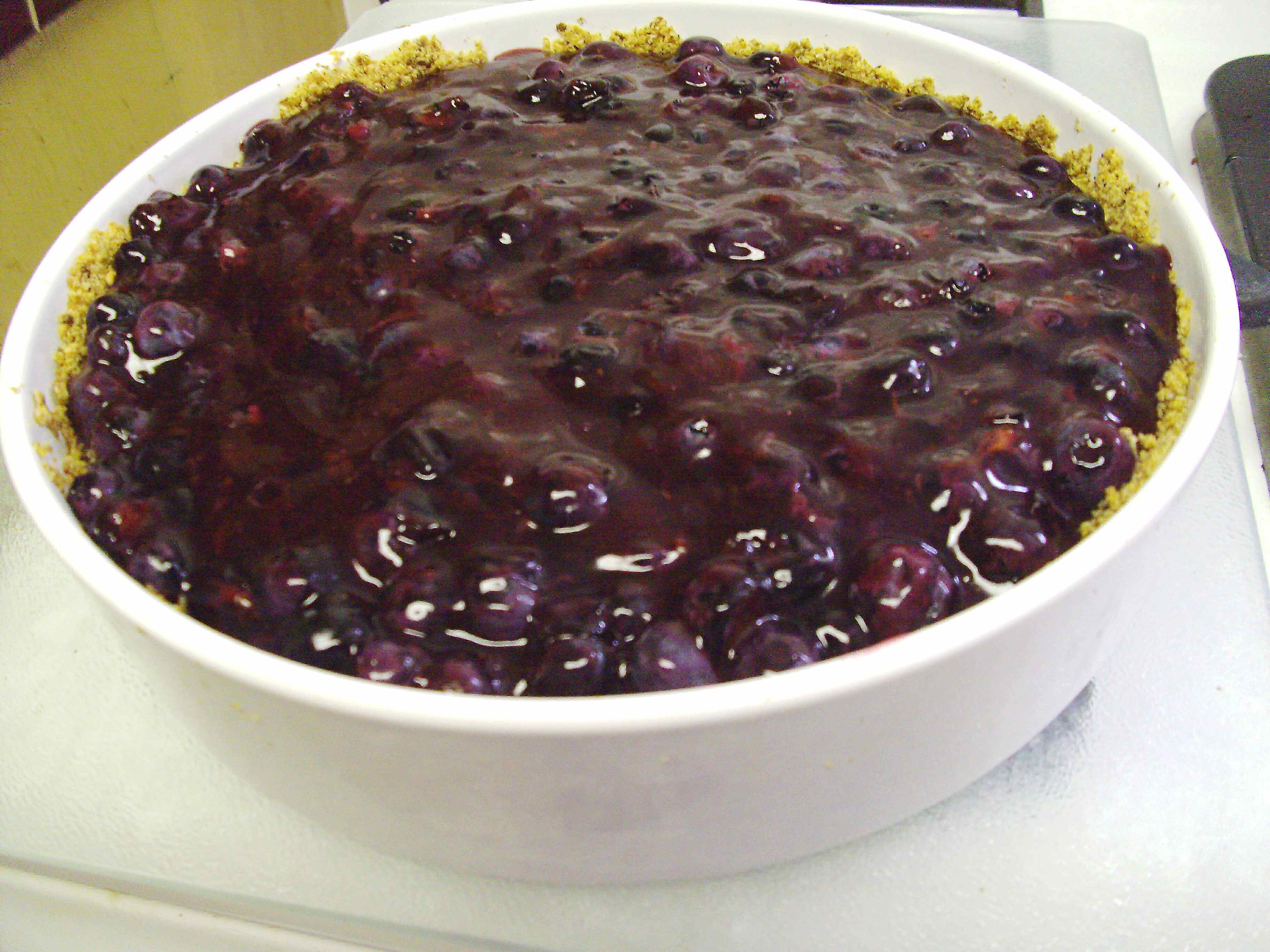
    raw blueberry pie with microwaveable filling and graham cracker crust

    This mostly-raw blueberry pie is a snap to make and very versatile--the filling microwaves in a few minutes, and you don't even have to bake the zippy gingered graham cracker crust--perfect for a hot Fourth of July and all summer long.

  • Recent Posts

  • Contents

  • Archives

  • Now Reading

  • See also my Book Reviews

  • Copyright 2008-2024Slow Food Fast. All writing and images on this blog unless otherwise attributed or set in quotes are the sole property of Slow Food Fast. Please contact DebbieN via the comments form for permissions before reprinting or reproducing any of the material on this blog.

  • ADS AND AFFILIATE LINKS

  • I may post affiliate links to books and movies that I personally review and recommend. Currently I favor Alibris and Vroman's, our terrific and venerable (now past the century mark!) independent bookstore in Pasadena. Or go to your local library--and make sure to support them with actual donations, not just overdue fines (ahem!), because your state probably has cut their budget and hours. Again.

  • In keeping with the disclaimer below, I DO NOT endorse, profit from, or recommend any medications, health treatments, commercial diet plans, supplements or any other such products.

  • DISCLAIMER

  • SlowFoodFast sometimes addresses general public health topics related to nutrition, heart disease, blood pressure, and diabetes. Because this is a blog with a personal point of view, my health and food politics entries often include my opinions on the trends I see, and I try to be as blatant as possible about that. None of these articles should be construed as specific medical advice for an individual case. I do try to keep to findings from well-vetted research sources and large, well-controlled studies, and I try not to sensationalize the science (though if they actually come up with a real cure for Type I diabetes in the next couple of years, I'm gonna be dancing in the streets with a hat that would put Carmen Miranda to shame. Consider yourself warned).

Tehina goes with fish

tilapia pan-fried with tehina, hummus, onions and curry spices

Two large tilapia fillets pan-fried with a hummus, tehina and yogurt coating. The fillets pick up a lattice of browned onions and curry spices when you flip them over.

This is no great surprise if you like Middle Eastern food, I suppose, but tehina or sesame paste is not just for hummus, felafel and eggplant (or roast butternut squash, for fans of Yotam Ottolenghi). It’s also a great match for white-fleshed fishes such as sole, red snapper and tilapia, because it’s rich-tasting and smoky, goes really well with cumin-type spice combinations, and can be dressed up or down.

But despite its richness (it is an oily paste like peanut butter, after all) it has very little saturated fat, mostly mono- and poly-unsaturated fats (the heart-healthy kinds) and it has enough flavor that a little goes a long way. So if you like fish and have a jar of tehina handy and some garlic (a must) and a few basic spices like cumin on your shelf, you can take advantage a couple of different ways without a lot of work.

I’ve already tried Poopa Dweck’s recipe for cold whitefish salad (much like tuna salad, but made with lighter-textured cooked white fish) where tehina, lemon juice, cumin, paprika and garlic stand in for the more usual mayonnaise, sour cream or yogurt in conventional western versions. The basic version was very good, even though I cut the quantities severely for home use and didn’t bother making sliced-cucumber scales to lay out over the whitefish salad (because I’m not that arty just for us). Although maybe if I do a brunch sometime later this year I’ll “scale up” in both senses…

More often, though, I cook tilapia as a standard hot weeknight dinner. It’s relatively inexpensive for fish, lighter and much quicker to cook than chicken, can be served with dairy in kosher homes like mine, and it’s pretty adaptable. But as with skinless, boneless chicken breasts, it can get a little boring if you don’t do something new with it once in a while.

One of the dishes I recall fondly and still miss from the Pita!Pita! Lebanese restaurant when it was still on Fair Oaks in Old Town Pasadena (must be something like 10 years ago now!) was sole fillets baked under tehina sauce. May Bsisu gives a recipe for two similar dishes (samak harra b’tehina and tagen al-samak) in The Arab Table, which I highly recommend. I think I mentioned this book in passing in a post about making your own yogurt in the microwave, but it really deserves more attention.

I think the elegant casseroles of fish baked in tehina sauce are worth doing for a larger crowd and with more time than I usually have. But I’ve always thought the flavors would be good in a quick frying-pan version with tilapia too. The coating in this version is a mixture of  hummus and a thick Greek yogurt/tehina/garlic spread I had originally made for pita and vegetables (and uncooked, it’s pretty good  for that). Because of the hummus, the coating cooks to a breading on individual fillets rather than remaining saucy, but the flavors are really good and it takes maybe 20 minutes, including browning the onions well. I tried this twice last week and it was terrific both times. Continue reading

Breaking the Rules: Fish with Red Wine

tilapia fillets Veracruz-style, with smoky salsa, onions, garlic, alfonso olives, red wine and fresh za'atar or "wild thyme"

One way to cook fish well using red wine

Wine is something I drink mostly for taste, not volume–I can’t really hack a lot of alcohol at once, blame my ancestors–but I do like wine tastings, even though I have to limit myself to about three small sips per glass if I don’t want to wobble out the winery door. Focusing on the flavors in a wine, and comparing several side by side, sharpens your palate and makes you think very specifically about what you’re experiencing. It’s rewarding even for someone with my drinking limits.

I also like to cook with wine, maybe more often than I like to drink much of it. Decent wine has such a complex combination of flavors that when you figure out how to do it well, cooking with wine can make even rapidly cooked dishes come off like serious Slow Food.

We hear a lot about long-cooking stews and coq au vin and so on, but many simpler and less time-consuming dishes benefit from smaller amounts of wine. Adding a couple of spoonfuls of dry white wine to mustard vinaigrette tempers the sourness, the garlic and the mustard sharpness a little and gives the sauce a quiet depth. And if my experiment with giant favas marinated in rosé and rosemary was any indication, we should be thinking about wine a lot more often and a lot more creatively as a cooking ingredient.

So I’ve been on the lookout lately for clear and simple techniques for cooking with wine without wasting it, and for doing it in less than a three-hour stew, because to me that’s slow-food-slow in large crowd-feeding quantities, to be attempted a maximum of once a year. I want better, more sophisticated-tasting food fast, using at most half a cup to a cup of wine, not a whole bottle, and preferably without huge cleanup.

But these days, when so much of the cookbook aisle in your local independent bookstore is taken over by Food Network Channel collateral, cooking with wine is almost a lost art. Most of the popular TV chefs aren’t even doing it anymore. Everyone’s gone sorta-Asian (but without Martin Yan’s shaoxing wine-wielding expertise or sense of humor) or sorta-Middle Eastern or bacon-filled-Tex/Mex or wishful-thinking-Indian-or-Moroccan wannabe (if I hear the words “ras el hanout” mispronounced one more time by any TV chef, anywhere…)

Most of those cuisines don’t include wine as a regular ingredient because of religious restrictions against alcohol, which I fully respect, or, in the Tex/Mex case, because wine doesn’t go with football (the true religion of Texas, although if you see the documentary Somm, you might be surprised at how many American master sommeliers and exam candidates are former football players.)

The new vegan and vegetarian cookbooks don’t consider wine at all, as far as I can tell, even though there are plenty of  vegan-approved wines and organic wines touted throughout Whole Foods (and even a few at Trader Joe’s). And a number of seitan and bean or lentil dishes (and certainly Roman-style lentil soup) would probably do all the better for a tinge of red, white, or rosé, either in the sauce or as a marinade ingredient.

Even the French- and Italian-trained chefs don’t use wine on TV very much, and if they do they don’t really explain it–why they chose that particular type of wine, how much to use and why, how to get the best flavor out of it in the dish, what else you could make using the same technique. Or else they’re kind of wasteful about it, using a whole bottle of wine for a single dish. Most people cooking for themselves would balk at that. Should balk at that.

It bothers me that I don’t actually see a lot of solid advice about cooking with wine, or at least not specific techniques that make sense in a home kitchen with a standard family budget.

Where am I going to get this advice? Not from the churn-a-minute Food Network chefs, clearly. Not from Harold McGee, either. To my great surprise, he devotes a total of about three paragraphs to “cooking with alcohol” in his food science books. The most interesting thing he says, other than to make sure and boil out the alcohol (duh) is that tannins will concentrate unpleasantly if you boil down a tannic red wine, but adding a protein to pick them up will tame them.

But since most of my uses for wine so far are to do with fish, I guess I’m already doing that…

As you might expect from some of my odd microwave-centric ideas, I tend to cook fish with wine in ways that probably seem unorthodox to anyone professional. For one thing, I cook several kinds of fish with red wine (sound of Francophile traditionalists screaming, then fainting in shock). Continue reading