
• Enter your email address to subscribe to this blog and receive notifications of new posts by email.

    Join 241 other subscribers
  • Noshing on

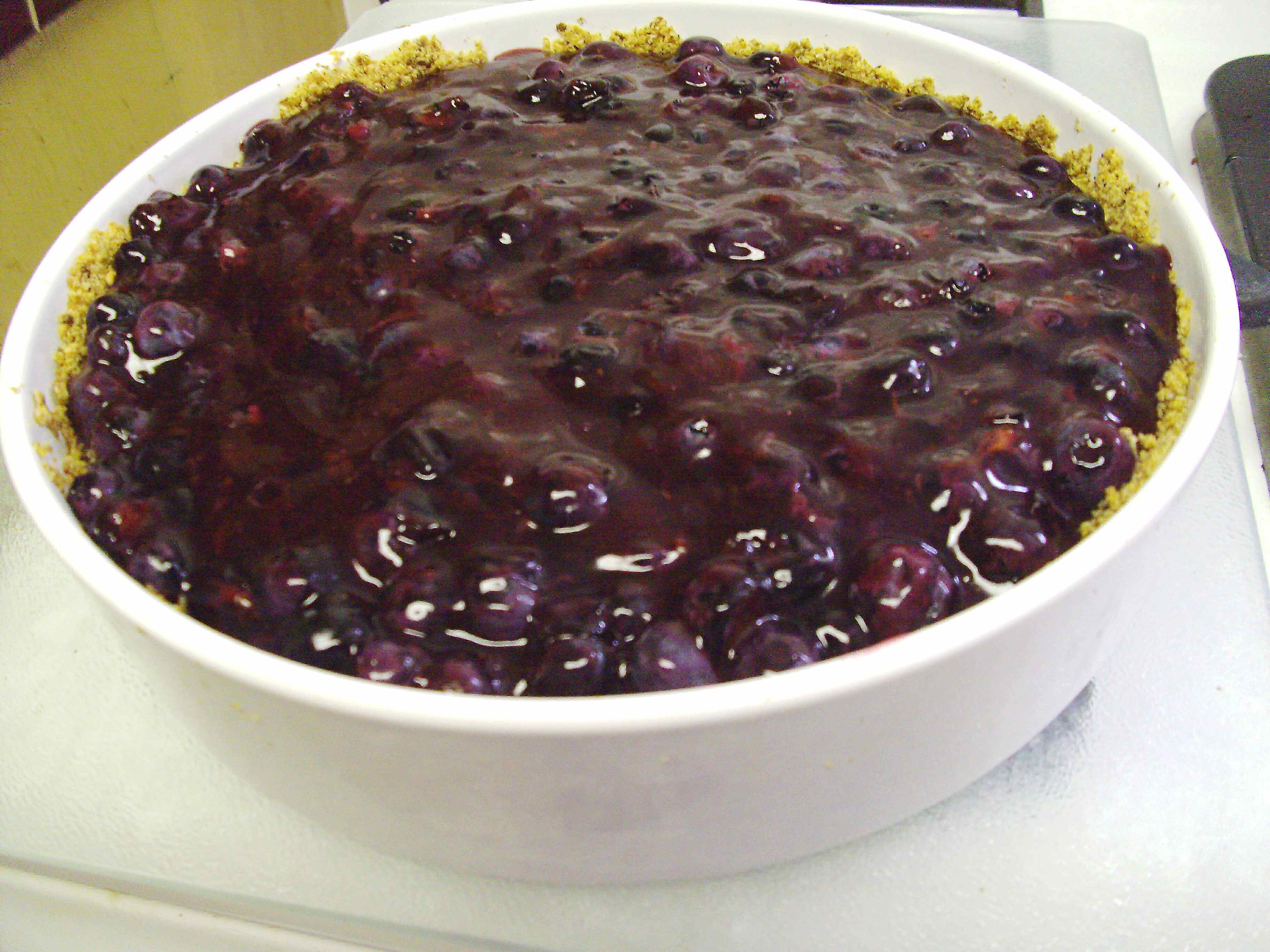
    raw blueberry pie with microwaveable filling and graham cracker crust

    This mostly-raw blueberry pie is a snap to make and very versatile--the filling microwaves in a few minutes, and you don't even have to bake the zippy gingered graham cracker crust--perfect for a hot Fourth of July and all summer long.

  • Recent Posts

  • Contents

  • Archives

  • Now Reading

  • See also my Book Reviews

  • Copyright 2008-2024Slow Food Fast. All writing and images on this blog unless otherwise attributed or set in quotes are the sole property of Slow Food Fast. Please contact DebbieN via the comments form for permissions before reprinting or reproducing any of the material on this blog.

  • ADS AND AFFILIATE LINKS

  • I may post affiliate links to books and movies that I personally review and recommend. Currently I favor Alibris and Vroman's, our terrific and venerable (now past the century mark!) independent bookstore in Pasadena. Or go to your local library--and make sure to support them with actual donations, not just overdue fines (ahem!), because your state probably has cut their budget and hours. Again.

  • In keeping with the disclaimer below, I DO NOT endorse, profit from, or recommend any medications, health treatments, commercial diet plans, supplements or any other such products.

  • DISCLAIMER

  • SlowFoodFast sometimes addresses general public health topics related to nutrition, heart disease, blood pressure, and diabetes. Because this is a blog with a personal point of view, my health and food politics entries often include my opinions on the trends I see, and I try to be as blatant as possible about that. None of these articles should be construed as specific medical advice for an individual case. I do try to keep to findings from well-vetted research sources and large, well-controlled studies, and I try not to sensationalize the science (though if they actually come up with a real cure for Type I diabetes in the next couple of years, I'm gonna be dancing in the streets with a hat that would put Carmen Miranda to shame. Consider yourself warned).

Chain-restaurant excess strikes again

The Center for Science in the Public Interest has found itself swamped for choice in its 2015 Xtreme Eating “awards” list.

What’s the highest calorie chain-restaurant meal in America? (LA Times online, 6/3/15)

The entries are frightening–typically 1-2 days’ worth of calories, 3 days’ worth of saturated fat and sodium, huge oversized amounts of food. One steakhouse platter with so much hamburger meat–not even steak–seven burgers, each piece topped with cheese or at least cheez–it’s like eating several Double Whoppers at once. Ice cream float-type concoctions with no actual pie but pie crust pieces crumbled on them. They start at 32 ounces. Which is clearly the new 20 ounces if you actually read through the horrible meal descriptions, because another chain’s sweet tea is only offered in a 32 oz size as well. That’s a quart. For one person. There’s a 900-calorie margarita in there somewhere at 24 ounces.

I’m sure Michael Jacobson, CSPI’s president, never dreamed there’d be something fully twice as bad on any restaurant menu as fettucine Alfredo, which he termed “a heart attack on a plate” only what, 20 or so years ago?

What the hell is going on here?  The chains may be cutting down slightly on artificial colors and trans-fats and GMO ingredients, but they’re serving meals with an entire day’s worth of calories embedded in the endless parade of glop that is routinely slathered on otherwise reasonable-sounding main ingredients like chicken breast (note: a top offender for hidden sodium in the “healthy” chain offerings, especially on salads). “Special” sauces, breadings, cheese, frying oil, stuffings, dips, and less-announced coatings (the problem with the chicken) that add surprising amounts of sweet, salt and/or fat. Chipotle isn’t on CSPI’s wall of shame over this, but it’s just as true of them as of any of the others–their meals typically run 500-800 calories for a burrito without chips, guacamole or salsa (not to mention sour cream and added cheese), and the same number of milligrams of sodium.

The meal insults listed on CSPI’s site consist of huge portions that could more normally serve four people, not one. Dishes are never less than 3″ high and cover every square millimeter of the plate. Burgers are multiplied–if one or two are okay, six or seven must be even better. Vegetables have disappeared, of course.

Accessories double or triple the calorie, fat and sodium counts of the full “meal”: caesar salad, fries, biscuits, half-gallon drinks, whole quarts of ice-cream-related desserts. Why is this gargantuan approach even appealing?

They didn’t list Baskin-Robbins 31 Flavors, but maybe they should have–a couple of years ago I took my daughter there for a post-diabetes-diagnosis ice cream cone so we could do something normal for summer, albeit with a shot of insulin (it was a new experience) and we got the entire brochure of offerings when we asked for the nutrition info. The single cone, no lightweight for any of the flavors at about 250-300 calories (double or triple what it would be for Dreyer’s/Edy’s half-the-fat, our standby) and 25-30 grams of carb (also double the D/E per serving), turned out to be a best bet. Some of the sundaes were getting to the 20 oz. range, with over 1500 calories and two days’ worth of carb and fat. The soft serves were actually the worst nutritionally, much higher in calories, carb and fat than they look for the volume you get–and especially given how plain the flavors always are.

Overall, the picture of chain food is not lookin’ good. It’s a nightmare of shameful, pointless stuntlike excess, the stuff parodied in Wall-E and Idiocracy among other movies from the past decade. Only as one of the CSPI judges remarked, it’s become the new normal, and much faster than the screenwriters imagined. Maybe we should all look at the before pictures of the participants on The Biggest Loser, as shown in all the accompanying guidebooks (see your local Friends of the Library bookstore) and ask ourselves if we really want to do that. Because that’s a lot of work.

2000-calorie meals in pictures

The New York Times has just posted a very clear picture-it chart of how people get to 2000 calories in a single meal, sometimes even a single dish, without realizing it when they eat out. Not just at Burger King, Denny’s or IHOP, either–some of the upscale chains’ ordinary dishes are just as devastating. If you’re having trouble figuring out your own diet, you might take a look and see What 2,000 Calories Looks Like.

One thing I like about the restaurant-by-restaurant feature is the breakdown of calories for each item in the meal, so you can see how you might do better while eating out.

One obvious takeaway–so to speak–is that fries, shakes, full dinner plates of pasta with cream sauce (or any sauce, really), and slices of cake as big as your head–topped with caramel goo!–are a bad deal for excess calories, lack of nutritional value, and are basically not really necessary.

The other obvious takeaway is that for things like sandwiches, burritos, burgers and similar protein-containing main dishes, you probably don’t want to be eating more than about 500 calories at lunch or maybe 600ish at dinner. Preferably 350-450, to give yourself some room for a salad or fruit. So the hoagies and double cheeseburgers at 900-1100 calories should really be split in two–maybe three. Share one with a friend unless you’re actually a linebacker in training. Or else get rid of the cheese, the excess meat, the bacon, the mayo-based sauces. Go back to a single burger with ketchup and mustard and a couple of pickle slices. And maybe you shouldn’t eat anything else with one of those but a plain apple or orange or some tomatoes or carrot sticks.

The other thing I like is the set of pictures at the bottom–whole days’ worth of decent food from home that are worth 2000 calories per day, and they look a whole lot better than what you get at the restaurants. For the same money or less, and with a microwave, maybe even in less time. A lot more vegetables and fruits, a decent amount of meat and fish and dairy, a lot less in the way of french fries, milkshakes, salad dressing, breadings, special sauces, burger buns and unlimited pasta.

DASH is US News & World Report’s “Best Overall Diet”

US News & World Report asked a panel of nationally recognized nutrition, diet, cardiovascular health and diabetes prevention experts to rank 32 popular diets. DASH (Dietary Approaches to Stop Hypertension) topped out as the overall best, including for long-term weight loss and maintenance.

The article and rankings online: Best Diets 2014 | US News & World Report

Where the experts complained–sort of–was that following it requires eating more real food and fewer boxed processed meals. So it’s technically “harder” to do than Lean Cuisine, Jenny Craig, and so on. They also said that buying produce is more expensive than eating out at fast food restaurants all the time. I’m not sure where they’re shopping or how they’re counting. But from my experience and checking out current fast food prices for a family of three, shopping relatively smart and unchic and sticking with the cheap nutritious bulk vegetables rather than the fashionable or precut, prebagged ones in the foodie magazines that cost three times as much–I’d have to say no, it really isn’t more expensive for what you get. Especially if you count the extra gasoline per trip to the fast food joints on a daily basis.

And I’m not happy that a nationally acclaimed panel of nutritionists–or the editorial staff, I’m not sure–seem more than a little veg-phobic. Buried somewhere in the blather–I mean, expanded description of the DASH Diet and how they ranked it–is the distinct suggestion that it’s too much work and too unrealistic to expect people to prepare and eat–you know–fresh unprocessed vegetables and fruits themselves. They actually put in the phrase that it’s too much “gruntwork” unless you can hire a private chef to do your cooking for you. Makes you wonder how they were raised–probably on a steady diet of Pop-Tarts.

What’s my beef with burgers?

As usual, I’m slightly behind the times on all the really exciting and futuristic food news. But a conversation I had yesterday with an older volunteer at my local library brought back the article and my (as usual) sarcastic thoughts on the way forward in American food culture. The man I talked to grew up in Arcadia, about 10 minutes southeast of Pasadena, back in the 1950s when it was still mostly farmland, and he rode a horse to school–and was often sent home with it early because it started fertilizing the school grounds at a copious rate. Nowadays, they’d have to pay good money for the stuff.

This gentleman, about my mother’s age, was talking about the younger generation, his grandkids, and while he admired how adept they seem to be with sophisticated technology, he shook his head at the fact that his grandson was the only kid last year in his kindergarten class who had any idea where tomatoes come from, because his family was the only one that had a garden or (perhaps) ate vegetables that didn’t miraculously appear, wan, grainy orangeish slices, mixed with pickle slices, on top of a hamburger in foil paper. “It’s all burgers now,” the man shook his head. “That’s all anyone seems to eat anymore–hamburgers and hotdogs. That’s not food.”

It was exactly what I’d been thinking all summer long, looking at the magazine covers and newspaper food sections. Which is why I view the biggest food story of the year a little differently than most biochem-trained enthusiasts….

Two weeks ago, an Austrian nutritionist, an American journalist, and a cell biologist in the Netherlands shared the first public taste  of a hamburger made from beef tissue cultured in laboratory from cattle stem cells.

Ordinarily we’d all be running around in circles throwing our hands up in the air and, depending on our political bent, either chanting “This is the Age of Aquarius” or else screaming “Soylent Green is People!” Or possibly “It’s Alive! It’s Alive!” (quickly followed with a heavy-booted reprise of “Puttin’ on the Ritz”).  I mean, it’s a big deal. Right? It is.

Yeah. Well. So, what is it, really, this synthetic stem cell-derived miracle burger? Synthetic beef, lab-cultured in (yes) flasks of nutrient sera as the starting stem cells differentiate into beef-style shoulder muscle (read, brisket?) cells and some fat cells.  The animal rights people are thrilled and dreaming of scaleup that could eliminate the need for stockyard cruelties, the vegetarians say they’d be first in line to try it, and…apparently no one yet has asked what exactly is in the nutrient serum to grow the little strings of muscle tissue.

Is it a vegetarian-sourced solution of amino acids and so on or does it (as I suspect) derive from the more usual beef and other animal broth, made (inexpensively for laboratory consumption) from boiled-down hooves and skins and various meat scraps? Maybe it ain’t time to celebrate that aspect just yet.

But still, it’s a big step forward. Isn’t it?

I mean, an actual New Age synthetic beef alternative using the latest advances in cell biology. Very exciting.

Except…they’ve used all this very sophisticated technology to develop…a hamburger.

For this test, the 20,000 or so individual strands of muscle tissue they managed to harvest (after a five-year developmental process funded by by Sergey Brin, cofounder of Google, no less, and 3 months or so of growing this particular sample) were patted lovingly into shape and fluffed out to reasonable volume and held together with the help of some salt, some breadcrumbs, and some egg powder. And some beet juice for realistic coloring because the strands were a little more yellow than pink, somehow. And then the sample was cooked and eaten plain by the lab director and his two volunteers.

Who complained that it was really hard to judge the flavor of the synthesized beef without any of their favorite toppings on board. No jalapenos or cheese or pickle relish, no salt and pepper, no aged gouda, no ketchup. They both skipped the lettuce and tomato they were offered, to say nothing of the bun. And they couldn’t judge the meat on its own. Continue reading

The new MyPlate icon–fantastic or plastic?

Everyone in the food press seems to be weighing in on the new replacement for the much-cursed USDA Food Pyramid in all (both?) its glorious confusion and obfuscation of real nutritional goals that might have (and should have) undermined the beef, corn, pork, corn, sugar, corn, and soy industries if they’d ever been presented honestly.

So where does that leave us? With ears of fresh corn that are more than 50 cents apiece in Los Angeles supermarkets, and the new…

USDA MyPlate logo

Already, the USDA’s MyPlate web site is in a certain amount of branding trouble (and of course, that’s what counts most in America): the Texas DMV had already bagged “MyPlates.com” for its vanity license plate division (highly unappetizing), and Livestrong.com already has its own well-established “MyPlate” food calculator and fan base. And those items come up first on Google searches. As in, the whole first page or more. The government site ranks way down the list and had to water down the impact of its original name choice with “choose” just to get a URL. Can it elbow out the competition just by bolding the “MyPlate” part?

What really counts are the food and nutrition opinion maker comments, though. And a lot of those are detracting in a nitpicking way that I think kind of misses the point.

The first thing they all have to say is that the plate looks dumbed down. Forgive me, but wasn’t the Food Pyramid’s unreadable and unusable design a large part of the problem? The MyPlate icon is simpler and more direct, and it names real food groups, not “Big Mac” or, on the haute side of things, any of Ferran Adrià’s foams. No wonder foodies and populists alike are wondering what it has to do with them.

A small sampling of the main arguments:

MyPlate: The Food Pyramid for dummies? (LA Times): Dr. Andrew Weil and others discuss what’s still wrong with the new icon. Weil says “fruits” could still include fruit juice, which is usually a useless sugar bomb in comparison with whole fruit, and he worries that the protein section, which comes with a guideline to eat 8 oz. of fish per week, might encourage unthinking people to increase their mercury intake since swordfish is on the guideline menu, as are some of the generally overfished popular species of fish. Weil’s not wrong about the fruit juice vs. actual fruit, but his hand-wringing about fish is really geared for well-off readers who can afford to eat much of it. All the fishes he names are Continue reading

Veg-phobia II: Summer Edition

My daughter is at camp for two weeks, the longest she’s been away from home, learning to deal with meals and insulin on her own (with the camp nurse’s help). After six months of calculating and eight weeks of giving herself shots, I know she’s ready to do it, and the nurse is ready, and her counselors are ready. And I overprepared and brought more supplies than she’ll need (my daughter has nicknamed this “Mom-anoia”).

I brought everything and a little bit more–including carrots and celery sticks and low-fat cheese sticks, and a loaf of whole wheat bread for activity carbs. I felt like I was turning into my grandmother, who used to bring shopping bags full of real bagels and corn rye on the plane with her from New York whenever she and Grandpa visited us in small-town Virginia.

But really. The nurse laughed at first when I asked a couple of weeks ago if the camp kitchen had vegetables as an option for campers who needed a non-junk snack (I’d looked at the sample menus online and they looked a bit Boy-Ar-Dee to me), but then she admitted the camp doesn’t really serve a lot of vegetables and suggested I bring them for her to store in the infirmary fridge. They don’t have anything whole wheat either. I think she stopped laughing and started sounding rueful about a third of the way through her reply. “We have fruit,” she said half-heartedly, knowing immediately that it wouldn’t really do for a diabetic.

The food at camp is a smack in the face with the wet rag of reality: this is how the rest of the country eats today. And don’t get me wrong, it’s a great camp in every other respect, with a long track record all over the Americas and people of my generation who still feel immensely grateful to have gone as kids. We were very fortunate to get a scholarship for it.

So what’s gone wrong with the food? It’s like school cafeteria food in the ’70s, but without the kale or the stewed tomatoes, the half-hearted iceberg lettuce salads or the lima beans. Take all that away and you have spaghetti, turkey burgers, the occasional chicken or tuna fish, grilled cheese, pizza, some form of potatoes or corn, and fruit. Some protein, a surprising amount of fat, hidden and otherwise, highish salt and a lot of starches on top of starches. It’s also “all you can eat.” But what are you really getting that’s worth seconds? No fiber. No vitamins. Few minerals. Nothing green. Per the Sylvia cartoons, “We feature all-white meals.”

Vegetables? Salad if you’re lucky. Broccoli? Nearly unheard of. Tomatoes? only occasionally. Red cabbage, carrots, celery or any other noshing vegetable of worth? Um, not this summer.

And it is summer. Best time of year for greens. This is when it’s all happening at the farmers’ markets all over the country, and your local newspaper is probably exhorting you to get out there and try it. And did I mention this is California, prime place for vegetabalia all year round?

How did this happen? To a well-educated, professional and middle-class part of the population, no less? The nurse tried to explain to me, “This is what they’re used to at home. The kitchen figures the kids won’t eat them.”

Disheartening in the extreme. But she’s right about the way families tend to eat these days. We saw it firsthand when some dear friends of ours came to visit Continue reading

Getting the Salt Out: NSRI and Voluntary Compliance, Again

In the wake of its city-wide diabetes reduction and restaurant nutrition labeling initiatives, the New York City Department of Health is leading yet another dietary health campaign, this time one that involves a national coalition of cities, states, and medical organizations. My hat’s off to them, even though I think the demands they intend to make of the food industry are much too light and much too toothless.

The National Salt Reduction Initiative, announced on Monday, will  encourage “voluntary compliance” from the processed food and restaurant industries to lower their sodium content by about 20% over the next 5 years. That’s pretty modest considering that both industries have doubled the standard sodium content of many common foods in the past 20-30 years, and that the national obesity epidemic seems to have coincided pretty nearly with that trend.

The UK’s national salt reduction campaign, which started in 2003 and serves as a model for NSRI, has government backing and its goal is 40% reduction of sodium in processed foods within 5 years, not 20%. They seem to be getting there, too.

NSRI’s coalition includes the Los Angeles Department of Health and a variety of medical organizations like the American Heart Association and the American College of Cardiology. What it doesn’t include this year, to my surprise–and, frankly, dismay–is involvement, funding or guidance from the National Heart, Lung and Blood Institute at NIH.

Ten years ago the NHLBI would have participated one way or another in encouraging this sort of initiative, but that was before the Bush years. NHLBI has been reorganized several times in the last decade. Two of its key diet-related outreach and education programs–the National Cholesterol Education Program and the National High Blood Pressure Education Program, which would have been the leading outreach proponent for NSRI–have receded from view, with perfunctory descriptions on the agency web site, no functioning links to current activities if there are any or to updated program pages, and no clear leadership or place in the agency’s organizational chart. But the need for them certainly hasn’t ended.

Voluntary compliance programs don’t have a great track record in the processed food industry. Look at the recent Smart Choices nutrition labeling program fiasco (see under, Froot Loops) from October.

Starting a national  program like this with voluntary compliance as a key component means the designers don’t think there’s much way to enforce the changes other than persuasion. It also means the government doesn’t have the tools, the money, or–and here is the crux of it–the will to enforce even modest limits on sodium content. Both the AHA and the AMA have been working on the FDA for years to get salt off the “generally harmless Continue reading

The Meaning of “Tasty”

One very strange description crops up in nearly every expert’s take on processed food and the way it’s overtaken fresh and whole foods in the American diet. Everyone from food industry veteran Hank Cardello (see the Stuffed book review) to NYU nutrition professor Marion Nestle in What to Eat talks about fast food and junk food as “tasty”. David Kessler goes even further: in The End of Overeating, he adds “irresistible,” which he says is the problem he faced most of his life.

Moreover, “tasty” has become the important word in processed food advertising. Driving home from the post office today I even saw it on a billboard for Vitaminwater10, with the tagline:  “10 CALORIES. 4 NEW FLAVORS. TASTIER THAN EVER.”

Tasty. It’s the word of champions, the key, the adword to beat.

And for the life of me, I’m not sure why. Because the words I would have chosen for most of it include stodgy, greasy, cardboardy, screamingly salty, day-glo ™ orange, and “a lot like airplane food, only on the ground.” Am I the only one?

But “tasty”–specifically that word–is clearly the accepted description, even among these food experts, and that points to a host of disturbing assumptions. Either they mean they find processed food tasty or they mean they think everyone else finds it tasty and irresistible–even if there’s something better to eat. That’s kind of defeatist, isn’t it? If everyone “knows” fast food is tastier than fresh produce, what hope is there for mainstream Americans to eat healthier than they do today?

What do they actually mean by “tasty” in the case of processed food? They don’t mean fresh, as in fresh produce. They don’t mean tangy, as in yogurt or a tangerine, or sharp as in horseradish or cheddar. Certainly not aromatic, like dill or fennel or rosemary or sage. Or rich and funky and thought-provoking, like aged camembert or shiitakes or asparagus or toasted sesame oil. And they don’t mean complex and savory and surprising, as in a palak paneer punctuated by smoky black cardamom pods, Armenian string cheese with nigella seed, or a long-cooked carbonnade or daube of beef with some cloves thrown in on a whim.

They can’t possibly, honestly, mean “these fresh hazelnuts are so sweet you’ll plotz” or “one bite and you’d better take this nectarine somewhere private.”

Most of the food experts who’ve posited that processed food is “tasty” in their books and articles are older than I am by about 10 years, old enough to remember eating late-July nectarines that devastatingly fragrant, backyard tomatoes earthily ripe and pungent, foods utterly unlike what’s available even in the produce section of most chain supermarkets today.

So I can’t help thinking that their casual use of the word “tasty” reflects and even perpetuates the hopelessly tattered, stunted and inexperienced taste imagination of the masses of people who don’t cook for themselves anymore and have given over completely to packaged food, with its excesses of salt and its bland, stale cardboardy background flavor. The ugly assumption they’ve bought into is that people who eat mostly processed food can’t change, won’t change, and most importantly, wouldn’t like fresh food if they tasted it.

Can the surge of food blogs with their encouragement to try something new, visit local farmers’ markets, maybe even take a share in a community garden plot, change this trend? I hope so, even though I know the open air markets are not often very available in poor neighborhoods and they tend to be as expensive as supermarkets. But when they are made available in urban areas, all kinds of people from the neighborhood suddenly come flocking to them, Continue reading

You want fries with that?

You have no idea how much I’m looking forward to tomorrow at 8:35 a.m. That will be a good five minutes after the start of the parental summer relief program known best as Back to School. I’m counting down the minutes as we speak.

With the return to school, public debates over what children should eat and how parents should or shouldn’t step in have intensified. Obesity, the selling out of school cafeterias, new restrictions on sodas and junk food in said cafeterias, and the diet of choice at home are the topics of the day–all underlined with a sense of rising panic.

This year more than any other I can remember, reporters, bloggers, doctors, models, political figures, and just about everyone else has jumped on the bandwagon to report the ugly facts that were excused for years.

All the statistics are in–or pretty much so, and they boil down to this: We’re facing a tidal wave of blubber.

With it comes a tidal wave of early heart disease, diabetes, kidney disease, and more. How early? Physicians are seeing a rise in the diseases of middle age–something that, 20 years ago, had been successfully pushed back by an average of 10 years, from age 50 or so to age 60 and up for a first heart attack. We thought we were making progress. But for the past 10 to 15 years,  these diseases have started popping up in school children–Type II diabetes, kidney stones, high blood cholesterol and high blood pressure. No way should a 10-year-old be facing these threats.   No wonder parents and everyone else are panicked–the studies we have aren’t giving us a single, easy-to-deal-with  definitive  guide on how to stop the juggernaut. They mostly tell us that it keeps on rolling.

But the mystery of what to do really isn’t that mysterious. Take for example the responses to Frank Bruni’s recent article in the New York Times on feeding children. Some come from doctors on the front lines, others from nutritionists and fresh-food-in-schools activists, discussing different facets of the problem, but they come to a number of sensible recommendations you could probably have named yourself without much struggle.

The conclusions?

Sodas should be cut out altogether from children’s (and probably everyone’s) daily diet. Not just for calories (250ish for a 20-oz bottle–and why is it 20 0z these days? used to be 12 was the standard) but for sodium (about 100 mg per 12-oz can, whether full-cal or diet, 200+ for the 20-oz).

Fruit juices with a pretty picture on the box are nowhere near qualifying as actual fruit. Not even with added vitamin C.

And exercise time, including outdoor recess–something most schools have cut back in the past decades–makes a big difference that’s generally overlooked in the school lunch debates.

So far, no great surprises. But they do mention one more item, also no great surprise–fast food in the school cafeterias.  Nobody seems to have trouble zeroing in on french fries as the worst offender. Are they right or is this a replay of the cupcake wars? Is the french fry being unjustly accused, as the vendors claim?

Continue reading