
• Enter your email address to subscribe to this blog and receive notifications of new posts by email.

    Join 241 other subscribers
  • Noshing on

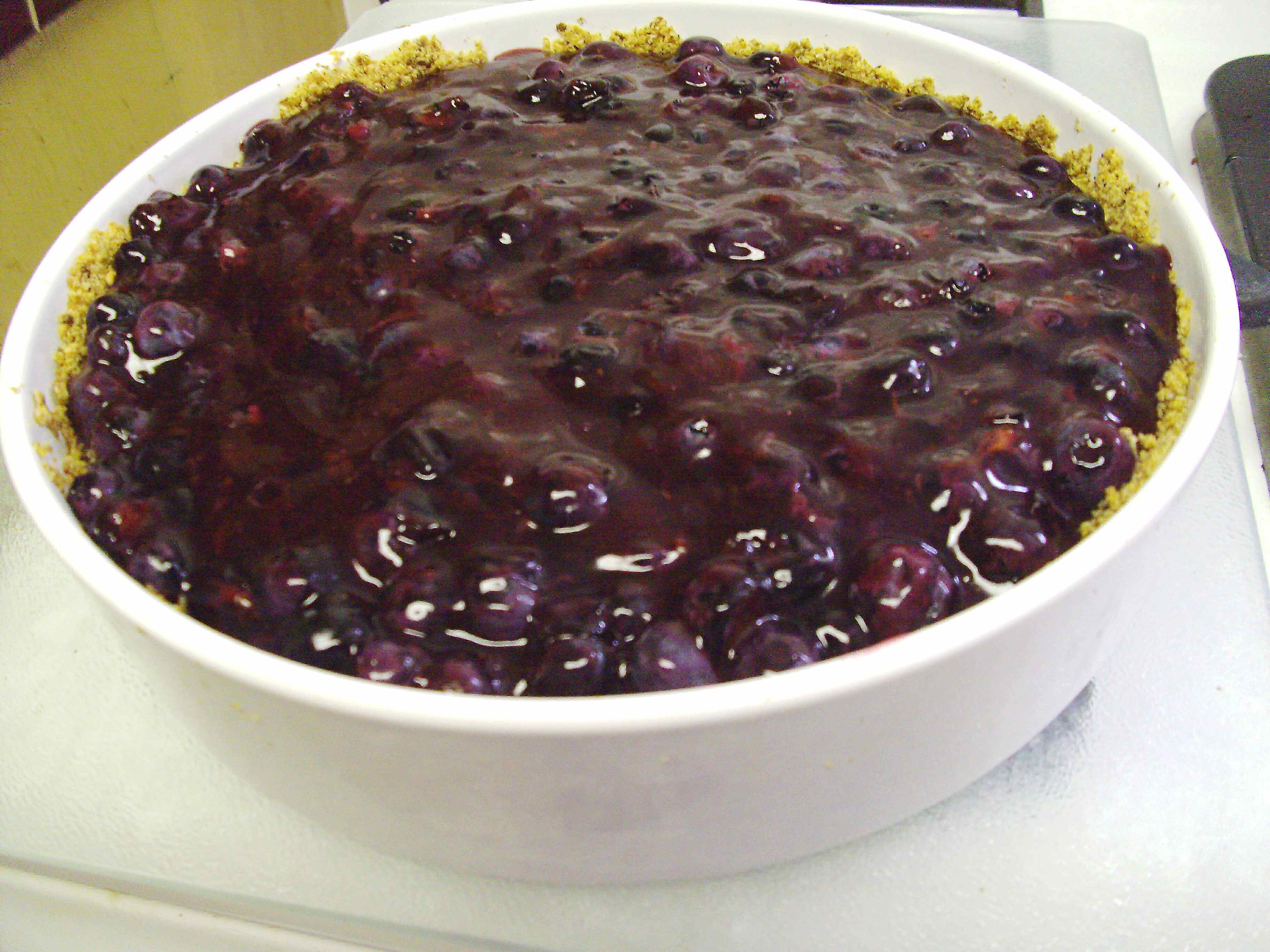
    raw blueberry pie with microwaveable filling and graham cracker crust

    This mostly-raw blueberry pie is a snap to make and very versatile--the filling microwaves in a few minutes, and you don't even have to bake the zippy gingered graham cracker crust--perfect for a hot Fourth of July and all summer long.

  • Recent Posts

  • Contents

  • Archives

  • Now Reading

  • See also my Book Reviews

  • Copyright 2008-2024Slow Food Fast. All writing and images on this blog unless otherwise attributed or set in quotes are the sole property of Slow Food Fast. Please contact DebbieN via the comments form for permissions before reprinting or reproducing any of the material on this blog.

  • ADS AND AFFILIATE LINKS

  • I may post affiliate links to books and movies that I personally review and recommend. Currently I favor Alibris and Vroman's, our terrific and venerable (now past the century mark!) independent bookstore in Pasadena. Or go to your local library--and make sure to support them with actual donations, not just overdue fines (ahem!), because your state probably has cut their budget and hours. Again.

  • In keeping with the disclaimer below, I DO NOT endorse, profit from, or recommend any medications, health treatments, commercial diet plans, supplements or any other such products.

  • DISCLAIMER

  • SlowFoodFast sometimes addresses general public health topics related to nutrition, heart disease, blood pressure, and diabetes. Because this is a blog with a personal point of view, my health and food politics entries often include my opinions on the trends I see, and I try to be as blatant as possible about that. None of these articles should be construed as specific medical advice for an individual case. I do try to keep to findings from well-vetted research sources and large, well-controlled studies, and I try not to sensationalize the science (though if they actually come up with a real cure for Type I diabetes in the next couple of years, I'm gonna be dancing in the streets with a hat that would put Carmen Miranda to shame. Consider yourself warned).

Purim options

standard cookie-dough hamantaschen

Regular hamantaschen with prune lekvar
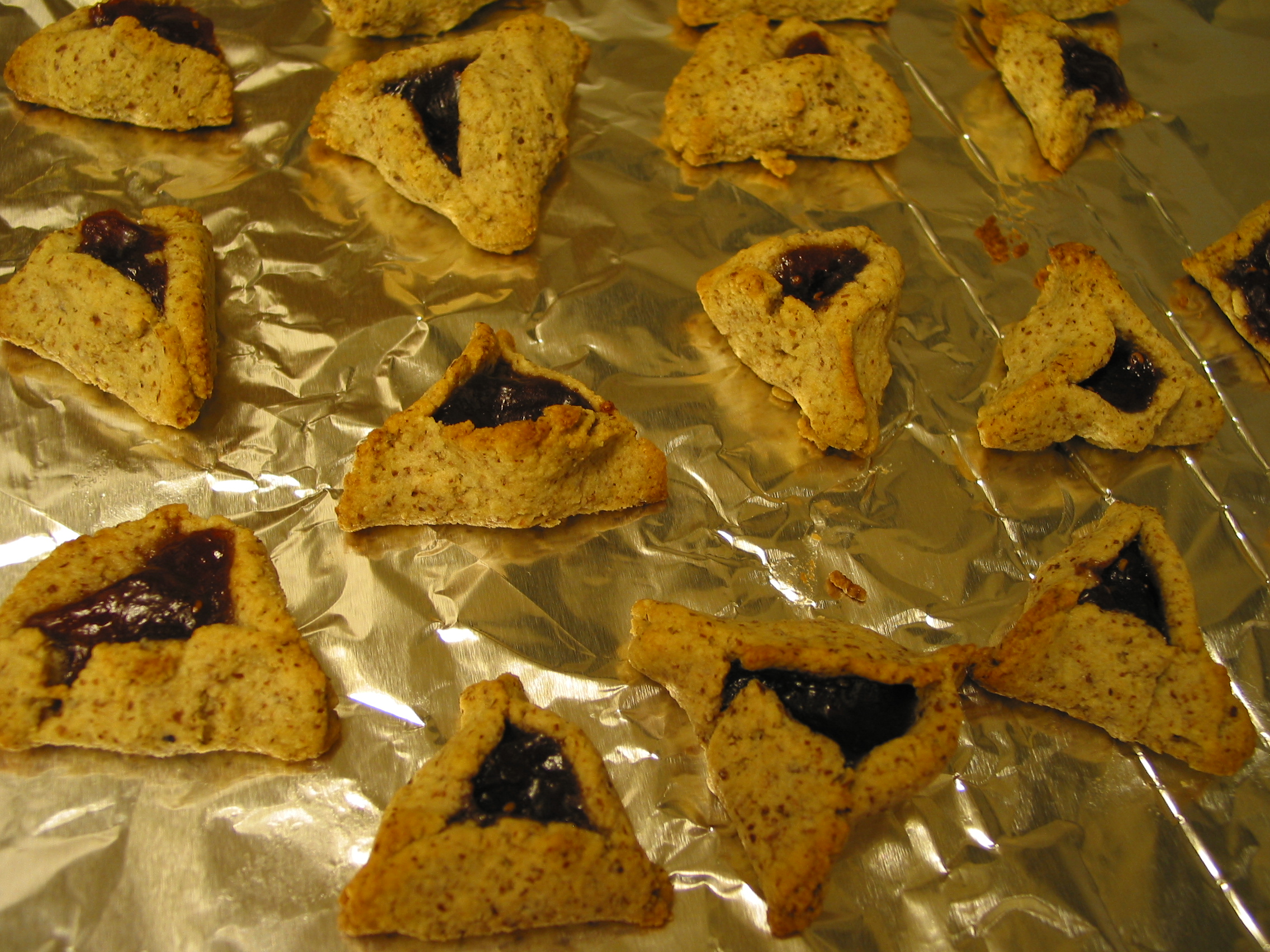
Almond meal-based low-carb hamantaschen

Almond meal-based low-carb hamantaschen

Purim is here tonight, a little late thanks to the “leap month” this year (drawbacks to a lunar holiday calendar) but none the worse for it–it’s over 80 degrees here, which means it’s almost time for Purim. Los Angeles is the only place I’ve ever been, including Israel, where people were slathering sunblock on their kids and gasping for water bottles at a Purim carnival well ahead of lining up for hamantaschen and games. It was 94 degrees that year. Fifteen years of this and I’m still not used to it.

Purim, of course, means manic baking, heat wave or no, because the adults’ reading of the Megillah (the Book of Esther) had…ummmm….last-minute planning and no one thought about hamantaschen as part of the refreshments until midweek. I think I’m the only one left in our  shul who still doesn’t care about having a fabulously original themed cocktail party for the adults afterward. Any kind of cocktail party is more drinking than I want to do, and I’m damned if I wanna dress up in full office battle array again after so many years sidestepping all the suits in my closet, just so I can fit in with the Mad Men theme. I’ve never even seen the show.

But I actually make hamantaschen at home once in a blue moon instead of schlepping over to the Valley to buy them from a kosher bakery.

So I did the stupid, crazy thing and volunteered. How many people? I asked–maybe 60. So I have SIX batches of dough sitting in my freezer relaxing. It took about half an hour, about 5 minutes apiece,  to do all the batches in the food processor, one after another and weighing out the ingredients so they’d be consistent. And yet…after all the excitement from two weeks ago, I’m just not all that geared up to roll it all out and bake it just this minute. Maybe when things cool down slightly–half an hour? Maybe?

Friday happens to have been Pi Day as well–and to my daughter, who was supposed to be my second-in-command for this delicate operation, and to her algebra teacher this morning, that meant Pie Day. They had about four different kinds of pie for all the math classes, and none of them had to calculate the areas or volumes of the wedges they sampled. My daughter, of course, was so elated that she ate two entire meals’ worth of carbohydrate in about fifteen minutes, and still came out with a pretty good blood glucose number an hour later–good on the calculated guesses, there–but at the cost of running through insulin that could have lasted her three or four more hours if she’d eaten an ordinary lunch. Teenagers! Mothers of teenagers!

Still, not to lose the spirit of things too much. It occurs to me that hamantaschen qualify as very small pies, only triangular. So we eventually started the process of inscribing a triangle inside a circle–240 times, if we can get through all the batches before showtime. Me, I’d settle for 3 or 4 batches and call it a week.

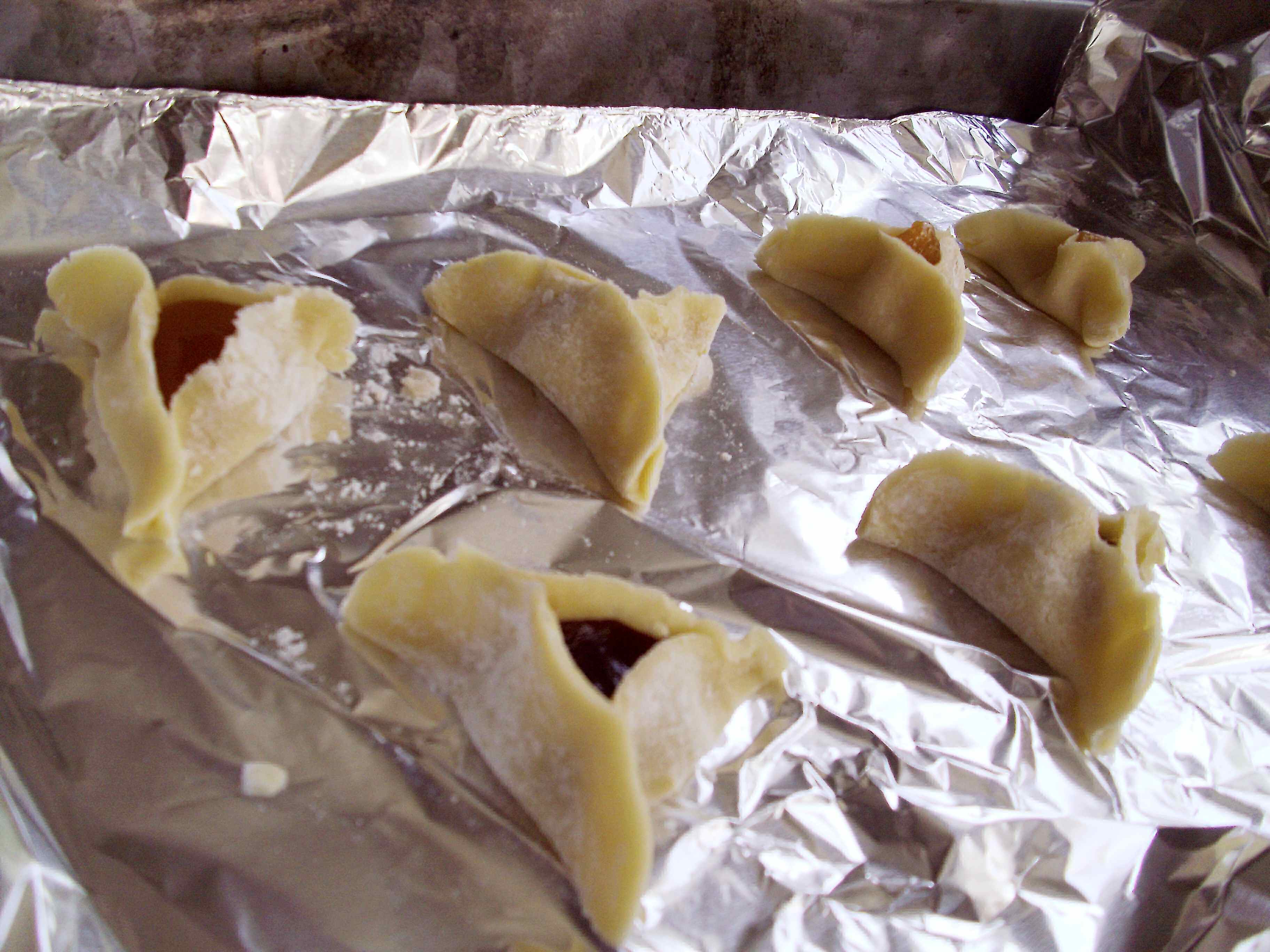
The raspberry jam filling–all that hard work for the first batch of rolling and filling–leaked all over the place. Too bad there isn’t still a vogue for vampire-everything; the first batch would have qualified! Too thin. You need a thick serious filling to stay in place during the baking.

So–time to nuke the prunes for lekvar and the figs for the heck of it (plus toast a small sampling of the poppyseeds in my freezer to see if they’re still okay to use for a filling, and to make sure I don’t pour in the bag of nigella seeds instead by mistake!). I rarely see these anymore, but I still believe in doing traditional fillings alongside the modern, newfangled apricot-jam-and-chocolate-chip ones. It’s true that if we keep skipping the prune filling, we might not turn into our own grandparents, and if we miss out on the poppy seed filling (known in Yiddish as mohn) we might pass the all-critical drug tests (à la Seinfeld) with no interferences, but then again we’d miss the ta’am, and what’s the joy of hamantaschen without a taste of the past?

Hamantaschen Recipes

Low-Carb Almond Meal-Based Hamantaschen

My version of Joan Nathan’s Hamantaschen, with four fillings: poppyseed, prune, apricot/chocolate, labaneh/cheesecake

Microwaveable dried fig and dried apricot fillings (originally for fillo pastries, but still good for this, and a lot less drippy than jam)

However–if you are feeling “Mad Men”, you might think of reconfiguring the hamantaschen motif for cocktail party fare instead. I was thinking about this Thursday but figured it would be too weird. Then I saw an article about it yesterday in one of the big three newspaper cooking sections–dammit! scooped again! In any case, if you’re feeling a little avantgarde, you could do a batch of savory hamantaschen if you feel like it. Use rugelach, bureka or olive oil tart dough instead of the standard sweet dough. Roll it out fairly thin, and fill with feta or bleu cheese mixed with labne or very thick sour cream, plus a little onion and some thyme, maybe a pecan or two. Or something with very cooked-down mushrooms and onions (so they don’t get soggy). Or pesto and cheese. Or spinach with cheese and nutmeg and lemon rind. Or tapenade. Etc.

Chickpeas of all sorts and descriptions

Since Esther supposedly refused meat and ate only chickpeas, chickpea recipes are also more or less relevant to Purim. Mine are not particularly traditional–look up Iranian Jewish recipes elsewhere on the web.

Chickpea crêpes  These can be savory or sweet, and they don’t require eggs or milk

The “other” moussaka–eggplant and chickpea stew

Hummus from scratch (aka how to nuke dried chickpeas)

Fast Hummus made with chickpea flour (microwaved)

There’s also the possible “nahit”–fry chickpeas in olive oil, drain and sprinkle with salt and pepper.

Or a cold chickpea salad with mint, scallion, garlic, olive oil and lemon juice or vinegar.

Or channa masala dal, something like the red lentil dal but with chickpeas (and not mashed)

The “other” moussaka–eggplant and chickpea stew

It’s been a fuller month than I expected, with a lot of travel and the unlooked-for complications of Thanksgiving and Chanukah falling on the same week. Supposedly we don’t get to do that again for another 77,000 years or so.

Most of the food features about the “Thanksgivukkah” mashup this year have been bemused, amused, and imaginative only in the sense of suggesting (always) latkes and sufganiyot (doughnuts) for the Thanksgiving menu. Not in replacement of any other starches or desserts, you understand. They mean in addition to. Forgive me if I can’t dig it, but I don’t think either holiday really benefits from the “double your starches, double your fun” idea.

We had a great long weekend up with my in-laws and family in San Jose; and what was on the table? A pretty decent meal by any standards, traditional or California modern.

Thanksgiving 2013-Northern California style

At my in-laws’, 5 minutes before showtime. A lot more green on this table than I remember as a kid. It could only be an improvement, and believe it or not, most of the broccoli got snapped up with the fabulous mustard garlic dressing (not yet on the table)

Turkey (kosher, and cooked by accident upside down because my in-laws stuck it in three entire shopping bags and couldn’t tell which end was up–but it came out better than most of their other attempts, so they’re doing it again next year on purpose–I highly recommend it). A little stuffing and mashed potatoes and gravy for those who insisted, which wasn’t us; cranberry orange sauce, a stellar Georgia pecan pie among the desserts. But the rest of it was California-conscious; farro salad with chestnuts and mushrooms, a roasted red-squash-and-onion platter with whole cloves of roasted garlic strewn around, a big green spinach and fennel salad with endive and pomegranate seeds, and my contribution, an impressively large platter of very green, just-steamed broccoli with a spicy mustard garlic dressing that, and I may say so, rocked the Casbah and provided the necessary Jewish influence.

Not just because of the olive oil-at-Chanukah factor–which would have been enough for me and was plenty symbolic–but for the balance of a big blob of sharp spicy brown mustard with a big fat clove of garlic. Plus red wine vinegar, olive oil, and a little white wine. . . whisk and taste, whisk and taste. When it’s just sharp enough, still thick but can be drizzled, tastes good and has just the right degree of excessive garlic without going to Gilroy (which, btw, is only about half an hour outside of San Jose and holds a surprisingly popular garlic festival every summer), you know it’s done.

The broccoli itself was a little undercooked for me but others insisted it had to be still crunchy to avoid killing the little green vitamins–a new trend in Califoodian philosophy, at least northern Califoodia. It was in the San Jose Mercury News that week or something. But the garlic mustard dressing made up for all that nutritional selfrighteousness and helped the turkey no end as well. Cranberries are well and good and I love them, but they’re no substitute. I maintain [talmudically, in question form]: if there’s no garlic, is it really food?

But with a week of too much food and travel and lectures on nutritional trendiness aside, I find myself thinking, do I really need to be thinking so much about food? Southern California makes it easy to eat well with very little effort–even with very little money, as long as you shop at the local Armenian or Latino markets for vegetables and stick to the unbranded or store-brand and whole foods only.

However…although it was about 85 degrees out when we came home to Pasadena, the temps quickly dropped and have been in the 50s all week, with and without drizzle (yes, you can pity us sarcastically if you want to. They don’t sell coats of any worth better than a sweatshirt here, so to us it’s cold). I realized it was time for a stew. With, obviously, garlic.

Most people think of moussaka as the Greek eggplant-lamb casserole with béchamel topping. But a much simpler vegetarian eggplant stew with chickpeas, onion and tomatoes is also called moussaka (also found on the web as “musakk’ah”). It stems from Lebanon and is popular throughout the Middle East. Continue reading

Microwave Tricks: Roast Eggplant Salad

Roast Eggplant, Onion and Pepper Salad

Ready for the microwave


This is what I made this afternoon for a potluck (before I realized the hostess meant for us to bring our own suppers to her pool party). Yes it’s easy–barring the onion crying session…I’ve included the recipe way back about 2 years ago in the first eggplant post I ever did, but it’s worth a recap:

Microwaved Roast Eggplant Salad

Slice one or two large firm eggplants into rounds, sit them in a pyrex dish, stuff slivers of bell pepper and onion between them, pour a little olive oil over the whole thing, and nuke 10-12 minutes on high. Then if that doesn’t look roasted (it won’t, but sometimes I just transfer everything to a plastic bag once it’s cool, mash a clove of garlic and toss it in, and stick it in the fridge overnight to marinate), preheat the oven to 350 F. Chop a fat clove or two of garlic and mix with another few tablespoons of oil, rub the mixture onto the eggplant, and put the pan in the hot oven for half an hour. Let it cool and serve it on sandwiches, with hummus or cheese, as an antipasto, etc.

More things to fry in olive oil

Thanksgiving has barely ended and Hanukkah is already upon us–which means more food! This time with olive oil to commemorate the rededication of the Temple in Jerusalem after a war in which the Assyrian Greeks trashed and piggified it in hopes that we’d be so abashed we’d immediately convert and become a convenient tribute-paying way station for their marches around the edge of the Mediterranean to Carthage.

I know the official story credits Judah Maccabee, but really, it happened like this:

The Assyrian Greeks thought we’d be too frightened to complain when they marched through Israel, taking what they wanted and getting their muddy footprints everywhere. They hadn’t yet heard of chutzpah. They also hadn’t reckoned with a little-known secret force:  Jewish grandmothers. These bubbies could out-argue G-d. Weekly. And the lectures? …

“Carthage, schmarthage!” the grandma said. “Wipe your feet already, what are you, a Hannibal?”

Then she hefted a mighty frying pan at the intruders and that’s all she wrote.

So the real hero of this geschichte is clearly not Judah Maccabee, aka “The Hammer” — but Judith ha-Machvat, or “Judy with the Frying Pan Handy” — a woman who could really scare off the goniffs! And so in her memory, we fry up all kinds of goodies for Hanukkah and none of the calories stick to our hips at all. Really. It’s a miracle.

So…enough bubbe meises. Back to the present day.

Last night I made latkes without benefit of a food processor–after a slight kitchen drawer reorganization last spring, I forgot where I put the shredder disk. But for a smallish batch for the three of us–only two spuds and half an onion–it’s not so difficult to grate them by hand, as long as you use a fork to hold the stubs (of the potatoes, not your fingers, I hope) to avoid getting extra “proteins” in there…

The Obligatory Latkes (very basic, but tasty in a good way)–about 12 or so 2-3-inch latkes, enough for 3 people for supper, so scale up as needed

Carbs: 2 big potatoes weighed 480 g total on the food scale before peeling. An estimated 1/6th of the weight of nonsweet potatoes is carb–so about 80 g carb total for this recipe. A 4-latke serving would be about 20-25 g carb.

  • 2 big russet potatoes, scrubbed, peeled, shredded on large holes of grater/food processor blade
  • 1/2 medium onion, grated on fine holes into the same bowl OR chopped finely in the food processor BEFORE changing to the shredder blade and doing the potatoes on top of the onion
  • 2 eggs
  • spoonful of olive oil
  • 1-2 t. flour
  • pinch of salt
  • pinch of baking soda (which I completely forgot last night, so it’s optional)
  • olive or vegetable oil for frying

Grate the potatoes and onions by hand or food processor into a big bowl. The grated onions will help prevent discoloration in the potatoes. Take handfuls of the mixture and squeeze them nearly dry, and pour off most or all of the liquid that collected in the bottom of the bowl. Return the potatoes to the bowl, add the eggs, spoonful of olive oil, flour, salt and baking soda and stir until evenly mixed.

Heat several tablespoons of oil in a nonstick pan until shimmering and dollop soupspoonfuls of the latke mixture in, flattening them as they start to fry. Swirl the pan a little to get the oil touching each latke and maybe keep them from sticking to the pan. Wait until you see brown edges at the bottom of the latkes, then flip and fry the other side, swirling the oil a little or adding another spoonful in droplets where the pan seems to need it. You want these really brown and crisp on the outside, not pale yellow.

Drain on napkins or paper towels on a plate, and at the end, if no one’s snatched them as they cooked, you might want to reheat them all together in the pan or microwave them on the plate for half a minute on HIGH. Serve with applesauce and sour cream or labaneh or plain yogurt.

–  –  –  –  –

That’s the only recipe I’m giving here with set quantities–latkes are more like pancakes, everything below is like a stir-fry.

Non-Latke Options

Even with mechanical assistance in the form of a food processor, I’m a one-latke-night-per-year-is-enough kind of person. I want something other than potatoes if I’m going to be frying stuff in more than a spoonful or so of olive oil. Therefore I look for other maybe less starchy and more flavorful (one can always hope) things to fry:

Pre-nuked (microwaved) eggplant slices, fried in a couple of spoonfuls of olive oil after heating a little garlic and curry powder, maybe a dab of z’khug, for a few seconds first. Onion and red bell pepper are good in this mix too.

Marinated artichoke hearts, perhaps drained slightly and shaken in a plastic bag with a spoonful or so of flour or almond meal or chickpea flour and a little grated cheese and/or some oregano or thyme–no extra salt needed

Pre-nuked cauliflower, breaded as for the artichoke hearts

or–pre-nuked cauliflower, stirfried in a spoonful or so of olive oil with a dab of z’khug if you like things hot, with red bell peppers, onions, and another Continue reading

Technique: How to Squeeze an Eggplant

Long ago, I threatened to post the unlovely but effective method of peeling cooked eggplants that I learned the hard way, in a kibbutz kitchen. We used to make baba ghanouj routinely for a thousand members–something like 50 to 75 baked eggplants went into it each time, mixed in a stand mixer the size of a wheelbarrow with a base that was cemented into the floor. You can’t be fooling around with spoons and forks when you’re working on that scale. Instead, we cooled the eggplants in a huge colander and then started squeezing them out as though they were pastry bags or tubes of toothpaste.

It takes a bit of practice…to say the least. But each eggplant only takes about half a minute to empty into the colander, and once you get the method down, the skin stays together and is just about completely clean inside. Very effective. Not very dignified, though, unless you do it enough to get good at it.

However, since I have no vanity whatsoever, I finally took some pictures (not easy to shoot while actually squeezing the eggplants, so don’t expect photogenic–eggplant is only pretty raw…) and have steeled myself to walk you through it. Wear goggles and a hairnet the first time if you’re afraid of flying goop, or make your little sister do it first. And don’t forget to rinse your hands (and arms) well right afterward, because the juice is still a bit caustic and will make them itch after awhile. Anyway, the following is for if your little sister refuses to take the bait.  Click directly on any of the pictures if you want a closer view.

How to Squeeze an Eggplant

First, microwave your eggplant(s) (best if you’re only doing up to 3; any more and it’s worth roasting them for a whole hour in the oven at 400F). Scrub them well, cut off the cap (watch out for thorns!), rub or sprinkle a little salt on the damp skins, and set them to microwave 10 minutes on HIGH, until they’re soft and collapsed.

whole eggplant before microwaving for baba ghanouj

Whole eggplant prepped to microwave for baba ghanouj

Eggplant after microwaving

After microwaving 10 minutes, the eggplant has collapsed

Next, let the eggplant cool enough to handle–this is probably the most important part. Trying to squeeze out a scalding eggplant leads to explosions of scalding eggplant goop, plus the peel usually toughens a little as it cools, which makes ruptures a little less likely.

–Am I making it sound good yet? No?–hang in there.

Poking the eggplant

The all-important poke

Set the cooling eggplant cut-end-down in a colander over a bowl to drain off some of the juices. If you have the asbestos-like fingers for it, you can poke a hole in the cut end while it’s still hot and earn yourself untold macho points as long as you only wince after you’ve slunk off to the bathroom. Never let ’em see you cry. If you’re not that brash, you’ll have to poke a hole in the cut end once it cools. That’s the easy part.

Once the eggplant’s cooled enough to wrap your hands around it, it’s showtime. Keep the cut end facing down.

Grab the eggplant like a pastry bag, cut end down

Grab the eggplant like a pastry bag, cut end down

Cup your hands around the fat round end at the top and very gradually push in and downward, closing your hands over the top, Continue reading

How to Nuke an Eggplant

Eggplant after microwaving

After microwaving 10 minutes, the eggplant has collapsed

Eggplant is one of those warm-climate foods. It’s big, cheap, and plentiful, it goes with everything from garlicky oregano-and-fennel laden tomato sauce to nutmeg-tinged custard or cumin/cinnamon-scented Greek and North African dishes, to curries and darkly soy-glazed Chinese and Thai dishes. You can deep-fry it, panfry it, grill it and serve it room-temperature under a glossy layer of olive oil, marinate it, wrap it around other fillings, stuff it, roast it, make spreads with it… There’s even a Greek eggplant “spoon sweet” and at least one eggplant “jam” from Morocco. To say nothing of pink-tinged sour eggplant pickles, one of my favorite additions at the Israeli felafel stands.

The only thing you don’t really want to do with eggplant is eat it raw.

I NEVER bother with the usual cookbook directions for eggplant. All of them slavishly recopy instructions from their predecessors–salt it, drain it, fry it in tons of expensive olive oil, which it will soak up mercilessly, bake it for an hour only to find it still has spongy raw spots… They never bother to update, or even retest, the traditional assumptions that make eggplant such a pain.

You can forget most of that if you just nuke your eggplants first. Most of the stuff people do to their eggplants comes of just trying to get it cooked through. The salt’s to get rid of some of the water; the fat’s to cook it hotter and let the juices steam inside the slices.

Microwaving takes care of both, needs neither fat nor salt, and it’s very quick–10 minutes on HIGH on a pyrex pie plate for 1 or 2 decent-sized eggplants and you’ve got either collapsed whole eggplant(s) ready for baba ghanouj or a fan of slices or a mountain of bite-sized cubes. All of them cooked through and ready to do something more interesting with.

I used to think I was alone in the wilderness on this one, because NO ethnic cookbook–or any other cookbook with eggplant recipes–ever considers the existence of microwaving, much less condones it for cooking actual food. Continue reading

Impatience is its own reward

I learned to cook at the ripe old age of eleven. My mother had gone back to school, I had a younger sister and brother, and I had a problem. Mom said to make spaghetti–so far, so good–but when I got to the kitchen, I discovered there was no tomato sauce in the house. Luckily, there was a little can of tomato paste, and a cabinet full of dried spices that included the essential garlic powder and oregano, plus a bunch of herbs (they came as a set) that my mother owned but never actually touched. And, as I’ve mentioned, there were two guinea pigs available. Good enough.

I learned to cook again when I hit college and started helping a friend with Friday night dinners at the Hillel House. That’s also where I learned how to keep kosher.

I learned a third time when I moved in upstairs as a resident after my sophomore year–I was working a strenuous lab job on a tight budget–no more than $25 a week for anything–and I walked everywhere. My housemates introduced me to two basic spaghetti sauces–one red, one white–and the rest of the time I ate omelettes because eggs were a dollar a carton. I shudder now to think I got through a carton a week, and didn’t ditch any of the yolks. At the time I reasoned that I wasn’t eating meat–couldn’t get kosher meat easily, and it was beyond my budget. I did lose 20 pounds without realizing it. And I started baking my own bread–challah for Friday nights; pita the rest of the week. No real recipes; I went by feel.

The next time I learned to cook was after college, on a year’s study in Israel. In the kitchens of Kibbutz Ma’agan Michael, everything had to be done in a rush because we were feeding 1000 people a day. But they knew their way around an eggplant or seventy (we used the bread machines to slice them all). Up in Ma’alot, I worked in a clinic with everyone from the surrounding towns–Jewish, Muslim, Christian, and Druse–in one of the few truly friendly workplaces in the country, and I spent afternoons tutoring and being fed in people’s homes or else learning to haggle for vegetables in the Thursday open air market. There I learned how to brew tea with mint (in summer) or sheba (petit absinthe) in winter, how to cook with real garlic, how to use a “wonderpot” on top of a gas ring, and how to eat z’khug (chile-garlic-cilantro paste) with just about everything.

When I returned to the U.S., I had to learn to cook all over again. I started keeping a “blank book” (remember those?) for recipes, and I learned, over the course of twenty years, how to cook real food, better food, from scratch, but faster than the cookbooks called for. When my grandmother had a major stroke, I was still in my mid-20s and realized I probably couldn’t get away with an all-eggs-and-cheese diet. Eventually I went to work up at NIH, and discovered that cutting back on saturated fat, cholesterol, salt, and calories really does help cut the national risk of heart attacks and strokes.

After talking with a nutrition expert there, I learned that our tastebuds can adjust to almost any level of sodium and consider it “normal” within just two weeks. Dangerous if you develop a tolerance for high salt and consider it normal even at really exaggerated levels–as many people do. The good news is that we can retrain our palates downward just as quickly, so I tried a completely salt-free, unprocessed food diet for two weeks–with surprising rewards. Without salt to swamp the taste receptors, the natural flavors of vegetables and fruits seem particularly brilliant and clean.

And then I had a kid. And I had to learn to cook all over again–this time, using a microwave oven, because I didn’t want to leave my kid unsupervised while I stood trapped at the stove. I wanted something that would shut itself off when done. But by now I had gotten used to real ingredients and fresh foods, and I had to come up with microwave methods for them. So I did. This blog is the result.