
• Enter your email address to subscribe to this blog and receive notifications of new posts by email.

    Join 241 other subscribers
  • Noshing on

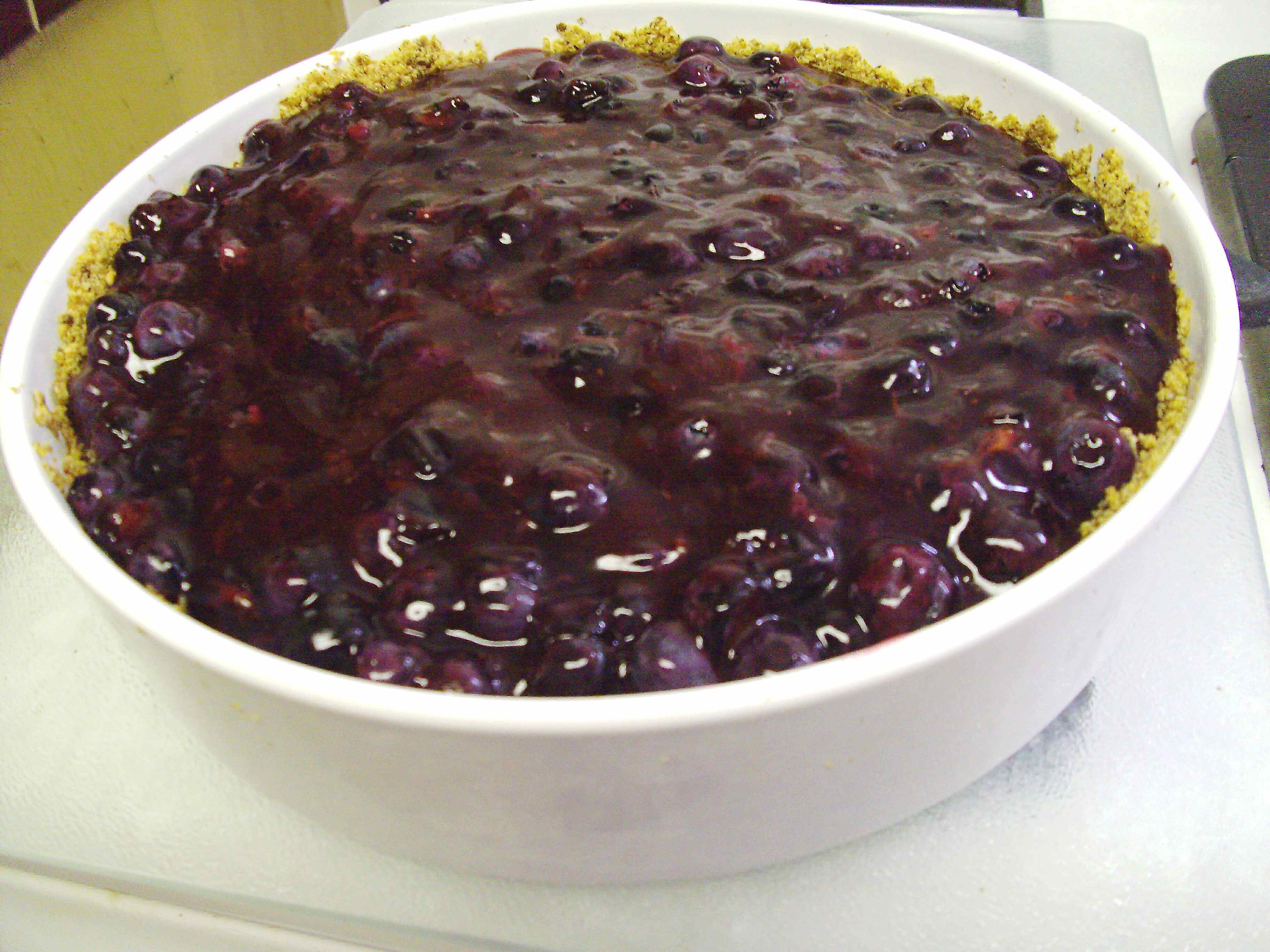
    raw blueberry pie with microwaveable filling and graham cracker crust

    This mostly-raw blueberry pie is a snap to make and very versatile--the filling microwaves in a few minutes, and you don't even have to bake the zippy gingered graham cracker crust--perfect for a hot Fourth of July and all summer long.

  • Recent Posts

  • Contents

  • Archives

  • Now Reading

  • See also my Book Reviews

  • Copyright 2008-2024Slow Food Fast. All writing and images on this blog unless otherwise attributed or set in quotes are the sole property of Slow Food Fast. Please contact DebbieN via the comments form for permissions before reprinting or reproducing any of the material on this blog.

  • ADS AND AFFILIATE LINKS

  • I may post affiliate links to books and movies that I personally review and recommend. Currently I favor Alibris and Vroman's, our terrific and venerable (now past the century mark!) independent bookstore in Pasadena. Or go to your local library--and make sure to support them with actual donations, not just overdue fines (ahem!), because your state probably has cut their budget and hours. Again.

  • In keeping with the disclaimer below, I DO NOT endorse, profit from, or recommend any medications, health treatments, commercial diet plans, supplements or any other such products.

  • DISCLAIMER

  • SlowFoodFast sometimes addresses general public health topics related to nutrition, heart disease, blood pressure, and diabetes. Because this is a blog with a personal point of view, my health and food politics entries often include my opinions on the trends I see, and I try to be as blatant as possible about that. None of these articles should be construed as specific medical advice for an individual case. I do try to keep to findings from well-vetted research sources and large, well-controlled studies, and I try not to sensationalize the science (though if they actually come up with a real cure for Type I diabetes in the next couple of years, I'm gonna be dancing in the streets with a hat that would put Carmen Miranda to shame. Consider yourself warned).

DASH is US News & World Report’s “Best Overall Diet”

US News & World Report asked a panel of nationally recognized nutrition, diet, cardiovascular health and diabetes prevention experts to rank 32 popular diets. DASH (Dietary Approaches to Stop Hypertension) topped out as the overall best, including for long-term weight loss and maintenance.

The article and rankings online: Best Diets 2014 | US News & World Report

Where the experts complained–sort of–was that following it requires eating more real food and fewer boxed processed meals. So it’s technically “harder” to do than Lean Cuisine, Jenny Craig, and so on. They also said that buying produce is more expensive than eating out at fast food restaurants all the time. I’m not sure where they’re shopping or how they’re counting. But from my experience and checking out current fast food prices for a family of three, shopping relatively smart and unchic and sticking with the cheap nutritious bulk vegetables rather than the fashionable or precut, prebagged ones in the foodie magazines that cost three times as much–I’d have to say no, it really isn’t more expensive for what you get. Especially if you count the extra gasoline per trip to the fast food joints on a daily basis.

And I’m not happy that a nationally acclaimed panel of nutritionists–or the editorial staff, I’m not sure–seem more than a little veg-phobic. Buried somewhere in the blather–I mean, expanded description of the DASH Diet and how they ranked it–is the distinct suggestion that it’s too much work and too unrealistic to expect people to prepare and eat–you know–fresh unprocessed vegetables and fruits themselves. They actually put in the phrase that it’s too much “gruntwork” unless you can hire a private chef to do your cooking for you. Makes you wonder how they were raised–probably on a steady diet of Pop-Tarts.

A Closer look at Einstein Bros. Bagels

A few weeks ago I bought a challah from Einstein Bros. Bagels, which had taken over from the Noah’s in my town sometime last fall. Noah’s had supplied my daughter’s school on Fridays and their challah was pretty good for store-bought–this tasted the same. I hadn’t been in the store since the takeover so I didn’t really know what to expect, but other than the name change outside, it looked the same and had more or less the same offerings as ever.

I’m not sure what prompted me to go online and look for their nutrition information sheet, but I wanted an idea of what was in the challah, so I looked. I couldn’t find it on the Einstein Bros. site, but there was a pointer to the Noah’s web site–still up after the takeover, apparently, and that had the challah listed. What I found for the challah itself wasn’t incredibly shocking or anything, ingredients more or less kosher, not too bad on any of the nutritional factors. In fact, it’s probably one of the best bets at our former Noah’s, although you have to order a couple days ahead for Friday morning pickup.

On the other hand, the bagels and other menu items really stood out for sodium–most were over 500 mg per bagel, and some of the “gourmet” varieties of bagels were in the 700-900 range, even without lox. A few sandwiches soared as high as 3500 mg sodium (more than a day’s worth even for today’s average intake, and about two days’ worth according to the CDC and AHA guidelines)–just for a sandwich. Anything with chicken on it was astronomical as well–above 1600. Which sounded like Denny’s or Chili’s to me.

I started to wonder just who designed the food and how “designed” it was. Were we talking mostly bagel joint, or were we talking fast food with a highly engineered, set-in-stone formulation? If I wanted to contact them to ask about lowering the sodium in their dishes, was there a real person I could talk to?

The Einstein’s web site doesn’t have a lot on it other than Flash bells and whistles–the site is extremely corporate as far as information goes. The only thing I found that seemed worth noting here is the management team, and even that–maybe it was the Flash, or maybe there was some programming in the web site, but after three management biographies it failed to load any others. I had to shut my browser, clear my cache, and try again.

What I found surprised me (I’m kind of naïve, I know it). Even with all the evidence to the contrary–my sister once did a comprehensive marketing survey of west coast bagelries and concluded none of them had the real, crackle-crusted thing, it was all just ring-shaped white bread–I still harbor a faint hope that if it’s a bagel shop, it must be Jewish. Especially since the founder of Noah’s is, and Einstein Bros.–well, what would you conclude? But you would be wrong. Continue reading

New Page Up: Carb Counts and Ratios

I’ve just uploaded a new page (see the top menu tabs) with a couple of tables of the most useful rules of thumb I’ve found for carb counting. Since my daughter became a Type I (insulin-dependent) diabetic back in February, we’ve both had to become pretty familiar with the amounts of carbohydrate in a given amount of different foods.

Although the American Dietetic Association’s “Choose Your Foods” carb count guide for diabetics is pretty helpful (and pretty inexpensive, about $3 per copy if you order from them direct on www.eatright.org), it’s written from the perspective of the eater, not the cook.

So (as the cook in the family) I’ve worked out the approximate ratios of carb grams per total weight of some common foods I serve routinely. Rice and beans are easy enough to remember. But when I want to know how much of a given potato my daughter can eat as one carb serving (15 g), it helps to be able to know that a regular potato is about 1/6th carbohydrate. Then all I have to do is weigh it on the food scale in grams and divide by 6.

The 2/3 carb ratio for moderately sweet baked goods like pie, scones, cookies and muffins is also pretty helpful if we’re home and can weigh a portion for my daughter. Sweets are one of the hardest things to guess right consistently by eye, even when you’ve made them yourself. If there’s a nutrition label, by all means go with it; if not, weighing a portion and figuring 2/3 has been a pretty good approximation so far.

Ice cream is its own thing–again, hard to figure. Dreyer’s 1/2-the-Fat is our standard home brand, and hovers around 15-18 grams per half-cup (small scoop). But Baskin Robbins 31 Flavors are all over the map–when you go in for a cone, you really need to ask them to look it up for whatever size scoop, then figure the cone separately. A junior scoop in a cake cone for pistachio almond turned out to be something like 25 grams, plus 4 grams for the cone. Almost double what a plain scoop would have been at home.

Over-the-top caramel-syrup-fudge-frosting types of confections are a little out of my league, closer to candy bars than cakes, and would probably be more like 80-90% carb by weight (or mass, if you’re being excessively metric about the properties of grams).  I haven’t listed them because they’re so laden it’s hard to think of serving them very often, but I do have a basic rule-of-thumb candy list at the bottom of the carb counts page (saving the best for last) and a link to a much better, more comprehensive one so kids don’t have to feel completely shut out at Halloween or Valentine’s Day. Or birthdays.

I also have a short (for me) bit of hard-won advice on how to strategize with a (school-aged) diabetic kid before they have to face candy-prone situations where their friends are free to eat right away and they aren’t. Good for braces-wearers too…actually maybe we should all take the hint.

In any case, I hope you find this new page helpful whether you’ve got diabetics in the family or you just want to know what you’re eating.

Let me know what you think!