
• Enter your email address to subscribe to this blog and receive notifications of new posts by email.

    Join 241 other subscribers
  • Noshing on

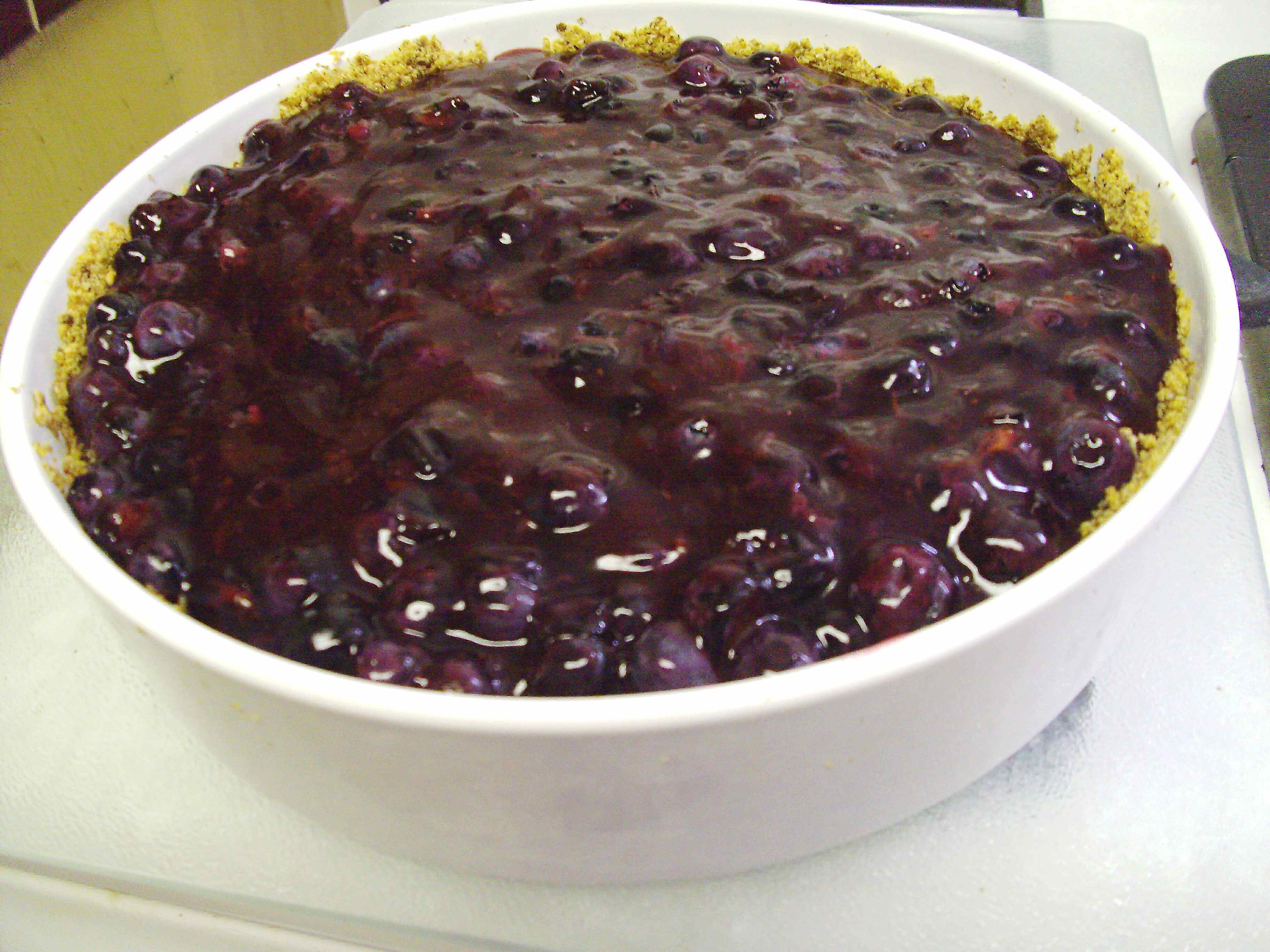
    raw blueberry pie with microwaveable filling and graham cracker crust

    This mostly-raw blueberry pie is a snap to make and very versatile--the filling microwaves in a few minutes, and you don't even have to bake the zippy gingered graham cracker crust--perfect for a hot Fourth of July and all summer long.

  • Recent Posts

  • Contents

  • Archives

  • Now Reading

  • See also my Book Reviews

  • Copyright 2008-2024Slow Food Fast. All writing and images on this blog unless otherwise attributed or set in quotes are the sole property of Slow Food Fast. Please contact DebbieN via the comments form for permissions before reprinting or reproducing any of the material on this blog.

  • ADS AND AFFILIATE LINKS

  • I may post affiliate links to books and movies that I personally review and recommend. Currently I favor Alibris and Vroman's, our terrific and venerable (now past the century mark!) independent bookstore in Pasadena. Or go to your local library--and make sure to support them with actual donations, not just overdue fines (ahem!), because your state probably has cut their budget and hours. Again.

  • In keeping with the disclaimer below, I DO NOT endorse, profit from, or recommend any medications, health treatments, commercial diet plans, supplements or any other such products.

  • DISCLAIMER

  • SlowFoodFast sometimes addresses general public health topics related to nutrition, heart disease, blood pressure, and diabetes. Because this is a blog with a personal point of view, my health and food politics entries often include my opinions on the trends I see, and I try to be as blatant as possible about that. None of these articles should be construed as specific medical advice for an individual case. I do try to keep to findings from well-vetted research sources and large, well-controlled studies, and I try not to sensationalize the science (though if they actually come up with a real cure for Type I diabetes in the next couple of years, I'm gonna be dancing in the streets with a hat that would put Carmen Miranda to shame. Consider yourself warned).

There’s something wrong when a veggie burger is worse for you than cheesecake

Recently spotted in the Los Angeles Times Food Section “Dear SOS”

Veggie burgers from North Peak

Dear SOS: My family and I just got back from a trip to Traverse City, Mich., where I had the absolute best veggie burger I’ve ever had. Is there any way you could coax North Peak Brewery Co. to give up its recipe for its Black Bean and Portobello Mushroom Burger?

Dear —–: This burger even had some non-vegetarians going for it. The restaurant also sometimes serves it with provolone cheese and sliced avocado along with a dab of basil pesto aioli on toasted ciabatta rolls.

Total time: 1½ hours, plus cooling time Servings: 8

The recipe starts out with a 9-ingredient pico de gallo homework item–let’s just agree it’s basically salsa, and it gets mixed into the beans and other stuff at midpoint in the cooking process–which is long. One and a half hours? Yikes. But then check out the rest of the ingredients for the veggie burger itself:
Veggie burgers and assembly
  • 4 cups cooked black beans, from about 2½ (15-ounce) cans (drained)
  • 1/4 cup honey
  • 1/4 cup molasses
  • 2 teaspoons salt, more to taste
  • 1 tablespoon cumin, more to taste
  • 1/4 cup plus 1 tablespoon olive oil, plus more for sautéing the burgers
  • 1/2 cup finely diced onion
  • 9 ounces portobello mushrooms, cut into ¼-inch pieces (about 4 cups)
  • 1 cup pico de gallo
  • 3 cups panko bread crumbs
  • Semolina flour for dusting
  • Sliced cheese, if desired
  • Sliced toasted ciabatta rolls

And then — guess the nutrition stats?

Each burger (without cheese or garnishes): 604 calories; 21 grams protein; 103 grams carbohydrates; 11 grams fiber; 13 grams fat; 1 gram saturated fat; 0 cholesterol; 16 grams sugar; 1,227 mg sodium.

Whoa. 604 calories for a single veggie burger. 103 grams of carbohydrate–more than a meal’s worth just by itself. Honey, molasses and panko turn what might have been a reasonable amount of carb from a serving of black beans into something that reminds me of the old sketch from Garrison Keillor’s A Prairie Home Companion on NPR: “Here’s my secret. I just add sugar to the same tired dinner and wow! suddenly everyone loves it!” … or words to that effect.

No doubt the honey and molasses also go a long way toward disguising the fact that each burger contains more than 1200 milligrams of sodium. Where’s that coming from, anyway? the canned beans–400  mg or so per serving. The added salt–a quarter-teaspoon or about 560 per serving. Breadcrumbs–more salt. Add a ciabatta roll and cheese and you’d be above 1500 mg easily.

At this point, despite their long laundry list of ingredients, the MorningStar Griller’s Vegan burgers I used to eat are looking a little more decent nutritionally–about 300 calories apiece and 280 or so mg. sodium. So if they could do it, why couldn’t you?

In theory, at least, you could make veggie burgers a little less dangerous and cheesecake-like if you just skipped the added syrups and salt, and cut the large excess of frying oil for the mushrooms and other sundries by simply microwaving them to precook. That is, choose a sensible recipe instead of something ridiculous.

Oh yeah. But then it would just be, you know, veggie burgers. Not keeping-up-with-the-chain-restaurants versions with the pumped-up sugar-salt-and-fat formulas. I ask again, is there any hope?

A Closer look at Einstein Bros. Bagels

A few weeks ago I bought a challah from Einstein Bros. Bagels, which had taken over from the Noah’s in my town sometime last fall. Noah’s had supplied my daughter’s school on Fridays and their challah was pretty good for store-bought–this tasted the same. I hadn’t been in the store since the takeover so I didn’t really know what to expect, but other than the name change outside, it looked the same and had more or less the same offerings as ever.

I’m not sure what prompted me to go online and look for their nutrition information sheet, but I wanted an idea of what was in the challah, so I looked. I couldn’t find it on the Einstein Bros. site, but there was a pointer to the Noah’s web site–still up after the takeover, apparently, and that had the challah listed. What I found for the challah itself wasn’t incredibly shocking or anything, ingredients more or less kosher, not too bad on any of the nutritional factors. In fact, it’s probably one of the best bets at our former Noah’s, although you have to order a couple days ahead for Friday morning pickup.

On the other hand, the bagels and other menu items really stood out for sodium–most were over 500 mg per bagel, and some of the “gourmet” varieties of bagels were in the 700-900 range, even without lox. A few sandwiches soared as high as 3500 mg sodium (more than a day’s worth even for today’s average intake, and about two days’ worth according to the CDC and AHA guidelines)–just for a sandwich. Anything with chicken on it was astronomical as well–above 1600. Which sounded like Denny’s or Chili’s to me.

I started to wonder just who designed the food and how “designed” it was. Were we talking mostly bagel joint, or were we talking fast food with a highly engineered, set-in-stone formulation? If I wanted to contact them to ask about lowering the sodium in their dishes, was there a real person I could talk to?

The Einstein’s web site doesn’t have a lot on it other than Flash bells and whistles–the site is extremely corporate as far as information goes. The only thing I found that seemed worth noting here is the management team, and even that–maybe it was the Flash, or maybe there was some programming in the web site, but after three management biographies it failed to load any others. I had to shut my browser, clear my cache, and try again.

What I found surprised me (I’m kind of naïve, I know it). Even with all the evidence to the contrary–my sister once did a comprehensive marketing survey of west coast bagelries and concluded none of them had the real, crackle-crusted thing, it was all just ring-shaped white bread–I still harbor a faint hope that if it’s a bagel shop, it must be Jewish. Especially since the founder of Noah’s is, and Einstein Bros.–well, what would you conclude? But you would be wrong. Continue reading

The Meaning of “Tasty”

One very strange description crops up in nearly every expert’s take on processed food and the way it’s overtaken fresh and whole foods in the American diet. Everyone from food industry veteran Hank Cardello (see the Stuffed book review) to NYU nutrition professor Marion Nestle in What to Eat talks about fast food and junk food as “tasty”. David Kessler goes even further: in The End of Overeating, he adds “irresistible,” which he says is the problem he faced most of his life.

Moreover, “tasty” has become the important word in processed food advertising. Driving home from the post office today I even saw it on a billboard for Vitaminwater10, with the tagline:  “10 CALORIES. 4 NEW FLAVORS. TASTIER THAN EVER.”

Tasty. It’s the word of champions, the key, the adword to beat.

And for the life of me, I’m not sure why. Because the words I would have chosen for most of it include stodgy, greasy, cardboardy, screamingly salty, day-glo ™ orange, and “a lot like airplane food, only on the ground.” Am I the only one?

But “tasty”–specifically that word–is clearly the accepted description, even among these food experts, and that points to a host of disturbing assumptions. Either they mean they find processed food tasty or they mean they think everyone else finds it tasty and irresistible–even if there’s something better to eat. That’s kind of defeatist, isn’t it? If everyone “knows” fast food is tastier than fresh produce, what hope is there for mainstream Americans to eat healthier than they do today?

What do they actually mean by “tasty” in the case of processed food? They don’t mean fresh, as in fresh produce. They don’t mean tangy, as in yogurt or a tangerine, or sharp as in horseradish or cheddar. Certainly not aromatic, like dill or fennel or rosemary or sage. Or rich and funky and thought-provoking, like aged camembert or shiitakes or asparagus or toasted sesame oil. And they don’t mean complex and savory and surprising, as in a palak paneer punctuated by smoky black cardamom pods, Armenian string cheese with nigella seed, or a long-cooked carbonnade or daube of beef with some cloves thrown in on a whim.

They can’t possibly, honestly, mean “these fresh hazelnuts are so sweet you’ll plotz” or “one bite and you’d better take this nectarine somewhere private.”

Most of the food experts who’ve posited that processed food is “tasty” in their books and articles are older than I am by about 10 years, old enough to remember eating late-July nectarines that devastatingly fragrant, backyard tomatoes earthily ripe and pungent, foods utterly unlike what’s available even in the produce section of most chain supermarkets today.

So I can’t help thinking that their casual use of the word “tasty” reflects and even perpetuates the hopelessly tattered, stunted and inexperienced taste imagination of the masses of people who don’t cook for themselves anymore and have given over completely to packaged food, with its excesses of salt and its bland, stale cardboardy background flavor. The ugly assumption they’ve bought into is that people who eat mostly processed food can’t change, won’t change, and most importantly, wouldn’t like fresh food if they tasted it.

Can the surge of food blogs with their encouragement to try something new, visit local farmers’ markets, maybe even take a share in a community garden plot, change this trend? I hope so, even though I know the open air markets are not often very available in poor neighborhoods and they tend to be as expensive as supermarkets. But when they are made available in urban areas, all kinds of people from the neighborhood suddenly come flocking to them, Continue reading

You want fries with that?

You have no idea how much I’m looking forward to tomorrow at 8:35 a.m. That will be a good five minutes after the start of the parental summer relief program known best as Back to School. I’m counting down the minutes as we speak.

With the return to school, public debates over what children should eat and how parents should or shouldn’t step in have intensified. Obesity, the selling out of school cafeterias, new restrictions on sodas and junk food in said cafeterias, and the diet of choice at home are the topics of the day–all underlined with a sense of rising panic.

This year more than any other I can remember, reporters, bloggers, doctors, models, political figures, and just about everyone else has jumped on the bandwagon to report the ugly facts that were excused for years.

All the statistics are in–or pretty much so, and they boil down to this: We’re facing a tidal wave of blubber.

With it comes a tidal wave of early heart disease, diabetes, kidney disease, and more. How early? Physicians are seeing a rise in the diseases of middle age–something that, 20 years ago, had been successfully pushed back by an average of 10 years, from age 50 or so to age 60 and up for a first heart attack. We thought we were making progress. But for the past 10 to 15 years,  these diseases have started popping up in school children–Type II diabetes, kidney stones, high blood cholesterol and high blood pressure. No way should a 10-year-old be facing these threats.   No wonder parents and everyone else are panicked–the studies we have aren’t giving us a single, easy-to-deal-with  definitive  guide on how to stop the juggernaut. They mostly tell us that it keeps on rolling.

But the mystery of what to do really isn’t that mysterious. Take for example the responses to Frank Bruni’s recent article in the New York Times on feeding children. Some come from doctors on the front lines, others from nutritionists and fresh-food-in-schools activists, discussing different facets of the problem, but they come to a number of sensible recommendations you could probably have named yourself without much struggle.

The conclusions?

Sodas should be cut out altogether from children’s (and probably everyone’s) daily diet. Not just for calories (250ish for a 20-oz bottle–and why is it 20 0z these days? used to be 12 was the standard) but for sodium (about 100 mg per 12-oz can, whether full-cal or diet, 200+ for the 20-oz).

Fruit juices with a pretty picture on the box are nowhere near qualifying as actual fruit. Not even with added vitamin C.

And exercise time, including outdoor recess–something most schools have cut back in the past decades–makes a big difference that’s generally overlooked in the school lunch debates.

So far, no great surprises. But they do mention one more item, also no great surprise–fast food in the school cafeterias.  Nobody seems to have trouble zeroing in on french fries as the worst offender. Are they right or is this a replay of the cupcake wars? Is the french fry being unjustly accused, as the vendors claim?

Continue reading

Naked Lunch: Nutrition labeling law in effect for California Chain Restaurants

California’s not the first state or municipality to require restaurants to declare their nutritional stats to customers, but as of today, the state will require chains with more than 20 in-state locations to post calories, carbs, sodium and fat information for each menu offering. The new law also bans sales of soda and junk foods to students at public schools–a big step toward reducing empty calories and sodium consumption among children and teens.

Patt Morrison of Pasadena-based public radio station KPCC interviewed the California Restaurant Association’s senior vice president for government affairs and the executive director of the California Center for Public Health Advocacy.

Surprisingly enough, the CRA’s representative said the association actually backs the legislation in its current form. When asked whether similar New York City legislation had had any effect so far, the CCPHA director said it had–chain restaurants had started reformulating popular high-calorie foods back downward. He also gave demographics: 89 percent of Democrats and 78 percent of Republicans polled said they were in favor of the new law. Most of the callers to the show also said they wanted or needed to know what was at the end of their forks.  A fascinating interview all the way around.

What’s in YOUR restaurant’s dumpster? David Kessler uncovers the addictive side of chain restaurant eating

David Kessler, the FDA commissioner who fought to bring the cigarette and tobacco companies to heel in the 1990s–has taken on the next big fight by doing something you wouldn’t think a man that eminent needs to do: he’s gone dumpster diving in the parking lots behind the fast-food chain restaurants in California. In a suit, according to his wife.

What’s in the dumpsters? Kessler’s new book, The End of Overeating: Taking Control of the Insatiable American Appetite, reveals a dirty secret. Kessler went in search of the nutrition labels on the boxes of food shipped to individual chain restaurants like Chili’s to find out what’s really in the food they serve and why people have so much trouble stopping at a normal portion and normal calorie intake when they make fast food a part of their lives.

He found the labels. Even ordinary-sounding foods were pumped abnormally, exaggeratedly, unconscionably high with fat, salt, and sugar. One appetizer–the Southwest Eggrolls–contained 910 calories, 57 grams of fat and 1,960 milligrams of sodium. Basically half a day’s calories for a normal healthy woman’s diet, about twice the recommended amount of fat if most of it was saturated, and nearly all of the recommended maximum for sodium.

Not really a big surprise–fat, salt and sugar are the three things most likely to provide a “quick hit” of satisfaction when you eat them, and all of them are cheap substitutes for actual flavor or (dare we dream) fresh ingredients you might otherwise expect in food. Most packaged snacks rely on at least one and usually all three–think Snickers; think Chees-Its; think just about any kind of vending machine item–fat, salt, sugar. It’s a hit.

But we know packaged snacks are junk food. We thought dinner at Chili’s — or Bennigan’s — or TGI Fridays — was an actual meal. It LOOKS like a meal. It looks like meat and vegetables and rice or potato. What Kessler discovered on the nutrition labels makes them seem more like giant-sized, glorified, salted, sugar-coated, oiled-up snack foods parading as meals.

That’s not a shocking kind of report anymore–the Center for Science in the Public Interest has been putting out shocker nutritional reports on all kinds of popular foods since it blasted into the headlines by calling fettucini Alfredo “a heart attack on a plate”. But since the CSPI Alfredo debacle, Americans have been swarming to fast food restaurants and sit-down chains in record numbers–not as a weekend jaunt but as a staple of their diet, reportedly eating out an average of 6 times a week.

Kessler ties these trends together with recent physiological research on fat, salt, and sugar consumption. Instead of satisfying hunger, the fat-salt-sugar combo acts as a stimulant, hitting up the dopamine receptors in the brain and triggering release of opiates as a “quick relief” response to eating the first bite of a fast food. Followed shortly, we would guess, by a let-down. And then a vicious cycle as the body suffers rapid hunger for more, even though you’ve just eaten.

So fat-salt-sugar really is a drug. Something we already knew,  but not in such detail. The fact that it’s being exploited not just in vending machine snack packs but in what we thought was real food, just restaurant-prepared, goes some way to explain why reports in the past year have clocked Americans eating 3800 calories a day.

The fact that that mass-prepared food has been manipulated to exaggerate the fat-salt-sugar content and encourage people to eat more than is reasonable in a chain restaurant sitting is even more insidious. The fact that high-class restaurants with big-name chefs are resorting to similar tactics–often unwittingly–to “boost flavor” and compete with chain food is just depressing.

Or in other words: Restaurant food is the new tobacco.