• Enter your email address to subscribe to this blog and receive notifications of new posts by email.

    Join 241 other subscribers
  • Noshing on

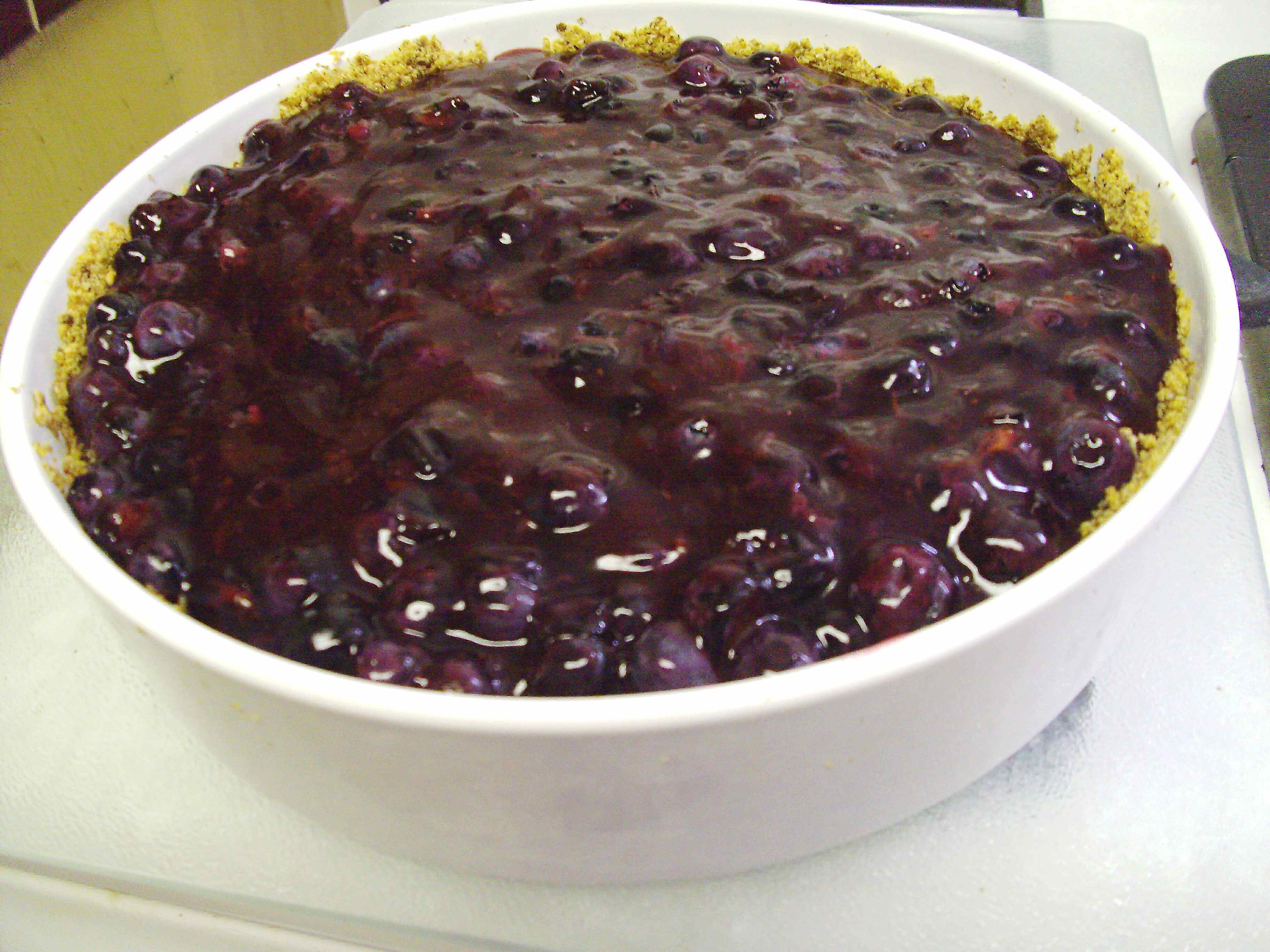
    raw blueberry pie with microwaveable filling and graham cracker crust

    This mostly-raw blueberry pie is a snap to make and very versatile--the filling microwaves in a few minutes, and you don't even have to bake the zippy gingered graham cracker crust--perfect for a hot Fourth of July and all summer long.

  • Recent Posts

  • Contents

  • Archives

  • Now Reading

  • See also my Book Reviews

  • Copyright 2008-2024Slow Food Fast. All writing and images on this blog unless otherwise attributed or set in quotes are the sole property of Slow Food Fast. Please contact DebbieN via the comments form for permissions before reprinting or reproducing any of the material on this blog.

  • ADS AND AFFILIATE LINKS

  • I may post affiliate links to books and movies that I personally review and recommend. Currently I favor Alibris and Vroman's, our terrific and venerable (now past the century mark!) independent bookstore in Pasadena. Or go to your local library--and make sure to support them with actual donations, not just overdue fines (ahem!), because your state probably has cut their budget and hours. Again.

  • In keeping with the disclaimer below, I DO NOT endorse, profit from, or recommend any medications, health treatments, commercial diet plans, supplements or any other such products.

  • DISCLAIMER

  • SlowFoodFast sometimes addresses general public health topics related to nutrition, heart disease, blood pressure, and diabetes. Because this is a blog with a personal point of view, my health and food politics entries often include my opinions on the trends I see, and I try to be as blatant as possible about that. None of these articles should be construed as specific medical advice for an individual case. I do try to keep to findings from well-vetted research sources and large, well-controlled studies, and I try not to sensationalize the science (though if they actually come up with a real cure for Type I diabetes in the next couple of years, I'm gonna be dancing in the streets with a hat that would put Carmen Miranda to shame. Consider yourself warned).

You must read this. Take an hour if you have to.

Today’s New York Times has an excerpt from investigative reporter Michael Moss’s forthcoming book on the processed food industry’s push to engineer addictive foods. It’s a long article, more than 12 pages, but well worth the read.

The Extraordinary Science of Addictive Junk Food – NYTimes.com.

American Grown (Groan?)

I have mixed feelings about Michelle Obama’s forthcoming book, American Grown, which the Barnes & Noble web site describes as:

Now, in her first-ever book, American Grown, Mrs. Obama invites you inside the White House Kitchen Garden and shares its inspiring story, from the first planting to the latest harvest… Learn about her struggles and her joys as lettuce, corn, tomatoes, collards and kale, sweet potatoes and rhubarb flourished in the freshly tilled soil.  Get an unprecedented behind-the-scenes look at every season of the garden’s growth…  Try the unique recipes created by top White House chefs…  [read about a community] garden that devotes its entire harvest to those less fortunate, and other stories of communities that are transforming the lives and health of their citizens. With American Grown, Mrs. Obama tells the story of the White House Kitchen Garden, celebrates the bounty of our nation, and reminds us all of what we can grow together.

The book is due out –well, now, really, the end of May. But I’ll tell the truth here: I hate this description and I’m sorry she wrote the book just from the blurb. Really, this is the best they could do? It’s so colorless. It sounds like a bland, give-the-wife-a-project kind of capitulation written by the official White House handlers.

What I find most disheartening about the beige, friendly-sounding jacket blurb is the “About the Author” section, in which Obama is described as the First Lady of the United States and a mother of two daughters, and that in 2010 she started the Let’s Move program. These are all good things, and she’s done a lot with the program. But nowhere does it mention her career–now on hold for at least four years–as a lawyer, and a good one.

In terms of public relations, Obama has conducted her Let’s Move program more successfully than Hillary Clinton, who was also a skilled and high-power attorney, handled a much-embattled health care expansion plan in her eight years as First Lady. Clinton is thorny and opinionated and direct, and is only now learning to keep her moves as Secretary of State quiet rather than telegraphing all her punches–but she’s achieving a lot. Obama is a lot smoother and more immediately likeable–something the rightwingers got wrong from the start–and she’s full of common sense, people sense, and I keep hoping for big wins from her.

Obama’s charismatic and not easily ruffled, and she’s a fashion icon–you could see the newspapers focusing on that since it’s so much easier and picturable than a career full of sitdown negotiations with House Republicans and stacks of paper and emails. But both women have been in the awkward position of First Lady, competent people sidelined for significant numbers of years by their husbands’ presidencies, hemmed in by the public expectation that they’ll shrink themselves into June Cleaver-like roles.

The Lady Bountiful bit is homey, patriotic, old-fashioned and charming. But it’s also hideously condescending and weird as hell that in this day and age it’s seen as acceptable to shove a professional out of work and relegate her to homemaking, even if it’s on such a grand scale. Home gardening is what you do on your day off, when you’re out of work or retired. Even if you enjoy it and are great at it, which I’m not. The fact that I got no tomatoes until January this year says a few things. If we had to depend on what I can grow successfully, we’d starve.

So what I say is, if you’re gonna go First Lady, go big. For the press release, why not do it more like the blockbuster movie radio voiceovers?

[pulsing dark synth strains, standard gravelly yet unctuous baritone voiceover]

“IN A WORLD…where everything has stopped growing except the American waistline…comes a heroine for our times. Once a high-power attorney, now down on her luck and forced to smile at hostile crowds who want her husband to say something–anything–definite about the economy, Michelle Obama IS… The First Lady.

[patriotic/threatening military march starts to swell with a roll of the tympani]

With NOTHING MORE than a trowel, a packet of seeds, a groundskeeping staff of at least twenty, a fully-trained yet cooperative head chef and a large, green lawn, Michelle Obama is TAKING ON …. Corporate America. You’d better HOPE …

[tympani going crazy à la “2001: A Space Odyssey”]

…she WINS.”

See you at the movies!

School lunch vs. Congress: Ketchup all over again

The House and Senate’s reconciled spending bill–surprise, surprise–now strips out the new USDA rules on school lunches. You know, the new rules to lower sodium, limit potatoes as in french fries, and debunk the idea that the smear of tomato paste on a commercial frozen pizza slice sold to the school through a fast food concession contract somehow counts as a vegetable. Those rules.

The spending bill is due for a final vote later this week and you won’t be surprised at all to find that the “no new lunch” provisions come primarily from the hands of a number of Republicans in both houses. Worse, one of their chief arguments is that because vegetables other than potatoes, corn and other starches are expensive, the schools shouldn’t have to comply.

But who made–and keeps making, take a look at the other parts of the spending bill–greens so much more expensive to grow than wheat, corn, soy, potatoes…the big heavily-subsidized commodity crops? You got it.

The shamelessness is everywhere though. While trying to verify the details of the bill in the Washington Post article, I looked up “House Budget Committee” (which isn’t exactly it; the official spending bills for the House come from the Appropriations Committee, but I wasn’t thinking official terminology first thing before coffee this morning).

I was disgusted to find an official House committee page apparently dedicated to singing the outsized praises of one party’s platform rather than to presenting actual public business–bill texts and status, committee assignments and mandate–conducted by and representing the work of all the members of the committee, whatever their party affiliations.

The Budget Committee’s chair, Paul Ryan, has commissioned a web site so grossly propagandist and silly it should be a public embarrassment. Go visit it. Am I wrong? Or does almost every single item on the front page mention Paul Ryan prominently in tones that suggest he led the Battle of the Bulge or launched NASA or some equally visionary achievement?

Given his performance in the GOP debates and the many polls that show his true popularity among voters, I shudder to think how much he had to spend out of the committee budget to get someone to put up such a flattering page.

If the House wants budget cuts, maybe this is where the supercommittee (and is that ever an overrating) should start. And then they should get back to work and put some actual food on the tables in public schools. $6.8 billion to improve school lunches and the federal breakfast program for low-income students is a pittance. It’s not enough to do everything students need, but it would do a lot if it weren’t wasted battling the processed food lobbyists over salt, potatoes, pizza, tomato paste and ketchup.

As it is, the food lobbies are likely to win this round in the legislature, or so the newspapers predict.

What power is left? Your purse. Your vote. Your phone calls to your senators and congressional representatives.

Likewise your ability not to pay for garbage. Boycott frozen pizza. Boycott french fries. Boycott soda. Stop buying this stuff for home and tell your kids why. These shameful food substitutes are a lot more expensive than they look. Pack your kids a real lunch–it could be leftovers or a sandwich, but pack something with protein, a little whole-grain starch, and actual vegetables. Maybe a fruit. Keep it cheap and whole–apples/oranges, not passionfruit.

I would also like to see students whose families can afford it to chip in by bringing a bag of apples to school, or a bag of carrot sticks, or a can of tuna, or a pound of cheese or a loaf of bread. Not every day, but every week or month. I have the idea that if all of that donated food went into a kitty for the low-income students, they might eat better than the way they do now.

New Page Up: Carb Counts and Ratios

I’ve just uploaded a new page (see the top menu tabs) with a couple of tables of the most useful rules of thumb I’ve found for carb counting. Since my daughter became a Type I (insulin-dependent) diabetic back in February, we’ve both had to become pretty familiar with the amounts of carbohydrate in a given amount of different foods.

Although the American Dietetic Association’s “Choose Your Foods” carb count guide for diabetics is pretty helpful (and pretty inexpensive, about $3 per copy if you order from them direct on www.eatright.org), it’s written from the perspective of the eater, not the cook.

So (as the cook in the family) I’ve worked out the approximate ratios of carb grams per total weight of some common foods I serve routinely. Rice and beans are easy enough to remember. But when I want to know how much of a given potato my daughter can eat as one carb serving (15 g), it helps to be able to know that a regular potato is about 1/6th carbohydrate. Then all I have to do is weigh it on the food scale in grams and divide by 6.

The 2/3 carb ratio for moderately sweet baked goods like pie, scones, cookies and muffins is also pretty helpful if we’re home and can weigh a portion for my daughter. Sweets are one of the hardest things to guess right consistently by eye, even when you’ve made them yourself. If there’s a nutrition label, by all means go with it; if not, weighing a portion and figuring 2/3 has been a pretty good approximation so far.

Ice cream is its own thing–again, hard to figure. Dreyer’s 1/2-the-Fat is our standard home brand, and hovers around 15-18 grams per half-cup (small scoop). But Baskin Robbins 31 Flavors are all over the map–when you go in for a cone, you really need to ask them to look it up for whatever size scoop, then figure the cone separately. A junior scoop in a cake cone for pistachio almond turned out to be something like 25 grams, plus 4 grams for the cone. Almost double what a plain scoop would have been at home.

Over-the-top caramel-syrup-fudge-frosting types of confections are a little out of my league, closer to candy bars than cakes, and would probably be more like 80-90% carb by weight (or mass, if you’re being excessively metric about the properties of grams).  I haven’t listed them because they’re so laden it’s hard to think of serving them very often, but I do have a basic rule-of-thumb candy list at the bottom of the carb counts page (saving the best for last) and a link to a much better, more comprehensive one so kids don’t have to feel completely shut out at Halloween or Valentine’s Day. Or birthdays.

I also have a short (for me) bit of hard-won advice on how to strategize with a (school-aged) diabetic kid before they have to face candy-prone situations where their friends are free to eat right away and they aren’t. Good for braces-wearers too…actually maybe we should all take the hint.

In any case, I hope you find this new page helpful whether you’ve got diabetics in the family or you just want to know what you’re eating.

Let me know what you think!

Unappetizing: Nutrition “Awareness” on Top Chef

Perhaps it’s a futile attempt to understand how restaurant chefs think about food and nutrition, but lately I’ve been watching the very warped “Top Chef” episodes for the last couple of seasons–easy to do online. I can’t help wondering not only at the contestants, all of whom seem to display basic ignorance of what used to be called the “Four Food Groups,” but at some of the judges who fault them on nutritional challenges.

In this season there have been two, the School Lunch Challenge and–not that the judges even thought about it as a nutritional challenge, which they should have–the Baby Food Challenge. In both, the judges seemed at least as lacking in nutritional knowledge as the contestants, and in some aspects even worse.

The School Lunch Challenge brought out scathing comments on the show and on a number of blogs, particularly when the bottom-ranked chef, who went home for her gaffe, attempted to make a banana pudding palatable by adding sugar. Tom Colicchio made a big deal of her adding two pounds of sugar to the pudding–which was to feed 50 students.

And admittedly it’s not great for nutrition, but it was hardly the disaster he and the other judges made out. If anyone had bothered to whip out a calculator and known how to use it for pounds-to-kilos conversions, they’d have discovered that the two pounds of sugar amounts to 0.91 kilos. Or 909 grams, to be a little more precise (which we shouldn’t, the chef was eyeballing what she added). Divide by 50 and you get 18 grams per serving or about 4 teaspoons–not all that surprising an amount of sweetener in any prepared dessert. Add that to the starch already present as thickener and the sugars from the milk and bananas and you probably have 30-40 grams of carb or thereabouts per half cup of pudding.

It would be a lot for someone diabetic, like my daughter, but not disastrous as long as she knew how much carb was in it, and it certainly wouldn’t be disastrous for most school kids if the rest of the meal was balanced with low-fat protein and vegetables and not too much other starch.

But actually, most of the lunch entries were pretty starchy. The fact that they didn’t all have as much noticeable added sugar is almost immaterial–starches break down into sugars. You have to count them all.

What really stood out was the pathetic nature of the criterion “to include a vegetable.” One that was most-praised–a slab of caramelized (talking of sugar) sweet potato under a chocolate sorbet as a dessert–was mostly a starch, though in its favor it had vitamin A and fiber. Another team served celery (no vitamins and very low fiber, despite the stringiness) with a peanut-butter mousse (why, oh lord, not just peanut butter? chef-think at work?) piped out directly onto the celery, supposedly so kids would eat it. No one liked the mousse because it looked Continue reading

You want fries with that?

You have no idea how much I’m looking forward to tomorrow at 8:35 a.m. That will be a good five minutes after the start of the parental summer relief program known best as Back to School. I’m counting down the minutes as we speak.

With the return to school, public debates over what children should eat and how parents should or shouldn’t step in have intensified. Obesity, the selling out of school cafeterias, new restrictions on sodas and junk food in said cafeterias, and the diet of choice at home are the topics of the day–all underlined with a sense of rising panic.

This year more than any other I can remember, reporters, bloggers, doctors, models, political figures, and just about everyone else has jumped on the bandwagon to report the ugly facts that were excused for years.

All the statistics are in–or pretty much so, and they boil down to this: We’re facing a tidal wave of blubber.

With it comes a tidal wave of early heart disease, diabetes, kidney disease, and more. How early? Physicians are seeing a rise in the diseases of middle age–something that, 20 years ago, had been successfully pushed back by an average of 10 years, from age 50 or so to age 60 and up for a first heart attack. We thought we were making progress. But for the past 10 to 15 years,  these diseases have started popping up in school children–Type II diabetes, kidney stones, high blood cholesterol and high blood pressure. No way should a 10-year-old be facing these threats.   No wonder parents and everyone else are panicked–the studies we have aren’t giving us a single, easy-to-deal-with  definitive  guide on how to stop the juggernaut. They mostly tell us that it keeps on rolling.

But the mystery of what to do really isn’t that mysterious. Take for example the responses to Frank Bruni’s recent article in the New York Times on feeding children. Some come from doctors on the front lines, others from nutritionists and fresh-food-in-schools activists, discussing different facets of the problem, but they come to a number of sensible recommendations you could probably have named yourself without much struggle.

The conclusions?

Sodas should be cut out altogether from children’s (and probably everyone’s) daily diet. Not just for calories (250ish for a 20-oz bottle–and why is it 20 0z these days? used to be 12 was the standard) but for sodium (about 100 mg per 12-oz can, whether full-cal or diet, 200+ for the 20-oz).

Fruit juices with a pretty picture on the box are nowhere near qualifying as actual fruit. Not even with added vitamin C.

And exercise time, including outdoor recess–something most schools have cut back in the past decades–makes a big difference that’s generally overlooked in the school lunch debates.

So far, no great surprises. But they do mention one more item, also no great surprise–fast food in the school cafeterias.  Nobody seems to have trouble zeroing in on french fries as the worst offender. Are they right or is this a replay of the cupcake wars? Is the french fry being unjustly accused, as the vendors claim?

Continue reading

Smart Choices Checkmarks–Corrupt Before They Ever Hit the Cereal Box?

William Neumann of the New York Times takes a hard look at “Smart Choices”, the new food industry-sponsored common nutrition labeling program, which makes its debut in supermarket packaged food aisles. The coveted green checkmark comes with a hefty license fee–toward the $100,000 mark per item–for food companies that want to qualify, but apparently qualifying is a little easier than you might expect. The new program, headed by a nutritionist with impressive enough credentials,  has awarded healthy choice status to heavily sugared cereals like Froot Loops because, as she explains, they’re a better breakfast choice than, say, doughnuts. For sure.

How could any reputable nutritionist blurt something like that out to a New York Times reporter? Does she really use doughnuts as a benchmark for comparison when the question is “what should I feed my kid for breakfast?”

More to the point, how could items like Froot Loops end up qualifying as a smart choice? Apparently, the FDA is wondering the same thing.

Take a look at the Smart Choices program nutrition criteria. Under the program, a given processed food product qualifies as a “smart choice” if:

1. Its nutrition stats fall within consensus-defined limits for carbs, added sugars, fats, cholesterol, and sodium. But the criteria are not particularly consistent about whether these nutrition stats count for a single serving or a meal, or perhaps multiple servings throughout the day, and the upper limits shift between categories of foods. And some of the criteria have been muted, dropped, or subordinated according to the preferences of food industry members over the protests of the nutrition scientists.

2. It contains at least one positive nutrient from an industry-accepted list of vitamins, minerals, fiber, and protein. The positive nutrient can be an additive, and it can be added to an otherwise nutritionally useless food product.

3. Alternatively to the positive nutrient criterion, the product can contain or represent some aspect of the category “food groups to encourage”: fruits, vegetables, whole grains and low fat or non-fat milk. How much of any of these ingredients must be present, what their original source is, and whether the final food product retains any reasonable or comparable amount of the nutrition found in an unprocessed fruit, vegetable, grain, or dairy item which it claims to include are all a bit vague. Processed cheese is technically considered dairy, for example, even though it may contain mostly vegetable oils, starches, and emulsifiers, not milk.

Not all food categories seem to require both nutrient-of-concern limits and positive characteristics.

Finally, the instructions to companies wishing to qualify a given food product state: “Qualifying your products for the Smart Choices Program is quick and simple. Product review is typically completed in 24 – 48 hours.”

Pretty much says it all. And doesn’t really support the “science-based, consistent, reliable” claims the program presents to consumers and the media.

For further mirth and bemusement, check out Marion Nestle’s account of her discussions with Neumann and with the Kellogg’s VP for global nutrition on her blog.

Pack your own lunch

It’s almost time to head back to school, and my daughter’s finally old enough to pack her own lunch. Not that she wasn’t actually old enough last year. But now she wants to.

When I was nine, I’d been making my own school lunches for at least a year, if only to save my sandwiches from my mother’s clutches and keep her from adding butter to the jam–something that did, and still does, make me absolutely nauseous. Emergency grossout prevention is the mother of lunch-making independence.

As many of my friends with same-age kids do, I worry that I haven’t been pushing my daughter hard enough toward independence by having her fix her own lunch. Is it too late to impart the mysteries of the toaster oven? But all is not lost–the other morning she figured out how to cut up her own apples (she has braces and our orthodontist “charges extra for stupidity-related bracket repairs”). She doesn’t appear to have lost any fingers. So we’re good to go!

Which is fortunate because lately I’ve been seeing a slew of new books on how to pack your kid’s lunch–they range from “here are all the vegan-friendly brand-names that look just like everyone else’s school lunch, only cooler” to Alice Waters insisting that the first step is growing your own school garden (which I’m actually in favor of, but not if it means waiting 6-8 weeks for your lunch to germinate).

Few of these fabulously sophisticated new books even consider the things I took to school every day as a kid–peanut butter and jelly, apple, carrots and celery. Or peanut butter and jelly, orange, carrots and celery. My mother was dull. My sister and I had no cool foods like Ho-Hos or Cheetos to distract us, and we usually ate at least some of the vegetables and the apple. Actually, so did most of the other kids in our school. It was that or suffer the cafeteria kale. And almost no one was fat. I’d like to point that out.

Hip mamas today (mostly those still in their 30s) look horrified at my daughter’s lunches because out there in hipland PBJ on whole wheat is so…so ’70s. It doesn’t contain any of the seventy-two essential nutritional supplement buzzwords (like selenium and phytoestrogens and antioxidant) they’re convinced all healthy food has to have (well, it’s true you have to have those things on the label to compete in the ads). And it has fat. And sugar!

But you know what? A decent peanut butter and jelly sandwich on whole wheat is a lot better deal nutritionally than most of the prepackaged, often self-righteously labeled, crap the hip kids bring to school these days. Much of it is along the lines of Kraft Foods’ “Lunchables”–a processed meat and cheese cracker kind of thing packed with some ersatz juice and faky side items like jello and  candies (not even, as I check belatedly, a tiny tin of applesauce–and check out the Lunchables nutrition and ingredient stats!). But you know how popular these things are–because they’re a kit. Buy five boxes, throw one  in your kid’s backpack each day. They stack neatly in the pantry.

Very few of these children ever bring a substantial serving of fresh vegetables or actual fruit–not even apples. Those require washing, peeling–maybe even cutting up. And sometimes the apples turn a little brown on the cut sides. Organic fair-trade labeling aside, any remotely fruit-like substances in the hip-kids’ lunch bags arrive in a rectangular cardboard box with a plastic overwrap, a plastic straw attached, and a sanitized-for-your-protection seal. No wonder they stare.

Anatomy of a PBJ:

Straight-up peanuts-only butter (no salt, no sugars, no mono- and diglycerides, no emulsifiers or BHT or “natural flavoring” or any of the rest of it) has about 16 grams of fat per 2 T (1 oz) serving. True. Absolutely true. But it’s not the same as the heart-stopping blubber you find on a piece of meat, so stop shrieking. Most of the oil in natural peanut butter is polyunsaturated (the “good fat” kind of fat). And it separates (because of the lack of fakery and emulsifiers) so you can pour off a good bit of it if you want to when you first open the jar.

Furthermore, the same peanuts-only peanut butter contains 8 g protein, 3 g fiber, almost no sodium, and about 210 mg potassium. And a little iron. It’s a pretty good deal for a kid’s lunch item at about 200 calories.

Two slices of whole wheat bread without too much sodium or garbage ingredients gives you another 200 calories–we’re up to 400, but only 3 g. saturated fat, another 3-7 g fiber, another 4-6 g protein, and with a little care preferably less than 400 mg sodium (all from the bread). Add a spoonful of all-fruit jam with 8 g sugar, at about 35 calories, and you have something that will get your kid through school without tears or big sugar highs and lows.

It doesn’t have big vitamin- and calcium-fortified labeling. It doesn’t have a label. It’s not supposed to do it all on its own. Your kid will eat about half, maybe the whole thing if he or she is growing fast or running around a lot that week. But he or she will get the vitamins and calcium from the other things in the lunchbox–some crunchy raw vegetables and an apple or orange and a thermos or carton of plain unsweetened milk. That’s it and that’s enough.

Do your kid a huge favor and leave out all the chips, chocolate, go-gurt (real milk-and-cultures yogurt is ok, not the fake tapioca- and gelatin-stretched stuff), cookies, jello, sorta-applesauce, and fluorescent boxes of juice. School is hard enough without sugar crashes or cavities, and they don’t need any of it to have a good day.

Oh yeah. And for crying out loud, please skip the sushi. Your kid does NOT need to be that hip in the school cafeteria. Or that sick, if the sushi doesn’t stay cold enough.

(Why yes, I live in Southern California. What gave it away?)