


I know. It sounds like the name of a really, really bad ’80s art rock tribute band. Not that there’s anything wrong with that. (Well, actually there is; I survived the ’80s by stubbornly ignoring everything from the Talking Heads onward, especially after I went to one of their concerts and heard the drummer. Maybe it was just a bad night, but I thought only David Byrne was allowed to be that far off.)
Altering cheese also sounds like the ultimate DIY, grow-your-own, cure-your-own, grind-your-own, fill-in-the-blank foodie optimism project. Weird, more work than it’s worth, but a good experiment to try once (if you’re under 30) so you’ll appreciate the effort that goes into it all when you go back to buying the professionally made version.
You might have noticed that all the nicer cheeses that get newspaper and food magazine reviews cost upwards of $15/lb and even though I’m a cheese freak, I’m just not in that league more than once a year, perhaps on my birthday. I deserve nicer cheese than I can get at the supermarket, I just know I do.
So let me just say it: I’m nobody’s idea of a dedicated cheesemaker or affineur. Mostly because I can’t stand heating and clabbering and then pressing large amounts of milk just to get the starting curd. I also hate scrubbing everything to death before and after, and the idea of cleaning scorched milk off the bottom of a soup pot is my idea of wrong. I’m not authentic. And I don’t wanna be. Even clabbering by microwave is probably not my idea of a good time when it comes to anything more complicated than paneer or yogurt–I’m not sure it wouldn’t destroy the cultures for hard cheeses.
Last year I got the idea to start with something already in cheese form–a lot less waste of both milk and time. After all, standard bland goat cheese is pretty inexpensive–an 11-oz log is about $5, about a quarter of the price of the goats’ milk you’d need to produce it (4-5 quarts at about $4 each). So are other fresh white cheeses. And you can get inexpensive domestic brie and bleu cheeses in supermarkets and–my preference–Trader Joe’s. They’re not bad, they’re just bland compared with the European originals. But they have the requisite blue or white mold cultures you need to add flavor to other cheeses, if the cultures will take.
Last year’s achievements may give you some idea of where I’m going with this:
- Bucheron (fresh chèvre log, bit of white mold rind from inexpensive, bland Trader Joe’s Canadian brie, sealed in a sandwich baggie with some air for about 2 months in the fridge until it ripened)
- Bleu de chèvre or Goatgonzola (another fresh chèvre log, this time with some crumbled cheap gorgonzola in the baggie, also about 1-2 months in the fridge)
and the accidental but serendipitous
- Marbled Feta (the byproduct of storing above-mentioned source gorgonzola next to ziplock bag containing a block of feta cheese)
But ever since I posted these first attempts at turning boring American supermarket cheese into something more flavorful and interesting, I’ve been haunted by the thought that I’d only scratched the creative surface of cheap cheese transmogrification. So I’ve been cheating with cheese yet again.
A Fungus Among Us
Goat cheese and feta are both fairly wet fresh cheeses that take mold pretty well if you do it on purpose. What about drier standard American varieties–cheddar, for instance, or brick mozzarella? These are bound to be more difficult to persuade, but if you have a bit of patience, it might be worth a try.
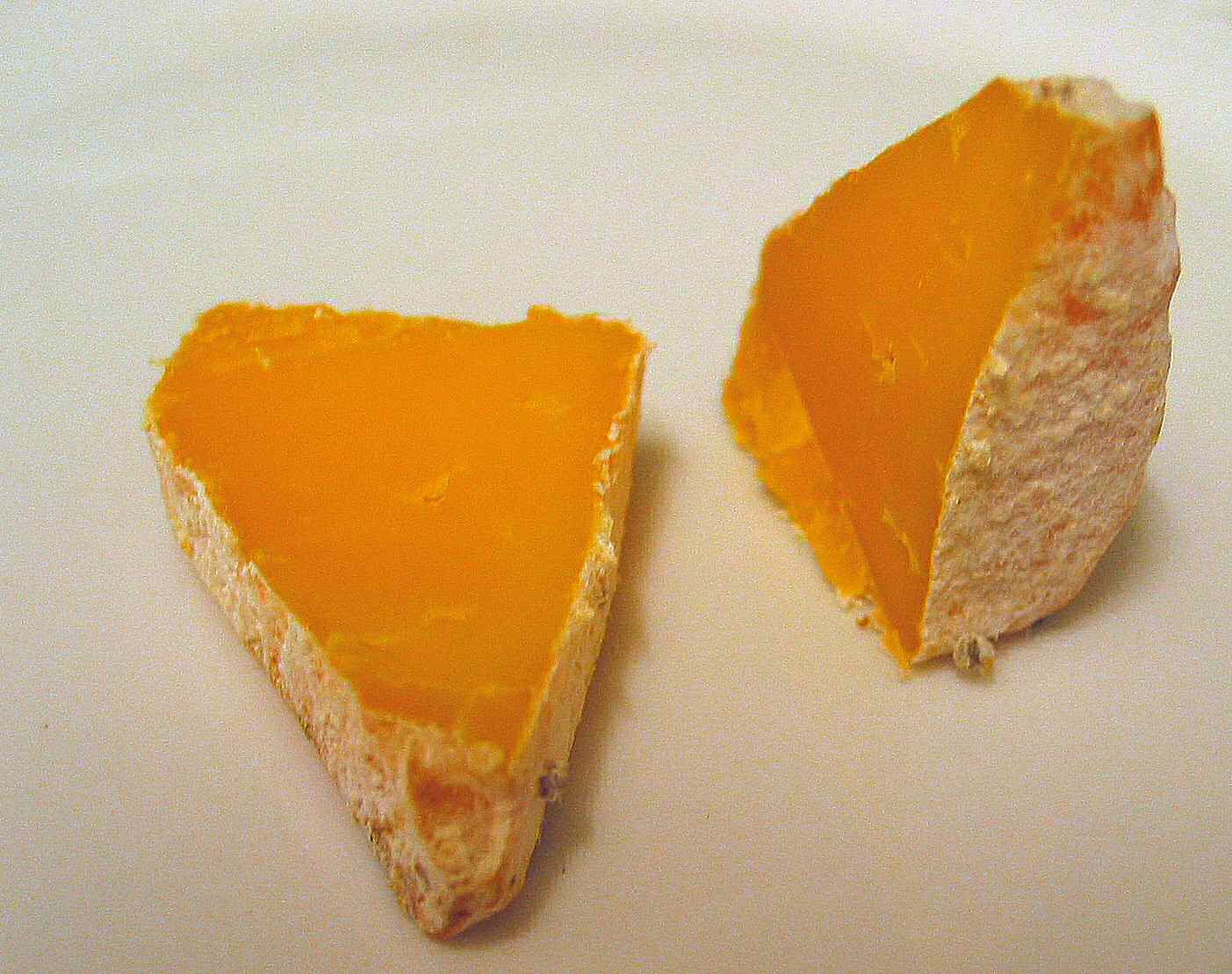
Cheddar after aging with gorgonzola starter
Now I know, normally you look to cut any developing mold spots off your cheddar–it’s what we’ve all been taught for decades. But the blue and white mold cultures are key to developing flavor and–I shouldn’t even be spelling this out–when it comes to flavor, America’s standard supermarket cheeses are in dire need of help.
Four or five weeks ago, I put a small end piece of Bel Gioioso gorgonzola in a ziplock bag with a couple of ounces from a brick of ordinary Trader Joe’s extra-sharp yellow Wisconsin cheddar and some air and kept it in an isolated part of the fridge to see what would happen. I’d actually diced the cheddar into bite-sized pieces to increase the surface area and maybe decrease the culturing time if the bleu mold managed to take.
Nothing much seemed to have happened except that the cheese looked a bit drier. No visible culturing going on at the surface. The gorgonzola crumbs had shrunk and dried out as well. But I took a cube out and cut into it with a knife, and the flavor had stopped being tangy standard cheddar and was moving toward Morbier or Emmenthal–something nuttier and more subtle. All I could think was that the cheddar was aging without actually culturing and growing the blue mold. But because the mold is a penicillium strain, what there was of it might have inhibited unwanted bacterial intrusion and helped steer the cheese toward a more nicely controlled aging process.
And then again, a week later, the mold had taken on the remaining cheddar cubes, and the taste, once I cut into it, was like a mild cheddar heading toward blue. Still not very potent, but encouraging. Continue reading
Filed under: appetizers, cooking, Dairy, frugality, haute cuisine, Odd food | Tagged: cheddar, cheesemaking, gorgonzola, home cheesemaking, kosher cheese, microbial rennet, mozzarella, vegetarian rennet | Comments Off on The Altered Cheese Project

 Slow Food Fast