
• Enter your email address to subscribe to this blog and receive notifications of new posts by email.

    Join 241 other subscribers
  • Noshing on

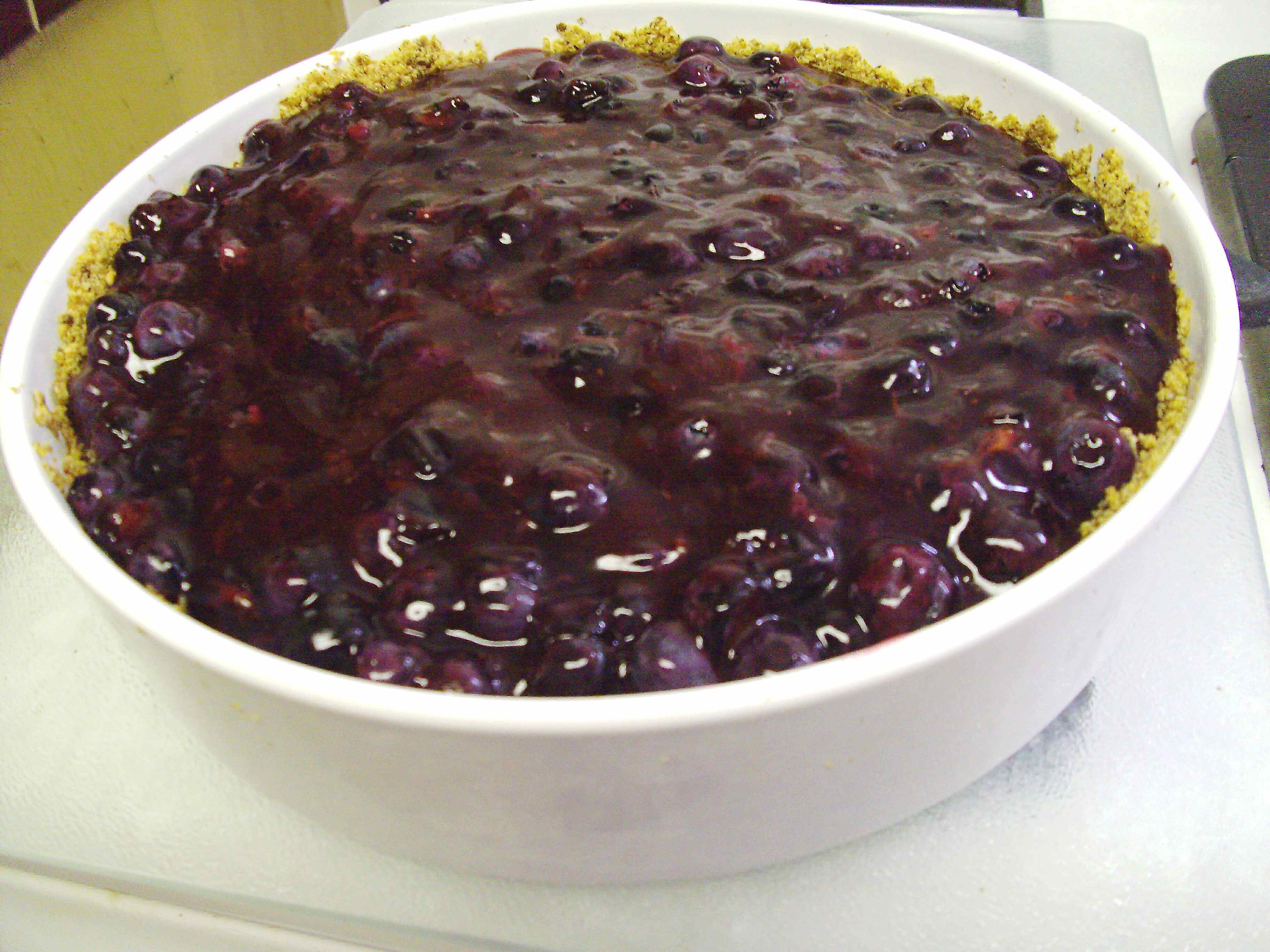
    raw blueberry pie with microwaveable filling and graham cracker crust

    This mostly-raw blueberry pie is a snap to make and very versatile--the filling microwaves in a few minutes, and you don't even have to bake the zippy gingered graham cracker crust--perfect for a hot Fourth of July and all summer long.

  • Recent Posts

  • Contents

  • Archives

  • Now Reading

  • See also my Book Reviews

  • Copyright 2008-2024Slow Food Fast. All writing and images on this blog unless otherwise attributed or set in quotes are the sole property of Slow Food Fast. Please contact DebbieN via the comments form for permissions before reprinting or reproducing any of the material on this blog.

  • ADS AND AFFILIATE LINKS

  • I may post affiliate links to books and movies that I personally review and recommend. Currently I favor Alibris and Vroman's, our terrific and venerable (now past the century mark!) independent bookstore in Pasadena. Or go to your local library--and make sure to support them with actual donations, not just overdue fines (ahem!), because your state probably has cut their budget and hours. Again.

  • In keeping with the disclaimer below, I DO NOT endorse, profit from, or recommend any medications, health treatments, commercial diet plans, supplements or any other such products.

  • DISCLAIMER

  • SlowFoodFast sometimes addresses general public health topics related to nutrition, heart disease, blood pressure, and diabetes. Because this is a blog with a personal point of view, my health and food politics entries often include my opinions on the trends I see, and I try to be as blatant as possible about that. None of these articles should be construed as specific medical advice for an individual case. I do try to keep to findings from well-vetted research sources and large, well-controlled studies, and I try not to sensationalize the science (though if they actually come up with a real cure for Type I diabetes in the next couple of years, I'm gonna be dancing in the streets with a hat that would put Carmen Miranda to shame. Consider yourself warned).

Halloween Candy Carb Guide

Halloween is coming…if you have a diabetic kid, as I do, it’s more difficult than Valentine’s Day to deal with the ups and downs. This year my daughter is in college and making her own decisions, but we’ve been strategizing since her first Halloween with T1D (Type 1 diabetes, the kind that requires insulin round the clock) about how to handle the (several pounds of) candy haul safely without spoiling all the fun.

She will tell you I spoiled it by throwing out one or more pounds (out of 3, more than we even handed out) behind her back a couple of years later, and she still feels ripped off. I will tell you that she eked out at least 2 of her 3 pounds of junk for over a month of getting to eat a piece or two every day with a meal, so what’s she complaining about?

Now of course she prefers actual chocolate, high-percentage, with some actual chocolate flavor instead of light-brown oversweetened waxy mush. But the appeal of trick-or-treating lasted a long time and is probably still going strong.

The point being, people with Type 1 diabetes still like candy and can in fact eat some of it with insulin to cover it, just “in moderation” as the Juvenile Diabetes Research Foundation puts it. In moderation meaning a little at any one time, preferably not on its own but with an actual meal that contains protein and vegetables and fiber to help de-spike it (for Halloween, I suppose I should say, “defang it”). And always with known and limited carb counts and the right amount of insulin to cover it.

Regular candy bars come with nutrition labels and carb counts, and you usually only buy one at a time, but Halloween throws everything off. The little minis and fun-sized and so on? And artificial sweeteners aren’t really the answer, especially not for kids, because there are some emerging health issues. If your kid (or you) have a candy haul with no labels, how do you carb count?

There are three ways to deal and you’ll want them all.

Start with the eyeball method

This is good for when you’re still on the street or at a party, or whenever you don’t have better measurement methods or official info handy…

If it’s a chocolate, the square minis (less than an inch on a side) are about 5 grams of carb apiece, and so are the small wrapped hard candies (“boiled sweets” in the UK) like Brach’s or Kraft peppermints and butterscotch, regular-sized thin 1″ plain lollipops and so on.

The slightly bigger 1 1/2″ long by 1/2″-5/8″ rectangles of standard chocolates are about 8-11 grams apiece.

The JDRF’s annual official guide to Halloween candy carbs

Once you get your haul home, or if you have a smartphone on you, use the official carb counts for any common candies with brand names. The  JDRF Halloween Candy Carb Guide is a PDF list you can print out and stick on the fridge or keep handy on your smartphone. They update it every year to keep it current.

When in doubt, weigh it out

Your best bet for any candy without a label–gummy worms, home-made or unwrapped chocolates, candy-bowl candy, etc.–is to weigh it on a scale that shows grams. Almost anything but sesame halvah (which you’re unlikely to pick up trick-or-treating) will be more than 85% carb by weight. (Halvah is about 50% by weight because it’s half sesame paste, half sugar syrup, but really. It’s kind of the exception.) Regular fudge is similar in texture but in terms of carb, it’s right up there around 90% like most commercial candies.

Most mass-market chocolate candy (i.e., Mars and Hershey, not the high-percentage bars) is 85-95% carb by weight, so if you weigh it in grams, multiply by 0.9 and you’ve got a pretty good estimate at least in reasonable single portions (1-2 pieces of candy, half an ounce or so). Hard candies like peppermints or butterscotch, Jolly Rancher, Lifesavers, etc. are basically 100% carb, so whatever they weigh in grams is the number of grams of carb. Jelly beans and gummy worms are in-between but figure 90-100% carb by weight.

Those percentages are a bit finicky and not everyone needs to know the carb to within a gram or so. If you don’t have a head for math or a calculator handy, just weigh it and figure it’s all carb, keep the portions limited to half an ounce (15-20 grams of candy) and and you won’t be off by more than 1-2 grams of carb.

For more tips on helping a young kid deal with diabetes and candy at Halloween, and more on general carb counting by weight for regular foods, check out the Carb Counts page (or just click the tab at the top of the blog).

Diabetes meets ethnic foodways in new ADA series

Just in at my library are two new cookbooks from the American Diabetes Association. Indian Cuisine Diabetes Cookbook by May Abraham Fridel (©2017, ADA, Inc.)  and The Italian Diabetes Cookbook by Amy Riolo (©2016, ADA, Inc.)  are written by two food authorities in their respective home cuisines. The books are bright, they’re attractive, the food looks decent and authentic.

But what makes them “diabetes cookbooks”? What have they changed–or not–about the recipes and what was the ADA’s role other than simply publishing them? Above all, how helpful are they to an average diabetes or prediabetes patient?

Both books start out with an explanation of their food traditions and what’s generally healthy about them. Both include a variety of food categories for different meals, from appetizers or chaats to mostly-protein “main” dishes to mixed casserole-type dishes to salads, breads, soups, cooked vegetables, fruits, baked sweets and drinks. The Indian cookbook also includes some useful spice mixes and tips on how to handle them, and the Italian one includes some traditional menu choices and tips on choosing wine.

The recipes are generally very DASH Diet-able with an emphasis on a variety of vegetables, beans, whole grains, low-fat dairy, whole fruits and nuts, along with smaller portions of meat and cheese and less added sugar for desserts.

On a closer read, the adaptations to recipes mainly look like sane portion sizing for starches and sweets, reducing or substituting poly- and monounsaturated fats for some of the saturated fats, cutting down excess sugars in sweets and desserts, adding fruit and vegetables, and substituting almond flour and dried fruits for standard flour and sweeteners. The recipes are adjusted just enough to be low in sodium and saturated fat, reasonable on calories, total carbohydrates and added sugars. The portion sizes listed are smaller than what you’d get at an American restaurant or see on a magazine cover these days but they’re close to the amounts people traditionally serve.

So the nutrition stats are a general improvement compared with most current cookbook-style recipes for equivalent dishes, and it looks like the nutrition guides at the bottom of each recipe are relatively accurate given the ingredients. So far so good. If this was the ADA’s doing, I’m all for it.  But it seems obvious to me that it would be better to trust the ADA reviewers’ understanding of diabetes nutrition than either cookbook author’s.

I was surprised to find that the ADA let each of the authors go her own way on the introductions, and that the health explanations tend to be vague and cultural rather than practical. In the Indian cookbook, Fridel describes ayurvedic dietary principles rather than talking about nutrients. Riolo also veers off into a discussion of which appetizer traditionally goes with which first course and how to choose Italian wines in a way that doesn’t really have anything to do with target carb counts or  exchanges for a meal either.

You can discount or admire these things as you please, but you can’t really learn a lot from them diabetes-wise. They’re not really directed toward helping patients put together balanced, carb-controlled meals from the nutrition stats given with the recipes.

Moreover, the ADA’s particular nutrition stats system lists “carbohydrate exchanges” separately from “starch,” “fruit” “vegetable” and “dairy” exchanges, even though most of the ingredients that fall into those categories contain significant carbohydrates. All of them have to be counted for diabetes management.

It’s not clear why their system differs so much in this regard from the Academy of Nutrition and Dietetics’ standard “Choose Your Foods” exchanges system for carb count approximations. It works okay for figuring out standard servings definitions for the major food groups if you’re following the DASH Diet or USDA/HHS MyPlate plans, but it’s not really in keeping with the way endocrinologists and certified diabetes educators train Type I diabetes patients. It makes carb counting and carb planning for meals more complicated than it has to be. That can’t be a good thing.

Also, simply giving the nutrition and exchanges stats for each recipe as it shows up in the book is not the same as teaching a new patient how to carb count or set up a balanced plate. Most of the dishes are mixtures of carb-containing and noncarb-containing ingredients–casseroles, soups with beans, meat and vegetables, biryanis, meatballs containing breadcrumbs, and so on. Those are some of the most difficult foods to estimate carbs for by eye, and it’s not visually obvious–or discussed in any detail–what the authors and their nutrition consultants at the ADA did to adjust these specific recipes.  In this regard the ADA books are no worse than most “diabetes diet” cookbooks and magazine recipe collections, but they’re also not much clearer.

Beginners really would do better to start with the carb and noncarb foods separated on the plate, at least until they get a feel for what to count and how much food to serve.

What both of these books–and any others in the ADA series–could use is a short, clear explanation for how to work through the nutrition stats they give in each recipe and how to plan a nutritionally balanced meal around that dish to reach a target total amount of carbohydrate. A two-page standard ADA primer with a basic diabetes meal plan diagram, some suggested per-meal carb counts or carb exchanges, a balanced-nutrition plate à la ChooseMyPlate.gov,  examples of where to look in the recipes for serving sizes and how to create a full meal from them, how to add things up for a meal’s total carb, etc., would help a lot. It might also be helpful to point out how to rework the meal plan if someone wants more than the standard serving amount or takes second helpings.

All in all, these two cookbooks aren’t terrible as cookbooks, but they’re not nearly as helpful as they could be as diabetes guides.

The Devil’s Food is in the Details

Melissa Clark has published an over-the-top cake recipe for the New York Times this week with two frostings and a demo video in her usual breezy style. The devil’s food cake, one of my favorite kinds, is pretty enough, and it looks like a fun idea, but… two homemade buttercream-type frostings? What kind of cake recipe is she using, and how does it compare with my usual (dare I say it) Duncan Hines?

I checked out the recipe itself and did a quick back-of-the-envelope calculation on the basic nutrition stats–carbs, fat, sodium, calories–then stared at it for a minute and wondered if I could possibly have been right.

Because the total I was coming up with was scary:  more than 1000 calories per serving for 10 servings. Half a day’s calories crammed into one piece of chocolate cake. It was about twice what I would have estimated looking at the photo. I mean it LOOKS pretty standard, if a little tall, on that cake stand. But 1000-plus calories per slice? Are you kidding? Had to be wrong.

So I went to the recipe nutrition calculator at myfitnesspal.com and tried it again. And it confirmed again that the recipe is indeed over-the-top, and over 1000 calories per tenth of the cake. What’s gone wrong here?

Here’s Clark’s recipe in the New York Times online for reference:

Devil’s Food Cake With Black Pepper Buttercream

and here’s what I saved off the nutrition calculator for everything–the cake plus both frostings:

Nutrition stats for Melissa Clark's 2-frosting devil's food cake for 10

Nutrition stats for Melissa Clark’s 2-frosting devil’s food cake for 10 people Calculated using myfitnesspal.com, 5/5/2014. Click the image to enlarge as needed, the numbers are still pretty scary.

My crude estimates, based on experience from having to calculate carbs in baked goods for a diabetic kid, were very close to the online calculator totals, within about 2o calories per serving and within 2-5% for each of the other stats.

And although it’s good to know my arithmetic and skepticism skills haven’t gotten rusty in the past month or so of trying hard not to bake, I think the nutrition chart above really tells you what’s going on in the world of popular recipe publishing today, particularly for American baking.

So let’s hit it over the head once more, because it’s still ridiculous: The first thing to think is, geeeeeeezzzzzz, over 1000 calories per serving.

How does Clark keep so thin? Did she actually eat a whole piece of this thing, or just pose for the photographer?

A 1/10th wedge of cake is a pretty big slice to begin with, and this cake is six layers tall–three full pans, cut crosswise in halves–for a standard-diameter round cake. In the accompanying demo video, Clark explains that the extra layers give you more room for frosting. “And isn’t that the best part?” she quips.

Well–I guess if you really like buttercream. She’s got both a vanilla-and-black-pepper buttercream AND a whipped chocolate ganache frosting. Does devil’s food cake really need so much dressing up to be good?

But here’s the added cost per serving: 111 grams of carb (about 2 meals’ worth), 86 grams of which are sugar. That’s 21 teaspoons of sugar per slice. A full day’s worth. 71 grams of mostly-saturated fat. Three full days’ worth.

Pro chefs excuse themselves for this kind of thing by calling their food “indulgent” or “decadent”. But this isn’t just excess, it’s mindless excess that doesn’t really add to the flavor or quality of the kind of dessert it’s supposed to be.

If you look at just the frosting ingredients, we’re talking 4 sticks of butter and 2 1/2 cups of sugar. The cake itself contains another stick-plus of butter and almost another two cups of sugar. So 5 sticks of butter and 4 1/2 cups of sugar total, or about half a stick of butter and half a cup of sugar per person, if you serve 1/10th cake as suggested. That puts it way into Paula Deen territory. Maybe even beyond Paula Deen.

I have to ask: Can’t we do a little better and still be decadent? Do we really need all that excess goo for it to be an okay cake?

It’s not that the frostings or even the cake are terrible-tasting or artificial or bland–she uses a whole real vanilla bean in the buttercream.  But it’s an awful lot of fat and sugar piled up with cake included merely as the excuse for the frosting.

That kind of tells you that the cake itself isn’t so hot. I’d rather have a smaller piece of a really good, really chocolate cake with more intense flavor per bite and no actual need to rely on frosting for interest. Something like Alice Medrich‘s revamped, lower fat Reine de Saba-style cakes (“Fallen Chocolate Soufflé Cake” and “Bittersweet Deception,” neither of which contain any butter) from Bittersweet, which she’s just reissued as Seriously Bittersweet. Or even David Lebovitz’s chocolate-butter-sugar-eggs flourless chocolate cake, which he’s dubbed “Chocolate Idiot Cake.”

If the cake’s just there as a frosting vehicle, why not be honest? I’d rather skip the cake and make dessert some intense ganache truffles to eat in smaller quantity with strong coffee. And even then I’d cut back on the fat and sugar so I could concentrate on the flavor.

If you are going to try and make some version of Melissa Clark’s cake, you really need to cut it down to size. In my two public performances exploring Continue reading

10 (or so) Warning Signs of a Half-Baked Diabetes Cookbook

For the past two months I’ve been scouring the library and bookstore shelves in search of practical guidelines for preventing and managing Type II diabetes with  diabetes-careful meal plans.

I have two goals for myself:

1. Get down to a healthier weight by eating less and exercising more–this is the big one with the best correlation to reversing prediabetes. And it’s going okay but slowly.

2. Eat balanced meals with somewhat less carb per meal, fewer free sugars and fewer calories overall than usual. This is the easier one generally…as long as I keep a food diary. Luckily, I know how to cook and I’ve been doing meal planning for a Type I diabetic child for four years now, so I know how to count carbs. And when I don’t, I have a copy of the American Dietetic Association’s handy, simple and cheap $3 or so guide on the shelf. And a link to the USDA nutrition database for the exotic occasional items like chestnuts in the shell (note to self, about 5 grams apiece).

But I still wondered if the diabetes and weight loss cookbooks I see around are solid and I’ve just been too lazy, arrogant or impatient to take them seriously all these years. Hence the trips to the library.

Because no doubt about it, the diabetes cookbook scene is burgeoning. There are loads of good-looking cookbooks out with pretty, gourmet-looking recipe photos and promises of perfect blood sugar management amid the desserts on the cover.

Here’s the short version of this post: a read through most of these books is NOT encouraging. All the popular diet book gimmickry of the past 40 years seems to have been transferred to a lucrative new target (read: gullible victim) market, complete with bright, shiny new drug company advertising and sponsorship potential on the coordinating web sites.

Considering that there’s no precise required diet for diabetes, just guidelines for budgeting meal carb totals and keeping some kind of commonsense balance between starches, fiber and sugars, even the premise of prescriptive diabetic cooking guides is a little shaky to start with. But what’s actually being presented as guidance in these popular books is far from that approach.

Even cookbooks affiliated with or endorsed by organizations like the American Diabetes Association and so on fail some pretty simple commonsense tests for honesty, accuracy, consistency, or relevance to standard public health guidance on preventing, managing and reversing Type II diabetes by way of diet. And if you don’t already know your way around carb counting and portion size measurement, they’re extremely confusing. Sometimes even on purpose.

So here are the main common flaws I’ve discovered in most of these books, with a few books singled out for personal ire and bemusement. You might want to consider these as warning signs if you’re looking for actual guidance to get you through.

10 Warning Signs that Your Diabetes Guide Cookbook is Half-Baked

1. The Dessert First approach to diabetes management. Telltale sign: does it show cake or ice cream on the cover? About half the books I scanned do. They treat desserts and snacks as a top priority, as though that were what diabetes control is all about. As though sweets were somehow necessary at every meal, or even every week. None of them ever say, “just stick with a small apple or orange most days. No recipe required.” Actual endocrinologists recommend keeping desserts occasional and snacks un-glamorous and limited in carb.

1b. Aside: Many of the dessert-first books show cheesecake on the cover, usually a 1/8 to 1/10 cake portion–a pretty hefty wedge by any standards. This is a come-on–cheesecake is usually high in fat calories, so it’s rarely a good pick for anyone attempting to lose weight (the main strategy for Continue reading

Fifty, or “Sugar Shock, Part II”

I’m back, though a little bummed out. I didn’t post anything at all in September. There’s a reason for that. No, it’s not because I turned 50 last month (which I did). No, it’s not because I rebelled and declared against cooking anything ever again (which I almost wish I had, even though most of what I cooked was pretty good).

It’s because my routine physical showed up with a higher-than-normal-for-nondiabetics A1c even though my fasting blood glucose was under 100. The A1c measures the fraction of hemoglobins (the red blood cell proteins that include iron atoms and transport oxygen) with glucose molecules stuck to them. There’s always some level of glycosylated protein in the bloodstream, but above a certain threshold it means your average blood glucose for the previous 3 months or so has been over 100.  Not a good thing at 50. And when I borrowed my daughter’s old glucose meter and tested myself before breakfast a couple of days in a row, I saw why my A1c had been up–my fasting glucose was now hovering about 105, 110, even though it didn’t happen to be up on the day I tested at the lab.

Don’t that just figure, I thought. Happy birthday to me.

So I’ve been pretty PO’d and somewhat panicked. I do NOT want to become a full-blown diabetic. One in the family is more than plenty, thanks. Even though all the finest news outlets announced today that Tom Hanks is now diabetic. Not a huge comfort.

I think of myself as eating a generally healthy diet. I know full well how to count carbs, having had to for the past 4 years. My blood pressure’s good. I walk nearly every day. I know how to balance a meal.

But the Type II diabetes prevention and management advice I can find in the popular diabetes magazines and cookbooks (and online sites), even the ones endorsed by the American Diabetes Association, always seems to be ludicrously lax and useless compared with what we already have to do at home.

I’ve spent the past month reading up and seeing why the popular diabetes cookbooks and magazine recipe sections seem so useless–or even deceptive. Next post, coming up this week. You won’t believe what I found in most of them (other than all the pharmaceutical and sweetener ads, of course).

But for now, back to basics. Can I do the simple common-sense stuff they tell you (without actual instructions) at the doctor’s office to back away from diabetes risk?

Marion Nestle has pointed out that in large studies, the factors with the highest Continue reading

Beating sugar shock

A new dietary sugar intake study from the University of Utah shows what happens when mice eat the kind of diet many Americans now eat:  25% of total calories in added sugars and high-fructose corn syrup (HFCS). The results were chilling: females died at twice the rate of controls, while males lost fertility and territorial instinct. And as the researchers pointed out when the corn and sugar associations tried to downplay the significance and shuffle blame, city mice tend to eat what humans near them eat. Yeah.

So of course, as the mother of a diabetic kid with a known and prominent sweet tooth (that goes for both of us, but we also love vegetables, or we’d never survive), I have to ask, how do you keep your added sugar calories under maybe 13% instead of 25%?

I don’t have a simple answer to this, particularly as I’ve discovered that most of my friends don’t cook anymore, if they ever did. Most of them think making soup means opening a can and dinner means ordering pizza. Snack, and occasionally breakfast too, is a power bar (shudder). All vegetables are precut, and many die in the fridge of sad neglect. They have good intentions; Whole Foods rubs its hands with glee when they see them wander in.

And although they’re smart, they have a very hard time wrapping their heads around the differences between added sugar, “naturally”-sourced or “unprocessed” brown sugar, sugars naturally present in whole unprocessed foods…agave syrup, power bars, “sugar-free” cookies…blah blah blah…all the gimmicks, in other words.

They don’t really understand the noncommercial measure that counts most for actual diabetics: total grams of carbohydrate in the current meal. Because that’s what you have to calculate and dose insulin for. Not just the sugars.

But even then, you don’t calculate for the whole day’s eating and just give one big dose based on a guess of what you might eat later. You calculate meal by meal and give a dose of short-acting insulin for that meal.

Calculating added sugar calories against total calories in a day is really difficult when you’re the mouse, so to speak. That’s the way nutrition researchers think about measuring the effects of your diet. It’s not the way people think as they’re getting ready to eat.

Especially if you’re eating out or you don’t have every food label right in front of you or you don’t walk around every minute with a meticulous food diary.  It’s like doing taxes when all you want to do is choose and eat a decent lunch.

WHAT DOES WORK?

I’d say, thinking like a diabetic. Or rather, in this case, like a diabetic’s mom.

  • First, definitely go meal-by-meal. Be sane.
  • Second, in any given meal–or snack–estimate the sugar grams as a fraction of the total carb grams, not the total calories, which can come from fat as well as carb. Too confusing.
  • Third, just count all the sweet stuff together. The whole idea of comparing added sugar vs. total consumed sugar is a pain in the tush to figure out. Once it’s in your system, it’s all sugar, and popular New Age-y fantasies about agave syrup and Hawaiian brown sugar and palm sugar being “natural” and “healthier” tend to fog things even worse.
  • Count fresh fruit, plain milk and yogurt-these are also in the form of sugar, not starch–and just figure that fresh fruit, milk and yogurt are the best choices (duh) per serving because they’re less concentrated in sugars than candy, pies, cakes, cookies, snack bars, power bars and …. syrup.
  • And then really look at the nutrition labels for anything packaged or processed. Including vegetables. If nothing else, it’ll be obvious why I rant against carrot juice instead of whole carrots, for example…

The first step for any of this, though is to know how much carb you’re actually eating.

Step 0. Know thou thy carbs. Continue reading

Raw Dough Carbs: Playing for Pizza, Calculating for Calzone

calzone

Calzone–one of my favorite Italian dishes–is extremely easy to make once you’ve got some basic pizza or bread dough risen and ready to shape. Flatten out individual rounds of dough, mix up a ricotta-based or roasted vegetable filling, fill and fold the dough over into half-moons, crimp the edges, brush with olive oil, and bake on a sheet in a hot oven until they’re puffed and golden. A satisfying but fairly light supper dish, especially if you have a good thick spicy tomato sauce to go with it and a salad on the side.

But even if you don’t, they’re a good consolation on a Sunday night for a kid with frustratingly advanced math homework the teacher didn’t quite prepare himself or the class for (11th-grade precalculus techniques popping up in a sheet of homework for 11-year-olds? The dangers of pulling your homework handouts from a math site on the internet. I keep reminding myself that he’s young yet). All I can say is, you know you’re in trouble when the heartburn is coming from the homework and not the food.

Grrrr. I’m almost over it. Anyway, here’s a much easier calculation trick that doesn’t require factorials…

The trick about making dinner from homemade dough is that the kid in question is diabetic and needs to know how many grams of carb she’s going to get in her calzone. Pizza, calzone, any kind of handmade entrée with dough plus noncarb ingredients, is tricky to calculate carbs for because you can’t easily tell by eye how much bread you’re getting in a serving. Check out any of the commercial pizza companies’ nutrition stats per slice–they’ll often state carbs as a range rather than a set value. How thick the dough is, how large the slice, etc, can really throw things off. Most people don’t need to know more precisely than “35-50 grams per slice”, but diabetics really do. Fifteen grams is a pretty big variation.

So how do you deal with it at home? If you’re making lasagne or stuffed shells or spanakopita, you can calculate the carb by counting the noodles or sheets of fillo dough you use and looking on the package nutrition label, then figuring a total carb count for the tray and dividing by the number of portions. A little tedious, but manageable.

Bread that’s already baked is also easy enough to calculate for–just weigh it out on a food scale in grams and figure 50 percent carb by weight. Most nonsweetened bread is pretty consistent, whatever density its texture. Weigh out a 70-gram piece of bread, and you’re usually looking at 35 grams of carb.

But for calzone or pizza you’re dealing with a bowl of wet dough to start, and once the dish is baked, it’s got lots of other stuff on or in it so you won’t be able to weigh it cooked and really know what carbs you’ve got. You need to test a portion of your raw dough, only raw dough is heavier than it will be once baked. Depending how wet the dough is, the proportion of carb could vary from a little less than half to a lot less.

Weighing a sample of raw dough to figure carbs after baking

Weighing a sample of raw dough to figure carbs after baking

The only thing to do is test a bit of dough by weighing it out raw, then reweighing it once it’s baked. Doing this in a conventional oven just for a single test ball of dough can be time-consuming unless you’re already heating it for the main event. Still, you want to get ahead with making the actual calzone so dinner will be sometime before midnight.

Enter the microwave. Yes, really. A nectarine-sized ball of dough, say 100 grams raw weight, will cook through lightly in 40-50 seconds in the microwave if you put it on a saucer and punch the “nuke” button. It’ll still be white and pale, but it’ll have risen fairly well to the size of a large dinner roll and won’t have gooey raw spots (you can check by breaking it open, just watch out for steam). Then just pop it in the toaster oven for about 5 minutes and it’s browned and baked through. When you reweigh it, you’ll know how much a 100-gram ball of your dough weighs cooked, and then figure 50 percent of that weight for carbs.

Aside: This nuke-and-toast scheme works pretty well for making a fast sandwich roll from a bowl of dough in the fridge. When I first came up with the idea, it was with great reluctance, because my only previous experience with microwaving bread had been the horrible, horrible mistake of Continue reading

Weighing in on kitchen scales

Digital kitchen scale

Farhad Manjoo, better known for his columns on computer and phone technology, has now tackled kitchen tech for the New York Times in his  ode to the electronic kitchen scale.

And while I applaud the general idea that it’s a valuable tool–after all, we use ours daily–I’m both stunned and unsurprised at the same time at the limited perspective he shows [chorus, because he’s a boy]. For Manjoo, as for the food bloggers he quotes (J. Kenji Lopez-Alt of Serious Eats, Deb Perelman of Smitten Kitchen), using a kitchen scale is about cooking more precisely and with fewer measuring cups, spoons, bowls, etc. Which is fair enough, I suppose, if you’re really worried about whether you already cook well, or if you have ambitions for exactitude.

But why do most Americans who actually have a kitchen scale get one in the first place? The fact that our kitchen scale came with a “The Biggest Loser” sticker on it might give you a solid clue.

We got our scale because our daughter developed Type I diabetes at age nine. Although we started out with half- and third-cup measures for simple foods like beans or plain pasta, we really needed to be able to calculate how much carbohydrate was in more complex or variable-density foods like breads and baked goods so we could give her the right amount of insulin for them.

Our school office manager said she’d gotten one on doctor’s orders after suffering a stroke in her early 40s, and she swore by it to help her cut back significantly on carbs and get her portions right.

Health concerns, not haute cuisine, are the most urgent reason to learn to use a kitchen scale. Not that better-tasting food isn’t important, but learning how to eat more moderately by measuring and knowing what’s in a serving would help at least two-thirds of Americans back themselves down off the high-BMI, pre-diabetic ledge. Especially since an international diabetes conference just reported something like 350 million people worldwide now have diabetes, double the number from 20 years ago.

Digital scales seem to do the most good, for us at least, in preparing homemade pastries or complex dishes (such as quiches or filled pastas). Our other best use is weighing out complex high-carb foods like pastries and candies that we’ve bought elsewhere, since they can be so variable in density or sugar content.

Unfortunately, weighing out treats is usually a big eye-opener for us as well as our daughter. That blackberry pie my husband lugged home from a specialty bakery run is worth a meal and a half of carbs if you do the picture-perfect wedge. We’ve started to cut our pieces a little thinner not just so our daughter doesn’t feel shortchanged but so we don’t get slapped when we step on the big scales the next morning.

Along the way the scale has helped us learn carb fractions for different foods and figure portions for them so it’s easier to estimate when we eat out.

It’s not so tempting to eat a whole doughnut for Sunday breakfast from the surprisingly good and inexpensive bakery three blocks away when you discover that even the relatively modest sugar twist (a real doughnut utterly unlike Starbucks’) represents 60 grams of carb, worth a whole meal without even accounting for a glass of milk, and the jelly doughnut is something like double that. And once you’ve eaten it, you won’t really feel full. Dangerous goods. Better to split the doughnuts and eat something more substantive with them.

Bonus points for my daughter’s practical algebra skills here: she’s figured out how to calculate carb fractions based on the nutrition labels for her own custom blend of low-carb, high-fiber cereal and ultra-carby granola on regular mornings, and she’s pretty fast by now. The extra flourish on the calculator may make me roll my eyes (and yes, at a certain point I’m always thinking, “Just pour it, already!”) but she’s having fun showing off. Even though she’s done the measurements and calculations often enough to be able to eyeball the amounts in a cup if she wanted to.

Because of course, it can be taken too far…

After all, you can’t lug a kitchen scale to school with you in your backpack every day. Most diabetics of longer experience count by eyeballing and estimating when they eat out rather than agonizing over every gram. You can get a little too involved and dependent on the precision a scale offers and forget how to trust–and train–your innate abilities.

Which brings me back to Farhad Manjoo’s column. There’s nothing actively wrong with the way he’s using his scale, I suppose–except for his exuberance about pouring flour straight from the bag into the mixing bowl, then pouring sugar straight on top of that. If you overpour, you should be taking some back out, but then what? Discard the excess sugar now that it’s contaminated with flour? Ignore the contamination and scoop it back into the sugar sack? Take it from a former lab rat, you’d have done better in the waste-not sense as well as the food safety sense to weigh each separately into a paper cup or onto a plate and then pour it in the bowl.

But that’s for things that really benefit from weighing. Manjoo’s using the scale to figure the exact portion of coffee beans to use each day. One of his interviewees is using the scale to weigh out the exact amount of sugar for his iced tea. These things would do fine by eyeballing–or just using a spoon like a normal person.

Do you really need a kitchen scale to figure out how much grated cheese you want in your mac and cheese? Wouldn’t grating it until it looks and tastes good to you work at least as well?

These guys have lost their trust in their ability to eyeball or cook by feel as they check and recheck their precision on the digital scale. Couple that with the cachet of doing as the French do (that is, when they bother to weigh ingredients instead of cooking by instinct, which they’re inordinately proud of) and you have a new American tech obsession parading itself as competence chic.

It’s like checking your e-mail every 20 minutes. Or bringing your new iPhone to the dinner table and looking up instant info on the Web every time your wife brings up a topic to which neither of you knows the answer. (AHEM!!!) Not that I’ve ever met (or acknowledged meeting) any certain husbands who got that obsessive over their apps. Trust me, it does NOT make them more competent or enjoyable conversationalists…even if they do occasionally bring home some serious pie.

Unappetizing: Nutrition “Awareness” on Top Chef

Perhaps it’s a futile attempt to understand how restaurant chefs think about food and nutrition, but lately I’ve been watching the very warped “Top Chef” episodes for the last couple of seasons–easy to do online. I can’t help wondering not only at the contestants, all of whom seem to display basic ignorance of what used to be called the “Four Food Groups,” but at some of the judges who fault them on nutritional challenges.

In this season there have been two, the School Lunch Challenge and–not that the judges even thought about it as a nutritional challenge, which they should have–the Baby Food Challenge. In both, the judges seemed at least as lacking in nutritional knowledge as the contestants, and in some aspects even worse.

The School Lunch Challenge brought out scathing comments on the show and on a number of blogs, particularly when the bottom-ranked chef, who went home for her gaffe, attempted to make a banana pudding palatable by adding sugar. Tom Colicchio made a big deal of her adding two pounds of sugar to the pudding–which was to feed 50 students.

And admittedly it’s not great for nutrition, but it was hardly the disaster he and the other judges made out. If anyone had bothered to whip out a calculator and known how to use it for pounds-to-kilos conversions, they’d have discovered that the two pounds of sugar amounts to 0.91 kilos. Or 909 grams, to be a little more precise (which we shouldn’t, the chef was eyeballing what she added). Divide by 50 and you get 18 grams per serving or about 4 teaspoons–not all that surprising an amount of sweetener in any prepared dessert. Add that to the starch already present as thickener and the sugars from the milk and bananas and you probably have 30-40 grams of carb or thereabouts per half cup of pudding.

It would be a lot for someone diabetic, like my daughter, but not disastrous as long as she knew how much carb was in it, and it certainly wouldn’t be disastrous for most school kids if the rest of the meal was balanced with low-fat protein and vegetables and not too much other starch.

But actually, most of the lunch entries were pretty starchy. The fact that they didn’t all have as much noticeable added sugar is almost immaterial–starches break down into sugars. You have to count them all.

What really stood out was the pathetic nature of the criterion “to include a vegetable.” One that was most-praised–a slab of caramelized (talking of sugar) sweet potato under a chocolate sorbet as a dessert–was mostly a starch, though in its favor it had vitamin A and fiber. Another team served celery (no vitamins and very low fiber, despite the stringiness) with a peanut-butter mousse (why, oh lord, not just peanut butter? chef-think at work?) piped out directly onto the celery, supposedly so kids would eat it. No one liked the mousse because it looked Continue reading

Veg-phobia II: Summer Edition

My daughter is at camp for two weeks, the longest she’s been away from home, learning to deal with meals and insulin on her own (with the camp nurse’s help). After six months of calculating and eight weeks of giving herself shots, I know she’s ready to do it, and the nurse is ready, and her counselors are ready. And I overprepared and brought more supplies than she’ll need (my daughter has nicknamed this “Mom-anoia”).

I brought everything and a little bit more–including carrots and celery sticks and low-fat cheese sticks, and a loaf of whole wheat bread for activity carbs. I felt like I was turning into my grandmother, who used to bring shopping bags full of real bagels and corn rye on the plane with her from New York whenever she and Grandpa visited us in small-town Virginia.

But really. The nurse laughed at first when I asked a couple of weeks ago if the camp kitchen had vegetables as an option for campers who needed a non-junk snack (I’d looked at the sample menus online and they looked a bit Boy-Ar-Dee to me), but then she admitted the camp doesn’t really serve a lot of vegetables and suggested I bring them for her to store in the infirmary fridge. They don’t have anything whole wheat either. I think she stopped laughing and started sounding rueful about a third of the way through her reply. “We have fruit,” she said half-heartedly, knowing immediately that it wouldn’t really do for a diabetic.

The food at camp is a smack in the face with the wet rag of reality: this is how the rest of the country eats today. And don’t get me wrong, it’s a great camp in every other respect, with a long track record all over the Americas and people of my generation who still feel immensely grateful to have gone as kids. We were very fortunate to get a scholarship for it.

So what’s gone wrong with the food? It’s like school cafeteria food in the ’70s, but without the kale or the stewed tomatoes, the half-hearted iceberg lettuce salads or the lima beans. Take all that away and you have spaghetti, turkey burgers, the occasional chicken or tuna fish, grilled cheese, pizza, some form of potatoes or corn, and fruit. Some protein, a surprising amount of fat, hidden and otherwise, highish salt and a lot of starches on top of starches. It’s also “all you can eat.” But what are you really getting that’s worth seconds? No fiber. No vitamins. Few minerals. Nothing green. Per the Sylvia cartoons, “We feature all-white meals.”

Vegetables? Salad if you’re lucky. Broccoli? Nearly unheard of. Tomatoes? only occasionally. Red cabbage, carrots, celery or any other noshing vegetable of worth? Um, not this summer.

And it is summer. Best time of year for greens. This is when it’s all happening at the farmers’ markets all over the country, and your local newspaper is probably exhorting you to get out there and try it. And did I mention this is California, prime place for vegetabalia all year round?

How did this happen? To a well-educated, professional and middle-class part of the population, no less? The nurse tried to explain to me, “This is what they’re used to at home. The kitchen figures the kids won’t eat them.”

Disheartening in the extreme. But she’s right about the way families tend to eat these days. We saw it firsthand when some dear friends of ours came to visit Continue reading