
• Enter your email address to subscribe to this blog and receive notifications of new posts by email.

    Join 241 other subscribers
  • Noshing on

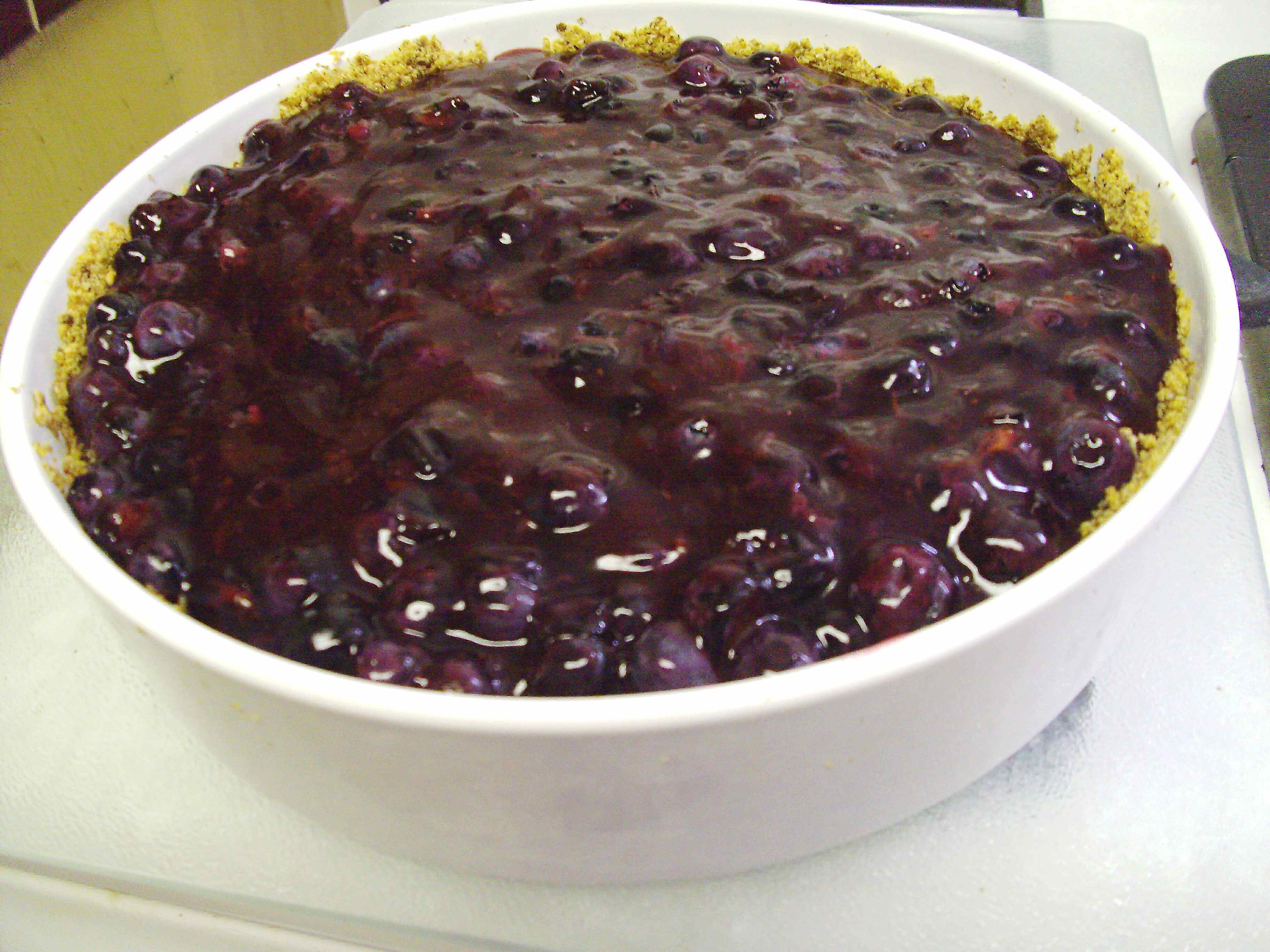
    raw blueberry pie with microwaveable filling and graham cracker crust

    This mostly-raw blueberry pie is a snap to make and very versatile--the filling microwaves in a few minutes, and you don't even have to bake the zippy gingered graham cracker crust--perfect for a hot Fourth of July and all summer long.

  • Recent Posts

  • Contents

  • Archives

  • Now Reading

  • See also my Book Reviews

  • Copyright 2008-2024Slow Food Fast. All writing and images on this blog unless otherwise attributed or set in quotes are the sole property of Slow Food Fast. Please contact DebbieN via the comments form for permissions before reprinting or reproducing any of the material on this blog.

  • ADS AND AFFILIATE LINKS

  • I may post affiliate links to books and movies that I personally review and recommend. Currently I favor Alibris and Vroman's, our terrific and venerable (now past the century mark!) independent bookstore in Pasadena. Or go to your local library--and make sure to support them with actual donations, not just overdue fines (ahem!), because your state probably has cut their budget and hours. Again.

  • In keeping with the disclaimer below, I DO NOT endorse, profit from, or recommend any medications, health treatments, commercial diet plans, supplements or any other such products.

  • DISCLAIMER

  • SlowFoodFast sometimes addresses general public health topics related to nutrition, heart disease, blood pressure, and diabetes. Because this is a blog with a personal point of view, my health and food politics entries often include my opinions on the trends I see, and I try to be as blatant as possible about that. None of these articles should be construed as specific medical advice for an individual case. I do try to keep to findings from well-vetted research sources and large, well-controlled studies, and I try not to sensationalize the science (though if they actually come up with a real cure for Type I diabetes in the next couple of years, I'm gonna be dancing in the streets with a hat that would put Carmen Miranda to shame. Consider yourself warned).

Why All the Mealy Peaches?

A lot of recent visitors to this site have come in desperate need of ways to redeem the disappointing peaches that are all you can find in the supermarkets these days. Even in peach season. The best I can tell them is that you can microwave the fruit with a little sugar and lemon juice to bring back some of the flavor, but of course it’ll be cooked, not raw. For a couple of suggestions on how to do it and what to use it for, see my original post.

I decided to take this topic up again because the idea of microwave peach jam as your only option is probably not what most of you were hoping for. Me either, frankly. I want great, aromatic, incredibly juicy height-of-season peaches, and I want to be able to eat them with no further ado. Cooking them runs a distant second as far as I’m concerned (though the jam and compote weren’t bad, to tell you the truth–and I just made another batch in about 5 minutes yesterday with some much better peaches from my father-in-law’s backyard trees).

But back to the more usual reality for a moment:

I really don’t think you can get a crummy, mealy unripenable peach to be juicy and fabulous and still raw by nuking it–though I might be wrong; I haven’t tried the lower-power settings or “defrost” yet, and I haven’t tried a shorter time than 3-5 minutes. If you’re determined to try one of these, at least take the poisonous pit out first–you really don’t want to risk infusing the flesh (the peach’s or your own!) with cyanide.

But all that begs the real question–

Why all these @#$*Q#R&*@F….etc. etc…. mealy peaches at the height of summer in the first place?

OK, I know that’s not a dignified way to phrase it, but it calms me down without actually specifying swear words for a situation that clearly deserves it. (And I do have some decent enough swear words beginning with “R” and “F”, but “Q” is going to be a challenge. I’ll have to work on it–get out the Scrabble Cussword Dictionary; it’s probably going to be something in Latin.)

The reason I get so upset about this is I remember looking forward to peaches every summer as a kid–you couldn’t get them in winter (for that matter, it’s debatable that what you get in winter now actually qualifies as peaches). They were so good, so reliably good when they did arrive that my mother once assured my younger brother, who was little enough at the time to worry about the fuzzy peel, that they tasted “like heaven”. She was right. You wouldn’t hear angels or anything insipid like that when you bit into one. You’d get a stream of juice down your chin and flavor so intense you wanted to take it somewhere private to eat so you wouldn’t embarrass yourself.

But things have changed. My post on microwaving unripenable peaches came out last summer, when I bought what turned out to be mealy peaches so many times in a row I started wondering if it was just me or were the peaches really a lot worse than I remembered in childhood. Maybe it was just a one-year blip, a bad crop, some kind of exception in the history of peach-harvesting.

Turns out, probably not. Crummy peaches are back in stock this year–judging from the visitors’ log, my experience, pretty much everyone’s. Even here in California where they do grow peaches.

So blithely scouting the web for answers I come up with two possibles:

Either all the good peaches are being shipped overseas for astronomical prices and our supermarkets are buying the good-looking but deceptive dregs and we’re allowing it by not returning the unacceptable goods and demanding refunds

OR

All the big supermarket chains are buying imported peaches from South America and the combination of long distance storage requirements and import quarantine protocols is ruining the peaches’ ability to ripen.

Of the two, I think the idea that all our domestic peach growers are sending their entire stock of acceptably good produce overseas is unlikely. We do export some fruit but the countries that were likeliest to buy from us ten years ago (Japan and Russia come to mind) have fallen on harder times and there’s more competition from sources that are geographically closer.

On the other hand, there’s a good bit of evidence to suggest the supermarket chains have been cheaping out by importing most of their summer fruit from Argentina and Chile even when it’s summer here–and winter down there. The stores have gotten used to importing all kinds of stone fruits from Chile when it’s winter here, and they may have decided to issue longer term contracts with their distributors. It’s probably cheaper than domestic fruit even after transportation and quarantine.

And that brings us to the main find: Continue reading

Not Your Parents’ Mom & Pop

Mom & pop stores–the little independent family-run corner grocery, hardware store, café, bakery, or barber shop–are, like local farmers’ markets, neighborhood gems just waiting to be rediscovered by a new generation. Some are the old-fashioned kind, limping along in the recession but fostering a friendly atmosphere and clientèle. Others mix old-fashioned personal service with cutting-edge specialties. Within five minutes of my house are five worth spending time in.

The bike shop at the other end of my block sells and fixes everything from used kids’ bikes with training wheels (which they’ll adjust for you) to the fancy $4000-plus professional racing bikes (ditto). Around the corner, beyond the Starbuck’s, is a young-chic type all-day café with arty rectangular plates, pretty good coffee–and outlets for every patron’s laptop. Down the street is a British pub owned by the chef and his wife, with the world’s crispest, most astonishing fish & chips and dozens of artisan beers on tap. No outlets here, but you can play darts on the bar side of the pub. The coffee shop across from my daughter’s school hosts tutoring sessions and keeps a frequent customer card file for regulars as well as a shelf of books  you can buy or just borrow while catching a break. And the fifth, my personal favorite, is an Armenian corner grocery with great deals, lots of unusual ingredients and spices, actual ripe tomatoes and one or another family member always willing to discuss the best way to cook something–or debate the merits of the latest Rose Parade.

These businesses are always under siege from the chain restaurants and big box price cutters, which pop up and then close suddenly whenever something better comes along for the long-distance investors, undercut the locals while they’re here, and leave a trail of mistreated minimum-wage employees and other forms of exploitation in their wake.  And yet often the mom & pop stores offer a better deal, unique merchandise, and certainly better service.

Most important is the way local shops change the way we interact when we come in to buy something. The owners treat everyone like a neighbor or a member of their congregation (in the case of the corner grocery, they usually are). The staff are usually the sons and daughters and grandchildren of the owners. Even shy customers come in ready to say hello, ask questions, compliment the new light fixtures, complain about the state budget cuts or the new parking meters near the center of town and generally catch up on the latest. They don’t ignore or avoid the staff the way everyone does at the big box stores, and they don’t feel ignored or pestered either. Kibbitzing and schmoozing are almost lost arts everywhere else, but the better mom & pop businesses have a way of restoring that sense of belonging to neighborhood shoppers.

So it’s with pleasure that I recommend two fairly recent books on the mom & pop phenomenon, with a side dish of a newly released French film.

Dough (2006), by Mort Zachter, is a well-told cautionary tale about working for family, especially if that family’s roots are in the Great Depression. Zachter, a former tax lawyer, learned the hard way that his uncles’ family bread business wasn’t exactly what he’d assumed as a kid. One day a phone call from his uncles’ stockbroker revealed that while his uncles almost never closed the shop, lived together like paupers in a dingy run-down tenement apartment, and certainly never paid Zachter’s mother anything for helping out, they had been sitting on a multimillion dollar account balance for decades. How they came by such wealth and why they never used it to better their lives or anyone else’s in the family is the riddle Zachter works to solve. Although there’s a bitter line of frustration Continue reading